Introduction: What Is Rock Cotoneaster
Rock cotoneaster is a low-growing woody shrub widely used in landscaping and as ground cover. The plant is valued for its spreading branches, dense foliage, and seasonal display of flowers and berries, making it both decorative and functional in garden design. Known commonly as rock cotoneaster, this shrub fits within the broader cotoneaster group, which includes prostrate and upright forms.
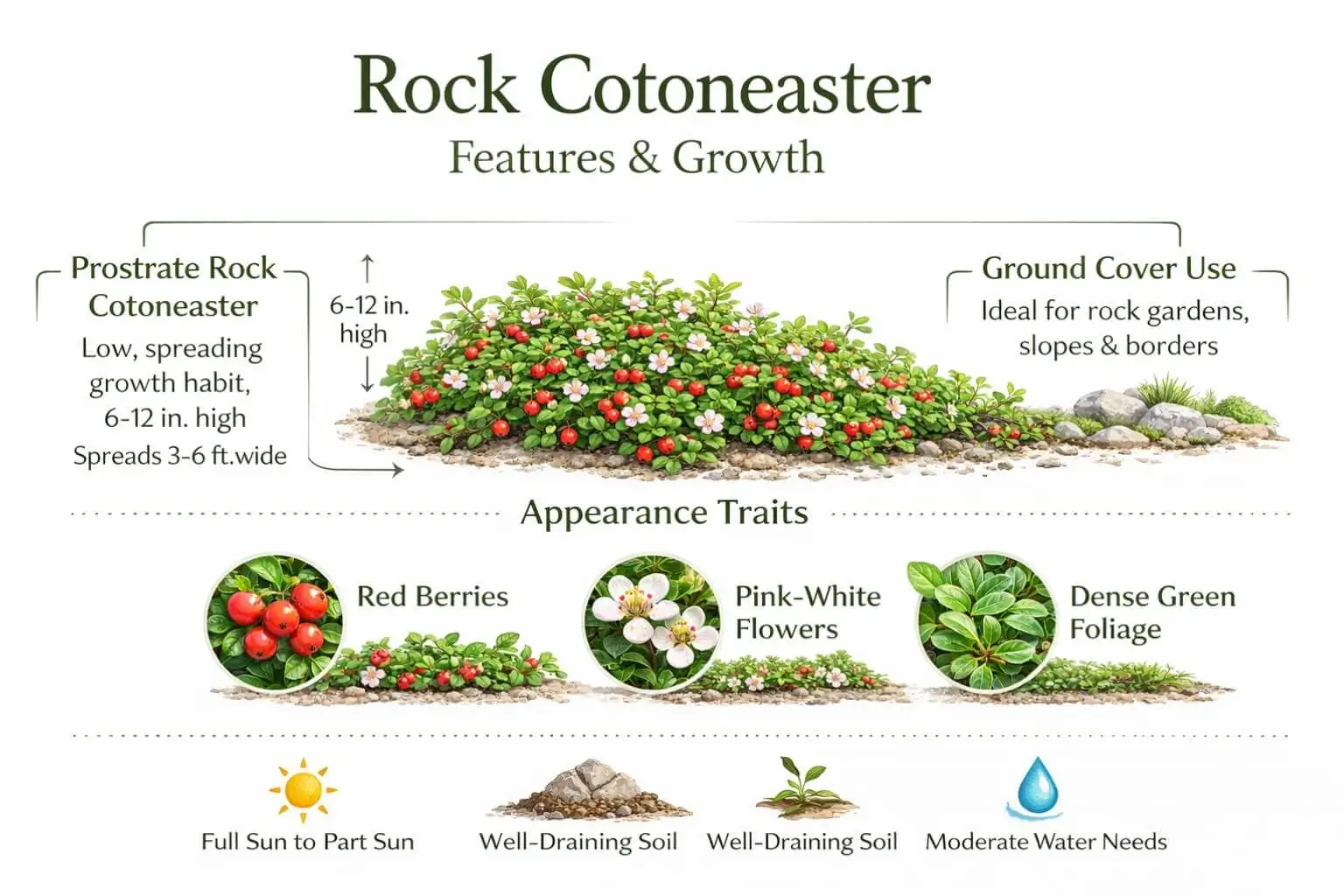
The term “rock cotoneaster” typically refers to cultivars adapted for rocky slopes, walls, and low-maintenance planting areas. Understanding what does rock cotoneaster look like helps gardeners select it for aesthetic and functional purposes in various landscape applications.
Botanical Classification and Related Cotoneaster Types
Rock cotoneaster belongs to the genus Cotoneaster, which encompasses a variety of species with differing growth habits. Within low-growing types, it is closely related to cotoneaster horizontalis and other horizontal forms. Rock spray cotoneaster or rockspray cotoneaster are commonly referenced cultivars that produce prostrate mats over soil and rocks. Wall cotoneaster is another related type used for vertical surfaces. The classification can be confusing because many names describe either the growth form or ornamental usage rather than distinct species. Understanding the relationships among these types clarifies planting choices and maintenance expectations. Rock cotoneaster belongs to the genus Cotoneaster, which encompasses a variety of species with differing growth habits.
Physical Characteristics and Growth Habit
-
Size, Height, and Spread
Rock cotoneaster typically reaches a mature height of 6 to 12 inches (15–30 cm) and spreads 3 to 6 feet (0.9–1.8 m) horizontally. Prostrate rock cotoneaster forms dense mats that cover ground effectively, while spreading varieties extend over low walls or rocky slopes. The growth habit determines placement in landscaping: dense, low-growing forms are ideal for erosion control, whereas slightly taller spreads provide decorative layering without obstructing views.
-
Leaves, Flowers, and Berries
The foliage consists of small, glossy leaves that may turn reddish or bronze in cooler seasons. Rock cotoneaster flowers are small, white to pink, and bloom in late spring to early summer, attracting pollinators. Berries develop in late summer or fall, turning bright red and providing seasonal visual impact. These traits make the plant easy to identify and enhance its ornamental value.
Climate and Growing Conditions
Rock cotoneaster thrives in temperate climates with moderate winters and warm summers. It tolerates cold but prefers zones with minimal extreme freezing. Full sun promotes dense foliage and abundant flowering, though partial shade is tolerated. Well-draining soil is essential, as the plant is susceptible to root rot in waterlogged conditions. Understanding rock cotoneaster climate preferences ensures successful establishment and long-term growth.
Care and Maintenance Requirements
-
General Care Needs
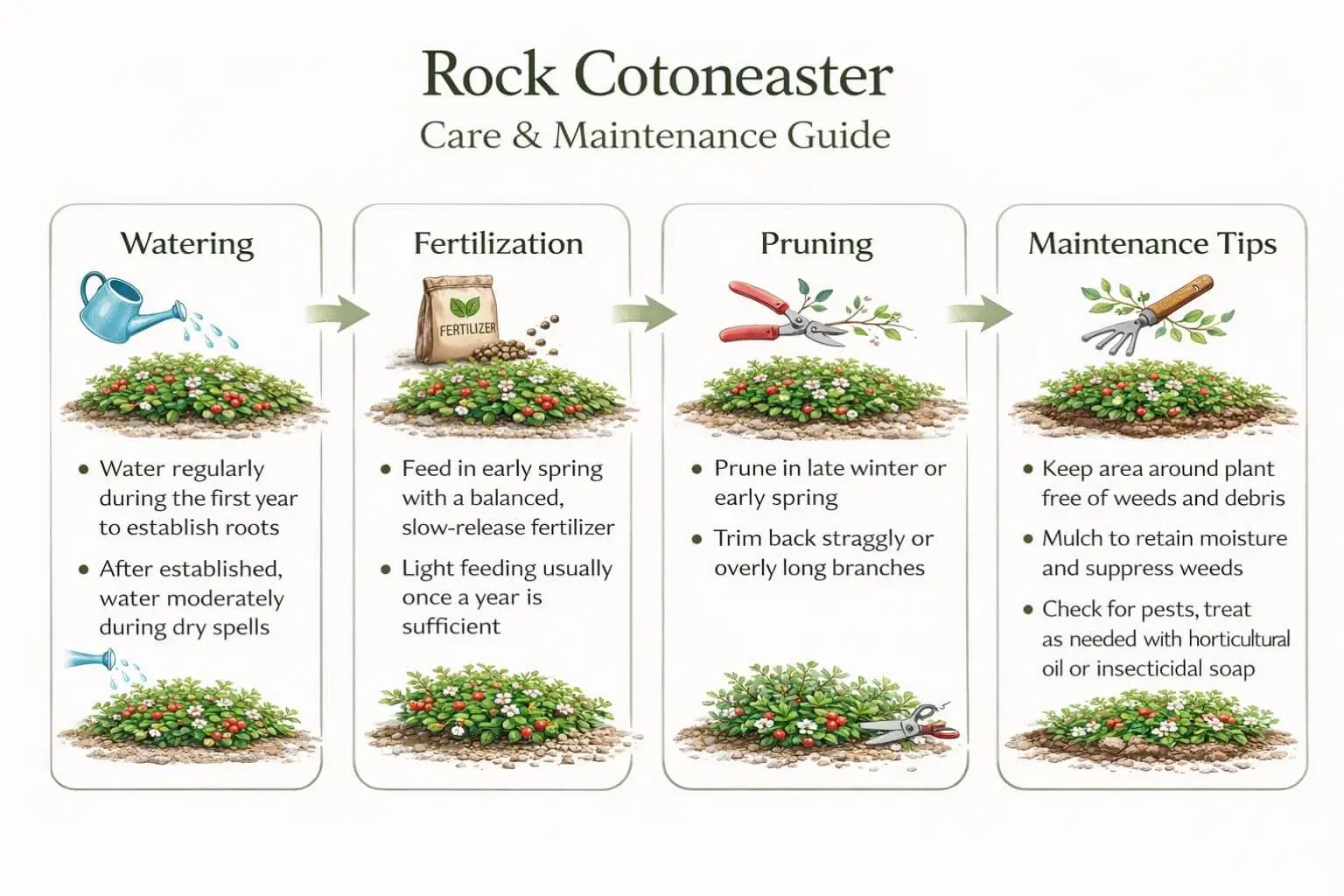
Once established, rock cotoneaster care is minimal. The plant requires occasional watering during extended dry periods and benefits from light fertilization in nutrient-poor soils. Its low-maintenance nature makes it suitable for areas where regular gardening is impractical. Rock cotoneaster thrives with basic care, retaining its dense growth and vibrant seasonal appearance without frequent intervention.
-
Pruning and Growth Control
Pruning is primarily functional, controlling shape, spread, and potential overgrowth. Early spring or post-bloom trimming encourages healthy branching and maintains desired coverage. Avoid severe pruning that removes more than one-third of the plant, as this can hinder flowering and berry production. Regular, moderate pruning ensures aesthetic form while supporting ground cover function.
Safety, Toxicity, and Edibility
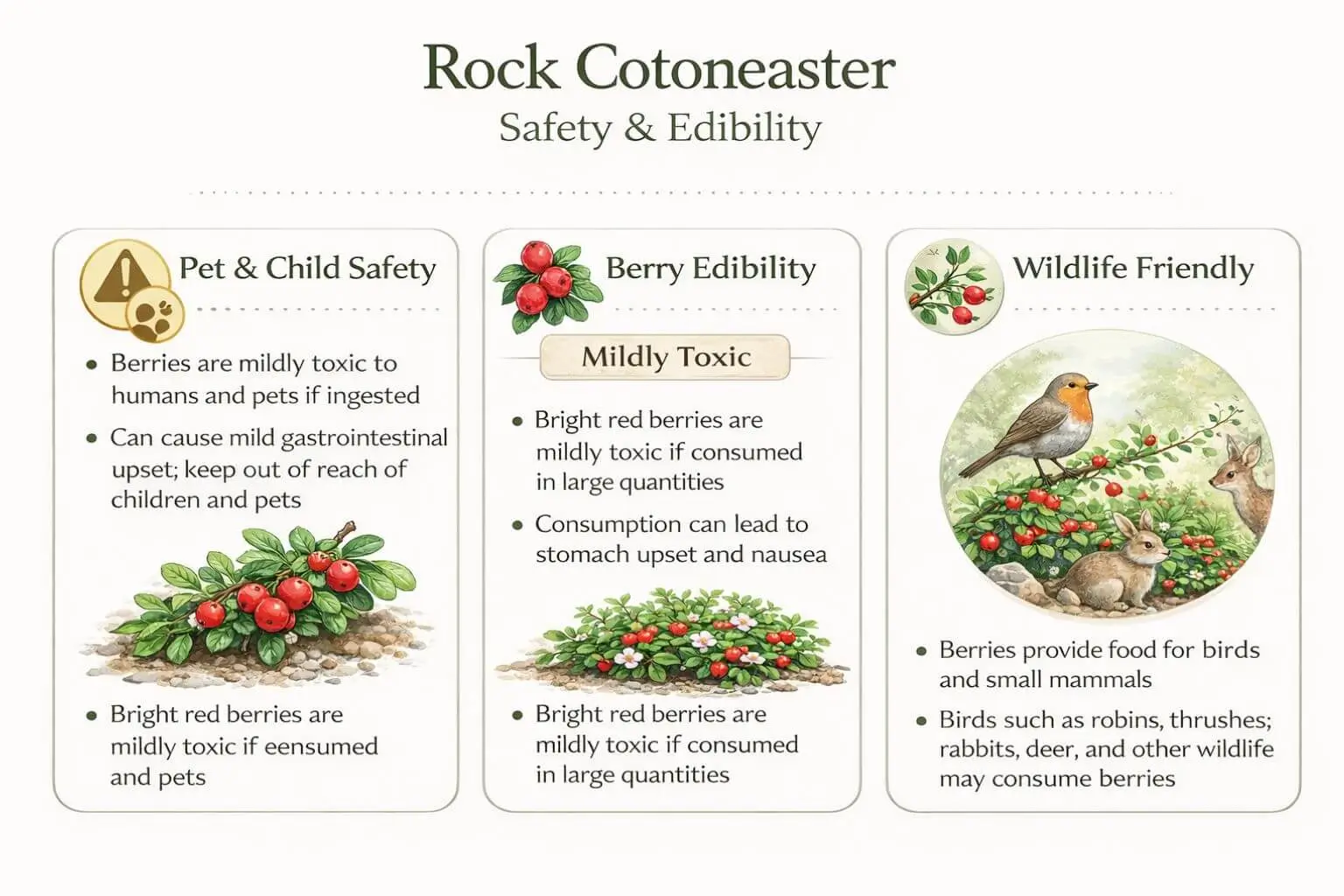
Rock cotoneaster is generally considered mildly poisonous to humans if berries are ingested in quantity. However, wildlife such as birds safely consume the berries without harm. While it is technically edible in small amounts, consumption by children or pets should be monitored. These safety considerations clarify its suitability for residential landscaping and areas with human or animal activity.
Ecological Impact and Invasiveness
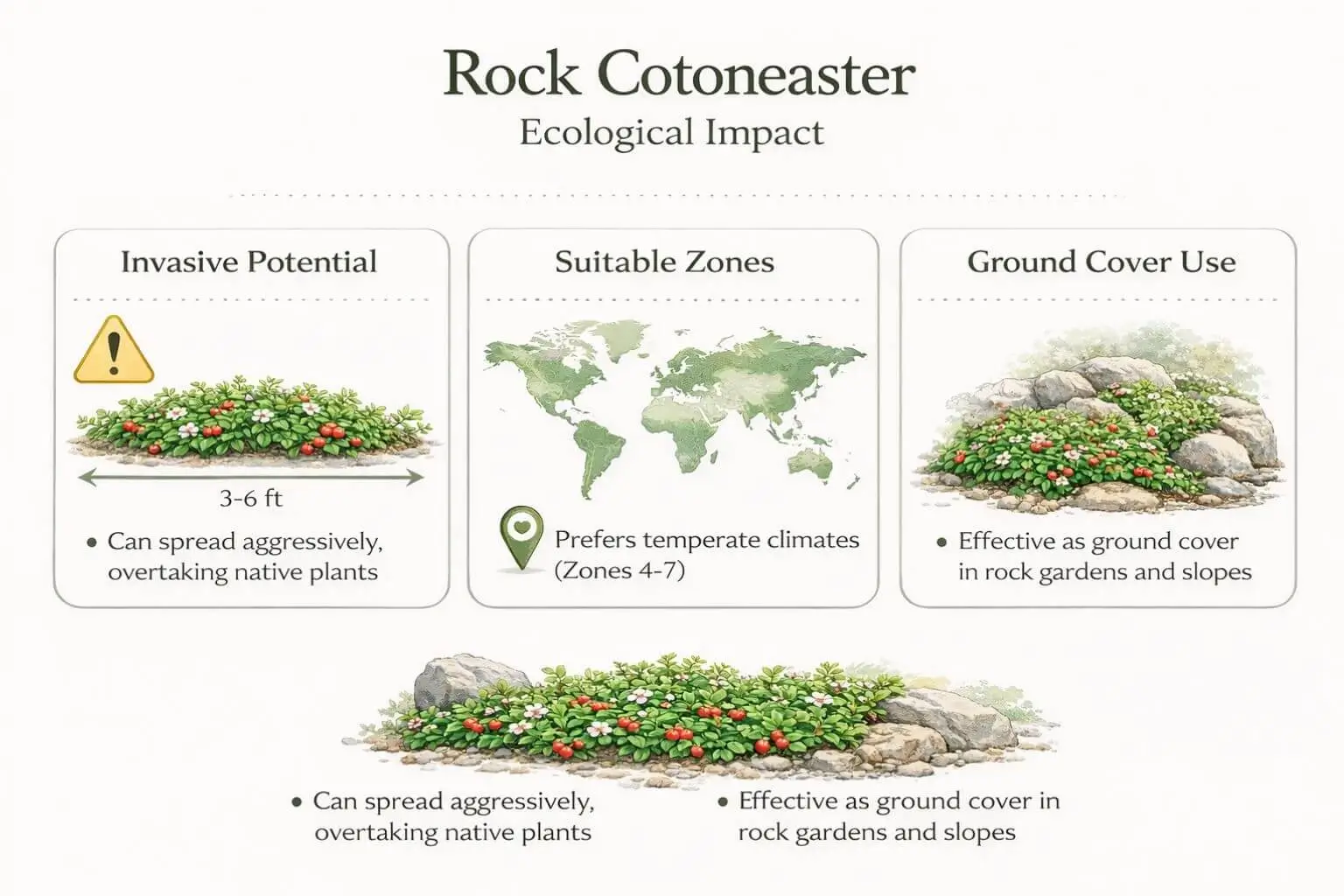
Cotoneasters can spread by seed and layering, sometimes becoming invasive in favorable conditions. Rock cotoneaster may naturalize outside cultivated areas, particularly in mild climates with loose soil. Monitoring spread and limiting uncontrolled seeding prevent ecological disruption. Awareness of local environmental conditions helps gardeners prevent potential invasiveness while enjoying the plant’s ornamental benefits.
Varieties and Cultivated Forms
Several rock cotoneaster varieties exist, differing in leaf pattern, growth habit, and seasonal color. Variegated rock cotoneaster displays contrasting leaf margins for added visual interest. Other varieties may have denser mats, faster spread, or distinct berry coloration. Knowledge of rock cotoneaster varieties allows targeted use in specific landscape designs, optimizing aesthetic and functional outcomes. Variegated rock cotoneaster displays contrasting leaf margins for visual interest, much like other ornamental varieties such as Variegated English Ivy.
Specialized Uses and Training Styles
Rock cotoneaster is widely used as ground cover due to its dense, spreading growth. Its flexible branches and small leaves make it suitable for bonsai training, where controlled pruning and shaping create miniature landscape forms. Adaptable growth traits, including tolerance for trimming and low maintenance, make it ideal for creative applications in horticulture and garden design. Rock cotoneaster is widely used as ground cover due to its dense, spreading growth, similar to other low-maintenance options like Dymondia ground cover.
Conclusion: Understanding Rock Cotoneaster in Context
Rock cotoneaster is a versatile, low-growing shrub valued for its dense foliage, seasonal flowers, and bright berries. Its minimal care requirements, adaptability, and ornamental appeal make it suitable for slopes, walls, and ground cover applications. Awareness of toxicity, growth habits, and potential ecological impact ensures safe and effective use. Gardeners and landscapers can learn more by comparing varieties, understanding plant behavior, and assessing suitability for local conditions.
FAQs
- What does rock cotoneaster look like when mature?
A low-growing shrub with arching or spreading branches, small glossy leaves, seasonal flowers, and red berries. - Is rock cotoneaster evergreen or deciduous?
It is typically semi-evergreen, retaining leaves in mild climates and shedding some foliage in colder conditions. - Is rock cotoneaster safe around pets and children?
The berries are generally considered mildly toxic to humans if eaten in quantity, so caution is advised. - How fast does rock cotoneaster spread?
It spreads gradually outward rather than upward, forming dense mats over time under favorable conditions. - Can rock cotoneaster grow in poor or rocky soil?
Yes, it is well adapted to well-drained, rocky, or low-fertility soils, which is why it is often used on slopes.