Introduction
Thomasia solanacea is an Australian native shrub belonging to the Malvaceae family, widely appreciated for its soft, velvety foliage and delicate papery flowers. Commonly known as velvet bush or paper flower, it is native to Western Australia and thrives in dry, well-drained environments. Gardeners value it for its ornamental texture, compact growth, and ecological compatibility with native landscapes. Its subtle yet elegant floral display makes it a popular choice for low-maintenance gardens. In our experience at Greenery Inside, it performs best when treated as a true native shrub rather than a high-fertility ornamental plant. For gardeners exploring more resilient native species, you may also like our guide on Plants Similar to Gymea Lily which highlights other structural Australian natives suited for similar landscapes.
For a broader scientific overview of related plant families, see Malvaceae (Wikipedia)
Quick Summary
- Thomasia solanacea is a compact Australian native shrub with papery flowers and velvety leaves.
- It belongs to the Malvaceae family and is closely related to Lasiopetalum species.
- It prefers low-nutrient, well-drained soils and thrives in full sun to partial shade.
- The plant is drought-tolerant once established but sensitive to overwatering.
- It is ideal for native gardens, rockeries, and low-maintenance landscapes.
What Is Thomasia solanacea? (Taxonomy & Botanical Identity)
Genus Overview — Understanding Thomasia
Thomasia is a genus of approximately 30–35 species of shrubs endemic to Australia, primarily concentrated in Western Australia. It belongs to the Malvaceae family, formerly grouped under Sterculiaceae. These shrubs are commonly referred to as velvet bushes due to their soft, hairy foliage. Historically, Thomasia was closely associated with Lasiopetalum, but modern taxonomy separates them based on floral structure and petal development. Thomasia belongs to a broader group of ornamental Australian natives, many of which are featured in our Native Trees of Australia Guide, helping you understand their ecological relationships and garden roles.
Thomasia solanacea Specific Characteristics
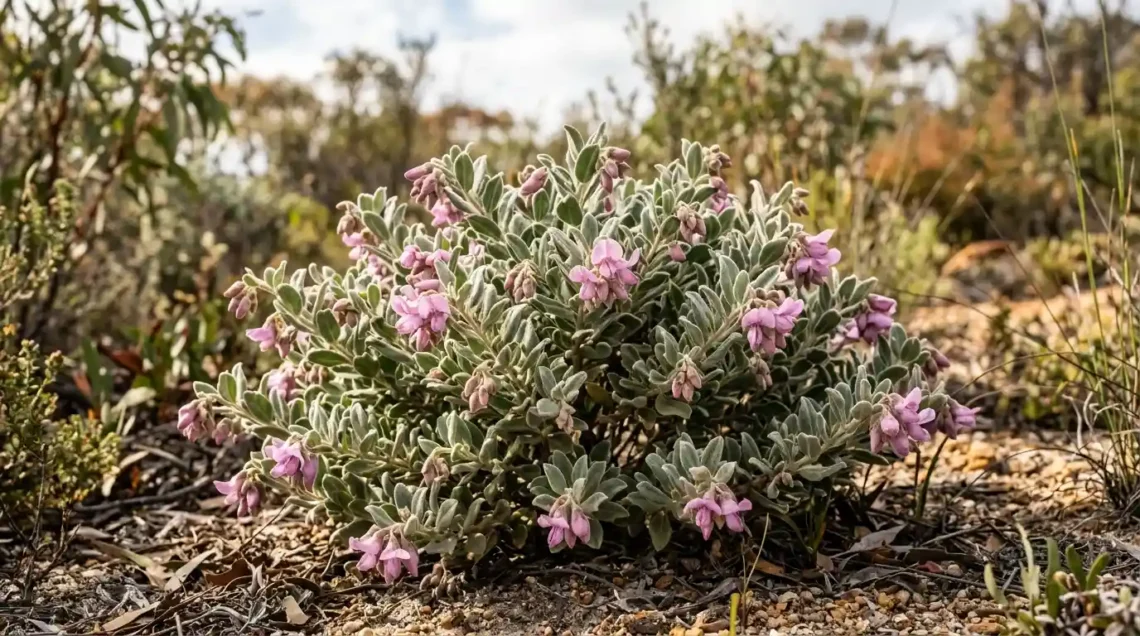
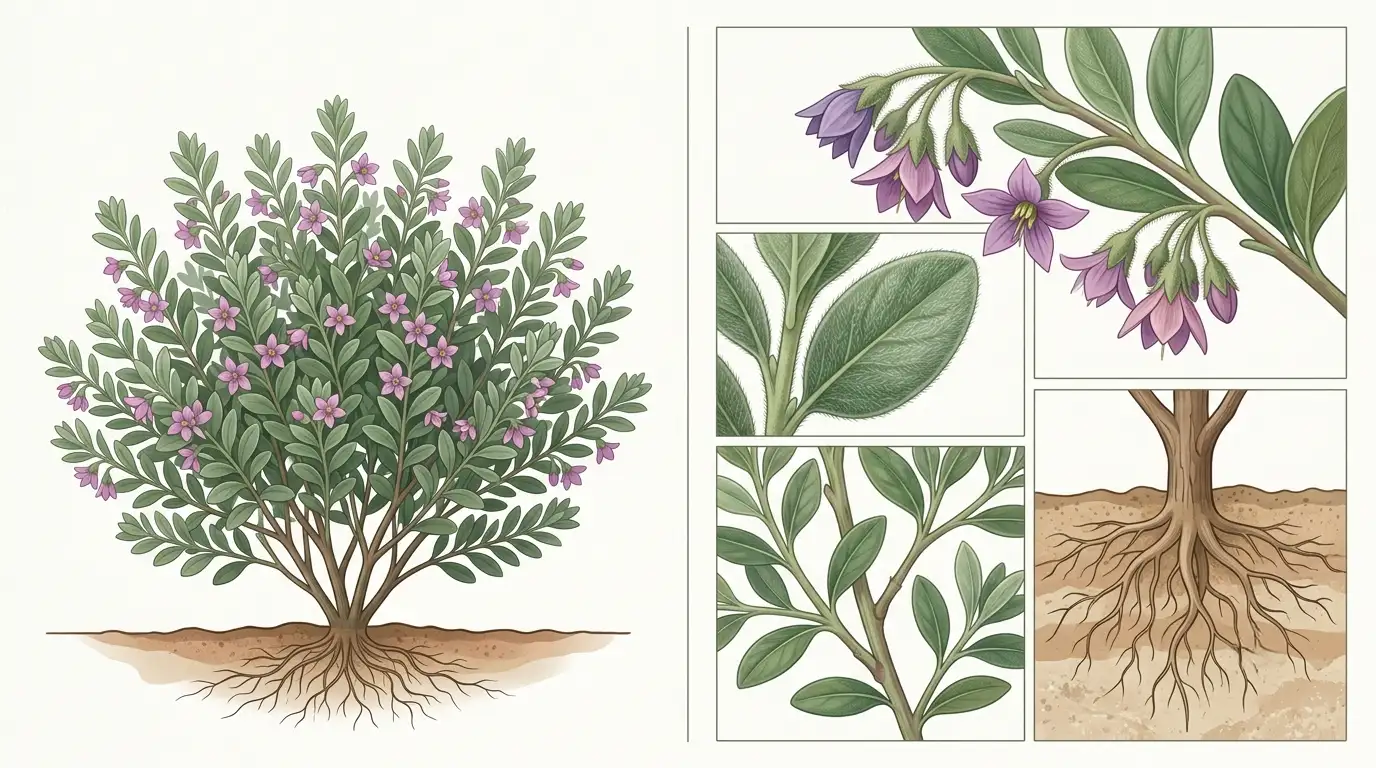
Thomasia solanacea is a low to medium shrub characterized by velvety grey-green leaves and star-shaped flowers. The flowers are typically pink to purple, with papery sepals forming the visible floral display. Unlike many ornamental shrubs, the petals are small and secondary, while sepals provide the main visual appeal. The species epithet “solanacea” refers to a superficial resemblance in some floral structures to the Solanaceae family.
Thomasia solanacea vs. Related Species — How Does It Compare?
Thomasia solanacea vs. Thomasia purpurea
Thomasia purpurea produces more intensely purple flowers and generally has a slightly more compact growth habit. Thomasia solanacea tends to have softer foliage and a more muted floral display but offers a longer blooming period under suitable conditions.
Thomasia solanacea vs. Thomasia macrocarpa
Thomasia macrocarpa is distinguished by its larger seed capsules and slightly broader growth habit. In contrast, Thomasia solanacea is more refined and better suited to smaller garden spaces.
Thomasia solanacea vs. Thomasia petalocalyx
Thomasia petalocalyx is more upright and narrow, while Thomasia solanacea grows in a mounded, spreading form. Flower density is typically higher in petalocalyx, but solanacea offers softer texture in landscape design.
Other Notable Thomasia Species at a Glance
| Species | Common Name | Key Feature | Size |
| Thomasia solanacea | Velvet Bush | Papery star flowers | Low-medium |
| Thomasia purpurea | Purple Thomasia | Rich purple flowers | Small shrub |
| Thomasia macrocarpa | Large-fruited Thomasia | Large seed capsules | Medium shrub |
| Thomasia petalocalyx | Slender Velvet Bush | Upright form | Tall shrub |
| Thomasia quercifolia | Oak-leaved Thomasia | Lobed leaves | Small-medium |
| Thomasia pygmaea | Pygmy Thomasia | Dwarf form | Very small |
| Thomasia grandiflora | Large-flowered Thomasia | Larger blooms | Medium |
| Thomasia foliosa | Leafy Thomasia | Dense foliage | Small-medium |
Thomasia and Lasiopetalum — Understanding the Relationship
Lasiopetalum is closely related to Thomasia, and both are often referred to as velvet bushes. The key distinction lies in floral structure. Thomasia species typically have small petals present, while Lasiopetalum flowers often lack visible petals entirely, relying on sepals for display. Both share similar ecological roles in Australian native gardens.
Comparison Table
| Feature | Thomasia | Lasiopetalum |
| Petals | Small petals present | Petals absent or vestigial |
| Sepals | Showy | Showy |
| Fruit | Capsule | Capsule |
| Distribution | Western Australia | Southern/Eastern Australia |
| Common Name | Velvet bush | Velvet bush |
Plant Size and Growth Habit of Thomasia solanacea
Thomasia solanacea typically grows between 0.5–1.5 meters tall and 0.5–1 meter wide. It forms a naturally mounding shrub with soft, spreading branches. In our observations at Greenery Inside, plants grown in well-drained soils with full sun develop a denser structure, while shaded specimens tend to become more open and leggy. It is primarily an outdoor plant, though it can be grown in large containers with proper drainage.
Growth Rate of Thomasia solanacea
This species is considered a moderate grower under ideal conditions. Most active growth occurs in spring following winter rainfall patterns typical of its native Western Australian habitat. Young plants establish relatively quickly within the first two years. However, growth slows significantly in heavy soils or humid climates where drainage is poor.
Thomasia solanacea Care Guide
Soil Requirements
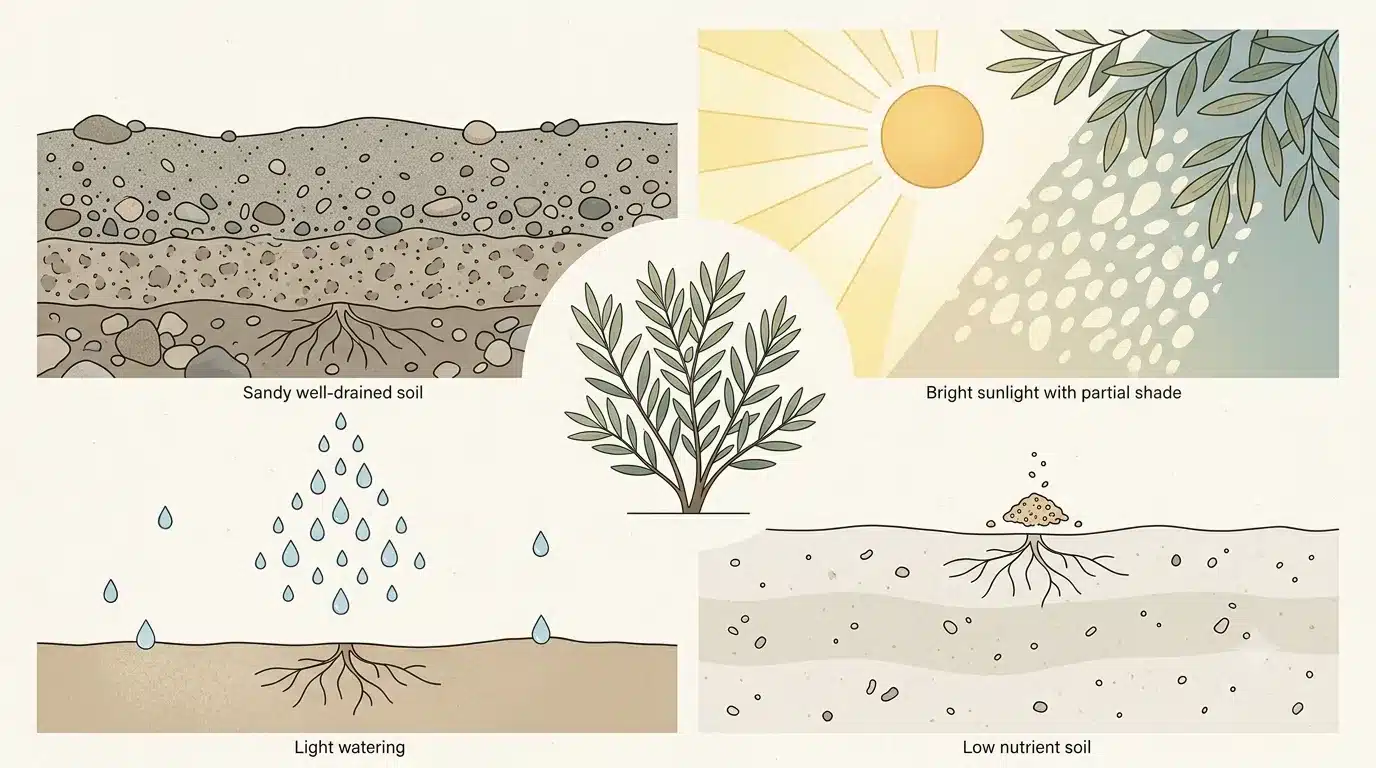
Prefers sandy or gravelly soils with excellent drainage and low fertility. Heavy clay soils can cause root stress and reduced flowering.
Watering Needs
Once established, it is drought-tolerant. Overwatering is a major cause of decline. Greenery Inside recommends deep but infrequent watering during dry summers.
Light Requirements
Full sun to light shade is ideal. Reduced light directly decreases flowering performance.
Fertilisation
Use low-phosphorus native plant fertilizers sparingly. Excess nutrients often reduce flowering and damage roots.
Pruning Thomasia solanacea
Light pruning after flowering encourages bushiness. Avoid cutting into old woody stems, as regeneration is limited.
Climate Tolerance
It tolerates Mediterranean and semi-arid climates well. Light frost is acceptable, but prolonged freezing or high humidity conditions can stress the plant.
Thomasia solanacea Varieties and Cultivars
Variability exists in flower color, ranging from pink to lavender shades. Some nursery selections offer more compact or profuse-flowering forms. Seed-grown plants may differ significantly in appearance, which adds diversity in garden settings.
Where to Source Thomasia solanacea (Availability & Buying Tips)
It is primarily available through native plant nurseries and specialist growers. Availability varies significantly by region. When purchasing, select plants with healthy roots, no signs of rot, and compact growth. Larger pots generally establish more successfully in gardens.
Common Thomasia solanacea Problems and How to Solve Them
Root Rot
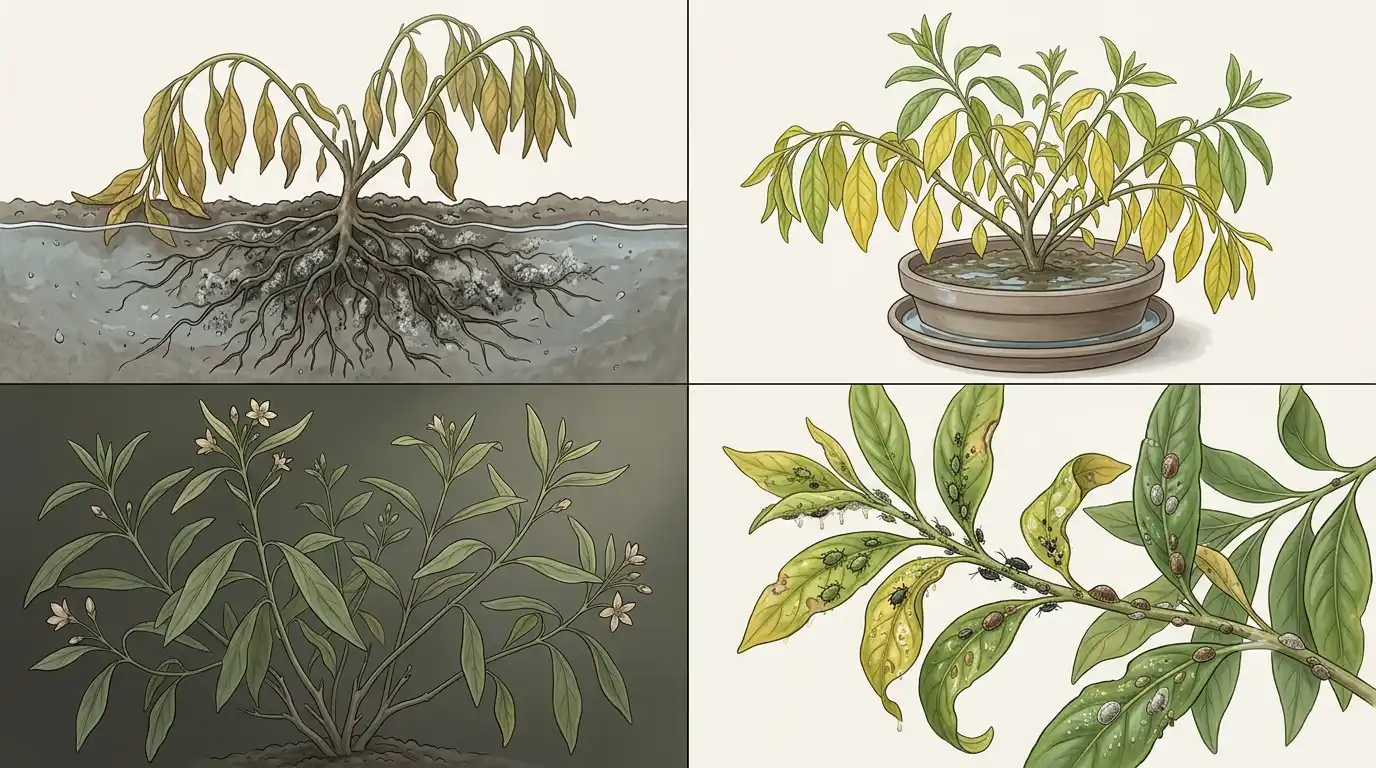
Caused by poor drainage or overwatering. Symptoms include wilting and darkened stems. Improve soil structure and reduce watering frequency.
Yellowing Leaves
Often caused by overwatering or nutrient imbalance, especially phosphorus toxicity. Adjust fertilization practices accordingly.
Failure to Flower
Usually due to low light, excess nitrogen, or over-pruning. Ensure full sun exposure and minimal fertilization.
Pest Problems
Generally resistant but may occasionally attract aphids or scale insects. Use mild organic treatments if necessary.
Short Lifespan
Typically 5–10 years. Regular pruning and excellent drainage can extend longevity.
Common Beginner Mistakes with Thomasia solanacea
- Planting in nutrient-rich soil
- Overwatering in summer
- Using high-phosphorus fertilizers
- Hard pruning into old wood
- Planting in humid, poorly ventilated areas
- Expecting long lifespan without renewal
Growing Thomasia solanacea in Australian Gardens — Landscape Uses
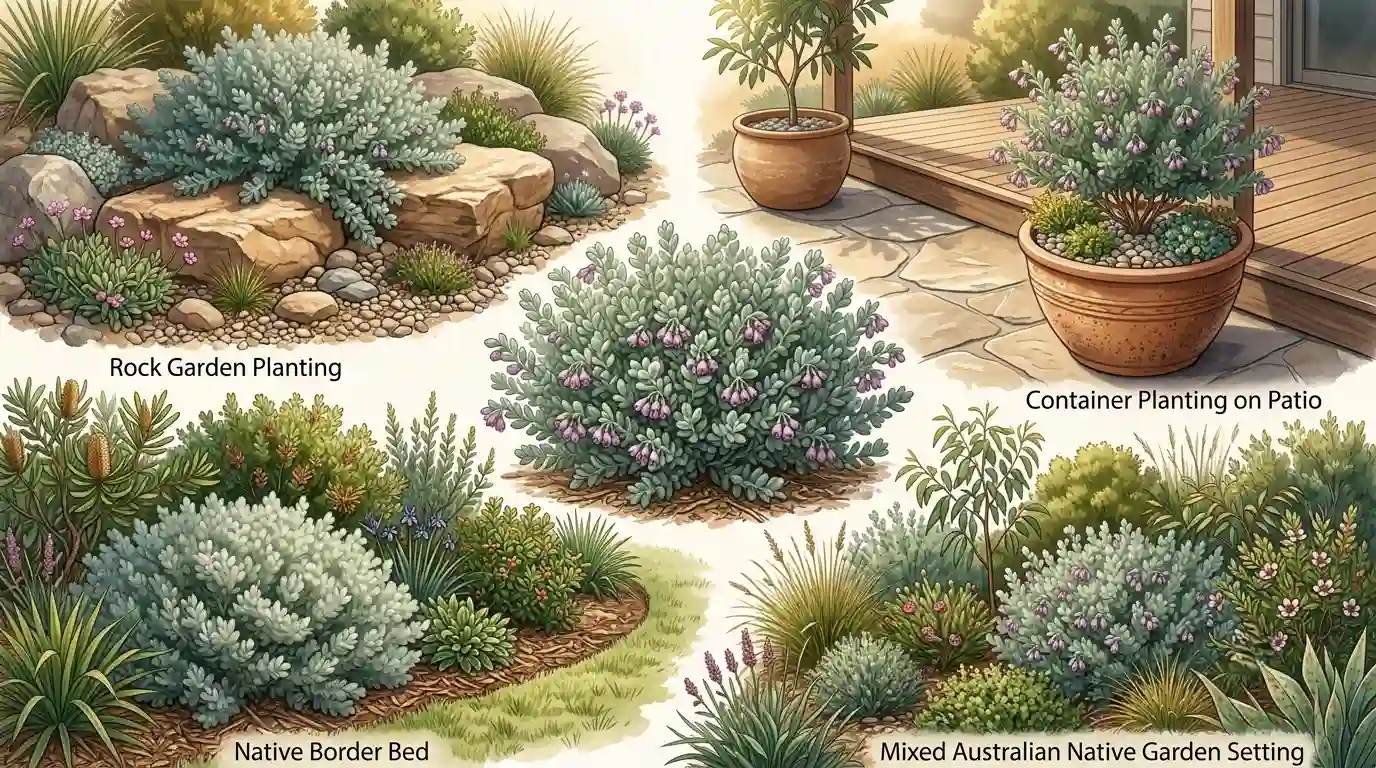
This species is widely used in rock gardens, native borders, and low-maintenance landscapes. It supports pollinators and small insects, making it valuable for biodiversity-friendly gardens. It pairs well with other Australian natives in mixed plantings and performs well in containers when drainage is carefully managed.
Conclusion
Thomasia solanacea is a visually delicate yet environmentally resilient Australian native shrub. Its success depends heavily on well-drained soil, low fertility, and full sun exposure. The combination of papery flowers and velvety foliage makes it highly ornamental in native landscapes. The most important takeaway is that it thrives on minimal intervention and is often harmed by excessive care, especially overwatering and over-fertilisation. When grown under suitable conditions, it becomes a reliable and attractive feature plant in Australian-style gardens.
Frequently Asked Questions About Thomasia solanacea
What is the difference between Thomasia and Lasiopetalum?
Thomasia has small petals present, while Lasiopetalum generally lacks petals and relies on sepals for floral display.
How fast does Thomasia solanacea grow?
It is a moderate grower, typically reaching mature size in 2–4 years under ideal conditions.
Why are the leaves turning yellow?
Common causes include overwatering, phosphorus toxicity, or natural aging of older leaves.
Is Thomasia solanacea drought-tolerant?
Yes, once established. Young plants require regular watering during the first 1–2 years.
How long does it live?
Usually 5–10 years, though good drainage and pruning can extend lifespan.
Can it grow in pots?
Yes, if planted in a well-draining native potting mix and watered carefully.
What are the main varieties?
Flower color variations include pink, purple, and lavender forms, with some compact nursery selections available.