Introduction
Thrift plants, scientifically known as Armeria maritima, are hardy perennials valued for their dense clumping foliage and vibrant flower heads. Native to coastal regions of Europe and North America, these plants thrive in rocky, sandy, or well-drained soils, making them ideal for gardens, borders, and rockeries. Also commonly called sea thrift, thrift plants offer year-round greenery and colorful blooms, combining durability with aesthetic appeal. Their low-maintenance nature and ability to function as natural ground cover make them a preferred choice for gardeners seeking resilient, ornamental perennials. Perennial thrift plants are particularly effective in enhancing both visual and ecological aspects of landscapes. Thrift plants, scientifically known as Armeria maritima (Wikipedia), are hardy perennials valued for their dense clumping foliage and vibrant flower heads.
What Are Thrift Plants?
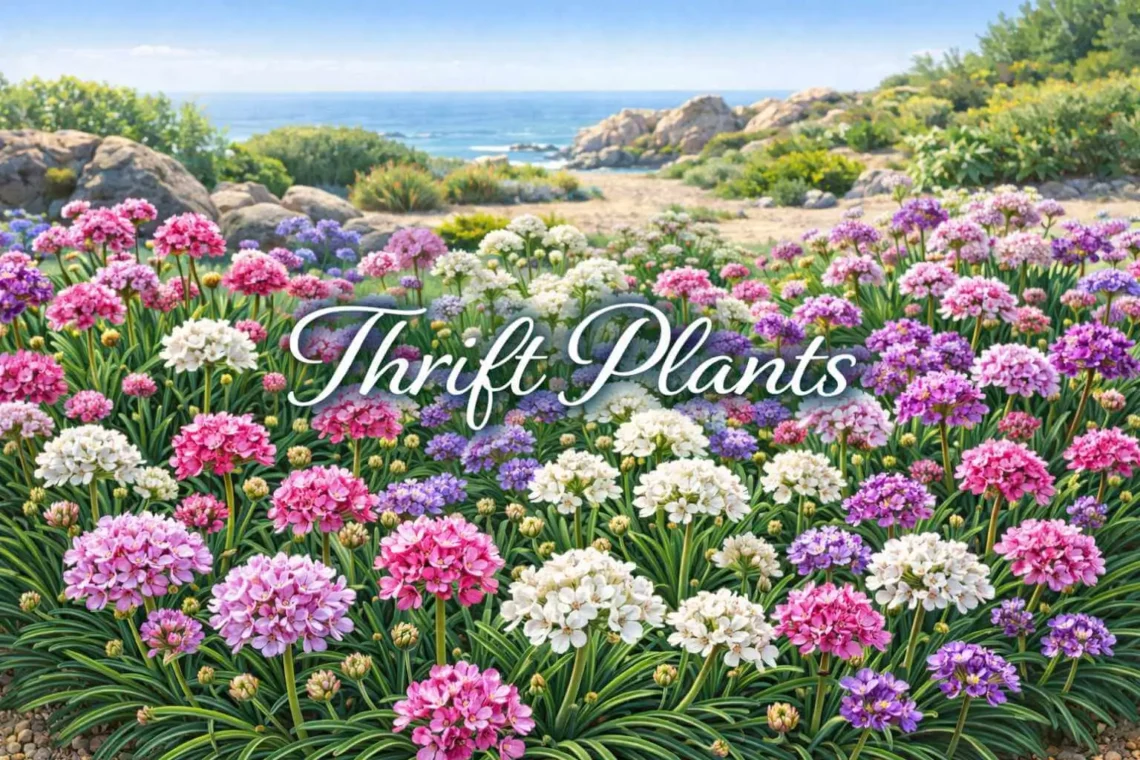
Thrift plants belong to the genus Armeria within the family Plumbaginaceae. They naturally occur in coastal habitats, cliffs, and meadows, where they withstand strong winds and saline conditions. Characterized by evergreen, grass-like foliage, these plants form tight clumps that produce dense flower stalks. Blooming typically occurs in spring and summer, showcasing pink, white, or purple flowers. Their evergreen habit ensures year-round structure, while their compact growth makes them suitable for borders, containers, and coastal landscaping. The combination of hardiness, aesthetic flowers, and low-maintenance traits defines the popularity of armeria maritima in horticulture.
Common Types of Thrift Plants
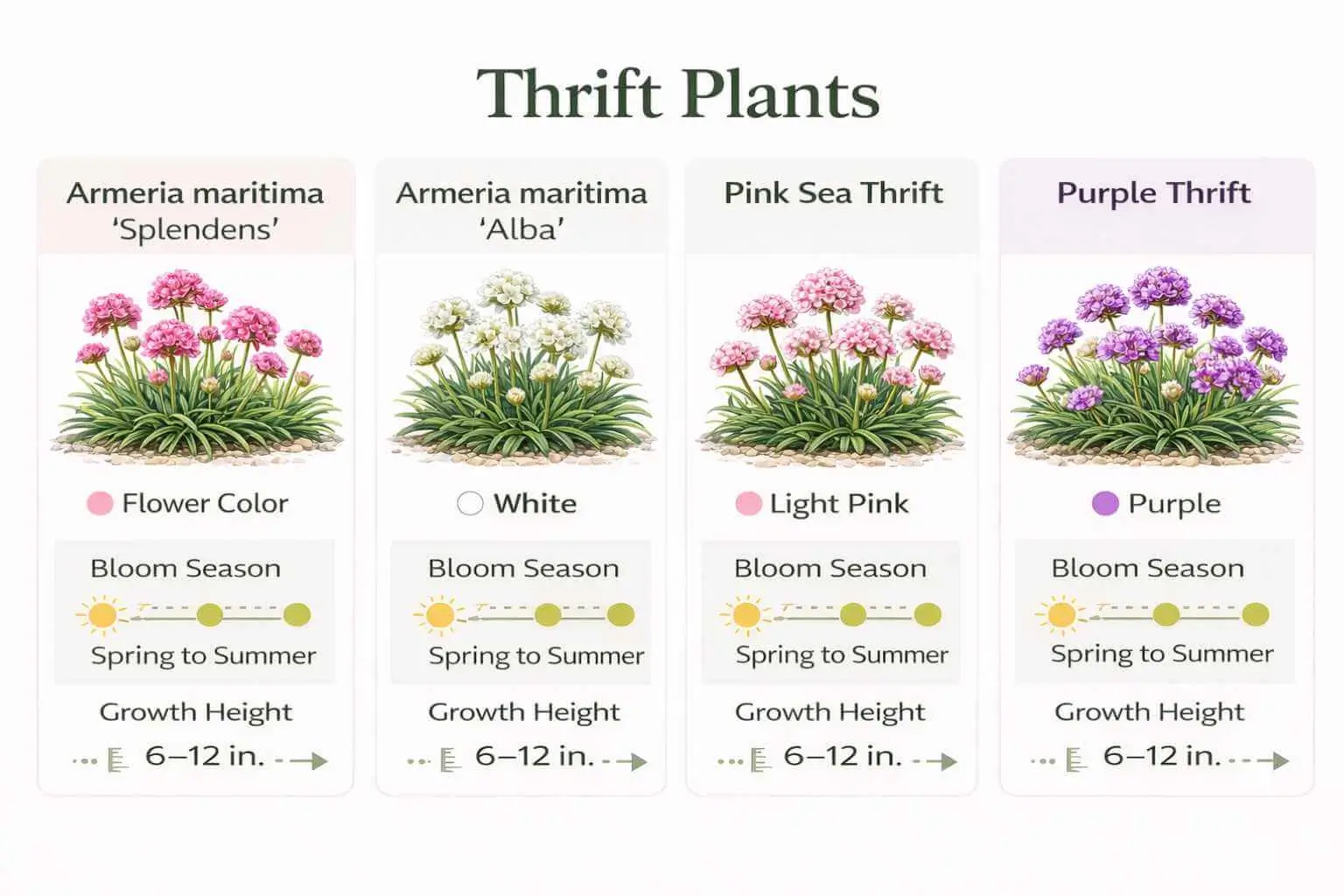
Armeria maritima Splendens
Armeria maritima Splendens is noted for its bright pink flowers and compact, rounded clumps. It thrives in full sun with well-draining soil and is commonly used in rock gardens, pathways, and coastal borders. Its flowering stems rise above foliage in spring and early summer, creating a vibrant display. This variety tolerates wind and drought, making it a resilient option for low-maintenance gardens.
Armeria maritima Alba (White Sea Thrift)
The white-flowered variant, Armeria maritima Alba, offers a subtle aesthetic for gardens requiring lighter tones. Like Splendens, it forms tight, evergreen clumps and prefers sunny, well-drained sites. Its white blooms make it suitable for contrast planting, container arrangements, and mixed perennial borders.
Other Varieties
Other noteworthy types include pink sea thrift, purple thrift plants, and various cultivars selected for flower color and growth habit. These include sea pink flowers and hybrid forms that extend bloom periods or adapt to specific climates. Gardeners choose varieties based on color schemes, garden design, and environmental tolerance.
How to Grow Thrift Plants
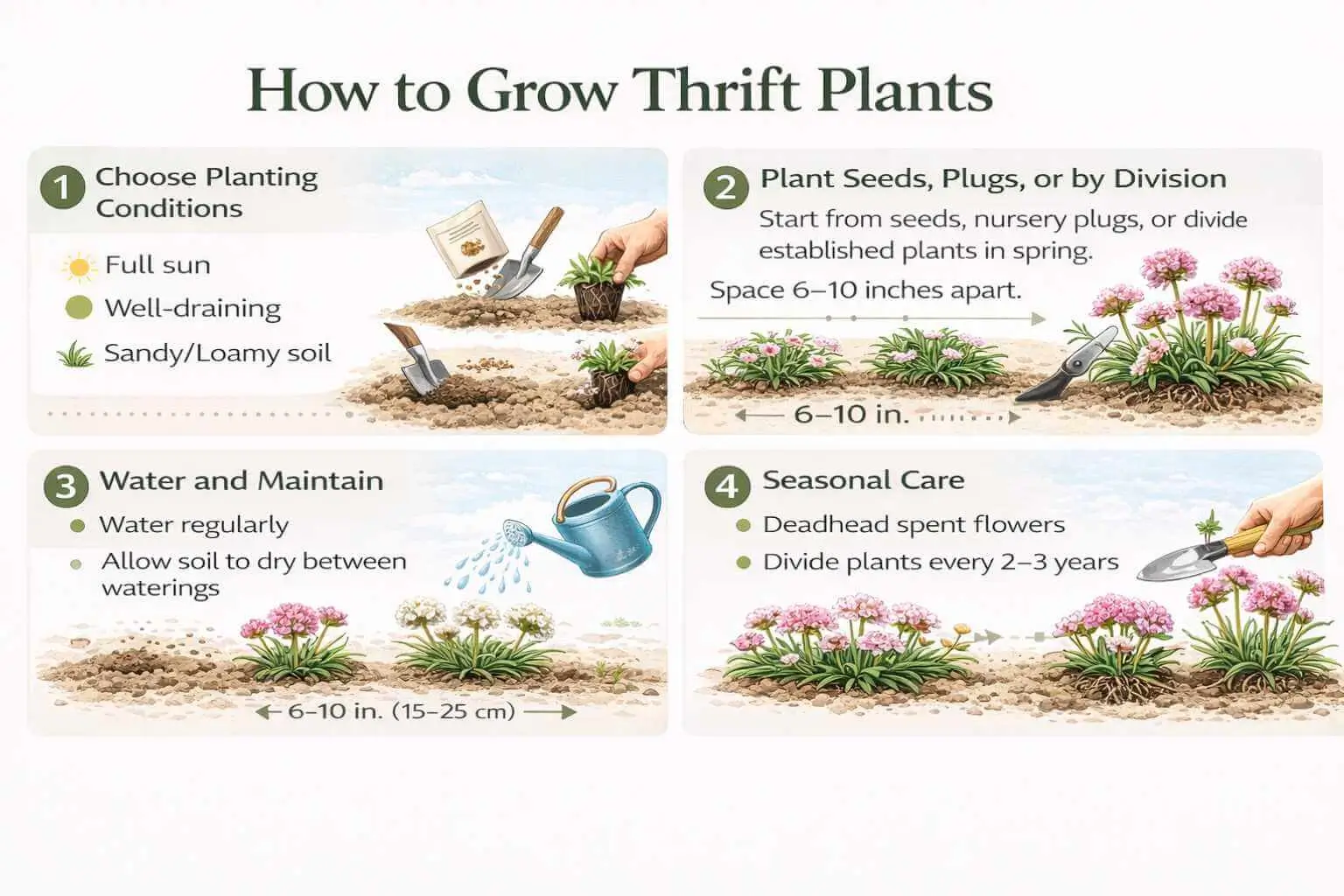
Thrift plants can be propagated from thrift plant seeds, divisions, or plugs. Seeds such as armeria maritima seed germinate best in well-draining soil under full sun, with moisture maintained until seedlings establish. Dividing established clumps in spring or autumn ensures vigorous growth and rejuvenation. Planting sites should offer full sun and moderate moisture, with soil amended for drainage if necessary. Seasonal care includes removing dead flowers to prolong blooming and monitoring growth to prevent overcrowding.
Thrift Plant Care Guide
-
Soil and Location Requirements
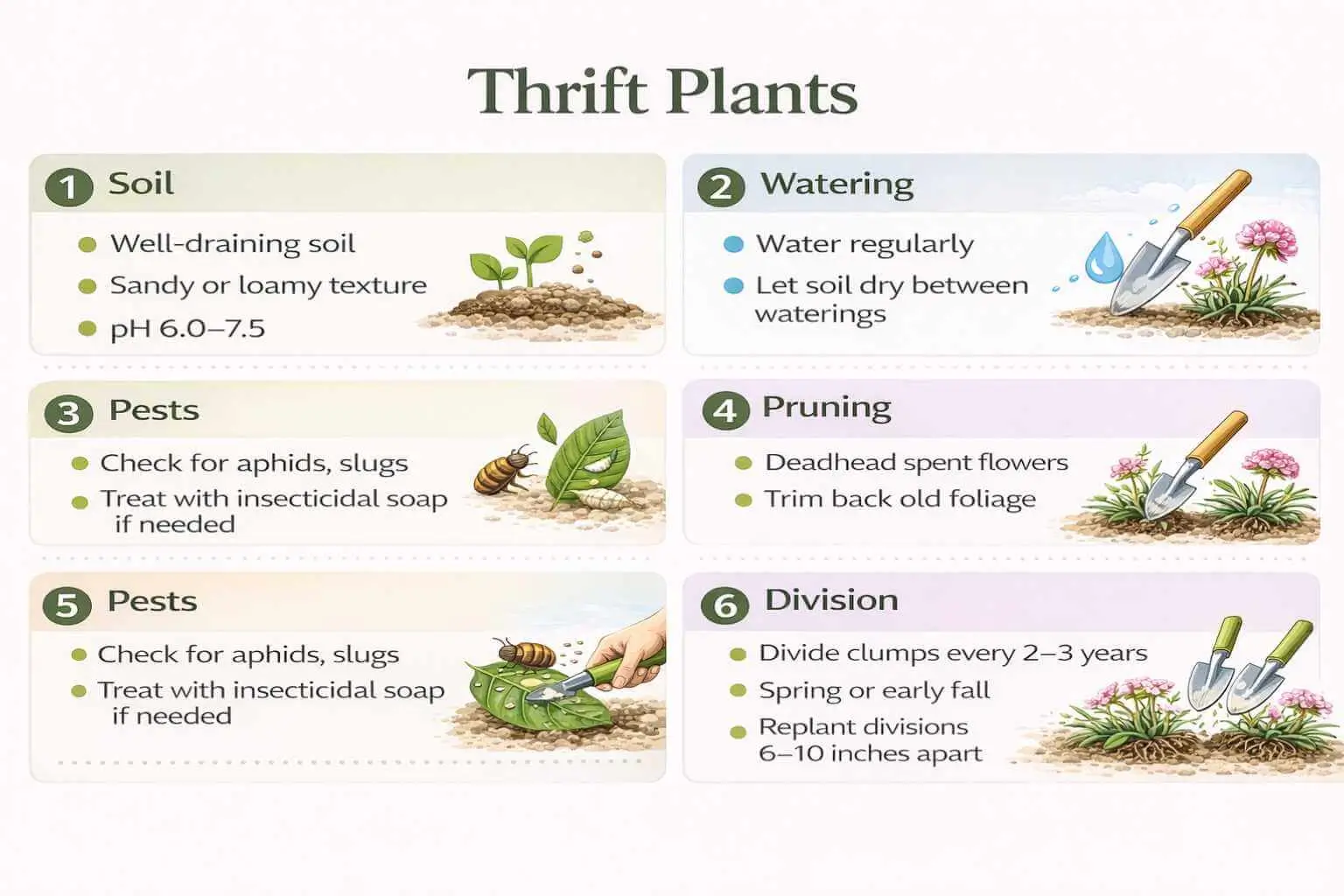
Thrift plants prefer sandy or loamy soils with excellent drainage. Excess moisture can cause root rot, so slopes, rock gardens, or raised beds are ideal. Full sun exposure promotes flowering and compact growth, while partial shade may reduce bloom intensity.
-
Watering and Fertilization
These plants are drought-tolerant once established. Watering should be moderate, focusing on dry spells. Fertilization is minimal; applying a balanced, slow-release fertilizer in early spring supports flowering without excessive foliage growth.
-
Pest and Disease Management
Common threats include thrips on plants and potential damage from rabbits. Regular inspection, use of physical barriers, or natural pest control methods maintain plant health. Good air circulation reduces fungal issues and supports vigorous growth.
-
Pruning and Division
Prune dead foliage after flowering to maintain shape. Dividing thrift plants every few years rejuvenates clumps, encourages flowering, and prevents overcrowding. Division is best performed in spring or autumn, ensuring soil moisture and gentle handling of roots.
Thrift Plants as Ground Cover
Thrift plants function effectively as thrift plant ground cover, ideal for slopes, rockeries, and coastal landscapes. Their spreading habit fills gaps, suppresses weeds, and stabilizes soil. Companion plants such as low-growing succulents or ornamental grasses complement their texture and bloom colors, enhancing overall garden aesthetics. Like coastal rosemary, thrift plants are excellent for stabilizing soil on slopes and coastal gardens while adding vibrant color.
Flowering and Seasonal Characteristics
Thrift flowers appear in spring and summer, with bloom colors ranging from pink and white to purple. Each flower head is held above dense foliage, creating a long-lasting display. Seasonal foliage remains evergreen, while flowering peaks provide vibrant color. Their extended bloom duration and compact habit make them suitable for continuous garden interest and formal landscaping. Sea thrift flowers are also appreciated in cut arrangements or container displays.
Propagation and Seed Care
Collect thrift plant seeds from mature flowers at the end of the growing season. Sow in well-draining soil and maintain moderate moisture. Germination occurs in 2–4 weeks under sunny conditions. Plug propagation allows genetic variety preservation and ensures healthy seedlings. Proper seed storage and careful handling maintain vigor and longevity of new plants.
Environmental Benefits and Uses
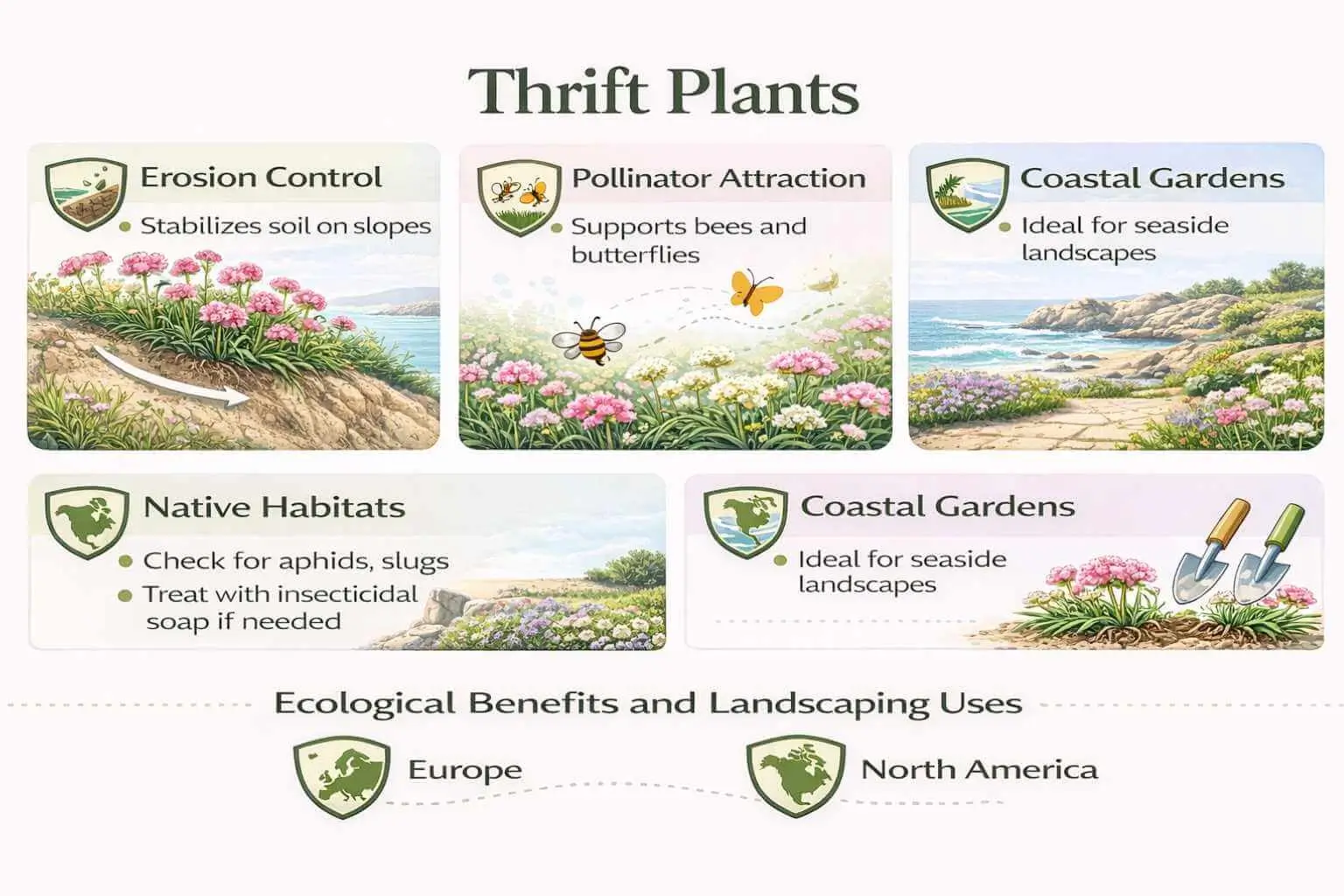
Thrift plants contribute to erosion control, particularly on slopes and coastal sites. Their dense clumps attract pollinators like bees and butterflies, supporting ecological diversity. Low-maintenance habits reduce water use and chemical inputs, making them environmentally sustainable. Their perennial nature combines aesthetic appeal with functional landscaping benefits, suitable for gardens, rockeries, and seaside environments. Similar to purple heart plants, thrift plants attract pollinators and offer low-maintenance landscaping benefits for indoor and outdoor gardens.
Conclusion
Thrift plants (Armeria maritima) are versatile, hardy perennials that enhance gardens with evergreen foliage and vibrant blooms. By understanding varieties, growth habits, and care requirements, gardeners can maximize their aesthetic and ecological value. Using thrift plants as ground cover, in rock gardens, or coastal landscapes supports sustainable, low-maintenance gardening while offering visual interest throughout the seasons.
FAQ
- What is a thrift plant?
Thrift plants are hardy perennial plants (Armeria maritima) known for clumping evergreen foliage and colorful flowers, often used in rock gardens and coastal landscapes. - How do I grow thrift plants from seeds?
Collect seeds from mature flowers, sow in well-draining soil, keep moist until germination, and provide full sun for healthy growth. - What types of thrift plants are most common?
Common types include Armeria maritima Splendens (pink flowers), Armeria maritima Alba (white flowers), and other cultivars like purple sea thrift. - Can thrift plants tolerate drought or poor soil?
Yes, thrift plants thrive in well-drained soil, are drought-tolerant, and adapt to rocky or sandy conditions, making them suitable for low-maintenance gardens. - How do I care for thrift plants in winter?
Reduce watering, remove dead foliage, and ensure plants are in well-draining soil to prevent root rot during cold months.