Introduction
Illinois flowers are the diverse flowering plants found across the state, ranging from native wildflowers and perennials to cultivated landscaping varieties. These plants enrich Illinois’s ecosystems by supporting pollinators, enhancing soil health, and increasing biodiversity. Beyond their ecological importance, they add aesthetic appeal to gardens, parks, and natural areas. Gardeners, landscapers, and nature enthusiasts can appreciate the variety, from prairie flowers to flowering trees and perennials. Understanding the native and non-native species in Illinois helps in selecting plants that thrive locally, promote sustainability, and maintain ecological balance throughout the seasons.
Understanding Illinois Native Flowers
What Makes a Flower “Native” to Illinois
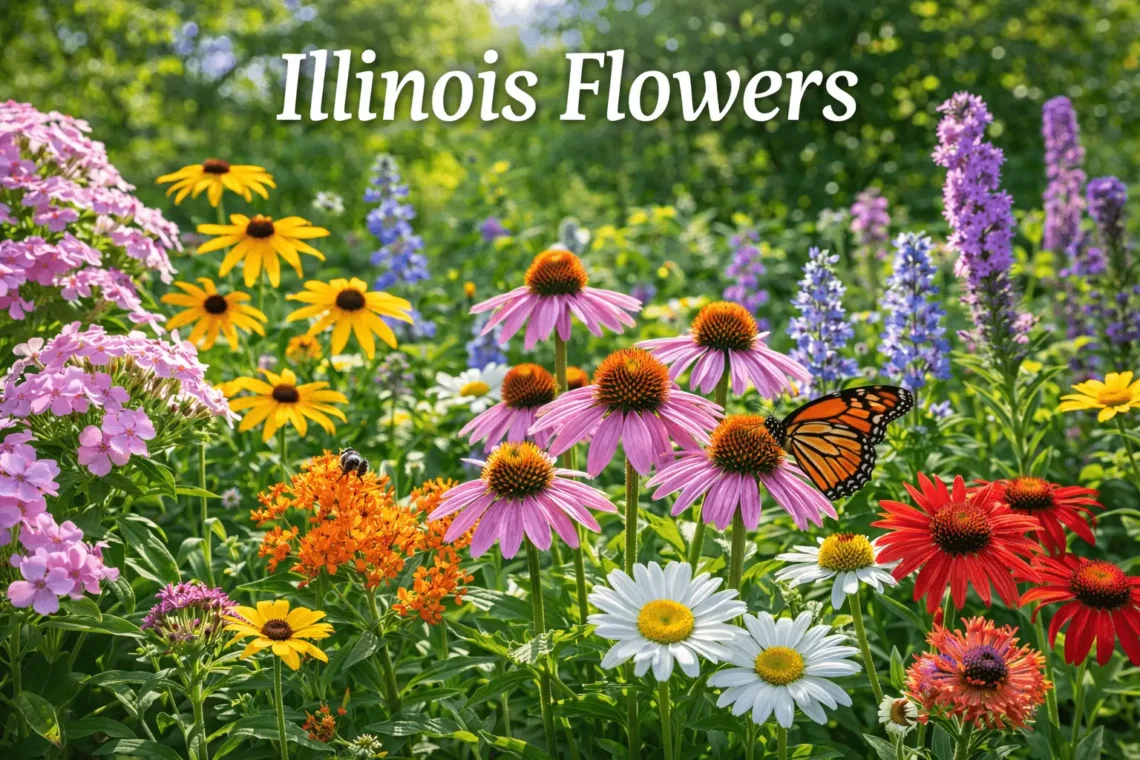
A flower is considered native to Illinois if it naturally occurs in the state without human introduction. Native Illinois flowers, such as Echinacea purpurea (purple coneflower) and Rudbeckia hirta (black-eyed Susan), evolved to support local ecosystems. Illinois native plants provide critical ecological benefits: they attract pollinators like bees and butterflies, improve soil health through deep root systems, and enhance biodiversity. Using native plants in northern Illinois gardens and landscapes ensures resilience against pests, reduced water needs, and a positive impact on local wildlife habitats. Many Illinois native flowers support local ecosystems by attracting pollinators such as bees and butterflies, similar to the species covered in Butterfly Attracting Flowers: Best Plants for Pollinator Gardens.
Common Native Flowers Found in Illinois
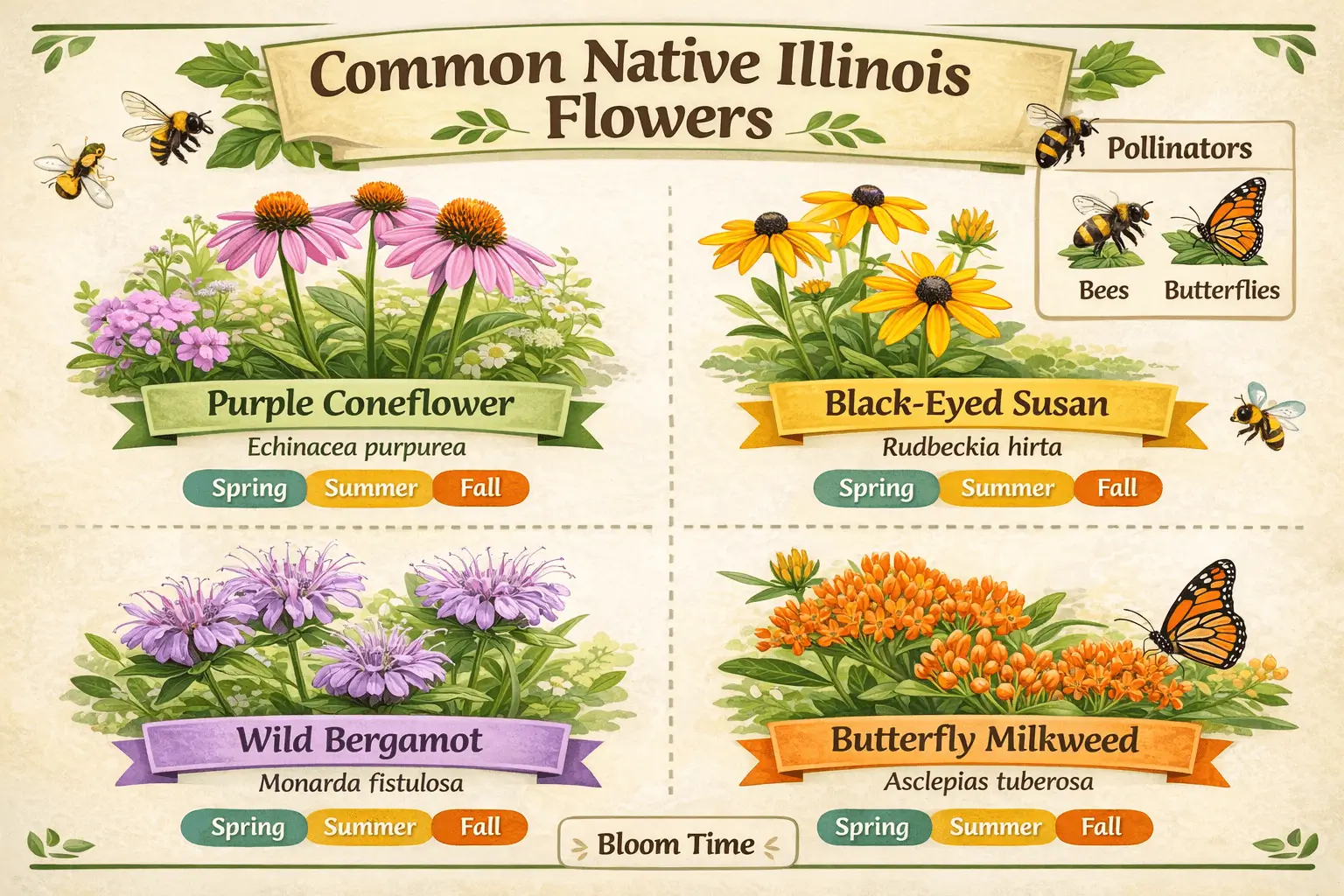
Illinois hosts a wide range of native wildflowers, prairie flowers, and perennials. Popular perennial flowers native to Illinois include purple coneflower (Echinacea purpurea), wild bergamot (Monarda fistulosa), and blue wild indigo (Baptisia australis). Illinois prairie flowers, like Rudbeckia hirta and Asclepias tuberosa (butterfly milkweed), are iconic for their vibrant colors. Illinois native perennial flowers and wildflowers often feature distinctive blooms that can be identified by petal shape, leaf arrangement, and growth habit. Visual identification is key for gardeners and enthusiasts seeking authentic Illinois native wildflowers.
Seasonal and Regional Considerations for Illinois Flowers
Spring Flowers in Illinois
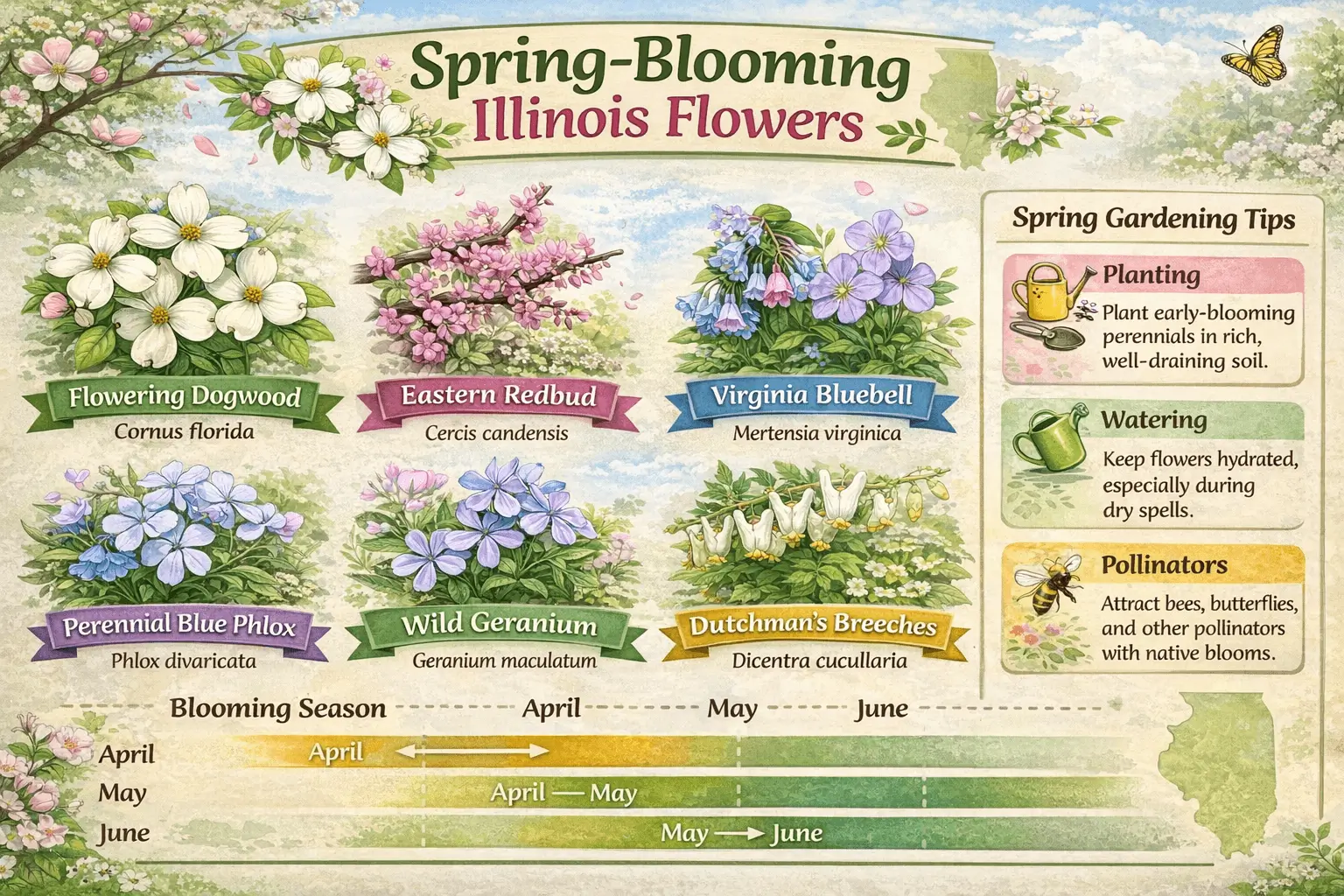
Spring in Illinois brings a surge of blooming plants. Illinois spring flowers include early perennials and flowering trees such as dogwood (Cornus florida) and redbud (Cercis canadensis). Illinois tree species with white flowers are common in suburban and natural areas. Spring valleys and woodlands bloom with trilliums, wild geraniums, and columbine. Knowing seasonal bloom periods helps gardeners plan planting and maintenance schedules effectively.
Regional Flower Highlights
Floral diversity varies across Illinois regions. Chicago Illinois flowers often include urban-adapted perennials and native prairie species, while Springfield Illinois flowers feature a mix of native and cultivated garden plants. Rockford Illinois flowers emphasize native woodland and prairie species, Bloomington Illinois flowers blend native perennials with ornamental landscaping, Wheaton Illinois flowers reflect suburban garden varieties, and Champaign Illinois flowers support pollinator-friendly native species. Evanston Illinois flowers showcase lakeside plant diversity and landscaped gardens. Regional awareness ensures plants thrive in specific soil and climate conditions.
Illinois Flowers for Landscaping
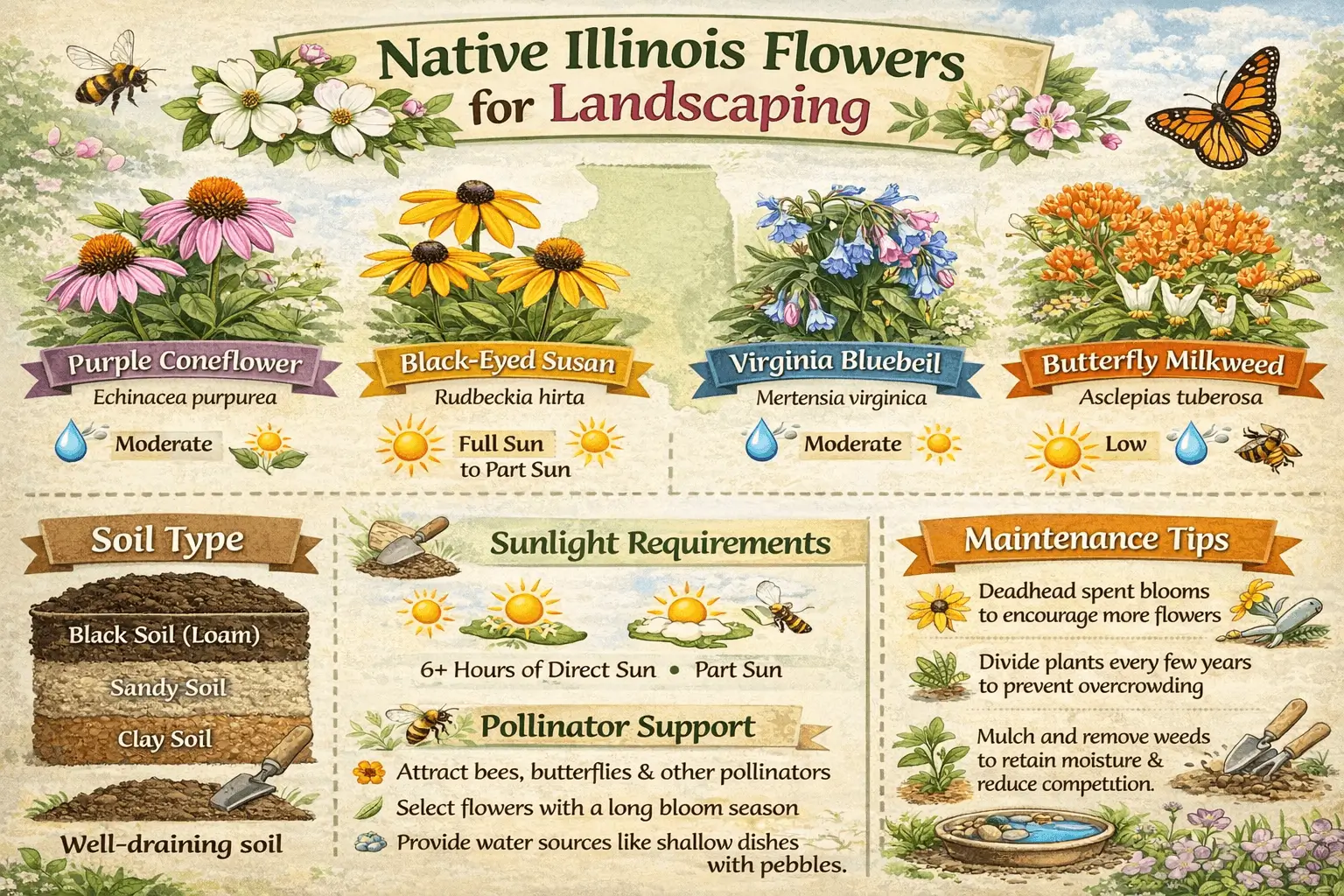
Selecting Illinois flowers for landscaping requires balancing aesthetics with ecological benefits. Native Illinois plants for landscaping, such as prairie perennials and pollinator-friendly flowers, reduce maintenance needs, support local wildlife, and thrive in local soil conditions. Gardeners should consider soil type, sunlight exposure, and water availability. Using native garden Illinois plants increases sustainability, reduces chemical inputs, and enhances biodiversity, making landscapes both beautiful and environmentally responsible. Using native garden Illinois plants, including shade-tolerant varieties, helps ensure sustainability and pollinator support, as discussed in our Native Plants Illinois: Shade-Tolerant Flowers and Garden Tips guide.
Identification and Resources
How to Identify Illinois Wildflowers
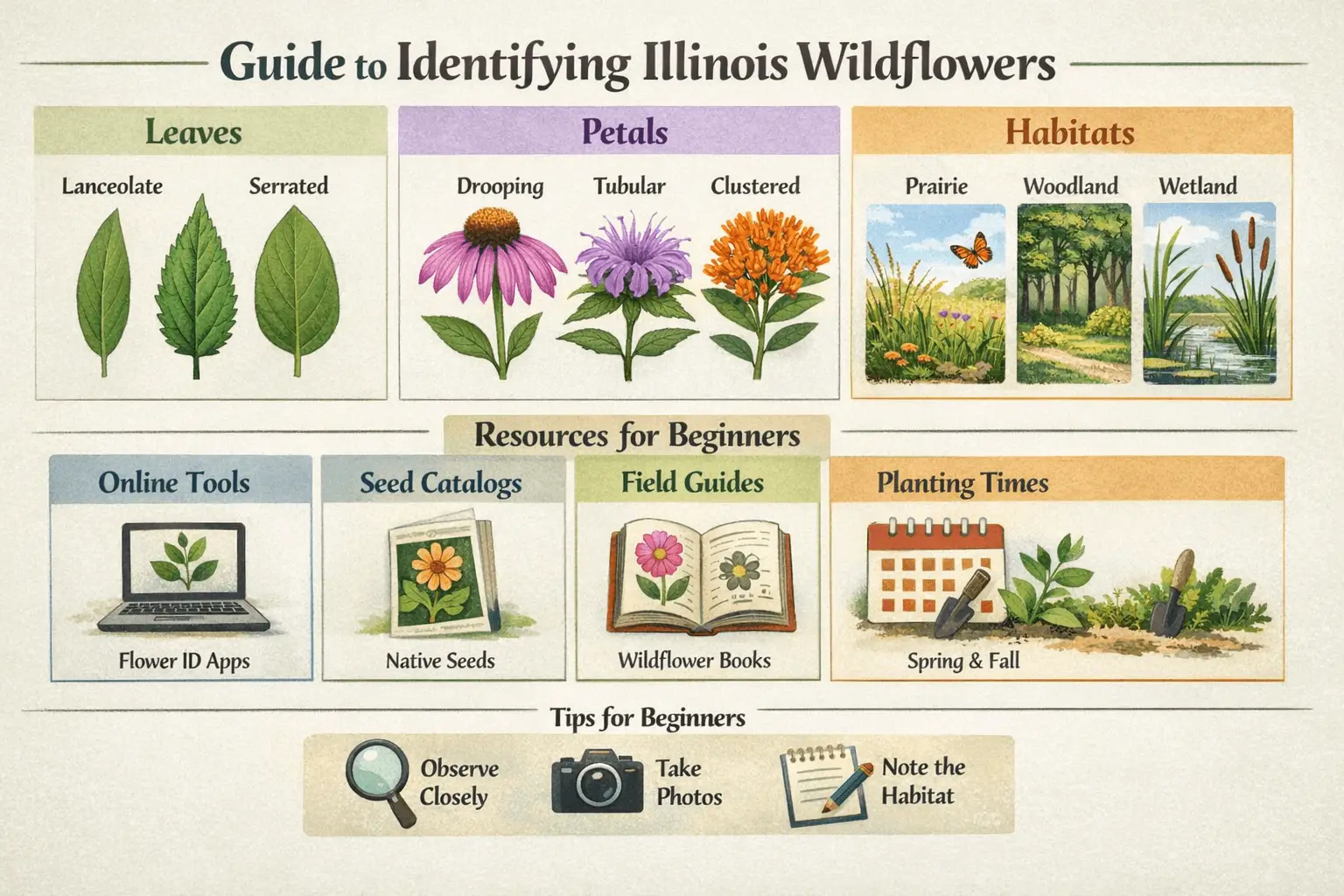
Identifying Illinois wildflowers involves observing leaf patterns, flower structure, bloom season, and habitat. Online tools, seed catalogs, and field guides provide images and descriptions. Resources like Illinois wildflowers identification guides and native plant databases allow gardeners to compare visual traits accurately. Recognizing wildflowers native to Illinois helps prevent accidental introduction of invasive species and ensures ecological balance.
Illinois Flower Varieties and Seed Resources
Illinois native plant seeds can be sourced from local nurseries and online suppliers. Seed mixes and native wildflower seeds Illinois are available for prairie restoration and gardens. Knowing when to plant wildflower seeds in Illinois, typically in early spring or late fall, ensures successful germination. Proper care includes soil preparation, appropriate spacing, and seasonal watering. Free Illinois wildflower seeds are sometimes offered through conservation programs, supporting the growth of native flora.
Problems and Solutions in Growing Illinois Flowers
Common challenges in growing Illinois flowers include yellowing leaves, pest infestations, improper soil pH, and overwatering. Yellowing leaves may indicate nutrient deficiencies, while pests like aphids can damage perennials. Addressing soil health through composting and pH adjustments improves plant resilience. Proper watering schedules and mulching prevent overwatering and maintain soil moisture. These solutions are effective for native perennials, wildflowers, and garden landscaping, ensuring long-term plant health and ecological benefits.
Differentiating Illinois Flowers
Comparing Wildflowers vs. Cultivated Landscaping Flowers
Illinois wild flowers and cultivated landscaping flowers differ in care, appearance, and ecological roles. Wildflowers native to Illinois often require minimal maintenance, support pollinators, and thrive in natural habitats. Common Illinois flowers in gardens may be hybrids or non-native species with higher aesthetic appeal but increased care needs. Understanding these differences helps gardeners select plants that balance beauty with ecological contribution.
Highlighting Rare or Unique Illinois Flowers
Illinois state flowers, like the violet (Viola sororia), symbolize regional flora. Illinois purple flowers and other region-specific wildflowers offer unique beauty and ecological importance. Highlighting rare species encourages conservation and educational awareness among gardeners, landscapers, and nature enthusiasts. The Illinois state flower, the violet (Viola sororia), is a prime example of a native species that thrives in both wild and cultivated settings (source).
Topical Cluster Connections
Illinois flowers connect to broader gardening and environmental topics such as indoor and outdoor plant care, pollinator gardens, and native prairie restoration. Integrating native northern Illinois plants and other native Illinois species into landscapes enhances ecological value, promotes pollinator populations, and supports sustainable gardening practices. Linking these topics provides comprehensive guidance for gardeners and environmental stewards.
Conclusion
Illinois flowers are an essential part of the state’s natural and cultivated landscapes. Their diversity spans native wildflowers, perennials, and ornamental garden varieties, each with ecological and aesthetic significance. Understanding native versus non-native species, seasonal and regional considerations, and proper identification ensures thriving gardens. By selecting appropriate plants, supporting pollinators, and following sustainable practices, gardeners and nature enthusiasts can maintain vibrant, healthy landscapes throughout Illinois.
FAQs
- What are the most common native Illinois flowers?
Common native Illinois flowers include purple coneflower (Echinacea purpurea), black-eyed Susan (Rudbeckia hirta), wild bergamot (Monarda fistulosa), and butterfly milkweed (Asclepias tuberosa). - How can I identify Illinois wildflowers in my area?
Identify Illinois wildflowers by observing leaf shape, flower color, bloom season, and habitat. Field guides, online databases, and native plant picture catalogs provide visual references for accurate identification. - Which perennial flowers are native to Illinois and easy to grow?
Easy-to-grow perennial flowers native to Illinois include purple coneflower, black-eyed Susan, wild bergamot, and blue wild indigo. These plants thrive in local soils and require minimal maintenance. - When is the best time to plant wildflower seeds in Illinois?
The best time to plant wildflower seeds in Illinois is early spring or late fall. Planting during these periods ensures proper germination and growth before extreme seasonal conditions. - How do I incorporate native Illinois flowers into landscaping for pollinators?
Select pollinator-friendly native Illinois plants such as coneflowers, milkweed, and prairie grasses. Plant in sunny areas, provide diverse bloom times, and avoid chemical pesticides to support bees, butterflies, and other pollinators. - What are the ecological benefits of planting Illinois native plants?
Illinois native plants enhance soil health, support pollinators, increase biodiversity, and require less water and chemical inputs compared to non-native species, promoting sustainable gardening and ecological balance. - How can I differentiate Illinois prairie flowers from garden cultivars?
Illinois prairie flowers are typically low-maintenance, adapted to local soil and climate, and support wildlife. Garden cultivars may have hybrid traits, larger blooms, and require additional care but offer aesthetic variety.