Introduction
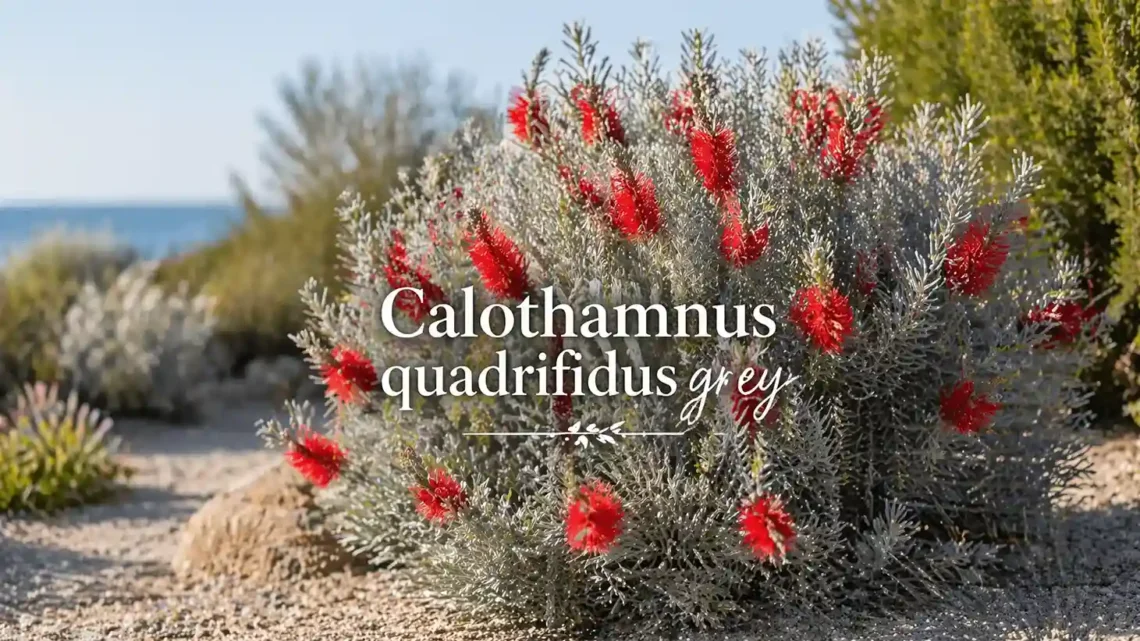
Calothamnus quadrifidus grey is a distinctive Australian native shrub known for its soft grey foliage and striking one-sided red flowers. This plant, often referred to as the one-sided bottlebrush, stands out for its drought tolerance, ornamental appeal, and adaptability to coastal and dry climates.
The main keyword, calothamnus quadrifidus grey, refers to a specific grey-leafed form of the species that is widely valued in landscaping. Its unique texture and resilience make it suitable for low-maintenance gardens. This guide explains what makes the calothamnus quadrifidus grey form unique, how it grows, and how to care for it successfully in different environments.
Quick Summary
- Calothamnus quadrifidus grey is a drought-tolerant shrub with silvery-grey leaves and red brush-like flowers
- Known as the one-sided bottlebrush due to its distinctive flower arrangement
- Thrives in full sun, well-drained soil, and low-water conditions
- Ideal for coastal gardens, xeriscaping, and native plant landscaping
What Is Calothamnus quadrifidus Grey?
Definition and Plant Identity
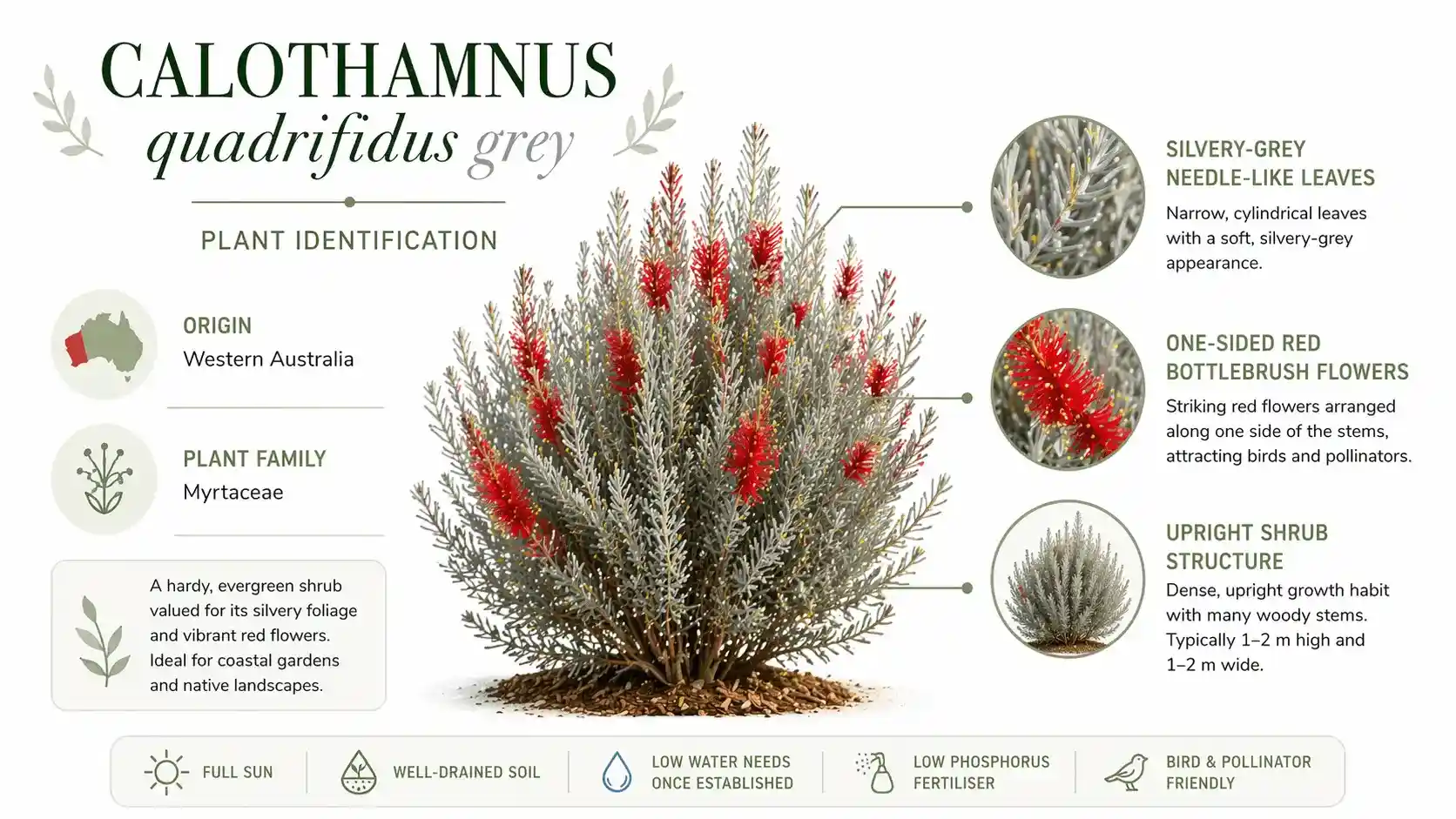
Calothamnus quadrifidus grey is a cultivated form of Calothamnus quadrifidus, a species in the Myrtaceae family, native to Western Australia. It is commonly called the one-sided bottlebrush due to its flowers forming along one side of the stem. The grey form differs from standard varieties by its silvery foliage, which enhances its ornamental value. This variation is selected for landscaping due to its softer visual texture and drought resilience. Botanically, it belongs to the Myrtaceae family, a group of flowering plants that includes many aromatic and drought-tolerant species.
Calothamnus quadrifidus is often compared to other bottlebrush-style plants, including dwarf varieties like Dwarf Bottlebrush, which share similar flower structures but differ in size and growth habit.
Key Characteristics of the Grey Form
The defining feature of calothamnus quadrifidus grey is its silvery-grey foliage, often described as soft and needle-like. The leaves create a muted backdrop that highlights the plant’s vibrant red flowers.
Key characteristics include:
- Grey or silvery foliage (calothamnus quadrifidus grey leaf)
- Bright red, brush-like flowers aligned on one side of stems
- Textured, airy appearance in garden design
- More subtle color palette compared to green-leafed varieties
Botanical Features and Plant Structure
Leaves, Flowers, and Growth Habit
Calothamnus quadrifidus grey has fine, needle-like leaves adapted to reduce water loss, making it suitable for dry environments. The flowers are typically red and arranged in a distinctive one-sided pattern along the stems.
The plant generally grows as an upright shrub, although some related forms may spread or remain compact.
Table: Key Botanical Traits
| Feature | Description |
| Leaf color & texture | Silvery-grey, needle-like |
| Flower type | One-sided brush, typically red |
| Growth habit | Upright shrub |
| Climate tolerance | Drought-tolerant, coastal adaptable |
| Native habitat | Western Australia |
Size, Height, and Growth Rate
Mature Size and Growth Expectations
Calothamnus quadrifidus grey typically grows into a medium-sized shrub. It generally reaches:
- Height: 1.5 to 3 meters
- Spread: 1 to 2 meters
It is primarily an outdoor plant and not suited for indoor growth due to its sunlight and airflow requirements.
Growth Rate and Seasonal Development
This plant has a moderate growth rate under suitable conditions. Flowering usually occurs seasonally, often in spring, with occasional blooms at other times depending on climate.
Growth is influenced by:
- Sunlight exposure
- Soil drainage
- Water availability
Ideal Growing Conditions
Light, Soil, and Climate Requirements
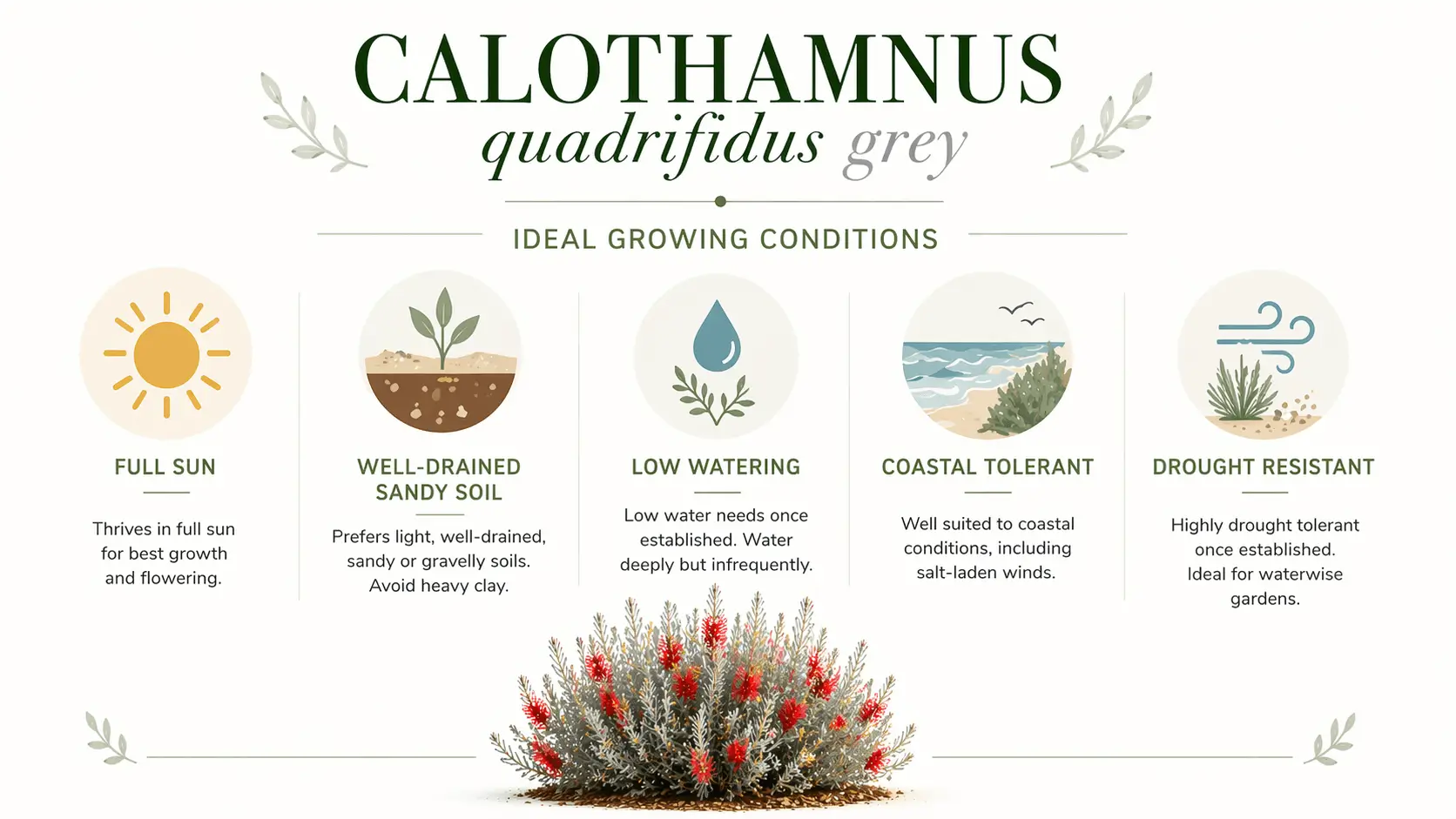
Calothamnus quadrifidus grey thrives best in full sun and well-drained soil. It is highly adapted to sandy or loamy soils and performs well in coastal environments.
Ideal conditions include:
- Full sun exposure
- Free-draining sandy or loamy soil
- Low humidity environments
- Drought-tolerant settings
Similar to other coastal natives such as Coastal Rosemary, this plant thrives in sandy soils and windy seaside environments.
Environmental Limitations
This plant does not tolerate poor drainage or heavy clay soils. Waterlogging can quickly lead to root stress.
Limitations include:
- Sensitivity to frost in colder regions
- Poor performance in compacted or wet soils
- Need for good air circulation to prevent stress
Calothamnus quadrifidus Grey Care Guide
Watering, Feeding, and General Care
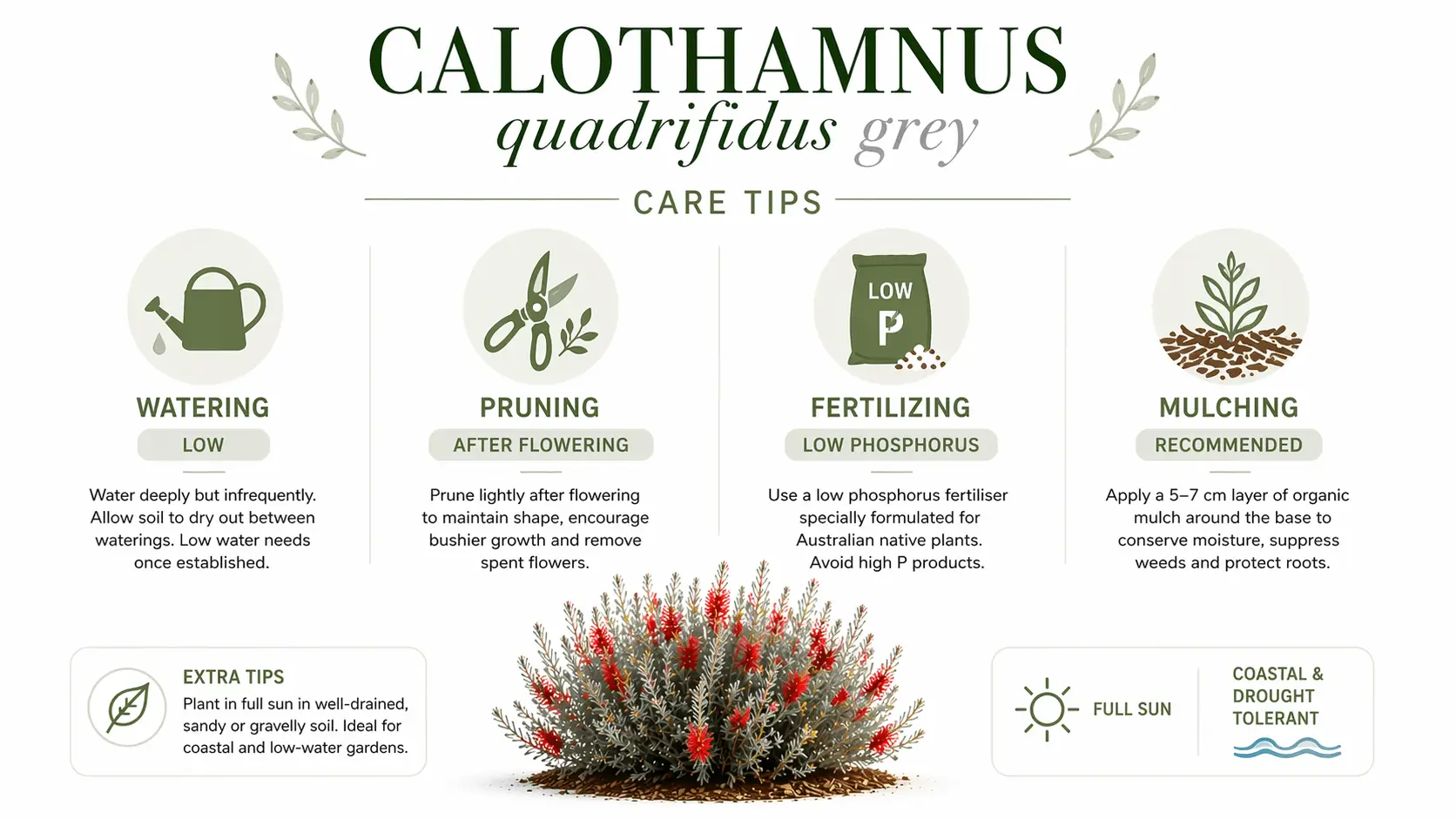
Calothamnus quadrifidus grey requires minimal watering once established. Overwatering is one of the most common mistakes.
Care basics:
- Water lightly and infrequently
- Use low-phosphorus fertilizers suitable for Australian natives
- Apply mulch to retain soil moisture and regulate temperature
Pruning and Maintenance
Pruning should be done after flowering to maintain shape and encourage new growth.
Best practices:
- Remove dead or woody stems
- Lightly shape the plant rather than heavy cutting
- Avoid pruning during active flowering
Common Problems and Solutions (Problem-Solution Section)
Yellowing Leaves, Poor Growth, and Stress
Yellowing leaves are usually caused by overwatering or poor drainage. The first solution is to improve soil conditions and reduce watering frequency.
Common causes:
- Waterlogged soil
- Nutrient imbalance
- Insufficient sunlight
Solutions:
- Improve drainage
- Adjust watering schedule
- Ensure full sun exposure
Pest and Disease Issues
Calothamnus quadrifidus grey is generally hardy but may be affected by pests such as scale or mites.
Prevention and treatment:
- Inspect regularly for infestations
- Use appropriate horticultural oils if needed
- Maintain plant health to reduce susceptibility
How to Prevent Common Mistakes
Preventing issues is easier than correcting them. The most common mistakes involve watering and soil conditions.
Avoid:
- Overwatering
- Planting in heavy clay soil
- Shaded planting locations
Types and Variations of Calothamnus quadrifidus
Grey Form vs Other Varieties
The grey form differs from the standard green form primarily in foliage color. The silvery-grey leaves provide a softer aesthetic and improved contrast in landscaping.
Other variations may include differences in growth habit or flower color.
Comparison of Popular Variants
Common variants include:
- Prostrate form (ground cover)
- Dwarf form (compact shrub)
- Aurea or yellow-toned varieties
Comparison Table: Calothamnus quadrifidus Forms
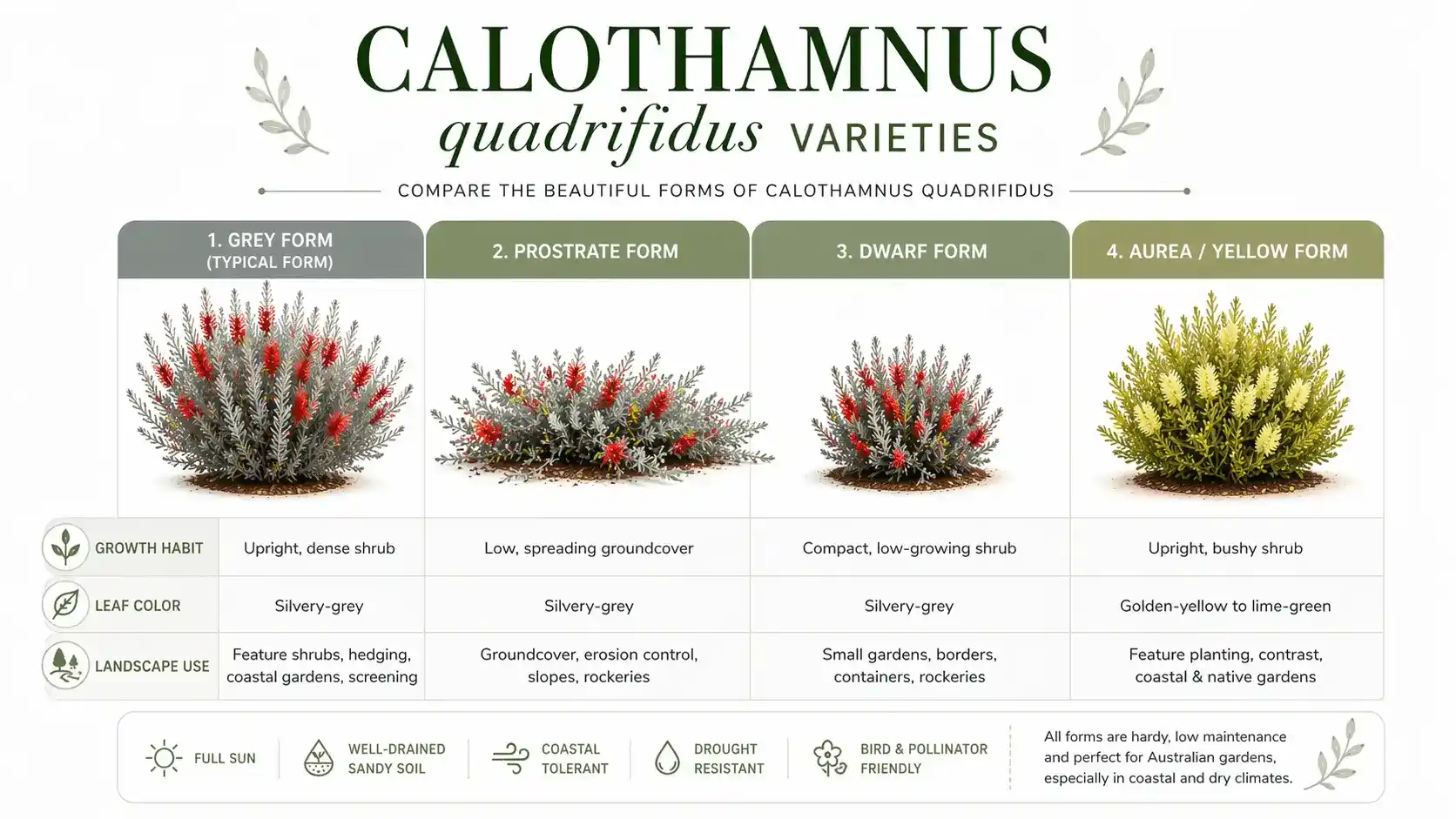
| Variety | Growth Habit | Leaf Color | Landscape Use |
| Grey Form | Upright shrub | Silvery grey | Feature plant |
| Prostrate | Ground cover | Green/grey | Erosion control |
| Dwarf | Compact | Green | Small gardens |
| Aurea/Yellow | Upright | Green | Color variation |
Landscaping and Garden Uses
Practical Uses in Garden Design
Calothamnus quadrifidus grey is widely used in coastal gardens and xeriscaping due to its drought tolerance. It functions well as a feature shrub or part of native plant landscapes.
Uses include:
- Coastal and seaside planting
- Low-maintenance garden design
- Native plant groupings
It fits perfectly within a modern Australian native garden design, where drought-tolerant plants are used to create sustainable and visually balanced landscapes.
Companion Planting and Design Ideas
This shrub pairs well with other drought-tolerant Australian natives and plants with contrasting green foliage.
Design ideas:
- Combine with grasses for texture contrast
- Use alongside other Myrtaceae species
- Create layered native garden beds
Beginner Tips and Growing Advice
What Most Guides Don’t Tell You
Successful growth depends more on drainage than watering frequency. Poor drainage is the primary cause of plant failure.
Important insights:
- Always prioritize well-drained soil
- Position the plant for maximum airflow
- Avoid overcrowding in garden beds
If you are exploring different plant types for your space, a broader plants for homes and gardens guide can help you understand how outdoor shrubs and indoor plants differ in care and placement.
Broader Gardening Context
Role in Native Gardening and Drought-Tolerant Landscapes
Calothamnus quadrifidus grey plays an important role in xeriscaping and sustainable gardening. Its drought tolerance reduces water usage while supporting biodiversity.
Benefits include:
- Attracting pollinators such as bees
- Supporting native ecosystems
- Reducing irrigation needs in dry climates
Conclusion
Calothamnus quadrifidus grey is a resilient and visually striking shrub that combines drought tolerance with unique ornamental appeal. Its silvery foliage and one-sided red flowers make it a standout feature in native and coastal landscapes.
Understanding its growth habits, care requirements, and environmental preferences ensures long-term success. With proper placement and minimal maintenance, this plant offers both aesthetic and ecological benefits.
FAQs
1. What makes Calothamnus quadrifidus grey different from other forms?
The grey form has silvery foliage, which provides a softer and more decorative appearance compared to standard green varieties.
2. How big does Calothamnus quadrifidus grey grow?
It typically grows to about 1.5 to 3 meters in height with a moderate spread, depending on environmental conditions.
3. How often should you water Calothamnus quadrifidus grey?
Water sparingly once established, as the plant prefers dry conditions and is highly drought-tolerant.
4. When is the best time to prune Calothamnus quadrifidus grey?
Prune after flowering to maintain its shape and encourage healthy new growth.
5. Can Calothamnus quadrifidus grey grow in coastal areas?
Yes, it is well-suited for coastal environments due to its tolerance for wind, salt exposure, and dry conditions.
6. Why are the leaves of Calothamnus quadrifidus turning yellow?
Yellowing is usually caused by overwatering or poor drainage and can be corrected by improving soil conditions.