Introduction
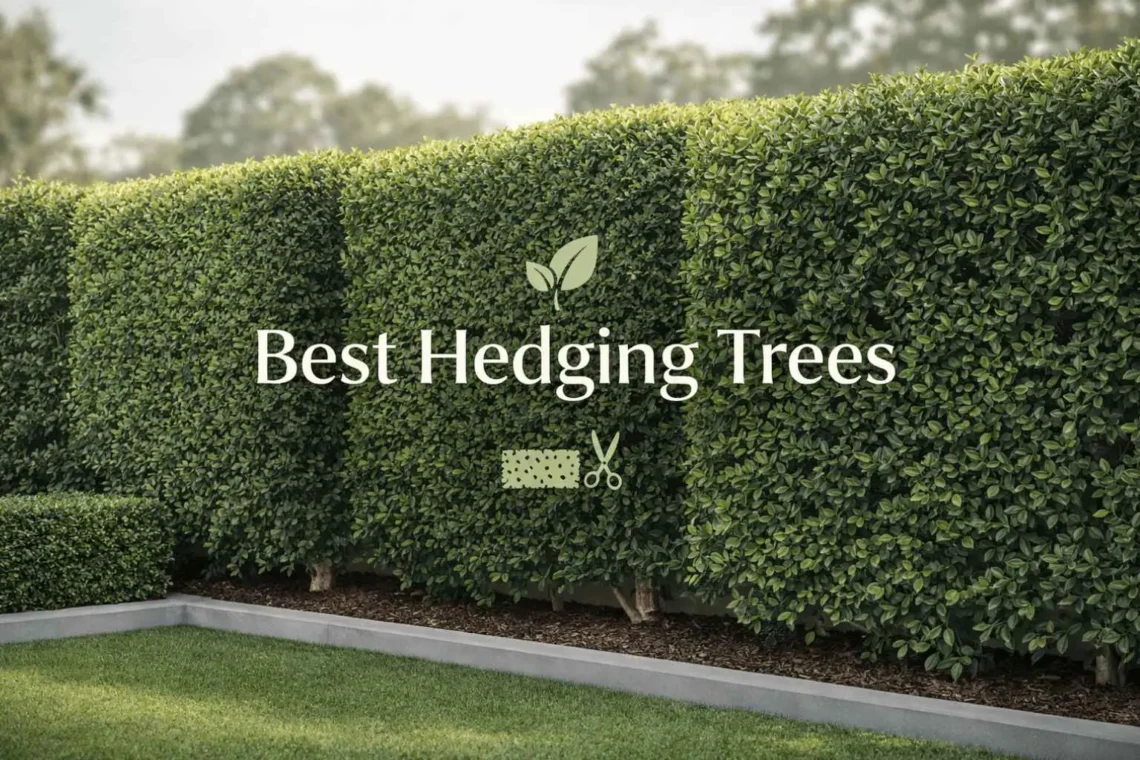
Best hedging trees are essential landscape plants used to form natural boundaries, privacy screens, and structured garden edges. These trees and shrubs are chosen based on growth rate, height, density, and climate adaptability—especially in regions like Australia, where evergreen and native species dominate. Unlike fences, hedging plants provide a living barrier that evolves over time while enhancing environmental quality. They serve both functional and aesthetic roles, from blocking unwanted views to improving outdoor design with greenery or seasonal flowers. Selecting the right hedge depends on purpose, maintenance level, and environmental conditions.
Quick Summary
- Best hedging trees create privacy, reduce wind, and structure outdoor spaces
- Evergreen and fast-growing hedge plants are preferred for consistent coverage
- Australian native screening plants like lilly pilly and viburnum are widely used
- Selection depends on height, growth speed, sunlight, and maintenance needs
What Are Hedging Trees and How Do They Work?
Hedging trees are dense-growing plants used to form continuous barriers for privacy, protection, or decoration. Hedge plants, hedging plants, and plants for a hedge all refer to species selected for their ability to grow closely together and create thick foliage coverage.
The key difference between trees and shrubs in hedging lies in size and structure. Trees typically grow taller and may require shaping, while shrubs are naturally bushy and easier to maintain as compact hedges. Hedging trees are dense-growing plants used to form continuous barriers for privacy, protection, or decoration, commonly referred to as a Hedge (gardening).
In Australia, screening shrubs and screening plants are commonly used in residential landscaping to create privacy and reduce exposure to wind and noise.
Key Points:
- Dense foliage forms a natural visual and physical barrier
- Can be trimmed into formal shapes or left informal
- Used for privacy, windbreaks, and decorative garden borders
Types of Best Hedging Trees Based on Function
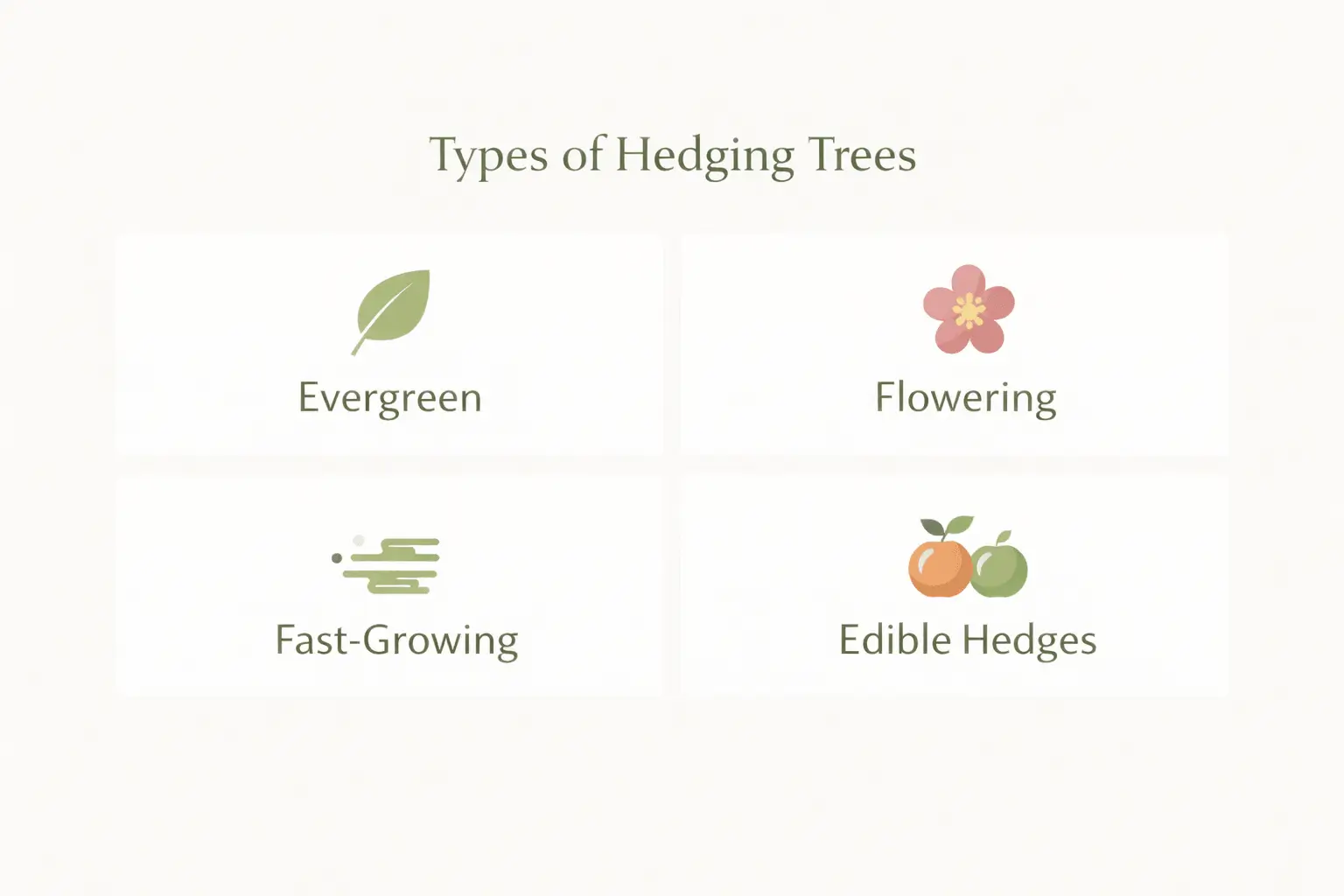
Evergreen Hedging Trees (Year-Round Coverage)
Evergreen hedging trees maintain foliage throughout the year, making them ideal for consistent privacy and screening. These are the best evergreen hedging trees for uninterrupted coverage.
- Minimal seasonal leaf drop
- Reliable for long-term privacy hedges
- Common choices include lilly pilly and viburnum
If you’re considering dense evergreen screening options, this breakdown of Carolina Cherry Laurel Hedge highlights another reliable hedge choice.
Flowering Hedge Plants (Aesthetic Appeal)
Flowering hedge plants provide both structure and visual interest through seasonal blooms. Flowering hedges in Australia are often used in decorative landscapes.
- Adds color and biodiversity to gardens
- Attracts pollinators such as bees
- May offer less dense coverage compared to evergreen hedges
Fast-Growing Hedge Plants (Quick Privacy)
Fast-growing hedging plants in Australia are ideal for quickly establishing a dense screen. These are the fastest growing hedge plants for rapid results.
- Suitable for new gardens or urgent privacy needs
- Requires regular pruning to control growth
- Examples include lilly pilly and viburnum
Edible & Functional Hedge Trees
Some hedging trees serve dual purposes by producing edible yields. These include fruit and olive trees used for hedging.
- Provide both privacy and food production
- Require more maintenance than ornamental hedges
- Olive trees are popular evergreen edible hedge options
Best Hedging Trees in Australia (Climate-Specific Guide)
Popular Australian Hedging Plants
In Australia, certain hedge plants dominate due to climate compatibility and adaptability.
- Lilly pilly hedge: Fast-growing, dense, evergreen
- Viburnum hedge: Tall, semi-evergreen, ideal for screening
- Native screening plants: Designed for local climates and conditions
For a deeper understanding of hedge performance and selection, explore different varieties in this guide on 7+ Essential Lilly Pilly Varieties for Hedges & Screening.
Why Australian Native Screening Plants Perform Better
Australian native screening plants perform better because they are naturally adapted to local environmental conditions.
- Require less water due to drought tolerance
- More resistant to pests and diseases
- Better suited to soil and temperature variations
For native hedge performance in dry climates, Dodonaea Viscosa Hedge is a strong example of a resilient screening plant.
Comparison of Popular Hedging Trees
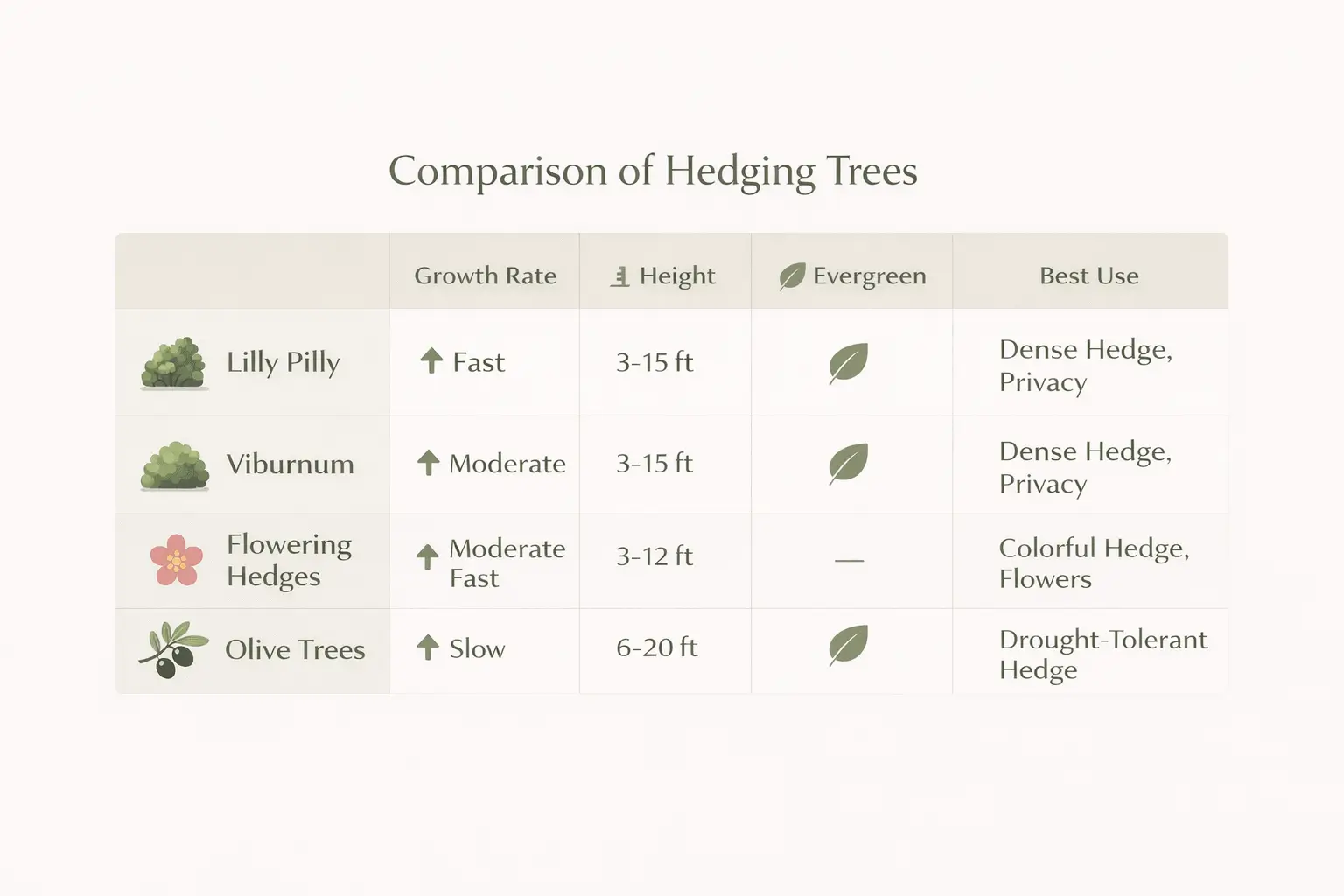
| Plant Type | Growth Rate | Height | Evergreen | Best Use Case |
| Lilly Pilly | Fast | Medium–Tall | Yes | Privacy hedge |
| Viburnum Hedge | Fast | Tall | Semi-evergreen | Screening |
| Flowering Hedge Plants | Moderate | Varies | Mixed | Decorative |
| Olive Trees | Slow–Moderate | Medium | Evergreen | Edible hedge |
Choosing the Right Hedging Trees for Your Space
The best hedging plants depend on environmental conditions and design goals. Good hedging trees should match your space, climate, and maintenance preferences. If you’re building a complete plant environment indoors and outdoors, this Guide to House Plants helps you balance interior greenery with your outdoor hedge design.
Key Considerations:
- Height requirements (small vs tall hedging trees)
- Sunlight exposure (full sun vs partial shade)
- Soil quality and climate compatibility
- Maintenance level (pruning frequency and care)
You can also explore broader options in this guide to 6+ Smart Australian Native Screening Trees for Privacy for climate-adapted screening solutions.
Best Hedging Plants for Shade and Difficult Conditions
Hedging plants for shade must tolerate lower light levels and slower growth conditions. Shade-tolerant hedging plants in Australia are suitable for areas under trees or near walls.
Key Points:
- Slower growth compared to sun-loving species
- Require well-drained soil to prevent root issues
- Ideal for shaded garden sections and enclosed spaces
Fast Growing Hedging Trees — How to Get Quick Results
Fast-growing hedging trees can establish quickly when proper conditions are provided. Growth speed depends on water, soil quality, and spacing.
Key Points:
- Regular watering supports faster establishment
- Proper spacing ensures dense hedge formation
- Pruning early encourages bushier growth
Planting and Growing a Hedge (Step-by-Step Process)
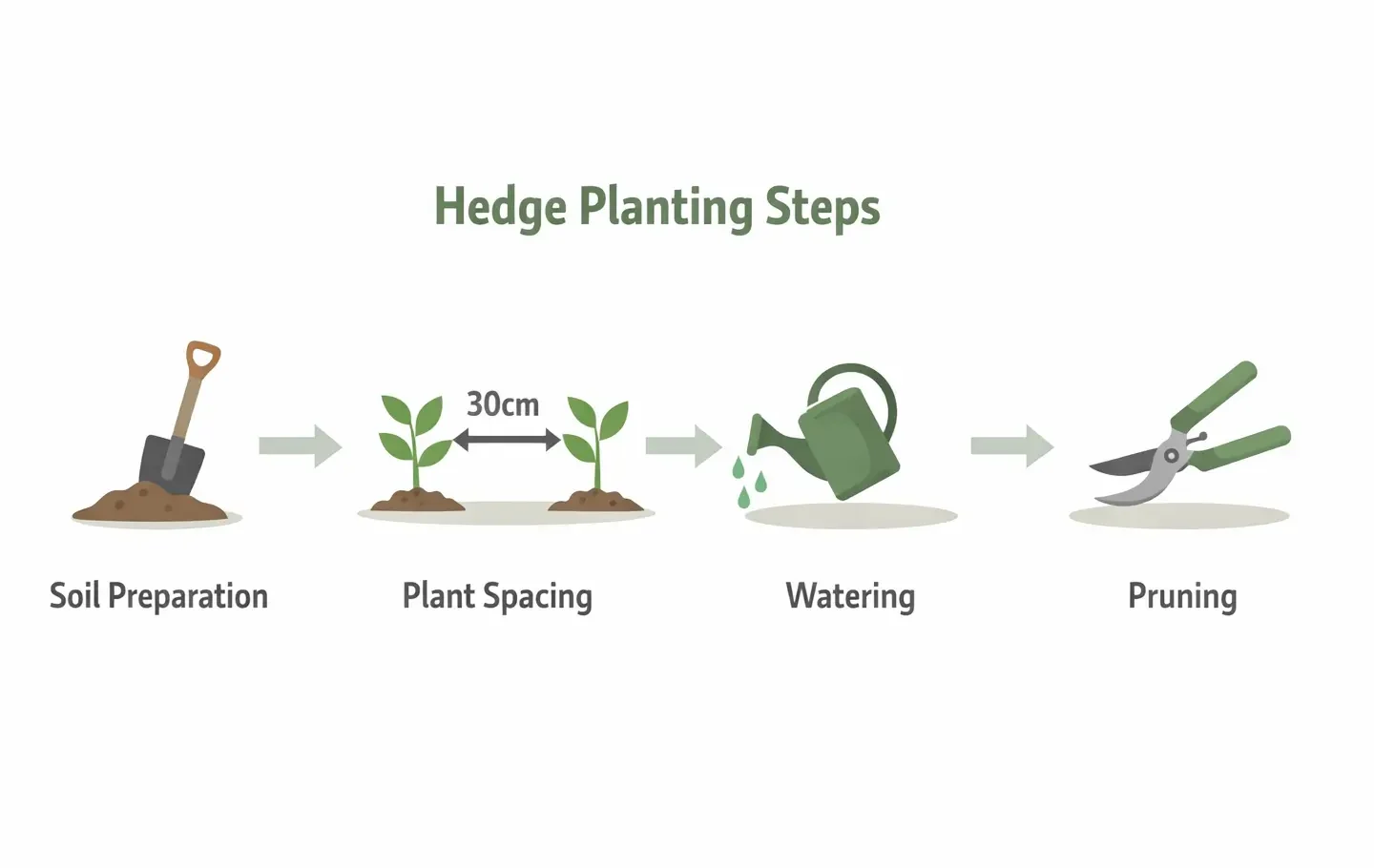
Establishing a hedge requires correct planting techniques and early care.
Steps:
- Prepare the soil with organic matter
- Space plants evenly based on mature width
- Water consistently during early growth
- Begin light pruning to encourage branching
Growth Rate, Size, and Maintenance of Hedging Trees
Hedging trees vary in growth rate and mature size depending on species and conditions. For example, lilly pilly growth is typically fast, and hedge height can range from small shrubs to tall screening trees.
Key Points:
- Mature height and spread vary by species
- Growth peaks during warmer seasons
- Regular pruning maintains shape and density
Common Problems with Hedging Trees and How to Fix Them
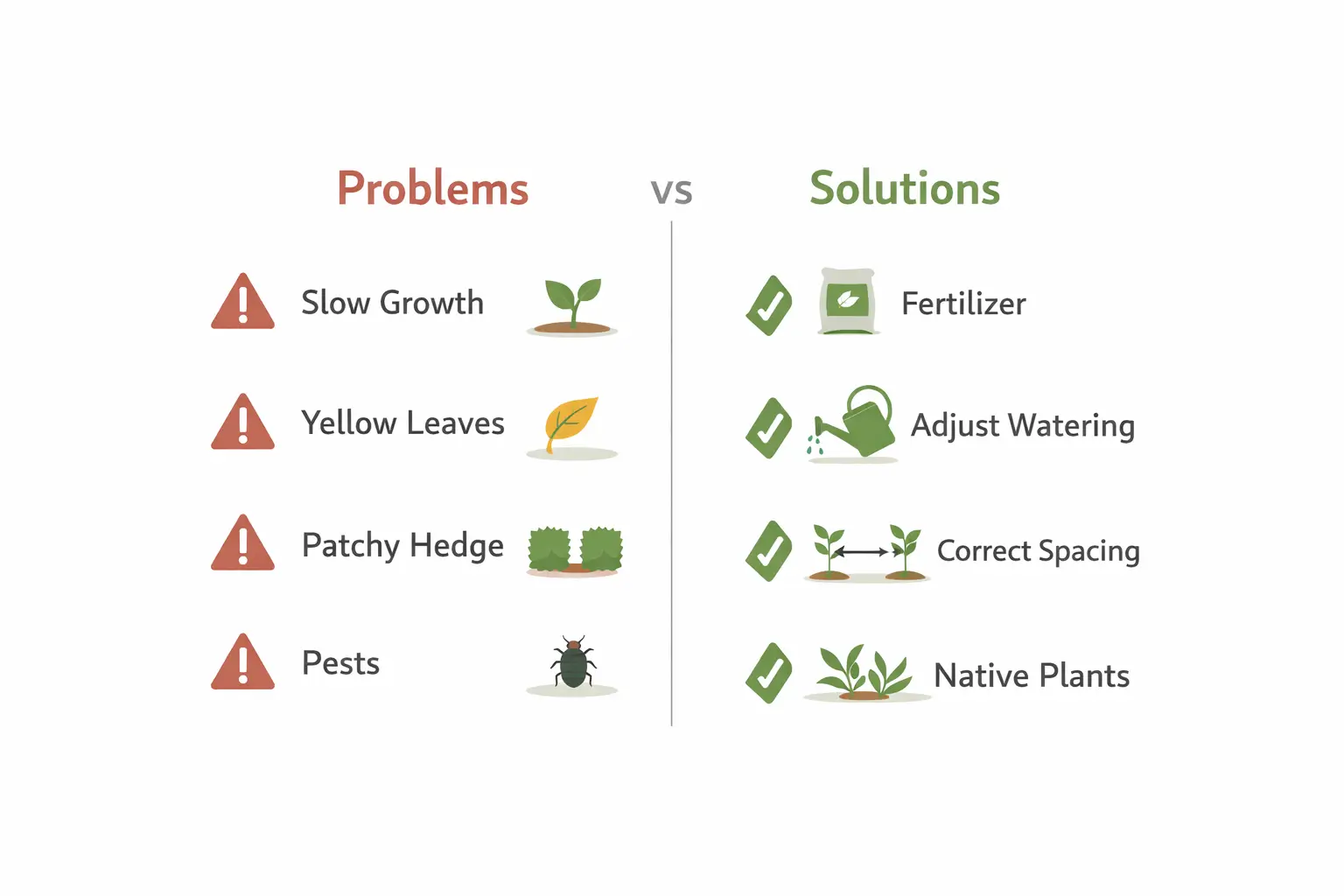
Hedging trees may encounter growth and health issues, but most problems are manageable with proper care.
Problems & Solutions:
- Slow growth → Improve soil quality and add fertilizer
- Yellow leaves → Adjust watering and check nutrients
- Patchy hedge → Correct spacing and replant gaps
- Pest issues → Choose resistant native plants
Beginner Mistakes to Avoid When Growing Hedging Plants
Avoiding common mistakes improves hedge success and longevity.
Common Mistakes:
- Choosing unsuitable plants for the climate
- Incorrect spacing between plants
- Delaying pruning during early growth stages
- Using non-evergreen plants for privacy hedges
Where Hedging Trees Fit in Garden Design
Hedging trees play a central role in landscaping and outdoor design by defining space and improving structure.
Key Uses:
- Privacy walls for residential areas
- Garden borders and pathways
- Windbreaks in exposed locations
- Wildlife habitats for birds and insects
Conclusion
Best hedging trees are essential for creating structured, private, and visually appealing outdoor spaces. By selecting the right type—whether evergreen, fast-growing, or flowering—you can align your hedge with climate conditions, maintenance preferences, and design goals. In Australia, adaptable and native options such as lilly pilly and viburnum remain reliable choices for long-term performance and sustainability.
FAQs
1. What are the best hedging trees for privacy?
Evergreen and fast-growing hedge plants like lilly pilly and viburnum are ideal because they provide dense, year-round coverage and effective screening.
2. Which hedging plants grow the fastest in Australia?
Fast-growing hedging plants such as lilly pilly and viburnum are among the quickest options for establishing a full, dense hedge.
3. What is the best hedge plant for shade?
Shade-tolerant hedging plants include certain native shrubs and viburnum varieties that can adapt well to low-light environments.
4. How tall do lilly pilly hedges grow?
Lilly pilly hedge height varies by variety but can range from compact shrubs to tall trees exceeding several meters with proper growth conditions.
5. Are flowering hedges suitable for privacy?
Yes, flowering hedge plants can provide privacy, but they are often less dense than evergreen hedges and may offer seasonal coverage instead of year-round screening.