Introduction
Banksia oblongifolia, commonly known as the fern-leaved banksia or dwarf banksia, is a native Australian shrub valued for its distinctive foliage and wildlife-friendly flowers. It belongs to the Proteaceae family and is recognized by its deeply lobed, fern-like leaves and cylindrical flower spikes. Native to eastern Australia, this species thrives in sandy coastal environments and heathlands where many other plants struggle. This guide explains what Banksia oblongifolia is, how to identify it, how it grows, how to care for it successfully, and how it compares with other popular Banksia species.
While Banksia oblongifolia is primarily grown outdoors, it is one of many valuable landscape species featured in our comprehensive Plants for Homes and Gardens Guide.
Quick Summary
- Banksia oblongifolia, commonly called the fern-leaved banksia or dwarf banksia, is a low-growing native Australian shrub in the Proteaceae family.
- It produces cylindrical yellow to greenish flower spikes that attract birds, insects, and other pollinators.
- The species grows best in sandy, well-drained, low-phosphorus soils.
- It is naturally adapted to coastal heathlands and wallum environments in eastern Australia.
- Gardeners value it for its compact growth habit, low maintenance requirements, and ecological benefits.
What Is Banksia oblongifolia?
Banksia oblongifolia is a flowering shrub within the genus Banksia and the Proteaceae family. It is native to eastern Australia, particularly coastal regions of Queensland and New South Wales. The plant is commonly called fern-leaved banksia because its deeply divided leaves resemble fern fronds. It is also known as dwarf banksia due to its relatively compact growth habit compared to many larger Banksia species. In the wild, it grows in coastal heathlands, wallum scrub, and sandy environments where drainage is excellent and nutrient levels are naturally low. These habitats are important components of Australian native flora and heathland ecology.
Banksia oblongifolia belongs to the Banksia genus, a group of flowering plants native to Australia that are widely recognized for their distinctive flower spikes and ecological importance.
Banksia is one of Australia’s most iconic plant genera, containing approximately 170 species. Many are valued for their striking flowers, wildlife value, and adaptability to challenging growing conditions.
Banksia oblongifolia is just one member of a diverse group of Australian species; explore other popular varieties in our guide to 7+ Essential Banksia Tree Varieties: Types, Size & Colors.
Banksia oblongifolia Identification — Leaves, Flowers & Key Features
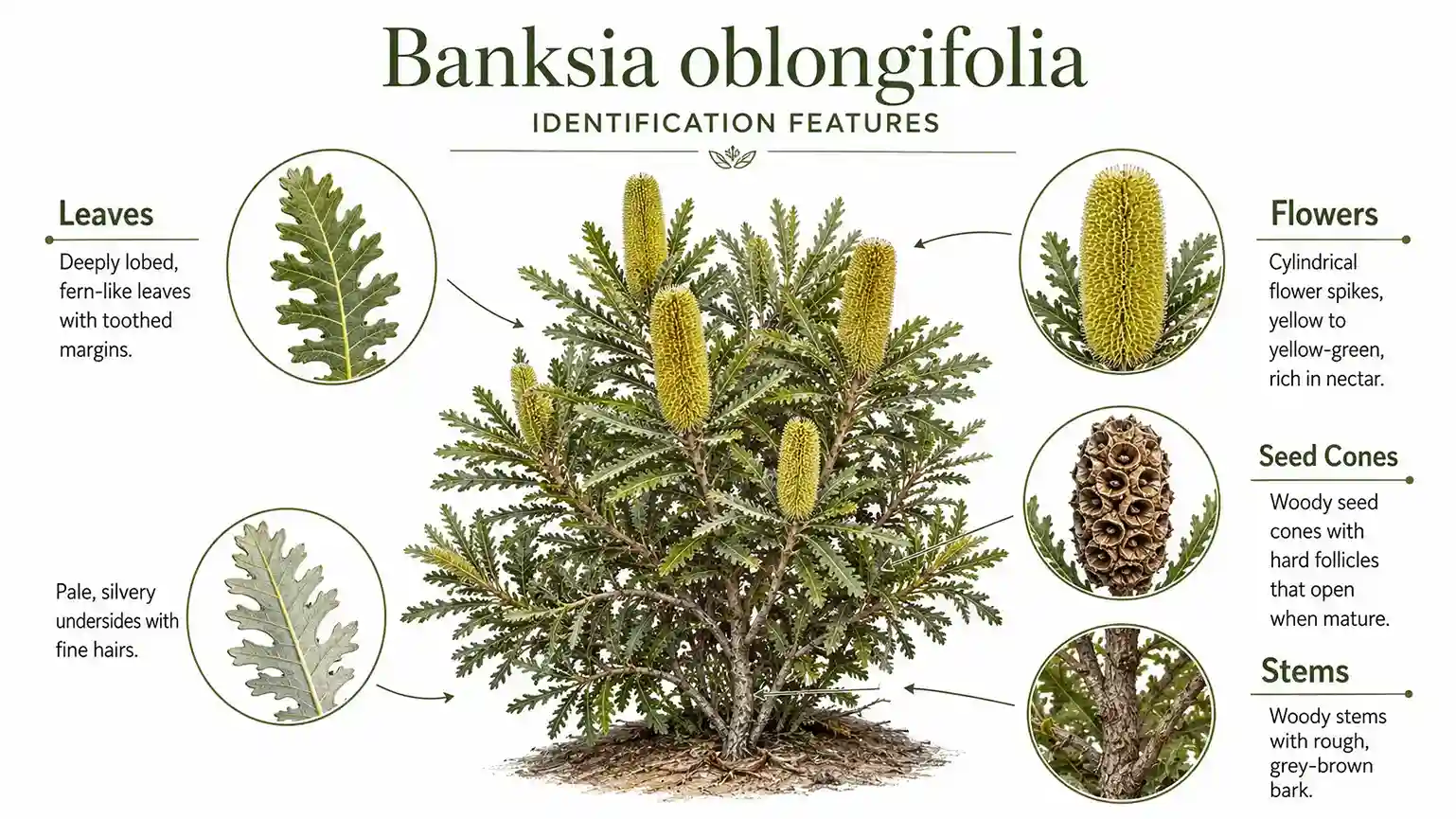
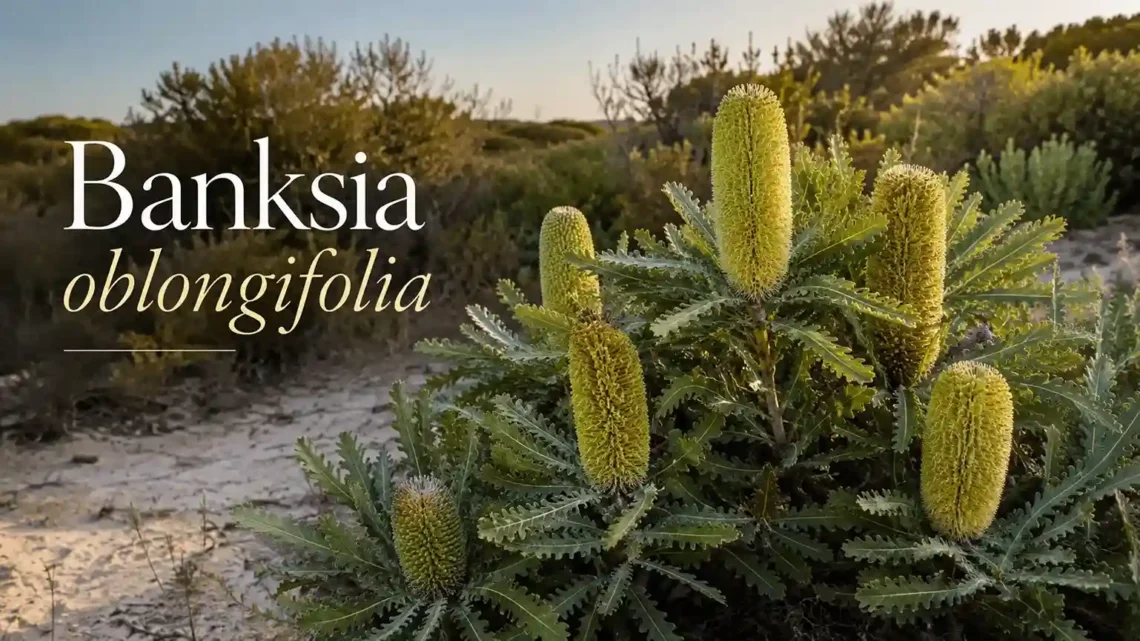
Banksia oblongifolia is most easily identified by its unusual fern-like foliage. The leaves are elongated and deeply lobed, creating a distinctive texture rarely seen in other Banksia species.
The flower spikes are cylindrical and brush-like, typically appearing in shades of yellow to pale green. These blooms contain numerous nectar-rich flowers that attract birds and insects.
After flowering, the plant develops woody cones containing follicles that may hold seeds for extended periods. This cone structure is a characteristic feature shared by many Banksia species.
The stems are woody and support a dense branching structure, while the bark is generally grey to brown and relatively rough with age.
Banksia oblongifolia Leaves — What Makes Them Distinctive
The leaves feature deep, regular lobes along their margins, giving them a fern-like appearance. This characteristic is the most important identification feature.
Additional leaf characteristics include:
- Deeply divided margins
- Narrow, elongated leaf shape
- Pale or silvery undersides
- Dense arrangement along stems
These leaves help distinguish the species from:
- Banksia serrata, which has serrated rather than deeply lobed leaves
- Banksia ericifolia, which has fine, needle-like foliage
The distinctive leaf shape also makes the species easier to identify using plant identification tools such as PlantNet.
Banksia oblongifolia Size — Height, Spread & Growth Habit
Banksia oblongifolia generally reaches between 0.5 and 2 meters in height, depending on environmental conditions and genetics. The plant often develops a spreading growth habit and may reach up to 2 meters in width. In exposed coastal locations, prostrate forms can occur, creating a low-growing ground cover effect. Most cultivated specimens develop as compact shrubs, while naturally occurring prostrate forms remain close to the ground.
If you’re planning its location in the landscape, it also helps to understand root behavior by reading Are Banksia Roots Invasive? 7+ Essential Facts to Know.
This species is not suitable as an indoor plant. It requires outdoor conditions, full sunlight, and excellent air circulation to thrive.
Factors influencing mature size include:
- Soil drainage
- Rainfall levels
- Sun exposure
- Coastal conditions
- Soil fertility
Banksia oblongifolia Growth Rate
Banksia oblongifolia is considered a moderate-growing shrub under suitable conditions.
Growth is typically strongest during spring and autumn when temperatures are mild and soil moisture is balanced. Established plants adapt well to nutrient-poor soils and do not require rich growing conditions.
Factors affecting growth rate include:
- Adequate sunlight
- Well-drained soil
- Proper watering during establishment
- Low-phosphorus growing conditions
Interestingly, overly fertile soils can reduce plant health. Rich soils and excessive fertiliser applications often cause more problems than naturally poor soils.
How to Grow Banksia oblongifolia — Full Care Guide
Soil Requirements
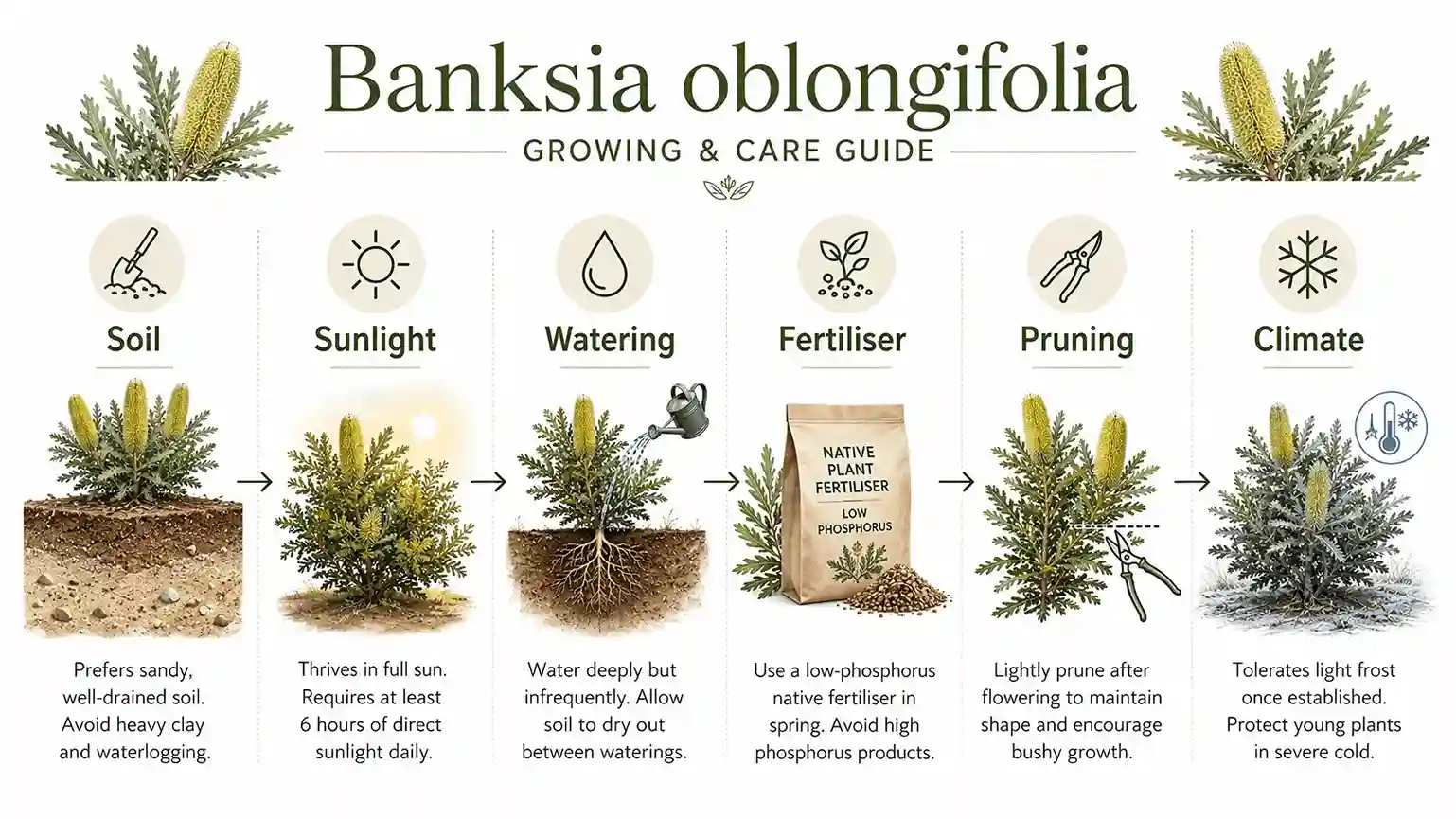
Banksia oblongifolia prefers sandy, well-drained soils with low phosphorus levels.
Avoid:
- Heavy clay soils
- Compacted ground
- Waterlogged locations
Phosphorus sensitivity is one of the most important care considerations. Excess phosphorus can severely damage or kill the plant.
Light Conditions
Full sun to light shade is ideal.
The best flowering occurs in full sun, where the plant receives at least six hours of direct sunlight daily. It also performs well in coastal and exposed positions.
Watering Requirements
Once established, Banksia oblongifolia is highly drought tolerant.
For best results:
- Water deeply but infrequently
- Allow soil to drain freely
- Reduce irrigation during wet periods
Overwatering is a common cause of root problems.
Fertilisation
Avoid standard garden fertilisers that contain high phosphorus levels.
Instead:
- Use fertilisers specifically formulated for Proteaceae plants
- Apply sparingly
- Use natural leaf litter mulch to improve soil health
Pruning
Light tip pruning after flowering helps maintain a compact shape.
Avoid severe pruning because the species does not respond well to aggressive cutbacks. Removing old flower cones is optional but can improve appearance.
Climate Tolerance
Banksia oblongifolia performs best in warm-temperate and subtropical climates.
It tolerates:
- Coastal exposure
- Salt-laden winds
- Mild frost
However, it is less suitable for humid tropical regions or cold alpine environments. Because it tolerates coastal exposure and strong winds, it pairs well with species featured in our 7+ Essential Wind Tolerant Trees Australia Guide.
Banksia oblongifolia Size & Growth at a Glance
| Feature | Detail |
| Common name | Fern-leaved banksia, dwarf banksia |
| Mature height | 0.5 m – 2 m |
| Mature spread | Up to 2 m |
| Growth rate | Moderate |
| Soil preference | Sandy, well-drained, low phosphorus |
| Sun requirements | Full sun to part shade |
| Drought tolerance | High once established |
| Frost tolerance | Mild frost only |
| Flower colour | Yellow to pale greenish-yellow |
| Wildlife value | High |
Banksia oblongifolia vs. Similar Banksia Species — Key Comparisons
Banksia oblongifolia vs. Banksia serrata (Saw Banksia / Old Man Banksia)
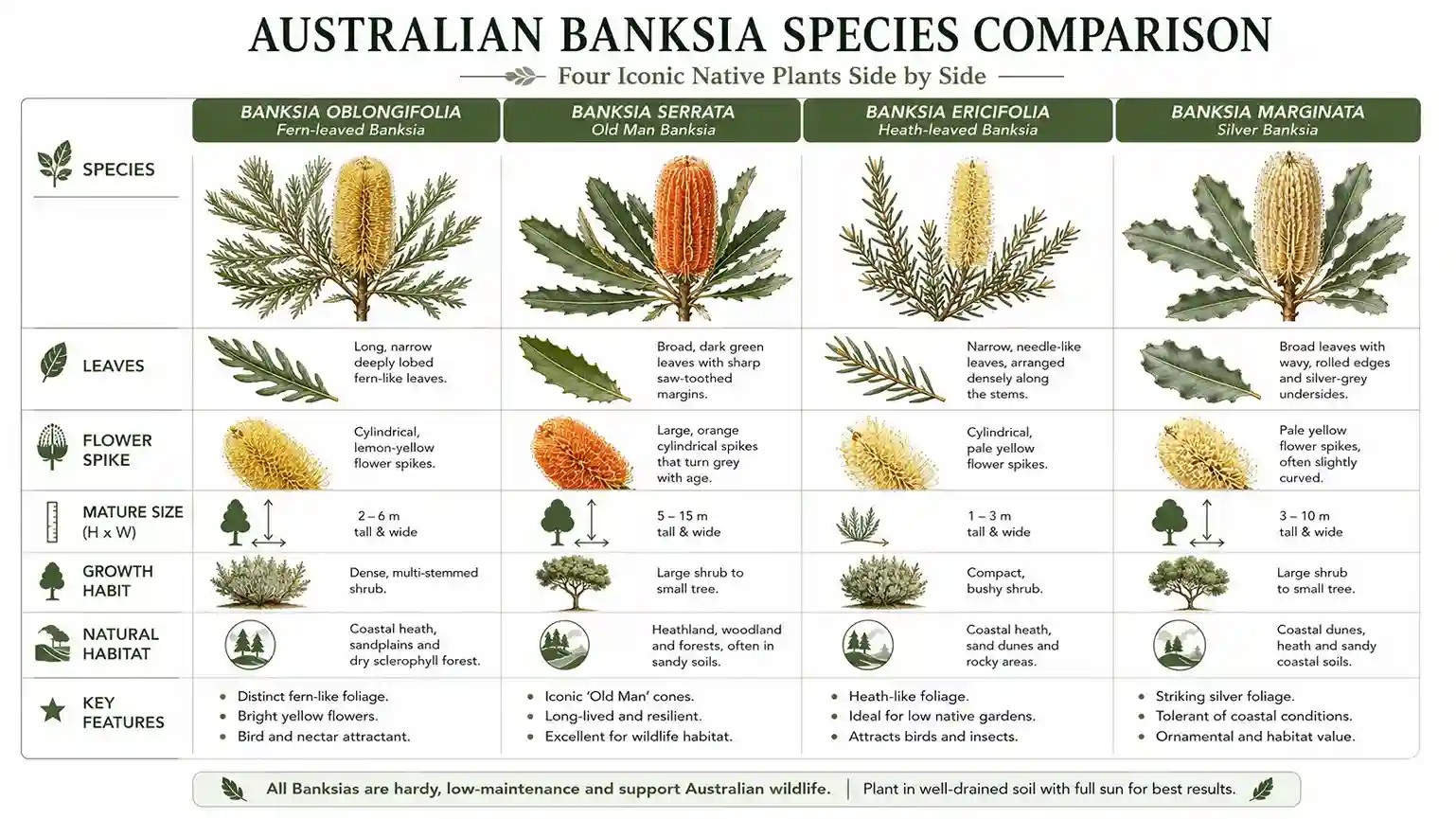
Banksia oblongifolia has deeply lobed fern-like leaves, while Banksia serrata has broad serrated leaves. Banksia serrata can develop into a large tree, whereas Banksia oblongifolia remains a compact shrub.
Banksia oblongifolia vs. Banksia ericifolia (Heath-Leaved Banksia)
Banksia ericifolia has narrow needle-like leaves and typically grows 2–3 meters or more in height. Banksia oblongifolia remains smaller and features deeply lobed foliage.
The dwarf cultivar ‘Little Eric’ belongs to Banksia ericifolia and should not be confused with Banksia oblongifolia.
Banksia oblongifolia vs. Banksia marginata (Silver Banksia)
Banksia marginata often has silver-white leaf undersides and can grow as a shrub or small tree. Banksia oblongifolia remains more compact and has distinct fern-like leaves.
Banksia oblongifolia vs. Banksia paludosa (Swamp Banksia)
Banksia paludosa tolerates wetter conditions and swampy habitats. Banksia oblongifolia requires better drainage and is less tolerant of prolonged soil saturation. Gardeners interested in compact coastal species may also enjoy learning about Coastal Cushion Banksia: 7+ Essential Care & Growth Tips.
| Species | Key Leaf Feature | Growth Habit | Preferred Habitat |
| B. oblongifolia | Deeply lobed | Compact shrub | Sandy heathlands |
| B. serrata | Serrated | Large shrub/tree | Coastal forests |
| B. ericifolia | Needle-like | Tall shrub | Heathlands |
| B. marginata | Smooth margins | Shrub/tree | Diverse habitats |
| B. paludosa | Narrow leaves | Shrub | Wet heathlands |
Banksia oblongifolia Varieties and Forms
Banksia oblongifolia displays natural variation throughout its range.
Some populations develop prostrate forms that spread horizontally and function as effective ground covers. Others grow as upright shrubs.
Unlike some Banksia species, Banksia oblongifolia is not widely represented by numerous named cultivars. However, confusion sometimes occurs because nursery labels may use the term “dwarf banksia” for unrelated dwarf cultivars such as Banksia ericifolia ‘Little Eric’ or dwarf forms of Banksia marginata.
Common Problems with Banksia oblongifolia — Troubleshooting Guide
Yellowing Leaves
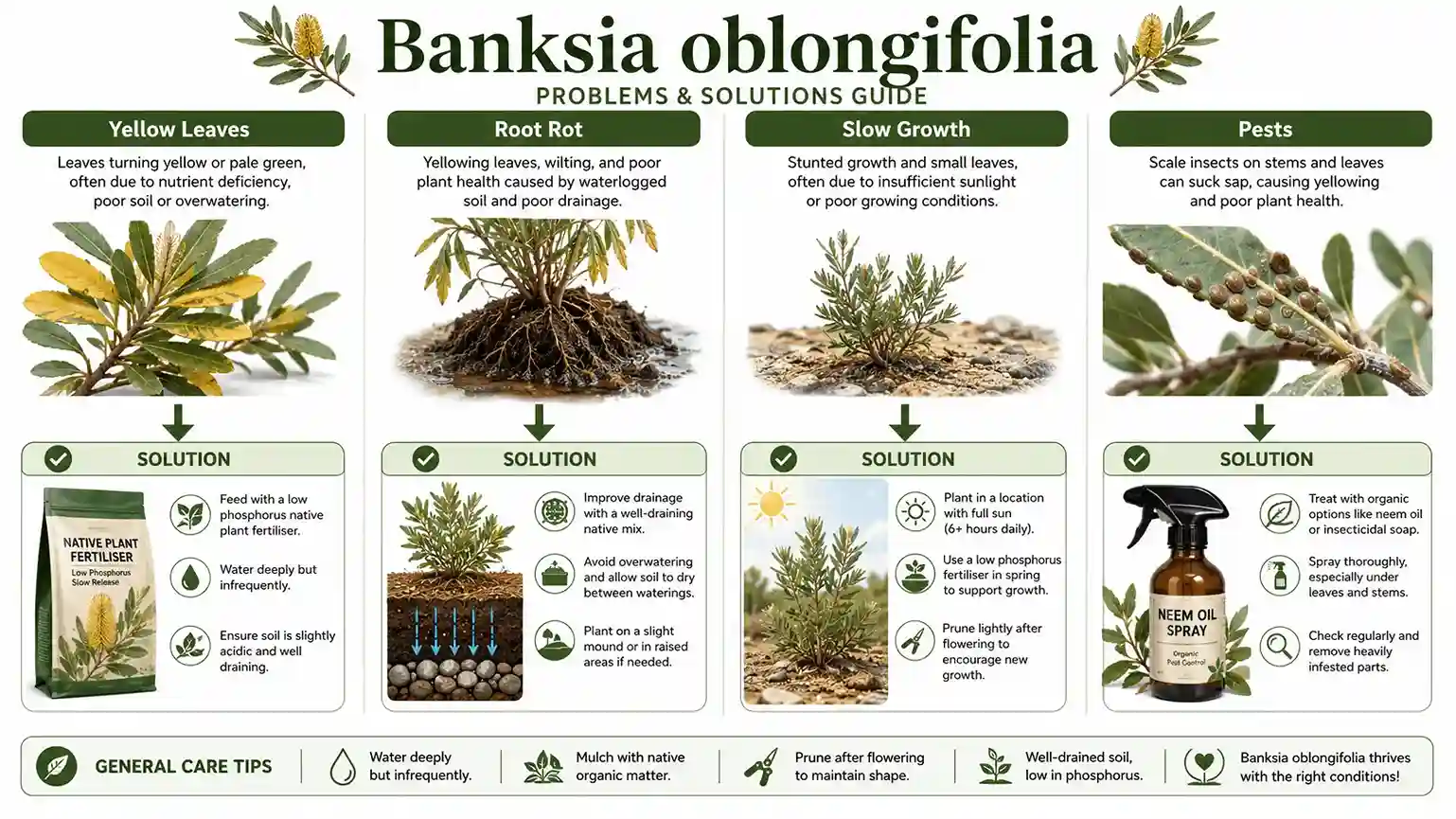
Yellowing leaves are often caused by phosphorus toxicity, poor drainage, or nutrient imbalances.
Solutions include:
- Removing inappropriate fertilisers
- Improving soil drainage
- Applying chelated iron if deficiency is suspected
Root Rot and Overwatering
Root rot usually develops in heavy soils or where irrigation is excessive.
Common signs include:
- Wilting foliage
- Poor growth
- Blackened roots
Improve drainage and reduce watering frequency to prevent further damage.
Slow or Poor Growth
Poor growth may result from:
- Excess phosphorus
- Incorrect soil pH
- Insufficient sunlight
Assess each factor individually and correct environmental conditions where necessary.
Pest Issues
Occasional pests include:
- Scale insects
- Borers
Organic management options include horticultural oils, manual removal, and maintaining strong plant health through proper growing conditions.
Beginner Mistakes When Growing Banksia oblongifolia
Common mistakes include:
- Using standard garden fertiliser
- Planting in clay-heavy soil
- Overwatering established plants
- Pruning too aggressively
- Growing the plant in excessive shade
- Purchasing the wrong Banksia species due to identification confusion
The most serious mistake is applying high-phosphorus fertilisers, which can quickly damage sensitive Proteaceae roots.
Wildlife Value and Ecological Role of Banksia oblongifolia
Banksia oblongifolia plays an important ecological role in native Australian ecosystems.
Its nectar-rich flowers attract:
- Honeyeaters
- Native bees
- Pollinating insects
The shrub also provides habitat and shelter for small wildlife. In coastal heathlands, it contributes to biodiversity and supports ecological interactions among plants, insects, and birds. Because of its wildlife value, the species is frequently included in habitat restoration projects and pollinator-friendly native gardens. Banksias are important components of Australia’s native ecosystems, alongside many species covered in our Ultimate Guide to Native Trees of Australia: Identification & Care.
Banksia oblongifolia in the Garden — Landscape Uses
Banksia oblongifolia is widely used in Australian native landscaping due to its compact size and adaptability.
Popular uses include:
- Native gardens
- Coastal plantings
- Wildlife gardens
- Low-maintenance borders
- Habitat gardens
The prostrate form can serve as an attractive ground cover in larger landscapes. It combines well with other Australian native species and is especially useful in gardens designed to support biodiversity. Banksia oblongifolia is not considered invasive within its native range. For layered planting designs, consider combining it with species featured in our 8+ Essential Shade Loving Australian Natives Guide.
This species works particularly well in naturalistic landscapes featured in our Modern Australian Native Garden: 10+ Smart Design Ideas Guide.
Conclusion
Banksia oblongifolia is a compact and ecologically valuable Australian native shrub distinguished by its deeply lobed fern-like leaves and nectar-rich flower spikes. It thrives in sandy, well-drained, low-phosphorus soils and performs best in sunny locations with good drainage. Its wildlife benefits, drought tolerance, and manageable size make it a valuable addition to native gardens, coastal landscapes, and biodiversity-focused plantings. With suitable soil conditions, minimal fertiliser, and careful watering, Banksia oblongifolia rewards gardeners with attractive foliage, seasonal flowers, and consistent wildlife activity.
Frequently Asked Questions
What is the common name of Banksia oblongifolia?
Banksia oblongifolia is commonly known as the fern-leaved banksia and dwarf banksia. The first name refers to its deeply lobed fern-like foliage, while the second reflects its relatively compact growth habit.
How tall does Banksia oblongifolia grow?
Most plants grow between 0.5 and 2 meters tall. Some prostrate forms remain much lower and spread horizontally. Growing conditions strongly influence final size.
What type of soil does Banksia oblongifolia need?
Banksia oblongifolia requires sandy, well-drained soil with low phosphorus levels. High-phosphorus soils and fertilisers can damage the plant’s roots and reduce health.
How is Banksia oblongifolia different from other banksia species?
It differs from Banksia serrata through its deeply lobed leaves, from Banksia ericifolia through its fern-like foliage rather than needle-like leaves, and from Banksia marginata through its growth habit and leaf characteristics.
Is Banksia oblongifolia drought-tolerant?
Yes. Once established, it is highly drought tolerant. Young plants require regular watering during establishment, but mature specimens need only occasional deep watering during prolonged dry periods.
Does Banksia oblongifolia attract wildlife?
Yes. The nectar-rich flower spikes attract honeyeaters, bees, and other pollinating insects. The plant also contributes to habitat value in wildlife-friendly gardens.
Can you use regular fertiliser on Banksia oblongifolia?
No. Standard fertilisers often contain excessive phosphorus, which can be toxic to Banksia species. Use only low-phosphorus fertilisers designed for Proteaceae plants.