Introduction
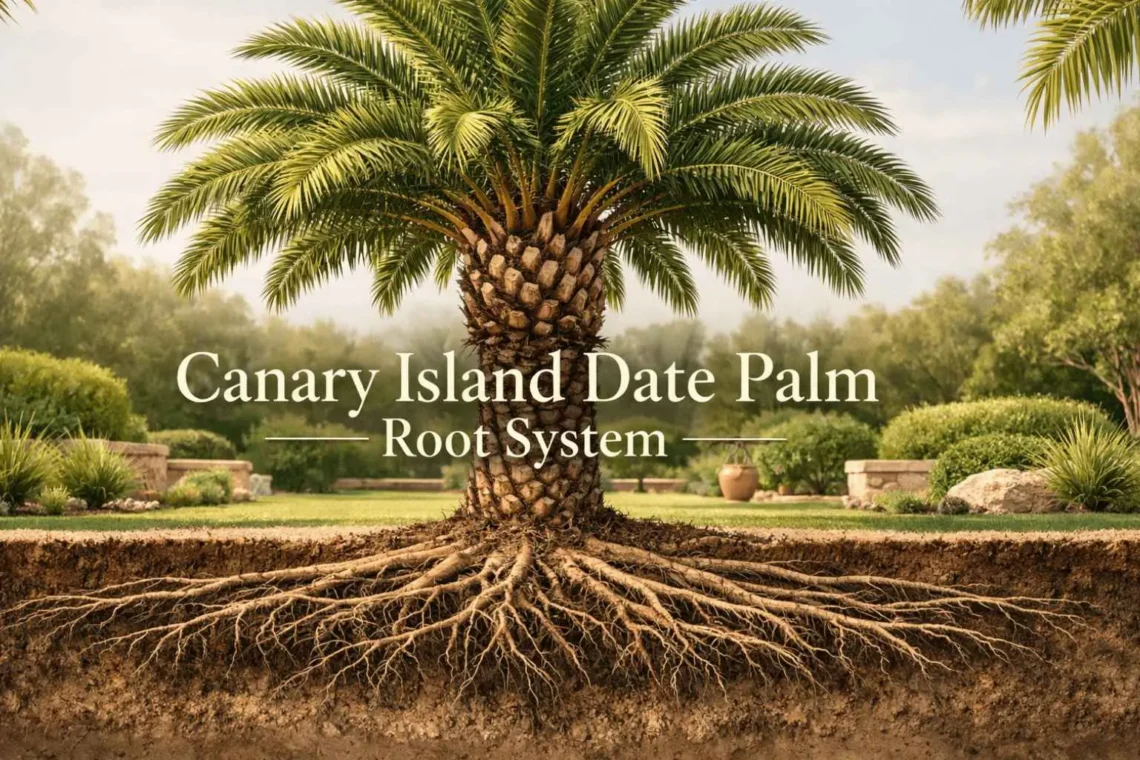
The canary island date palm root system refers to the underground structure of the widely known canary date palm, also called the pineapple palm, a large ornamental species valued for its symmetrical crown and strong visual presence. Understanding how its roots develop and spread is essential for proper planting and long-term landscape planning. Unlike deep-rooted trees, this palm relies on a dense network of fibrous roots that expand outward through the soil. These roots interact closely with soil conditions, water availability, and surrounding structures, making spacing and soil preparation critical factors in maintaining stability and preventing future issues. While this guide focuses on outdoor palms, understanding root systems is a key part of broader plant care—especially when explored in a complete guide to house plants.
Quick Summary
- The canary island date palm root system is fibrous, dense, and spreads laterally rather than deeply
- Roots are generally non-invasive but require adequate spacing due to wide horizontal growth
- Soil type, drainage, and climate directly affect root health and stability
- Proper planting practices reduce the risk of structural damage and root-related problems
What Is the Canary Island Date Palm Root System?
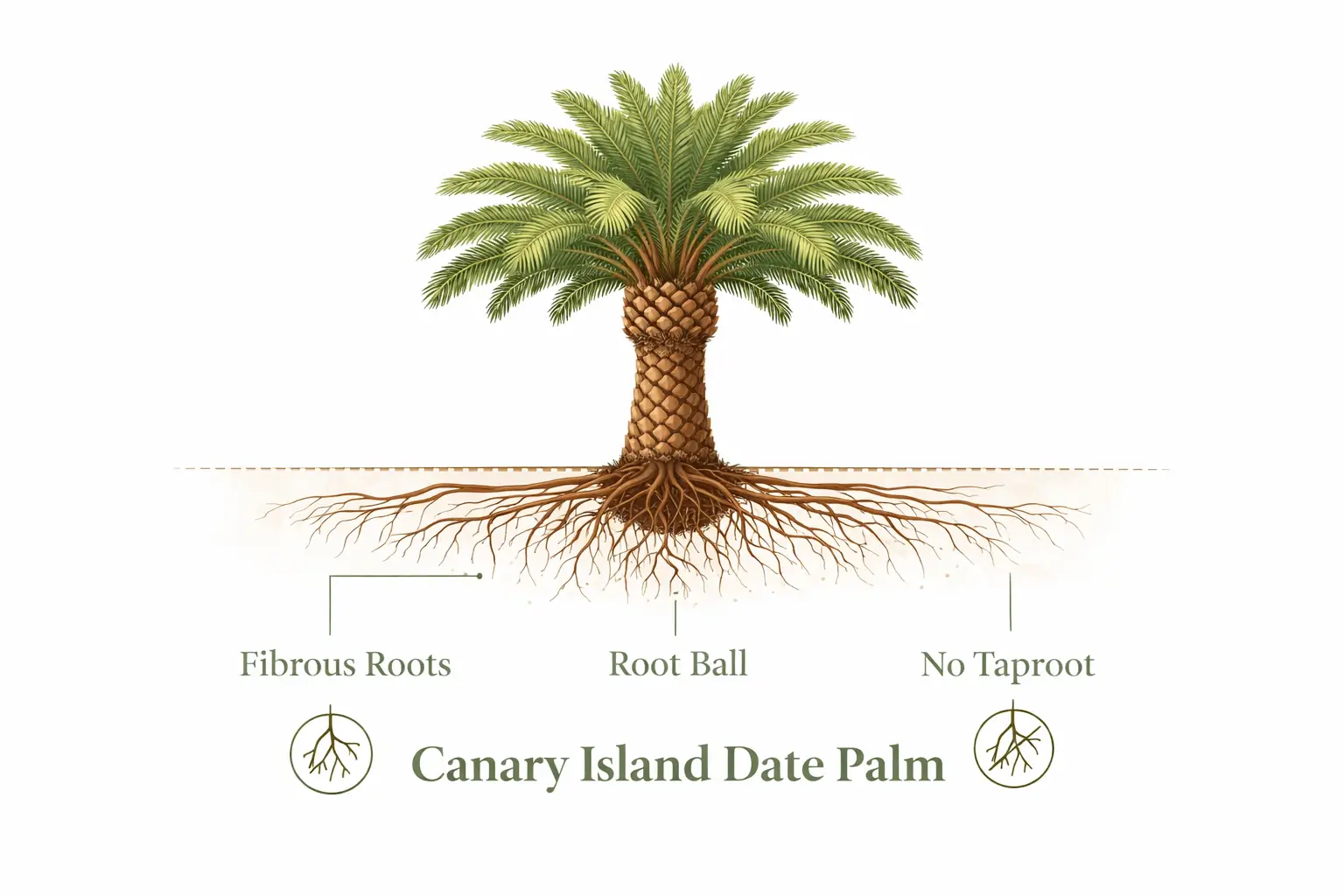
The canary island date palm root system is a fibrous root structure composed of many thin, non-woody roots that grow outward from the base rather than forming a single deep taproot. This type of system allows the tree to anchor itself through widespread soil contact rather than depth.
In botanical terms, the species is known as Phoenix canariensis, often referred to as the phoenix palm tree or canary palm. Its roots originate from the root ball at the trunk base and continuously regenerate throughout the plant’s life. Botanically known as Phoenix canariensis, this species develops a fibrous root system typical of many palm trees.
Key characteristics include:
- Fibrous, branching roots emerging from the root ball
- No dominant taproot structure
- Ongoing root renewal supporting long-term stability
How Deep and Wide Do Canary Palm Roots Grow?
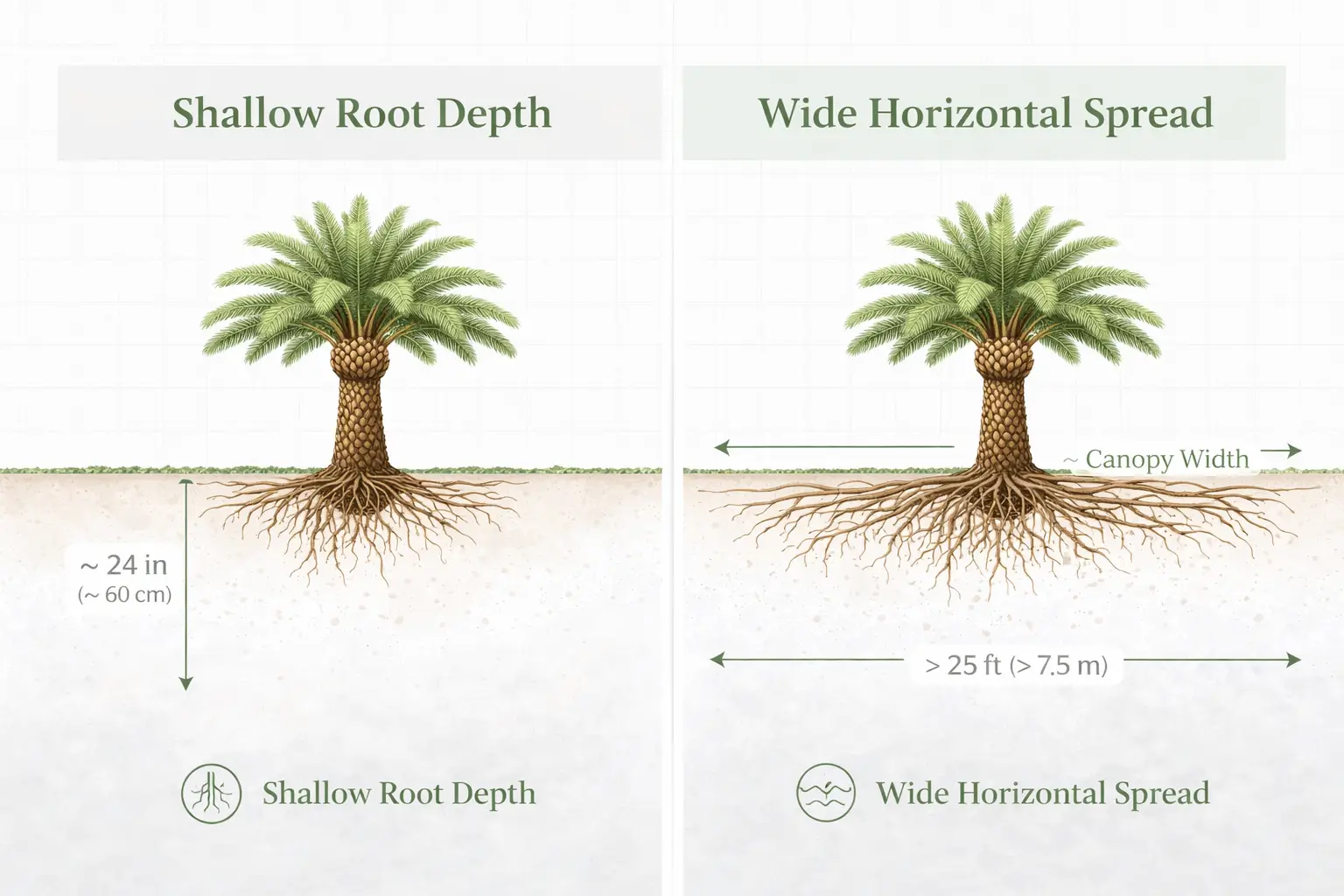
Canary island date palm roots grow shallow to moderately deep but spread extensively in a horizontal direction. The system prioritizes lateral expansion over vertical penetration.
- Typical depth: Shallow to moderate, rarely extending deep into the soil
- Horizontal spread: Often extends beyond the canopy width
- Density: Increases as the canary island date palm height and maturity increase
This wide-spreading pattern makes proper spacing essential, especially in urban or residential environments.
Root System Behavior as the Tree Matures
The root system evolves significantly as the tree progresses through its lifecycle, closely following the canary island date palm growth rate.
- Early stage: Roots remain compact within the root ball
- Mid-growth stage: Rapid lateral expansion begins, increasing soil coverage
- Mature stage: Dense, stabilizing root network forms
The pineapple palm growth rate is generally slow to moderate, but root expansion continues steadily, reinforcing structural stability over time. The pineapple palm growth rate is generally slow to moderate, but root expansion continues steadily, reinforcing structural stability over time. You can track how this compares across palm varieties in this palm tree root system comparison spreadsheet.
Soil Type and Environmental Influence on Root Growth
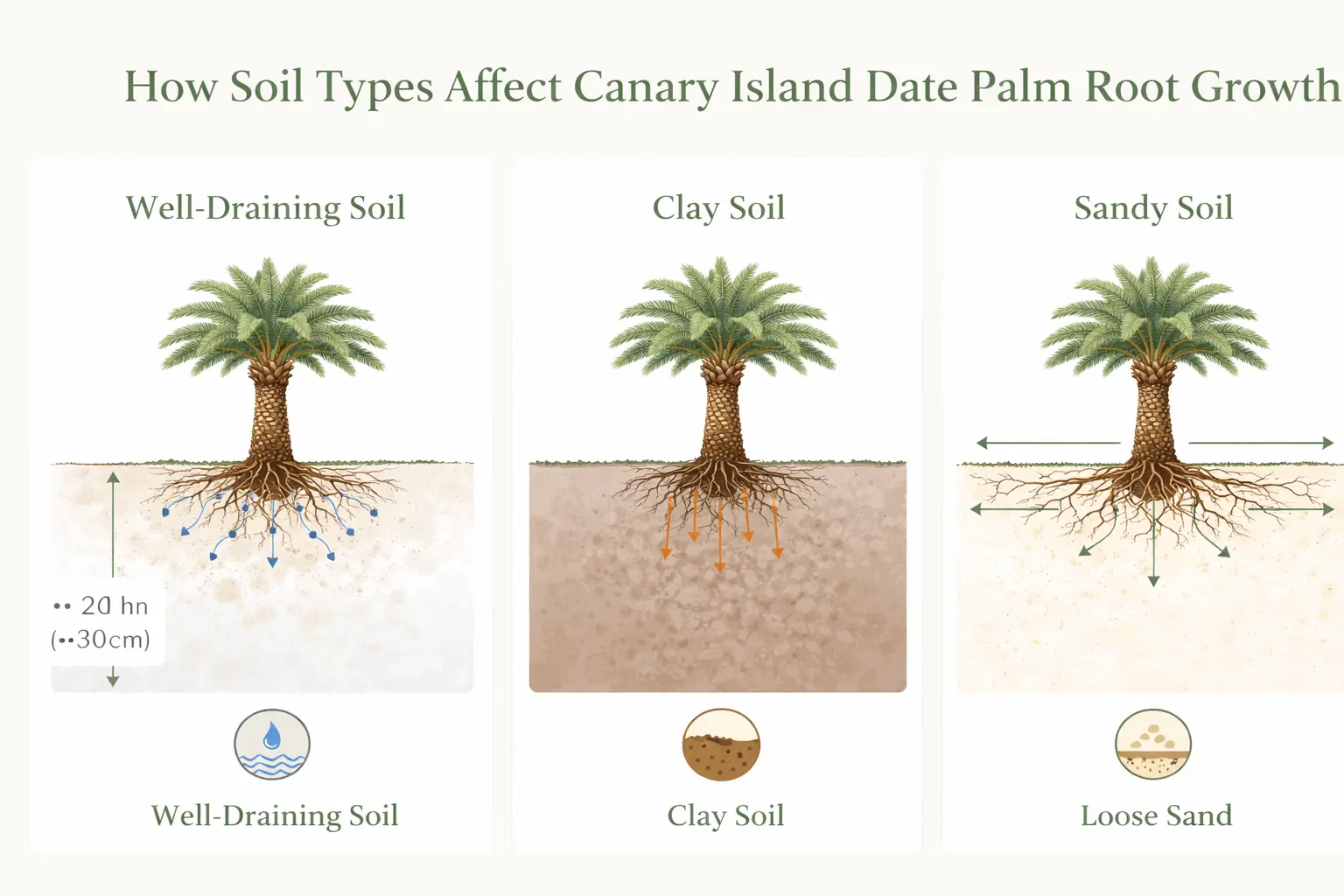
Soil conditions play a critical role in shaping how the canary island date palm root system develops and performs.
- Well-draining soil: Encourages healthy root spread and prevents waterlogging
- Clay soil: Restricts root movement and increases risk of root problems
- Sandy soil: Allows faster root expansion but may require additional nutrients
Proper aeration and drainage are essential, as compacted or poorly draining soils can limit root oxygen and reduce stability. If your garden has heavy clay, improving structure is essential—techniques explained in How to Improve Clay Soil for Lawns for Better Grass Growth can significantly enhance root development and drainage.
Are Canary Island Date Palm Roots Invasive or Damaging?
Canary island date palm roots are generally non-invasive and do not aggressively seek out pipes or foundations. However, they can still cause minor surface disruption under certain conditions.
- Roots may lift paving or sidewalks if planted too close
- Damage is usually due to pressure from growth, not invasive behavior
- Proper spacing significantly reduces risk
Overall, they are considered low-risk compared to many hardwood tree species. While canary island date palm roots are considered low-risk, understanding how different plants behave underground can provide better context—especially when comparing with species discussed in Are Leighton Green Roots Invasive?.
Root System Spacing and Planting Guidelines
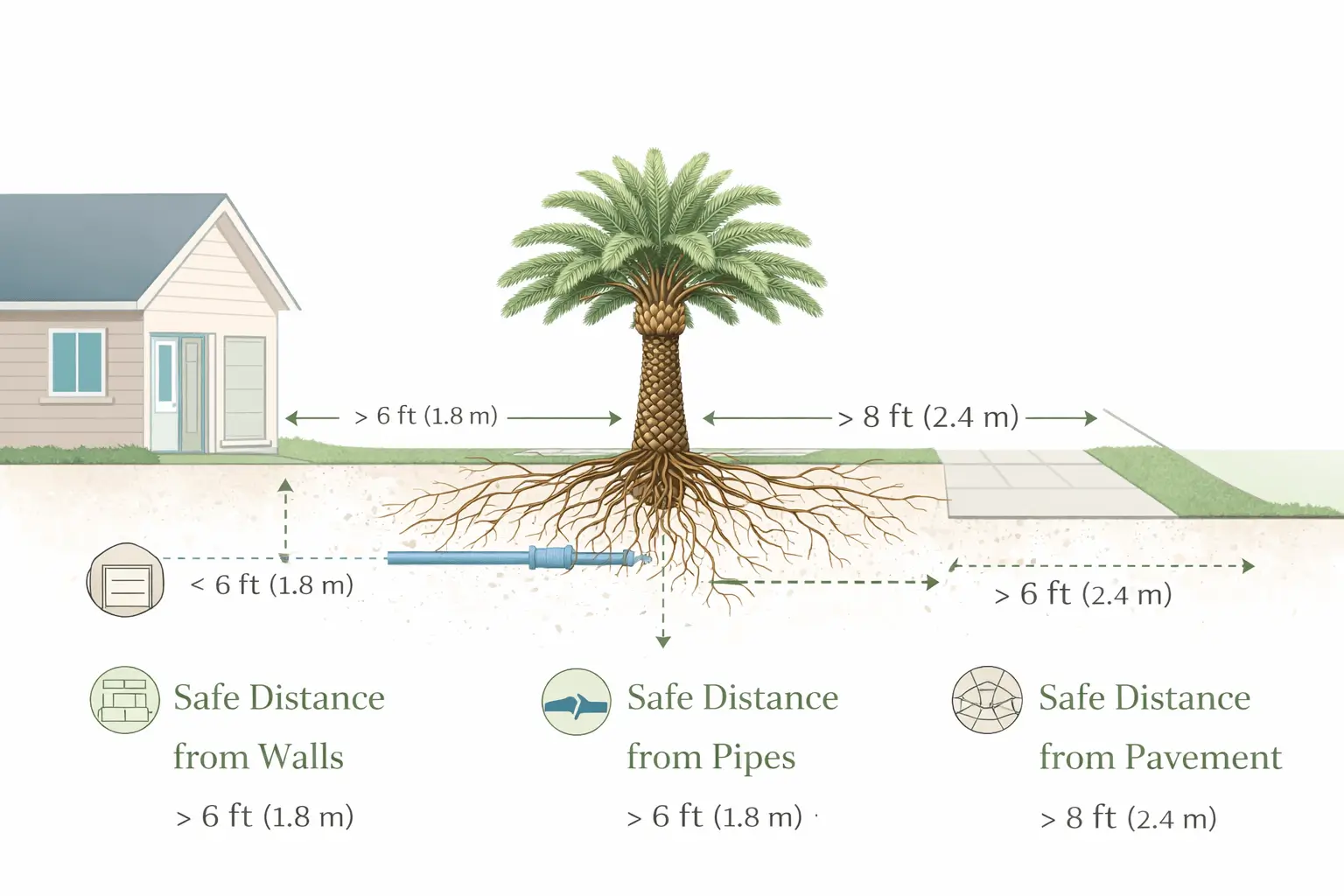
Proper planting is essential to accommodate the lateral spread of the root system and prevent future issues.
- Maintain a safe distance from buildings and walls
- Allow adequate spacing between multiple canary island palm trees
- Avoid planting near driveways, pipes, or paved surfaces
Spacing should account for both root spread and canopy size at full maturity. Proper planting is essential to accommodate the lateral spread of the root system and prevent future issues. For exact clearance distances from foundations, pools, and driveways, see this detailed canary island date palm root spacing reference.
Common Root System Problems and How to Fix Them
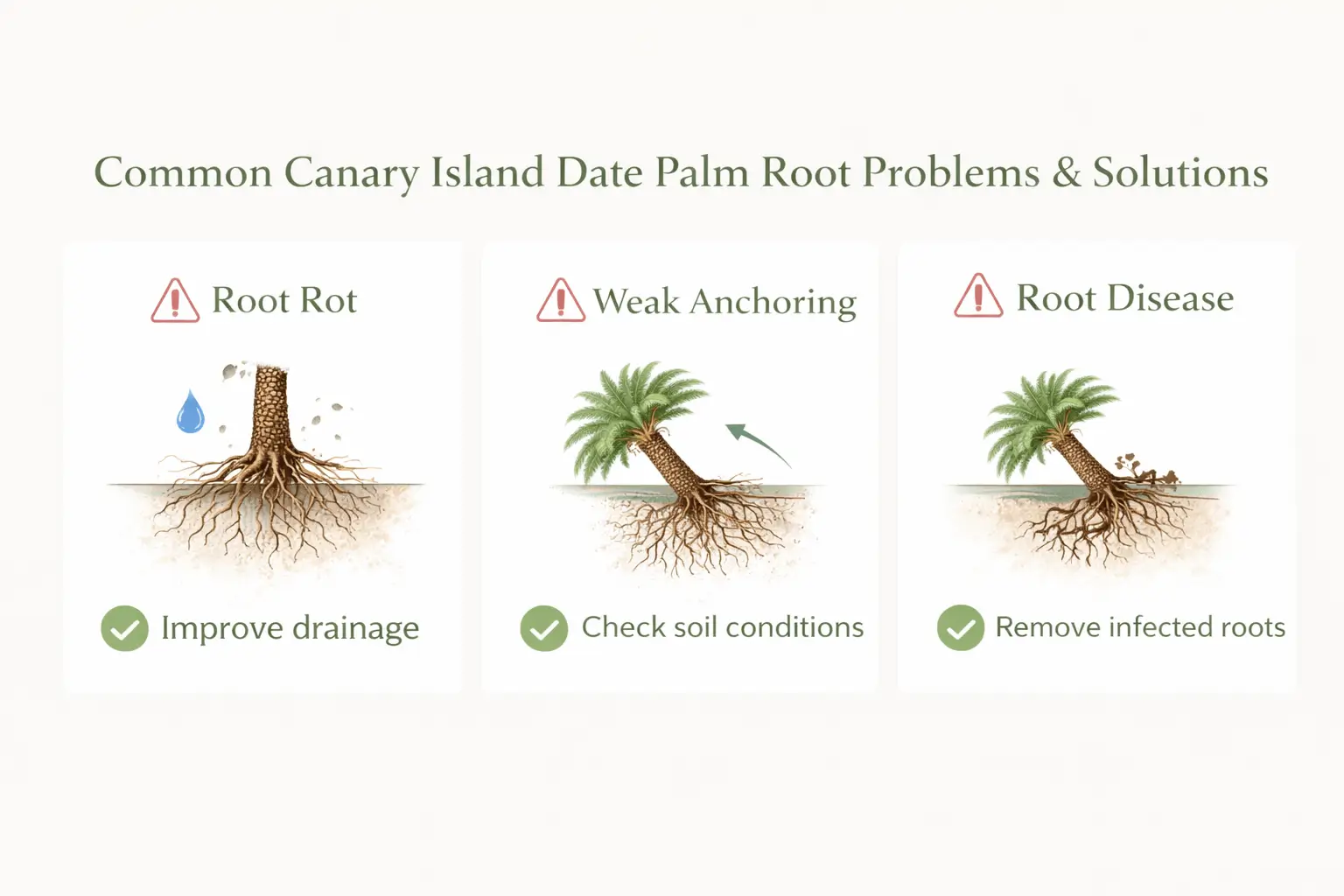
Root Rot and Poor Drainage
Root rot occurs when excess moisture surrounds the roots due to overwatering or poorly draining soil.
Fix: Improve soil drainage and reduce watering frequency.
Weak Root Anchoring
Shallow or poorly developed roots can lead to instability, especially in loose or compacted soil.
Fix: Enhance soil structure and ensure proper planting depth.
Disease Impact on Roots
Certain fungal diseases can affect root health and reduce overall plant vitality.
Fix: Monitor for signs of disease and maintain proper soil conditions to prevent infection.
Comparison: Canary Island Date Palm vs Other Palm Root Systems
| Feature | Canary Island Date Palm | Other Date Palms |
| Root Type | Fibrous, dense | Fibrous |
| Spread | Wide lateral | Moderate |
| Depth | Shallow–medium | Slightly deeper |
| Invasiveness | Low | Low |
| Stability | High when mature | Moderate |
This comparison shows that while most palms share fibrous systems, the canary palm develops a broader and more stabilizing root network. For example, compared to upright conifers like those in the Pencil Pine Guide, palm roots spread more laterally rather than anchoring deeply. This comparison shows that while most palms share fibrous systems, the canary palm develops a broader and more stabilizing root network. For a deeper side-by-side look, the palm root system reference database breaks down root behavior across additional palm species.
Growth Rate and Its Impact on Root Expansion
The canary island date palm growth rate is slow to moderate, which directly influences how its root system expands over time.
- Root growth mirrors canopy development
- Expansion is gradual but continuous
- Warmer climates accelerate both root and canopy growth
The canary palm growth rate contributes to its long lifespan and structural stability.
Fruit Production and Its Relationship to Root Health
The canary island date palm produces ornamental fruit, and its quality is closely linked to root health.
- Strong roots support nutrient uptake
- Healthy soil conditions improve fruit production
- Poor root systems can reduce flowering and fruiting
Balanced soil nutrition is essential for optimal performance.
Cost and Value Considerations
The canary island date palm price is often high due to its slow growth and transplant complexity.
- Mature trees take years to develop
- Large root balls increase transport difficulty
- Installation requires specialized handling
These factors contribute to its reputation as one of the most expensive palm tree types in landscaping.
Beginner Mistakes When Planting Canary Island Date Palms
Common planting mistakes often lead to long-term root system issues.
- Planting too close to structures
- Ignoring soil drainage requirements
- Underestimating mature size
- Mishandling the root ball during planting
Avoiding these mistakes ensures healthier root development and stability.
Environmental and Climate Limitations
The canary island date palm hardiness zone typically ranges from warm temperate to subtropical regions.
- Performs best in warm, dry climates
- Sensitive to prolonged frost
- Extreme heat can stress roots without proper watering
Climate suitability directly affects root health and long-term growth.
Removal and Transplant Considerations
Removing or transplanting a canary island date palm is complex due to its large root system.
- The root ball is heavy and difficult to manage
- Transplant shock is a significant risk
- Specialized equipment is often required
Proper planning and aftercare are essential for successful relocation.
Conclusion
The canary island date palm root system is a wide-spreading, fibrous network designed for stability rather than deep anchoring. While generally non-invasive, its lateral growth requires thoughtful spacing and proper soil conditions. Understanding how roots behave across growth stages helps prevent structural issues, improve plant health, and support long-term success when planting or maintaining a canary palm tree.
FAQs
- How deep do canary island date palm roots grow?
They are relatively shallow and spread more horizontally than vertically, focusing on surface stability. - Are canary island date palm roots invasive?
No, they are not invasive, but they can cause minor surface lifting if planted too close to hard surfaces. - How far should you plant a canary palm from a house?
It is recommended to plant several meters away to allow space for root spread and canopy expansion. - What soil is best for canary island date palms?
Well-draining soil is ideal to prevent root rot and support healthy growth. - Do root systems affect palm tree growth rate?
Yes, strong root systems improve nutrient uptake and directly support growth and stability. - Can you transplant a mature canary island date palm?
Yes, but it requires careful handling of the root ball and proper aftercare to reduce transplant shock.