Introduction
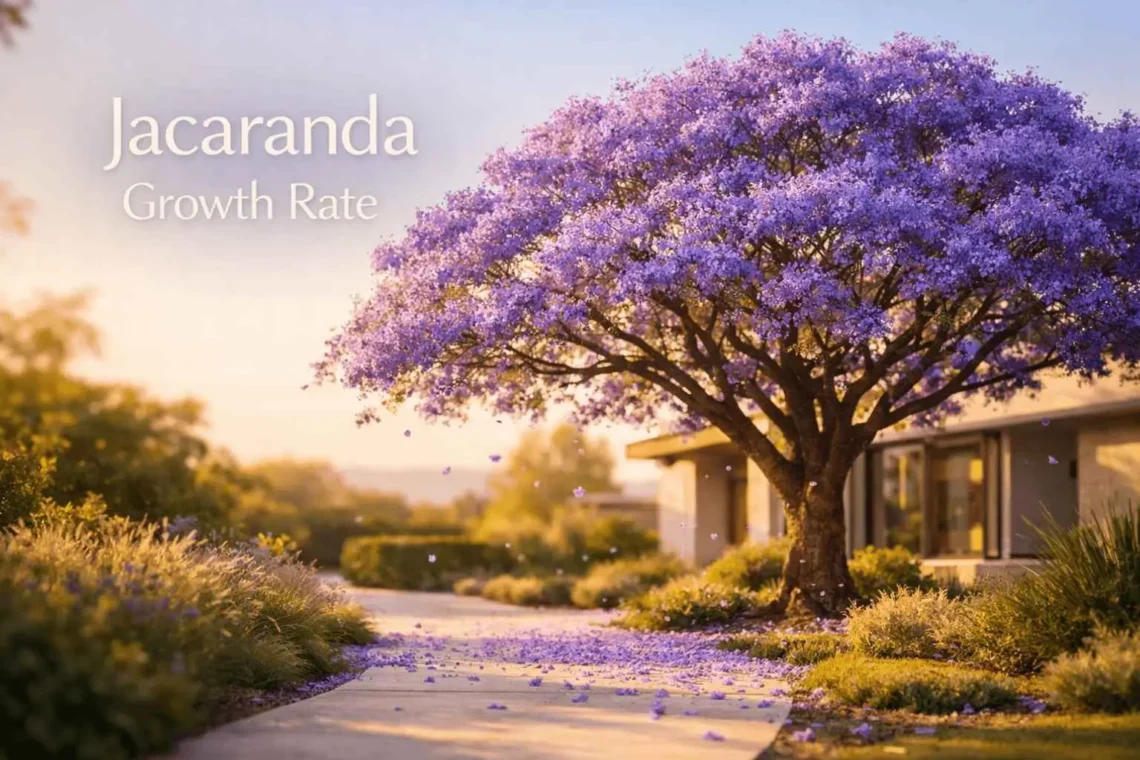
Jacaranda growth rate refers to how quickly a jacaranda tree develops in height, canopy spread, and overall maturity under varying environmental conditions. Known for their distinctive purple-blue blooms and light, fern-like foliage, jacaranda trees typically grow at a moderate to fast pace when planted in favorable climates.
Their growth speed is highly influenced by external factors such as sunlight exposure, soil quality, watering practices, and regional climate. When these conditions are optimized, jacaranda trees can establish quickly and develop into large, visually striking landscape trees over time.
Quick Summary
- Jacaranda growth rate is moderate to fast, especially in warm climates
- Most trees grow approximately 1–3 feet per year under optimal conditions
- Full maturity generally takes between 10–20 years
- Growth speed varies significantly based on soil, sunlight, and temperature
What Is the Jacaranda Growth Rate?
Jacaranda growth rate describes the speed at which jacaranda trees increase in height, canopy spread, and trunk thickness over time, typically measured on an annual basis.
Key Points
- Average annual growth ranges from 1 to 3 feet per year
- Growth is faster in tropical and subtropical climates
- Growth slows in cooler or dry regions
- Early growth is more rapid compared to mature stages
The term includes variations such as jacaranda tree growth rate, jacaranda growth rate per year, and jacaranda mimosifolia growth rate. Growth is commonly evaluated through three indicators: vertical height increase, canopy expansion, and trunk development. When comparing growth speed across species, guides like Bay Tree Growth Rate: 5+ Key Facts for Faster Growth help highlight how environmental conditions influence development differently among ornamental trees.
How Quickly Do Jacaranda Trees Grow in Real Conditions?
Jacaranda trees grow at a moderate to fast rate in real-world conditions, but actual speed depends on environmental factors rather than ideal benchmarks.
Growth Phases
- First 3–5 years: Establishment phase focused on root development and initial height growth
- Years 5–10: Accelerated canopy expansion and visible structural growth
- After 10 years: Slower growth as the tree focuses on maturity and stability
Natural variations such as blue or purple jacaranda types do not significantly affect growth rate, but local conditions can cause noticeable differences.
How Long Do Jacaranda Trees Take to Grow and Mature?
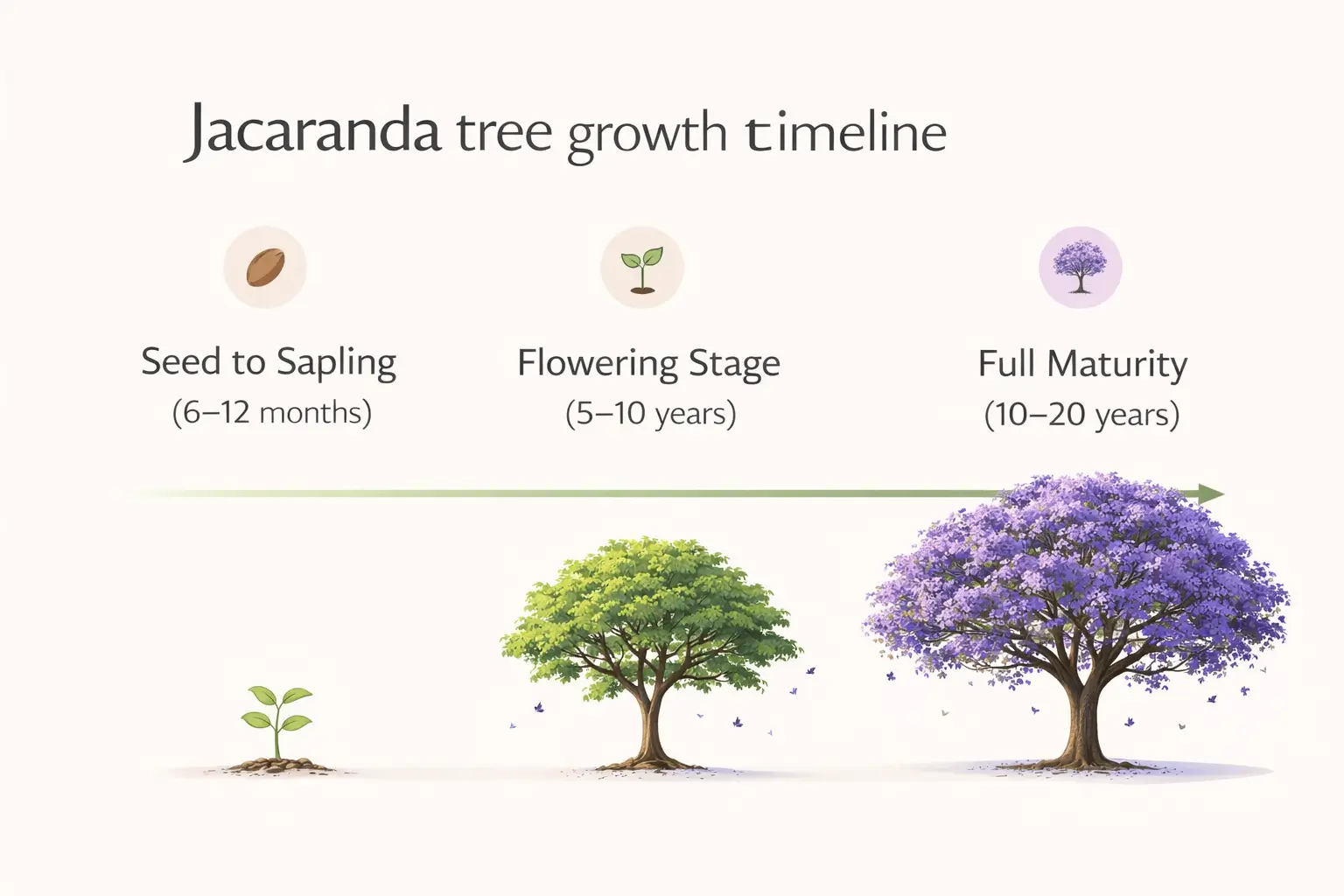
Jacaranda trees typically take between 10–20 years to reach full maturity, though early growth stages occur much faster.
Growth Timeline
- From seed to sapling: approximately 6–12 months
- To flowering maturity: typically 5–10 years
- To full size: around 10–20 years
Trees grown from seed may take longer to flower compared to nursery-grown specimens.
Jacaranda Tree Size: How Tall and Wide Do They Grow?
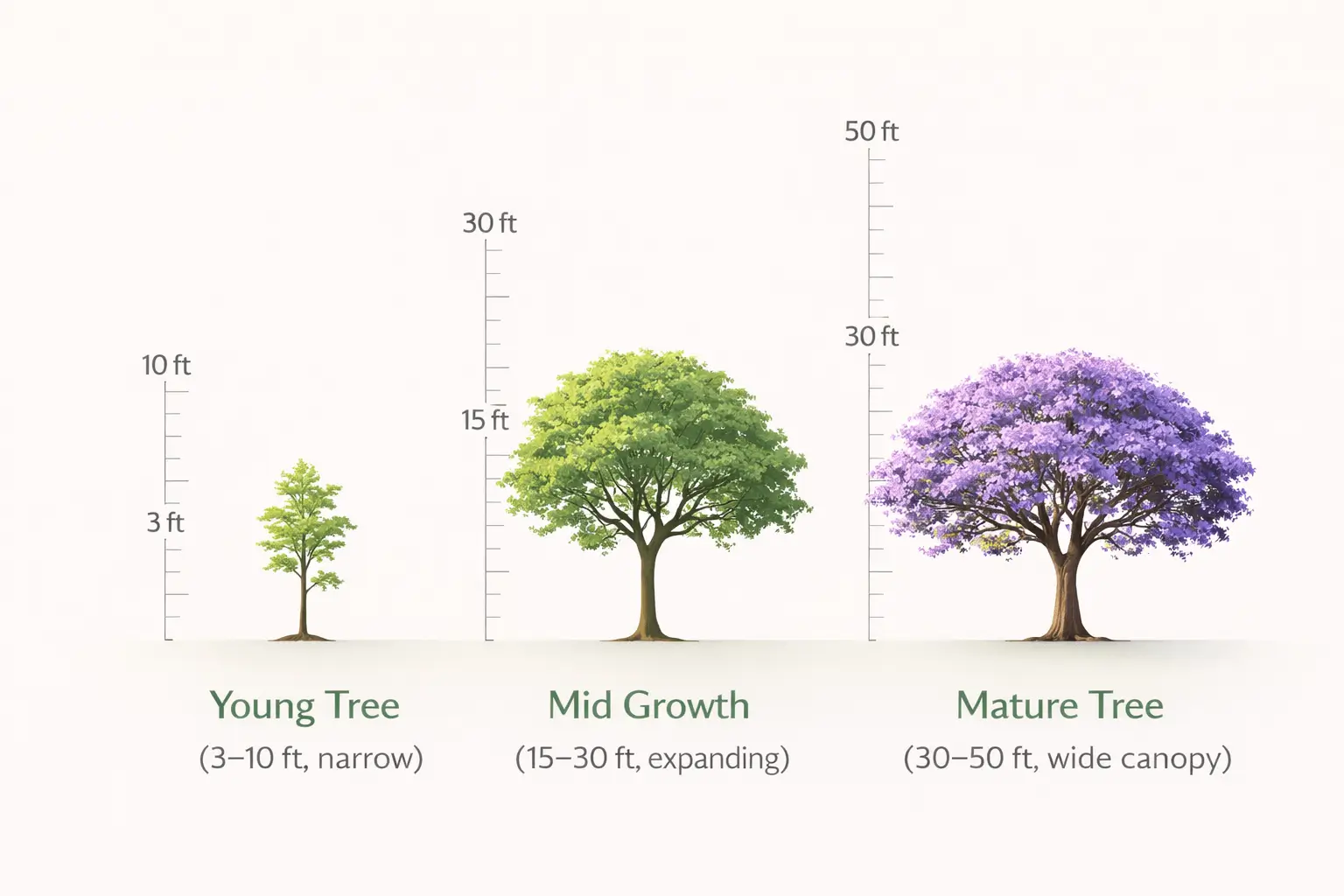
Jacaranda trees can grow to substantial sizes, reaching heights of 30–50 feet with wide, spreading canopies.
Growth Stages
| Growth Stage | Height Range | Canopy Spread |
| Young Tree | 3–10 ft | Narrow |
| Mid Growth | 15–30 ft | Expanding |
| Mature Tree | 30–50 ft | Wide, umbrella-shaped |
Young trees remain relatively compact, but mature jacarandas develop a broad, umbrella-shaped canopy that provides significant shade.
Jacaranda Growing Conditions That Affect Growth Rate
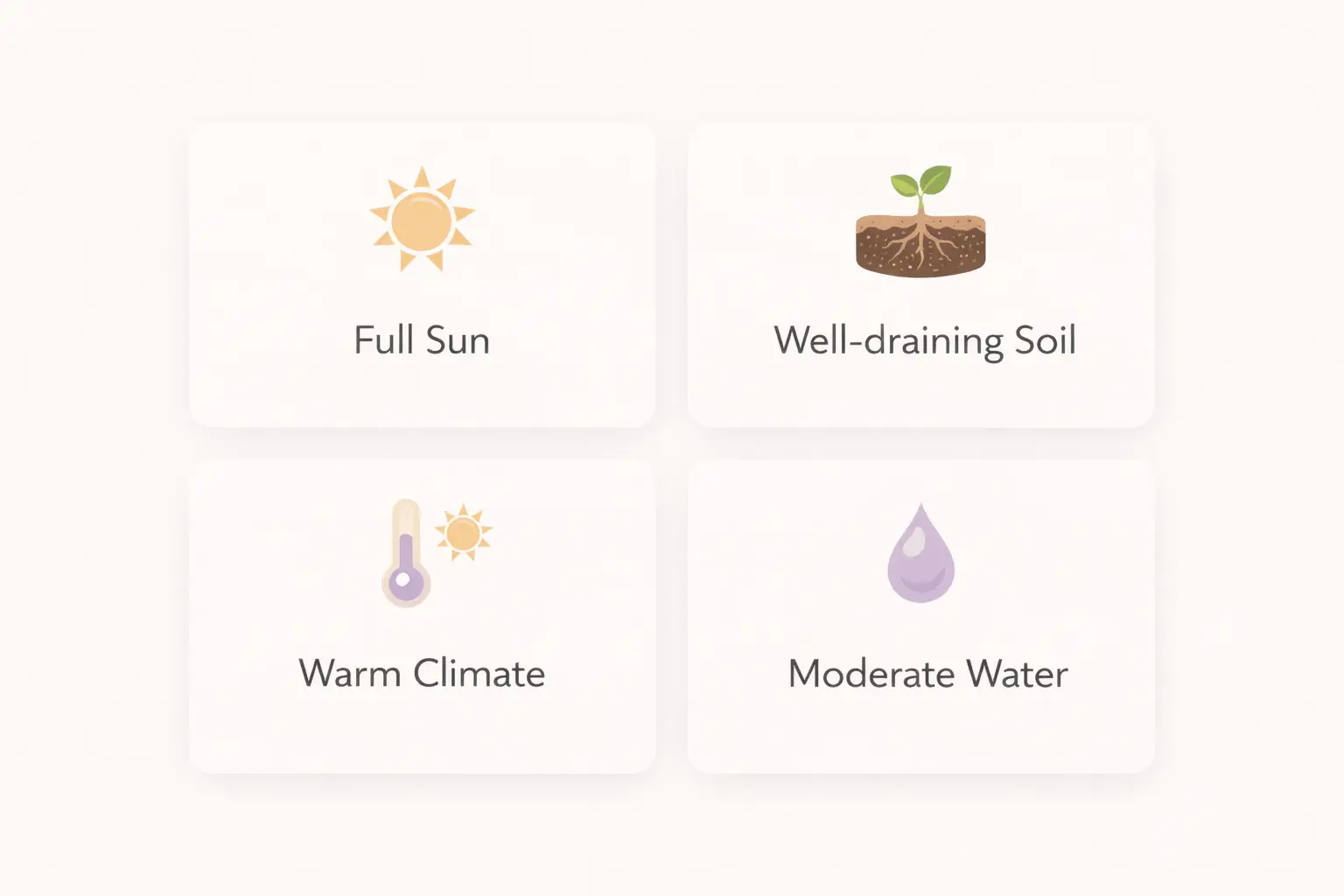
Jacaranda growth rate is directly influenced by environmental conditions, with optimal settings significantly accelerating development.
Key Factors
- Sunlight: Requires full sun for maximum growth and flowering
- Soil: Prefers well-draining soil to prevent root issues
- Climate: Thrives in warm, frost-free environments
- Water: Needs moderate watering; becomes drought-tolerant once established
Poor conditions in any of these areas can slow growth and reduce overall tree health.
Jacaranda Growth Rate by Climate and Region
Jacaranda growth rate varies widely depending on regional climate conditions, with warmer areas supporting faster development.
Key Concepts
- Faster growth in subtropical and tropical zones
- Slower growth in cooler or temperate climates
- Seasonal dormancy reduces growth during colder months
In regions like Australia’s subtropical zones, jacarandas grow more vigorously compared to cooler inland or southern regions.
Jacaranda Life Cycle and Seasonal Growth Patterns
Jacaranda trees follow a seasonal growth cycle that includes active growth, dormancy, and flowering phases.
Key Patterns
- Deciduous or semi-deciduous behavior depending on climate
- Leaf drop typically occurs before flowering
- Dormancy during cooler winter months
- Growth resumes in spring with new foliage
This cycle is part of the natural development of Jacaranda mimosifolia, the most commonly cultivated species. The seasonal behavior of jacaranda trees, including leaf drop and flowering cycles, aligns with the biological characteristics of Jacaranda mimosifolia, a deciduous species widely cultivated in warm climates.
Blooming Cycle: When and How Long Do Jacaranda Trees Flower?
Jacaranda trees typically bloom for 3–8 weeks, producing vibrant purple-blue flowers under optimal conditions.
Blooming Characteristics
- Bloom duration: approximately 3–8 weeks
- Flower color: purple-blue tones
- Peak blooming occurs in warm, sunny conditions
- Timing varies by region and climate
Blooming often follows leaf drop, creating the characteristic appearance of flowers on bare branches.
Common Jacaranda Tree Problems That Slow Growth
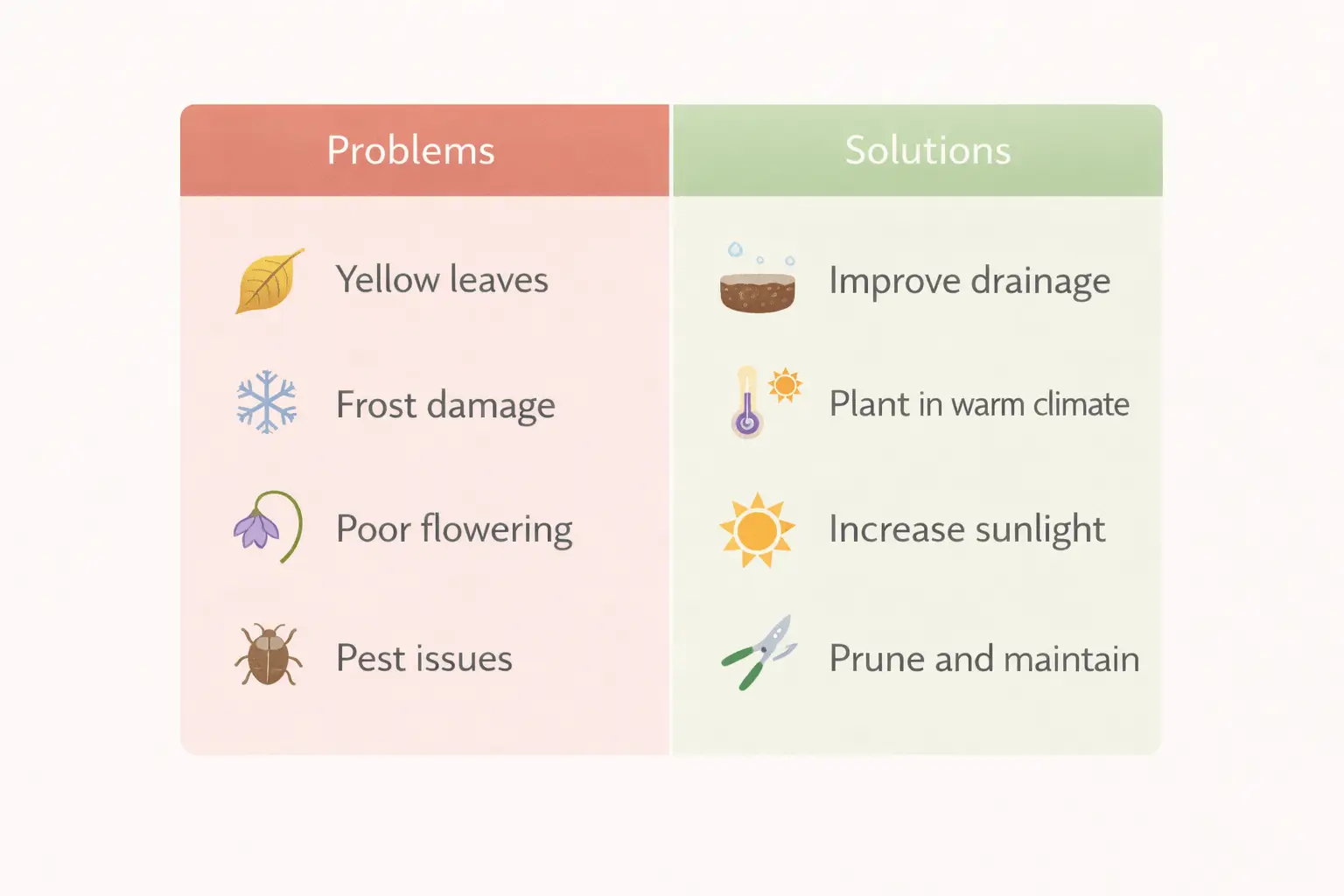
Several environmental and care-related issues can significantly reduce jacaranda growth rate.
Problems and Solutions
- Yellowing leaves: Often caused by overwatering or poor drainage → improve soil conditions
- Frost damage: Results from unsuitable climate → plant in warmer zones
- Poor flowering: Linked to insufficient sunlight → relocate or increase exposure
- Pests and diseases: Require regular monitoring and pruning
Addressing these issues early helps maintain steady growth and overall tree health. Growth issues such as pests and stress conditions are not unique to jacarandas—problems like infestations are also common across many plants, as explained in Aphids on Plants: 7 Proven Fixes to Save Your Plants Fast.
Comparison: Jacaranda Growth Rate vs Similar Ornamental Trees
Jacaranda growth rate is moderate to fast when compared with other ornamental flowering trees, though growth patterns differ by species.
Comparison Table
| Tree Type | Growth Speed | Bloom Type | Climate Suitability |
| Jacaranda | Moderate–Fast | Purple blooms | Warm climates |
| Crepe Myrtle | Fast | Pink/white | Wider adaptability |
| Royal Poinciana | Fast | Red/orange | Tropical only |
Each tree offers different advantages depending on climate and landscape needs. Jacaranda growth patterns are often compared with other ornamental trees, and studies on trees like How Fast Crepe Myrtles Grow in Australia: 7+ Proven Facts show similar rapid development under warm conditions, though adaptability varies by species.
Beginner Mistakes That Affect Jacaranda Growth
Common mistakes can significantly slow jacaranda growth, particularly during early stages.
Common Errors
- Planting in shaded areas reduces growth and flowering
- Overwatering young trees leads to root problems
- Poor soil drainage limits root development
- Expecting rapid growth in cold climates
Avoiding these issues improves establishment and long-term growth.
How to Grow a Jacaranda Tree Successfully
Growing a jacaranda tree successfully requires proper planning and consistent care during early stages.
Steps
- Choose a sunny planting location
- Use well-draining soil
- Water consistently during early growth
- Prune lightly to maintain structure
Once established, jacarandas require minimal maintenance and become more resilient.
Conclusion
Jacaranda growth rate is best described as moderate to fast under suitable environmental conditions, with most trees reaching full maturity within 10–20 years. Factors such as climate, sunlight, and soil quality play a critical role in determining how quickly a jacaranda tree develops.
With proper care and realistic expectations, jacaranda trees reward growers with expansive canopies and striking seasonal blooms.
FAQs
1. How fast does a jacaranda tree grow per year?
Jacaranda trees typically grow between 1–3 feet per year under optimal conditions.
2. How long does it take for a jacaranda tree to bloom?
Most jacaranda trees begin flowering after 5–10 years, depending on growing conditions.
3. Are jacaranda trees deciduous?
Yes, jacarandas are deciduous or semi-deciduous and often shed leaves before blooming.
4. What slows down jacaranda growth the most?
Poor soil drainage, lack of sunlight, and cold climates are the main limiting factors.
5. Can jacaranda trees grow in colder climates?
They can grow slowly in cooler climates, but frost can damage them and significantly reduce growth rate.