Introduction
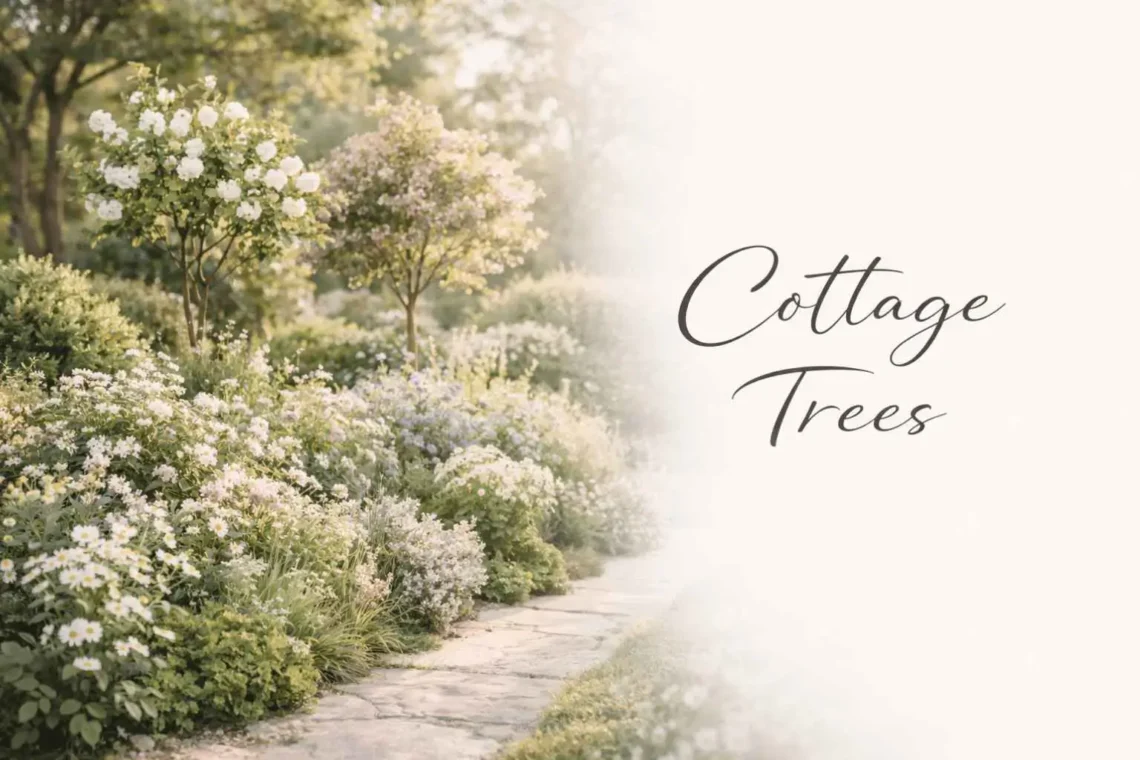
Cottage trees are small to medium ornamental trees used to create a relaxed, layered, and natural-looking garden style inspired by traditional cottage landscapes. In Australian gardens, cottage trees are valued for their manageable size, seasonal interest, and compatibility with informal planting schemes. They help structure spaces without overwhelming them, making them ideal for front yards, compact backyards, and modern cottage garden designs. By blending effortlessly with flowering plants, shrubs, and ground covers, cottage trees create a soft, lived-in aesthetic while still providing height, shade, and visual balance.
Quick Summary
- Cottage trees are small, decorative trees suited for informal garden styles
- Ideal for small gardens, front yards, and layered planting designs
- Include flowering, evergreen, and dwarf varieties
- Widely used in Australian gardens due to climate adaptability
What Are Cottage Trees and Their Role in Garden Design
Cottage trees are ornamental trees selected for their soft structure, moderate size, and natural appearance in informal garden layouts. Unlike formal landscape trees, they are not used to create symmetry or rigid structure but to enhance flow and visual softness.
This approach is rooted in the traditional Cottage garden style, which emphasizes informal planting, layered textures, and natural flow.
In garden design, they serve three key roles:
- Canopy layer: Adds height and light shade
- Mid-layer anchor: Supports shrubs and flowering plants
- Visual connector: Blends different planting zones
They are closely associated with both traditional English-style gardens and modern Australian cottage gardens, where layered planting and relaxed aesthetics are essential. Cottage trees are often used as focal elements in garden layouts, similar to how feature trees are selected in structured designs—see these 7+ Stunning Accent Trees That Transform Any Space Instantly for inspiration.
Types of Cottage Trees (Based on Function and Form)
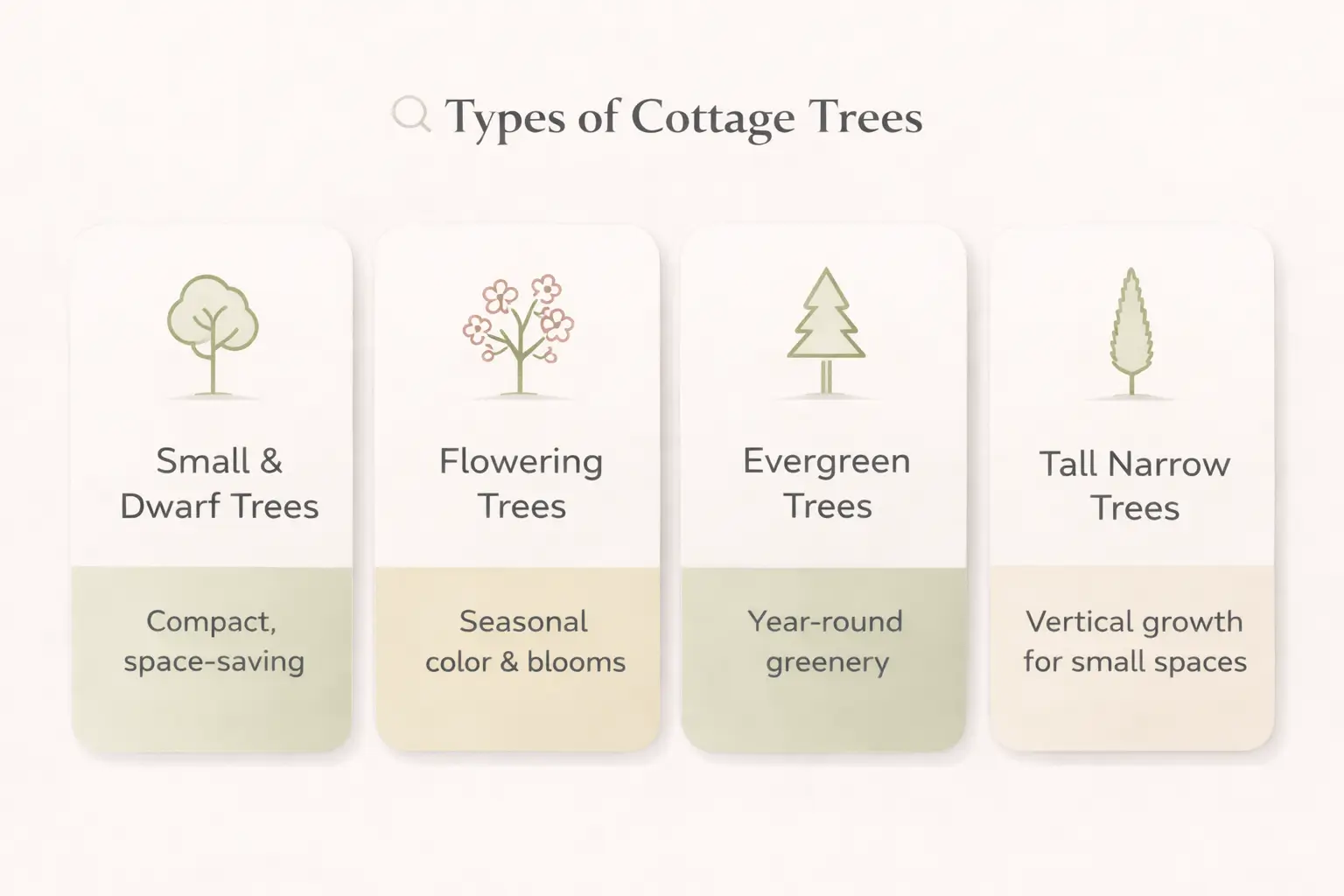
1. Small and Dwarf Cottage Trees
These are ideal for compact spaces and front yard designs.
- Height: typically 1–4 meters
- Suitable for patios and small garden beds
- Easy to maintain and prune
2. Flowering Cottage Trees
These trees provide seasonal blooms and color.
- Enhance visual interest throughout the year
- Pair well with cottage flowers
- Commonly used as focal points
Flowering cottage trees are especially valued for seasonal color, and options like those featured in 6+ Essential Trees With Purple Flowers in Australia can enhance visual impact.
3. Evergreen Cottage Trees
These trees retain foliage year-round.
- Provide structure and privacy
- Reduce seasonal maintenance
- Support low-maintenance garden designs
4. Tall and Narrow Cottage Trees
These trees offer vertical growth without spreading widely.
- Ideal for narrow spaces
- Add height without crowding
- Suitable for urban gardens
Best Cottage Trees for Australian Gardens
The best cottage trees for Australian conditions are those adapted to heat, sunlight, and occasional drought.
Key considerations:
- Full sun tolerance: Essential for most Australian regions
- Urban suitability: Compact root systems for small backyards
- Native compatibility: Supports biodiversity
Common categories:
- Trees for full sun environments
- Trees suited for small urban gardens
- Evergreen options for year-round greenery
- Deciduous trees for seasonal variation
Small Cottage Trees for Compact Spaces
Small cottage trees are ideal for tight areas such as courtyards, patios, and front yards.
Key features:
- Height range: 1–4 meters
- Controlled root systems (less invasive)
- Suitable for containers or raised beds
Practical insight:
Choosing trees with slow to moderate growth reduces pruning needs and prevents overcrowding in small garden layouts.
Evergreen vs Deciduous Cottage Trees (Comparison Section)
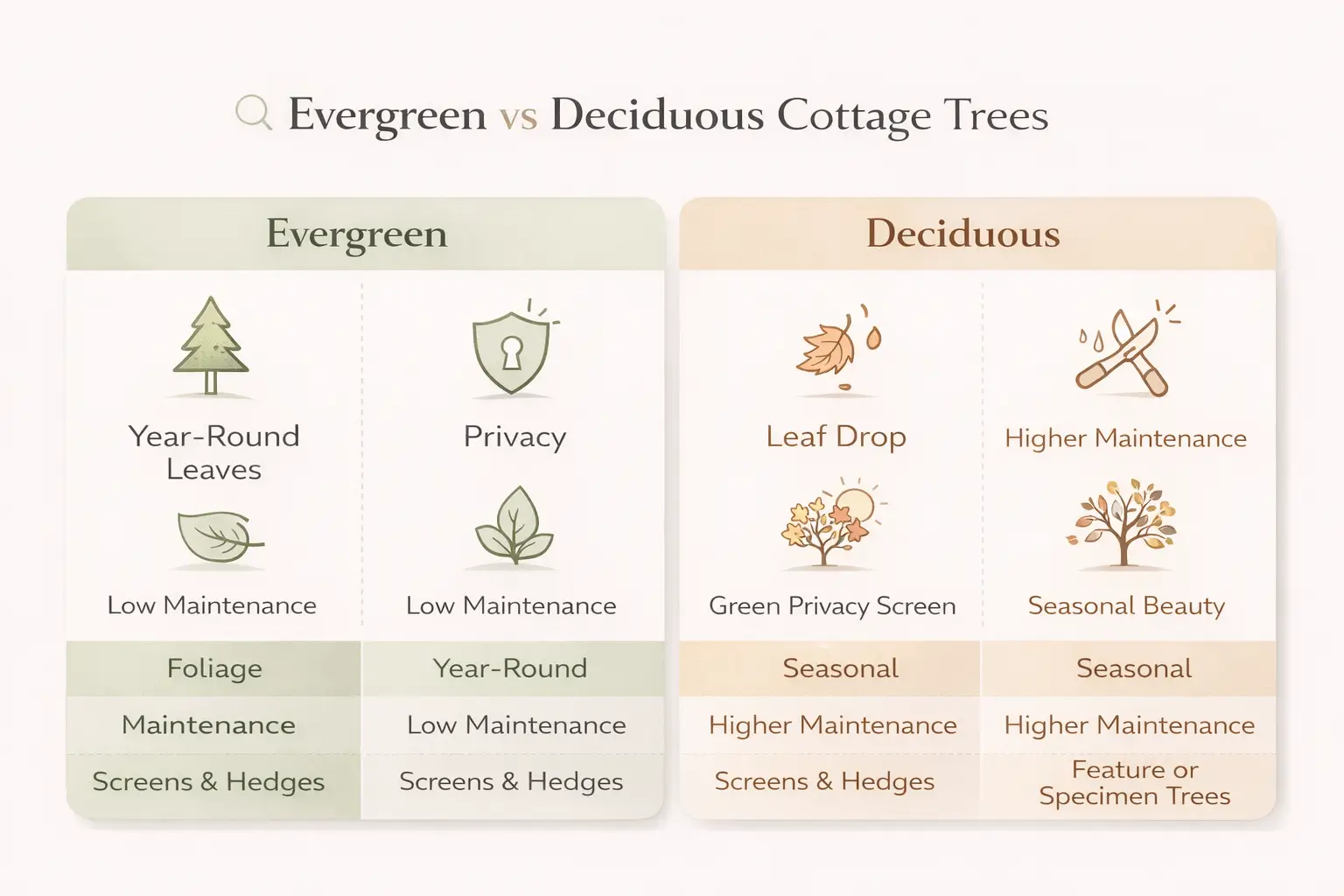
| Feature | Evergreen Cottage Trees | Deciduous Cottage Trees |
| Foliage | Year-round greenery | Seasonal leaf drop |
| Maintenance | Lower cleanup | Requires seasonal care |
| Visual Impact | Consistent structure | Changing seasonal color |
| Best Use | Privacy, structure | Decorative interest |
How to Choose the Right Cottage Tree
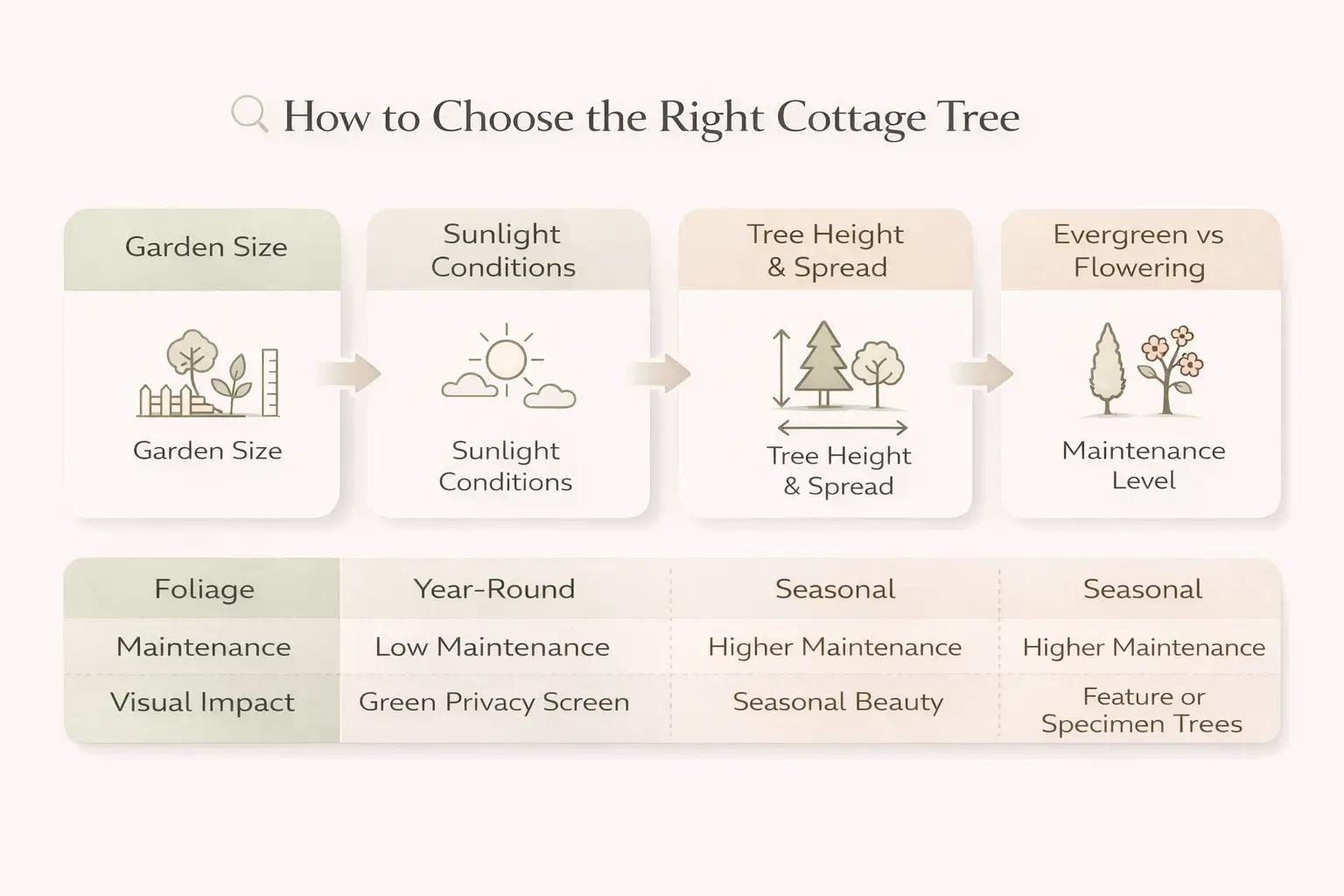
Selecting the right cottage tree depends on your garden conditions and design goals.
Key factors to evaluate:
- Garden size and available space
- Sunlight exposure (full sun vs partial shade)
- Desired height and canopy spread
- Preference for evergreen or flowering trees
- Maintenance requirements
Tip:
Always consider the mature size rather than the current plant size to avoid long-term space issues.
Placement Ideas for Cottage Trees
Front Yard Placement
- Position near the entrance as a focal feature
- Frame pathways or driveways
Backyard Cottage Garden
- Layer with shrubs and flowers
- Create shaded seating areas
Small Garden Layouts
- Use vertical trees in narrow spaces
- Place feature trees in corners for balance
Cottage Trees and Companion Planting
Cottage trees work best when integrated with layered planting schemes.
Effective combinations:
- Pair with flowering perennials for seasonal color
- Combine with soft-textured shrubs for contrast
- Use ground covers to fill gaps and reduce weeds
Design insight:
Mixing textures—fine foliage with broader leaves—creates depth and visual interest. For a complete layered look, combine trees with traditional planting schemes using classic Cottage Plants: Types, Growing Tips, and Garden Design to create a cohesive cottage garden.
Care Guide for Cottage Trees
Watering
- Deep watering encourages strong root systems
- Avoid frequent shallow watering
Light Requirements
- Most cottage trees prefer full sun
- Some tolerate partial shade
Soil Conditions
- Well-draining soil is essential
- Poor drainage leads to root issues
Pruning
- Maintain shape and airflow
- Remove dead or crowded branches
Climate Considerations
- Choose drought-tolerant varieties for hot regions
- Protect young trees during extreme heat
Growth Size and Rate of Cottage Trees
| Tree Type | Typical Height | Growth Rate |
| Dwarf trees | 1–3 m | Slow |
| Small trees | 3–6 m | Moderate |
| Tall narrow trees | 5–10 m | Fast–Moderate |
Common Problems and Solutions
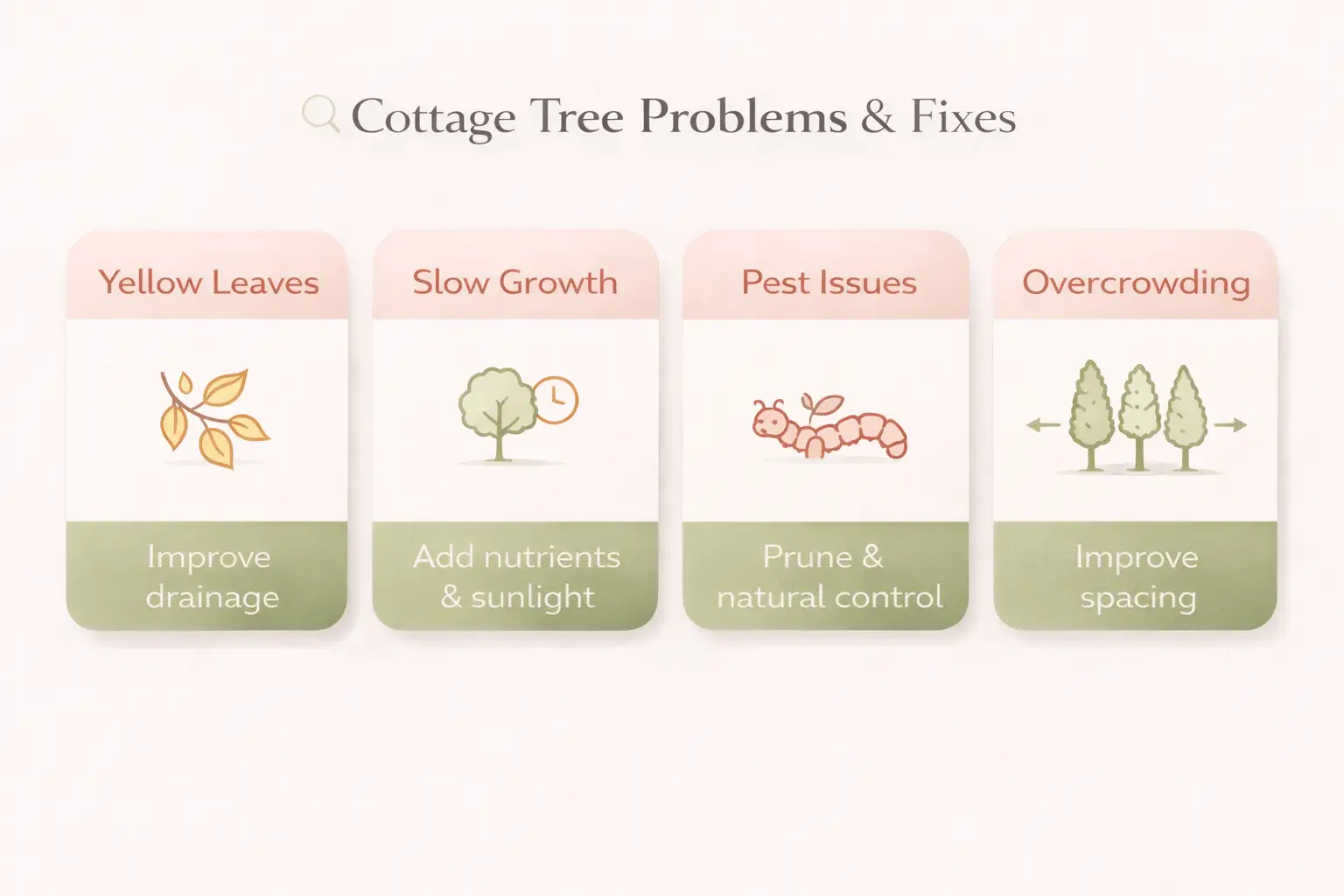
Yellowing Leaves
- Cause: Overwatering or poor drainage
- Fix: Improve soil drainage and adjust watering
Slow Growth
- Cause: Lack of nutrients or sunlight
- Fix: Apply fertilizer and increase sun exposure
Pest Issues
- Cause: Dense planting or weak plants
- Fix: Prune regularly and use natural pest control
Overcrowding
- Cause: Poor planning and spacing
- Fix: Thin plants and redesign layout
Beginner Mistakes to Avoid
- Choosing trees that grow too large
- Ignoring sunlight requirements
- Overplanting in small spaces
- Mixing incompatible plant types
Cottage Trees vs Other Garden Tree Styles (Comparison)
| Garden Style | Tree Characteristics |
| Cottage garden | Soft, natural, layered |
| Formal garden | Structured, symmetrical |
| Modern garden | Minimal, architectural |
How Cottage Trees Fit Into Modern Australian Garden Trends
Cottage trees are increasingly used in modern Australian garden design due to their adaptability and aesthetic flexibility.
Current trends include:
- Incorporating native species for sustainability
- Water-wise planting for drought conditions
- Compact trees for urban living spaces
They bridge traditional cottage charm with contemporary landscaping needs.
Conclusion
Cottage trees are essential elements in creating natural, balanced, and visually appealing gardens. Their manageable size, adaptability, and compatibility with layered planting make them ideal for both traditional and modern Australian garden styles. By choosing the right type—whether dwarf, evergreen, or flowering—you can enhance structure, improve visual flow, and maintain a practical, low-maintenance landscape.
FAQs
- What are the best cottage trees for small gardens?
Small or dwarf cottage trees are best, especially those with compact growth and non-invasive roots. - Can cottage trees grow in full sun in Australia?
Yes, many varieties are adapted to full sun and perform well in Australian climates. - What is the difference between cottage trees and ornamental trees?
Cottage trees focus on informal, natural design, while ornamental trees may be used in both formal and decorative landscapes. - Are evergreen cottage trees better than deciduous ones?
Neither is better overall; evergreen trees provide structure, while deciduous trees offer seasonal variety. - How tall do cottage trees typically grow?
Most range from 2 to 6 meters, depending on the variety and conditions. - Can I use cottage trees in a front yard garden?
Yes, they are highly suitable for front yard designs due to their size and visual appeal.