Introduction
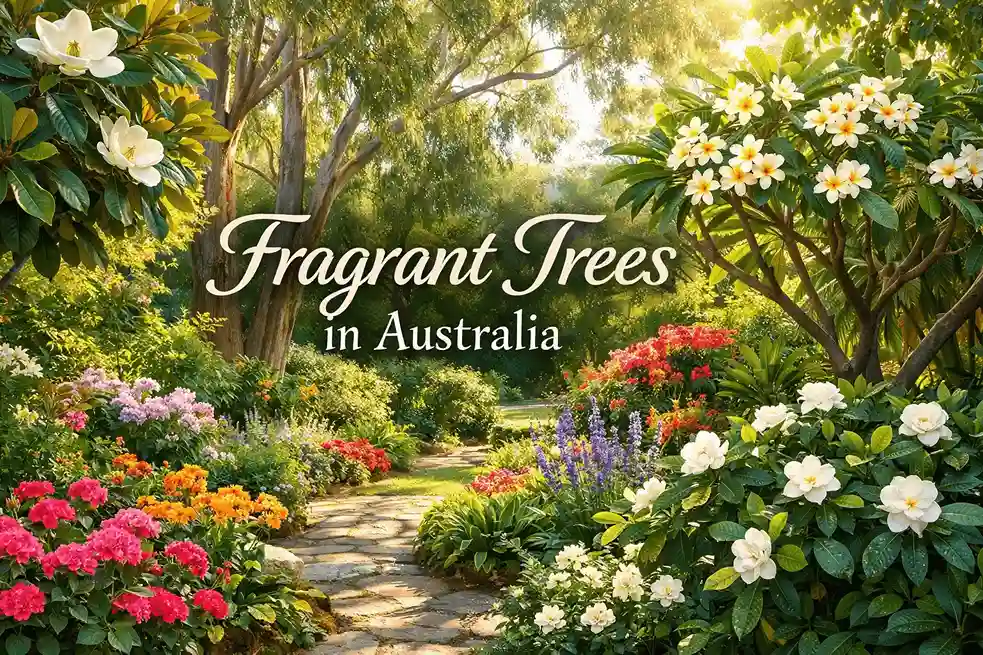
Fragrant trees in Australia are widely used to enhance outdoor and indoor environments through natural scent, seasonal blooms, and visual structure. These trees include both native Australian species and ornamental varieties, offering fragrant flowers, aromatic bark, and scented foliage suitable for diverse climates. Fragrant trees are commonly integrated into landscaping designs to create sensory gardens, improve ambiance, and support pollinators such as bees and birds. Their versatility allows them to thrive in full sun, partial shade, and compact urban spaces, making them a practical choice for both residential and public gardens.
Quick Summary
- Fragrant trees in Australia include native and ornamental species with scented flowers, bark, or foliage
- Many produce white fragrant flowers or seasonal blooms with strong perfume
- Suitable options are available for full sun, shade, and small garden spaces
- Some trees may produce unpleasant odors, making careful selection important
What Are Fragrant Trees and How Do They Work?
Fragrant trees are plant species that release scent through flowers, leaves, or bark due to natural aromatic compounds. These compounds, often volatile oils, evaporate into the air and create noticeable fragrance, especially during warm weather or flowering seasons. Fragrance in trees is produced through aromatic compounds in flowers, leaves, and bark, which play a role in pollinator attraction (Plant fragrance – Wikipedia).
Fragrance production plays a biological role in attracting pollinators such as bees, birds, and insects. In many perfume plants, scent intensity increases during peak blooming periods.
Key characteristics:
- Fragrance originates from volatile oils in flowers, foliage, or fragrant tree bark
- Scent is strongest during warm temperatures and active growth phases
- Helps attract pollinators and supports ecosystem interactions
Types of Fragrant Trees in Australia
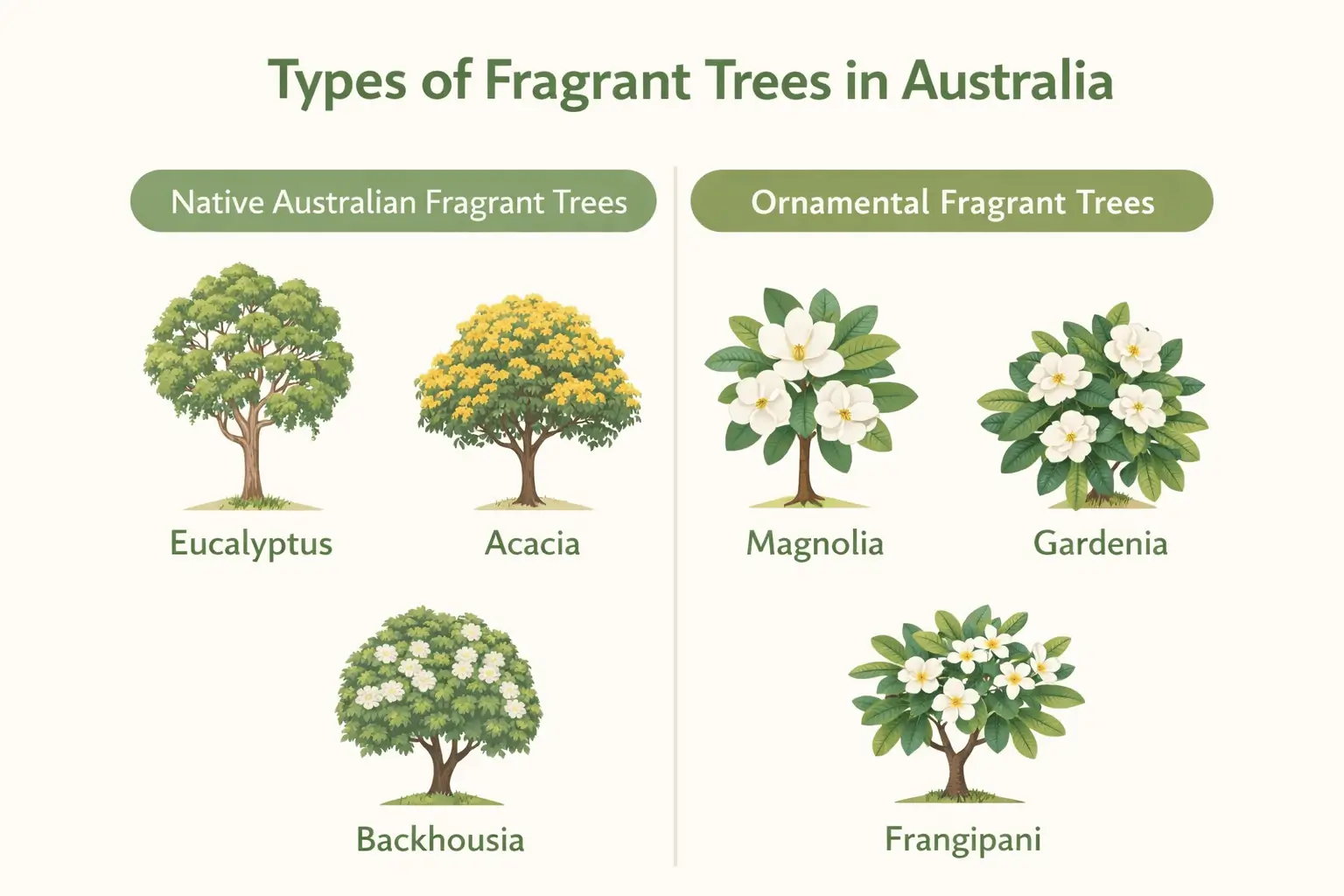
Native Australian Fragrant Trees
Native species are adapted to local climates and often produce natural aromatic oils.
- Eucalyptus – Known for strong aromatic oils in leaves and bark
- Acacia – Produces sweet, floral fragrance during blooming
- Backhousia citriodora (Lemon Myrtle) – Emits strong lemon-scented foliage
These fragrant Australian native trees are drought-tolerant and suitable for low-maintenance landscapes.
Ornamental and Decorative Fragrant Trees
Ornamental trees are selected primarily for visual appeal and strong fragrance.
- Magnolia – Large white fragrant flowers with rich perfume
- Gardenia trees – Intense floral scent and glossy foliage
- Frangipani (Plumeria) – Tropical fragrance with seasonal blooms
These decorative trees are commonly used in gardens focused on aesthetics and sensory design.
Most Fragrant Trees in Australia (Top Picks)
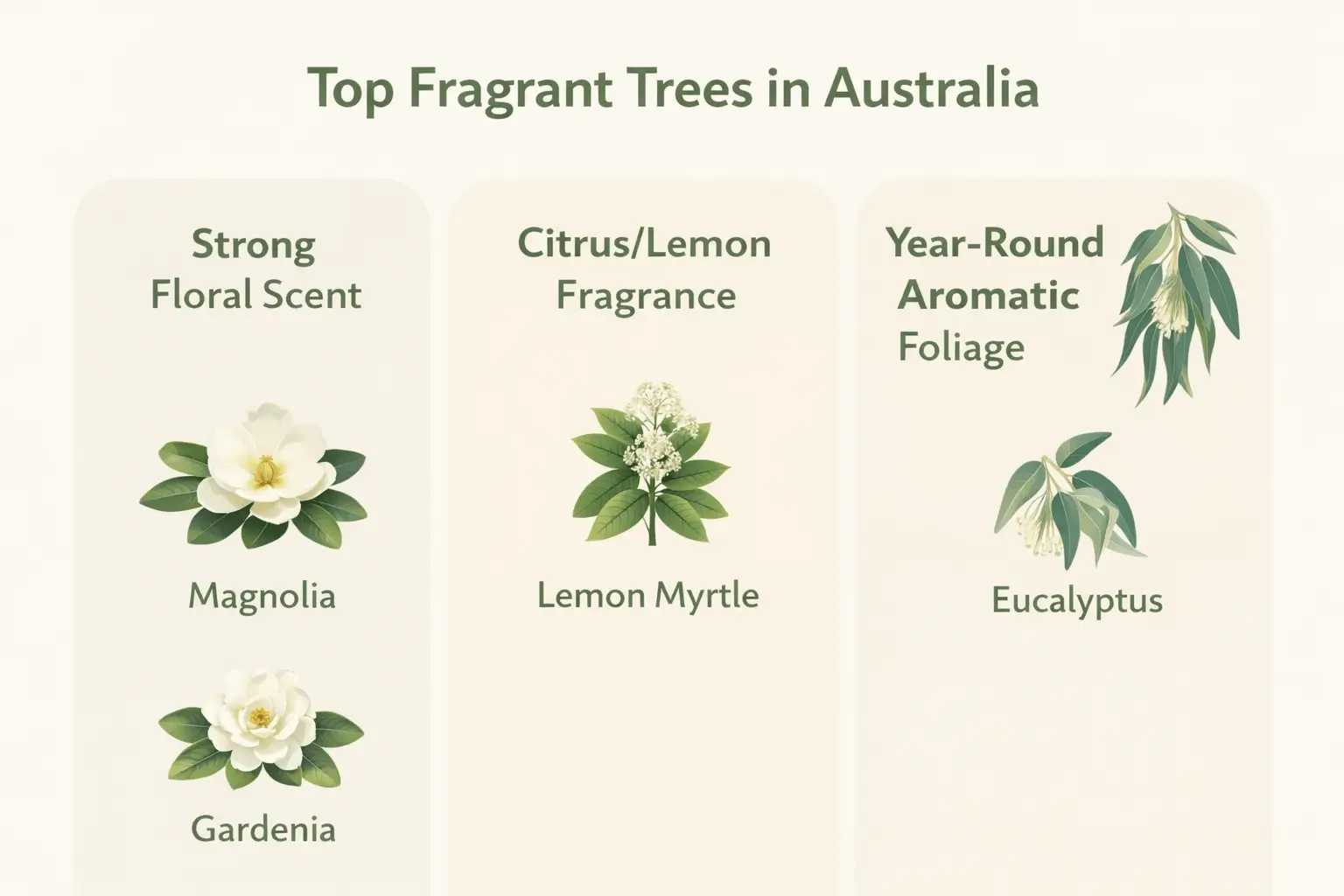
The most fragrant trees in Australia are known for strong scent intensity, especially during flowering seasons or warm climates.
Trees with strong floral scent:
- Magnolia
- Gardenia
- Frangipani
Trees with citrus or lemon fragrance:
- Lemon Myrtle
- Some Eucalyptus varieties
Trees with year-round aromatic foliage:
- Eucalyptus species
- Evergreen aromatic natives
These are often considered the best fragrant trees in Australia due to their consistent and noticeable scent.
Small Fragrant Trees for Australian Gardens
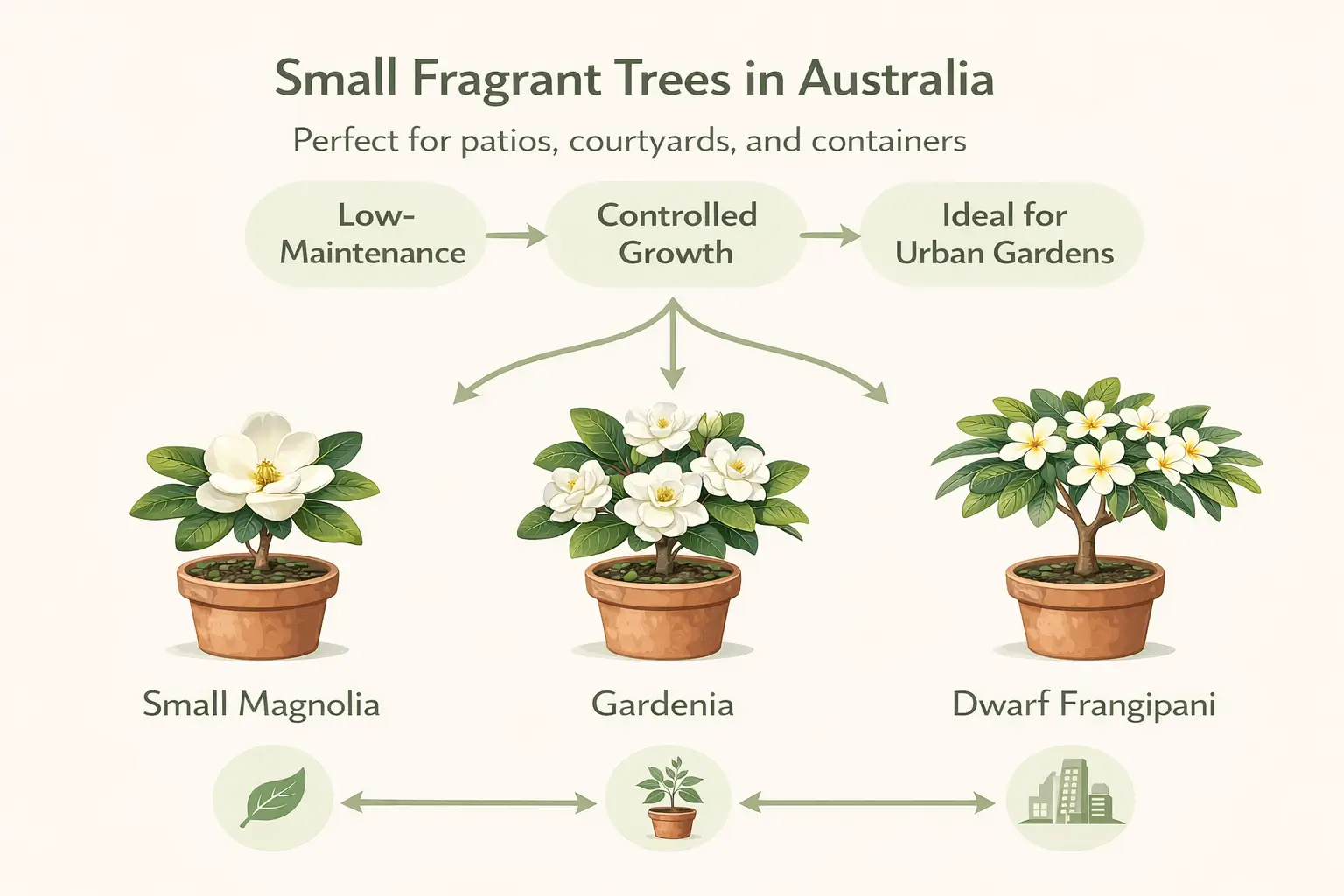
Small fragrant trees are ideal for urban environments, patios, and compact landscapes.
- Suitable for courtyards and container planting
- Low-maintenance options for beginners
- Controlled height makes pruning easier
Common choices include dwarf magnolia, compact citrus-scented trees, and smaller gardenia varieties. These small fragrant trees in Australia provide strong scent without requiring large garden space. For more compact and low-maintenance options, check out our 7+ Smart Small Feature Trees in Australia Guide and 8+ Essential Cottage Trees for Small Australian Gardens. Many small fragrant trees suitable for patios or indoor spaces are featured in our Guide to House Plants, offering both scent and greenery for indoor gardening.
Fragrant Trees for Full Sun, Shade, and Different Conditions
Fragrant trees vary in their environmental requirements, making it important to match species with local conditions.
- Full sun: Frangipani, citrus-scented trees, and flowering ornamentals
- Partial shade: Gardenia and softer floral trees
- Coastal areas: Salt-tolerant natives like certain eucalyptus
- Inland climates: Drought-tolerant native species
Fragrant trees in Australia perform best when planted according to sunlight exposure and climate compatibility. Depending on soil and wind exposure, you may also find our Ultimate Guide to the Best Trees for Clay Soil in Australia and 7+ Essential Wind Tolerant Trees Australia Guide helpful.
Evergreen Fragrant Trees and Year-Round Scent
Evergreen fragrant trees provide consistent foliage and, in some cases, continuous aroma throughout the year.
- Trees with aromatic leaves offer persistent scent
- Seasonal flowering trees provide stronger but temporary fragrance
- Climate conditions influence scent longevity
Fragrant trees in Australia that are evergreen are often preferred for maintaining year-round sensory appeal.
Fragrant Trees vs Fragrant Shrubs and Plants
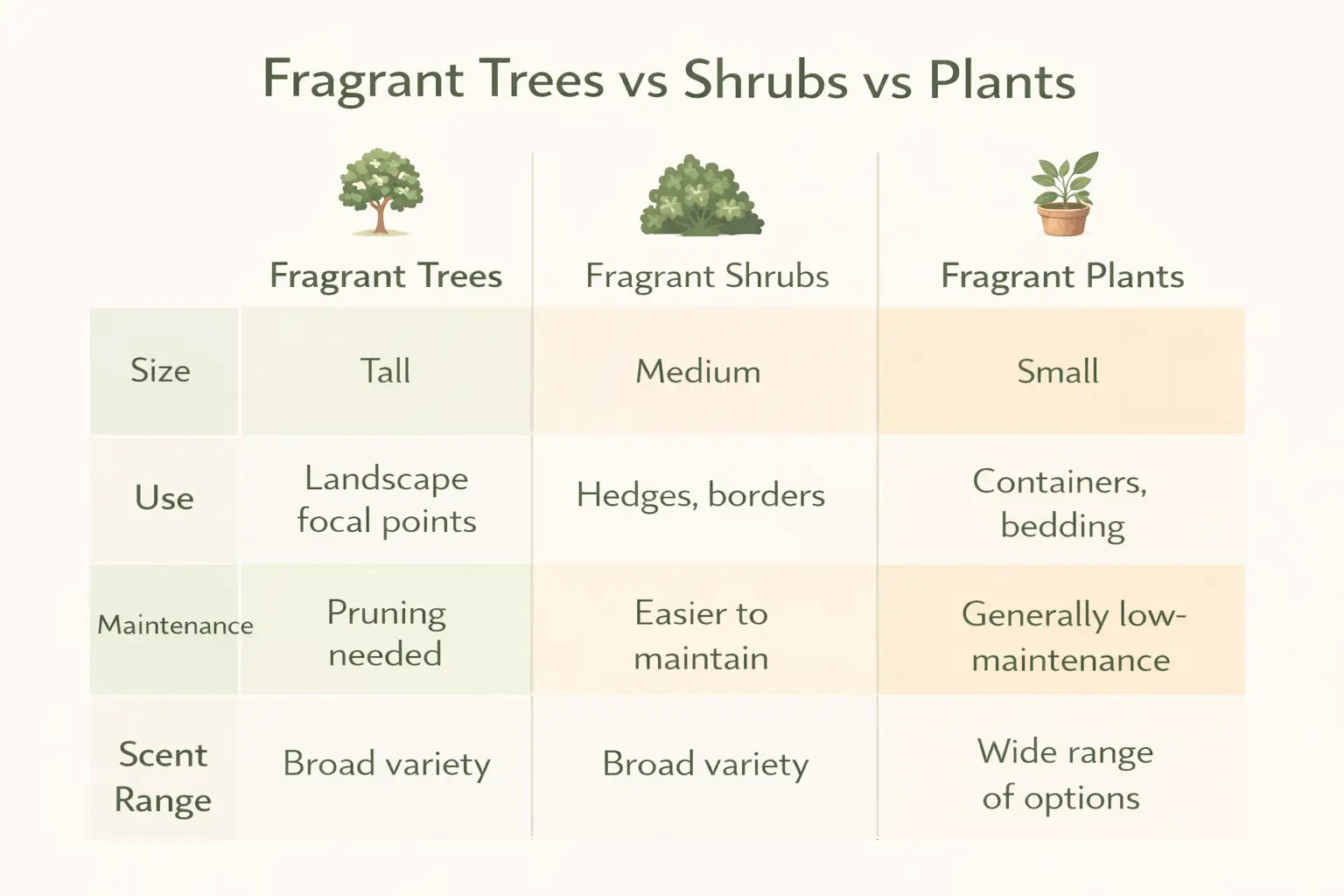
Fragrant trees differ from shrubs and smaller plants in size, maintenance, and scent distribution.
| Feature | Fragrant Trees | Fragrant Shrubs | Fragrant Plants |
| Size | Tall | Medium | Small |
| Use | Landscaping | Borders | Indoor/outdoor pots |
| Maintenance | Moderate | Low–Moderate | Low |
| Scent Range | Seasonal/strong | Frequent blooms | Continuous/light |
Fragrant shrubs in Australia and smaller plants are often used alongside trees to create layered scent in garden design.
Common Fragrant Flower Types Found on Trees
Fragrant trees produce a variety of flower types with different scent profiles.
- Small clustered white flowers: Strong, sweet fragrance (common in acacia)
- Large showy blooms: Intense scent (magnolia, frangipani)
- Night-scented flowers: Release fragrance after sunset
- Daytime fragrant flowers: Strong scent during sunlight hours
White fragrant flowers are especially popular due to their visibility and strong scent.
Trees With Unpleasant Odors (Smelly Trees to Avoid)
Some trees produce unpleasant smells rather than appealing fragrance. These are often referred to as smelly trees.
- Trees with decaying or fish-like odors
- Some species emit scent to attract specific pollinators
- Certain Australian trees may produce strong, undesirable smells
Despite unpleasant odor, these trees can still play ecological roles in pollination and biodiversity.
Choosing the Best Fragrant Trees for Your Garden
Selecting the best scented plants depends on environmental and practical factors.
- Climate compatibility with local conditions
- Available space and mature tree size
- Maintenance requirements
- Preferred scent type (sweet, citrus, subtle, or strong)
Careful planning ensures fragrant trees integrate effectively into garden design.
Beginner Mistakes When Growing Fragrant Trees
Common mistakes can reduce growth quality and scent production.
- Planting in incorrect sunlight conditions
- Ignoring mature tree size and spacing
- Overwatering or poor soil drainage
- Expecting continuous fragrance year-round
Understanding these issues improves long-term success.
Common Problems and How to Fix Them
Weak or No Fragrance
Weak fragrance is usually caused by insufficient sunlight or immature plants. Improving light exposure and ensuring proper nutrition can enhance scent production.
Yellow Leaves or Poor Growth
Yellowing leaves often result from overwatering or nutrient deficiency. Adjust watering schedules and apply balanced fertilizers.
Pest or Environmental Stress
Pests or unsuitable climate conditions can damage plant health. Selecting appropriate species and maintaining proper care reduces stress.
Fragrant Trees in Broader Gardening Design
Fragrant trees play a key role in landscaping and ecosystem support.
- Used in sensory gardens for visual and scent appeal
- Combined with shrubs and flowering plants for layered fragrance
- Support pollinators and biodiversity
- Complement ornamental trees and decorative grasses
They contribute both aesthetic and ecological value to garden environments. Pair fragrant trees with ornamental plants like Sweet Flag Grass or Purple Trailing Lantana to enhance garden aesthetics and biodiversity.
Conclusion
Fragrant trees in Australia provide both aesthetic beauty and sensory value through their flowers, foliage, and natural oils. By selecting the right species for climate, space, and desired scent, gardeners can create environments that are visually appealing and richly aromatic year-round. Proper planning and care ensure long-term performance and consistent fragrance.
FAQs
1. What are the most fragrant trees in Australia?
The most fragrant trees include species such as magnolia, frangipani, and certain eucalyptus varieties, known for their strong floral or aromatic scents.
2. Are there small fragrant trees suitable for home gardens?
Yes, many compact or dwarf fragrant trees are ideal for small gardens, patios, and urban spaces, offering strong scent without large growth.
3. Which fragrant trees grow best in full sun in Australia?
Frangipani and citrus-scented trees perform best in full sun, producing stronger fragrance in warm and bright conditions.
4. Do fragrant trees bloom all year round?
Most fragrant trees bloom seasonally, but evergreen species can provide consistent aromatic foliage throughout the year.
5. Why do some trees smell bad instead of fragrant?
Some trees produce unpleasant odors to attract specific pollinators or as part of natural defense mechanisms, supporting ecological balance.