Introduction
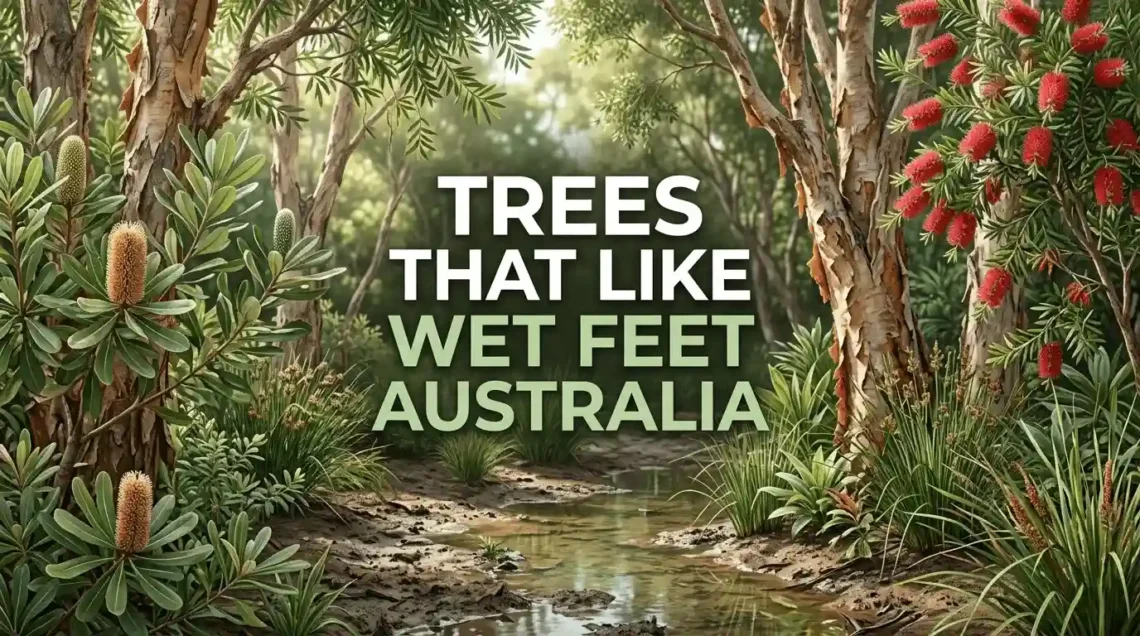
Trees that like wet feet in Australia thrive in waterlogged or poorly drained soils, such as clay-heavy ground or areas prone to flooding, where many plants fail. These tolerant species, often Australian natives, adapt to seasonal wet spells while offering both aesthetic appeal and ecological benefits. They are particularly useful in gardens near creeks, drainage lines, or low-lying backyard zones. By selecting the right trees for wet soil conditions, gardeners can transform problematic areas into functional, green spaces. This guide explains the best species, care strategies, and site-specific planting tips for success.
Quick Summary
- Trees that like wet feet in Australia include swamp banksia, bottlebrush, and paperbark, all adapted to waterlogged and clay soils.
- Ideal for poorly drained areas, these plants help absorb excess water and support native wildlife.
- Native species are low-maintenance and better suited to Australian climate extremes.
- Key success factors include choosing the right soil, light conditions, and plant size.
Understanding Wet Soil Conditions
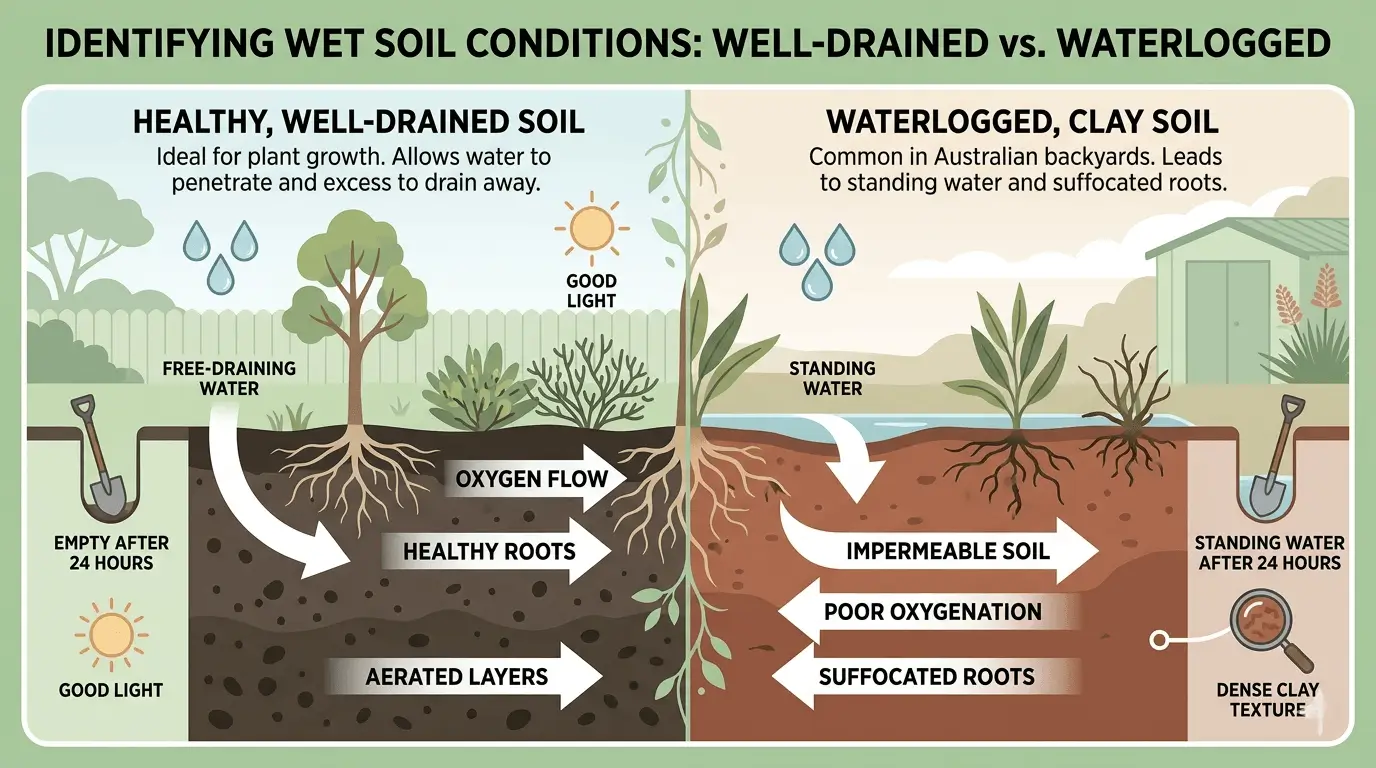
Wet soil refers to ground that remains saturated due to poor drainage, high clay content, or frequent rainfall. Plants that tolerate “wet feet” are adapted to survive with consistently moist or waterlogged roots. This condition is commonly known as waterlogging, where excess water fills the soil pores and restricts oxygen to plant roots, affecting plant health and growth.
How to Identify Wet Soil
- Water remains on the surface after rain for extended periods
- Soil feels sticky and compacted (typical of clay)
- Grass or plants show signs of yellowing or root stress
Simple Drainage Test
- Dig a hole and fill it with water
- If water remains after 24 hours, the soil is poorly drained
Common Causes in Australia
- Heavy clay soils in suburban backyards
- Seasonal rainfall and stormwater runoff
- Low-lying areas near gullies or creeks
Benefits of Wet Soil Planting
- Reduces soil erosion
- Improves water management
- Supports biodiversity in garden ecosystems
Top Trees for Wet Feet in Australia
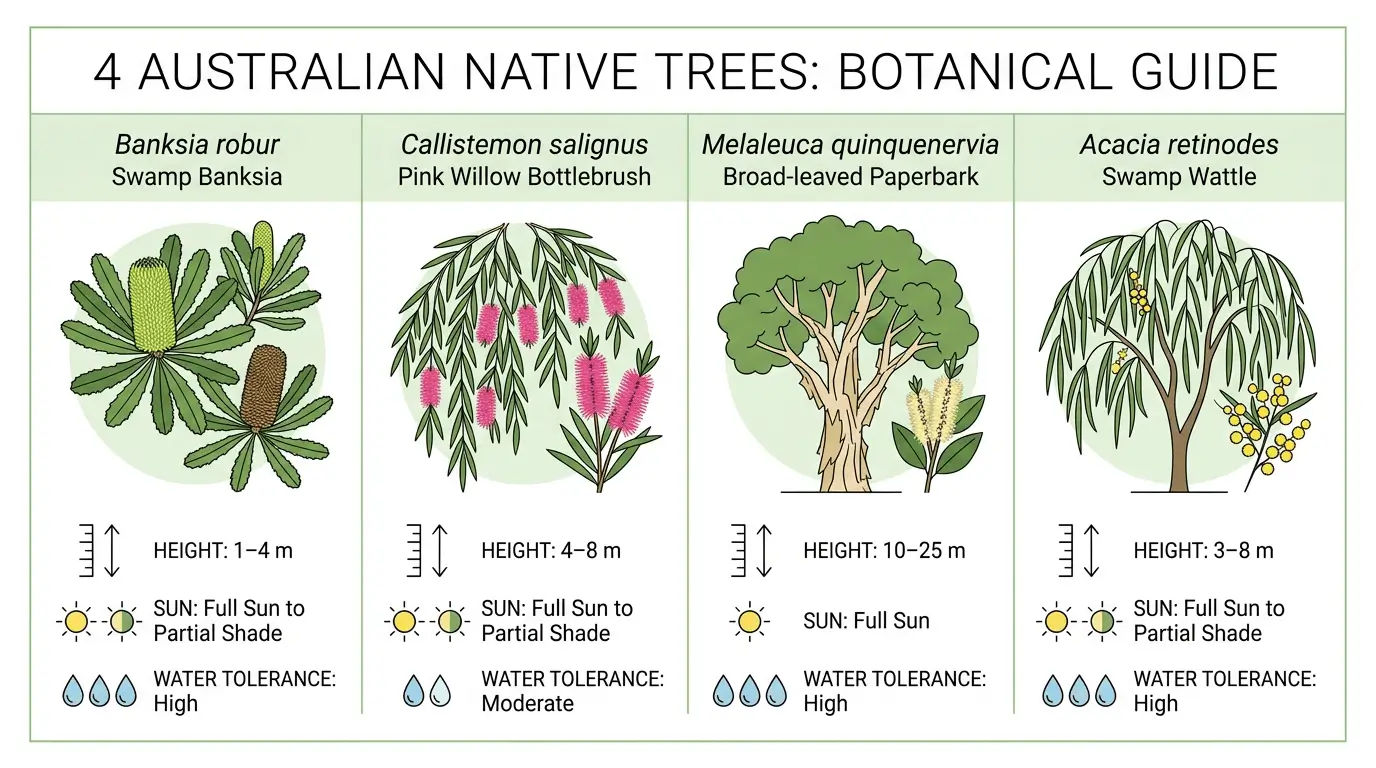
Several native species naturally thrive in wet conditions and provide both visual and ecological value.
Key Tree Options
- Banksia robur (Swamp Banksia)
- Golden flower spikes
- Attracts birds and pollinators
- Ideal for small to medium gardens
- Callistemon salignus (Willow Bottlebrush)
- Red bottlebrush flowers
- Tolerates clay and fluctuating moisture
- Suitable for creek edges
- Melaleuca quinquenervia (Paperbark Tree)
- Peeling bark and swamp tolerance
- Excellent for large wet landscapes
- Acacia retinodes (Wirilda)
- Fast-growing with yellow blooms
- Useful for erosion control
Wet soil gardening connects strongly with other landscape plant types such as [Best Trees for Clay Soil in Australia], [Ultimate Guide to Native Trees of Australia], and [Essential Fire Resistant Trees in Australia], which also focus on resilient Australian planting conditions.
Comparison Table
| Tree Species | Mature Height | Light Needs | Key Features | Best For |
| Banksia robur | 3–8 m | Full sun | Golden flowers, bird-attracting | Small to medium gardens |
| Callistemon salignus | 4–10 m | Full sun / part shade | Red blooms, adaptable | Creek banks, clay soils |
| Melaleuca quinquenervia | 10–20 m | Full sun | Peeling bark, swamp-tolerant | Large wet areas |
| Acacia retinodes | 5–10 m | Full sun | Fast-growing, erosion control | Slopes and drainage zones |
Small Trees for Compact Wet Sites
Small trees that like wet soil in Australia are ideal for urban gardens or limited spaces.
Recommended Options
- Grevillea baileyana
- Hymenosporum flavum (Native Frangipani)
Key Benefits
- Suitable for areas under 5 meters in height
- Adapt to temporary flooding
- Provide structure without overcrowding
Shrubs and Ground Covers for Wet Areas
Shrubs and ground covers enhance layered planting and stabilize wet soil.
Common Options
| Type | Examples | Sun/Shade Tolerance |
| Shrubs | Bauera rubioides, Melaleuca spp. | Full sun to shade |
| Ground Covers | Juncus usitatus, Viola hederacea | Part shade |
Why Use Them
- Improve soil stability
- Reduce runoff
- Fill gaps under trees
Plants for Wet Soil and Shade
Plants that like wet soil and shade in Australia perform well under tree canopies or low-light conditions.
Suitable Choices
- Swamp lily (Crinum species)
- Bird’s nest fern (Asplenium australasicum)
Planting Tips
- Layer beneath taller trees
- Maintain airflow to prevent fungal issues
- Combine with shade-tolerant ground covers
Plant Size
Plant size varies depending on species and environmental conditions.
Typical Examples
- Banksia robur: 3–8 m height, 2–3 m width
- Melaleuca quinquenervia: up to 20 m in open landscapes
Influencing Factors
- Soil type (clay can restrict root spread)
- Pruning practices
- Water availability
Indoor growth is generally not applicable for these trees, as they are suited to outdoor environments.
Growth Rate
Growth rates depend on species and environmental conditions.
General Patterns
- Fast growers: Melaleuca, Acacia
- Moderate growers: Banksia
Key Influences
- Consistent moisture accelerates growth
- Seasonal rainfall boosts development
- Nutrient availability affects vigor
Care Guide
Watering
- Established plants rely on rainfall
- Young plants need consistent moisture during dry periods
Light
- Most species prefer full sun
- Some tolerate partial shade
Soil
- Suitable for clay or poorly drained soils
- Add organic matter cautiously to avoid water retention issues
Fertilizer
- Use low-phosphorus native fertilizers in spring
Pruning
- Prune after flowering to maintain shape
- Remove dead or diseased branches
Plants That Soak Up Excess Water
Certain species actively absorb and manage excess moisture in wet landscapes.
Effective Water-Absorbing Plants
- Paperbark trees (Melaleuca species)
- Rushes (Juncus species)
Benefits
- Reduce waterlogging
- Improve drainage over time
- Support stormwater management
Comparison: Sun vs. Shade Wet Soil Plants
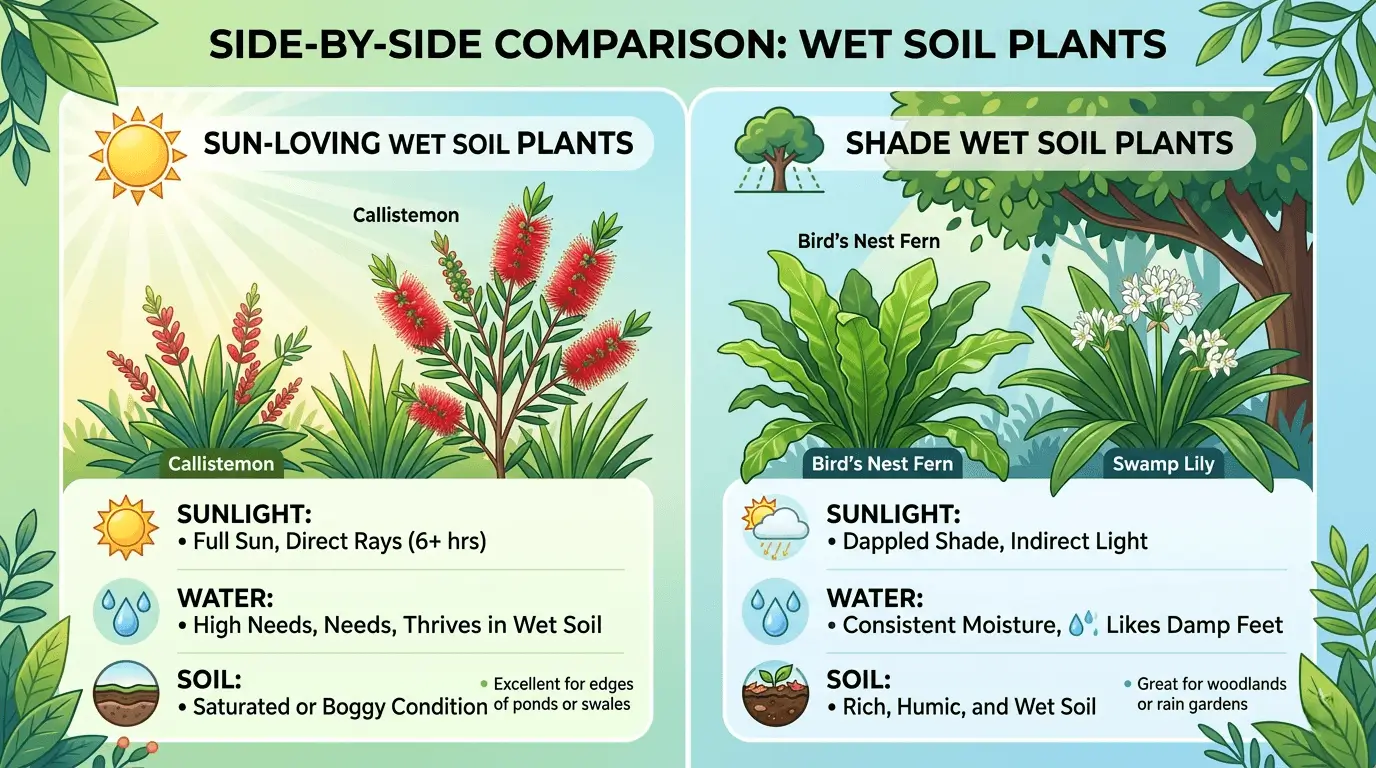
| Feature | Sun-Loving Plants | Shade-Tolerant Plants |
| Example | Callistemon | Alocasia brisbanensis |
| Light Requirement | Full sun | Partial to full shade |
| Growth Rate | Faster | Moderate |
| Use Case | Open areas | Understory planting |
Common Problems and Solutions
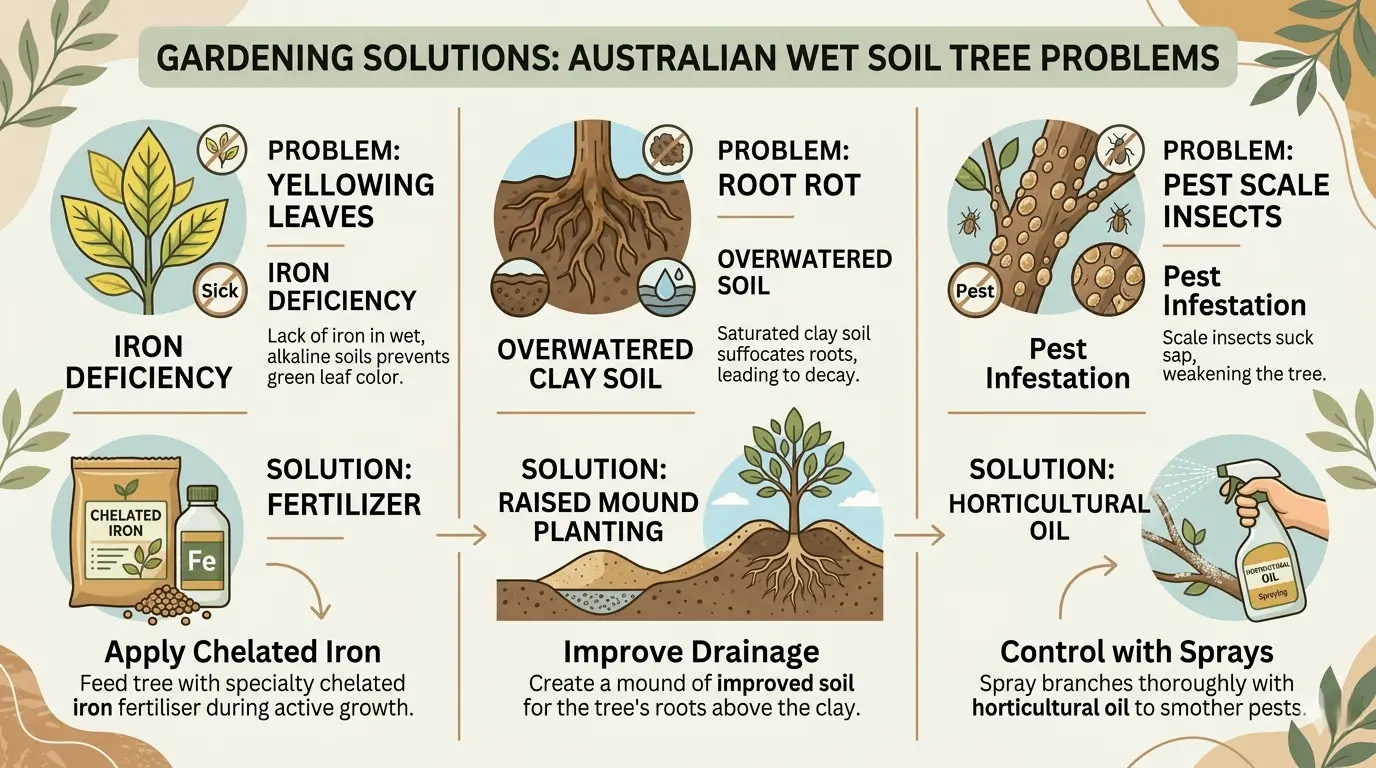
Yellowing Leaves
- Cause: Iron deficiency in wet clay soils
- Solution: Apply chelated iron and adjust soil pH
Root Rot
- Cause: Constant water saturation
- Solution: Improve drainage or plant on raised mounds
Slow Growth
- Cause: Insufficient sunlight
- Solution: Relocate or prune surrounding plants
Pests
- Example: Scale insects on bottlebrush
- Solution: Apply horticultural oil
Common Mistakes
- Planting drought-tolerant species in wet soil
- Overwatering natives during dry seasons
Content Differentiation: Native vs. Exotic Options
Native Plants
- Adapted to Australian conditions
- Better drought recovery
- Support local wildlife
Exotic Plants
- May struggle with fluctuating moisture
- Require more maintenance
- Less ecological benefit
Key Insight
Native species like Banksia and Melaleuca provide long-term resilience and sustainability in wet environments.
Conclusion
Trees that like wet feet in Australia, including swamp banksia and bottlebrush, provide practical solutions for waterlogged gardens. By selecting species suited to soil, light, and space conditions, gardeners can turn challenging wet areas into thriving landscapes. Native plants remain the best choice due to their adaptability, low maintenance, and ecological value. The key takeaway is simple: match the plant to the environment to achieve sustainable, low-effort growth.
FAQs
What are the best native trees that like wet feet in Australia?
Swamp banksia, paperbark, and bottlebrush are among the best native trees for wet conditions due to their ability to tolerate flooding and poor drainage.
Can small trees handle clay soil with poor drainage in Australia?
Yes, small trees like Grevillea baileyana grow well in clay soils and adapt to waterlogged conditions without requiring major soil improvements.
Which plants tolerate wet soil and shade in Australian gardens?
Bird’s nest fern and swamp lily are ideal for shaded wet areas, as they naturally grow in moist, low-light environments.
How do I care for trees in constantly wet soil?
Use low-phosphorus fertilizers, monitor root health, prune regularly, and ensure plants receive adequate sunlight to prevent disease.
What shrubs absorb water in wet Australian yards?
Melaleuca shrubs and Bauera species effectively absorb excess moisture while stabilizing the soil.
Are there fruit trees for wet feet in Australia?
Very few fruit trees tolerate wet conditions, but some native relatives, such as certain quandong types, perform better than standard fruit varieties.