Introduction
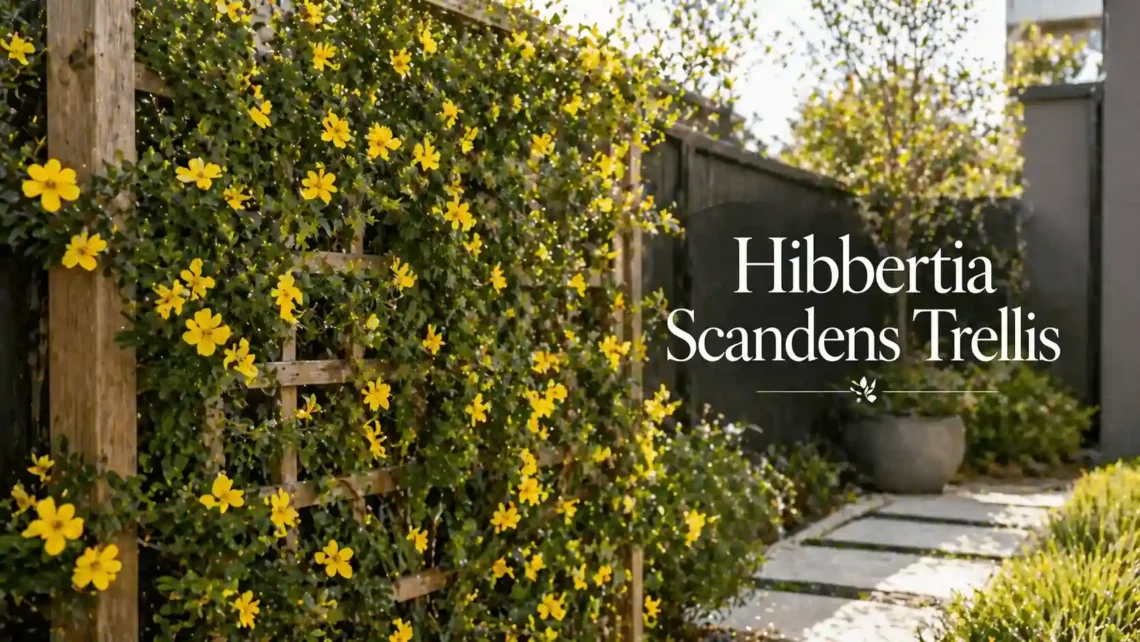
Hibbertia scandens trellis refers to using structured supports to guide the growth of Hibbertia scandens, a vigorous Australian native climber known for its bright yellow flowers and spreading habit. This climbing plant, often called guinea flower or snake vine, benefits significantly from vertical support. Training it on a trellis improves airflow, promotes healthier foliage, and enhances flowering performance. It also helps gardeners control its rapid growth and maintain a clean, structured appearance in landscapes. Proper trellis use ensures better plant management while maximizing ornamental value in gardens, fences, and pergolas.
Quick Summary
- Hibbertia scandens is a fast-growing climbing vine that thrives when trained on a trellis
- Trellis support improves airflow, sunlight exposure, and flowering performance
- Proper spacing and placement prevent overcrowding and disease issues
- Regular pruning and pest monitoring are essential for healthy growth
What Is Hibbertia Scandens and How Does It Grow?
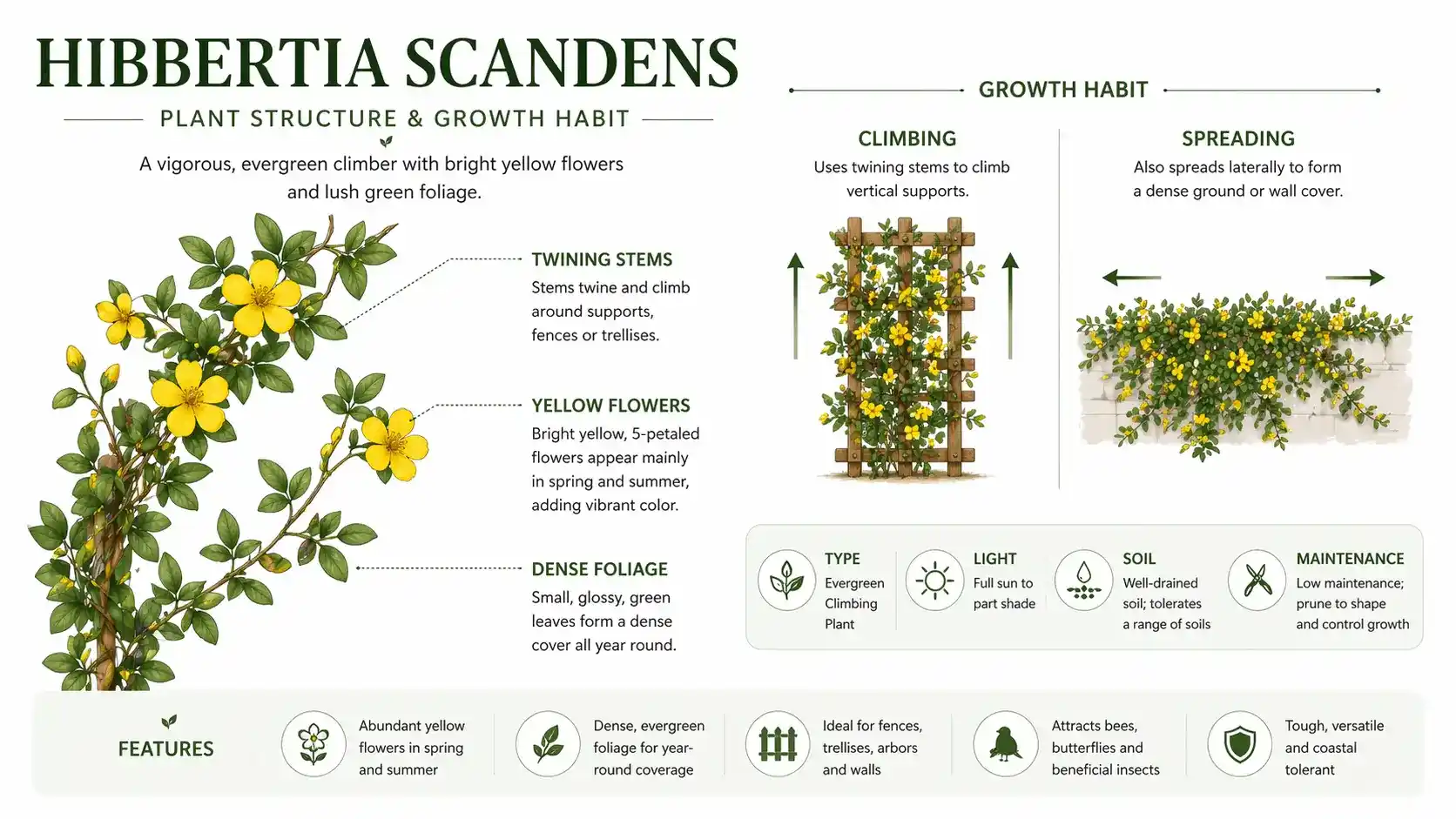
Hibbertia scandens is a fast-growing Australian native climbing vine, commonly known as guinea flower, climbing guinea flower, or golden guinea flower. It belongs to the Dilleniaceae family and is valued for its bright yellow blooms and vigorous growth habit.
Hibbertia scandens is a fast-growing Australian native climbing vine (see Hibbertia scandens on Wikipedia for botanical classification), commonly known as guinea flower or climbing guinea flower.
This plant, sometimes misspelled as hibertia scandens, naturally grows as a twining and sprawling climber. It uses flexible stems to spread across surfaces rather than attaching with tendrils.
Key characteristics include:
- Rapid growth rate in warm climates
- Ability to climb fences, pergolas, and trellises
- Dense foliage with trailing or twining stems
- Suitable as a hibbertia scandens climber for vertical landscaping
Under ideal conditions, hibbertia scandens growth is fast and can cover large areas within a single season.
🌿 My Experience Growing Hibbertia Scandens on a Trellis
When I first grew hibbertia scandens, I let it spread naturally without any support. The plant stayed low, a bit messy, and didn’t flower as well as I expected.
After adding a simple metal trellis, the difference became obvious within a few weeks.
In the beginning, I had to gently tie a few stems to guide the plant upward. Hibbertia isn’t a strong self-clinger like ivy, so it needs a little help early on. But once the stems found support, they started wrapping around the trellis naturally.
Within about 8–10 weeks, the plant began growing vertically instead of spreading across the ground. It also received more sunlight, which noticeably improved flowering.
From my experience, using a trellis doesn’t just make hibbertia scandens look better — it actually helps the plant grow healthier and more structured over time.
Why Use a Trellis for Hibbertia Scandens?
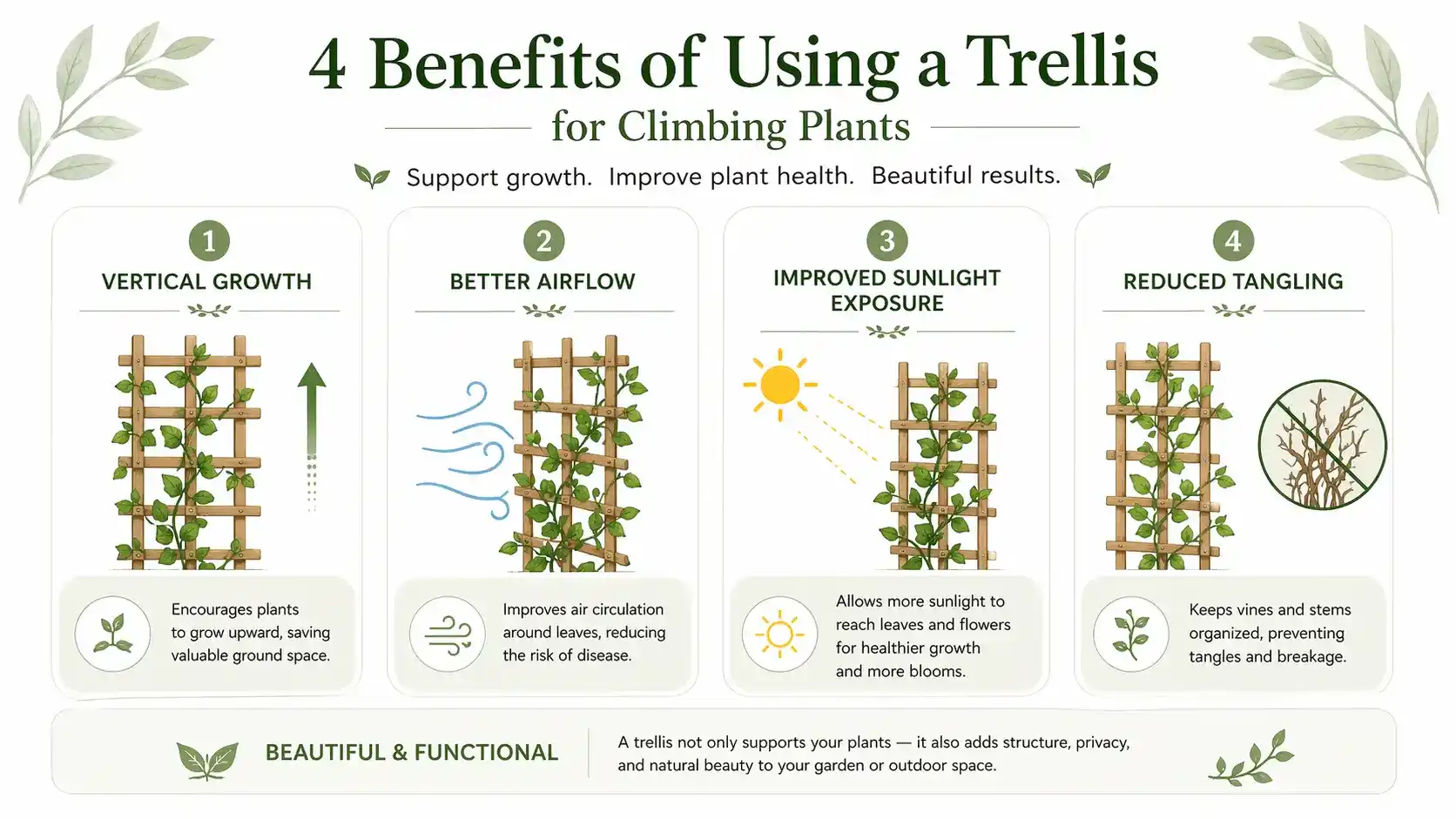
Using a hibbertia scandens trellis improves plant structure, health, and visual appeal. This guinea vine or snake vine plant naturally spreads, but support structures help direct its growth vertically.
Benefits include:
- Encourages vertical growth and efficient space use
- Improves sunlight exposure and airflow
- Enhances flowering and reduces disease risk
- Prevents ground spread and tangling
A trellis is especially useful when growing hibbertia scandens on fences or garden boundaries.
Types of Trellis Suitable for Hibbertia Scandens
Common Trellis Options
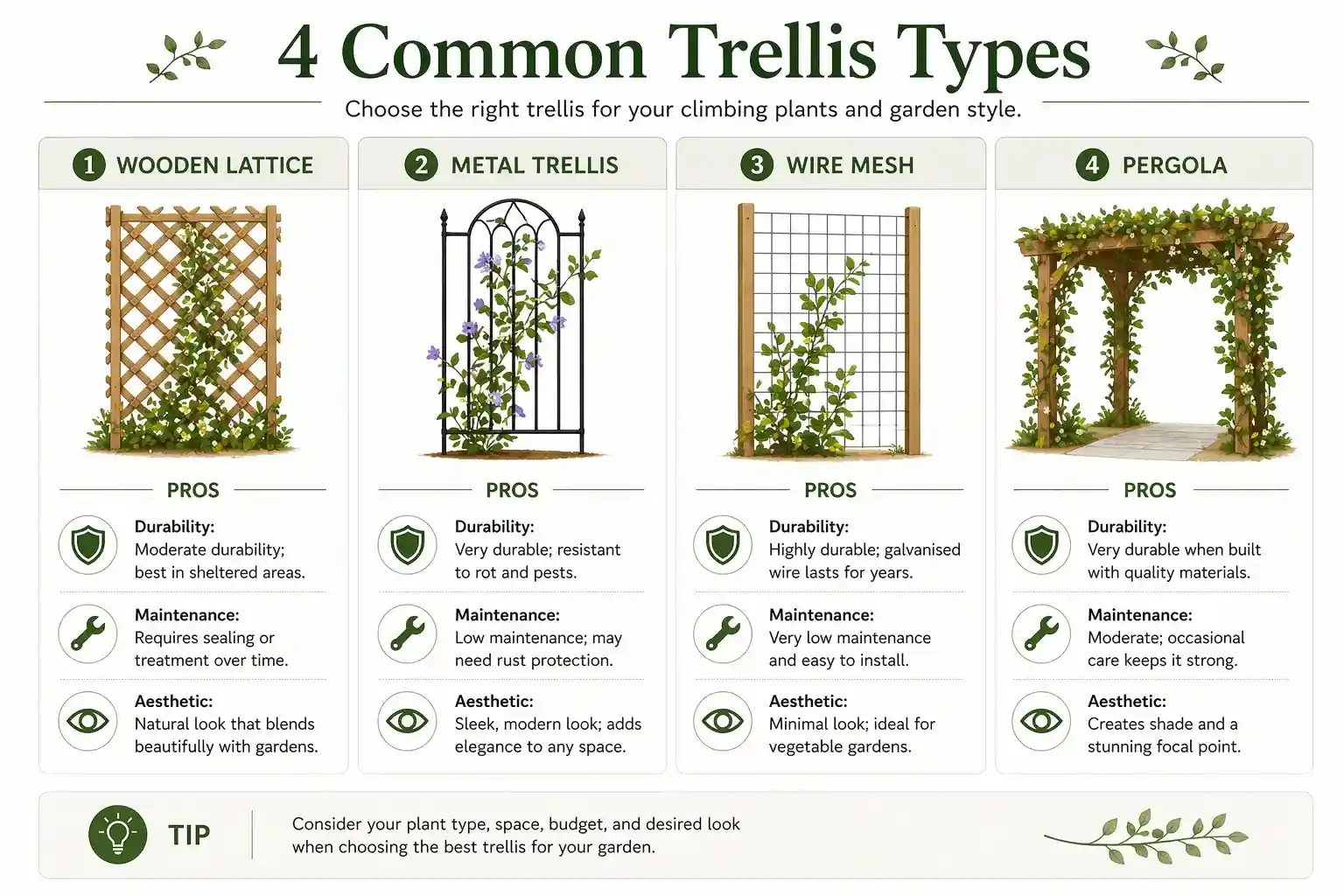
Different trellis designs can support climbing plants like hibbertia scandens. The choice depends on garden size, aesthetics, and durability.
- Wooden lattice panels
- Wire mesh or steel trellis
- Garden arches and pergolas
- Fence-mounted supports
These options work well for vines for trellis in sun and provide flexibility for different landscaping needs.
Comparison of Trellis Types
| Trellis Type | Best For | Durability | Visual Appeal | Maintenance |
| Wooden lattice | Decorative gardens | Medium | High | Moderate |
| Metal trellis | Long-term support | High | Medium | Low |
| Wire mesh | Budget setups | Medium | Low | Low |
| Pergola | Large climbers | High | High | Moderate |
Hibbertia Scandens Trellis Spacing and Placement
Proper hibbertia scandens trellis spacing ensures healthy growth and prevents overcrowding. This plant can spread widely, so planning for its mature size is essential.
Key considerations:
- Space plants 1.5 to 2 meters apart
- Keep a gap of 20–30 cm from walls or fences
- Allow room for mature height and width spread
- Position in full sun to partial shade
Correct placement improves airflow and supports the plant’s natural growth habit.
⚠️ Why Your Hibbertia Scandens Is Not Climbing the Trellis
If your hibbertia scandens isn’t climbing as expected, it’s usually not a serious problem — but a few small factors can make a big difference.
1. The plant is too young
Young stems are soft and don’t naturally grab onto supports yet. Give it time, or guide the stems manually in the early stages.
2. No initial support or tying
Unlike aggressive climbers, hibbertia often needs a little help to get started. Use soft ties or garden clips to attach stems to the trellis.
3. Not enough sunlight
If the plant isn’t getting enough direct light, growth becomes weak and slow. This reduces its ability to climb and spread upward.
4. The trellis surface is too smooth
Very smooth metal or plastic surfaces can make it harder for stems to grip. A slightly textured or grid-style trellis works much better.
5. Growth direction isn’t guided
If stems are left unattended, they may grow sideways instead of upward. Regularly checking and redirecting growth helps train the plant effectively.
In most cases, once you correct these small issues, hibbertia scandens will begin climbing steadily and fill out the trellis over time.
Step-by-Step Guide to Training Hibbertia Scandens on a Trellis
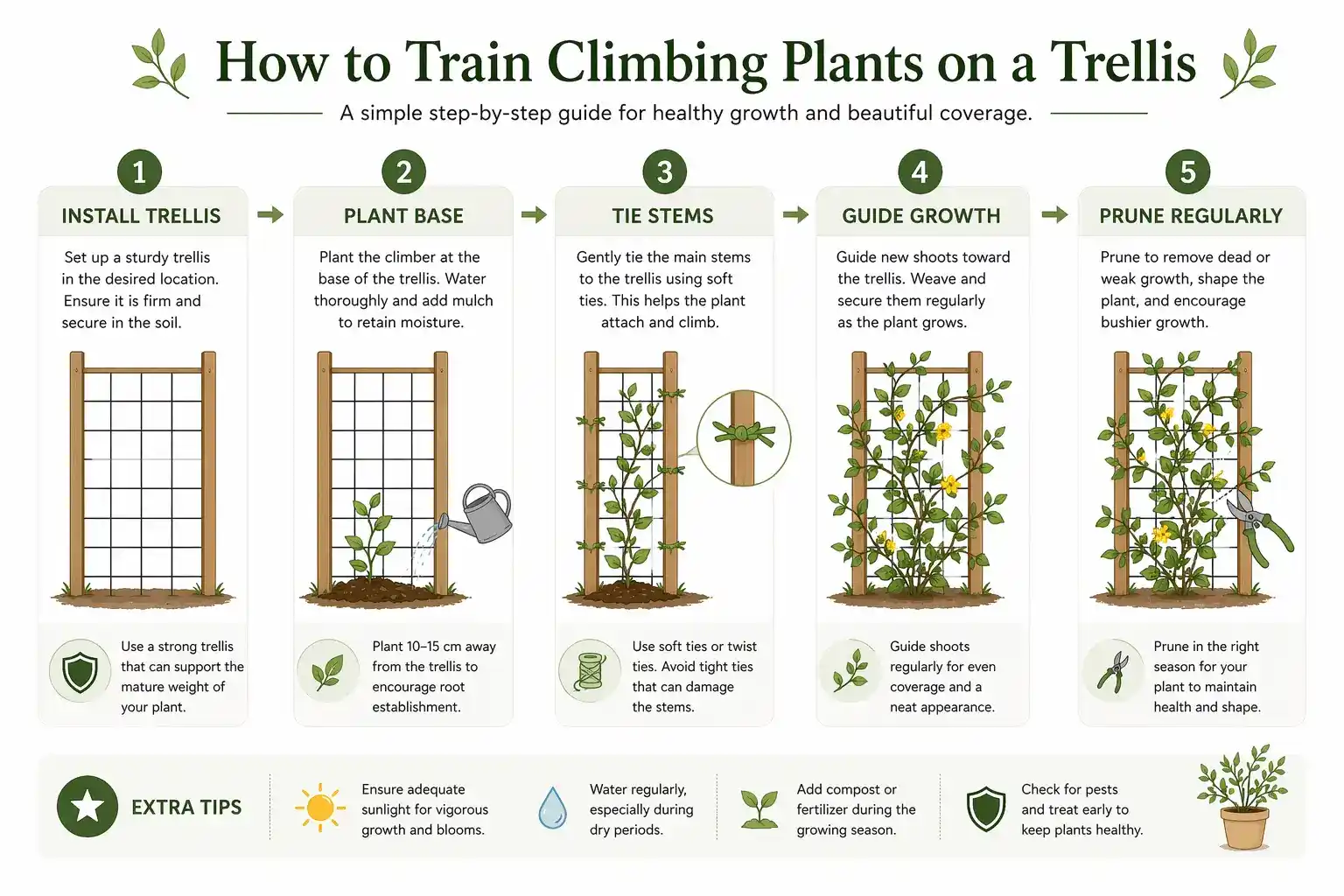
Training hibbertia scandens on a trellis ensures structured growth and better flowering.
Steps:
- Install the trellis securely before planting
- Plant at the base with proper spacing
- Gently tie young stems to the support
- Guide growth direction regularly
- Prune to maintain shape and density
Early training is critical, as young stems are easier to guide than mature ones.
Care Guide for Hibbertia Scandens on a Trellis
Watering and Soil
Hibbertia scandens prefers well-draining soil and moderate watering. Once established, it tolerates short dry periods but performs best with consistent moisture.
Light Requirements
Full sun promotes optimal flowering and dense growth. Partial shade is tolerated but may reduce bloom production.
Pruning and Maintenance
Regular pruning encourages bushier growth and prevents excessive spreading across the trellis. Removing tangled or weak stems improves airflow.
For a broader understanding of plant care principles, see our complete Guide to House Plants, which covers essential watering, light, and maintenance basics.
Common Problems with Hibbertia Scandens and How to Fix Them
Yellowing Leaves
Yellow leaves are usually caused by overwatering or poor drainage. Improving soil structure and reducing watering frequency can resolve this issue.
Poor Climbing or Weak Growth
Weak growth often results from insufficient support or lack of sunlight. Adjust trellis placement and ensure adequate sun exposure.
Pest Issues
Common pests include aphids and scale insects.
Treatment:
- Use natural insecticidal sprays
- Prune affected areas
Fungal Diseases
Fungal issues occur due to poor airflow and high humidity.
Prevention:
- Maintain proper spacing
- Prune regularly to improve ventilation
Common pests include aphids and scale insects, which can quickly damage foliage if left untreated. For effective solutions, see Aphids on Plants: 7 Proven Fixes to Save Your Plants Fast.
⏱️ How Fast Does Hibbertia Scandens Climb a Trellis?
Hibbertia scandens is a moderate grower, and its climbing speed depends on sunlight, support, and care.
- Weeks 1–3: Needs manual guidance and tying
- Weeks 4–6: Starts attaching and growing upward
- Weeks 7–10: Noticeable vertical growth
- After 3 months: Begins covering large sections of the trellis
With proper conditions, it can create a dense, attractive climbing display within a single growing season.
Beginner Mistakes When Using a Trellis
Many beginners face issues due to improper setup or care.
Common mistakes:
- Using weak or unstable trellis structures
- Incorrect plant spacing
- Not training early growth
- Overwatering climbing plants
- Ignoring pruning needs
Avoiding these mistakes improves long-term plant performance.
Comparison — Hibbertia Scandens vs Other Trellis Climbers
| Plant | Growth Speed | Sun Needs | Maintenance | Best Use |
| Hibbertia scandens | Fast | Full sun | Moderate | Fences, trellis |
| Bougainvillea | Fast | Full sun | High | Walls |
| Jasmine | Moderate | Partial sun | Low | Fragrance gardens |
Hibbertia scandens is ideal for gardeners seeking a fast-growing, moderately maintained climber.
Landscaping Ideas Using Hibbertia Scandens Trellis
Hibbertia scandens trellis setups can enhance garden design and structure.
Ideas:
- Cover fences for privacy screening
- Create vertical garden features
- Use on pergolas for shaded walkways
- Combine with other climbers for layered effects
Its dense foliage and bright flowers make it suitable for decorative landscaping.
For broader design inspiration, explore Modern Australian Native Garden: 10+ Smart Design Ideas Guide to combine climbers with native landscaping.
Environmental Limitations and Growing Conditions
Hibbertia scandens, often called snake vine in Australia, thrives in warm climates and coastal regions.
Key conditions:
- Prefers warm, temperate environments
- Sensitive to frost and cold temperatures
- Performs well in coastal conditions with good airflow
Protecting the plant from frost is essential for long-term survival. If you’re planning a complete garden setup, refer to Plants for Homes and Gardens Guide for selecting compatible plant combinations.
Conclusion
Hibbertia scandens trellis systems provide an effective way to manage and showcase this fast-growing climbing plant. With proper spacing, support structures, and consistent care, gardeners can improve plant health and visual appeal. Understanding its growth habits, selecting the right trellis, and addressing common problems ensures successful long-term growth. This approach allows hibbertia scandens to thrive as a structured and attractive feature in gardens and landscapes.
FAQs
How fast does hibbertia scandens grow on a trellis?
Hibbertia scandens grows quickly under full sun and proper care, often covering a trellis within a single growing season.
What is the best trellis for hibbertia scandens?
Strong structures such as metal trellises or wooden lattice panels are best, as they can support the plant’s vigorous growth.
Can hibbertia scandens grow without a trellis?
Yes, it can grow without a trellis, but it will spread along the ground instead of climbing vertically.
How do you maintain hibbertia scandens on a trellis?
Maintenance includes regular pruning, guiding stems along the support, and ensuring proper watering and sunlight.
What are the most common hibbertia scandens problems?
The most common issues include overwatering, pest infestations, and poor airflow, which can lead to disease.