Introduction
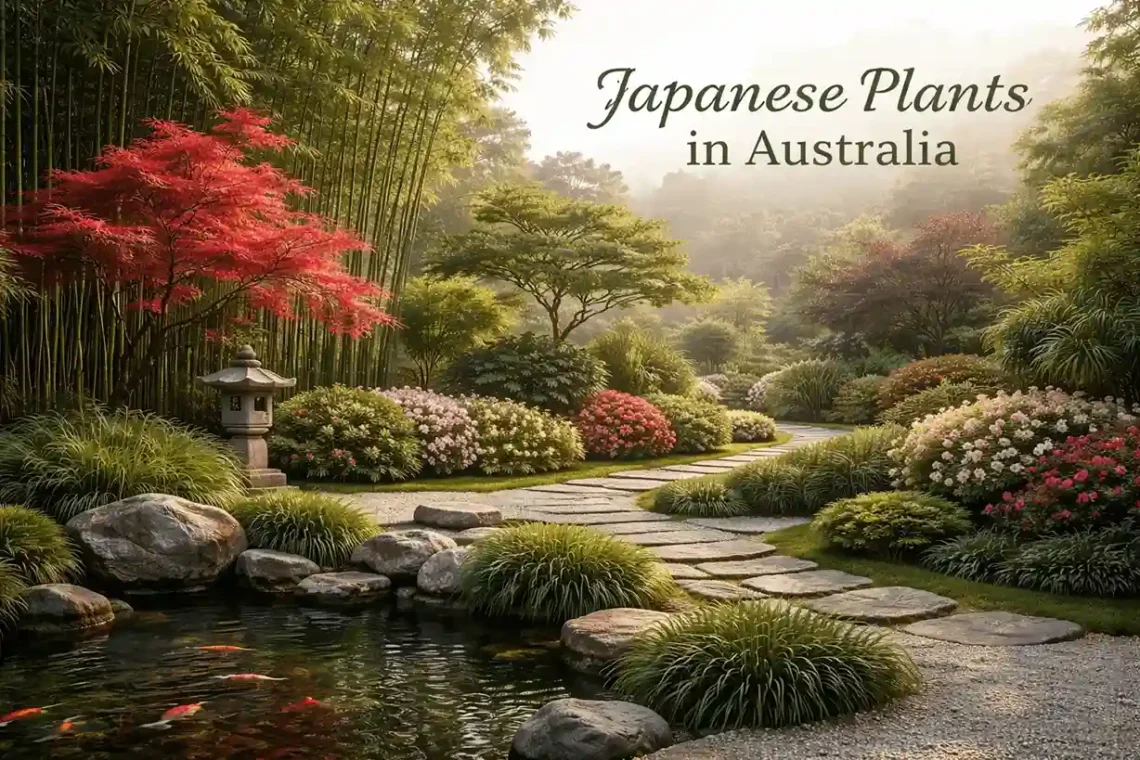
Japanese plants in Australia blend traditional Japanese aesthetics with local climate adaptations, focusing on serene, balanced landscapes that suit warmer and more variable conditions. These gardens emphasize harmony, structure, and natural flow while incorporating heat-tolerant species and drought-resilient substitutes. By selecting the right mix of traditional plants and climate-adapted varieties, gardeners can achieve authentic Japanese-style environments without excessive maintenance. This approach supports both outdoor landscapes and indoor greenery, ensuring plants thrive across Australia’s diverse climates, from humid coastal regions to dry inland areas. Japanese garden design is deeply rooted in traditional aesthetics such as balance and simplicity, as seen in classical garden philosophy like Zen gardens.
Quick Summary
- Japanese plants in Australia combine classic species with climate-adapted or native alternatives for better survival.
- Evergreen shrubs, sculptural trees, and textured groundcovers create a balanced, zen-like garden.
- Heat tolerance, drought resistance, and soil adaptability are key for long-term success.
- Proper care focuses on low-maintenance watering, filtered light, and well-draining soil.
Best Plants for Japanese Gardens in Australia
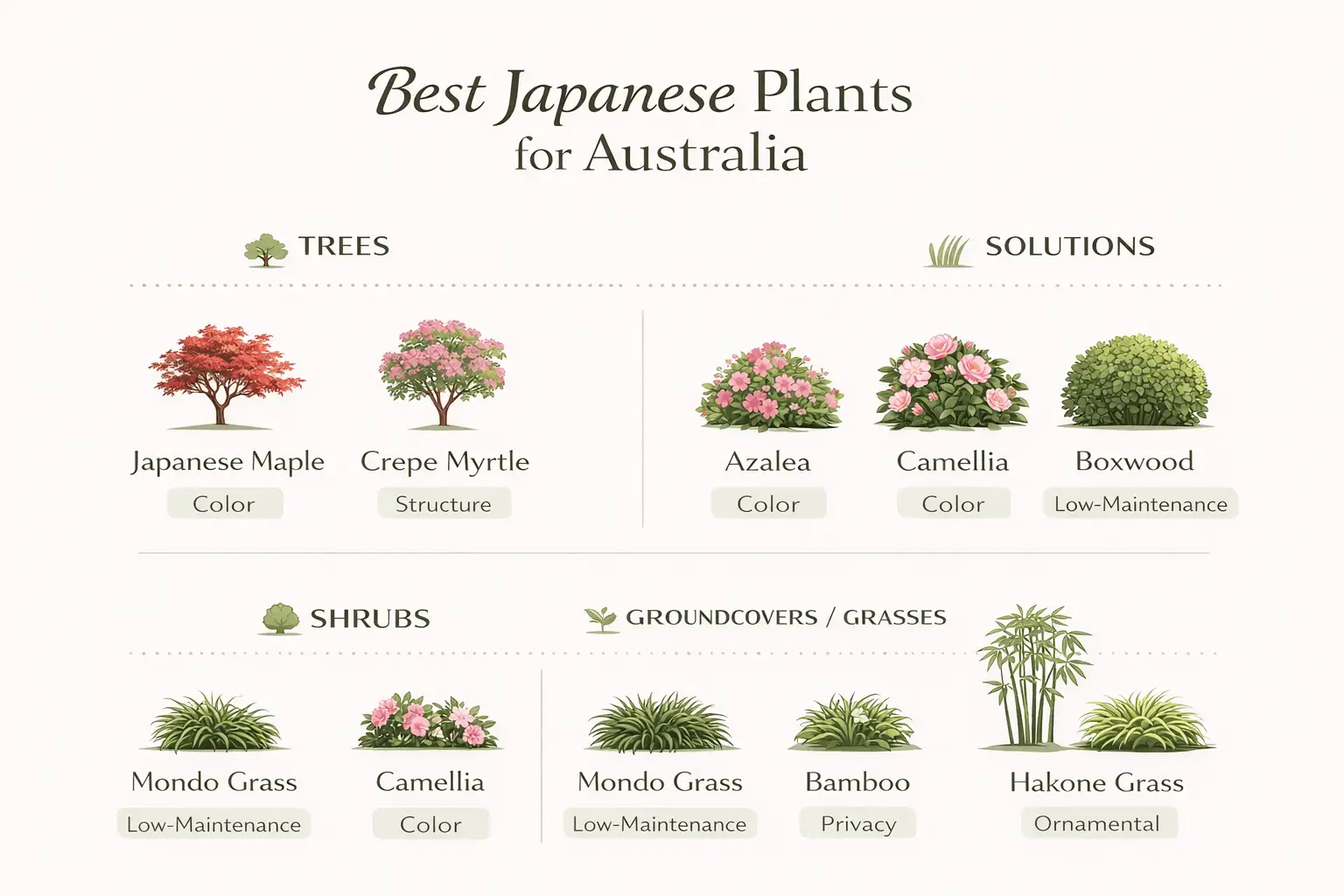
Japanese garden plants in Australia include traditional species alongside adapted varieties that perform well in local climates. The focus is on structure, seasonal interest, and resilience.
To expand your plant selection options, you can also explore complementary landscaping species like 7+ Powerful Bamboo Plants Benefits for Modern Homes, 7+ Powerful Reasons Rosemary Prostrate Transforms Any Garden, and Variegated Lomandra: Features, Varieties, and Care Guide, which blend perfectly with Japanese-style garden structure.
Evergreen Shrubs
- Azaleas (Rhododendron spp.) provide seasonal color and thrive in subtropical and coastal climates with partial shade.
- Camellias (Camellia japonica) offer evergreen structure and winter-to-spring blooms.
- Korean boxwood is commonly used for hedging and shaping, adding formal structure to garden layouts.
Feature Trees
- Japanese maple (Acer palmatum) works best in sheltered, temperate areas with protection from harsh sun. Heat-tolerant cultivars are preferred.
- Crepe myrtle (Lagerstroemia indica) acts as a substitute in hotter regions, offering similar seasonal color and form.
Textured Grasses and Groundcovers
- Mondo grass (Ophiopogon japonicus) provides dense, low-maintenance coverage ideal for pathways.
- Hakone grass (Hakonechloa macra) adds soft, flowing texture, though it prefers cooler zones.
- Bamboo varieties create vertical interest and privacy, with clumping species recommended for control.
Climate Suitability Insights
- Coastal regions: Azaleas, camellias, and bamboo perform well with humidity.
- Inland areas: Drought-tolerant substitutes like crepe myrtle are more reliable.
- Temperate zones: Japanese maples and ornamental grasses thrive best.
Plant Suitability Table
| Plant Type | Examples | Best Australian Climate | Key Features |
| Trees | Japanese Maple, Crepe Myrtle | Temperate, sheltered | Seasonal color, sculptural form |
| Shrubs | Azalea, Camellia | Subtropical, coastal | Flowers, evergreen structure |
| Grasses/Groundcovers | Mondo Grass, Bamboo | All zones, drought-tolerant | Texture, low-maintenance |
Plant Size and Growth Rate
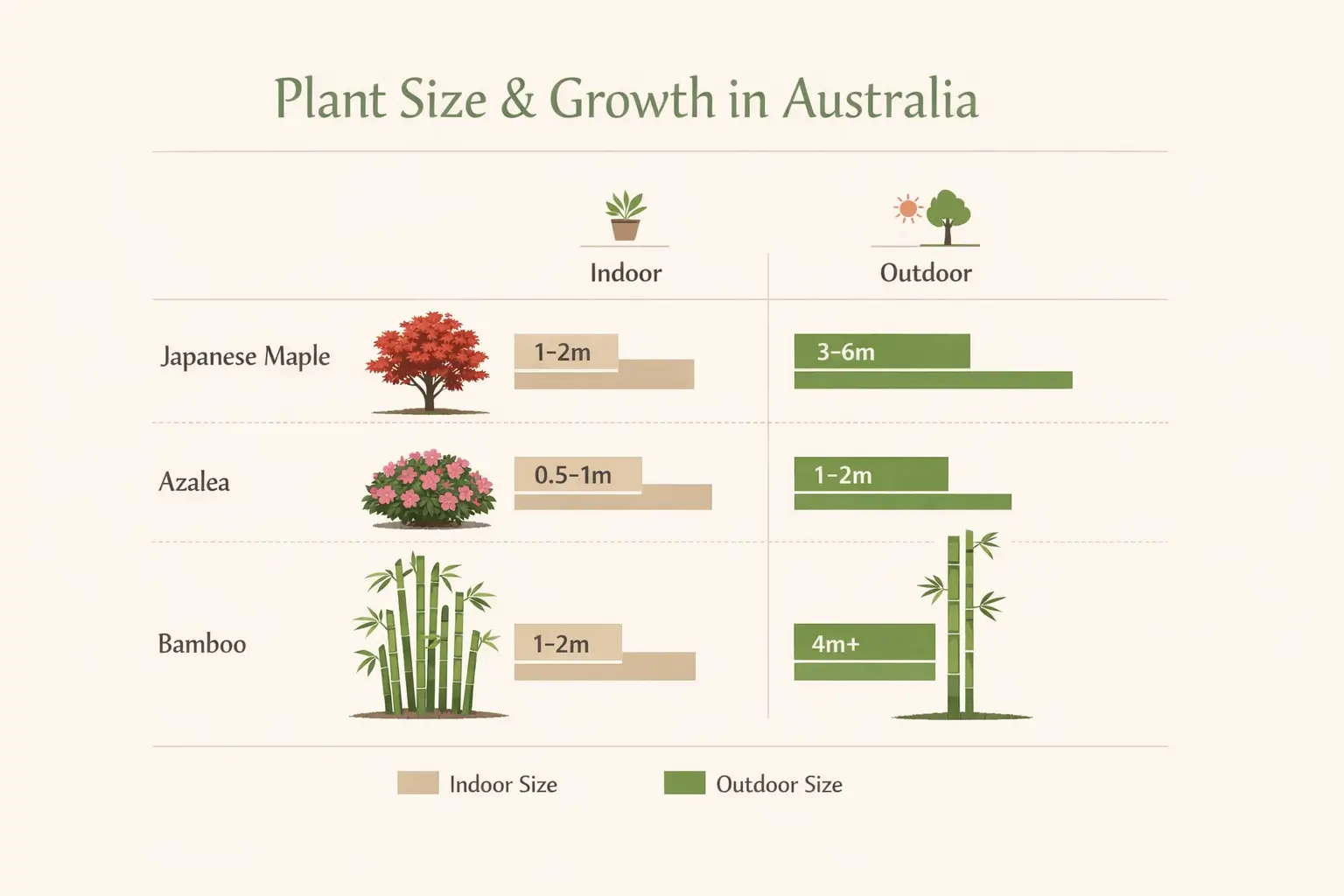
Japanese-style plants in Australia vary in size depending on species, environment, and care practices.
Mature Size
- Japanese maples typically grow 3–6 meters outdoors in suitable climates.
- Dwarf varieties remain 1–2 meters indoors or in containers.
- Shrubs like azaleas stay compact, usually under 2 meters.
Growth Rate
- Japanese maples: Moderate growth, faster in humid and mild climates.
- Azaleas and camellias: Slow to moderate growth, requiring patience.
- Bamboo: Fast-growing, especially in warm conditions.
Environmental Influence
- Outdoor plants grow faster in regions with mild winters and consistent moisture.
- Indoor plants grow slower due to limited light and space.
Size by Environment Table
| Plant | Indoor Size | Outdoor Size | Growth Speed |
| Japanese Maple | 1–2m | 3–6m | Moderate |
| Azalea | 0.5–1.5m | 1–2m | Slow |
| Bamboo | Limited in pots | 4m+ | Fast |
Practical Insight
Regular pruning helps maintain shape and size, especially in small gardens. Without pruning, feature trees can outgrow their intended design role.
Care Guide for Australian Conditions
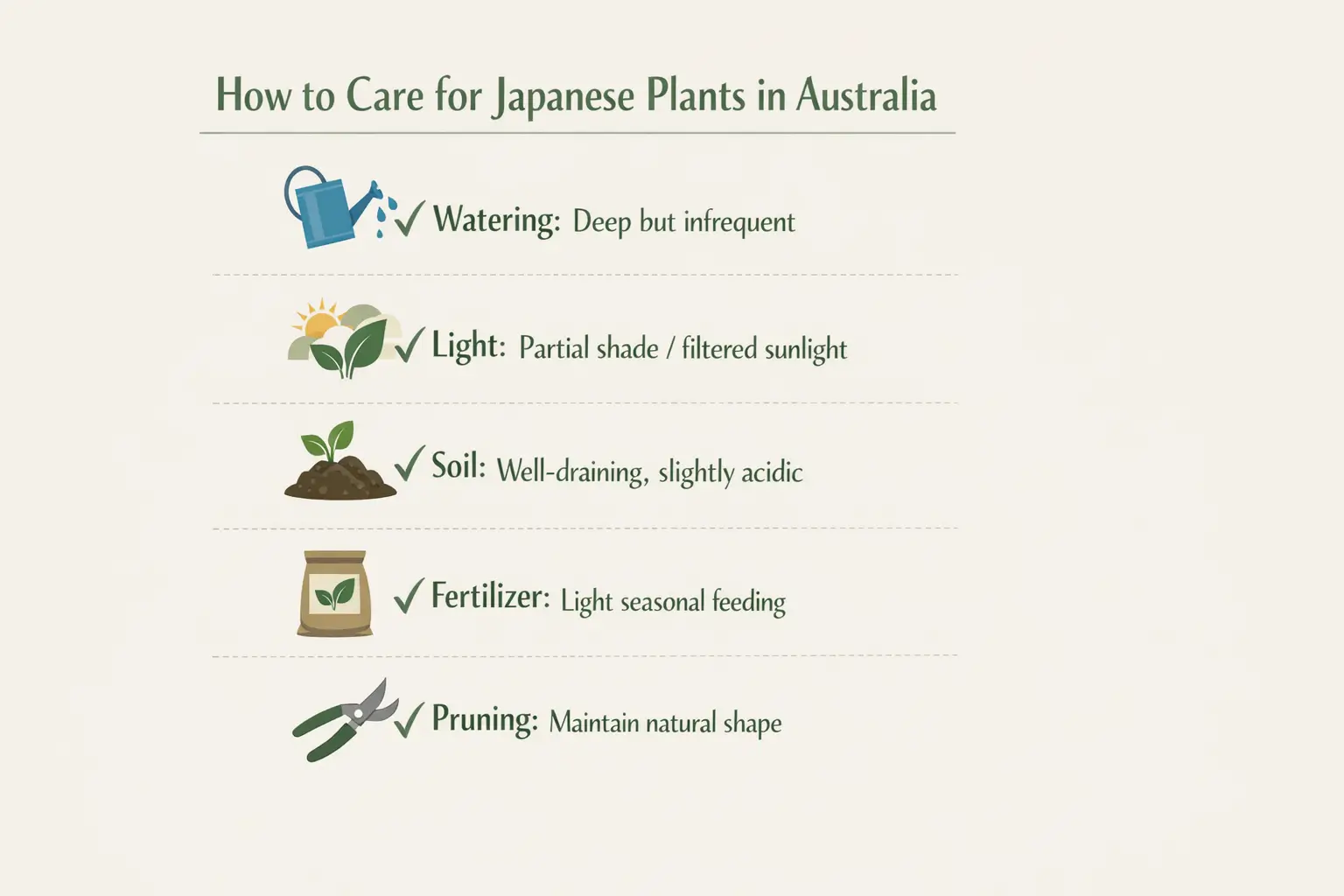
Plants for a Japanese garden in Australia require simple but consistent care tailored to local climates.
Watering
- Water deeply but infrequently once plants are established.
- Avoid overwatering to prevent root rot.
Light Requirements
- Most Japanese plants prefer filtered or partial shade.
- Direct afternoon sun can damage delicate foliage like maples.
Soil Conditions
- Use well-draining, slightly acidic soil.
- Add mulch to retain moisture and regulate temperature.
Fertilization
- Apply light, slow-release fertilizers during the growing season.
- Avoid excessive feeding, which can harm plant balance.
Pruning
- Prune lightly to maintain natural shapes.
- Remove dead or overcrowded branches to improve airflow.
Establishment Steps
- Choose a sheltered planting location.
- Prepare soil with organic matter.
- Water consistently during the first growing season.
Practical Insight
A common beginner mistake is overwatering during hot months. In Australian climates, deep watering less often is more effective than frequent shallow watering.
Indoor Japanese Plants
Japanese indoor plants provide a compact way to bring garden aesthetics indoors while adapting to controlled environments.
Top Indoor Options
- Dwarf Japanese maples for decorative focal points.
- Japanese aralia (Fatsia japonica) for lush foliage.
- Ferns and peace-lily alternatives for soft greenery.
Indoor Care Needs
- Maintain moderate humidity, especially in dry climates.
- Provide indirect light near windows.
- Use well-draining pots to prevent water buildup.
Indoor vs Outdoor Comparison
- Indoor plants grow slower and remain smaller.
- Outdoor plants develop fuller shapes and stronger seasonal changes.
For more indoor greenery ideas that complement Japanese aesthetics, you can also explore Swedish Ivy Plant Care: Light, Watering and Rainbow Fern: Care, Propagation, and Indoor Tips, which work well in low-light home environments.
Japanese vs Australian Native Substitutes
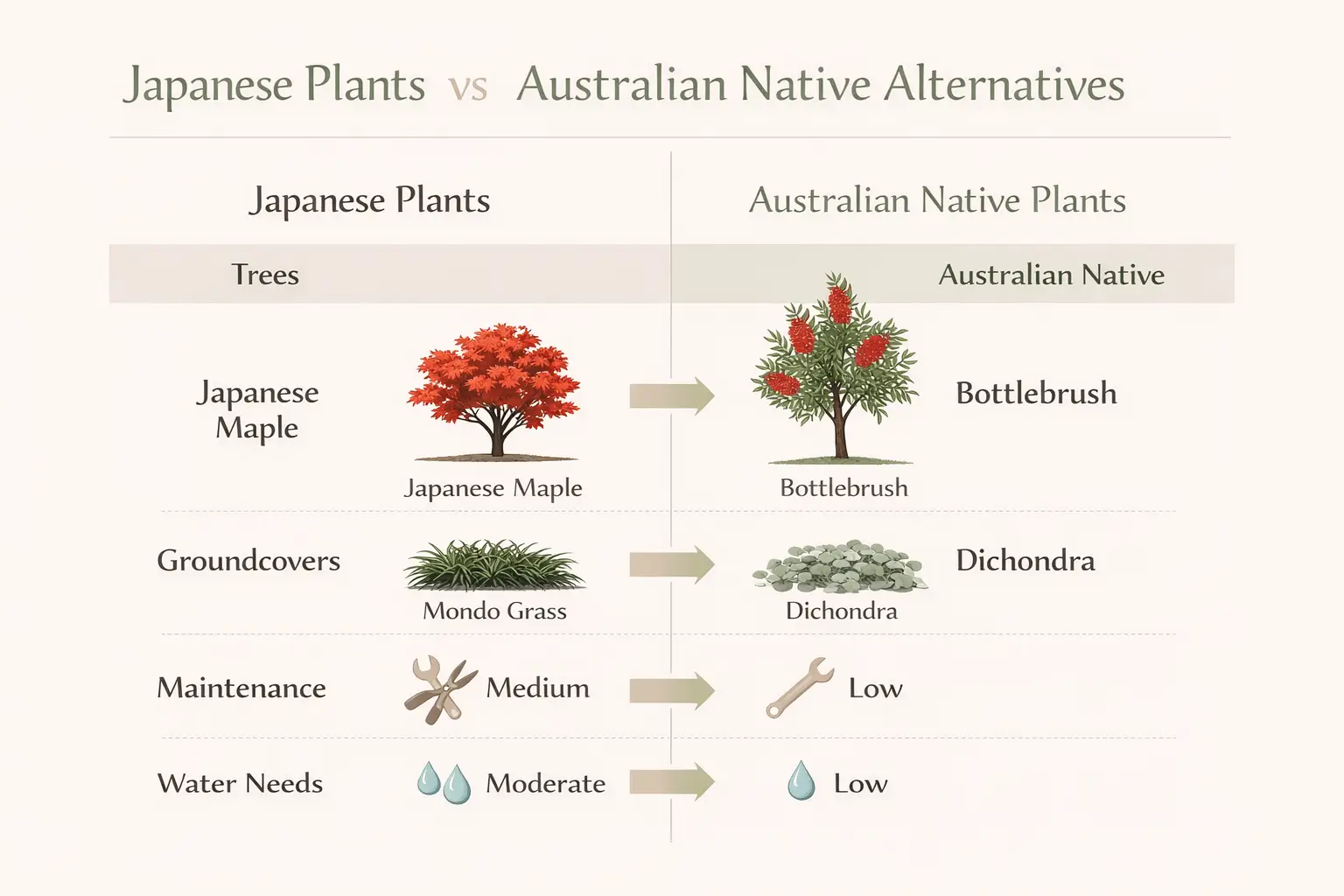
Combining Japanese plants with Australian natives creates sustainable, low-maintenance gardens while preserving aesthetic appeal.
Comparison Table
| Aspect | Japanese Plants | Australian Native Substitutes |
| Trees | Maple (colorful but sensitive) | Bottlebrush (drought-hardy, floral) |
| Groundcovers | Mondo grass (lush) | Dichondra repens (shade-tolerant) |
| Resilience | Higher water needs | Low-maintenance, climate-adapted |
Key Differences
- Japanese plants often require more water and protection.
- Native substitutes offer greater resilience and lower maintenance.
Practical Insight
Hybrid gardens that mix both types provide visual authenticity while improving sustainability in harsh climates.
Common Problems and Solutions
Japanese plants in Australia can face issues related to climate, watering, and soil conditions.
Yellowing Leaves
- Cause: Overwatering or poor drainage leading to root rot.
- Solution: Improve soil drainage and reduce watering frequency.
Slow Growth
- Cause: Poor soil quality or insufficient nutrients.
- Solution: Add organic matter and apply balanced fertilizer.
Pests
- Common pests include scale insects on maples.
- Solution: Prune affected areas and use eco-friendly oils.
Beginner Mistakes
- Overwatering during summer
- Planting in full sun without protection
- Ignoring soil drainage requirements
Seasonal Tip
Prepare plants for summer droughts by applying mulch and adjusting watering schedules early.
Japanese Garden Ideas for Australia
Japanese garden ideas in Australia focus on adapting traditional design principles to local conditions.
Key Design Principles
- Simplicity: Use minimal plant varieties for a clean look.
- Balance: Combine trees, shrubs, and groundcovers evenly.
- Natural flow: Arrange plants to mimic natural landscapes.
- Texture contrast: Mix fine foliage with bold structures.
Practical Layout Ideas
- Use a feature tree like a maple or substitute as a focal point.
- Surround with low groundcovers such as mondo grass.
- Add stones, gravel, or water features for authenticity.
Conclusion
Japanese plants in Australia offer a practical way to create tranquil, visually balanced gardens using a mix of traditional species and climate-adapted alternatives. By selecting heat-tolerant plants, ensuring proper care, and incorporating native substitutes where needed, gardeners can achieve authentic Japanese aesthetics with minimal maintenance. This approach supports both outdoor landscapes and indoor greenery, making it suitable for a wide range of Australian environments.
This guide connects closely with broader landscaping principles discussed in Plants for Homes and Gardens Guide, helping readers design complete indoor and outdoor green spaces with cohesive plant selection.
FAQs
What are the best low-maintenance Japanese garden plants for Australia?
Azaleas, mondo grass, and heat-tolerant Japanese maples are among the best options due to their adaptability and relatively low care requirements in most Australian climates.
Can Japanese maples grow outdoors in Australia?
Yes, Japanese maples can grow outdoors in Australia when planted in sheltered, cooler areas with protection from strong sun and supported by mulch and consistent moisture.
What Australian natives mimic Japanese plants?
Australian natives like bottlebrush, kangaroo paw, and Dichondra repens can replicate the texture, structure, or color of traditional Japanese plants while offering better drought tolerance.
How do I care for indoor Japanese plants in Australia?
Indoor Japanese plants require indirect light, moderate humidity, and well-draining pots. Avoid overwatering and ensure stable indoor temperatures for consistent growth.
What plants suit small Japanese gardens in Australia?
Dwarf shrubs such as boxwood, compact azaleas, and groundcovers like mondo grass or Dichondra are ideal for small Japanese-style gardens due to their manageable size and structure.