Introduction
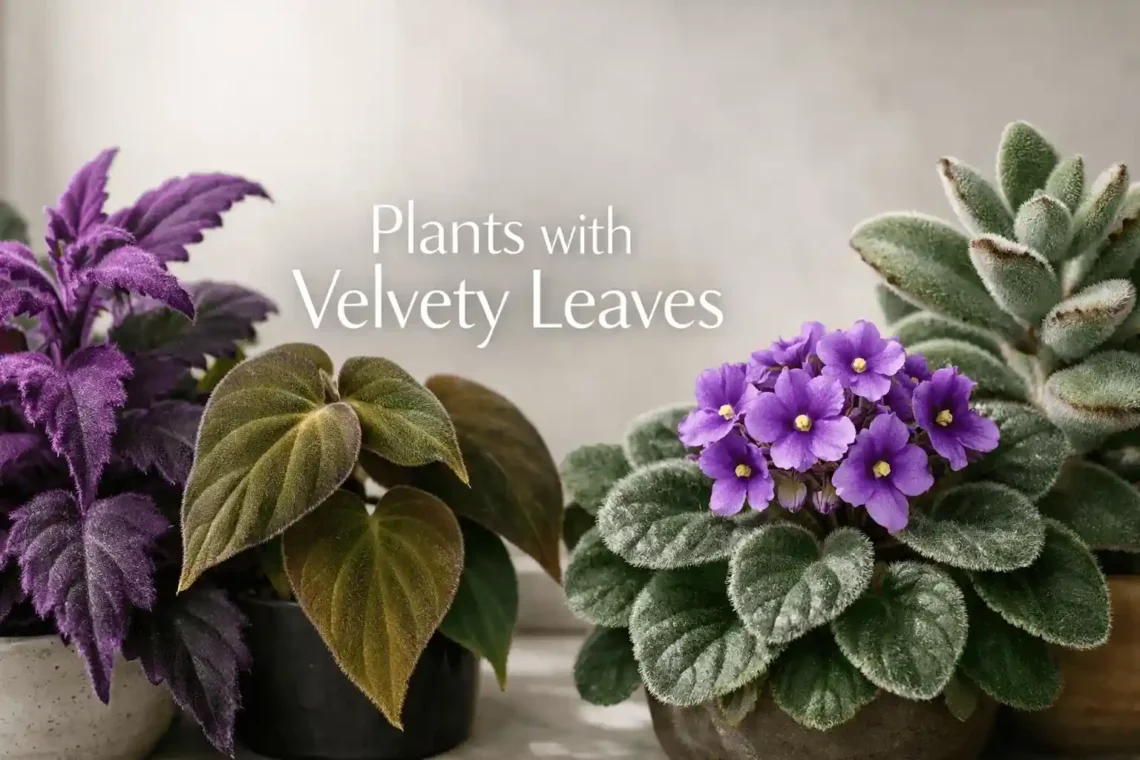
Plants with velvety leaves are valued for their soft, fuzzy surfaces created by microscopic hairs known as trichomes. These structures give foliage a distinctive texture that feels like velvet while also serving protective biological functions such as reducing water loss and reflecting excess light. Many indoor and outdoor varieties, including Purple Passion and Philodendron Micans, combine aesthetic appeal with relatively simple care requirements. As a result, these plants are popular among beginners and experienced growers alike. With proper light, watering, and humidity, plants with velvety leaves can maintain their texture and thrive in diverse environments.
Quick Summary
- Velvety leaves result from fine hairs (trichomes) that create a soft, fuzzy surface.
- Most varieties prefer bright indirect light, moderate humidity, and well-draining soil.
- Common types include succulents, tropical houseplants, and climbing species.
- These plants are beginner-friendly but sensitive to overwatering and poor lighting.
What Creates Velvety Texture
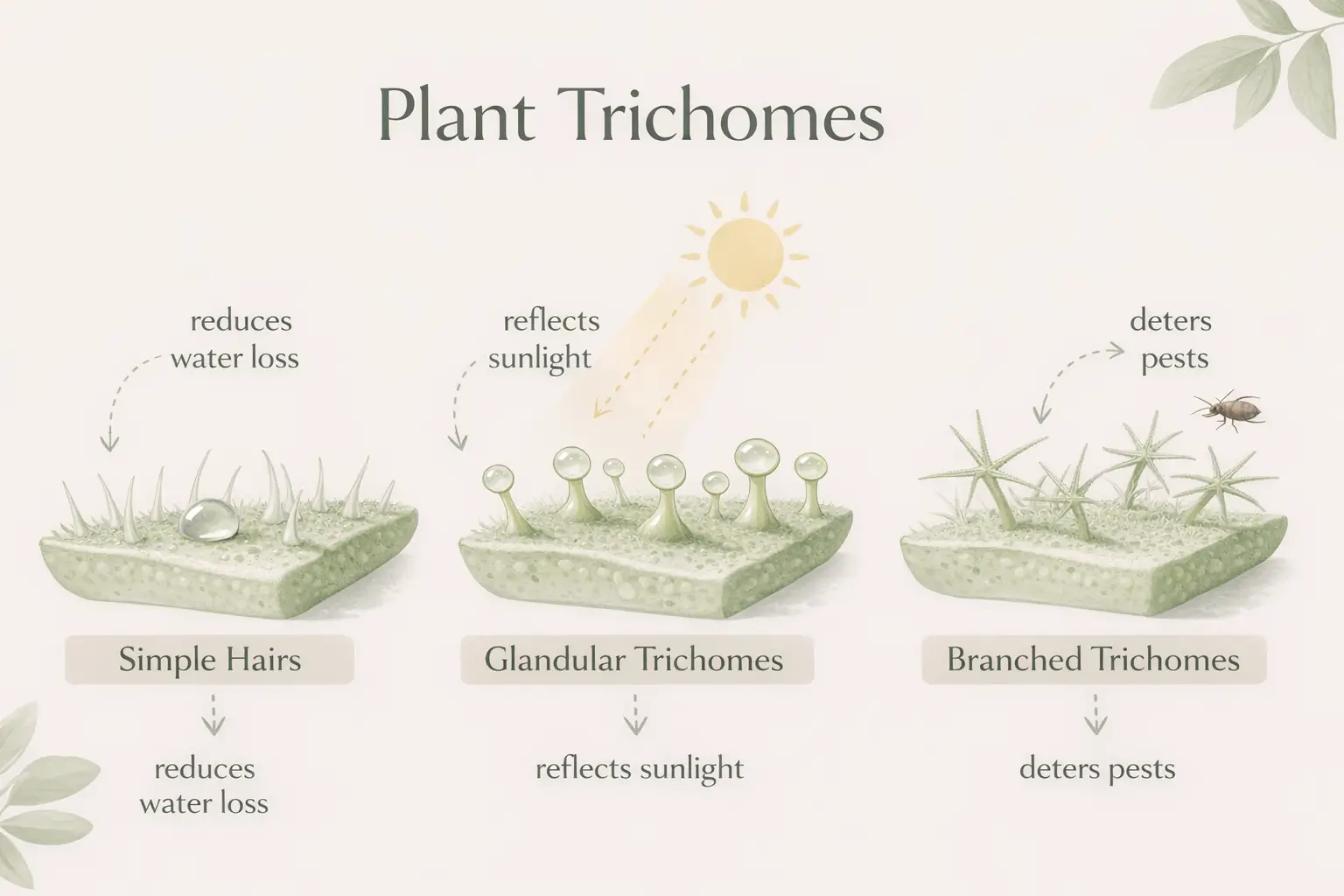
Plants that feel like velvet develop their texture due to specialized surface structures called trichomes. These tiny hair-like projections vary in form and function but collectively create the soft, fuzzy appearance seen in plants with soft velvety leaves. Plants that feel like velvet develop their texture due to specialized surface structures called trichomes, which are explained in detail in this Trichome resource.
Trichome Types and Functions
- Simple hairs: Fine, dense coverings that create a soft texture
- Glandular trichomes: Produce protective compounds or sticky substances
- Branched structures: Increase surface coverage for better insulation
Key Functions of Velvety Texture
- Reflect excess sunlight to prevent leaf damage
- Reduce water loss by trapping moisture
- Deter insects and herbivores
- Regulate leaf temperature
Why Texture Fades
Velvety texture may diminish due to environmental conditions:
- High humidity or frequent misting can flatten or wash away trichomes
- Dust accumulation reduces the tactile softness
- Low light weakens plant structure and hair development
Texture Types vs. Functions
| Texture Feature | Example Plants | Primary Benefit |
| Dense fine hairs | Purple Passion (Gynura aurantiaca) | Water retention |
| Powdery coating | Panda Plant (Kalanchoe tomentosa) | Sun protection |
| Iridescent fuzz | Philodendron Micans | Light diffusion |
Popular Indoor Plants with Velvety Leaves
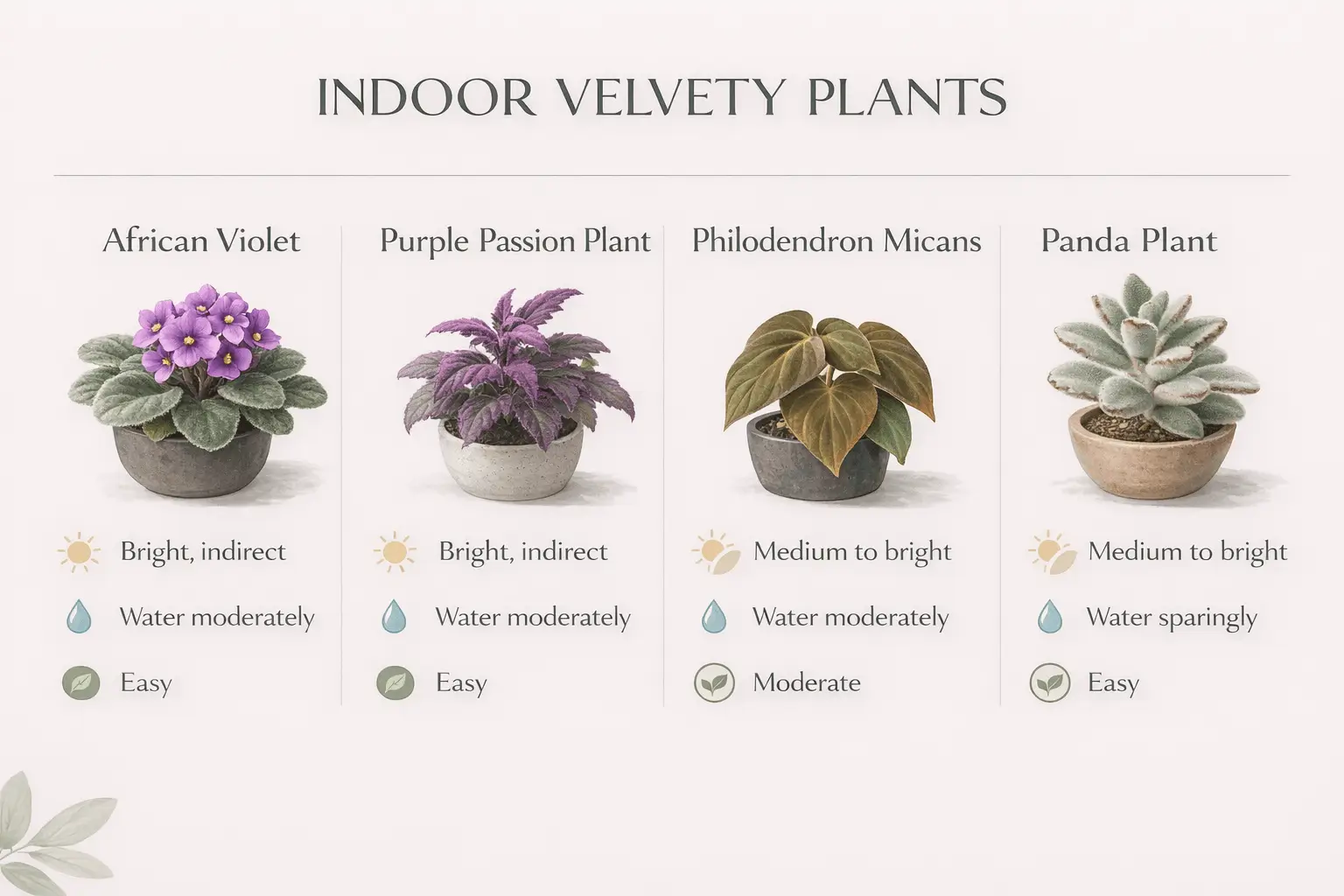
Indoor plants with velvety leaves are widely grown for their compact size and decorative foliage. They are suitable for homes, offices, and controlled environments.
Common Types
- African Violet (Saintpaulia): Compact rosettes with soft leaves and purple or pink flowers
- Purple Passion Plant (Gynura aurantiaca): Vibrant purple fuzz with fast growth
- Philodendron Micans: Trailing plant with iridescent velvet foliage
- Panda Plant (Kalanchoe tomentosa): Succulent with fuzzy leaf edges
Basic Care Requirements
- Bright, indirect light
- Moderate watering with good drainage
- Stable indoor temperatures
For a deeper species-by-species breakdown, check this velvety leaf plants database, a spreadsheet listing care specifics for dozens of fuzzy-foliage varieties.
It’s especially useful if you’re comparing multiple indoor picks side by side before choosing which to buy.
Beginner Mistakes
- Placing plants in direct sunlight, which scorches the fuzz
- Overwatering, leading to root rot
- Ignoring airflow, which can cause fungal issues
Panda Plant (Kalanchoe tomentosa) is a popular succulent with fuzzy edges, and you can explore its full care needs in this Panda Plants: Care, Types, and Indoor Growth Guide. For comparison with other easy indoor foliage plants, see this Swedish Ivy Plant Care: Light, Watering, Soil & Growth Guide.
Outdoor Plants with Velvety Leaves
Outdoor plants with soft velvety leaves are adapted to harsher conditions and often provide ground cover or climbing features in gardens.
Suitable Outdoor Options
- Lamb’s Ear (Stachys byzantina): Silver-gray fuzzy leaves, drought-tolerant
- Hoya varieties (e.g., Hoya lauterbachii): Climbing plants for warm climates
Climate Suitability
- Thrives in USDA zones 5–9 (depending on species)
- Prefers well-drained soil and moderate sunlight
- Tolerates dry conditions better than excessive moisture
Indoor vs Outdoor Size Comparison
| Plant | Indoor Mature Size | Outdoor Mature Size |
| Lamb’s Ear | 6–12 inches tall | 12–18 inches, spreads 2 ft |
| Hoya calycina | 1–2 ft vines | 3–5 ft vines |
Plant Size
Plants with velvety leaves vary widely in size depending on species and environment.
Small Plants
- African Violet: 6–8 inches wide
- Velvet Calathea: Compact and suitable for shelves
Large Plants
- Anthurium magnificum: 3–5 feet tall
- Alocasia Green Velvet: Large statement foliage
Factors Affecting Size
- Pot size and root space
- Light availability
- Pruning and maintenance
- Humidity levels, which can enhance growth
Growth Rate
Most plants with velvety leaves grow at a slow to moderate pace indoors, with faster growth under ideal outdoor conditions.
Growth Categories
- Slow growth: Succulents like Panda Plant
- Moderate growth: Tropical species like Philodendron Micans
- Fast growth: Purple Passion, though it may become leggy
Growth Influences
- Seasonal changes (peak in spring and summer)
- Fertilization during active growth
- Adequate light and warmth
Care Guide
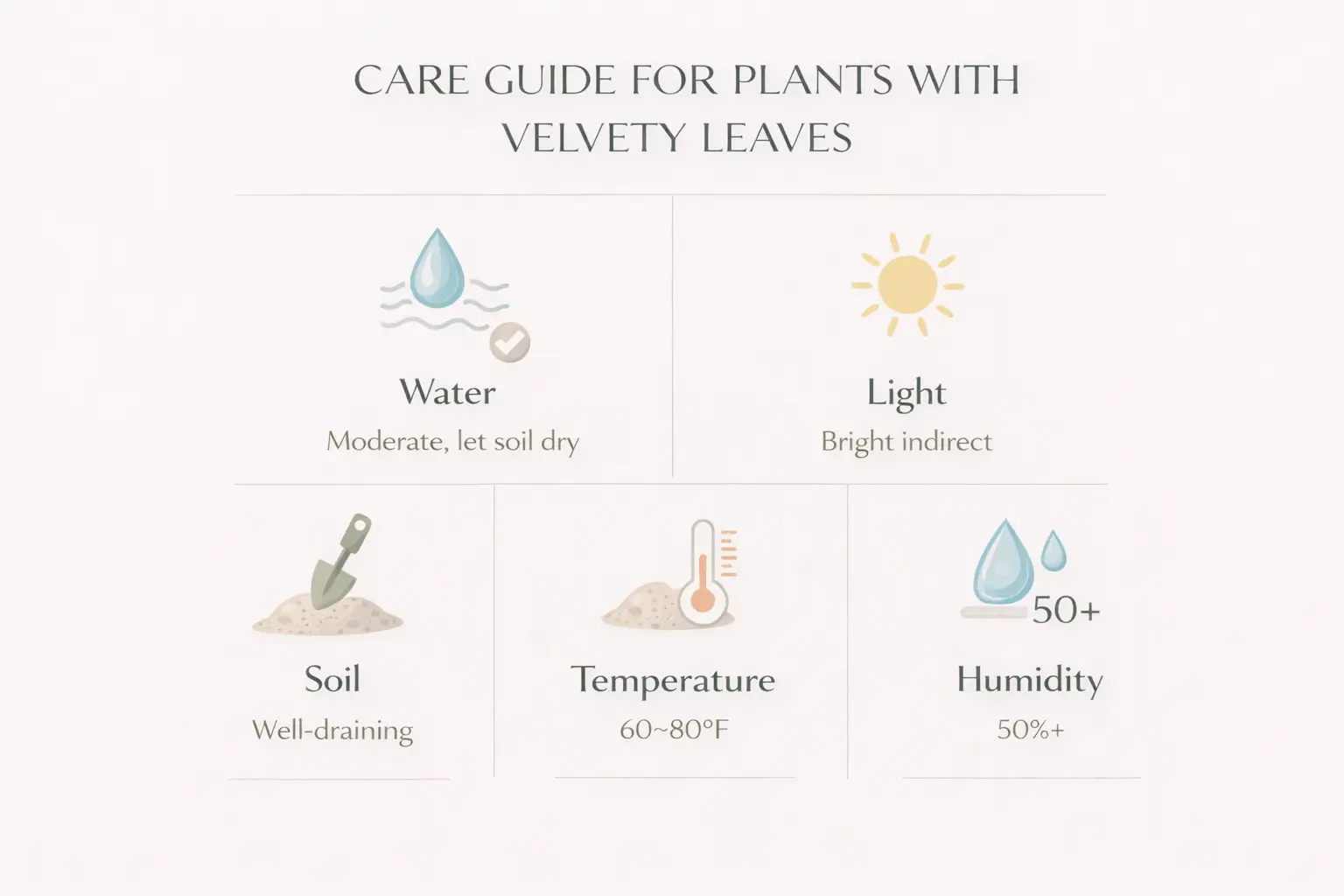
Proper care ensures that velvety leaves maintain their texture and health.
Watering
- Allow topsoil to dry before watering
- Avoid wetting leaves to preserve trichomes
Light Requirements
- Bright, indirect light
- East or west-facing windows are ideal
Soil and Fertilizer
- Use well-draining, peat-based soil
- Apply diluted fertilizer monthly during growing season
Pruning
- Pinch tips to encourage bushy growth
- Remove leggy stems regularly
Environmental Conditions
- Temperature: 60–80°F
- Humidity: Above 50%
- Avoid exposure below 50°F
If you want one consolidated reference covering all these care factors in a single place, bookmark this master reference database of velvety-leaved plants.
It brings together watering, light, and humidity notes for velvet-leaved species in one organized workspace.
Maintaining humidity above 50% is essential, and practical methods are explained in this guide on How to Increase Humidity for Plants Naturally and with Humidifiers.
Comparison: Top Velvety Varieties
Different velvet plants vary in texture intensity, maintenance, and flowering characteristics. Want to compare beyond these four? Explore the full interactive velvety-leaf plant finder, which lets you filter all 24 fuzzy-leaved species by light, humidity, and care level.
It’s the fastest way to shortlist plants that match your exact growing conditions before you commit to buying one.
| Plant | Texture Intensity | Flower Color | Light Needs | Maintenance |
| Purple Passion (Gynura aurantiaca) | High fuzz | Orange | Medium | Medium (requires pruning) |
| Philodendron Micans | Iridescent | None | Low–medium | Low |
| African Violet | Soft downy | Purple/pink | Bright indirect | Medium (repotting needed) |
| Panda Plant | Powdery edges | Rare yellow | Bright | Low |
Key Differences
- Flowering vs foliage-focused species
- Maintenance levels vary from low to moderate
- Light tolerance differs significantly
Common Problems and Solutions
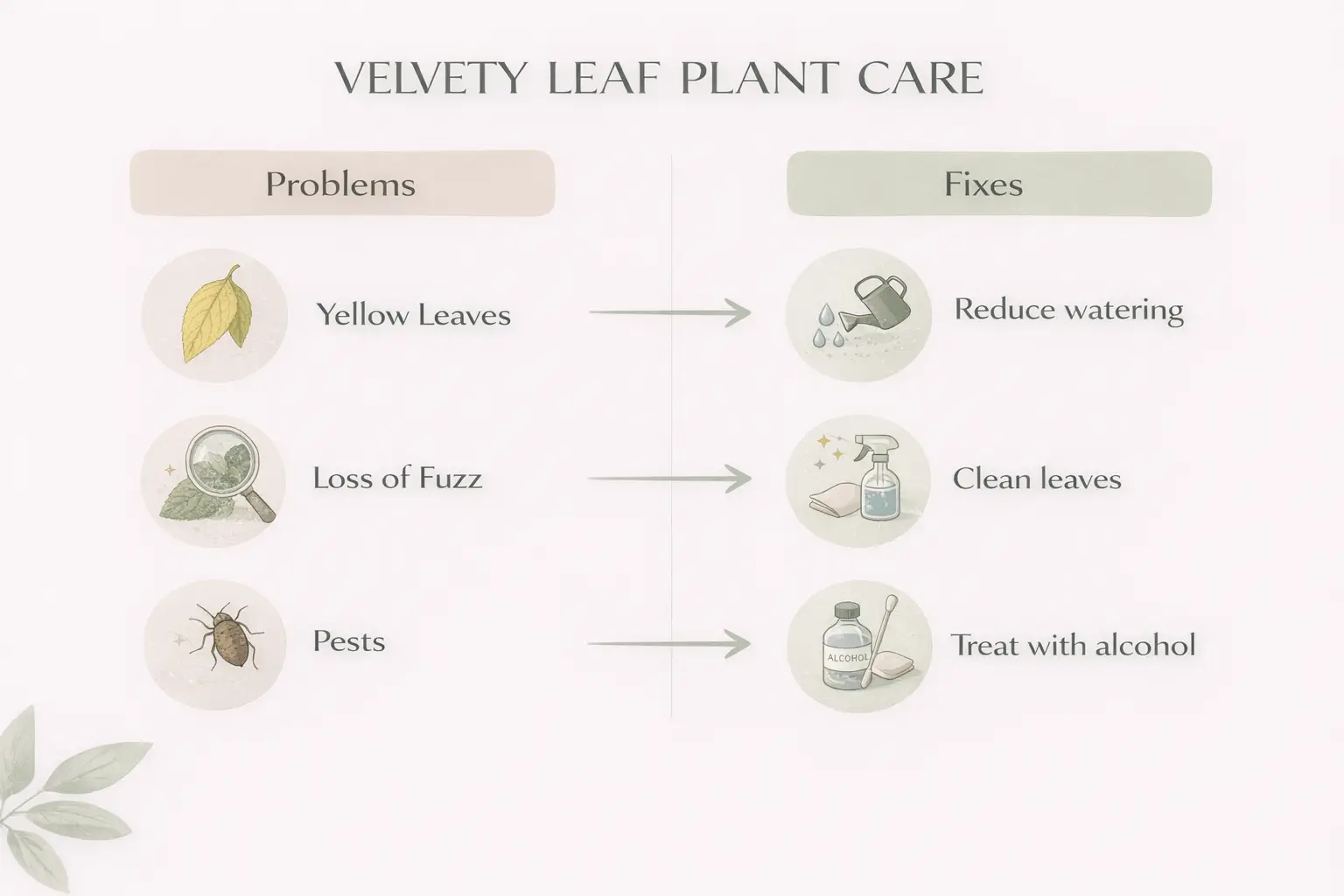
Velvety plants can develop issues if environmental conditions are not balanced.
Common Issues
- Yellow leaves: Caused by overwatering and root rot
- Loss of fuzz: Due to dust buildup or improper humidity
- Pests (mealybugs): Common in indoor environments
Solutions
- Repot in well-draining soil and reduce watering
- Gently wipe leaves with a damp cloth
- Treat pests with alcohol swabs and isolate affected plants
Prevention Tips
- Maintain proper airflow
- Avoid excessive misting
- Monitor soil moisture regularly
Beginner Mistakes and Differentiation
Understanding common mistakes helps maintain plant health and texture.
Frequent Mistakes
- Direct sunlight fading purple coloration in Gynura aurantiaca
- Overwatering leading to fungal issues
- Ignoring pruning, causing legginess
Propagation
- Stem cuttings root quickly in water or soil
- Best performed during active growth seasons
Differentiation
- Indoor velvet plants differ from outdoor species like Lamb’s Ear in humidity needs
- Some plants have waxy leaves, which can be mistaken for velvety textures
Varieties and Seasonal Notes
- Cultivars such as Gynura aurantiaca ‘Purple Passion’ are popular
- Growth slows during winter dormancy
Conclusion
Plants with velvety leaves combine unique texture with practical biological functions, making them both visually appealing and adaptable. Species like Purple Passion, African Violet, and Philodendron Micans offer diverse options for indoor and outdoor environments. By providing proper light, controlled watering, and adequate humidity, growers can maintain the characteristic soft texture. These plants are ideal for those seeking low-maintenance greenery with added sensory appeal, making them a valuable addition to any plant collection.
For a broader understanding of houseplants and how to choose the right ones, refer to this complete Plants for Homes and Gardens Guide.
FAQ
What is the best indoor plant with soft fuzzy leaves?
Philodendron Micans and Purple Passion are among the best options because they are easy to care for, adapt well to indoor conditions, and maintain strong velvety texture with minimal effort.
Which plant has velvety leaves and purple flowers?
African Violet (Saintpaulia) is known for its soft velvety leaves and vibrant purple flowers, making it a popular flowering houseplant.
How do you care for a velvet plant (Gynura)?
Provide bright indirect light, water only when the topsoil dries, and prune regularly to prevent legginess. Maintaining moderate humidity helps preserve the velvety texture.
Are there outdoor plants with velvety leaves?
Yes, Lamb’s Ear (Stachys byzantina) is a common outdoor plant with soft velvety foliage that thrives in sunny, well-drained environments.
Why do velvety leaves lose their texture?
Velvety leaves lose texture due to overwatering, low humidity, or dust accumulation. Proper watering, gentle cleaning, and stable environmental conditions help maintain their softness.