Introduction
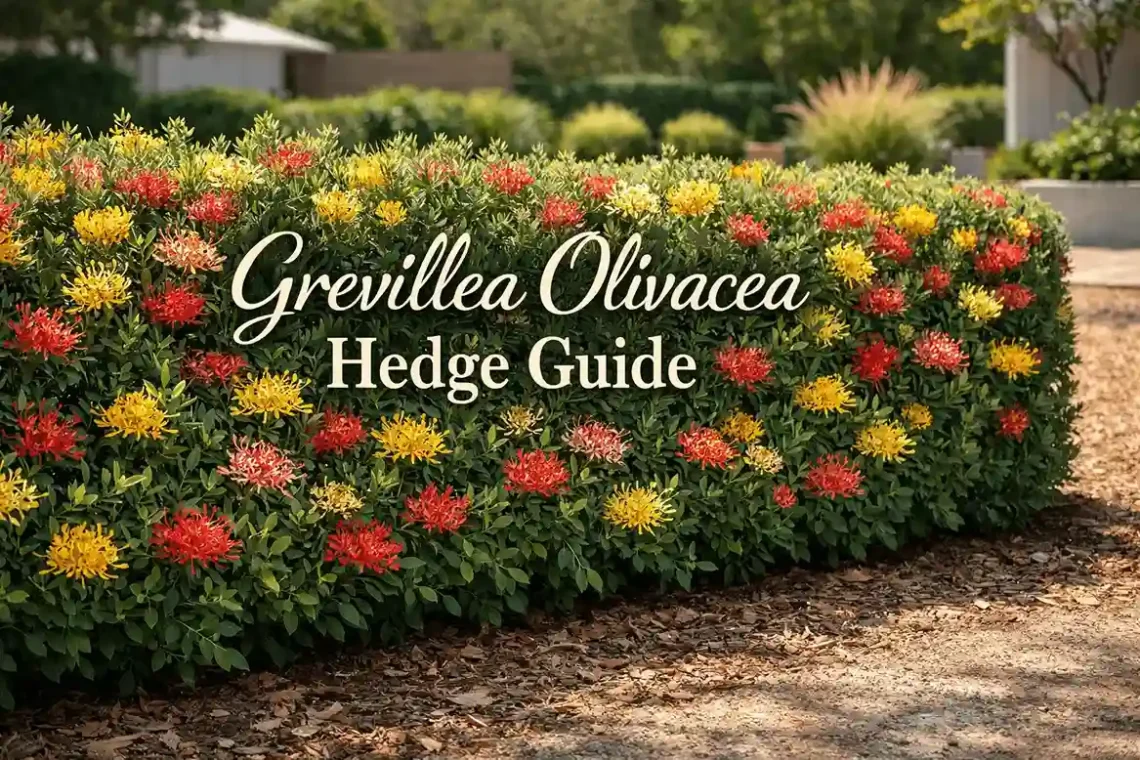
Grevillea olivacea hedge refers to using the Grevillea olivacea shrub, commonly known as olive grevillea, as a dense, evergreen screening plant in gardens. Native to Australia and part of the Proteaceae family, this species features narrow olive-green foliage and striking spider-like flowers in yellow, red, or two-tone variations. It is widely used for hedging due to its fast growth, drought tolerance, and strong response to pruning. Gardeners value it for creating low-maintenance privacy screens while also supporting biodiversity by attracting birds and pollinators. Grevillea olivacea belongs to the genus Grevillea, a diverse group of Australian native plants known for their unique flowers and ecological value (see more on Grevillea species on Wikipedia).
Quick Summary
- Grevillea olivacea is a fast-growing, evergreen shrub with olive foliage and colorful spider-like flowers that attract birds and bees.
- Ideal for hedges due to dense growth, drought tolerance, and pruning adaptability; typically reaches 2–4 meters.
- Performs best in full sun with well-drained soil and tolerates coastal conditions and light frost.
- Requires minimal maintenance once established, with peak flowering from winter to spring.
Grevillea Olivacea Characteristics
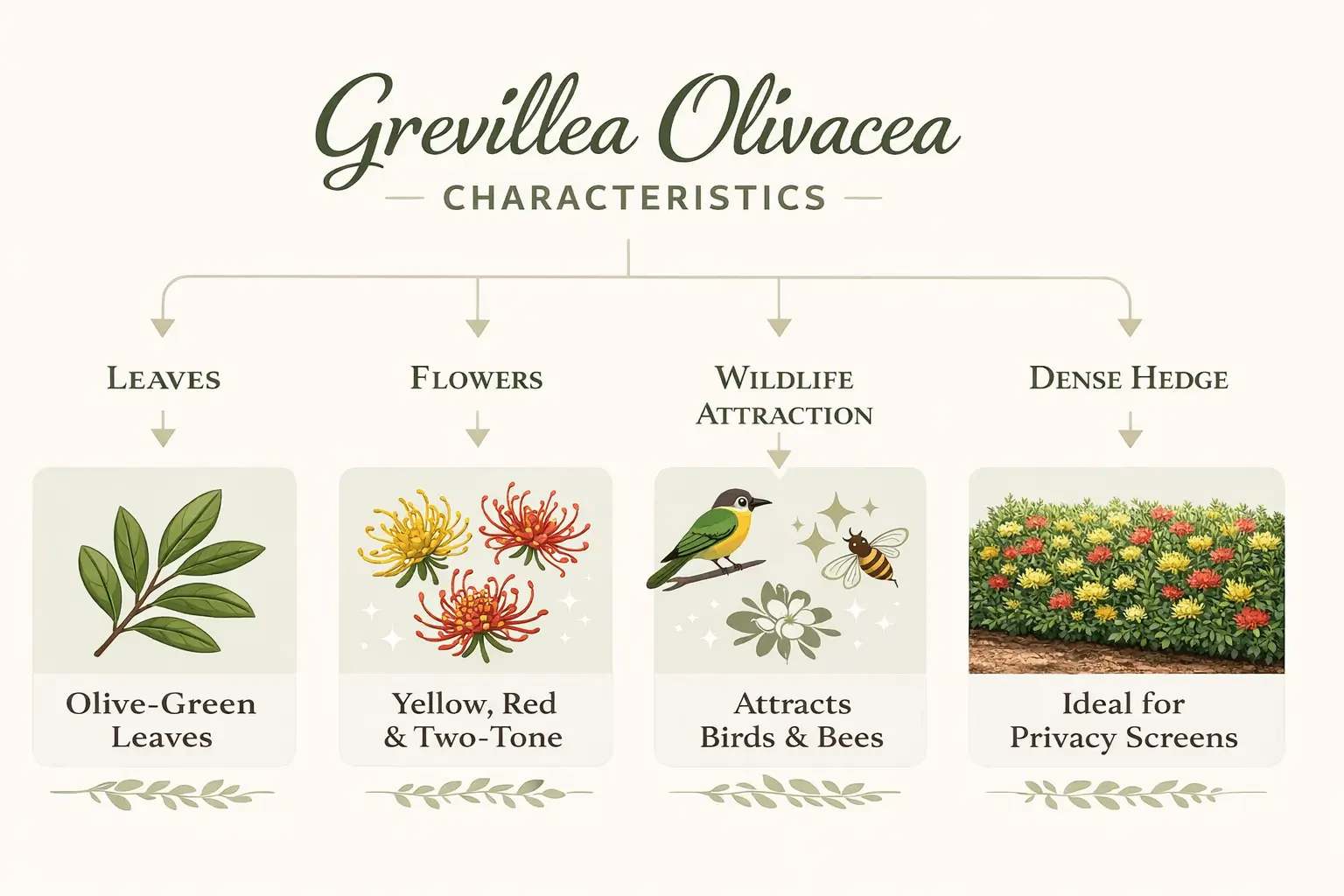
Grevillea olivacea is defined by its dense, evergreen structure and narrow olive-green leaves, making it highly effective for year-round screening. Its upright and bushy growth habit naturally supports informal hedge formation.
Key Features
- Foliage: Fine-textured, olive-green leaves that remain year-round
- Flowers: Spider-like clusters appearing in winter to spring
- Pollinator Attraction: Highly attractive to birds and bees
- Growth Form: Upright, dense, and suitable for hedging
Flower Color Comparison
| Feature | Yellow Variety | Red Variety | Two-Tone Variety |
| Appearance | Bright yellow flowers | Deep red flowers | Blend of red, yellow, or orange |
| Visual Impact | Vibrant and light | Bold and striking | Decorative and unique |
| Landscape Use | Brightens garden spaces | Adds contrast | Feature planting |
Plant Size
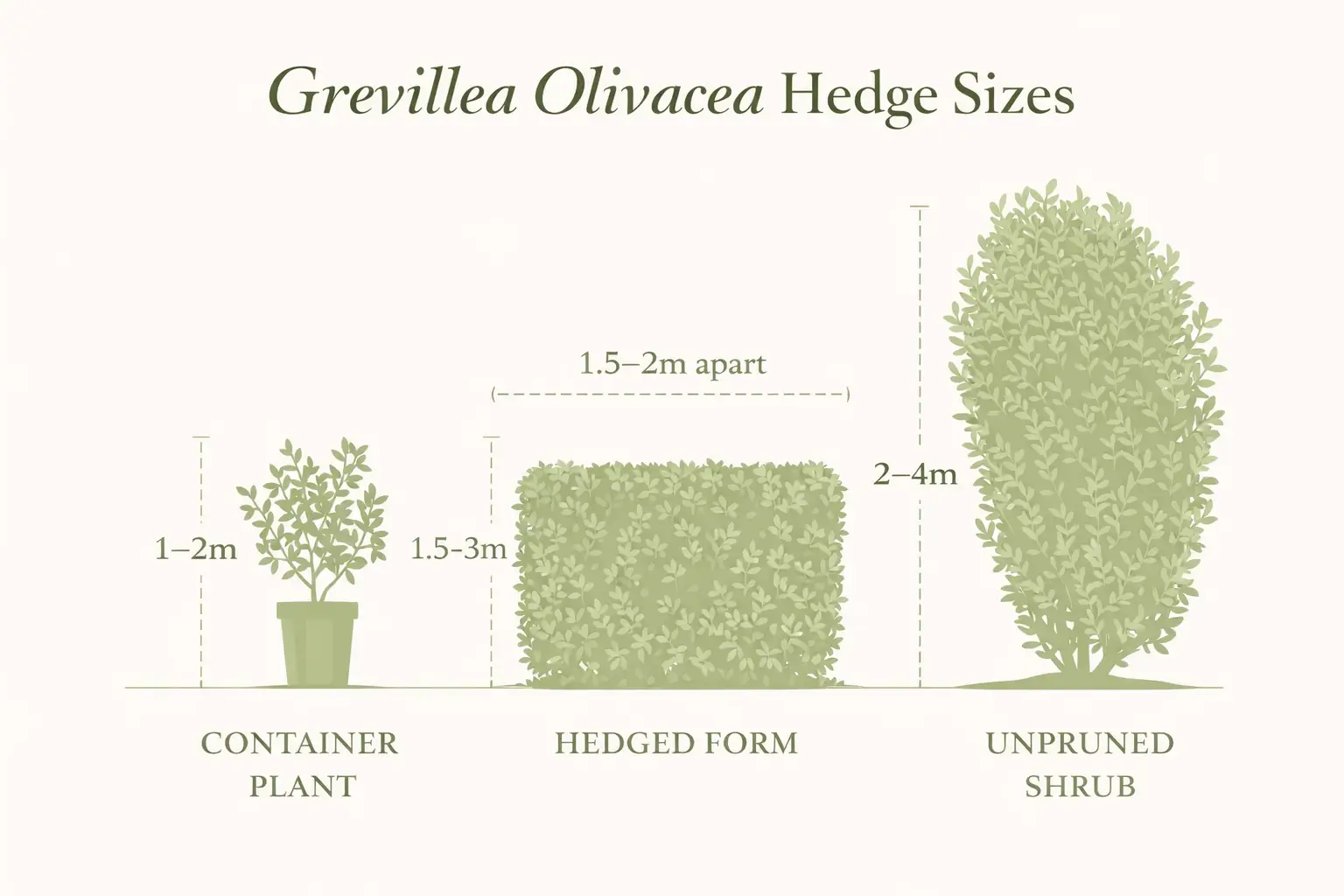
Grevillea olivacea hedge size varies depending on pruning, environment, and planting conditions. It is naturally a medium to large shrub but can be maintained at smaller sizes for hedging.
Typical Dimensions
- Mature Height: 2–4 meters
- Mature Width: 2–3 meters (unpruned)
- Hedge Height: 1.5–3 meters with trimming
Growth Context Table
| Growth Context | Height | Width | Notes |
| Unpruned Shrub | 2–4m | 2–3m | Full size in open ground |
| Hedged | 1.5–3m | 1–2m | Maintained through pruning |
| Container | 1–2m | 1m | Restricted by pot size |
Practical Insights
- Outdoor plants grow larger than container-grown ones
- Coastal winds and poor soil may reduce final size
- Ideal hedge spacing ranges from 1.5–2 meters apart
Growth Rate
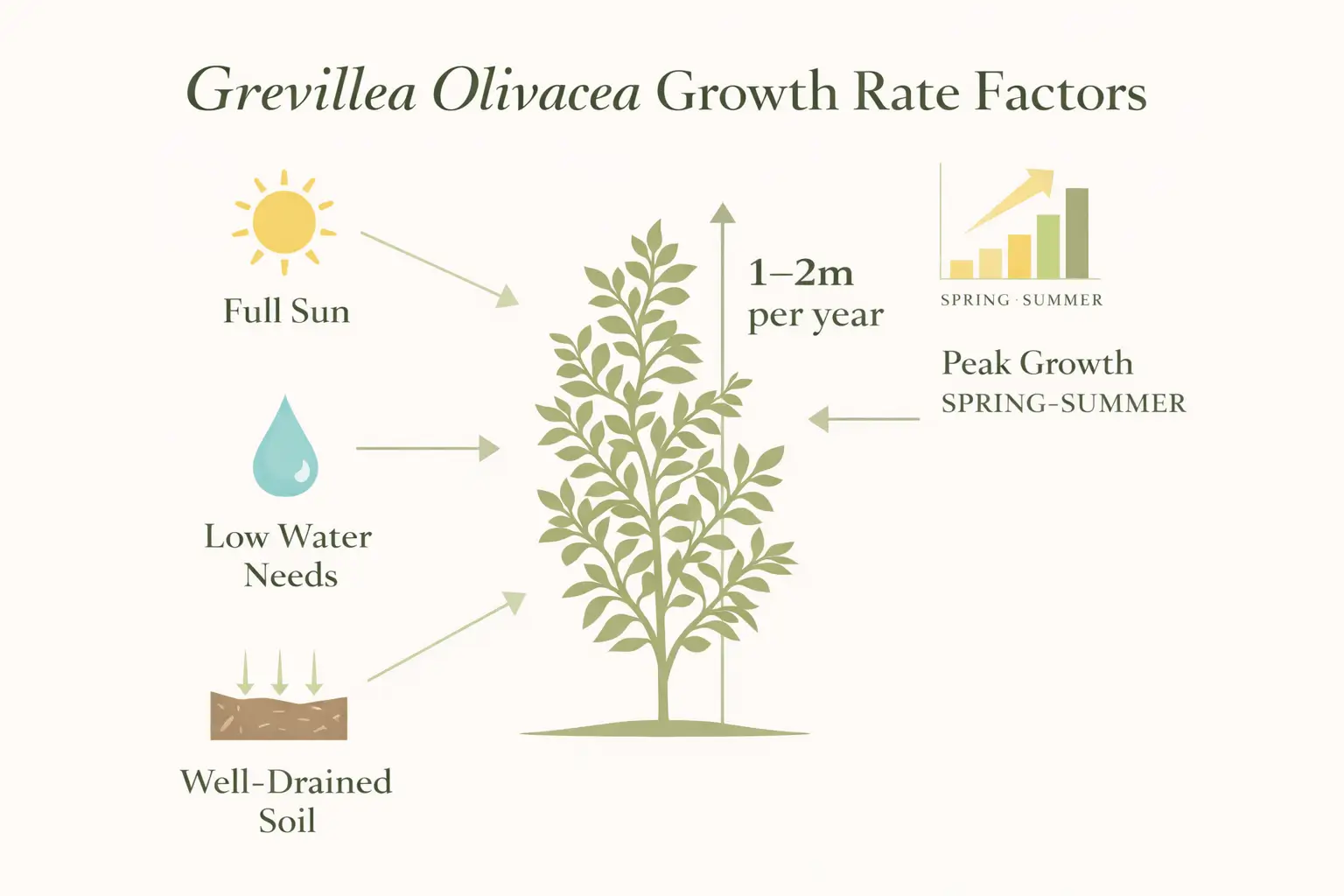
Grevillea olivacea is considered a fast-growing shrub, making it highly suitable for quick hedge establishment.
Growth Characteristics
- Rate: Approximately 1–2 meters per year under ideal conditions
- Peak Growth: Spring and summer seasons
- Establishment Time: Reaches hedge height (1.5m) within 1–2 years
Growth Influencing Factors
- Full sun exposure significantly boosts growth
- Well-drained soil prevents root stress
- Poor drainage or low light slows development
Hedge Planting and Spacing
Proper planting and spacing are critical for establishing a dense and healthy grevillea olivacea hedge.
Ideal Conditions
- Light: Full sun
- Soil: Well-drained, sandy or loamy
- Preparation: Improve clay soils with sand or organic matter
Spacing Guidelines
- 1.5–2 meters apart for standard hedges
- 1 meter apart for tighter, formal hedges
Planting Steps
- Dig wide planting holes to encourage root spread
- Position plant at original soil level (avoid deep planting)
- Apply mulch to retain moisture
- Water deeply during initial establishment
Common Mistake
- Planting too deep can lead to root rot and poor growth
Care Guide
Grevillea olivacea hedge care is straightforward once plants are established, making it suitable for low-maintenance gardens.
Core Care Requirements
- Watering:
- Weekly deep watering during first year
- Minimal watering once established
- Light:
- Full sun (minimum 6 hours daily)
- Tolerates light shade but with reduced flowering
- Soil:
- Well-drained, slightly acidic
- Avoid phosphorus-rich soils
- Fertilizer:
- Use low-phosphorus native plant fertilizers
- Apply in spring and autumn
- Pruning:
- Light pruning after flowering
- Maintains dense hedge shape
Climate Tolerance
- Suitable for coastal environments
- Tolerates light frost
- Best suited to USDA zones 9–11
Pruning for Hedges
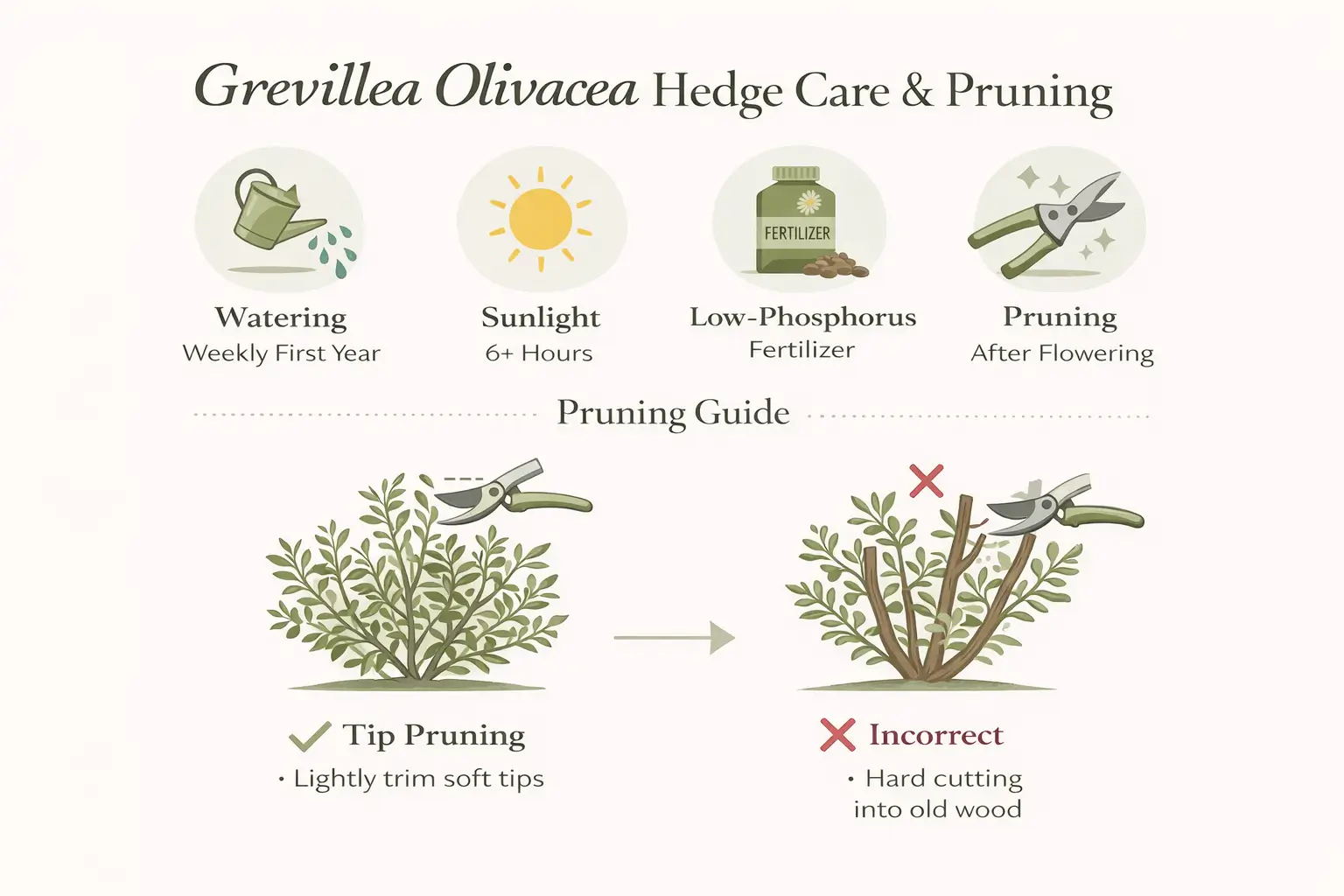
Yes, grevillea olivacea can be effectively used as a hedge because it responds well to controlled pruning.
Pruning Guidelines
- Prune after flowering (late spring)
- Use tip-pruning to encourage dense growth
- Avoid cutting into old wood
Tools and Technique
- Use sharp, clean pruning shears
- Sanitize tools to prevent disease spread
Practical Tips
- Prune 2–3 times per year for shape
- Over-pruning may reduce flowering
- Wear gloves due to mildly irritant sap
Comparison with Similar Grevilleas
| Feature | Grevillea Olivacea | Apricot Glow Grevillea | Grevillea Octopinky |
| Flower Color | Yellow/Red/Two-Tone | Apricot-Orange | Pink |
| Foliage | Olive-Green | Grey-Green | Fine, Dense |
| Hedge Suitability | Excellent | Moderate | Good |
| Growth Rate | Fast | Moderate | Fast |
Key Insight
Grevillea olivacea stands out for hedging due to its dense growth habit and faster establishment compared to similar varieties. For broader hedge landscaping options, many gardeners also compare Grevillea olivacea hedge with other fast-growing screening plants such as Lilly Pilly varieties for hedges and screening and drought-tolerant alternatives like Dodonaea viscosa hedge, which are widely used in Australian garden design for dense privacy hedging.
Common Problems and Solutions
Grevillea olivacea hedges are generally hardy, but some issues may arise due to environmental or care-related factors.
Common Issues
- Yellow Leaves:
- Caused by overwatering or excess phosphorus
- Solution: Improve drainage and use native fertilizers
- Slow Growth:
- Caused by poor soil or insufficient sunlight
- Solution: Enhance soil drainage and increase sun exposure
- Pests (Psyllids):
- Cause leaf distortion
- Solution: Hose off pests and prune affected areas
Prevention Tips
- Ensure good airflow between plants
- Avoid waterlogging soil
- Use appropriate fertilizers
Topical Cluster: Propagation and Landscaping
Propagation
Grevillea olivacea can be propagated using semi-ripe cuttings taken in summer.
Basic Steps:
- Select healthy semi-hardwood cuttings
- Dip in rooting hormone
- Plant in well-draining propagation mix
- Keep moist until roots develop
Landscaping Uses
- Ideal for privacy hedges and screening
- Can be used as a windbreak in coastal gardens
- Less suitable as ground cover due to upright growth
Conclusion
Grevillea olivacea hedge is a practical and visually appealing solution for creating dense, evergreen screening in gardens. With its olive foliage, colorful flowers, and bird-attracting qualities, it delivers both function and biodiversity benefits. Successful growth depends on proper spacing, well-drained soil, and consistent pruning. Its drought tolerance and low maintenance requirements make it especially suitable for water-wise landscapes and coastal environments.
FAQs
What is the ideal grevillea olivacea hedge spacing?
The ideal spacing is 1.5–2 meters apart for a dense hedge. Closer spacing (around 1 meter) can be used for faster privacy and a more compact appearance.
Can grevillea olivacea be used as a hedge?
Yes, grevillea olivacea is highly suitable for hedging due to its dense growth habit, evergreen foliage, and strong response to pruning.
What are the flower colors of grevillea olivacea?
The plant produces flowers in red, yellow, orange, and two-tone combinations, often appearing as spider-like clusters.
How do you prune grevillea olivacea hedge?
Prune lightly after flowering, focusing on tip pruning to maintain shape. Avoid cutting into old wood, as this can limit regrowth.
Is grevillea olivacea drought tolerant?
Yes, it is highly drought tolerant once established, making it suitable for low-water and xeriscape gardens.
What causes yellow leaves on grevillea olivacea?
Yellow leaves are usually caused by poor drainage or excess phosphorus in the soil. Adjust watering and use low-phosphorus fertilizers to correct the issue.