Introduction
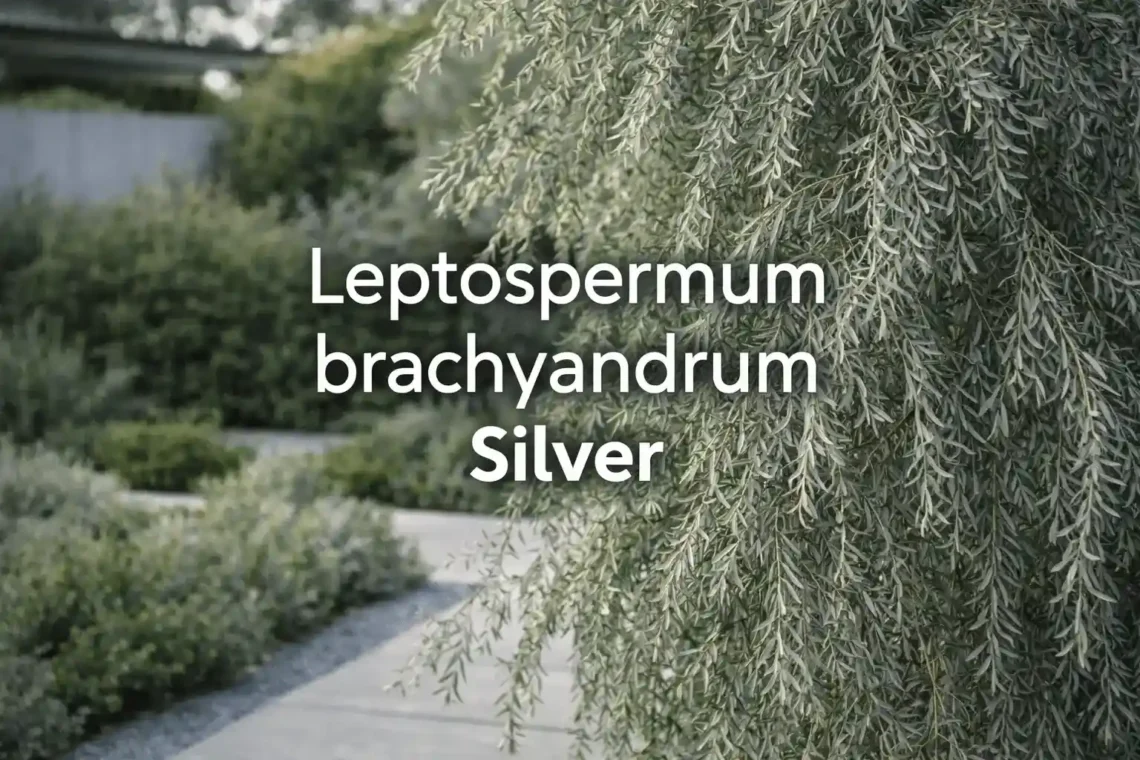
Leptospermum brachyandrum silver is a visually striking Australian native plant known for its elegant weeping form and silvery foliage. Commonly called the silver weeping tea tree, this species belongs to the Myrtaceae family and is widely used in ornamental landscaping. It is valued for its year-round decorative appeal, drought tolerance, and ability to thrive in well-drained soils.
In gardens, leptospermum brachyandrum silver is often used as a feature shrub or hedge due to its soft, cascading branches and fine-textured leaves. It produces small white flowers that enhance its visual appeal while also attracting pollinators, making it both decorative and ecologically beneficial. It belongs to the plant family Myrtaceae, a large family of flowering plants that includes eucalyptus and bottlebrush species. For more plant ideas and structured garden planning, explore our complete guide on Plants for Homes and Gardens Guide, which features curated plant selections for indoor and outdoor landscapes.
Quick Summary
- Silvery foliage and weeping branches define leptospermum brachyandrum silver, growing 2–4 meters tall.
- Native to eastern Australia, it thrives in full sun and well-drained sandy soils.
- Produces white flowers in spring and supports pollinators in garden ecosystems.
- Suitable for hedging, coastal gardens, and containers with regular pruning.
- Drought-tolerant once established but sensitive to heavy or poorly drained soils.
What Is Leptospermum Brachyandrum Silver?
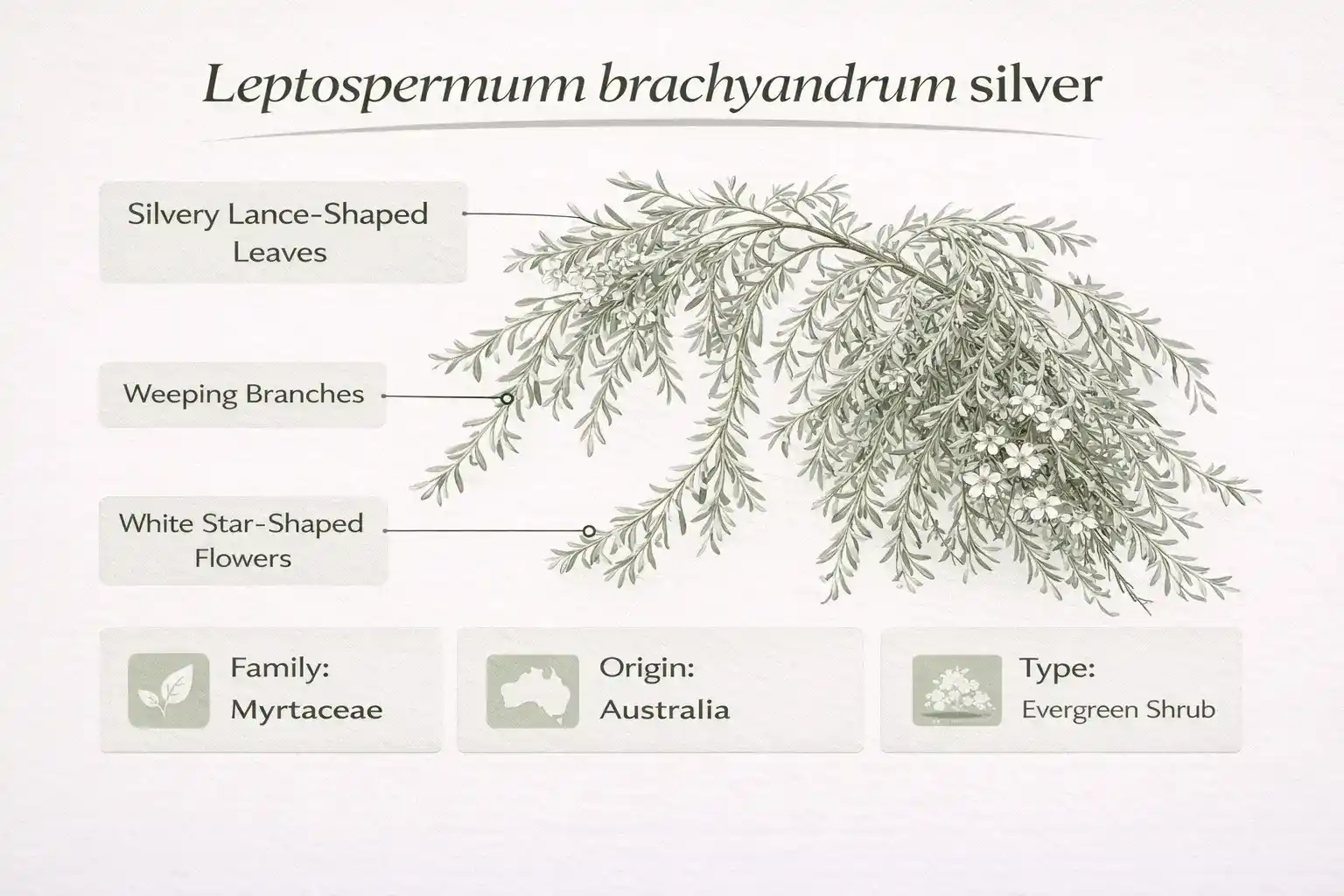
Leptospermum brachyandrum silver is a cultivated form of the weeping tea tree, an Australian native shrub recognized for its graceful habit and silvery-gray foliage. It belongs to the Myrtaceae family, which includes many aromatic and hardy shrubs adapted to dry and coastal environments.
Botanical Characteristics
This plant features narrow, lance-shaped leaves with a distinct silvery sheen that reflects sunlight. Its branches naturally droop, creating a cascading or weeping structure that adds movement and texture to landscapes.
Habitat and Origin
- Native region: Eastern Australia
- Natural environment: Coastal scrublands and open forests
- Soil preference: Sandy, free-draining soils
Key Features
- Silvery foliage provides year-round contrast
- White star-shaped flowers bloom in spring and summer
- Attracts bees and beneficial insects
- Evergreen structure ensures continuous garden interest
Plant Size
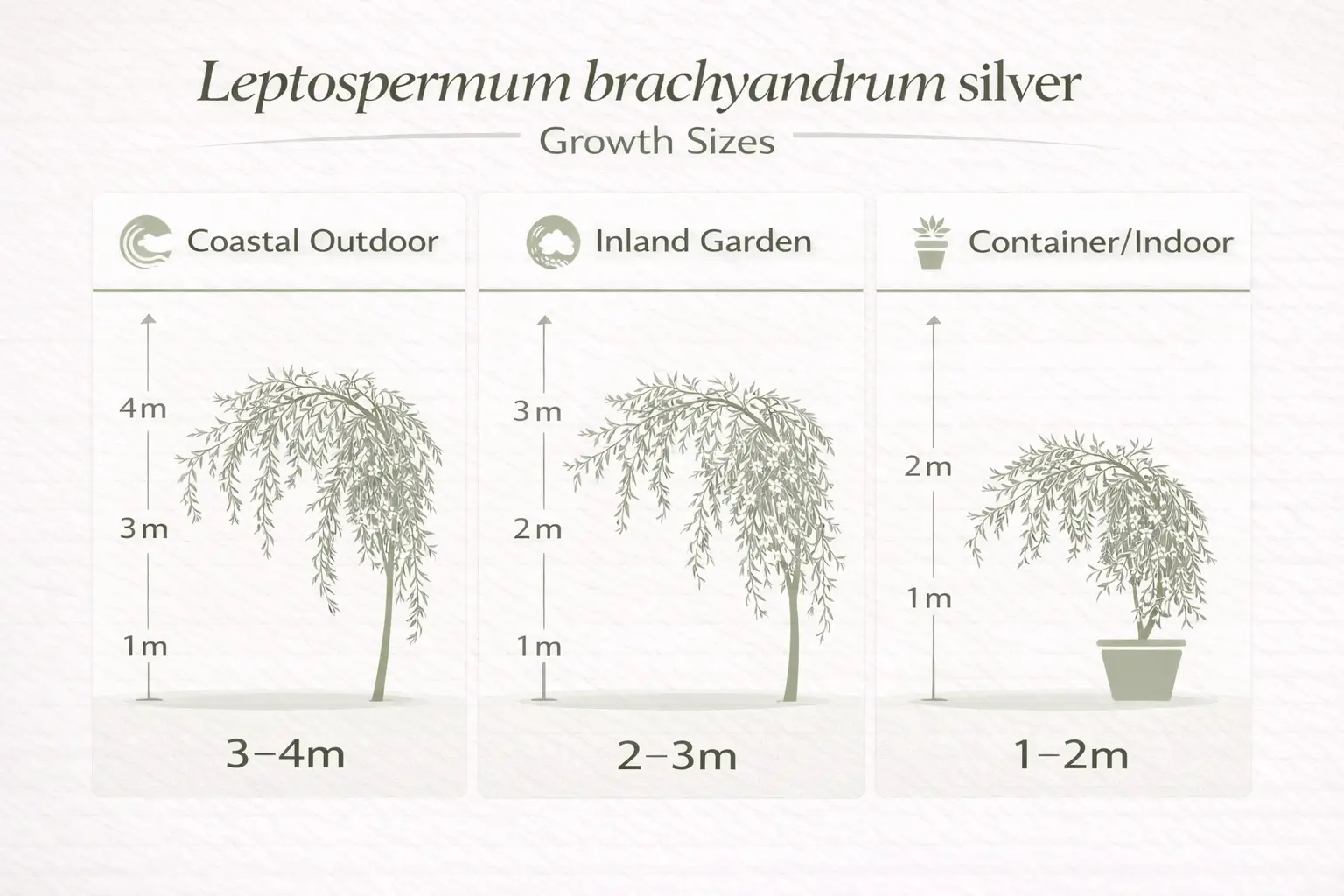
Leptospermum brachyandrum silver typically reaches a moderate size depending on growing conditions.
Mature Dimensions
- Height: 2–4 meters
- Width: 2–3 meters
Size Variations by Environment
| Environment | Height (m) | Width (m) | Notes |
| Coastal outdoor | 3–4 | 2–3 | Best growth with wind protection |
| Inland garden | 2–3 | ~2 | Slower due to heat stress |
| Container/indoor | 1–2 | ~1 | Requires pruning to maintain shape |
Growth Influences
- Soil drainage quality
- Pruning frequency
- Climate stability
Growth Rate
Leptospermum brachyandrum silver has a moderate growth rate once established.
Growth Pattern
It typically grows 30–60 cm per year under optimal conditions, especially during warm seasons.
Seasonal Behavior
- Spring–Summer: Active growth phase with rapid foliage expansion
- Autumn: Gradual slowdown
- Winter: Minimal growth in cooler climates
Growth Factors
- Faster growth in full sun exposure
- Slower growth in compact or waterlogged soils
- Mulching improves moisture balance and root health
Care Guide
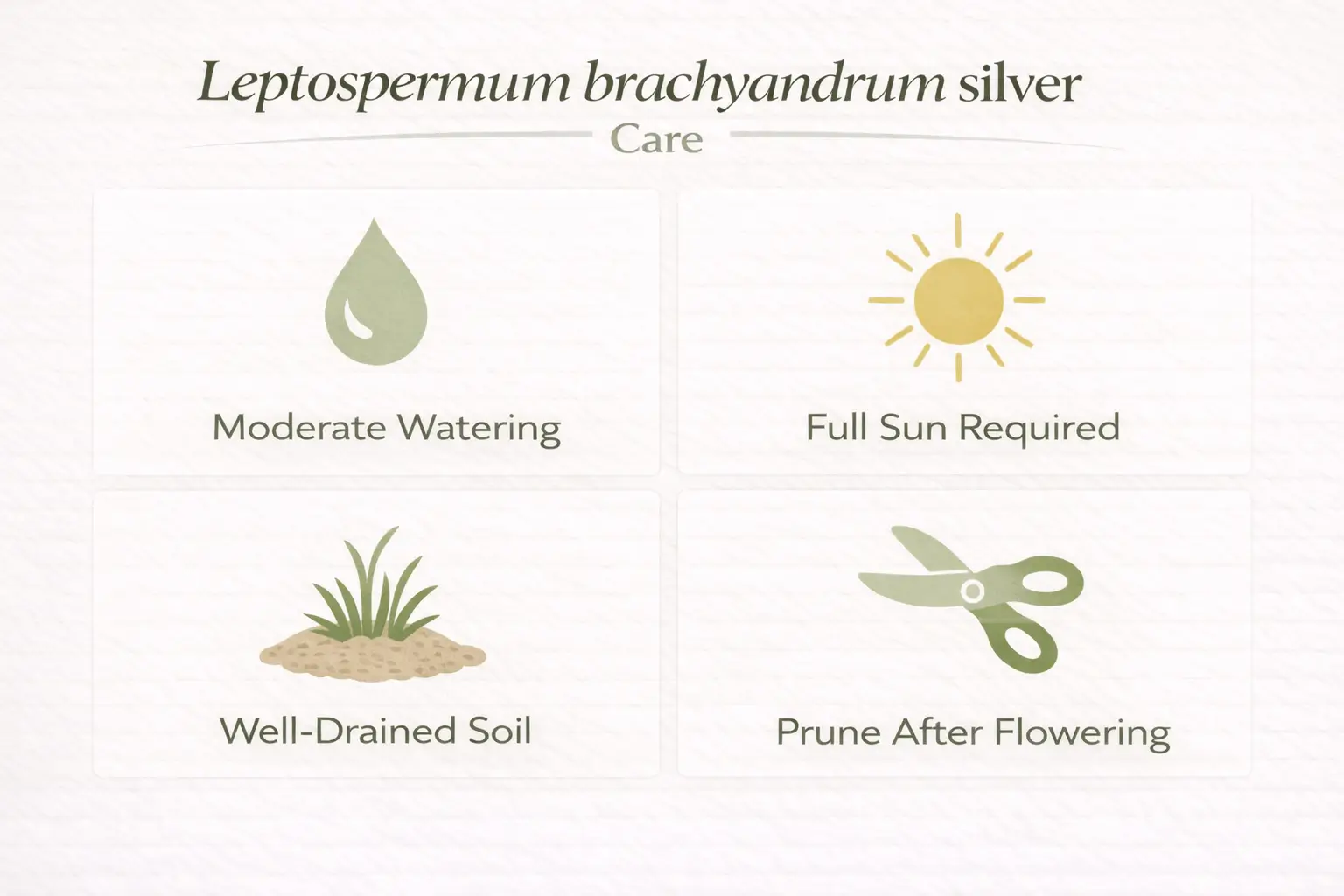
Proper care ensures healthy structure and silvery foliage retention.
Watering
- Deep watering once weekly during establishment
- Drought-tolerant after maturity
- Avoid waterlogged conditions
Light Requirements
- Full sun (6+ hours daily) preferred
- Partial shade tolerated but reduces density
Soil Conditions
- Well-drained sandy or loamy soil
- pH range: 5.5–7.0
- Poor tolerance for heavy clay soils
Fertilization
- Low-nitrogen slow-release fertilizer in spring
- Minimal feeding required overall
Pruning
- Light pruning after flowering
- Hard pruning tolerated for shaping
Climate Suitability
- USDA zones: 9–11
- Frost tolerance: down to approximately -5°C
Leptospermum brachyandrum silver is often grouped with other easy-care landscaping plants like Dwarf Myrtle Shrub and 7+ Powerful Reasons Rosemary Prostrate Transforms Any Garden, which share similar drought tolerance and pruning flexibility.
Comparison: Leptospermum Brachyandrum Silver vs Similar Varieties
| Feature | L. brachyandrum Silver | L. brachyandrum ‘Jack Frost’ | Standard Weeping Tea Tree |
| Foliage | Intense silver-gray | Silvery-blue frosted look | Green-gray |
| Height | 2–4 m | 1.5–3 m | 3–5 m |
| Flower | White, spring | White, profuse bloom | White/pink summer |
| Hardiness | Moderate frost tolerance | Higher cold tolerance | Moderate |
If you are comparing ornamental shrubs and screening plants, you may also find Best Hedging Trees: 6+ Essential Types for Privacy helpful for selecting the right landscape structure.
Common Problems and Solutions
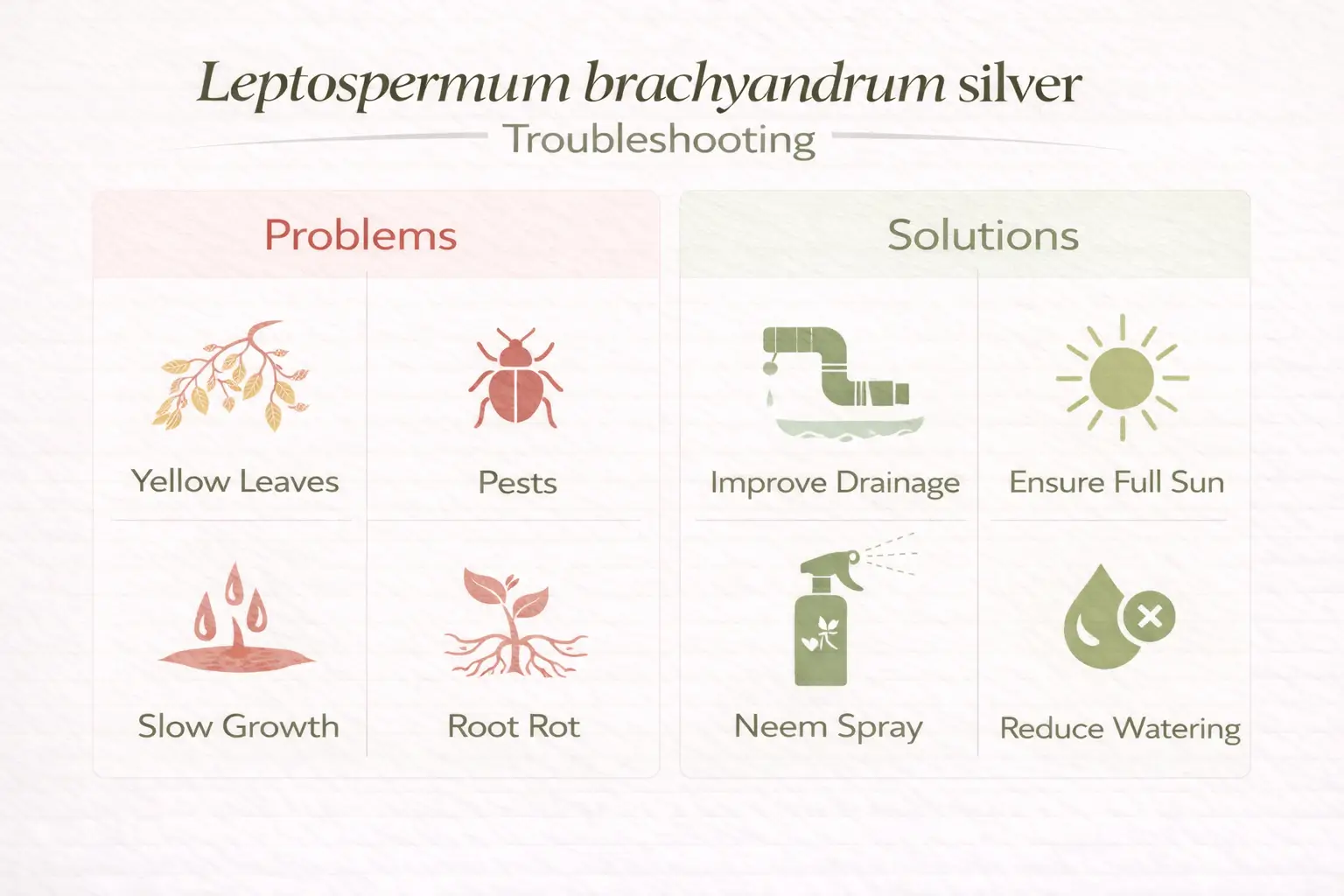
Yellowing Leaves
Usually caused by overwatering or poor drainage. Improve soil structure using sand or grit and reduce watering frequency.
Pests (Aphids, Scale)
Treat infestations with neem oil or encourage natural predators like ladybugs.
Slow Growth
Often linked to nutrient deficiency or insufficient sunlight. Apply light fertilizer and ensure full sun exposure.
Root Rot
Caused by waterlogged soil. Improve drainage immediately and avoid excessive winter watering.
Propagation and Landscaping Uses
Propagation Methods
- Semi-hardwood cuttings in summer (most reliable)
- Seed propagation (less consistent results)
Landscaping Applications
- Coastal gardens and windbreaks
- Informal hedging or screening plants
- Feature shrub in ornamental landscapes
- Erosion control in sandy soils
Companion Planting
Pairs well with Australian natives such as banksia and grevillea for a natural ecosystem design.
For broader garden design inspiration, this plant can be combined with native and ornamental species such as 7+ Powerful Reasons Australian Brush Cherry and 6+ Essential Australian Native Screening Trees for Privacy to create structured evergreen landscapes.
Seasonal Care and Environmental Limitations
Seasonal Care Guide
- Spring: Fertilize and prune after flowering
- Summer: Apply mulch to retain moisture
- Autumn: Reduce watering gradually
- Winter: Protect young plants from frost
Environmental Limitations
- Poor performance in heavy clay soils
- Unsuitable for high humidity tropical climates
- Sensitive to prolonged waterlogging
Conclusion
Leptospermum brachyandrum silver is a resilient and ornamental Australian native shrub valued for its silvery foliage and elegant weeping habit. It thrives in sunny, well-drained environments and requires minimal maintenance once established. With proper care, it serves as a striking feature plant, hedge, or coastal landscape addition.
FAQs
What is leptospermum brachyandrum silver?
It is a silver-leaved weeping tea tree native to Australia, growing 2–4 meters tall in sunny, well-drained conditions.
How do I care for silver weeping tea tree?
Provide full sun, sandy soil, and moderate watering, with pruning after flowering to maintain shape.
What is the difference between silver and ‘Jack Frost’ varieties?
‘Jack Frost’ has bluer foliage and higher frost tolerance, while silver has grayer leaves and moderate hardiness.
Why are leaves turning yellow?
This is commonly due to overwatering or poor drainage, which should be corrected by improving soil conditions.
Can it grow indoors?
Yes, but only in bright light with proper drainage; indoor plants remain smaller, usually 1–2 meters tall.