Introduction
The term grass palm is a common name used to describe several plants that resemble palm trees but are not true palms from a botanical standpoint. In everyday gardening and landscaping language, grass palm is often applied to plants with long, narrow, arching leaves that create a palm-like silhouette. This naming overlap causes frequent confusion between palms, grasses, and palm-like plants, especially among home gardeners. While these plants may look similar at first glance, their botanical classification, structure, and growth habits are very different. Understanding how the grass palm name is used helps clarify why some plants are mistaken for palms or grasses despite belonging to entirely separate plant families.
What Is a Grass Palm?
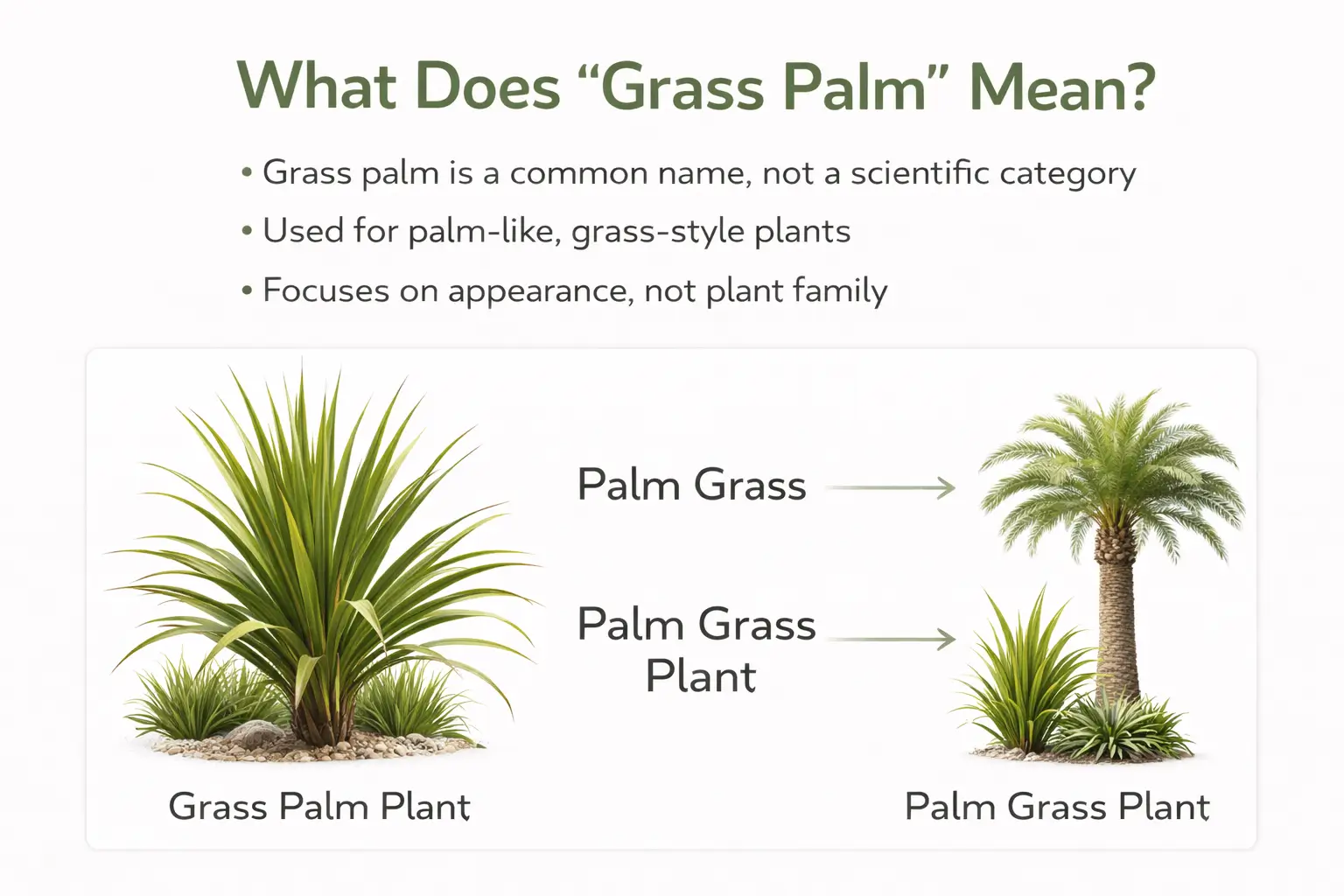
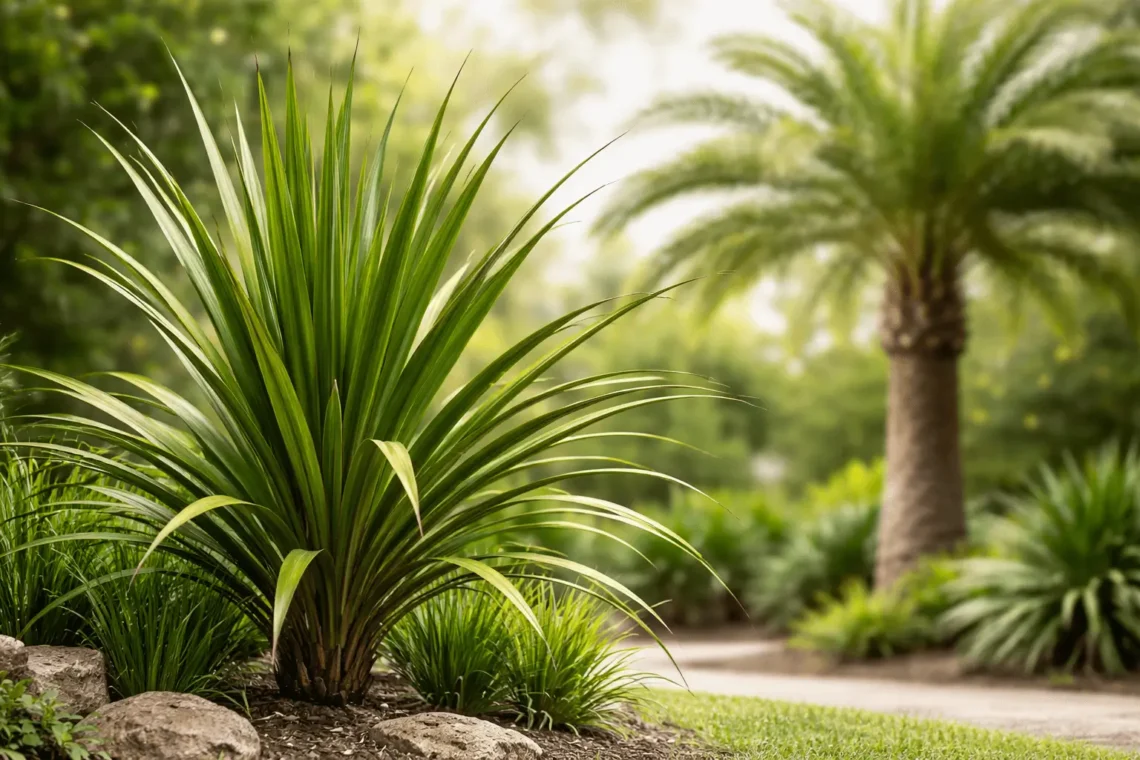
A grass palm is not a scientifically recognized plant category. Instead, it is a descriptive term used in horticulture to label plants that visually resemble palms but often grow in a grass-like form. The phrase is commonly used for ornamental plants with tufted or rosette-style foliage.
True palms belong to the Arecaceae family, while many so-called grass palms are unrelated species with similar leaf shapes. A grass palm plant may also be referred to as palm grass or palm grass plant in garden centers and landscaping guides, even though these plants lack the woody trunk and reproductive traits of true palm trees. The term focuses on appearance rather than botanical accuracy.
Is a Palm Tree a Grass?
This is a common question driven by visual similarities between palms and large ornamental grasses. Botanically, the answer is clear when plant classification is examined.
Are Palm Trees a Type of Grass?
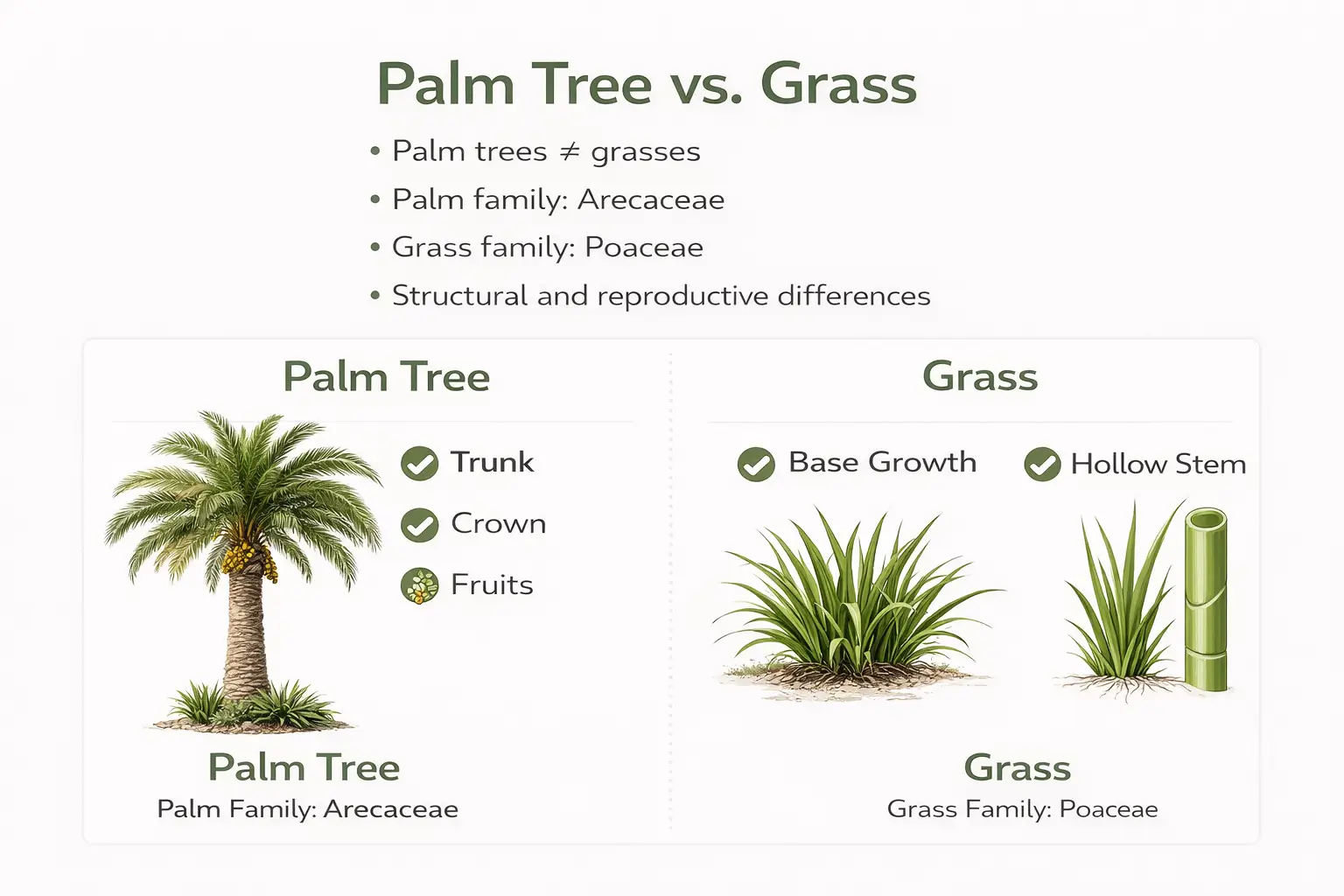
Palm trees are not grasses. Scientifically, palms are flowering plants classified under the family Arecaceae, while grasses belong to the Poaceae family. When asking are palm trees a type of grass or is a palm tree a grass, the answer is no. Palms are monocotyledons like grasses, but this shared trait does not place them in the same plant group. Their internal structure, growth pattern, and reproductive biology differ significantly.
Are Palm Trees in the Grass Family?
Palm trees are not part of the grass family. The grass family consists of herbaceous plants with hollow stems and jointed nodes. In contrast, palms develop a solid trunk and a distinct crown of leaves. Questions such as are palm trees in the grass family or references to the palm trees grass family confusion arise from visual resemblance, not scientific classification.
Palm Tree vs Grass — Key Differences
Key differences between a palm tree and grass include:
- Structure: A palm tree develops a single trunk, while grasses grow from the base with no woody trunk
- Growth habit: Palms grow upright and long-lived; grasses are typically low-growing and fast-spreading
- Reproduction: Palms produce flowers and fruits from the crown, unlike grasses, which flower along stems
These distinctions clarify why comparing palm tree grass or palm trees grass is based on appearance rather than biology.
Palm-Like Grasses Commonly Called Grass Palm
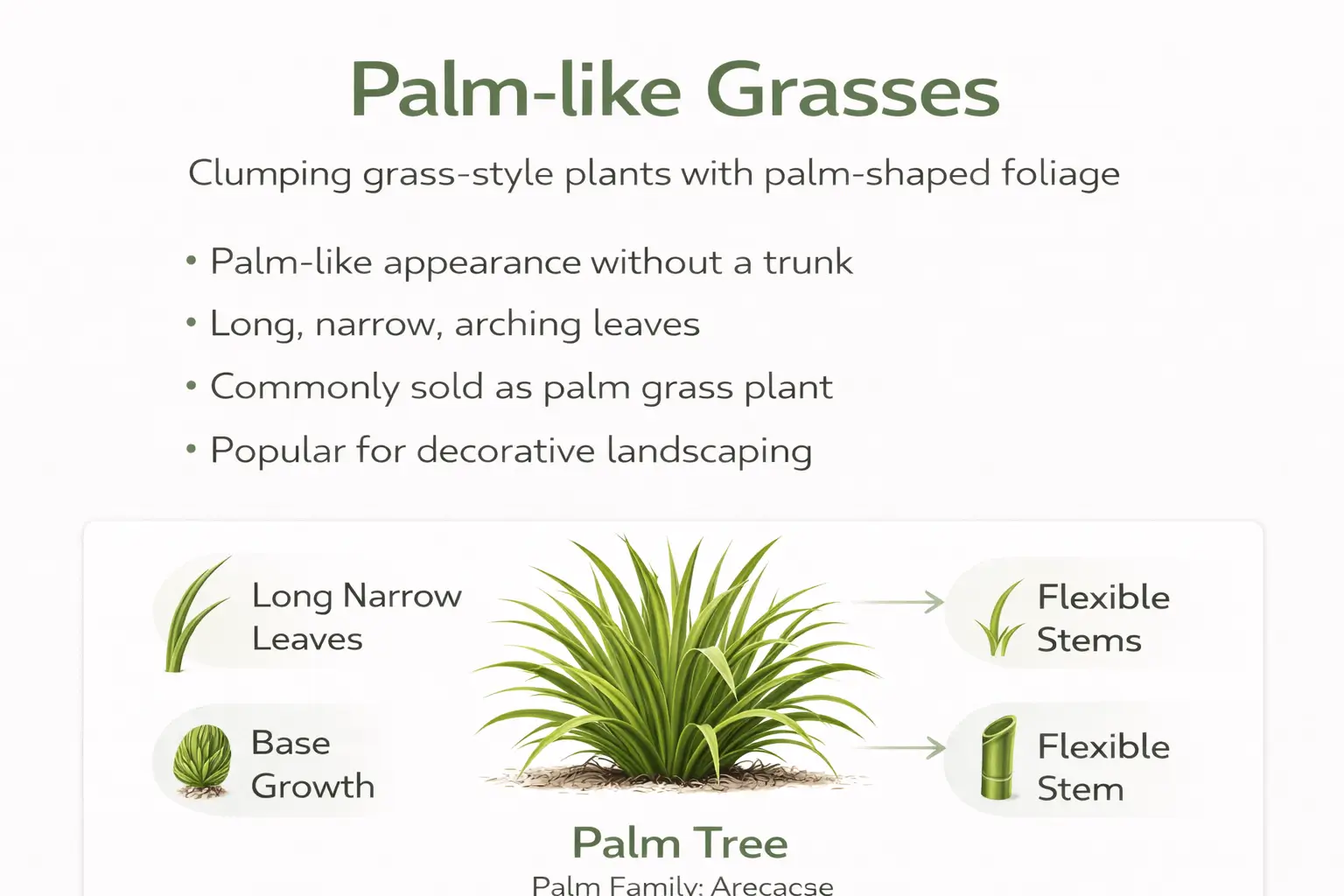
Some plants are labeled grass palms because their foliage mimics the form of a palm crown. Narrow, strap-like leaves and clumping growth patterns create a palm-inspired look without true palm characteristics. These plants are popular in decorative landscaping where a tropical appearance is desired without using actual palm trees.
Palm Like Grasses Explained
Palm-like grasses share several visual traits that lead to mislabeling:
- Long, linear leaves radiating from a central base
- Flexible, grass-style growth without woody trunks
- Compact size suitable for containers and borders
These plants are often sold as palm like grasses or palm grass plant, emphasizing style rather than taxonomy. For a side-by-side breakdown of every palm-like grass variety and its identifying traits, check this complete grass palm reference table. It’s a handy quick-lookup when comparing leaf shape and growth habit across species.
Cordyline as a Grass Palm Alternative
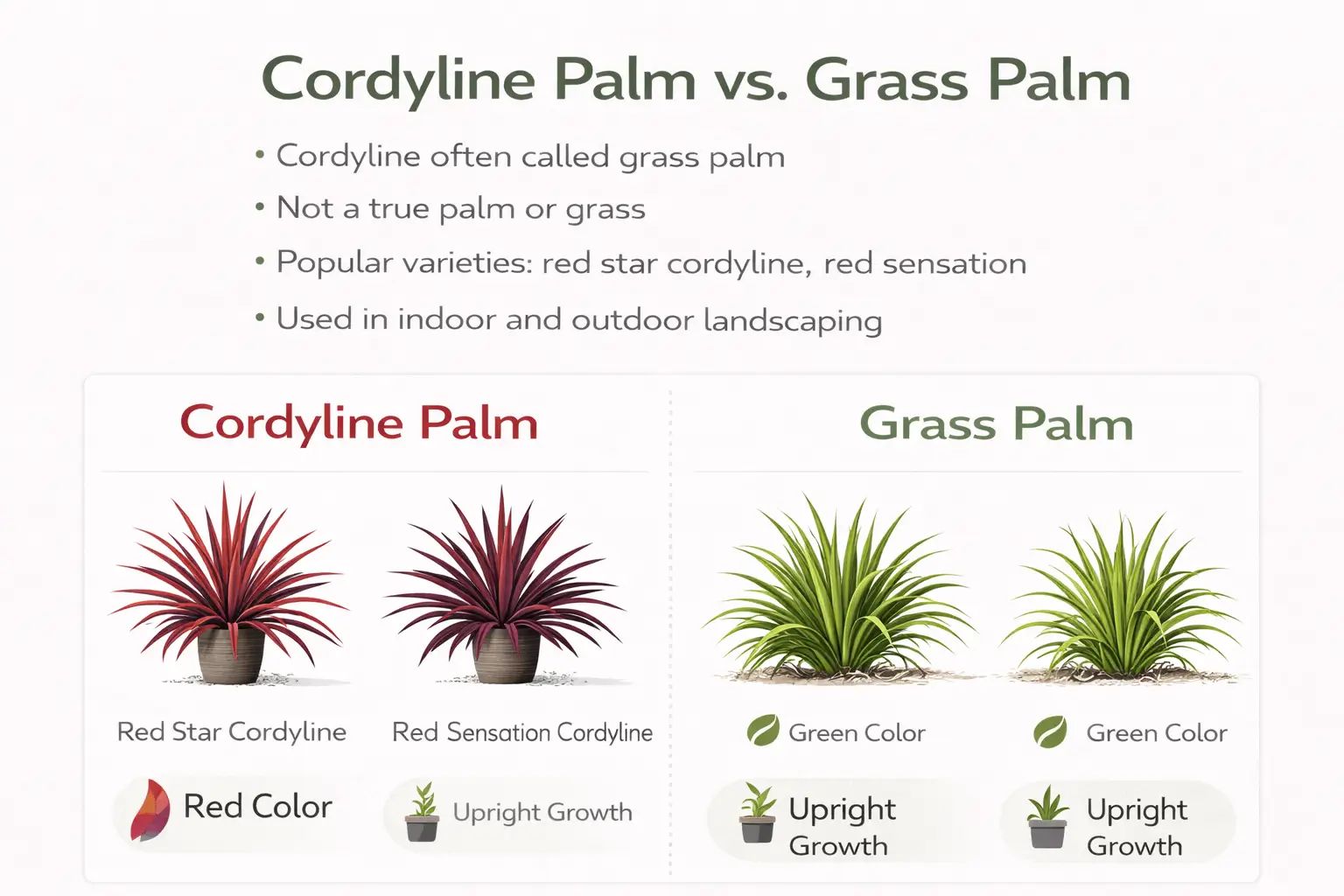
Cordyline species are among the most common plants marketed as grass palms. Their bold, upright leaves and architectural form make them popular substitutes for palms in both modern and tropical landscape designs. Cordylines offer strong ornamental value, especially in climates where true palms struggle to grow.
Cordyline Palm vs Grass Palm
When comparing a cordyline palm to a grass palm, similarities are mostly visual. Cordylines form a cane-like stem with a leaf rosette, while many grass palms remain clump-forming. Terms such as palm cordyline and cordyline palm plants are widely used in retail settings, even though cordylines are neither true palms nor grasses.
Read more: 7+ Powerful Purple Heart Plant Indoor Benefits for Health & Home
Red Star Cordyline and Red Sensation Cordyline
Several cordyline varieties are especially popular in landscaping:
- Red star cordyline: Known for deep burgundy foliage and upright growth
- Red star cordyline plant and cordyline red star plant: Common container and border plants
- Cordyline red sensation plant and red sensation cordyline plant: Valued for dramatic color and low maintenance
These varieties are frequently labeled as grass palms due to their palm-like appearance. To compare foliage color, growth rate, and care needs across cultivars at a glance, this cordyline grass palm variety chart lays out red star and red sensation varieties side by side. It’s useful for narrowing down which cultivar fits your landscape design.
Is Cordyline a Grass?
Cordyline is not a grass. Botanically, it belongs to the Asparagaceae family. The term cordyline grass is a naming convenience rather than a scientific description. While cordylines share leaf shape similarities with grasses, their woody stems and growth structure set them apart.
Grass Palm Plant Uses in Landscaping
Grass palms and cordylines are widely used in landscaping for their clean lines and tropical aesthetic. A grass palm plant works well in containers, pathways, and accent beds. Palms and cordylines are often combined in modern garden designs to create height variation and visual contrast. Many varieties perform well both indoors and outdoors, depending on climate and light conditions.
Readers interested in indoor styling ideas and organized care resources can also explore this helpful grass palm care resource center.
How to Identify a True Grass Palm vs Palm Tree
Identifying whether a plant is a true palm or a grass palm substitute involves simple observation:
- Leaf attachment: Palms have leaves emerging from a central crown; grass palms grow from the base
- Trunk presence: True palms develop a defined trunk; grass palms do not
- Growth pattern: Palms grow vertically over time, while grass palms remain clumping or cane-forming
These traits help distinguish visual resemblance from true botanical identity. Gardeners who want deeper visual and structural comparisons can browse this grass palm identification database for detailed photos and species notes. It expands on the leaf-attachment and trunk-presence traits covered above.
Conclusion: Understanding the Grass Palm Term
The term grass palm is a visual description rather than a botanical category. It is commonly used for plants that resemble palms in shape but differ in structure, growth habit, and classification. True palms belong to the Arecaceae family, while grasses and palm-like plants such as cordylines fall into entirely different plant groups. Much of the confusion comes from similar leaf forms and upright growth patterns. Understanding these distinctions helps gardeners avoid mislabeling and choose plants that suit their climate, space, and design goals. By knowing what the grass palm term really means, plant buyers can make informed selections based on function, appearance, and long-term care needs.
Read more: Purple Jew Plant: 8+ Stunning Benefits & Care Secrets
FAQs
Is a grass palm a real palm tree?
No, a grass palm is not a real palm tree. It is a common name used for palm-like plants that resemble palms in appearance but do not belong to the palm family.
Are palm trees actually grasses?
Palm trees are not grasses. Although both are monocots, palms belong to the Arecaceae family, while grasses belong to the Poaceae family.
Why are cordylines called grass palms?
Cordylines are called grass palms because their long, narrow leaves and upright form resemble palms, even though they are botanically unrelated to both palms and grasses.
Is red star cordyline a type of grass palm?
Red star cordyline is often marketed as a grass palm due to its appearance, but it is not a true palm or grass. It is an ornamental plant from the Asparagaceae family.
What is the difference between palm grass and palm trees?
Palm grass refers to grass-like or palm-like plants with similar foliage, while palm trees are true palms with trunks, crowns, and distinct reproductive structures.
Can grass palm plants be grown indoors?
Many grass palm plants, including cordylines, can be grown indoors if they receive adequate light and proper care, making them popular choices for interior plant displays.