Introduction
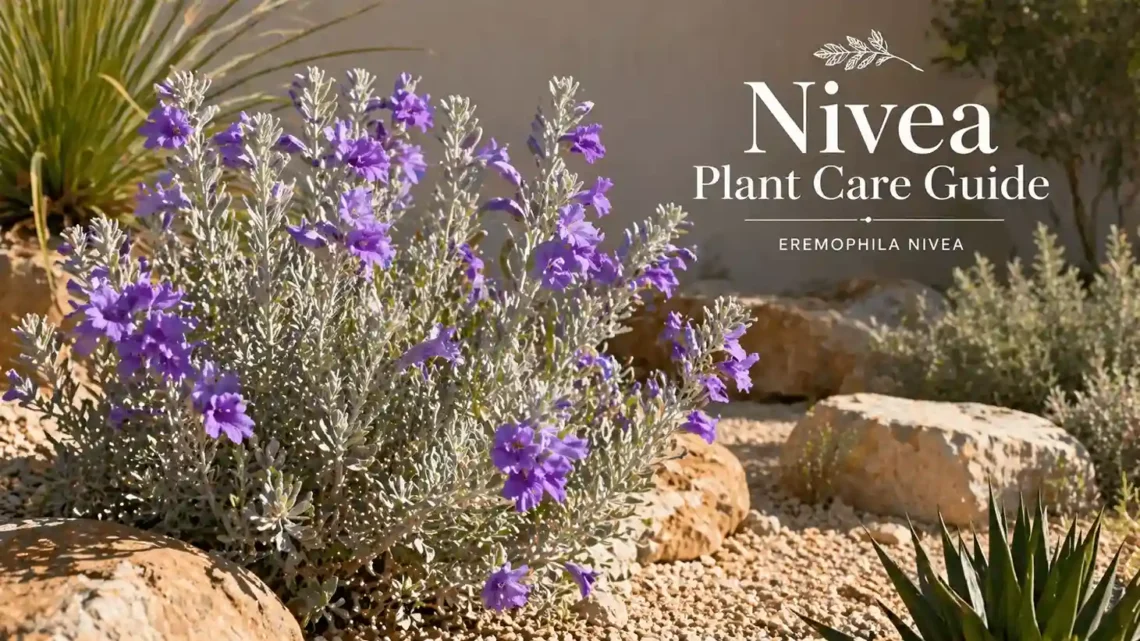
The nivea plant most commonly refers to Eremophila nivea, a silvery-leaved flowering shrub native to Australia, often known as the emu bush nivea or blue velvet plant. It belongs to the Scrophulariaceae family and is highly valued for its soft, woolly foliage and vibrant purple blooms. This drought-adapted plant thrives in dry environments and is widely used in ornamental landscaping, particularly in low-water gardens. Its distinctive texture and color make it a standout choice for xeriscaping and modern garden design.
This guide explains what the nivea plant is, its varieties like eremophila nivea blue velvet and spring mist plant, how to care for it, and common problems gardeners may face.
Quick Summary
- The nivea plant (Eremophila nivea) is a drought-tolerant shrub with silvery foliage and purple flowers.
- Popular varieties include blue velvet plant and eremophila spring mist.
- It thrives in sunny, well-drained conditions and requires minimal watering.
- Common issues include root rot, poor drainage, and climate sensitivity.
What Is the Nivea Plant? (Definition & Botanical Context)
The nivea plant is a species of emu bush known scientifically as Eremophila nivea, native to arid regions of Western Australia. It is a drought-adapted shrub designed to survive extreme heat, low rainfall, and nutrient-poor soils. Eremophila nivea belongs to the genus Eremophila, a group of flowering plants native to Australia known for their drought tolerance.
The nivea plant belongs to the broader group of emu bush species, which are known for their resilience and ornamental value in dry landscapes—learn more in this detailed emu bush guide.
Botanical Classification and Naming
- Scientific name: Eremophila nivea
- Family: Scrophulariaceae
- Common names: emu bush nivea, blue velvet plant
- Genus: Eremophila (a group of Australian shrubs adapted to dry climates)
The name “blue velvet plant” comes from the dense, fine hairs covering the leaves, giving them a soft, velvety texture and silvery-blue appearance.
Native Habitat and Adaptation
- Originates from dry, arid Australian regions
- Grows naturally in sandy, rocky soils
- Highly tolerant of heat and drought conditions
Distinction Between True Nivea and Similar Plants
Several plants share the “nivea” name, but they are botanically different:
- Pimelea nivea: A small shrub with white flowers
- Boehmeria nivea: A fiber plant used in textile production
- Luzula nivea: A grass-like ornamental plant
Only Eremophila nivea is the true emu bush nivea valued for ornamental drought-tolerant gardening.
Key Characteristics of Eremophila Nivea
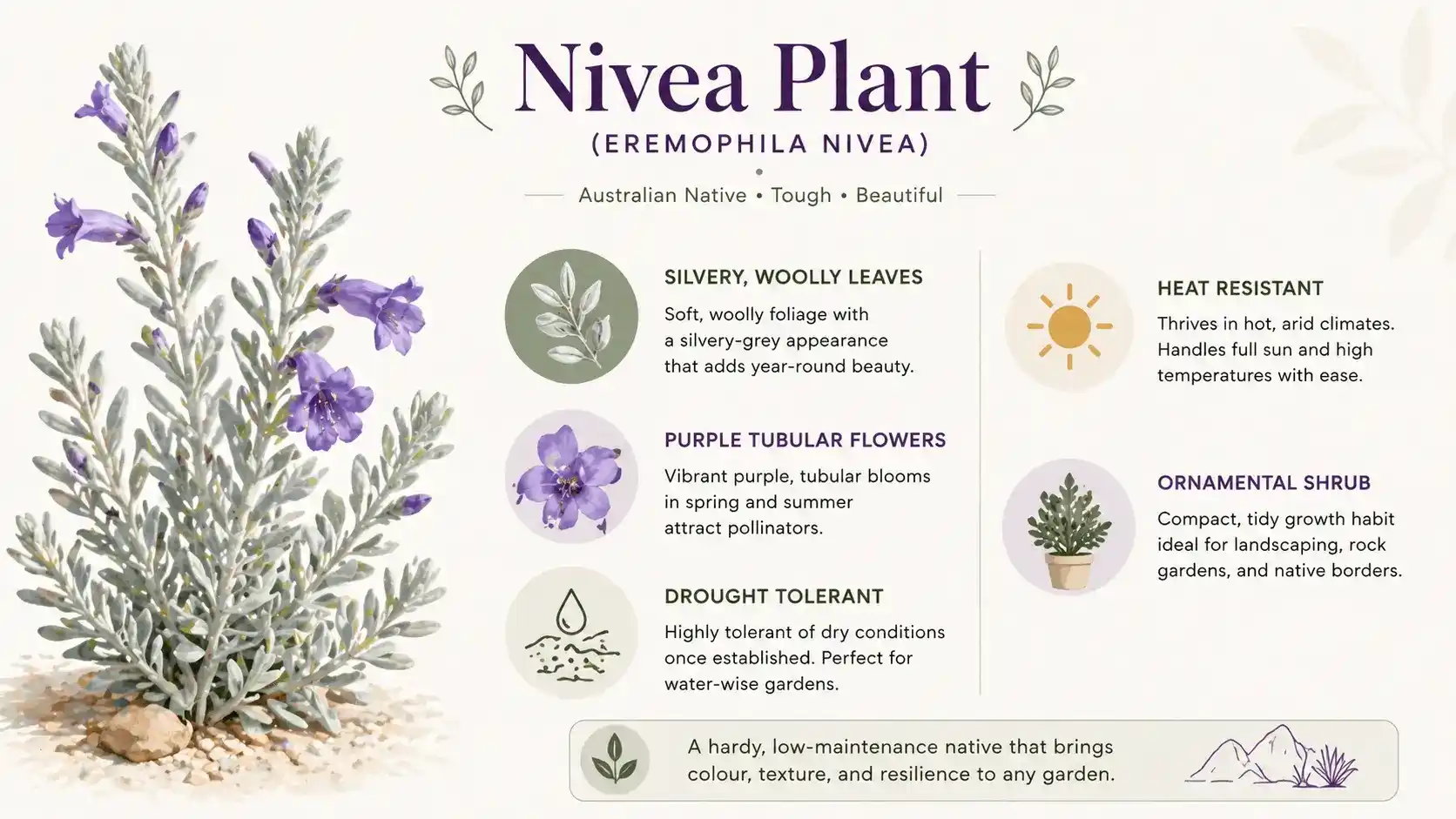
Eremophila nivea is recognized for its unique foliage and vibrant blooms, making it visually distinct in dry landscapes.
Visual Traits and Structure
- Silvery, woolly leaves that reflect sunlight and reduce water loss
- Tubular purple to lilac flowers that attract pollinators
- Compact to medium shrub structure with soft branching
Seasonal Blooming Patterns
- Flowers typically appear in spring and early summer
- Blooming may extend longer in warm climates
Key Features
- Foliage: Silvery, soft, woolly texture
- Flowers: Purple to lilac tubular blooms
- Adaptation: Drought-tolerant and heat-resistant
- Landscape use: Ideal for ornamental planting and xeriscaping
Its soft, woolly foliage places it among plants with velvety leaves, a category valued for both texture and visual appeal in garden design.
Nivea Plant Varieties and Related Species
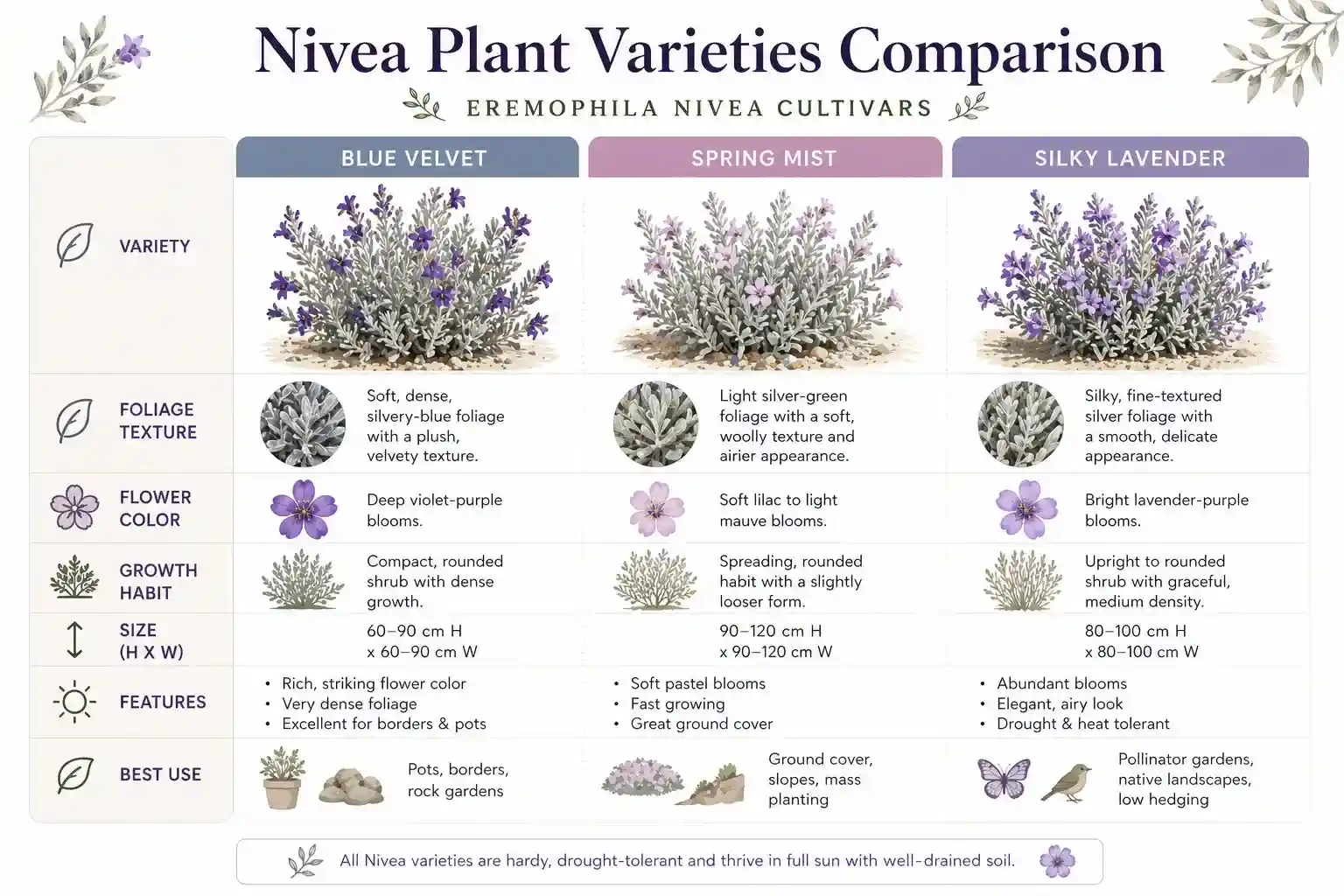
Different cultivars of Eremophila nivea offer variations in growth habit, foliage density, and flower color.
Common Varieties
Blue Velvet Plant (Eremophila nivea blue velvet)
- Dense, compact growth
- Deep purple flowers
- Strong visual contrast due to thick velvety foliage
Spring Mist Plant (Eremophila nivea spring mist)
- Softer, more open structure
- Pale lavender flowers
- Spreading habit suitable for ground cover
Silky Eremophila / Silver Emu Bush
- Fine, silky foliage
- Light purple flowers
- Medium-sized shrub ideal for accent planting
Comparison Table
| Variety | Foliage Texture | Flower Color | Growth Habit | Best Use |
| Blue Velvet | Dense, velvety | Deep purple | Compact shrub | Decorative borders |
| Spring Mist | Softer, airy | Pale lavender | Spreading | Ground cover |
| Silky Lavender | Fine, silky | Light purple | Medium shrub | Accent planting |
Nivea Plant Size and Growth Rate
Plant Size
The nivea plant typically grows as a medium-sized shrub under suitable conditions.
- Typical height: 1–2 meters
- Spread: up to 2 meters depending on variety
- Growth influenced by sunlight, pruning, and soil drainage
Indoor growth is uncommon, as the plant requires full sun and outdoor conditions to thrive effectively.
Growth Rate
The plant has a moderate growth rate, which can vary based on environment.
- Faster growth in warm, dry climates
- Slower development in humid or poorly drained conditions
- Seasonal growth peaks during warmer months
Nivea Plant Care Guide (Eremophila Nivea Care)
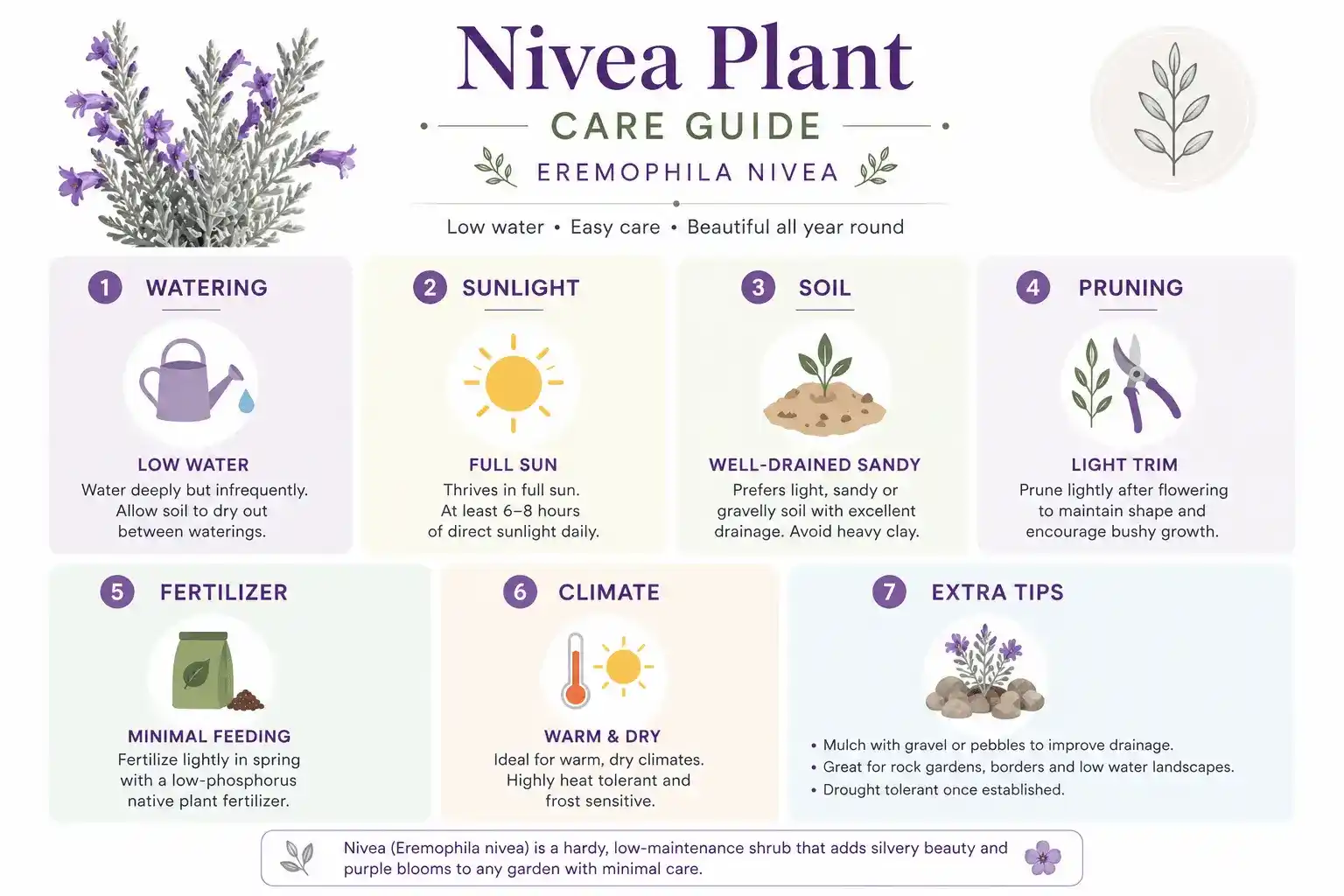
Proper care is essential for maintaining healthy growth and preventing common issues in the nivea plant.
Watering
- Requires very low water
- Allow soil to dry completely between watering
- Overwatering is the most common cause of failure
Light Requirements
- Needs full sun exposure
- Poor growth and flowering in shaded areas
Soil Preferences
- Prefers well-draining sandy or rocky soil
- Avoid heavy clay soils that retain moisture
Fertilization
- Minimal feeding required
- Use low-phosphorus fertilizer if necessary
Pruning
- Light pruning after flowering
- Helps maintain shape and improve airflow
Climate Tolerance
- Best suited for warm, dry climates
- Sensitive to frost and prolonged humidity
Common Nivea Plant Problems and Solutions
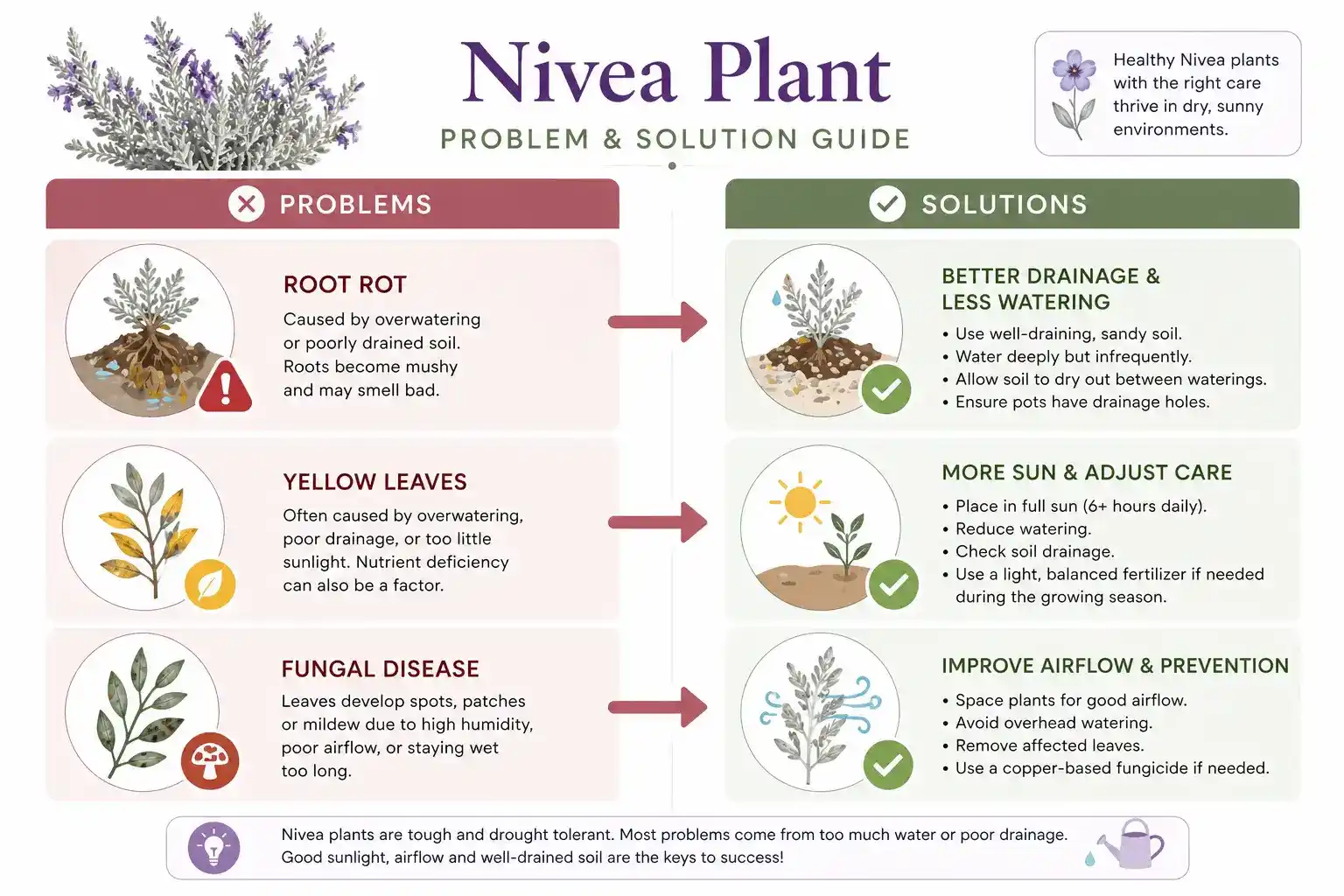
Root Rot
- Cause: Overwatering or poor drainage
- Solution: Improve soil drainage and reduce watering
- Prevention: Use sandy soil and avoid waterlogging
Leaf Yellowing
- Cause: Excess moisture or insufficient sunlight
- Solution: Adjust watering and increase sunlight exposure
Fungal Diseases
- Cause: High humidity and poor airflow
- Solution: Improve spacing and airflow
- Prevention: Avoid overhead watering
Prevention Tips
- Use raised beds or well-drained soil
- Ensure full sun exposure
- Water sparingly and infrequently
Beginner Mistakes to Avoid When Growing Nivea Plant
Common mistakes often lead to poor plant performance or failure.
- Overwatering a drought-tolerant plant
- Planting in humid climates without improving drainage
- Ignoring full sunlight requirements
- Using excessive or heavy fertilizers
Environmental Limitations and Growing Conditions
The nivea plant performs best in climates similar to its native Australian habitat.
Key Environmental Factors
- Thrives in dry, arid environments
- Struggles in tropical or high-humidity regions
- Requires adaptation such as pots or controlled drainage in non-native areas
For example, growing the nivea plant in regions like India may require careful soil management and protection from excessive rainfall. While it thrives outdoors, it is not suitable for typical indoor environments—unlike many plants covered in this houseplant guide.
Comparison: Eremophila Nivea vs Similar “Nivea” Plants
Different plants share the “nivea” name but vary significantly in characteristics and uses.
Comparison Table
| Plant Name | Plant Type | Key Feature | Use Case |
| Eremophila nivea | Shrub | Silvery foliage, purple flowers | Ornamental landscaping |
| Pimelea nivea | Small shrub | White flowers | Native garden plant |
| Boehmeria nivea | Fiber plant | Used for textiles | Industrial/agricultural |
| Luzula nivea | Grass-like | White flowers | Ground cover |
| Tacca nivea | Exotic plant | Unique white blooms | Indoor/collector plant |
How the Nivea Plant Fits Into Garden Design
The nivea plant is widely used in landscaping due to its drought tolerance and visual appeal.
Landscape Uses
- Ideal for xeriscaping and water-efficient gardens
- Works as a feature shrub or border plant
- Pairs well with other emu bush varieties
- Suitable for low-maintenance landscaping designs
It pairs well with other drought-tolerant Mediterranean-style plants, making it ideal for cohesive, low-water landscape designs.
Conclusion
The nivea plant (Eremophila nivea) is a distinctive drought-tolerant shrub known for its soft silver foliage and vibrant purple flowers. It thrives in full sun, well-drained soil, and low-water conditions, making it ideal for dry-climate gardens. Understanding its varieties, growth patterns, care requirements, and potential problems allows gardeners to grow it successfully. With proper conditions, it serves as a reliable, low-maintenance ornamental plant in modern landscaping.
FAQs
What is the nivea plant used for?
The nivea plant is primarily used as an ornamental shrub in gardens, especially in drought-tolerant and low-water landscapes due to its unique foliage and flowers.
Is eremophila nivea the same as blue velvet plant?
Yes, the blue velvet plant is a common name for Eremophila nivea, referring to its soft, velvety, silvery foliage.
Can the nivea plant grow in humid climates?
The nivea plant struggles in humid environments and requires excellent drainage and airflow to survive in such conditions.
How often should I water a nivea plant?
Water sparingly and allow the soil to dry out completely between watering to prevent root rot and other moisture-related issues.
What are the most common problems with eremophila nivea?
The most common problems include root rot, fungal diseases, and poor growth caused by excess moisture or insufficient sunlight.