Introduction
Common garden bugs are insects and small organisms found in soil, plants, and garden environments, where they can either harm or support plant health. Understanding common garden pests and beneficial insects is essential for proper garden pest identification and effective plant care. These organisms include a wide range of species, from sap-sucking insects to soil-dwelling larvae that influence plant growth. In diverse ecosystems, especially regions like Australia, recognizing the difference between harmful pests and helpful insects helps prevent unnecessary treatments and supports sustainable gardening practices.
Quick Summary
- Common garden bugs include both harmful pests and beneficial insects
- Identification is key to protecting plants and avoiding unnecessary treatments
- Many bugs in soil and on leaves indicate underlying garden conditions
- Proper management depends on recognizing pest behavior and lifecycle
What Are Common Garden Bugs?
Common garden bugs refer broadly to insects, mites, larvae, and soil organisms that live in garden environments. These include garden pests insects, small animals, and other organisms that interact with plants.
Key points:
- Garden bugs include insects, mites, larvae, and soil organisms
- Not all bugs are harmful—many support plant health and soil quality
- Found in leaves, stems, roots, and soil
The term “bugs” is often used loosely. Scientifically, insects belong to the class Insecta, while pests are defined by their impact on plants rather than their classification.
How Garden Pest Identification Works
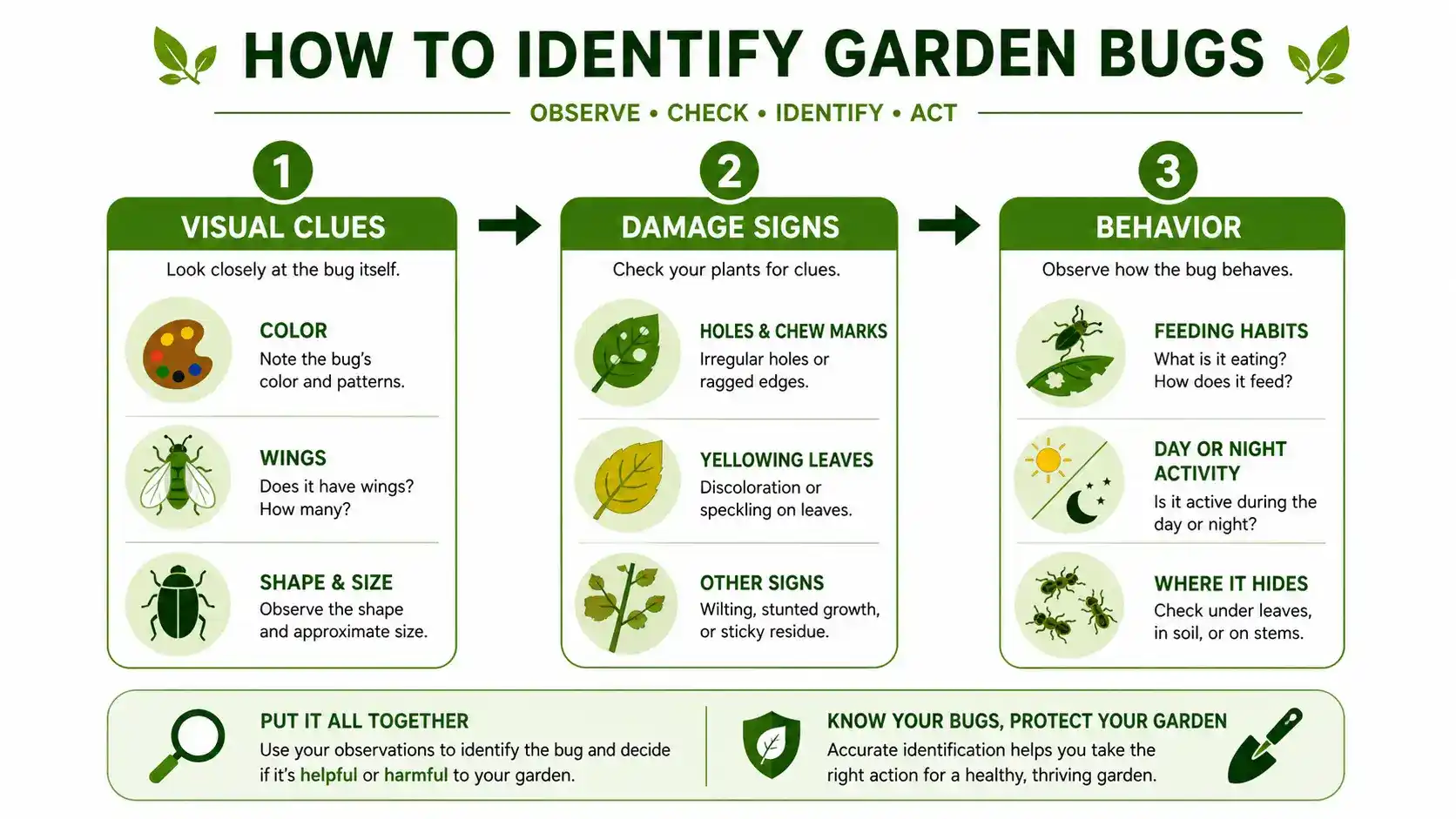
Garden pest identification involves recognizing insects based on their physical features and behavior. Accurate identification helps determine whether intervention is necessary.
Visual Identification Clues
- Body shape, size, color, and presence of wings
- Damage patterns such as holes, spots, or discoloration on leaves
- Eggs, larvae, or clusters on plant surfaces
Behavior-Based Identification
- Feeding habits such as leaf-chewing or sap-sucking
- Activity timing (day vs night pests)
- Location (soil-dwelling vs surface insects)
Using labeled garden insect images and guides improves accuracy.
Most Common Garden Bugs (With Examples)
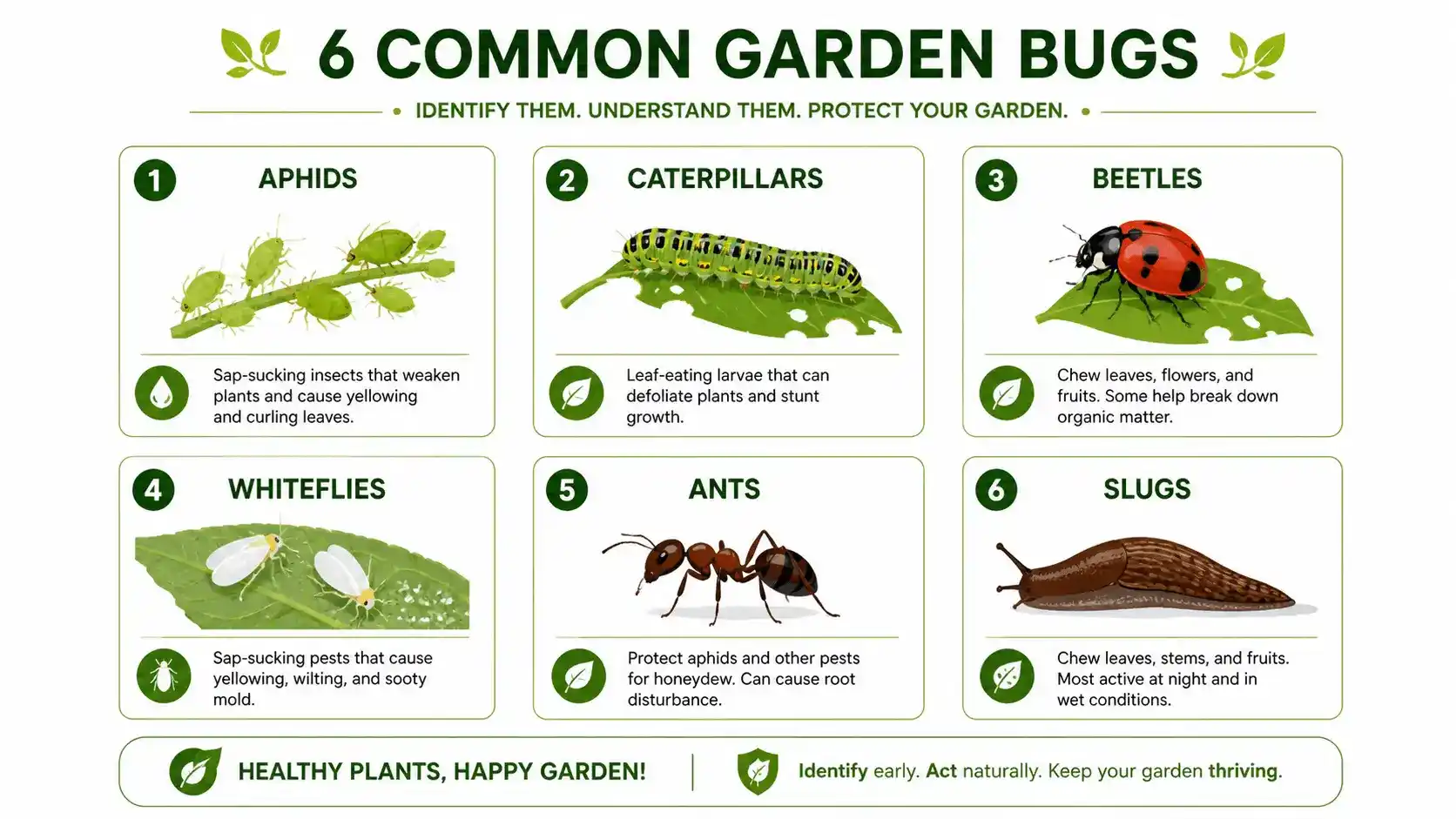
The most common garden bugs are widely found across different climates and plant types.
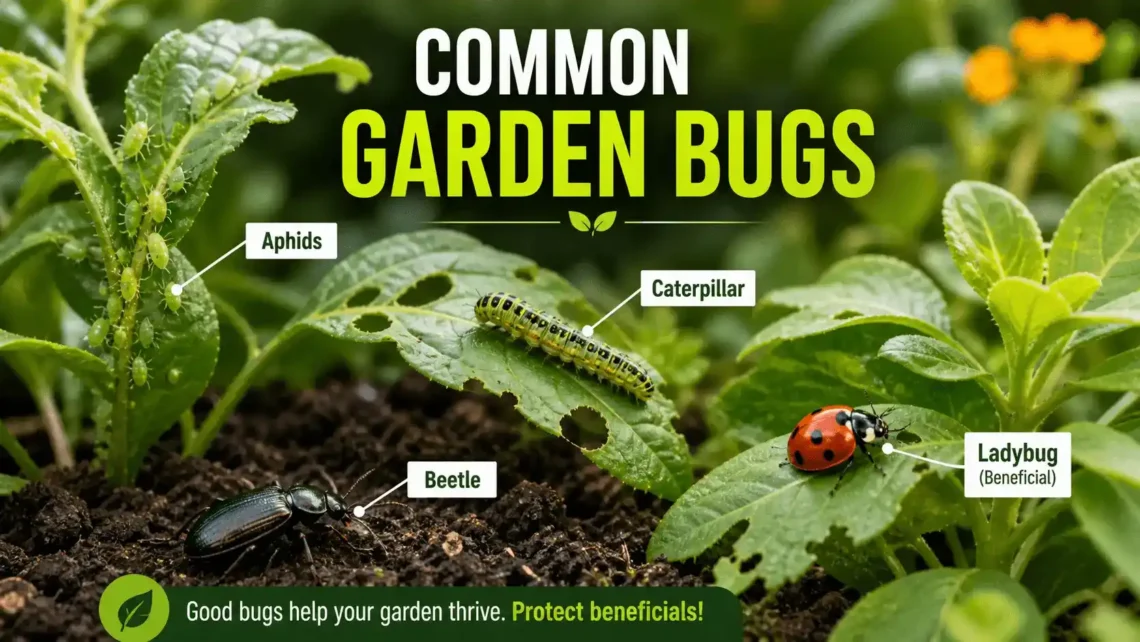
- Aphids – Sap-sucking insects that cause leaf curling and sticky residue (see Aphids on Plants: 7 Proven Fixes to Save Your Plants Fast for targeted solutions)
- Caterpillars – Larval stage of moths and butterflies that chew leaves
- Beetles – Hard-shelled insects that damage roots and foliage
- Whiteflies – Tiny flying insects that feed under leaves
- Ants – Often protect aphids and disrupt plant health
- Slugs and snails – Soft-bodied organisms that consume plant tissue
Common Garden Bugs in Australia
Common garden bugs in Australia are influenced by climate and biodiversity, especially in vegetable gardens.
- Aphids and scale insects
- Leaf miners
- Cutworms and armyworms
- Grasshoppers
- Garden moths (larvae stage causes plant damage)
Warm conditions often increase pest activity and reproduction rates.
Garden Bugs in Soil vs On Plants
Garden bugs exist both below and above ground, each playing different ecological roles.
Common Soil Bugs
- Earthworms – Beneficial organisms that improve soil structure
- Grubs – Larvae that can damage plant roots
- Nematodes – Microscopic organisms; some beneficial, others harmful
Surface and Leaf Bugs
- Caterpillars
- Aphids
- Beetles
Harmful vs Beneficial Garden Bugs
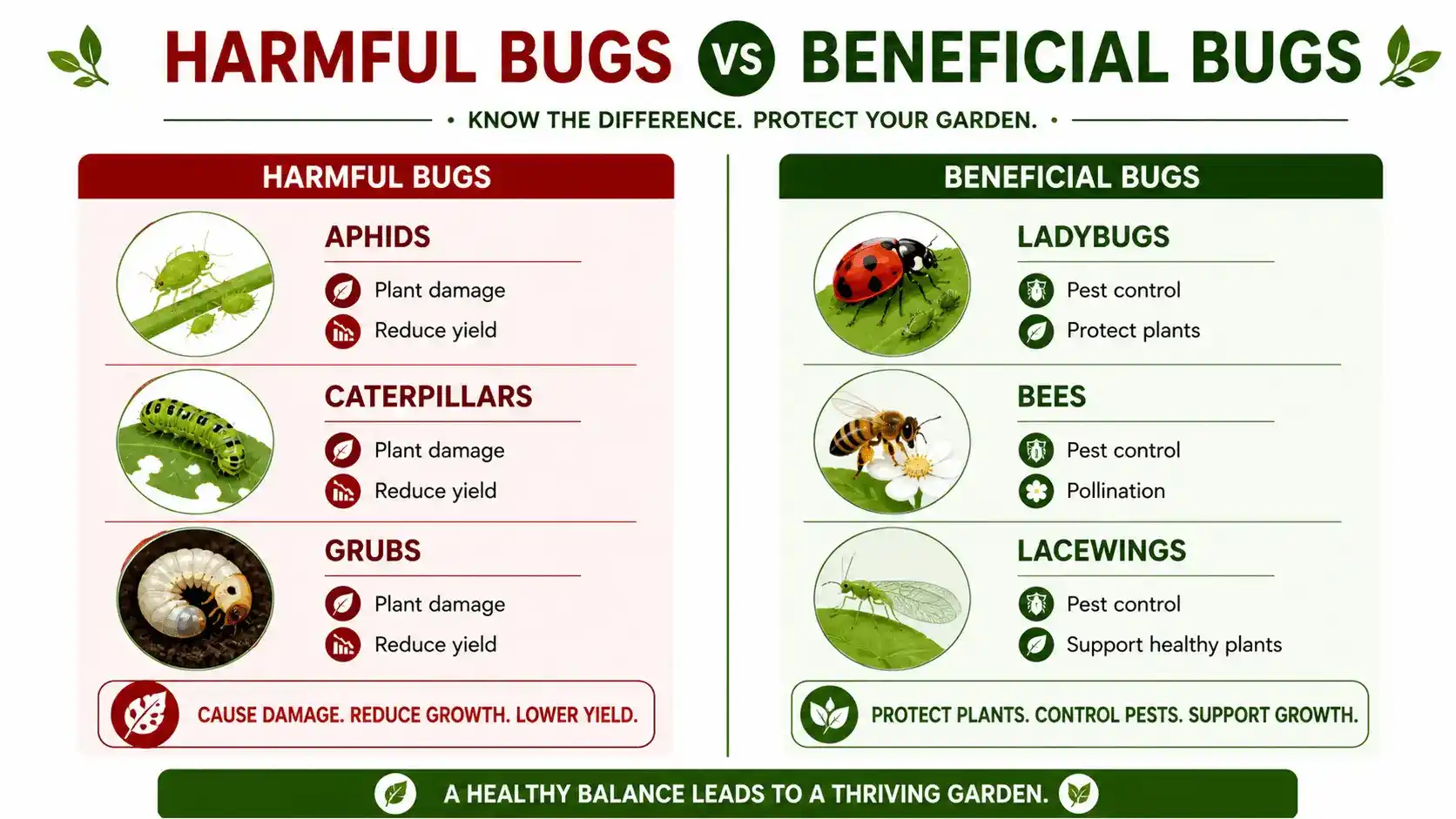
Garden bugs can be categorized based on their impact on plants.
Comparison Table
| Category | Examples | Impact on Garden |
| Harmful bugs | Aphids, caterpillars, grubs | Damage plants and reduce yield |
| Beneficial bugs | Ladybugs, lacewings, bees | Control pests and support pollination |
Beneficial insects play a key role in maintaining ecological balance and reducing the need for chemical treatments.
Signs of Garden Pest Problems
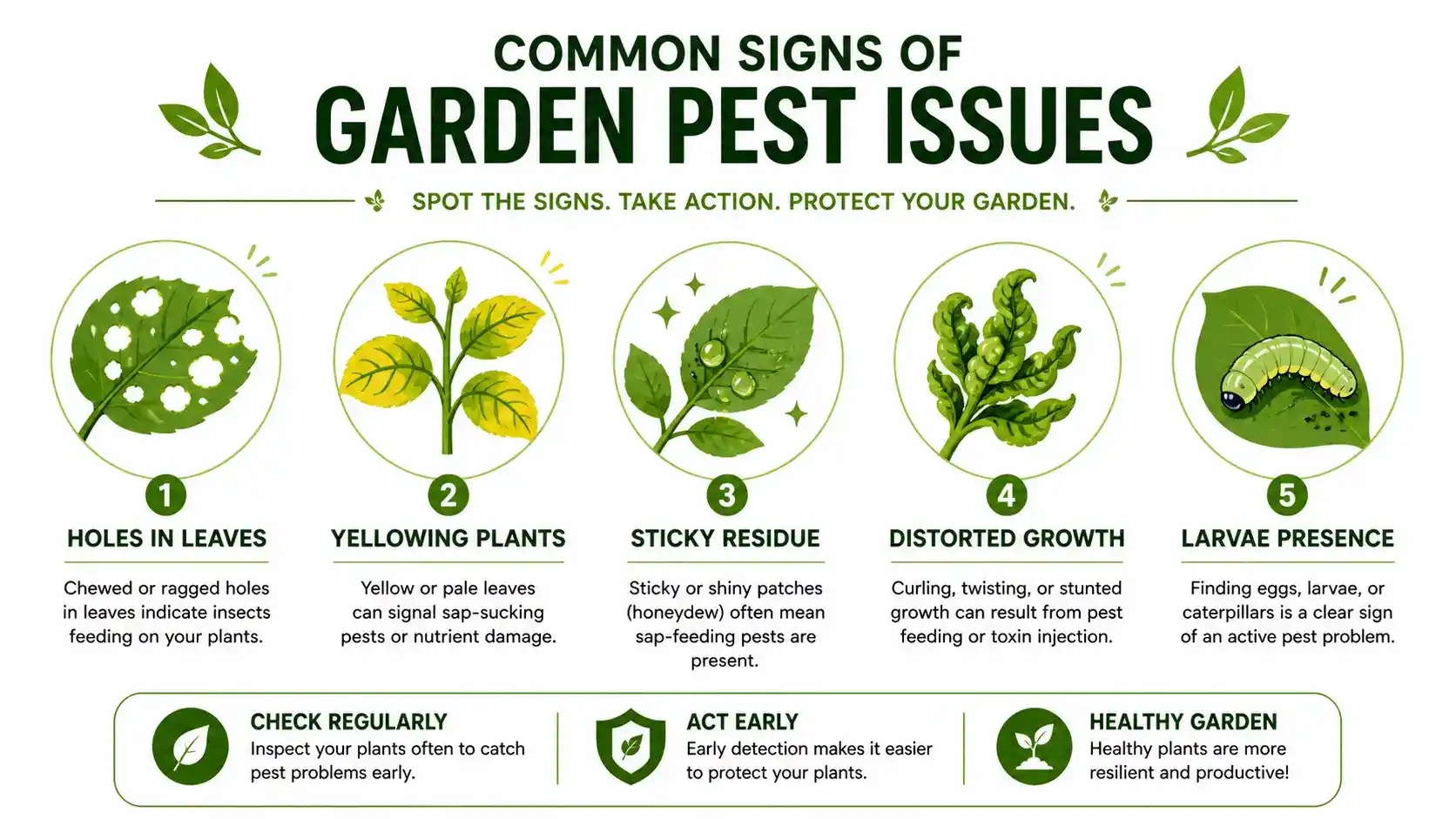
Common signs of pest issues can help identify the cause early.
- Holes in leaves
- Yellowing or wilting plants
- Sticky residue (honeydew)
- Distorted plant growth
- Presence of larvae or eggs
These symptoms often indicate feeding activity or infestation. These symptoms are commonly observed in vegetable crops such as tomatoes (see Tomatoes Plant Care Guide: Grow Healthier Plants Easily for prevention strategies)
Common Garden Pest Identification Table
| Pest Type | Appearance | Damage Type | Where Found |
| Aphids | Small, green/black | Sap sucking | Leaves/stems |
| Caterpillars | Worm-like | Leaf chewing | Foliage |
| Beetles | Hard shell | Root/leaf damage | Soil/plants |
| Whiteflies | Tiny white insects | Sap sucking | Under leaves |
How to Identify Garden Bugs Using Pictures and Tools
Garden bugs can be identified using modern tools and visual references.
- Use online garden pest identifier tools
- Compare insects with labeled images and charts
- Observe plant damage patterns
- Refer to regional guides such as Australian pest charts
These methods improve identification accuracy and decision-making.
Common Mistakes When Identifying Garden Bugs
Incorrect identification can lead to ineffective or harmful treatments.
- Confusing beneficial insects with pests
- Ignoring life stages (larvae vs adult insects)
- Treating all bugs as harmful
- Misdiagnosing plant diseases as insect damage
Recognizing these mistakes helps improve garden management.
How to Manage and Control Garden Pests
Garden pest control should focus on sustainable and balanced methods. Modern pest control often follows principles of Integrated Pest Management, which combine biological, cultural, and natural methods to reduce pest impact sustainably.
Natural Pest Control Methods
- Introduce beneficial insects like ladybugs
- Use neem oil or organic sprays
- Apply companion planting techniques
When using neem oil, it’s important to know which plants may react negatively (refer to What Plants Not to Use Neem Oil On: Indoor, Outdoor & Edible before application)
Preventive Measures
- Maintain healthy soil
- Inspect plants regularly
- Practice crop rotation
These approaches reduce pest populations without harming beneficial species.
Troubleshooting Common Garden Bug Problems
Leaves Being Eaten
Leaves are typically eaten by caterpillars or beetles. Manual removal and encouraging natural predators can reduce damage effectively.
Sticky Leaves or Mold
Sticky residue is usually caused by aphids or whiteflies. Washing leaves and introducing ladybugs can help control the issue.
Root Damage or Wilting Plants
Root damage is often caused by soil grubs. Improving soil health and using biological controls can prevent further harm.
Seasonal and Environmental Factors Affecting Garden Bugs
Environmental conditions directly influence pest activity and population.
- Warm climates increase pest populations
- Rain impacts soil insect activity
- Seasonal cycles affect reproduction rates
- Indoor vs outdoor environments change pest types
Understanding these factors helps predict and manage infestations.
Connecting Garden Bugs to Broader Gardening Practices
Garden bugs are closely linked to overall gardening systems.
- Soil health and biodiversity affect insect populations
- Indoor plant pest control requires different strategies
- Organic gardening supports beneficial insects
- Plant propagation practices influence pest spread
Integrated approaches improve long-term garden health. Understanding pest behavior is especially important for indoor environments, as explained in a complete Guide to House Plants, where pest prevention and plant care are closely connected.
Conclusion
Common garden bugs play a critical role in garden ecosystems, but proper identification is essential to distinguish harmful pests from beneficial insects. Understanding their types, behaviors, and environmental influences allows gardeners to manage pests effectively while maintaining ecological balance. Accurate identification and sustainable practices ensure healthier plants and more resilient gardens.
FAQs
1. What are the most common garden bugs?
The most common garden bugs include aphids, caterpillars, beetles, whiteflies, and ants, which can damage plants or affect growth.
2. How do I identify bugs in my garden?
You can identify garden bugs by observing their appearance, the type of plant damage they cause, and using insect identification guides or images.
3. Are all garden bugs harmful?
No, many garden bugs are beneficial, such as ladybugs and lacewings, which help control harmful pests.
4. What bugs live in garden soil?
Common soil bugs include earthworms, grubs, and nematodes, some of which improve soil health while others damage plant roots.
5. What is eating my plant leaves?
Leaf damage is usually caused by caterpillars, beetles, or slugs, depending on the type of holes or feeding pattern.