Introduction
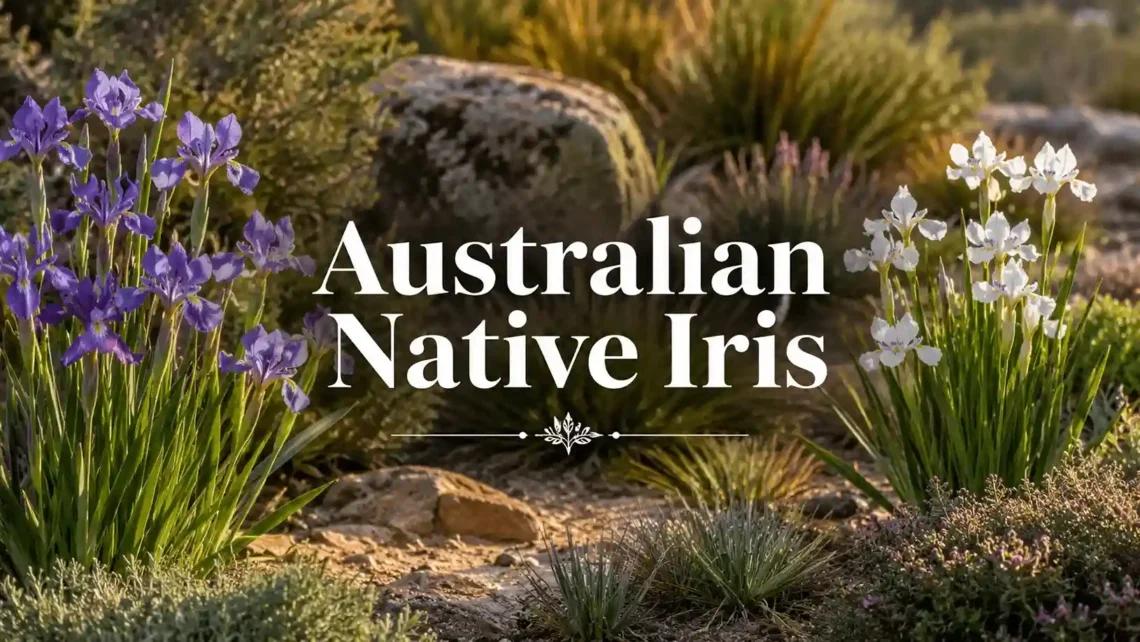
The Australian native iris refers to a group of iris-like flowering plants commonly associated with the genus Patersonia, which belongs to the Iridaceae family. Unlike traditional European bearded irises, many native iris Australia species are adapted to harsh Australian climates, low rainfall, and nutrient-poor soils. These plants are valued for their low-maintenance nature, drought tolerance, and ability to thrive in natural landscapes and home gardens. Native Australian iris species typically produce purple, blue, or white flowers with slender grass-like foliage. The terms australian native iris, australian iris, native irises Australia, and wild iris Australia are often used interchangeably, although these plants are not always true botanical irises.
Australian native iris plants are increasingly popular in home landscapes because they combine ornamental beauty with low-maintenance gardening benefits suitable for modern Australian homes and gardens.
Quick Summary
- Australian native irises are hardy flowering plants commonly associated with the Patersonia genus.
- They are valued for drought tolerance, low-maintenance care, and suitability for Australian gardens.
- Most native species produce purple, blue, or white flowers and thrive in sunny conditions.
- Native irises differ from bearded irises and introduced ornamental iris varieties.
What Is an Australian Native Iris?
An Australian native iris is generally an iris-like flowering plant naturally found in Australia, most commonly from the Patersonia genus. These plants resemble true irises but differ botanically in growth habits, flower structure, and environmental adaptation. Most australian native iris plants belong to the genus Patersonia, a group of flowering plants within the Iridaceae family.
Are There True Iris Species Native to Australia?
No, most plants referred to as australian native iris are not true members of the genus Iris. The majority belong to Patersonia, a genus within the Iridaceae family. This naming confusion occurs because the flowers resemble ornamental iris blooms.
People often ask, “is there an australian native iris?” Botanically, Australia has very few true Iris species native to the continent. Most iris native plants commonly grown in Australian gardens are introduced ornamentals from Europe or Asia.
The Difference Between Native Iris and Introduced Iris Plants
Native iris plants evolved in Australian ecosystems and are adapted to local climates, drought conditions, and poor soils. Introduced irises, such as bearded iris varieties, originated mainly from Europe and the Mediterranean region.
Key differences include:
- Native species tolerate heat and dry conditions better.
- Introduced irises often require richer soil and more maintenance.
- Native australian iris plants support local biodiversity.
- Introduced varieties usually produce larger ornamental flowers.
Many gardeners searching “where are iris native” discover that true irises naturally occur across Europe, Asia, and parts of North America rather than Australia.
Why Patersonia Is Commonly Called Australian Native Iris
Patersonia species are commonly called native irises because their flowers closely resemble traditional iris blooms. These plants feature delicate petals, clumping foliage, and seasonal flowering habits similar to ornamental iris plants.
The common name “morning iris” is also frequently used because many flowers open briefly during the morning before fading later in the day.
Common Types of Australian Native Iris
Several Patersonia species are commonly grown throughout Australia due to their adaptability and attractive flowers.
Patersonia occidentalis
Patersonia occidentalis is native to Western Australia and produces soft purple to violet flowers. It grows well in sandy soils and coastal climates.
Patersonia sericea
Patersonia sericea features blue-purple flowers and narrow foliage. It naturally grows in eastern Australia and adapts well to dry woodland gardens.
Patersonia fragilis
Patersonia fragilis is known for its delicate flowers and compact growth habit. It performs well in native plant landscapes and low-water gardens.
Native White Iris Varieties
Native white iris varieties are less common but highly valued in landscaping. Some australian native iris white cultivars produce pale cream or white flowers suitable for minimalist garden designs.
Australian Native Water Iris Types
Some australian native water iris species tolerate wetter soils and can grow near ponds or seasonal wetlands. These varieties are useful for water-wise landscaping and biodiversity gardens.
Table: Popular Australian Native Iris Varieties
| Variety name | Flower color | Mature height | Sun tolerance | Water needs | Best climate zones |
| Patersonia occidentalis | Purple | 40–60 cm | Full sun | Low | Mediterranean |
| Patersonia sericea | Blue-purple | 30–50 cm | Full sun to part shade | Low | Coastal |
| Patersonia fragilis | Violet | 20–40 cm | Full sun | Low | Temperate |
| Native white iris types | White | 30–60 cm | Full sun | Moderate | Mild temperate |
| Australian native water iris | Blue or white | 50–80 cm | Sun to part shade | Moderate to high | Wetland/coastal |
Australian Native Iris vs Bearded Iris
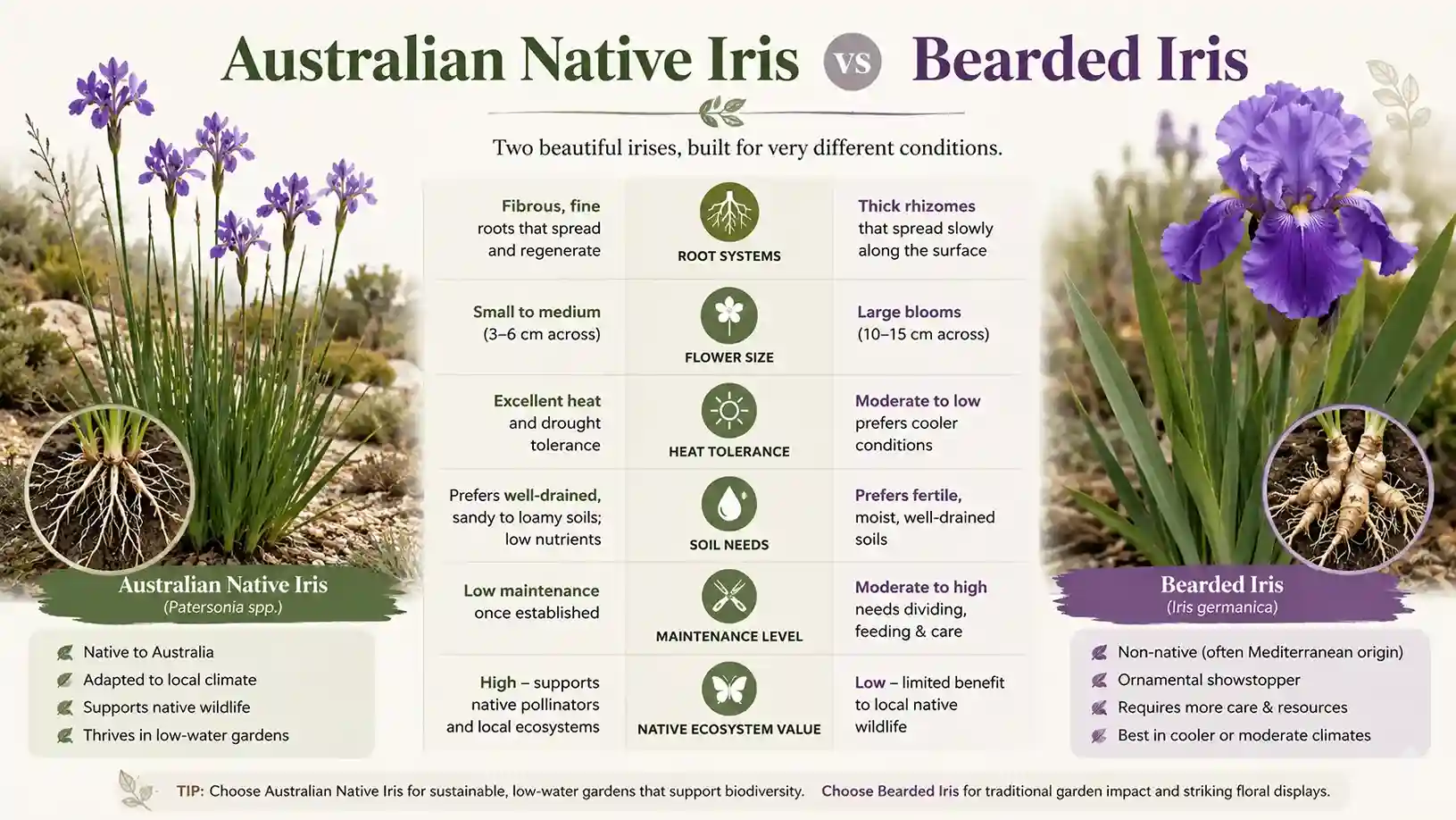
Australian native iris and bearded iris plants differ significantly in maintenance needs, flower structure, and environmental tolerance.
Appearance Differences
Native irises generally produce smaller flowers with slender foliage, while bearded irises develop large, ornamental blooms with thicker leaves and rhizomes.
Growing Requirements
Bearded irises require excellent drainage, seasonal division, and cooler winter conditions. Native species are more adaptable to Australian heat and poor soils.
Water and Climate Tolerance
Australian native iris plants tolerate drought and hot summers better than bearded irises. Introduced iris varieties may struggle in humid or extremely dry Australian regions.
Which Iris Type Works Best in Australian Gardens?
Australian native iris species are usually better suited to low-maintenance and sustainable gardens. However, gardeners interested in ornamental displays may still grow bearded irises successfully.
People searching “how to grow bearded iris in australia” or “when to plant bearded iris in australia” should know that timing and drainage are critical for introduced iris varieties.
Australian Native Iris vs Bearded Iris
| Feature | Australian Native Iris | Bearded Iris |
| Root systems | Fibrous clumps | Rhizomes |
| Flower size | Smaller | Large ornamental flowers |
| Heat tolerance | High | Moderate |
| Soil needs | Sandy, well-drained | Rich, well-drained |
| Maintenance level | Low | Moderate to high |
| Native ecosystem value | High | Low |
How to Grow Australian Native Iris
Australian native iris plants are generally easy to grow when planted in suitable conditions.
Best Soil Conditions
Well-drained sandy or loamy soil is ideal. Heavy clay can cause root rot and poor growth.
Ideal planting conditions include:
- Free-draining soil
- Full sunlight
- Low to moderate fertility
- Good airflow around plants
Sunlight Requirements
Most native iris Australia species prefer full sun. Some tolerate partial shade, but flowering may decrease.
Watering Needs
These plants are drought tolerant once established. Overwatering is one of the most common beginner mistakes.
Watering mistakes to avoid:
- Constantly wet soil
- Watering during cool humid periods
- Poor drainage around roots
Signs of poor drainage include:
- Yellowing leaves
- Soft root tissue
- Fungal growth
- Slow flowering
Fertilizing and Mulching
Use low-phosphorus native plant fertilizers sparingly. Excessive fertilizing can damage roots and reduce flowering.
Mulching helps conserve moisture and regulate soil temperature but should not touch the crown directly.
Growing From Iris Seeds
Growing australian native iris plants from iris seeds requires patience.
Seed germination basics:
- Use free-draining seed mix
- Keep lightly moist
- Provide warmth and indirect sunlight
- Germination may take several weeks
Proper drainage is essential because australian native iris plants can struggle in compacted or waterlogged soils commonly found in heavy clay gardens.
Australian Native Iris Height and Growth Habits
Australian native irises typically grow in compact clumping forms.
Typical Mature Size
Most species reach 30–70 cm in height depending on climate and soil quality.
Indoor vs Outdoor Growth Differences
Outdoor plants generally perform better due to stronger sunlight and airflow. Indoor growth may reduce flowering and overall vigor.
Seasonal Growth Patterns
Most native irises actively grow during warmer months and flower in spring or early summer.
Factors That Affect Plant Size
Environmental factors affecting australian native iris height include:
- Sun exposure
- Soil drainage
- Water availability
- Plant spacing
- Climate conditions
Table: Growth Characteristics of Native Iris Species
| Species | Average height | Growth rate | Flowering season | Spread width |
| Patersonia occidentalis | 40–60 cm | Moderate | Spring | 40 cm |
| Patersonia sericea | 30–50 cm | Moderate | Spring–summer | 35 cm |
| Patersonia fragilis | 20–40 cm | Slow to moderate | Spring | 30 cm |
Common Problems With Australian Native Iris
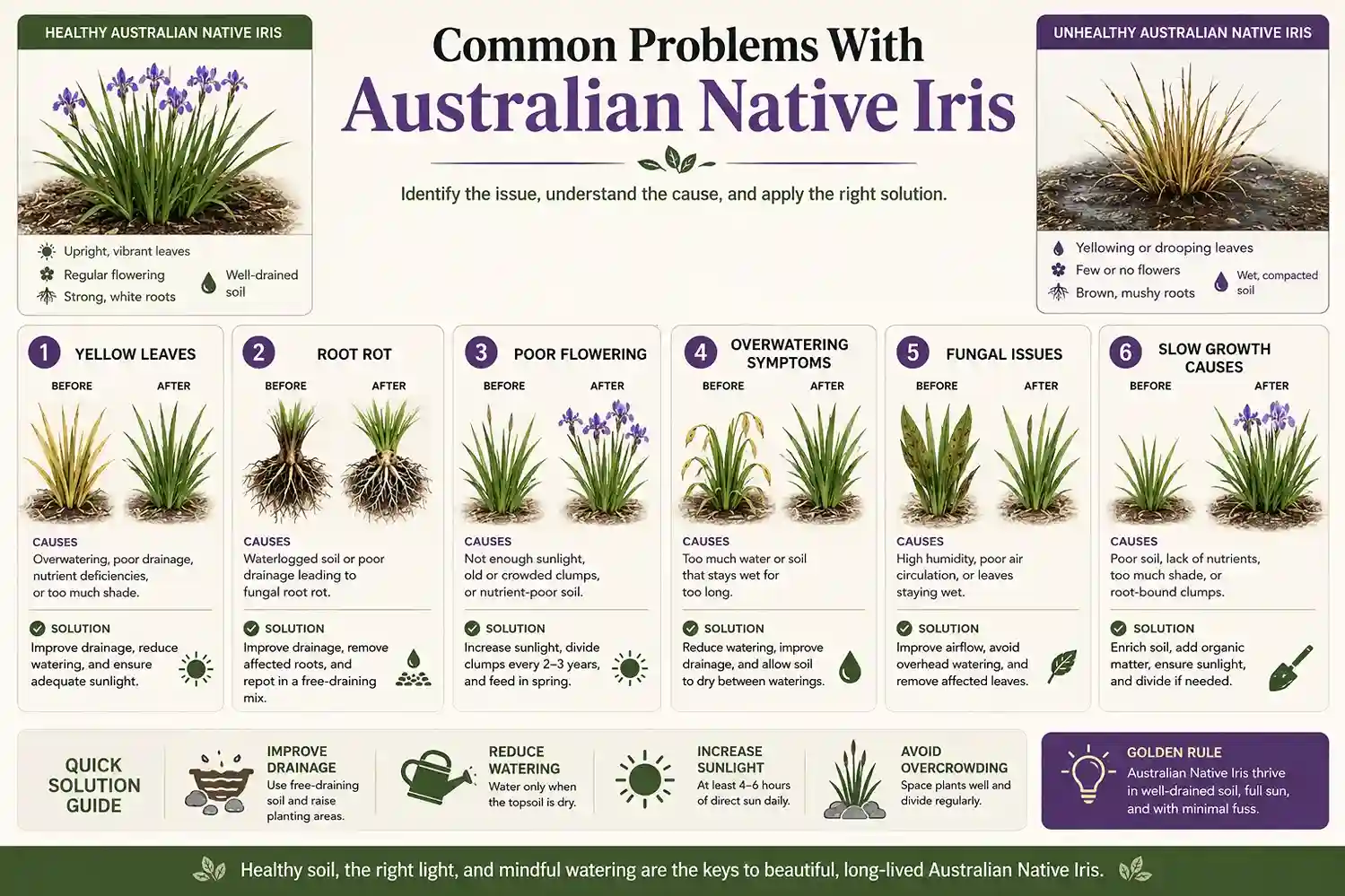
Several growing issues affect native irises when environmental conditions are unsuitable.
Why Leaves Turn Yellow
Yellow leaves commonly result from overwatering, nutrient imbalance, or poor drainage.
Overwatering and Root Rot
Root rot develops in compacted or waterlogged soils. This problem is especially common in heavy clay gardens.
Poor Flowering Problems
Insufficient sunlight and excessive fertilizing can reduce flowering.
Pest and Fungal Issues
Although relatively hardy, native irises may develop fungal spotting or suffer from snails and slugs in wet conditions.
Slow Growth in Native Irises
Slow growth often occurs due to overcrowding, poor airflow, or nutrient-deficient soil.
Warning signs of unhealthy plants:
- Brown leaf tips
- Wilting despite wet soil
- Sparse flowering
- Mushy roots
Fast fixes for watering problems:
- Reduce irrigation frequency
- Improve drainage
- Remove damaged roots
- Replant in raised beds if necessary
Seasonal maintenance checklist:
- Remove dead foliage annually
- Divide overcrowded clumps
- Monitor drainage during wet seasons
- Mulch lightly before summer
Where Australian Native Iris Grows Naturally
Australian native iris species naturally occur across diverse ecosystems.
Native Habitats Across Australia
Native irises Australia species grow in woodlands, coastal dunes, grasslands, and rocky outcrops.
Coastal vs Inland Growing Conditions
Coastal plants tolerate salt winds and sandy soils, while inland varieties often withstand heat and periodic drought.
Wild Iris Australia Environments
Wild iris Australia habitats typically feature low-nutrient soils and seasonal rainfall patterns.
Australian Native Iris in Landscaping and Garden Design
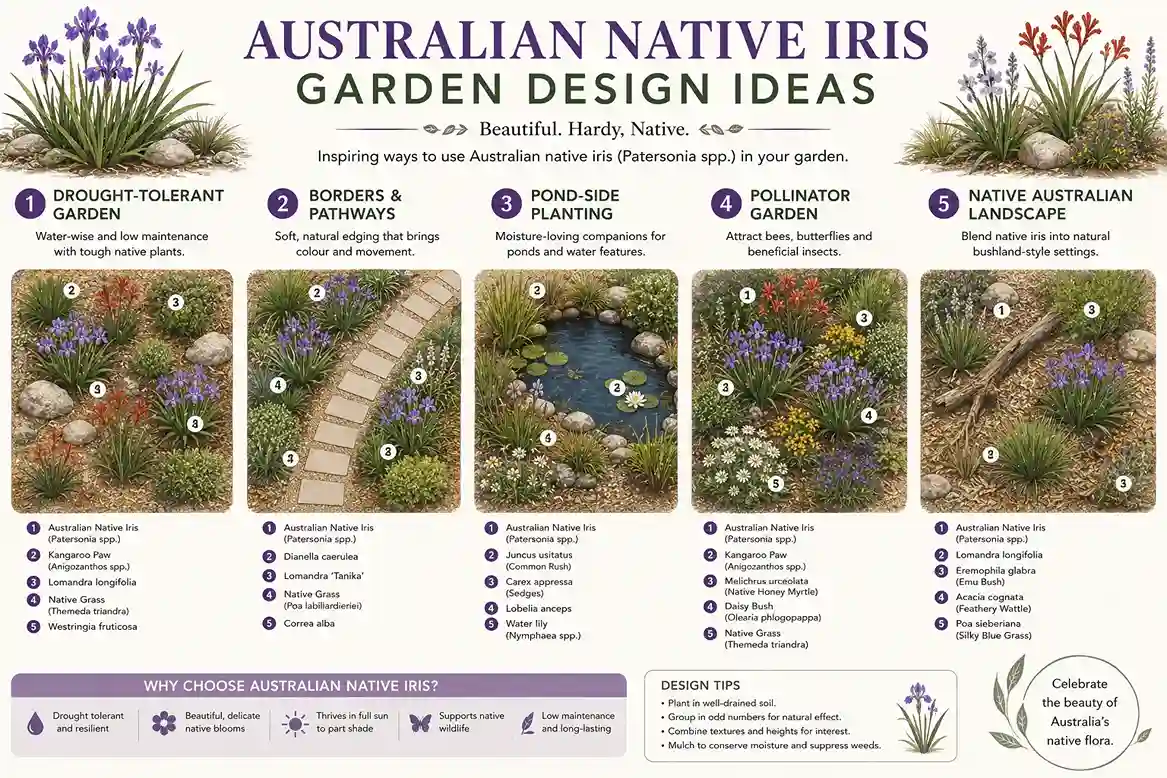
Australian native iris plants are widely used in sustainable landscaping.
Using Native Iris in Drought-Tolerant Gardens
Their low water requirements make them ideal for drought-resistant gardens.
Companion Plants for Native Iris
Native grasses, kangaroo paws, and flowering shrubs pair well with australian native irises.
Native Iris for Borders and Mass Planting
The clumping habit makes these plants suitable for borders, pathways, and mass planting designs.
Growing Native Iris Near Ponds or Water Features
Some species tolerate moist conditions near ponds and rain gardens. Australian native iris plants combine well with drought-tolerant landscaping species such as lomandra and other low-water native grasses often used in modern Australian garden design.
Table: Best Companion Plants for Australian Native Iris
| Plant name | Light preference | Water compatibility | Landscape use |
| Kangaroo paw | Full sun | Low water | Feature planting |
| Lomandra | Full sun | Low water | Borders |
| Dianella | Part shade | Moderate | Mass planting |
| Native grasses | Full sun | Low water | Naturalistic gardens |
Common Plants Confused With Australian Native Iris
Several plants resemble native irises but differ botanically. Plants like dianella and other strappy-leaf natives are also frequently confused with native iris species because of their similar foliage and flowering structure.
Dietes grandiflora
Many gardeners ask, “is dietes grandiflora native to australia?” The answer is no. Dietes grandiflora originated in Africa.
Walking Iris
Walking iris plants are ornamental species known for spreading through plantlets.
Purple Flag Plants
Purple flag flower species and long purple flag plants are often confused with native irises due to similar foliage and flowers.
Similar Native Flowering Plants
Other iris-like native plants include Dianella species and various grass lilies.
Native Australian Iris vs Dietes grandiflora
| Feature | Native Australian Iris | Dietes grandiflora |
| Origin | Australia | South Africa |
| Appearance | Smaller flowers | Larger white flowers |
| Water requirements | Low | Moderate |
| Frost tolerance | Moderate | Moderate |
| Landscaping use | Native gardens | Ornamental borders |
Buying Australian Native Iris Plants and Seeds
Native iris plants and iris seeds are commonly available from specialist nurseries.
Where Native Iris Plants Are Commonly Sold
Many gardeners search for native iris Bunnings or native plants Bunnings to find local suppliers.
Choosing Healthy Iris Plants
Healthy plants should have:
- Firm roots
- Green foliage
- No fungal spotting
- Strong clumping growth
Buying Seeds vs Established Plants
Seeds are cheaper but slower to establish. Established plants provide faster flowering and easier maintenance.
What to Check Before Purchasing Native Plants
Always check:
- Climate suitability
- Sun requirements
- Drainage needs
- Botanical labeling accuracy
Beginner Mistakes When Growing Native Australian Iris
Many common problems are preventable with proper planning.
Planting in Poorly Drained Soil
Heavy clay traps moisture and increases root disease risk.
Using Too Much Fertilizer
Native plants generally require less fertilizer than ornamental garden plants.
Choosing the Wrong Sun Exposure
Too much shade reduces flowering and weakens growth.
Ignoring Climate Compatibility
Some species perform better in coastal climates while others tolerate inland heat and drought.
Australian Native Iris and Broader Native Gardening Trends
Native gardening continues to increase in popularity across Australia.
Why Native Plants Are Increasingly Popular
Many homeowners prefer native species because they require less water and maintenance.
Benefits for Pollinators and Biodiversity
Native irises support pollinators and contribute to biodiversity-friendly landscapes.
Water-Wise Gardening With Native Species
Water-wise landscaping focuses on drought-tolerant plants adapted to local conditions. People often ask, “what do you call australian natives?” In gardening, the term usually refers to plant species naturally occurring within Australian ecosystems.
Many gardeners now combine australian native iris species with broader collections of drought-tolerant native plants to create sustainable and biodiversity-friendly landscapes.
Conclusion
The Australian native iris is a resilient and environmentally adaptable flowering plant widely valued in sustainable Australian gardens. Most species commonly called native irises belong to the Patersonia genus rather than the true Iris genus. These plants differ from introduced ornamental irises through their drought tolerance, low-maintenance growth habits, and suitability for Australian climates. Native irises also contribute to biodiversity-friendly landscaping and water-wise garden design. Choosing climate-appropriate varieties, maintaining good drainage, and avoiding overwatering are the most important factors for healthy long-term growth.
FAQs
What is the Australian native iris called?
The Australian native iris is most commonly associated with the Patersonia genus, often called the native iris or morning iris.
Is Patersonia a true iris?
No, Patersonia is not a true iris from the genus Iris, but it belongs to the same Iridaceae family.
How tall does Australian native iris grow?
Most species grow between 30 and 70 cm tall depending on climate and growing conditions.
Can Australian native iris grow in full sun?
Yes, most australian native iris species grow best in full sun and flower more heavily with strong sunlight.
What is the difference between native iris and bearded iris?
Native irises are generally more drought tolerant and lower maintenance, while bearded irises produce larger ornamental flowers.
Are native irises drought tolerant?
Yes, most native irises Australia species are highly drought tolerant once established.
Can you grow Australian native iris from seeds?
Yes, native iris plants can be grown from iris seeds using well-drained soil and warm germination conditions.
Is Dietes grandiflora native to Australia?
No, Dietes grandiflora is native to South Africa, not Australia.
When does Australian native iris flower?
Most species flower during spring and early summer.
What causes yellow leaves on native iris plants?
Yellow leaves are usually caused by overwatering, poor drainage, root rot, or nutrient imbalance.