Introduction
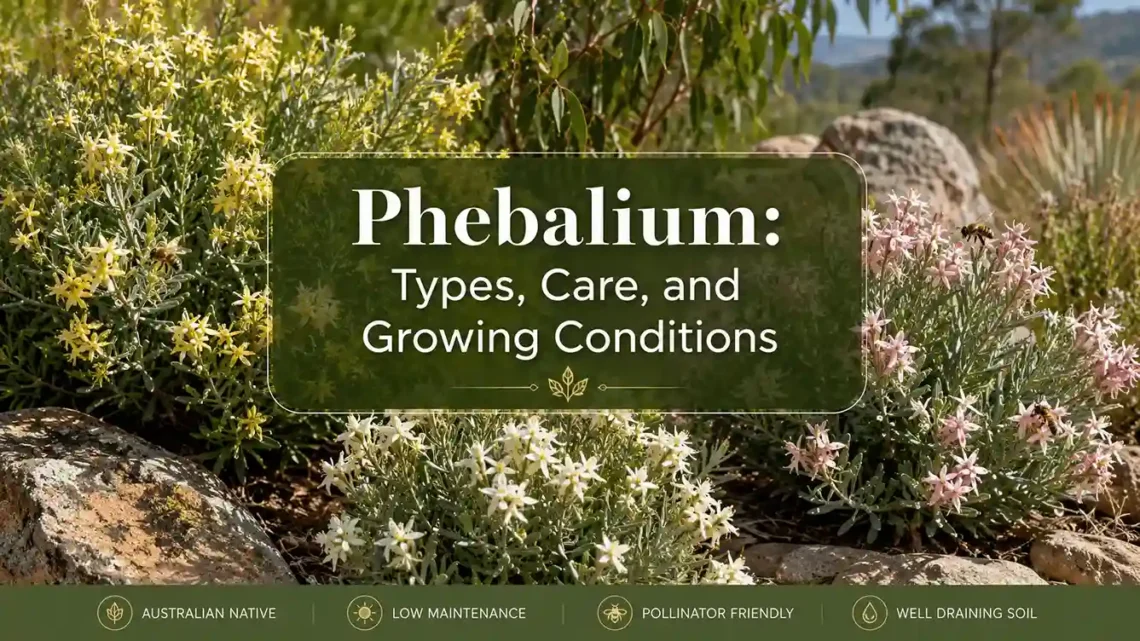
Phebalium is a genus of flowering Australian native shrubs valued for fragrant foliage, star-shaped blooms, and adaptability to challenging landscapes. Gardeners commonly grow phebalium plants for ornamental landscaping, pollinator attraction, and drought tolerance in native gardens. Popular species such as phebalium squamulosum, phebalium whitei, phebalium glandulosum, and phebalium stenophyllum differ in flower color, foliage texture, growth habit, and climate adaptability. Some thrive in alpine environments, while others prefer coastal or forest conditions. Their evergreen structure and low-maintenance nature make them suitable for sustainable gardening and water-wise landscapes throughout temperate and coastal regions.
Quick Summary
- Phebalium is a group of Australian native shrubs grown for fragrant leaves and colorful flowers.
- Species such as phebalium squamulosum and phebalium whitei thrive in well-drained soil and sunny conditions.
- Different varieties include alpine, forest, and coastal forms adapted to specific environments.
- Proper drainage, pruning, and sunlight are essential for healthy growth.
What Is Phebalium?
Phebalium is a genus of evergreen flowering shrubs native to Australia and belongs to the Rutaceae family, which also includes citrus plants. These shrubs are widely recognized for their aromatic foliage and clusters of small star-shaped flowers that bloom in shades of yellow, white, cream, or pink. Phebalium belongs to the Rutaceae family, a plant family that also includes citrus species and many aromatic shrubs.
The name “scaly phebalium” refers to the silvery or scaly texture found on the underside of leaves in some species. “Forest phebalium” describes varieties naturally found in woodland and forest habitats with filtered light and moderate moisture conditions.
Most phebalium species grow as compact to medium-sized shrubs and are commonly used in Australian native gardens because of their resilience and decorative appearance.
Key Characteristics
- Native to Australia
- Evergreen shrub habit
- Aromatic foliage
- Star-shaped flowers
- Popular in native gardens
Common Phebalium Varieties and Species
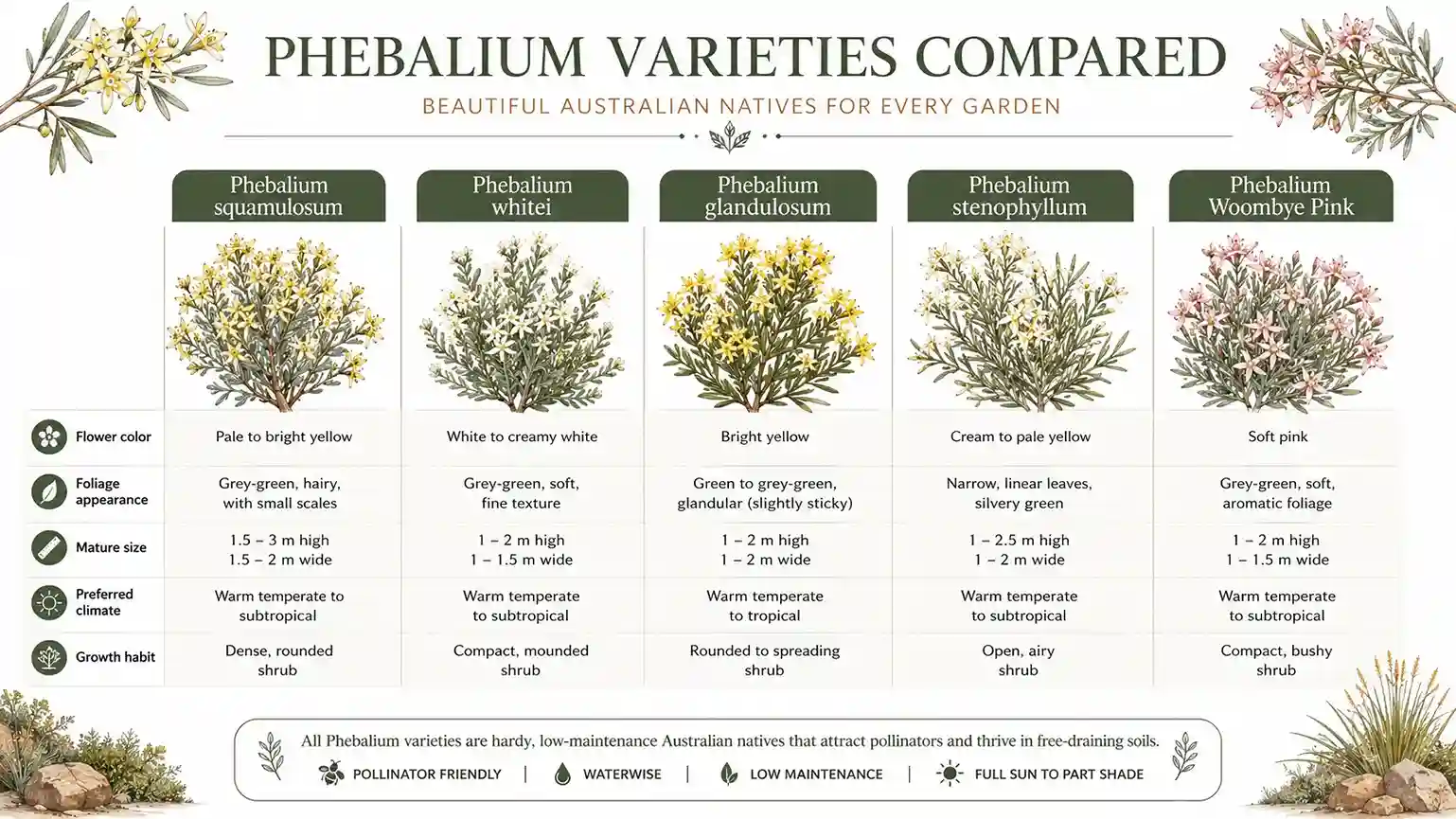
Phebalium Squamulosum
Phebalium squamulosum is one of the most recognized and widely cultivated species. Commonly known as scaly phebalium, it features narrow green leaves with silvery undersides and clusters of cream to yellow flowers.
This species typically flowers from late winter through spring and adapts well to native gardens, bushland landscapes, and rocky slopes. It performs best in well-drained soils and sunny conditions.
Its moderate growth habit and drought tolerance make it suitable for low-maintenance gardens.
Phebalium Whitei
Phebalium whitei is valued for its dense foliage and attractive pale flowers. It naturally grows in specific regional habitats with rocky or elevated terrain.
Compared to other species, phebalium whitei often has a more compact appearance and may tolerate cooler conditions better than some coastal varieties.
Its ornamental structure makes it useful for feature planting and native garden borders.
Phebalium Glandulosum
Phebalium glandulosum is known for textured leaves and soft yellow flower clusters. The species commonly grows in forest margins and sheltered native landscapes.
Gardeners use this variety in ornamental gardens because of its dense growth habit and extended flowering display. It prefers slightly protected environments with good airflow and drainage.
Phebalium Stenophyllum
Phebalium stenophyllum is recognized for its narrow foliage and adaptability to dry conditions. It naturally grows in rocky environments where drainage is rapid and nutrient levels remain low.
This species tolerates drought more effectively than some softer-leaved varieties and is often selected for xeriscaping or low-water native gardens.
Phebalium Nottii and Phebalium Daviesii
Phebalium nottii and phebalium daviesii are less commonly grown but remain important native species.
Phebalium daviesii is considered regionally rare in some areas and may have limited natural distribution. Both species display unique foliage textures and flowering habits that distinguish them from more widely cultivated varieties.
Phebalium Woombye and Phebalium Woombye Pink
Phebalium Woombye and phebalium Woombye Pink are ornamental forms admired for their pink-toned flowers and landscaping appeal.
Pink-flowering varieties provide visual contrast in native gardens and are frequently used near pathways, rock gardens, or pollinator-friendly landscapes.
Quick Species Identification
- Yellow flowers: Phebalium glandulosum
- Pink flowers: Phebalium Woombye Pink
- Narrow foliage: Phebalium stenophyllum
- Cooler climates: Alpine phebalium types
- Compact habit: Phebalium whitei
Types of Phebalium by Natural Habitat
Alpine Phebalium
Alpine phebalium varieties are adapted to cooler mountain environments with frost exposure and seasonal temperature variation.
These plants generally develop strong cold tolerance and compact growth habits that help them survive in exposed conditions.
Wallum Phebalium
Wallum phebalium grows in sandy coastal regions with nutrient-poor soils and high wind exposure.
These species tolerate harsher environmental conditions, including salt-laden air, low fertility, and periodic drought.
Forest Phebalium
Forest phebalium naturally grows in woodland settings with partial shade and moderate moisture.
These species usually prefer protected growing conditions and may perform better in cooler gardens with filtered sunlight.
Table: Phebalium Habitat Types and Growing Conditions
| Type | Natural Environment | Sunlight Needs | Soil Preference | Moisture Tolerance |
| Alpine Phebalium | Mountain regions | Full sun | Rocky, well-drained | Moderate |
| Wallum Phebalium | Coastal sandy areas | Full sun | Sandy soil | High drought tolerance |
| Forest Phebalium | Woodland habitats | Partial shade | Organic, well-drained | Moderate moisture |
What Does a Phebalium Tree Look Like?
Some gardeners refer to mature phebalium shrubs as a phebalium tree because older plants can develop upright branching structures and woody trunks. Phebalium plants usually feature fine-textured foliage, silvery or scaly leaf undersides, and masses of star-shaped flowers that bloom seasonally. Bark texture varies depending on species, though most maintain dense evergreen branching. Plant size ranges from compact shrubs under one meter to taller upright forms exceeding two meters. Yellow-flowering varieties are often grouped with other species highlighted in Australian Native Yellow Flowers: 8+ Essential Types guides.
Visual Characteristics
- Compact shrub forms
- Upright branching varieties
- Silver or scaly foliage undersides
- Yellow, white, or pink flowers
Common flower shades include phebalium yellow blooms and pale cream varieties.
Ideal Growing Conditions for Phebalium
Sunlight Requirements
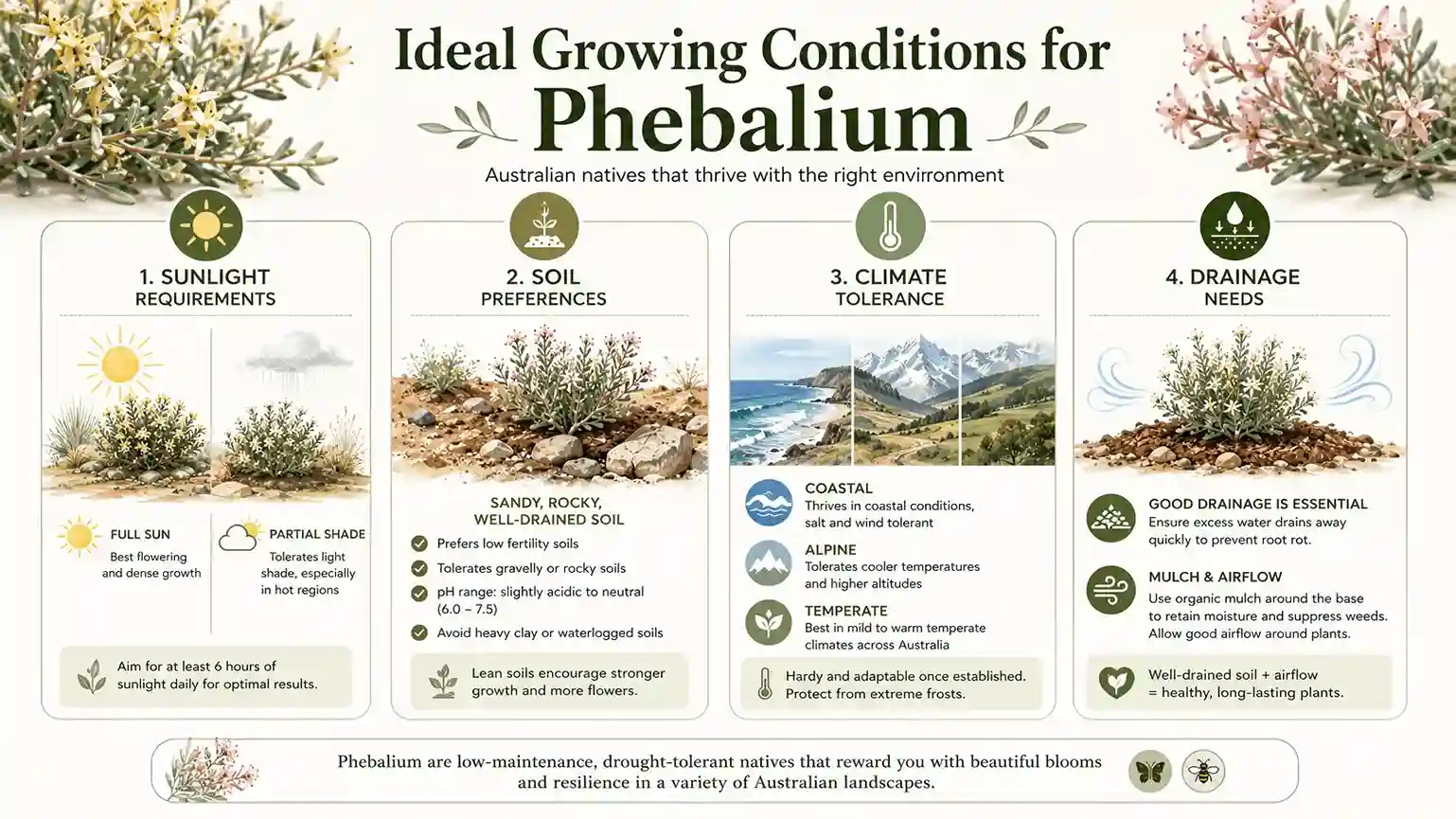
Phebalium generally grows best in full sun, though some forest species tolerate partial shade.
Flowering performance usually improves with increased sunlight exposure. Plants grown in deep shade often become leggy and produce fewer blooms.
Soil Preferences
Well-drained soil is essential for healthy phebalium growth. Sandy, rocky, and low-phosphorus soils are preferred because many Australian native plants are sensitive to excess nutrients.
Heavy clay soils increase the risk of root rot and poor plant performance.
Climate and Temperature Tolerance
Different species adapt to coastal, temperate, alpine, and dry inland climates.
Some varieties tolerate frost, while others are sensitive to prolonged cold or waterlogged winter conditions.
Growing Tips
- Improve drainage before planting
- Avoid waterlogged soil
- Protect young plants from strong wind
- Apply mulch to regulate soil moisture
Phebalium Care Guide
Watering Needs
Newly planted phebalium requires regular watering during establishment. Once mature, many species become drought tolerant and need less frequent irrigation.
Overwatering remains one of the most common causes of decline.
Fertilizing Phebalium
Use low-phosphorus fertilizers specifically designed for Australian native plants.
Excess fertilizer may damage roots and reduce plant health, especially in phosphorus-sensitive species.
Pruning and Maintenance
Light pruning after flowering helps maintain shape and encourages denser growth.
Removing spent flowers and weak branches improves airflow and overall plant structure.
Growing Phebalium in Containers
Container-grown phebalium requires free-draining native potting mix and pots with adequate drainage holes.
Plants in containers dry out faster than garden-grown specimens and may require more frequent monitoring during hot weather.
Table: Phebalium Care Requirements
| Care Factor | Recommended Conditions | Common Mistakes | Maintenance Frequency |
| Watering | Moderate, well-drained | Overwatering | Weekly during establishment |
| Fertilizing | Low-phosphorus fertilizer | Excess nutrients | Seasonal |
| Pruning | Light shaping after flowering | Heavy pruning | Annually |
| Soil | Sandy or rocky mix | Poor drainage | Ongoing monitoring |
How Fast Does Phebalium Grow?
Most phebalium species have moderate growth rates under suitable conditions.
Growth speed depends on sunlight exposure, soil drainage, watering practices, and climate compatibility. Plants growing in the ground usually establish faster than container-grown specimens.
Factors Affecting Growth
- Soil quality
- Water availability
- Sunlight exposure
- Pruning practices
Common Problems With Phebalium and How to Fix Them
Yellow Leaves and Poor Growth
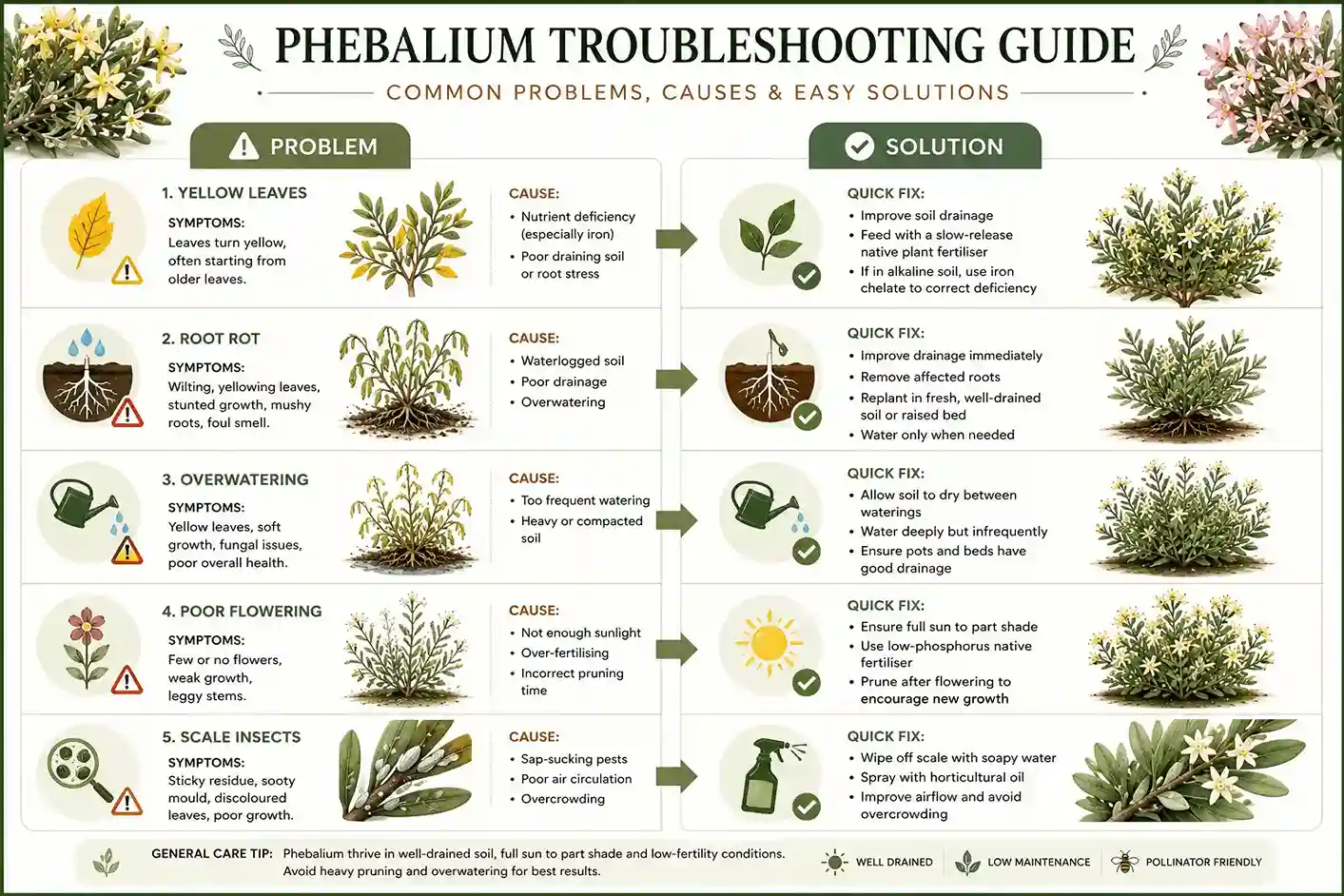
Yellow leaves commonly result from drainage issues, nutrient imbalance, or root stress.
Improving soil aeration and reducing excessive watering often helps recovery.
Root Rot and Overwatering
Root rot is usually caused by waterlogged soil and poor drainage.
Symptoms include wilting, blackened roots, and sudden plant decline. Prevention involves planting in raised beds or sandy soil.
Pest and Disease Issues
Scale insects and fungal diseases occasionally affect phebalium plants, especially in humid conditions with poor airflow.
Pruning crowded growth improves ventilation and reduces disease pressure.
Why Phebalium Fails in Some Gardens
Phebalium often struggles when planted outside its preferred climate or in heavy clay soils.
Common beginner mistakes include overwatering, incorrect fertilizer use, and planting in low-light conditions.
Signs and Solutions
- Yellowing foliage
- Root softness
- Sparse flowering
- Weak growth
- Improve drainage and airflow
Comparing Phebalium Varieties
Phebalium Squamulosum vs Phebalium Glandulosum
Phebalium squamulosum generally has narrower leaves and silvery undersides, while phebalium glandulosum develops denser foliage and softer yellow blooms.
Growth habits also vary depending on climate and soil conditions.
Alpine vs Coastal Phebalium Types
Alpine species tolerate frost and cooler conditions better than coastal forms.
Coastal phebalium varieties handle salt exposure and sandy soils more effectively.
Yellow-Flowering vs Pink-Flowering Phebalium
Yellow-flowering phebalium species create natural bushland aesthetics, while pink-flowering forms provide ornamental contrast in decorative gardens.
Table: Comparison of Popular Phebalium Varieties
| Variety | Flower Color | Mature Size | Preferred Climate | Growth Habit |
| Phebalium squamulosum | Cream-yellow | Medium | Temperate | Upright |
| Phebalium glandulosum | Yellow | Medium | Woodland | Dense |
| Phebalium whitei | Pale cream | Compact | Cooler regions | Bushy |
| Phebalium Woombye Pink | Pink | Medium | Temperate | Ornamental |
Landscaping Uses for Phebalium
Phebalium works well in native gardens, rock gardens, and pollinator-friendly landscapes because of its fragrant flowers and drought tolerance. It also pairs effectively with other Australian native shrubs such as grevillea, westringia, and callistemon. Phebalium also works well alongside other drought-tolerant shrubs commonly featured in broader Plants for Homes and Gardens Guide resources focused on sustainable landscaping.
Landscaping Applications
- Coastal landscaping
- Wildlife gardens
- Feature shrub planting
- Low-maintenance native borders
Phebalium is especially effective in contemporary native landscapes inspired by Modern Australian Native Garden: 10+ Smart Design Ideas Guide planting principles.
Beginner Mistakes to Avoid When Growing Phebalium
Many gardeners lose phebalium plants because of unsuitable soil or excessive watering. Improper fertilization and climate mismatch also reduce long-term survival.
Common Mistakes
- Planting in poorly drained soil
- Using high-phosphorus fertilizer
- Excessive watering
- Over-pruning
- Choosing the wrong climate zone
Seasonal Care Tips for Phebalium
Spring and Summer Care
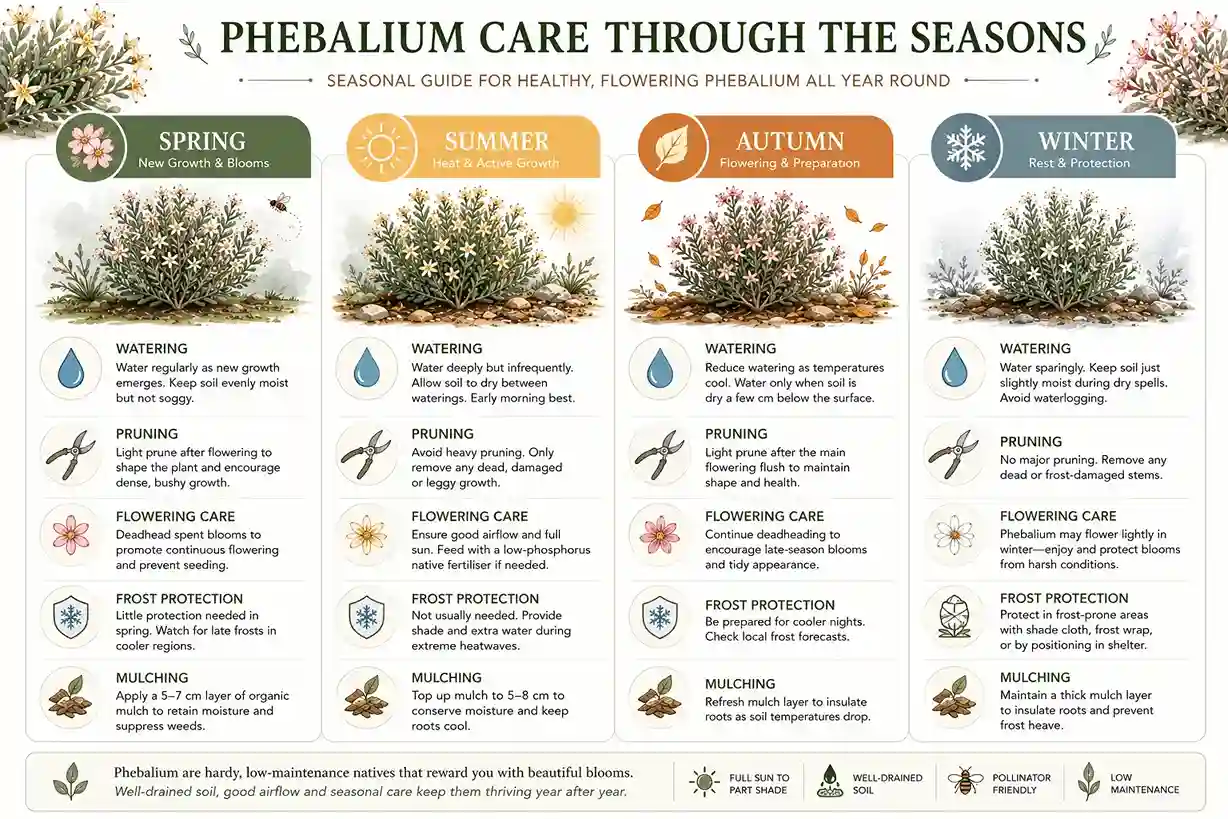
Spring and summer are the main growing and flowering periods for many phebalium species.
Adjust watering during hot weather while avoiding saturated soil conditions.
Autumn and Winter Care
Autumn and winter care focuses on drainage management, frost protection, and pruning timing after flowering.
Mulching around roots helps stabilize soil temperature.
Seasonal Maintenance Tips
- Reduce watering during cooler months
- Maintain mulch layers
- Remove spent flowers
- Protect frost-sensitive species
How Phebalium Supports Native Garden Ecosystems
Phebalium supports native ecosystems by attracting pollinators and increasing biodiversity in sustainable landscapes. Its flowers provide nectar for bees and beneficial insects, while dense shrub growth creates habitat for small wildlife. Native shrubs also require less irrigation and fertilizer than many exotic ornamental plants.
Ecological Benefits
- Bee attraction
- Habitat support
- Drought resilience
- Low-maintenance gardening benefits
Conclusion
Phebalium is a diverse group of Australian native shrubs valued for fragrant foliage, star-shaped flowers, and adaptability to different climates. Species such as phebalium squamulosum, phebalium whitei, and phebalium glandulosum offer varying ornamental qualities and environmental benefits for native gardens and sustainable landscapes. Successful growth depends on selecting the right species for local soil and climate conditions. Proper drainage, sunlight exposure, moderate watering, and low-phosphorus fertilization remain essential for long-term plant health and flowering performance.
FAQs
What is phebalium?
Phebalium is a genus of Australian native evergreen shrubs in the Rutaceae family. These plants are known for aromatic foliage and star-shaped flowers in shades of yellow, cream, white, or pink.
How do you care for phebalium plants?
Phebalium plants require well-drained soil, moderate watering during establishment, full sun or partial shade, and low-phosphorus fertilizer. Light pruning after flowering also helps maintain shape and healthy growth.
What is the difference between phebalium squamulosum and phebalium glandulosum?
Phebalium squamulosum typically has narrower leaves with silvery undersides, while phebalium glandulosum often develops denser foliage and yellow flower clusters. Their preferred growing environments may also differ slightly.
Does phebalium prefer full sun or shade?
Most phebalium species prefer full sun for better flowering, though some forest varieties tolerate partial shade. Deep shade may reduce flowering and weaken growth.
Why are my phebalium leaves turning yellow?
Yellow leaves usually indicate drainage problems, overwatering, nutrient imbalance, or root stress. Improving soil drainage and adjusting watering often helps recovery.
Can phebalium tolerate drought conditions?
Yes, many phebalium species develop drought tolerance once established, especially varieties adapted to rocky or coastal environments.
How large does a phebalium tree grow?
Most phebalium plants grow as shrubs ranging from under one meter to over two meters tall, depending on species and growing conditions.
Which phebalium varieties produce pink flowers?
Phebalium Woombye Pink is one of the most recognized pink-flowering forms grown for ornamental landscaping purposes.
Is phebalium suitable for coastal gardens?
Yes, coastal and wallum phebalium varieties tolerate sandy soils, wind exposure, and dry conditions commonly found in coastal gardens.
When is the best time to prune phebalium?
The best time to prune phebalium is after flowering. Light pruning encourages denser growth and improves plant shape without reducing future blooms.