Introduction
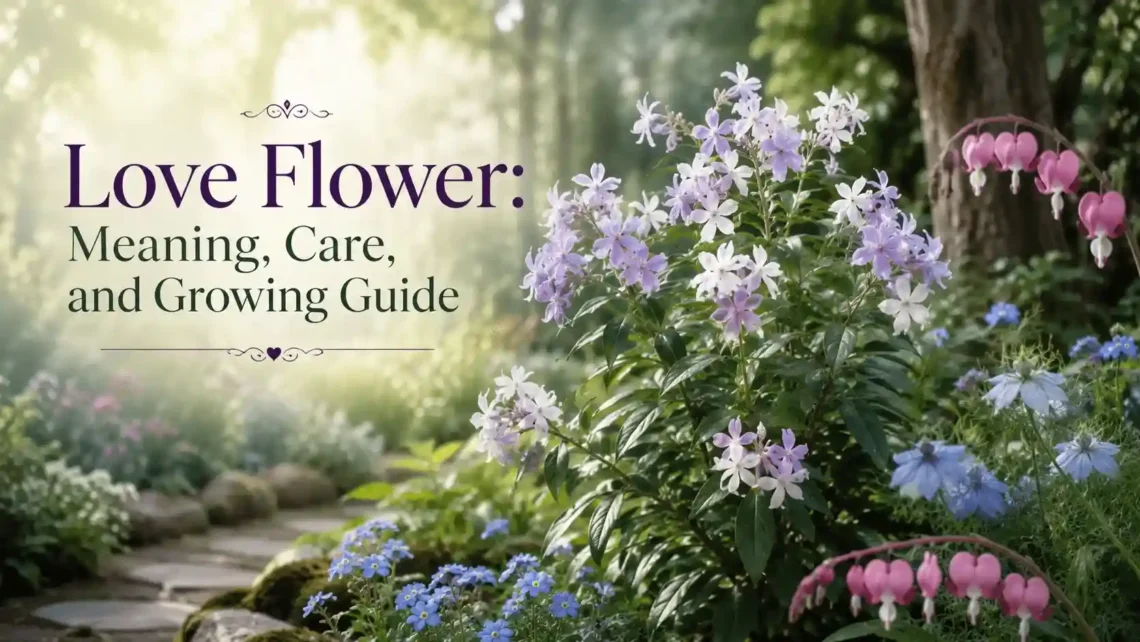
The love flower is both a specific Australian native plant and a broader symbolic category linked to romance, devotion, and emotional meaning. In botanical terms, the love flower commonly refers to Pseuderanthemum variabile, a low-growing perennial native to eastern Australia known for its soft pastel blooms and shade tolerance. In cultural and horticultural traditions, “love flowers” also include blooms historically associated with affection, remembrance, and romance through the language of flowers. Popular examples include roses, forget-me-nots, bleeding heart, and love-in-a-mist. These plants are valued not only for ornamental beauty but also for the symbolic meanings they bring to gardens, floral traditions, and landscape design.
Quick Summary
- The love flower (Pseuderanthemum variabile) is a native Australian ground cover known for its delicate pastel blooms and low-maintenance growth.
- In the broader sense, love flowers include any blooms historically associated with romance, devotion, and emotional symbolism.
- Common love flowers include forget-me-nots, bleeding heart, love-in-a-mist, and love-lies-bleeding, each with distinct meanings.
- Love flowers can be annual or perennial depending on the species and growing climate.
What Is the Love Flower? (Definition and Overview)
The love flower is most commonly identified botanically as Pseuderanthemum variabile, a flowering plant native to eastern Australia. It is also known as the pastel flower because of its pale lilac and white blossoms.
This plant belongs to the Acanthaceae family and naturally grows in shaded forest margins and moist woodland environments. It forms a spreading ground cover or compact sub-shrub, making it useful in native landscaping and shaded garden beds.
The term “love flower” also has a broader symbolic meaning. In horticulture and folklore, it refers to flowers associated with love, romance, emotional attachment, and devotion. Many flowering plants gained symbolic meanings through floriography, also known as the language of flowers.
Key Facts
- Botanical name: Pseuderanthemum variabile
- Common name: Love flower, pastel flower
- Native habitat: Eastern Australia
- Growth form: Low-growing ground cover or sub-shrub
The concept naturally connects to related terms such as:
- Love plant
- Plant of love
- Love flower Australia
- Love flower plant
What Flower Symbolizes Love? — The Language of Flowers
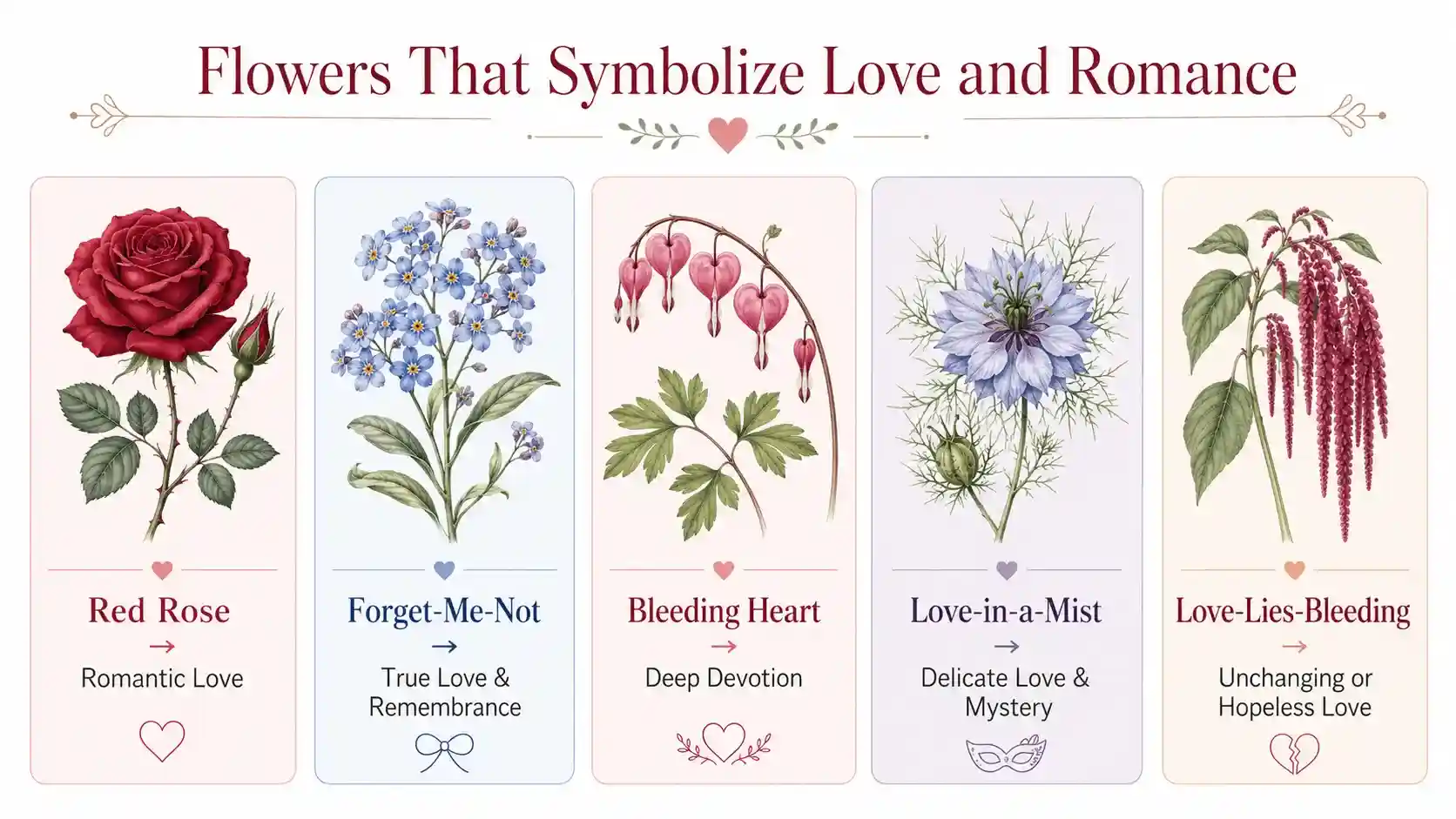
Many flowers symbolize love, but the meaning depends on the species, color, and cultural tradition. The historical language of flowers assigned emotional meanings to blooms, allowing flowers to communicate affection, loyalty, grief, or romance without words.
The historical practice of assigning symbolic meanings to flowers is known as floriography, often called the language of flowers.
Floriography became especially popular during the Victorian era, when flowers were exchanged to express emotions discreetly.
Flowers That Represent Love and Romance
Several flowers are strongly associated with love and romantic symbolism.
- Forget-me-not — symbolizes true love and remembrance
- Bleeding heart — represents deep romantic devotion
- Love-in-a-mist — symbolizes delicate love and mystery
- Love-lies-bleeding — associated with hopeless or unrequited love
- Red rose — universal symbol of romantic love
Each flower carries unique emotional associations and is commonly used in romantic gardens, bouquets, and symbolic planting schemes.
Love Flowers in Folklore and Cultural Tradition
Flowers associated with love appear throughout European, Asian, and Middle Eastern folklore traditions. In many cultures, flowers represented emotional states, marital devotion, fertility, or loyalty.
For example:
- Red roses became associated with passion through Greek and Roman mythology.
- Forget-me-nots were linked to eternal remembrance in medieval European folklore.
- Bleeding hearts symbolized emotional sacrifice and enduring affection.
These symbolic traditions continue to influence modern gardening, wedding flowers, and romantic floral arrangements.
Pseuderanthemum variabile — The Australian Love Flower
Pseuderanthemum variabile is a native Australian perennial valued for its soft pastel flowers and adaptability to shaded landscapes. It naturally occurs in Queensland and New South Wales, particularly in subtropical woodland and rainforest edge habitats.
As a woodland understory species, the love flower also fits well among other shade loving Australian natives used in sustainable landscaping.
The plant supports biodiversity by attracting native insects and pollinators while also functioning as an attractive ornamental ground cover.
Key Characteristics of Pseuderanthemum variabile
| Feature | Detail |
| Botanical Name | Pseuderanthemum variabile |
| Common Name | Love flower, Pastel flower |
| Origin | Eastern Australia |
| Flower Color | White to pale lilac (pastel) |
| Mature Height | 20–60 cm |
| Growth Type | Ground cover / sub-shrub |
| Sun Requirements | Part shade to full shade |
| Soil Preference | Moist, well-drained |
| Annual or Perennial | Perennial (in suitable climates) |
Love Flower Plant Size and Growth Rate
The love flower typically reaches a mature height of 20–60 cm and can spread up to one metre when used as a ground cover. Growth habits vary depending on environmental conditions.
Outdoor plants generally spread more extensively than indoor specimens because of higher humidity, natural rainfall, and larger root space.
Growth Characteristics
- Typical mature height: 20–60 cm
- Spread: Up to 1 metre
- Growth rate: Moderate
- Best growth conditions: Warm, humid, shaded environments
- Seasonal growth: Most active during warmer months
Plants grown in dry or exposed locations often remain smaller and may flower less heavily.
Love Flower Care Guide — How to Grow Pseuderanthemum variabile
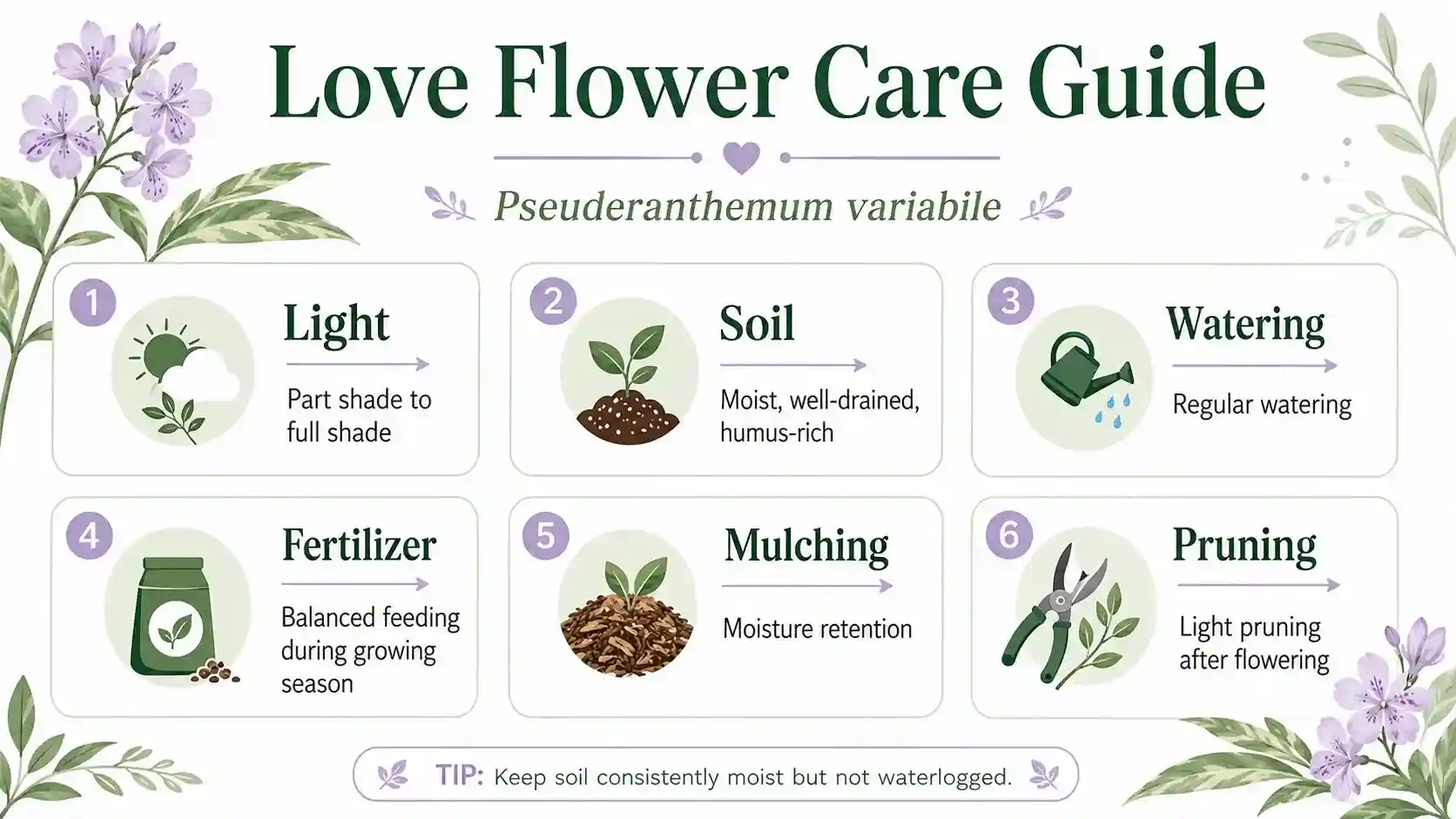
The love flower is considered relatively easy to maintain when grown in suitable conditions. It performs best in moist, shaded environments that mimic its native woodland habitat. Gardeners designing low-light landscapes may also benefit from exploring other shade tolerant flowers that thrive in similar conditions.
Soil, Light, and Watering Requirements
Proper growing conditions are essential for healthy foliage and flowering.
- Light: Prefers part shade to full shade
- Soil: Moist, well-drained, humus-rich soil
- Watering: Requires regular watering and consistent moisture
- Fertilization: Light feeding with balanced fertilizer during active growth
- Mulching: Helps retain soil moisture and reduce weed growth
A common beginner mistake is planting the love flower in harsh afternoon sun, which can scorch foliage and reduce flowering.
Propagation and Seeds
Love flowers can be propagated through seeds or stem cuttings.
- Seeds are best sown during spring in warm, sheltered conditions.
- Stem cuttings taken in late spring or early summer root readily in moist growing medium.
- Propagation is generally easier in humid climates with stable warmth.
Pruning and Maintenance
Regular maintenance helps improve flowering and plant density.
- Light pruning after flowering encourages bushier growth.
- Removing spent blooms may extend flowering duration.
- Established plants require relatively minimal maintenance.
Is the Love Flower Annual or Perennial?
The love flower (Pseuderanthemum variabile) is primarily a perennial plant in warm climates. In its native subtropical and tropical Australian range, it grows year-round and returns continuously.
However, climate strongly affects plant longevity.
- In warm Australian regions: perennial
- In cooler temperate regions: often grown as an annual
- Frost exposure significantly reduces survival rates outside native habitats
Gardeners in colder climates may grow the plant seasonally or protect it indoors during winter.
Love-in-a-Mist — Growing Guide and Flower Care
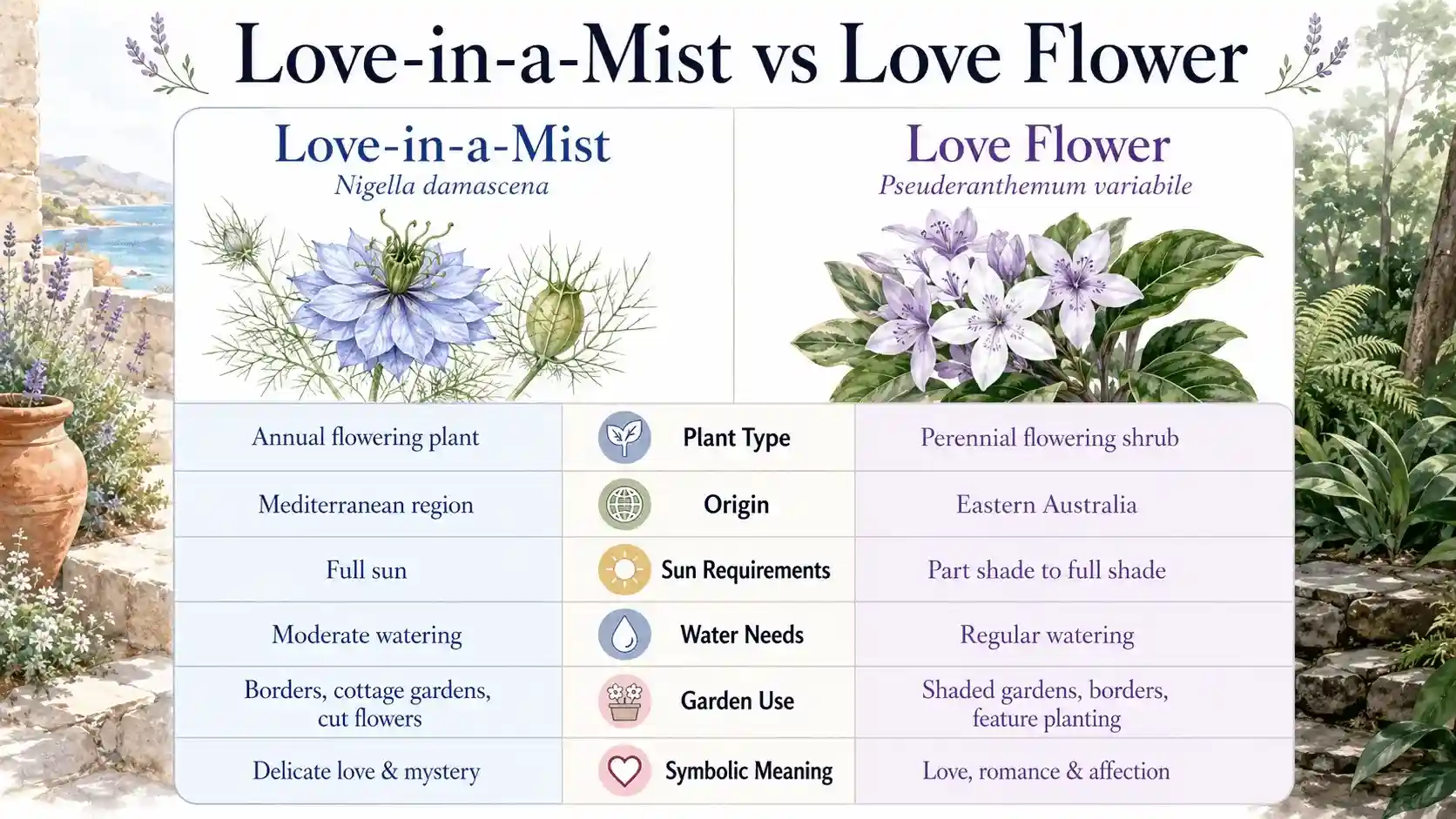
Love-in-a-mist (Nigella damascena) is a separate flowering species commonly associated with romantic symbolism and cottage gardens.
What Is Love-in-a-Mist?
Nigella damascena is an annual flowering plant with feathery foliage and delicate blue, white, or pink blooms.
Its symbolic meanings include:
- Delicate love
- Mystery
- Complexity
The plant is especially popular in traditional cottage-style gardens.
How to Grow Love-in-a-Mist
| Feature | Love-in-a-Mist (Nigella) | Love Flower (Pseuderanthemum) |
| Type | Annual | Perennial |
| Origin | Mediterranean | Australia |
| Light | Full sun | Part to full shade |
| Water Needs | Moderate | Moderate–high |
| Garden Use | Border, cottage | Ground cover, native |
| Symbolic Meaning | Delicate love | Love, romance |
Love-in-a-mist grows best when direct-sown into garden beds after frost danger has passed.
Bleeding Heart Flower — Care Tips and Love Symbolism
The bleeding heart flower (Lamprocapnos spectabilis) symbolizes deep romantic love and compassion. Its heart-shaped flowers make it one of the most recognizable romantic plants in ornamental gardening.
Care Requirements
- Prefers part shade and cool temperatures
- Requires moist, well-drained soil
- Performs best in woodland-style gardens
- Dies back during summer dormancy
Because it is a herbaceous perennial, foliage naturally disappears during hot weather before returning the following growing season.
Love-Lies-Bleeding — How to Grow This Romantic Flower
Amaranthus caudatus, commonly called love-lies-bleeding, is known for its dramatic hanging red tassels.
Growing Requirements
- Annual flowering plant
- Best grown in full sun
- Direct sow after the final frost
- Requires moderate watering and warm temperatures
Symbolic Meaning
Love-lies-bleeding traditionally symbolizes:
- Hopeless love
- Unchanging devotion
- Emotional endurance
Its striking appearance makes it popular as a focal ornamental plant.
Forget-Me-Not Flower Meaning and Love Symbolism
Forget-me-nots belong to the genus Myosotis and are historically associated with faithful love and remembrance.
Symbolic Associations
- True love
- Lasting memory
- Loyal devotion
Historically, these flowers were exchanged between lovers as promises of remembrance and fidelity.
Forget-me-nots are commonly planted in:
- Romantic gardens
- Memorial gardens
- Spring woodland beds
Their small blue flowers pair well with other cottage garden species.
Romantic Garden Design — Love Flowers for a Cottage Garden
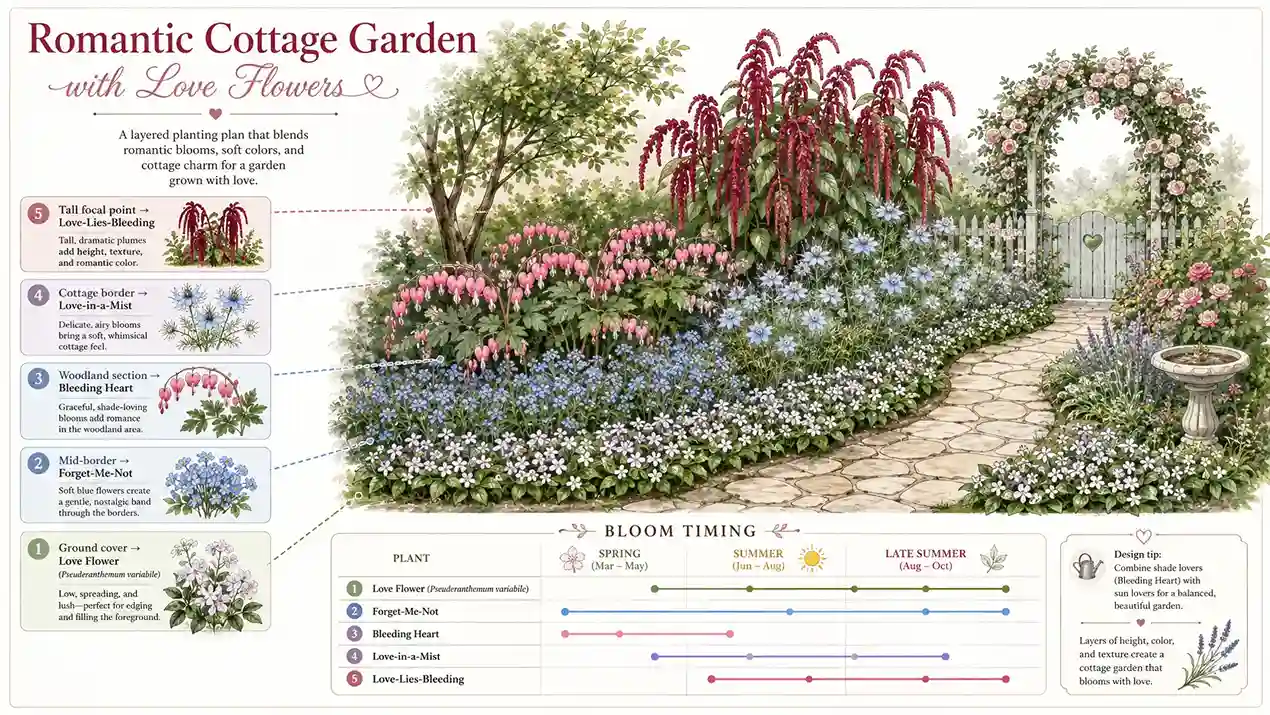
Love-themed flowers can create visually soft, emotionally symbolic cottage-style gardens. Many traditional cottage plants pair beautifully with love flowers to create layered, romantic garden spaces with extended seasonal color.
Plants That Symbolize Love for the Garden
Different species suit different garden environments.
- Love flower (Pseuderanthemum variabile) — shaded borders
- Love-in-a-mist (Nigella damascena) — cottage borders
- Bleeding heart — woodland gardens
- Forget-me-not — spring underplanting
- Love-lies-bleeding — dramatic focal planting
Design Tips for a Romantic Cottage Garden
Effective romantic garden design relies on layered textures and soft color palettes.
- Layer plants by height from low ground covers to taller focal flowers
- Use pastel shades such as lavender, blush pink, and white
- Combine early and late bloomers for longer seasonal color
- Include symbolic flowers to create emotional storytelling within the garden
Common Problems With the Love Flower — Troubleshooting Guide
The love flower is generally low-maintenance, but several environmental issues can affect plant health.
Why Is My Love Flower Not Blooming?
Insufficient flowering is commonly caused by excessive sunlight or inconsistent moisture.
Causes
- Too much direct sun
- Dry soil conditions
Fixes
- Relocate to partial or full shade
- Increase watering frequency
Prevention
- Plant in naturally shaded positions from the beginning
Yellowing Leaves on Love Flower Plants
Yellow leaves usually indicate root stress or nutrient imbalance.
Causes
- Overwatering
- Poor drainage
- Nutrient deficiency
Fixes
- Improve soil drainage
- Apply balanced fertilizer
Prevention
- Use well-drained humus-rich soil
Pest and Disease Issues
The love flower is relatively pest-resistant.
Potential issues include:
- Slugs
- Snails
- Minor fungal problems in excessive humidity
Iron-based pellets and physical removal are common control methods for snails and slugs.
Love Flower Uses — Ornamental and Ecological Value
The love flower has both ornamental and ecological benefits in garden landscapes. Combining love flowers with other butterfly attracting flowers can improve pollinator diversity and ecological balance within the garden.
Common Uses
- Native ground cover for shaded gardens
- Underplanting beneath trees
- Border planting in woodland landscapes
- Habitat support for pollinators
Ecological Benefits
The plant attracts:
- Bees
- Butterflies
- Native beneficial insects
Because it tolerates shaded conditions and requires relatively low maintenance, it is increasingly used in sustainable landscaping and Australian native garden design. The plant is increasingly featured in modern Australian native garden designs focused on biodiversity and low-maintenance landscaping.
How Love Flowers Compare — Choosing the Right Plant for Your Garden
Different love-themed flowers suit different climates, garden styles, and symbolic purposes.
| Plant | Type | Sun | Symbolic Meaning | Best For |
| Love Flower (Pseuderanthemum) | Perennial | Shade | Love, romance | Native gardens, ground cover |
| Love-in-a-Mist (Nigella) | Annual | Full sun | Delicate love | Cottage borders |
| Bleeding Heart | Perennial | Part shade | Deep devotion | Woodland gardens |
| Love-Lies-Bleeding | Annual | Full sun | Hopeless love | Dramatic focal points |
| Forget-Me-Not | Annual/Biennial | Part shade | True love | Underplanting, spring beds |
Topical Connections — Love Flowers in the Broader Garden Context
Love flowers connect naturally to broader gardening and landscaping themes. For broader inspiration on selecting ornamental plants for indoor and outdoor spaces, explore our Plants for Homes and Gardens Guide.
Related Gardening Topics
- Indoor plant care for shade-loving flowering plants
- Seed propagation and stem cutting techniques
- Australian native landscaping practices
- Cottage garden planning
- Plant troubleshooting and seasonal maintenance
The love flower can also be grown indoors in bright indirect light if humidity and moisture are maintained consistently.
Conclusion
The love flower represents both a specific Australian native plant and a broader tradition of romantic floral symbolism. Pseuderanthemum variabile offers gardeners an attractive, shade-tolerant perennial ground cover with ecological benefits and low-maintenance growth. At the same time, flowers such as love-in-a-mist, bleeding heart, forget-me-nots, and love-lies-bleeding continue to carry symbolic meanings connected to devotion, remembrance, and romance. Whether chosen for practical landscaping, pollinator support, or emotional symbolism, love flowers add beauty and narrative depth to gardens. Selecting the right species depends on climate conditions, garden style, and the symbolic atmosphere a gardener wants to create.
FAQs
What is the love flower plant?
The love flower plant (Pseuderanthemum variabile) is a native Australian ground cover that produces small pastel flowers and thrives in shaded, moist garden conditions.
What flower symbolizes love?
Many flowers symbolize love, including roses (romantic love), forget-me-nots (true love), bleeding heart (deep devotion), love-in-a-mist (delicate love), and love-lies-bleeding (unchanging love).
Is the love flower annual or perennial?
The love flower (Pseuderanthemum variabile) is a perennial in its native Australian subtropical climate, but may behave as an annual in cooler regions where frost occurs.
How do you care for a love flower plant?
Love flowers prefer part to full shade, moist well-drained soil, and regular watering. They require minimal fertilization and light pruning after flowering to maintain a bushy form.
What is the difference between love-in-a-mist and the love flower?
Love-in-a-mist (Nigella damascena) is a Mediterranean annual suited to full sun cottage gardens, while the love flower (Pseuderanthemum variabile) is an Australian perennial ground cover suited to shaded, humid conditions.
What are plants that symbolize love in a garden?
Plants that symbolize love in a garden include the love flower, forget-me-nots, bleeding heart, love-in-a-mist, love-lies-bleeding, and red roses — each carrying a distinct meaning within the historical language of flowers.
Where can I grow love flower in Australia?
Love flower (Pseuderanthemum variabile) grows naturally along Australia’s eastern coast, thriving in Queensland and New South Wales in shaded, moist garden beds or under tree canopy.