Introduction
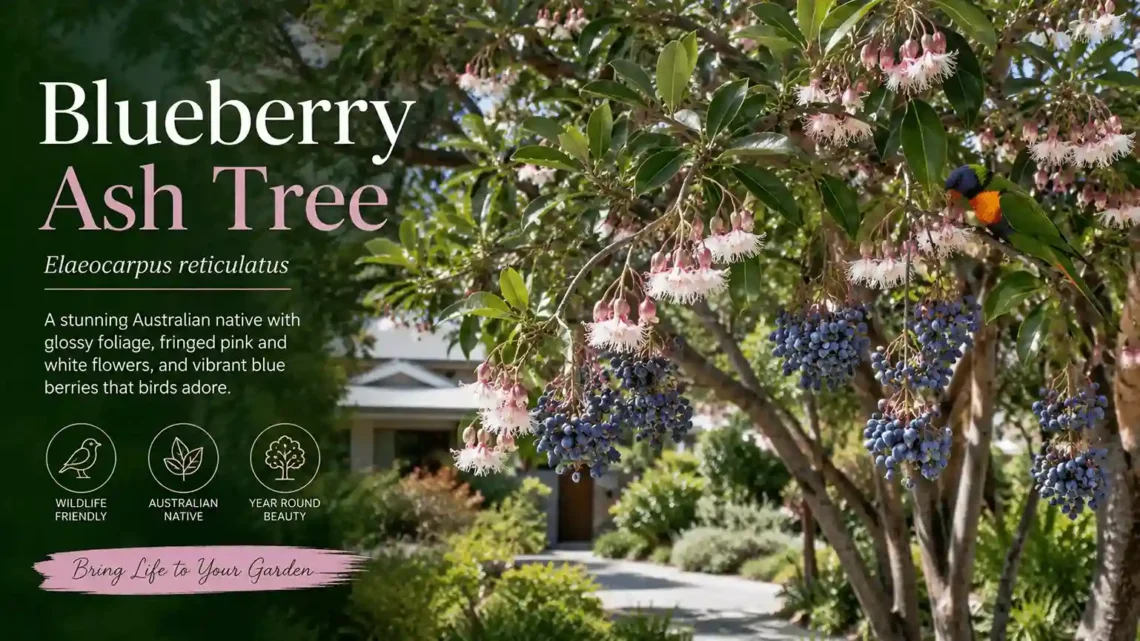
The blueberry ash tree (Elaeocarpus reticulatus) is a native Australian evergreen valued for its ornamental flowers, attractive berries, and adaptability in gardens. This species is known for its distinctive fringed pink or white bell-shaped flowers, glossy green foliage, and striking blue-purple fruit that remains on the tree for extended periods. Gardeners frequently use it for hedging, privacy screens, street planting, and wildlife-friendly landscapes. Its combination of beauty, ecological value, and manageable growth habit makes it a popular choice across many Australian regions. This guide covers blueberry ash tree size, growth rate, care requirements, common problems, root behavior, and cultivar differences, including Elaeocarpus reticulatus ‘Prima Donna’.
If you’re exploring suitable plants for residential landscapes, our comprehensive Plants for Homes and Gardens Guide provides additional recommendations for selecting trees, shrubs, and ornamental plants for different environments.
Quick Summary
- The blueberry ash (Elaeocarpus reticulatus) is a native Australian evergreen tree grown for its decorative fringed flowers and distinctive blue-purple berries.
- It typically reaches 5–10 m at maturity but can be maintained at a smaller size through pruning or hedging.
- The species performs best in subtropical and temperate climates, especially along Australia’s eastern coastline.
- Elaeocarpus reticulatus ‘Prima Donna’ is a widely grown pink-flowering cultivar popular in residential landscapes.
- The tree provides valuable habitat and food resources for native birds, insects, and other wildlife.
What Is the Blueberry Ash Tree?
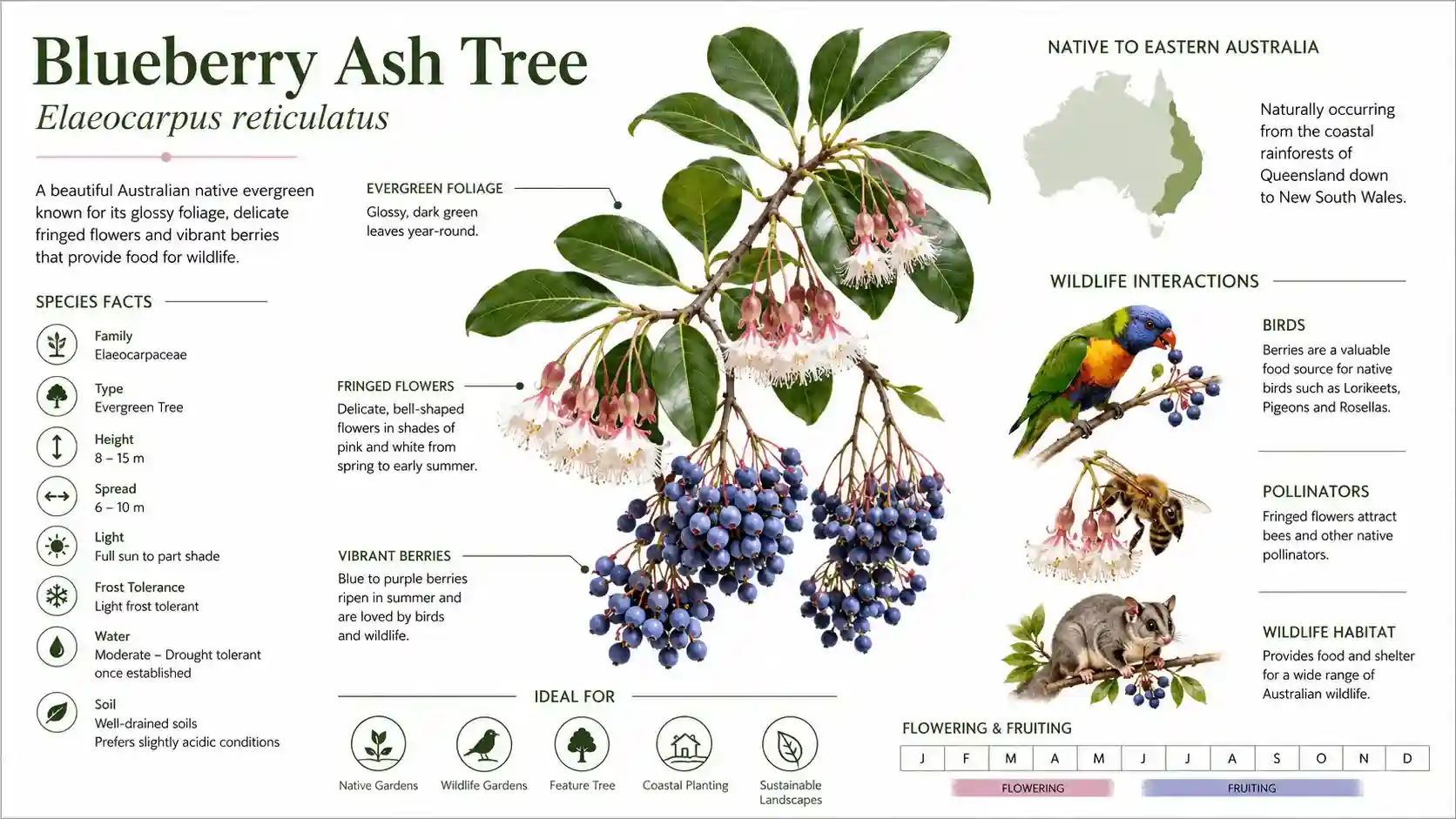
The blueberry ash tree is an evergreen species belonging to the Elaeocarpaceae family. Despite its common name, it is not related to true ash trees. The botanical name is Elaeocarpus reticulatus.
The common name comes from its blue-purple drupes, which resemble blueberries in appearance. However, these fruits are not considered edible for humans.
The species is native to eastern Australia and naturally occurs from Queensland through New South Wales and into Victoria. It is commonly found along rainforest margins, moist gullies, and forest edges.
Ecologically, the tree plays an important role by providing nectar for pollinating insects and birds. Its fruit is also consumed by a variety of native wildlife species.
Quick Species Profile
| Characteristic | Details |
| Botanical Name | Elaeocarpus reticulatus |
| Family | Elaeocarpaceae |
| Common Name | Blueberry Ash |
| Origin | Eastern Australia |
| Flower Color | White to pink |
| Fruit Color | Blue-purple |
| Evergreen/Deciduous | Evergreen |
| Typical Uses | Hedging, screening, specimen tree, street planting |
Blueberry Ash Tree Size — What to Expect at Full Growth
A mature blueberry ash tree typically reaches between 5 and 10 metres in height under garden conditions. In natural bushland or rainforest environments, specimens may grow as tall as 15 metres.
The canopy spread usually ranges from 3 to 5 metres, creating a moderately dense crown suitable for screening and privacy.
The species is not suitable as a permanent indoor plant. However, younger specimens can be grown in large containers for several years before requiring transplantation into the landscape.
Factors affecting final size include:
- Soil fertility
- Water availability
- Climate conditions
- Available root space
- Pruning frequency
A full-grown blueberry ash tree in a coastal rainforest environment generally grows larger and denser than one maintained in a residential garden.
Dwarf and Compact Varieties
There is no widely recognized true dwarf blueberry ash cultivar. Most compact forms are created through regular pruning and hedging practices.
Comparisons between common forms include:
- Standard form: Typically 5–10 m tall.
- ‘Prima Donna’: Often maintained at 4–8 m in gardens.
- Pink flowering forms: Similar size to standard plants, depending on growing conditions.
Blueberry Ash Growth Rate — How Fast Does It Grow?
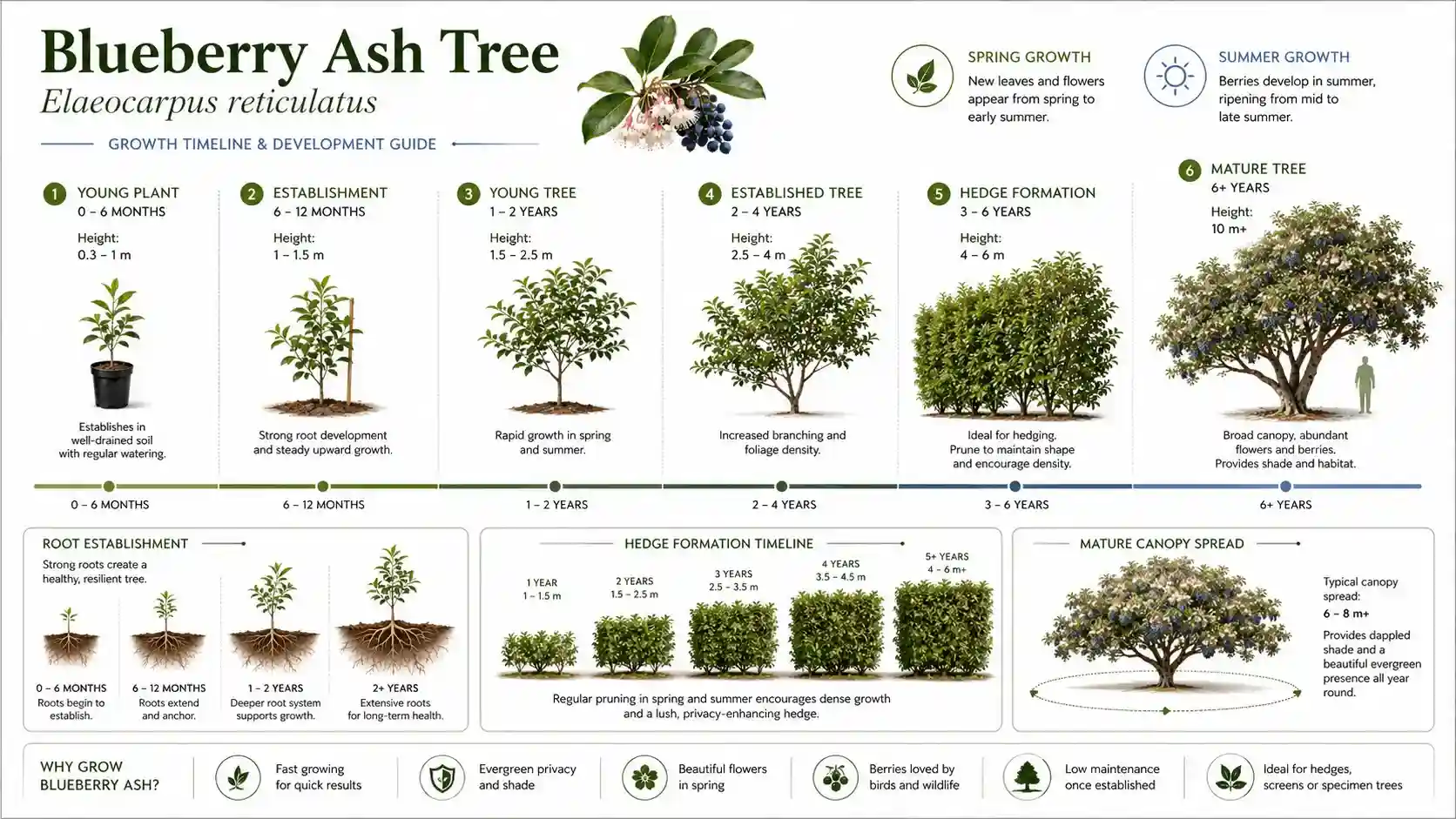
The blueberry ash tree is considered a moderate-growing species. Under favourable conditions, it typically grows between 30 and 60 cm per year.
Growth is most active during spring and summer when temperatures are warm and moisture levels are adequate.
In subtropical areas such as Brisbane, growth rates are generally faster than in cooler southern regions. Growth can slow significantly in poor soils or during drought conditions.
Factors influencing growth speed include:
- Sunlight exposure
- Soil quality
- Irrigation practices
- Fertility levels
- Establishment care
For screening purposes, a newly planted hedge often requires approximately 4–7 years to develop into a substantial privacy screen.
Blueberry Ash Tree — Native Status and Natural Habitat
The blueberry ash is a true native Australian species rather than an introduced ornamental tree.
Its natural habitat includes:
- Coastal rainforest margins
- Moist gullies
- Forest edges
- Sheltered woodland areas
Native status is important because the species supports local biodiversity. Its flowers attract pollinators, while its berries provide food for birds and small animals. Gardeners seeking native landscaping options often choose blueberry ash as an alternative to exotic screening trees.
As a true eastern Australian native, blueberry ash also appears among many of the species covered in our Ultimate Guide to Native Trees of Australia.
Blueberry Ash Cultivars — Forms and Varieties
Several forms and cultivars of blueberry ash are available through Australian nurseries.
Elaeocarpus reticulatus ‘Prima Donna’ is among the most popular selections due to its vibrant pink fringed flowers and dependable garden performance.
Pink flowering blueberry ash forms may refer to ‘Prima Donna’ or similar pink-flowering selections. Availability can vary between nurseries.
The standard form generally produces white flowers and is commonly used in native landscaping projects.
Standard vs. ‘Prima Donna’ vs. Pink Form
| Cultivar | Flower Color | Mature Height | Best Use | Nursery Availability |
| Standard Form | White | 5–10 m | Screening, native gardens | Common |
| ‘Prima Donna’ | Bright Pink | 4–8 m | Feature tree, hedging | Widely Available |
| Pink Form | Pink | 5–10 m | Ornamental planting | Moderate |
Blueberry Ash as a Hedge — Using It for Screening and Privacy
The blueberry ash hedge is popular because it combines dense evergreen foliage with attractive flowers and wildlife value.
For effective screening:
- Plant approximately 1–2 metres apart.
- Water consistently during establishment.
- Mulch around root zones.
- Prune lightly to encourage dense growth.
Compared with some fast-growing alternatives, blueberry ash develops more slowly but often provides a more refined and ornamental appearance. In Brisbane and other subtropical regions, it performs exceptionally well as a privacy screen.
Homeowners comparing screening options may also find our guide to Best Hedging Trees for Privacy helpful when selecting the right evergreen hedge for their landscape.
Blueberry ash is often included among the best Australian native screening plants due to its dense evergreen foliage, making it comparable to other options featured in our guide to Australian Native Screening Trees for Privacy.
Blueberry Ash Care Guide
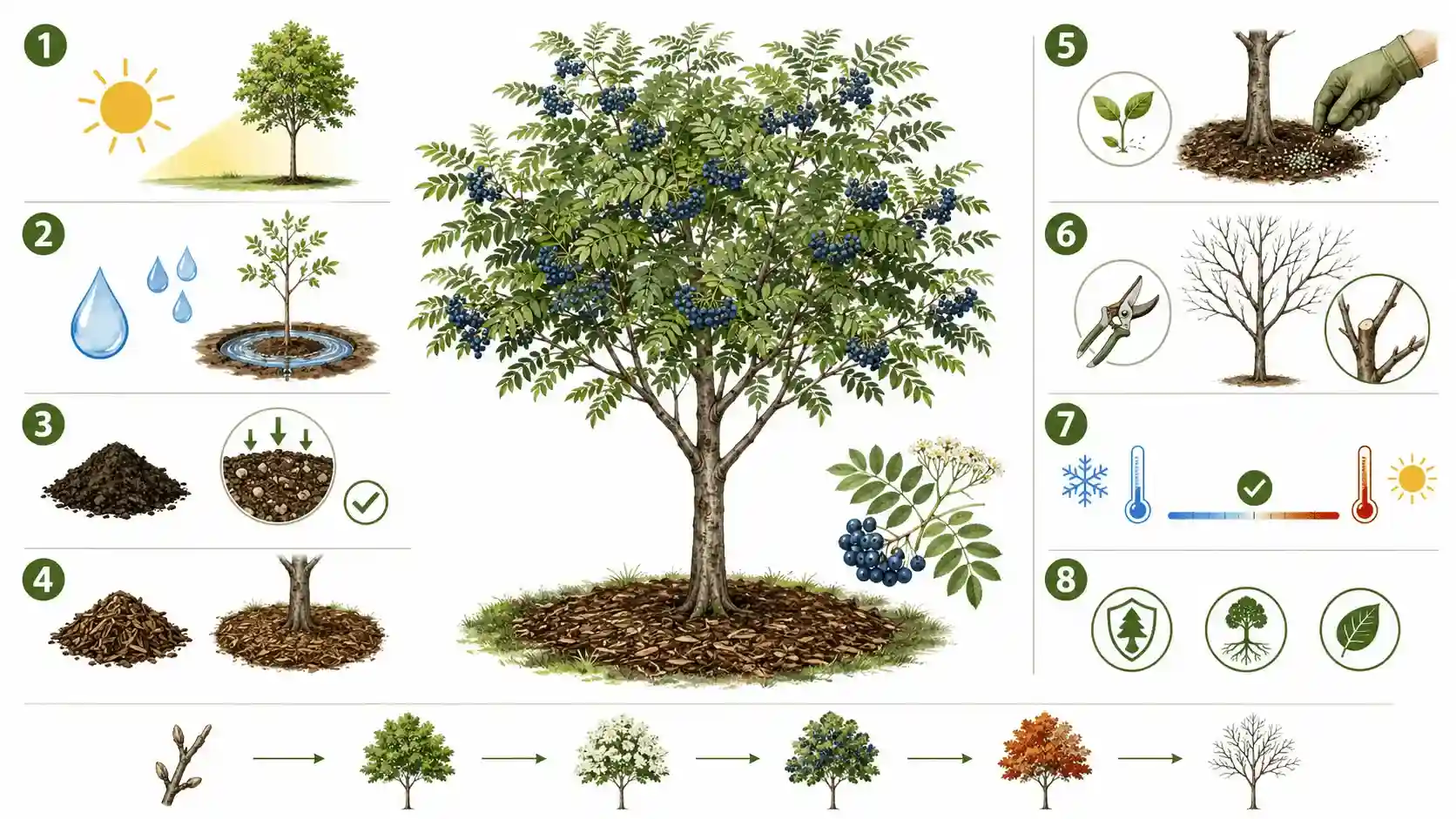
Sunlight Requirements
Blueberry ash grows best in full sun to partial shade. In hotter climates, protection from harsh afternoon sun can improve overall plant health.
Watering
Young plants require regular watering while establishing.
Once established, the species develops moderate drought tolerance. Overwatering can lead to:
- Yellowing foliage
- Poor growth
- Root rot
Soil Preferences
The species prefers well-drained, slightly acidic soil but adapts to various soil types.
Benefits of mulching include:
- Improved moisture retention
- Reduced weed competition
- Protection of shallow roots
- More stable soil temperatures
Fertilization
Apply a native-specific fertilizer during the growing season.
Avoid high-phosphorus products because many Australian native plants are sensitive to excessive phosphorus levels.
Pruning
Prune after flowering to maintain shape and encourage dense growth.
Pruning can be used for:
- Hedge maintenance
- Size control
- Canopy shaping
Excessive pruning may reduce flowering and berry production.
Climate Tolerance
The blueberry ash performs best in temperate and subtropical climates.
It is particularly well-suited to Brisbane and much of coastal Queensland. It can also be grown in Perth if irrigation and soil management are carefully maintained.
The species tolerates light frosts but struggles in regions with prolonged freezing temperatures.
Blueberry Ash Tree Roots — Are They Invasive?
No, blueberry ash tree roots are generally not considered invasive.
Compared with many larger landscape trees, the root system is relatively non-aggressive and suitable for residential gardens.
Recommended planting distances include:
- 3–5 metres from structures
- 2–3 metres from pathways
- Adequate clearance from underground services
Root spread may increase in highly fertile soils with abundant moisture, but the species rarely causes the severe structural problems associated with aggressive-rooted trees.
Blueberry Ash Flowers and Fruit
Blueberry Ash Flower
The flowers are among the tree’s most distinctive features.
Characteristics include:
- Fringed bell-shaped petals
- White or pink coloration
- Spring to summer flowering period
- Strong ornamental value
The flowers attract bees, butterflies, and nectar-feeding birds.
Blueberry Ash Fruit (Berries)
The fruit consists of blue-purple drupes that resemble blueberries.
These berries often remain on the tree well into winter, providing extended ornamental interest.
Can you eat the berries from a blueberry ash tree? No. The berries are not recommended for human consumption and are primarily valued as wildlife food.
Birds and other native animals commonly feed on the fruit.
Blueberry Ash Tree Problems — Common Issues and Solutions
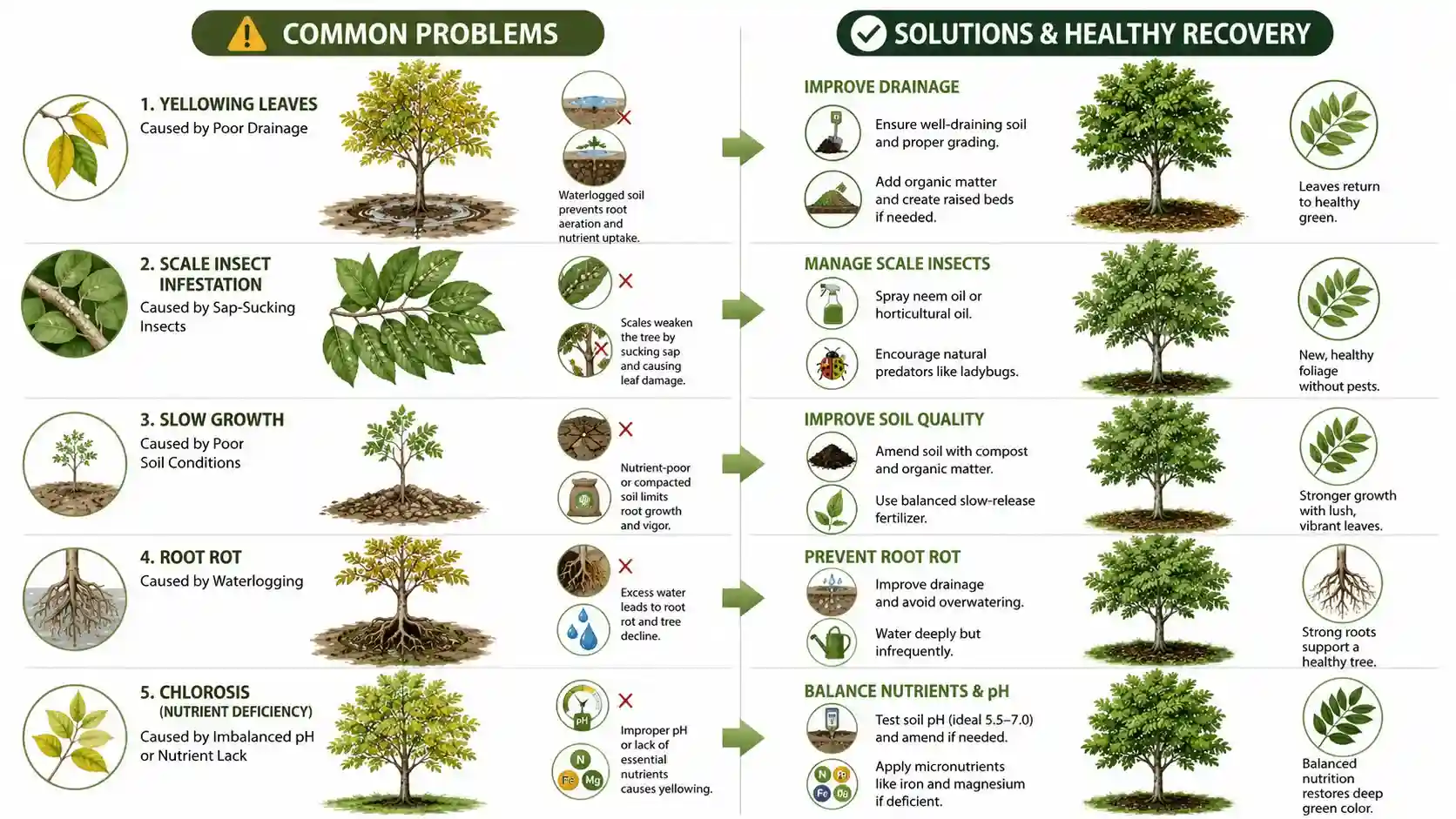
Problem-Solution Table
| Problem | Likely Cause | Fix | Prevention |
| Yellowing Leaves | Poor drainage, nutrient deficiency | Improve drainage, apply iron | Avoid waterlogging |
| Scale Insects | Pest infestation | Horticultural oil | Regular inspections |
| Slow Growth | Poor soil or low sunlight | Improve site conditions | Proper planting |
| Leaf Drop | Stress or root problems | Correct watering | Maintain healthy soil |
Yellowing Leaves
Yellow leaves often result from:
- Overwatering
- Poor drainage
- Iron deficiency
- Alkaline soils
Improving drainage and applying chelated iron can often resolve the issue.
Pest Issues
Common pests include:
- Scale insects
- Caterpillars
- Aphids
Low-impact controls include:
- Horticultural oils
- Beneficial insects
- Manual removal
Slow Growth or Poor Performance
Common causes include:
- Incorrect soil pH
- Limited sunlight
- Root competition
- Transplant shock
Assessing site conditions is usually the first step toward diagnosis.
Leaf Drop and Stress Signs
Occasional leaf drop is normal.
However, excessive leaf loss may indicate:
- Waterlogging
- Drought stress
- Root disease
- Environmental shock
Root rot is especially common in poorly drained soils.
Blueberry Ash Tree Pros and Cons
Pros
- Native Australian species
- Attractive flowers and berries
- Evergreen foliage
- Useful as a hedge or screen
- Supports wildlife
- Relatively non-invasive roots
- Moderate drought tolerance
Cons
- Moderate growth rate
- Sensitive to severe frost
- Requires good drainage
- Berries are not edible for humans
- Fallen fruit can occasionally create minor mess
Blueberry Ash vs. Similar Trees — How It Compares
Blueberry Ash vs. Comparable Screening Trees
| Tree | Size | Growth Rate | Native Status | Hedging Suitability | Wildlife Value | Root Invasiveness |
| Blueberry Ash | 5–10 m | Moderate | Native | Excellent | High | Low |
| Lilly Pilly | 4–12 m | Fast | Native | Excellent | Moderate-High | Moderate |
| Magnolia | 6–15 m | Moderate | Exotic | Moderate | Lower | Moderate |
Blueberry ash is often chosen as a native alternative to exotic screening trees because of its ecological benefits and ornamental appeal. Lilly pilly may be preferable where faster screening is required, while blueberry ash is often preferred for its unique flowers and berries.
Gardeners considering blueberry ash often compare it with popular screening plants discussed in our guide to Lilly Pilly Varieties for Hedges & Screening.
Growing Blueberry Ash in Different Australian Regions
Blueberry ash performs particularly well in Brisbane and much of Queensland due to warm temperatures and reliable rainfall.
In Western Australia, especially around Perth, success depends on:
- Supplemental irrigation
- Soil improvement
- Protection from extreme summer heat
Across Australia, the strongest performance is generally seen in eastern coastal regions. In cooler southern areas, sheltered planting positions improve establishment and growth. Because of its attractive flowers, berries, and adaptability, blueberry ash is frequently recommended among the top Feature Trees Brisbane gardeners use for residential landscapes.
Common Beginner Mistakes with Blueberry Ash
Common mistakes include:
- Planting in poorly drained soil
- Overwatering young trees
- Using high-phosphorus fertilizers
- Excessive pruning
- Planting too close to buildings
- Expecting very rapid growth
Proper site preparation significantly improves long-term success.
Conclusion
The blueberry ash tree (Elaeocarpus reticulatus) is a versatile native Australian species valued for its ornamental flowers, decorative berries, evergreen foliage, and ecological benefits. It performs well as a hedge, privacy screen, specimen tree, or street planting in temperate and subtropical climates. Whether choosing the standard form, a pink-flowering selection, or the popular ‘Prima Donna’ cultivar, gardeners can expect a reliable and attractive landscape tree. With appropriate site selection, well-drained soil, sensible watering practices, and regular maintenance, the blueberry ash remains a rewarding and relatively low-maintenance addition to Australian gardens.
FAQs
How tall does a blueberry ash tree grow?
A blueberry ash tree typically grows between 5 and 10 metres tall in gardens. In natural bushland environments, some specimens may reach 15 metres. Regular pruning can maintain a smaller size for screening or ornamental purposes.
How fast does a blueberry ash tree grow?
The species is a moderate grower, usually adding 30–60 cm of growth annually under favourable conditions. Growth rates depend on climate, soil quality, watering, and sunlight exposure.
Are blueberry ash tree roots invasive?
No. Blueberry ash roots are generally considered non-invasive compared with many large landscape trees. Proper planting distances from structures and underground services are still recommended.
Can you eat the berries from a blueberry ash tree?
No. The berries are not recommended for human consumption. Their primary value is ecological, as they provide food for birds and other native wildlife.
What is the difference between the blueberry ash ‘Prima Donna’ and the standard form?
‘Prima Donna’ is known for its vivid pink flowers, while the standard form usually produces white flowers. Both share similar growth habits, but ‘Prima Donna’ is often selected for its stronger ornamental impact.
Is the blueberry ash suitable as a hedge plant?
Yes. Blueberry ash is an excellent hedge and screening plant due to its evergreen foliage, dense growth, and tolerance of pruning. Proper spacing and regular maintenance help create an effective privacy screen.