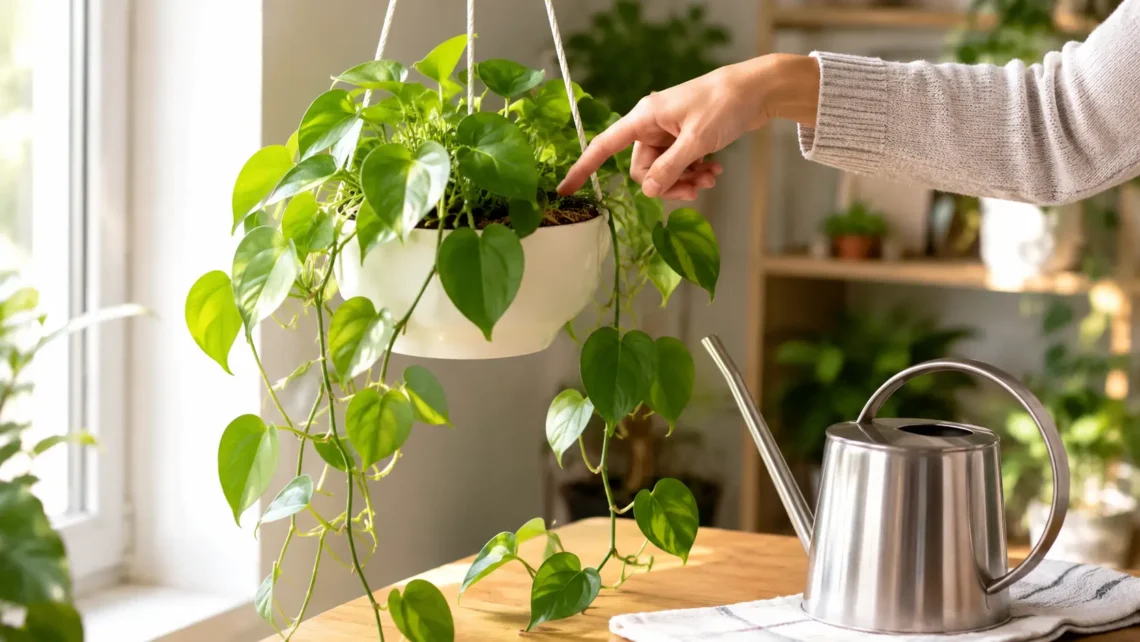
According to Greenery Inside, heartleaf philodendrons should be watered every 7 to 9 days, once the top 1 to 2 inches of soil feel dry to the touch. Water thoroughly until it drains from the pot’s bottom, then empty the saucer. Reduce frequency to every 10 to 14 days during fall and winter.
Yellowing leaves signal overwatering, while drooping or crisping edges mean the plant needed water sooner than it got it. Terracotta pots dry out faster than plastic or ceramic, and higher indoor humidity or brighter indirect light both speed up how quickly the soil dries between waterings.
Heartleaf philodendron (Philodendron hederaceum), also known as philodendron scandens or philodendron cordatum, is a tropical climbing plant in the Araceae family. For additional botanical information and classification, see Wikipedia’s Philodendron hederaceum article.
Quick Summary
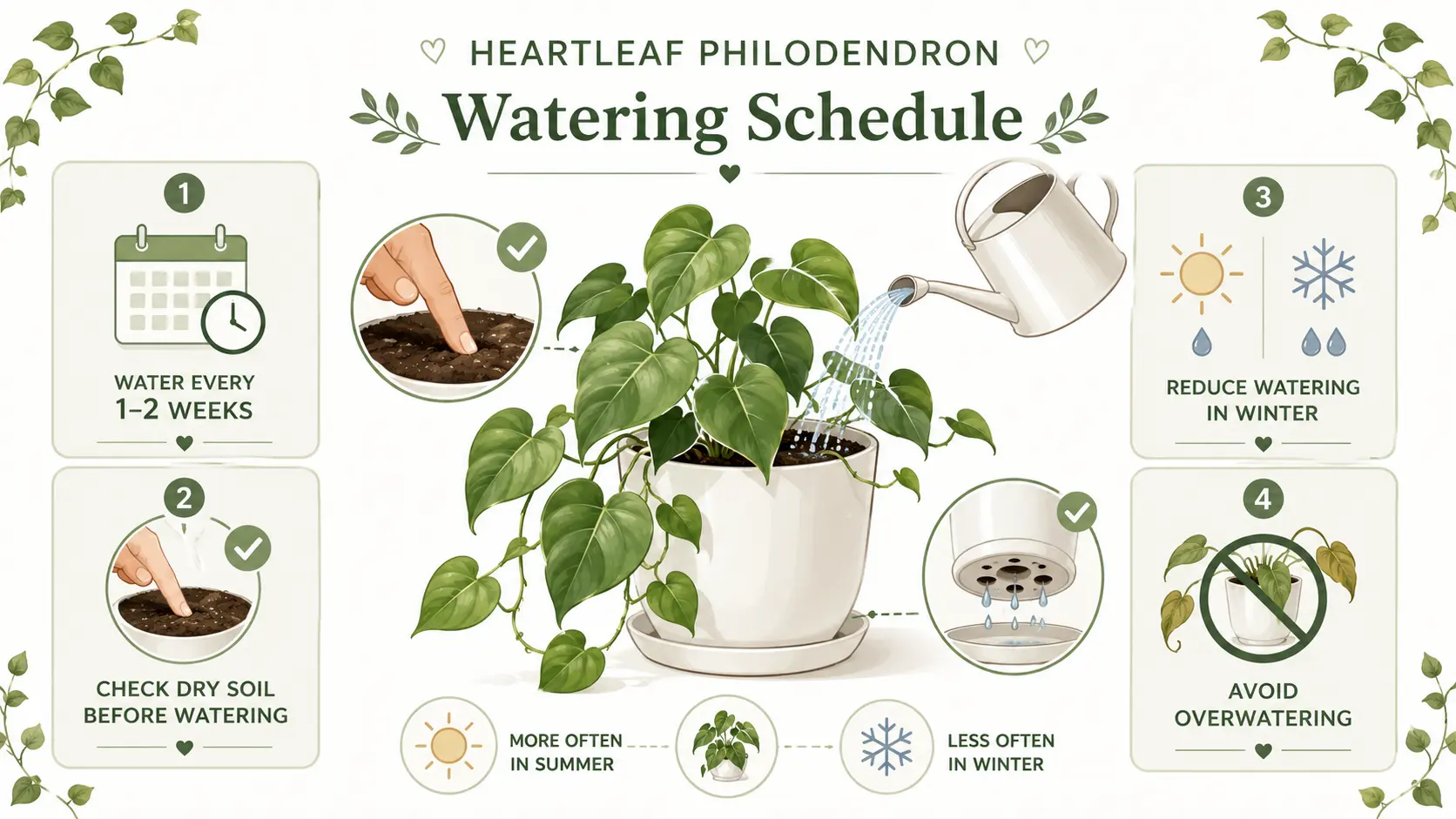
- Water heartleaf philodendron every 1–2 weeks, only after the top 1–2 inches of soil have dried.
- Water less often during winter and more frequently during summer or in bright indirect light.
- Overwatering is the leading cause of yellow leaves and root rot.
- Always test the soil with your finger instead of relying on a fixed watering schedule.
How Often Should You Water Heartleaf Philodendron?
A heartleaf philodendron should generally be watered every 1–2 weeks, but only after the top layer of soil has dried. This watering method allows oxygen to reach the roots while preventing excess moisture that can lead to root rot.
If you enjoy caring for trailing houseplants, many of the same watering principles also apply to Swedish Ivy Plant Care: Light, Watering, Soil & Growth Guide, especially allowing the soil to partially dry before watering again.
Several factors affect watering frequency, including:
- Brightness of the growing location
- Indoor temperature
- Humidity levels
- Pot size
- Soil drainage
- Seasonal growth
Greenery Inside recommends treating the soil as your watering guide rather than the calendar. During periods of active growth, the plant may need water sooner, while cooler months naturally slow moisture use.
How to Tell If a Philodendron Needs Water
Instead of watering automatically, look for these reliable signs:
- Topsoil is dry: Insert your finger 1–2 inches into the soil. If it feels dry, it’s time to water.
- Leaves begin to droop: Mild drooping often signals thirst before permanent damage occurs.
- The pot feels lighter: Dry soil weighs much less than moist soil.
- Leaves start curling slightly: Curling can indicate the plant is conserving moisture.
Using several of these signs together provides a more accurate indication than relying on a schedule alone.
Do Philodendrons Like to Dry Out Between Waterings?
Yes. Heartleaf philodendrons prefer the soil to dry partially between waterings.
Their roots naturally require both moisture and oxygen. Constantly wet soil reduces airflow around the roots, increasing the risk of fungal diseases and root rot. However, allowing the entire pot to become completely dry for long periods can stress the plant and slow growth.
The ideal balance is evenly moist soil followed by a short drying period before watering again.
Watering Frequency by Season
Heartleaf philodendrons use water at different rates throughout the year because light intensity, temperature, and growth naturally change with the seasons.
Watering in Winter
Winter usually requires less frequent watering because growth slows under shorter daylight hours.
During winter:
- Water every 2–3 weeks if the soil remains moist.
- Always confirm the soil is dry before watering.
- Avoid leaving excess water in saucers.
Indoor heating can dry the air, but reduced light generally has a greater effect on slowing water consumption.
Watering in Summer
Summer brings warmer temperatures and stronger light, encouraging active growth.
During summer:
- Check soil every few days.
- Water approximately every 7–10 days, depending on conditions.
- Monitor hanging baskets closely because they dry more quickly.
As of the 2026 growing season, many experienced indoor growers continue to recommend soil-moisture testing over calendar watering, especially during heat waves.
Watering Indoors vs Other Conditions
Indoor conditions vary widely depending on your home.
Plants placed near bright windows often dry faster than those in darker rooms. Air conditioners and heating systems can also reduce humidity, increasing evaporation from the soil.
In our experience, heartleaf philodendrons growing near east-facing windows generally require more frequent watering than identical plants kept in shaded corners. Instead of increasing watering automatically, monitor soil moisture more often when indoor conditions change.
How Much Water Does a Heartleaf Philodendron Need?
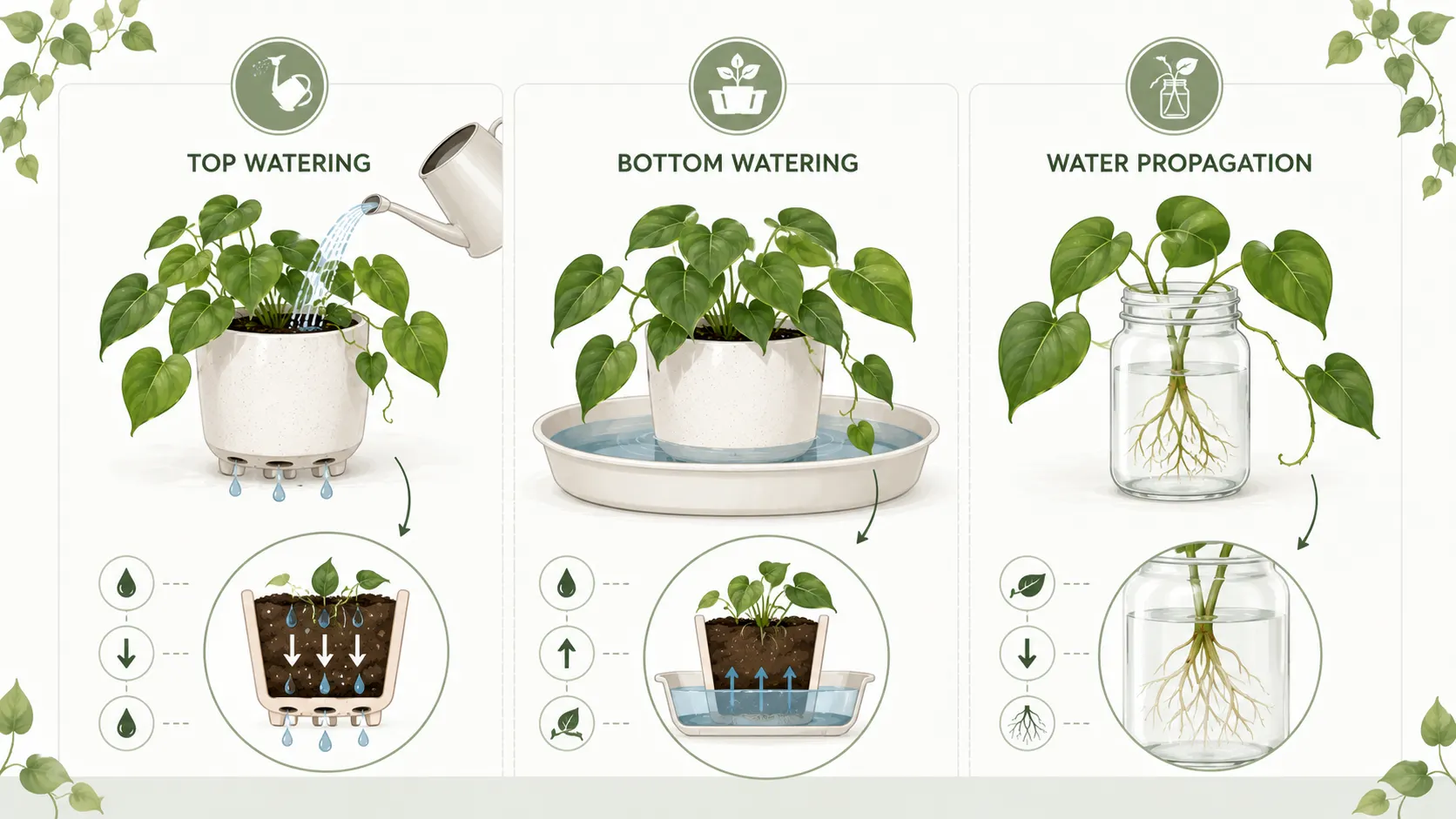
Heartleaf philodendrons need enough water to thoroughly moisten the entire root ball. Water slowly until moisture flows from the drainage holes, then discard any excess water collected in the saucer.
Avoid giving only small amounts of water because shallow watering encourages weak surface roots.
Watering Method Comparison
| Method | How It Works | Best For |
| Top watering | Pour water until it drains from the bottom | Most home setups |
| Bottom watering | Place the pot in shallow water until soil absorbs moisture | Even moisture distribution |
| Water propagation | Grow roots directly in water | Cuttings and propagation |
Should I Bottom Water My Philodendron?
Bottom watering can provide even moisture throughout the soil and helps reduce dry pockets in potting mix.
Its advantages include:
- Even hydration
- Less disturbance to the soil
- Reduced surface fungus gnats in some situations
However, it can be harder to judge whether the soil has become fully saturated. Occasional top watering also helps flush accumulated fertilizer salts from the potting mix.
Can Heartleaf Philodendron Grow in Water?
Yes. Heartleaf philodendron cuttings root readily in water and can even grow long-term in water with proper care.
Plants grown permanently in water require:
- Regular water changes
- Liquid nutrients designed for hydroponic growth
- Clean containers to reduce algae and bacteria
Water-grown roots differ from soil roots, so plants may need time to adjust if transferred between the two growing methods.
How Often Should I Mist Heartleaf Philodendron?
Misting can temporarily increase humidity around the leaves, but it does not replace watering.
While occasional misting may benefit plants in very dry homes, proper root watering remains essential. If humidity is consistently low, using a humidifier is generally more effective than frequent misting.
If your home has consistently dry air, our guide on How to Increase Humidity for Plants Naturally and with Humidifiers explains several effective ways to create a healthier indoor growing environment.
Factors That Affect Watering Needs
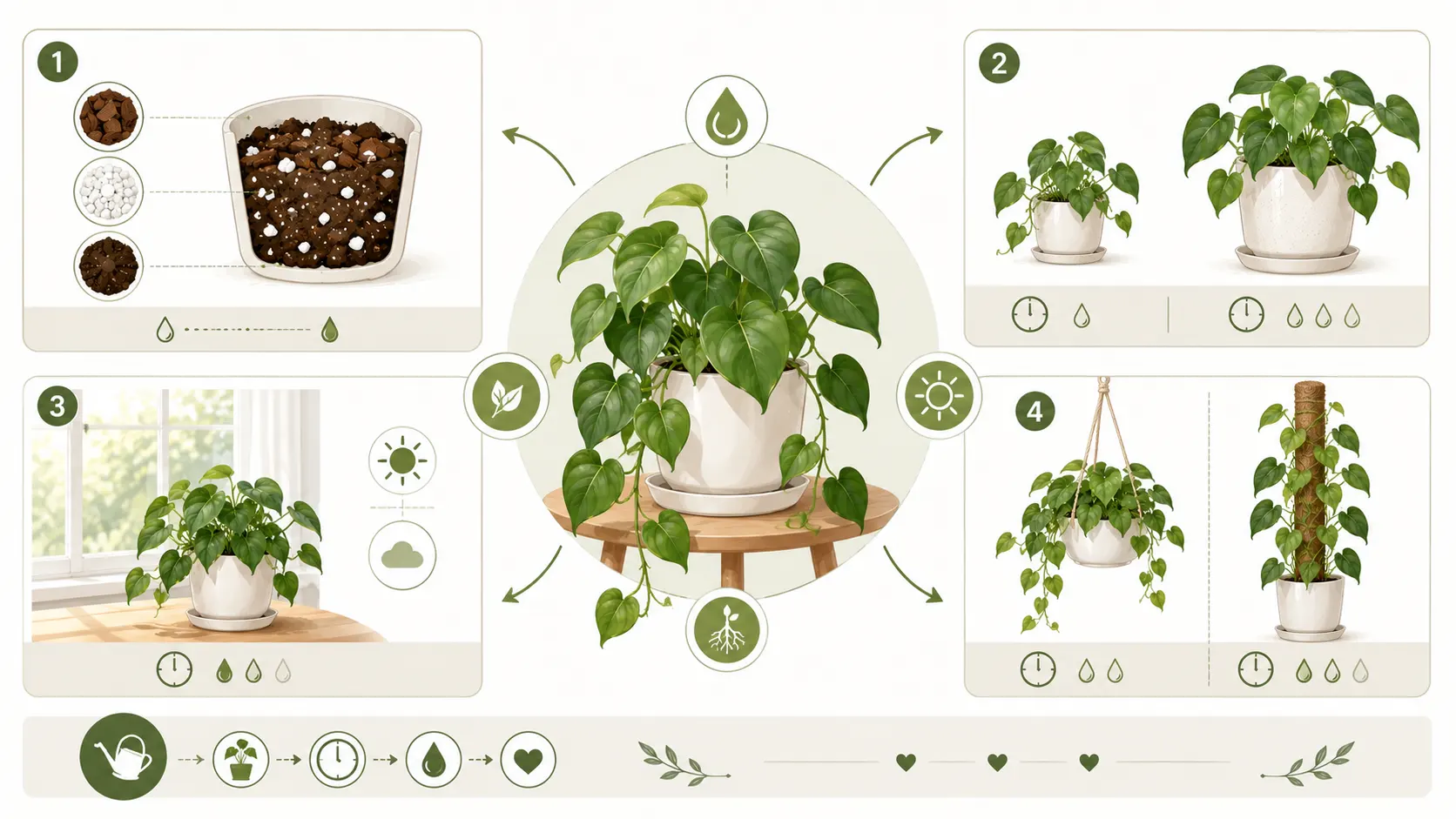
No two heartleaf philodendrons require exactly the same watering schedule. Growing conditions significantly influence how quickly the soil dries.
Best Soil for Heartleaf Philodendron
A well-draining aroid mix provides the ideal balance of moisture retention and airflow.
A suitable mix often contains:
- High-quality potting soil
- Perlite
- Orchid bark
- Coco coir or peat moss
This combination prevents waterlogging while supplying enough moisture for healthy root growth.
Pot Size — Big or Small?
Pot size directly affects watering frequency.
- Small pots dry out quickly and usually need more frequent watering.
- Large pots retain moisture longer, increasing the risk of overwatering if watered too often.
Choose a pot only slightly larger than the existing root ball to maintain healthy moisture levels.
Light Requirements and Watering
Heartleaf philodendrons grow best in bright indirect light.
Plants receiving brighter light grow faster and use more water. Those kept in low-light conditions consume moisture more slowly and require less frequent watering.
Similar lighting and watering practices are recommended for other philodendron species, as explained in our Dwarf Xanadu Care Guide: Indoor & Outdoor Philodendron Tips.
Where you place your heartleaf philodendron therefore influences both its growth rate and watering schedule.
Hanging vs Climbing Philodendron
Heartleaf philodendrons naturally produce long vines that can either trail from hanging baskets or climb moss poles and supports.
Although the growth habit changes the plant’s appearance, it has little effect on watering frequency. Hanging baskets may dry slightly faster because they have greater airflow, but watering should still be based on soil dryness rather than whether the plant is climbing or trailing.
Signs of Overwatering vs Underwatering
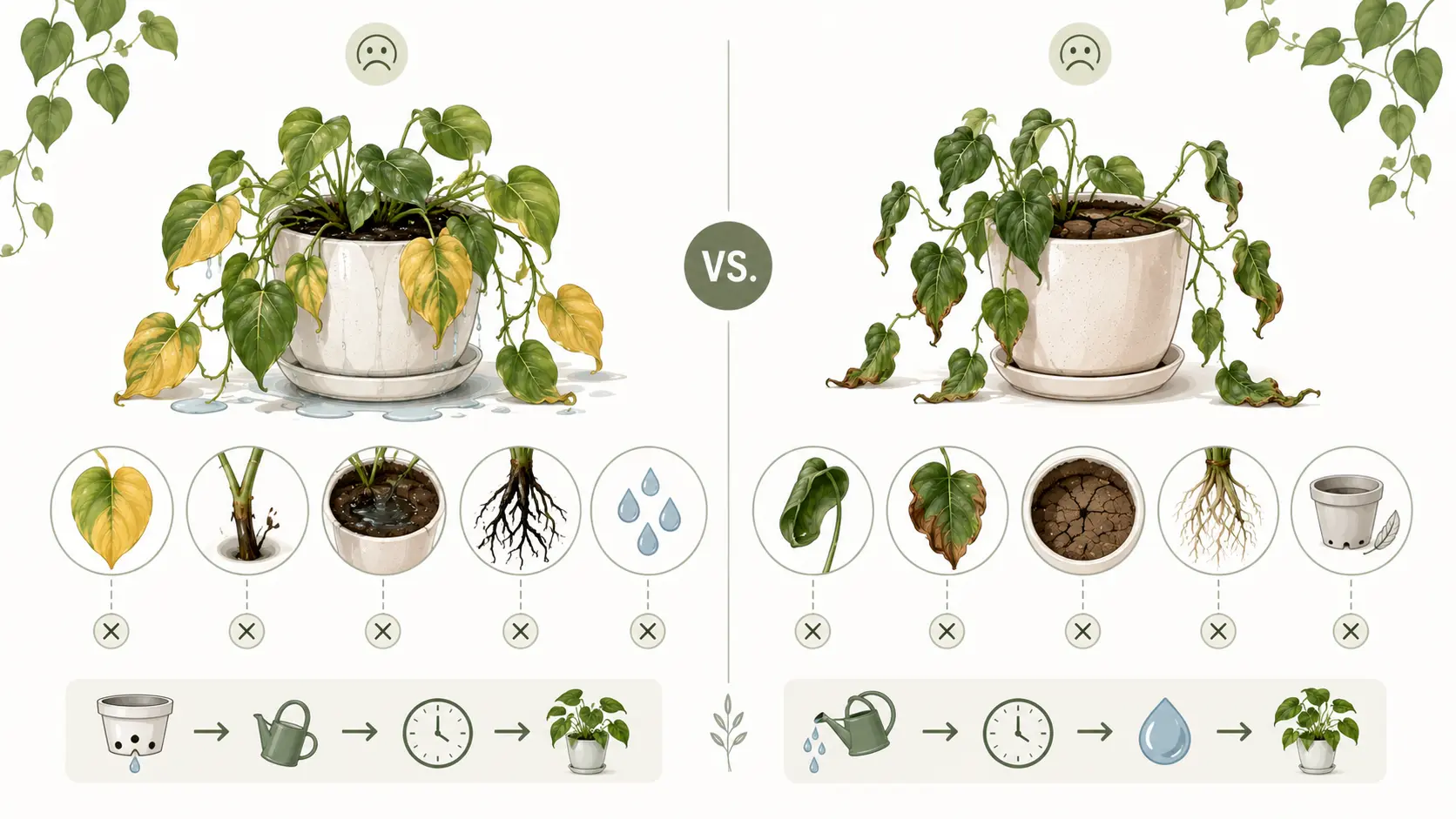
Overwatering and underwatering can produce similar symptoms at first, but the condition of the soil and stems usually reveals the real cause. Overwatering is far more common because heartleaf philodendrons tolerate short dry periods better than constantly wet roots.
Overwatered vs Underwatered Philodendron
| Symptom | Overwatered | Underwatered |
| Leaf color | Yellow, soft, mushy | Dry, crispy brown edges |
| Soil | Constantly wet | Bone dry, pulling away from pot |
| Stems | Soft or black with rot | Wrinkled or shriveled |
| Smell | Sour or rotten odor | No unusual smell |
What Does an Overwatered Philodendron Look Like?
An overwatered heartleaf philodendron typically develops yellow leaves, soft stems, and consistently soggy soil. As root rot progresses, the roots turn brown or black and become mushy, preventing the plant from absorbing water efficiently.
If overwatering is suspected:
- Stop watering until the soil partially dries.
- Remove damaged roots if root rot is present.
- Repot into fresh, well-draining soil if necessary.
- Ensure the pot has adequate drainage holes.
Common Heartleaf Problems and Fixes
| Problem | Why It Happens | How to Fix | How to Prevent |
| Yellow leaves | Overwatering or poor drainage | Reduce watering and improve drainage | Check soil before watering |
| Slow growth | Low light or nutrient deficiency | Move to brighter indirect light and fertilize during active growth | Maintain proper lighting and seasonal feeding |
| Spider mites or mealybugs | Dry indoor air or plant stress | Wipe leaves and use insecticidal soap if needed | Inspect foliage regularly and keep plants healthy |
Greenery Inside has found that most indoor problems are solved by correcting watering habits before replacing the plant or applying unnecessary treatments.
Growth Rate and Fullness
Healthy watering practices contribute directly to vigorous vines and dense foliage.
Heart Leaf Philodendron Growth Rate
Heartleaf philodendron is considered a moderate-to-fast growing houseplant.
During spring and summer, healthy vines can produce several new leaves each month under bright indirect light. Growth naturally slows during autumn and winter because of reduced daylight.
Proper watering, quality soil, and balanced fertilization encourage consistent growth throughout the active season.
How Do You Make a Heartleaf Philodendron Fuller?
To create a fuller plant:
- Prune long vines just above a node.
- Root healthy cuttings and plant them back into the original pot.
- Provide bright indirect light.
- Water consistently without overwatering.
- Feed monthly during spring and summer with a balanced houseplant fertilizer.
In our experience growing Philodendron hederaceum, regularly reinserting rooted cuttings is one of the easiest ways to produce a bushier appearance.
Propagating Heartleaf Philodendron (Related to Watering)
Propagation is simple because heartleaf philodendron roots readily from stem cuttings, especially in water.
How to Propagate Heartleaf Philodendron
Follow these steps:
- Select a healthy vine.
- Cut below a node.
- Remove the lowest leaf.
- Place the node in clean water or moist potting mix.
- Change the water weekly if propagating in water.
- Transplant once roots are 2–3 inches (5–7 cm) long.
Keep the cutting in bright indirect light while roots develop.
Where to Cut Heart Leaf Philodendron
Always cut just below a node, where leaves and aerial roots emerge.
A node contains the growing tissue needed to produce new roots. Stem pieces without a node will not develop into new plants.
Is Heartleaf Philodendron Toxic to Cats?
Yes. Heartleaf philodendron is toxic to both cats and dogs because it contains insoluble calcium oxalate crystals.
If chewed, these crystals can cause:
- Mouth irritation
- Excessive drooling
- Pawing at the mouth
- Difficulty swallowing
- Vomiting in some cases
Keep the plant out of reach of pets and contact a veterinarian promptly if ingestion is suspected.
Beginner Mistakes and Care Tips
Many care issues result from a few common mistakes rather than difficult growing conditions.
Avoid these beginner errors:
- Watering on a fixed schedule: Always check soil moisture first.
- Using pots without drainage: Excess water trapped around roots encourages root rot.
- Keeping plants in low light while watering heavily: Less light means slower water use.
- Ignoring seasonal changes: Reduce watering during winter and increase monitoring during active summer growth.
Greenery Inside recommends observing your plant weekly instead of watering automatically. Small adjustments based on the environment usually produce healthier plants than following rigid care calendars.
What Is the “Holy Grail” of Philodendrons?
The phrase “Holy Grail” philodendron does not refer to the heartleaf philodendron. Instead, it commonly describes rare and highly sought-after cultivars, particularly Philodendron Pink Princess and other uncommon variegated varieties.
These collector plants differ from Philodendron hederaceum in appearance, rarity, and price, but they generally prefer similar care principles, including well-draining soil, bright indirect light, and careful watering that allows partial drying between waterings.
Conclusion
Knowing how often to water heartleaf philodendron is less about following a calendar and more about understanding the plant’s environment. Most plants thrive when watered every 1–2 weeks, after the top 1–2 inches of soil have dried. Seasonal changes, light levels, pot size, and soil type all influence how quickly moisture is used. Overwatering remains the most common cause of problems, so allowing partial drying between waterings is essential for healthy roots. By combining proper watering with well-draining soil and bright indirect light, your heartleaf philodendron can remain vigorous, lush, and attractive for many years.
To learn more about watering, lighting, propagation, and everyday maintenance, explore our complete Guide to House Plants, which covers essential care techniques for a wide variety of indoor plants.
Frequently Asked Questions
How often should I water my heartleaf philodendron?
Most heartleaf philodendrons need watering every 1–2 weeks, but always check that the top 1–2 inches of soil are dry before watering.
How much water does a heartleaf philodendron need each time?
Water thoroughly until excess water drains from the bottom of the pot, then empty the saucer to prevent standing water around the roots.
Can heartleaf philodendron grow permanently in water?
Yes. It can grow long-term in water if the water is changed regularly and appropriate liquid nutrients are supplied.
What does an overwatered heartleaf philodendron look like?
Common signs include yellow leaves, soft or mushy stems, soggy soil, and black or rotting roots with a foul smell.
Are heartleaf philodendrons toxic to cats?
Yes. Heartleaf philodendrons contain calcium oxalate crystals that can irritate the mouth and digestive system if chewed by cats or dogs. Keep the plant out of reach of pets.