Introduction
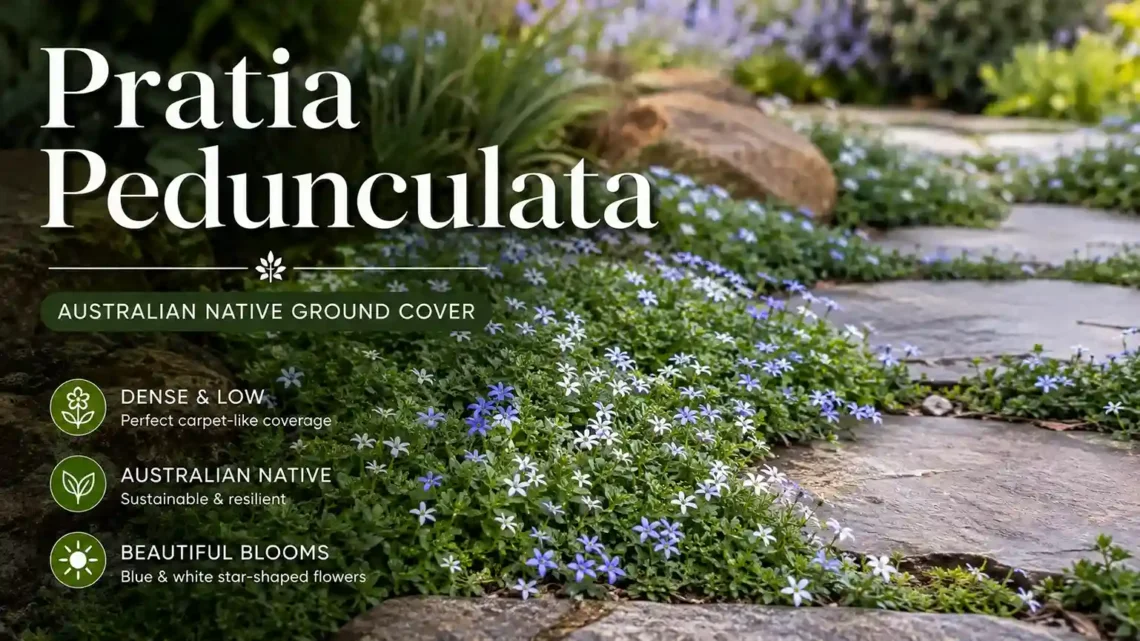
Pratia pedunculata is a low-growing, mat-forming perennial native to southeastern Australia. It is also botanically known as Lobelia pedunculata, the accepted scientific name under modern plant taxonomy. Commonly called blue star creeper, white star creeper, trailing pratia, matted pratia, or simply star creeper, this versatile plant is valued for its dense ground-covering habit. Gardeners use it as a lawn alternative, between pavers, and as a filler around stepping stones and garden beds. This guide explains how to identify pratia pedunculata, understand its varieties, evaluate its size and growth habits, provide proper care, and successfully grow it from seed in different climates.
Quick Summary
- Pratia pedunculata is a low-growing Australian native ground cover in the Campanulaceae family and is also classified as Lobelia pedunculata.
- It typically grows 2–5 cm tall and spreads through creeping stolons to form a dense carpet-like mat.
- The plant produces star-shaped flowers that are blue or purple in standard forms and white in the ‘Alba’ cultivar.
- It is frost-tolerant and well-suited to temperate climates, including the UK and New Zealand.
- Common uses include lawn replacement, planting between pavers, and ornamental ground cover displays.
What Is Pratia Pedunculata?
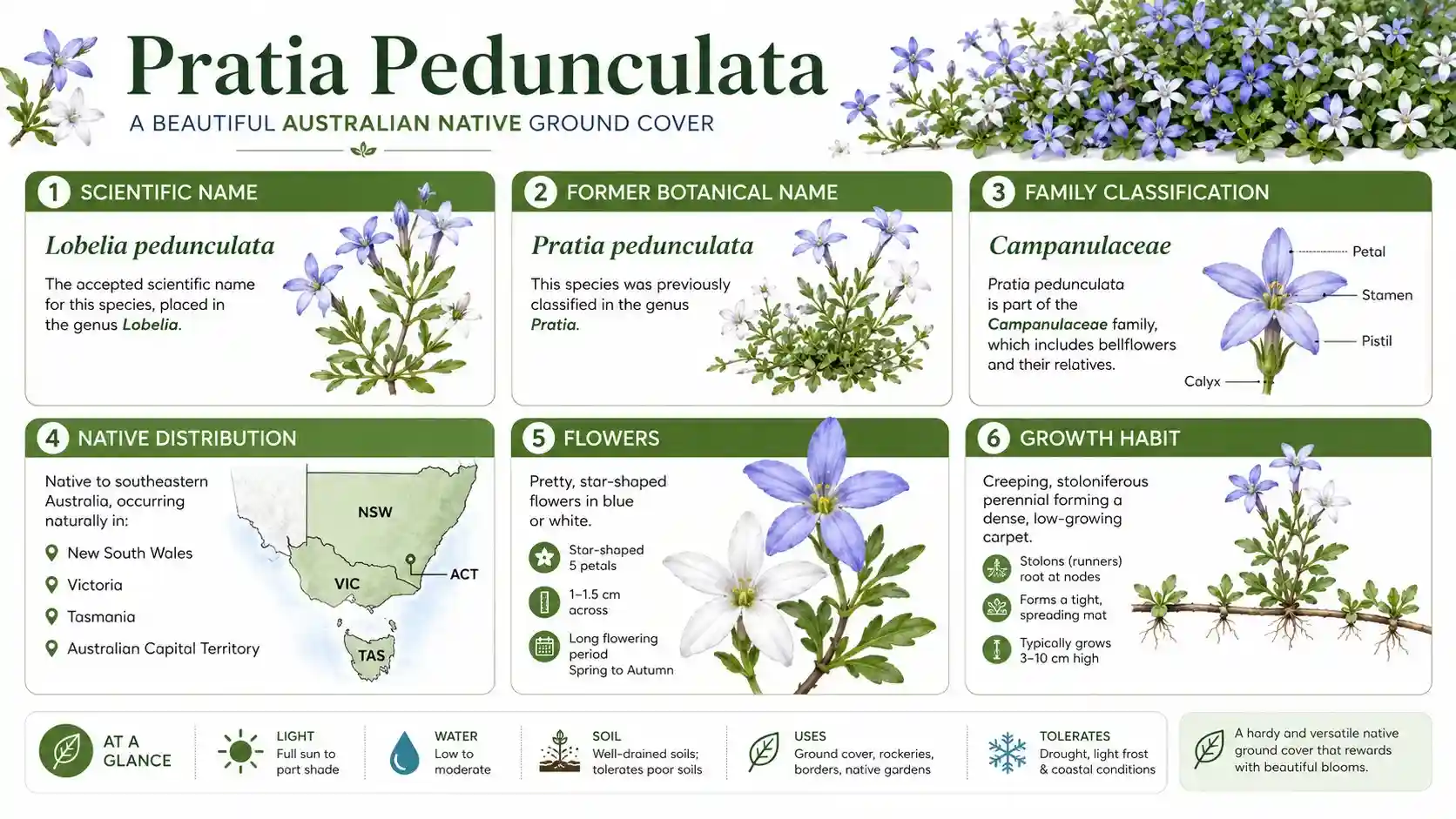
Pratia pedunculata is a perennial creeping ground cover known for its compact growth, attractive flowers, and ability to spread across soil surfaces. It is widely used in ornamental landscapes where a dense, low-growing plant is required.
Botanical Classification and Plant Family
Pratia pedunculata belongs to the Campanulaceae family, commonly known as the bellflower family. Historically, it was placed within the Lobeliaceae family, but modern classification systems group it within Campanulaceae.
Botanical revisions have largely merged the genus Pratia into Lobelia. As a result, Lobelia pedunculata is now considered the accepted scientific name. However, both names remain common in horticulture, plant catalogs, and nursery trade listings.
Common Names — Why It Has So Many
Pratia pedunculata is known by several common names:
- Blue star creeper
- White star creeper
- Trailing pratia
- Matted pratia
- Star creeper
These names often vary according to flower color and regional gardening traditions. Blue-flowering forms are typically called blue star creeper, while white-flowering cultivars are commonly marketed as white star creeper.
Is Pratia Pedunculata Native to Australia?
Yes, pratia pedunculata is native to southeastern Australia.
Its natural range includes:
- New South Wales
- Victoria
- Tasmania
- Australian Capital Territory
It naturally grows in moist grasslands, stream margins, woodland edges, and montane environments. It is sometimes confused with Isotoma fluviatilis, another Australian ground cover that is also sold under the name blue star creeper. Pratia pedunculata is often included in naturalistic landscapes alongside other species featured in our Australian Native Garden Trees guide, helping create cohesive Australian native garden designs.
Pratia Pedunculata Varieties and Cultivars
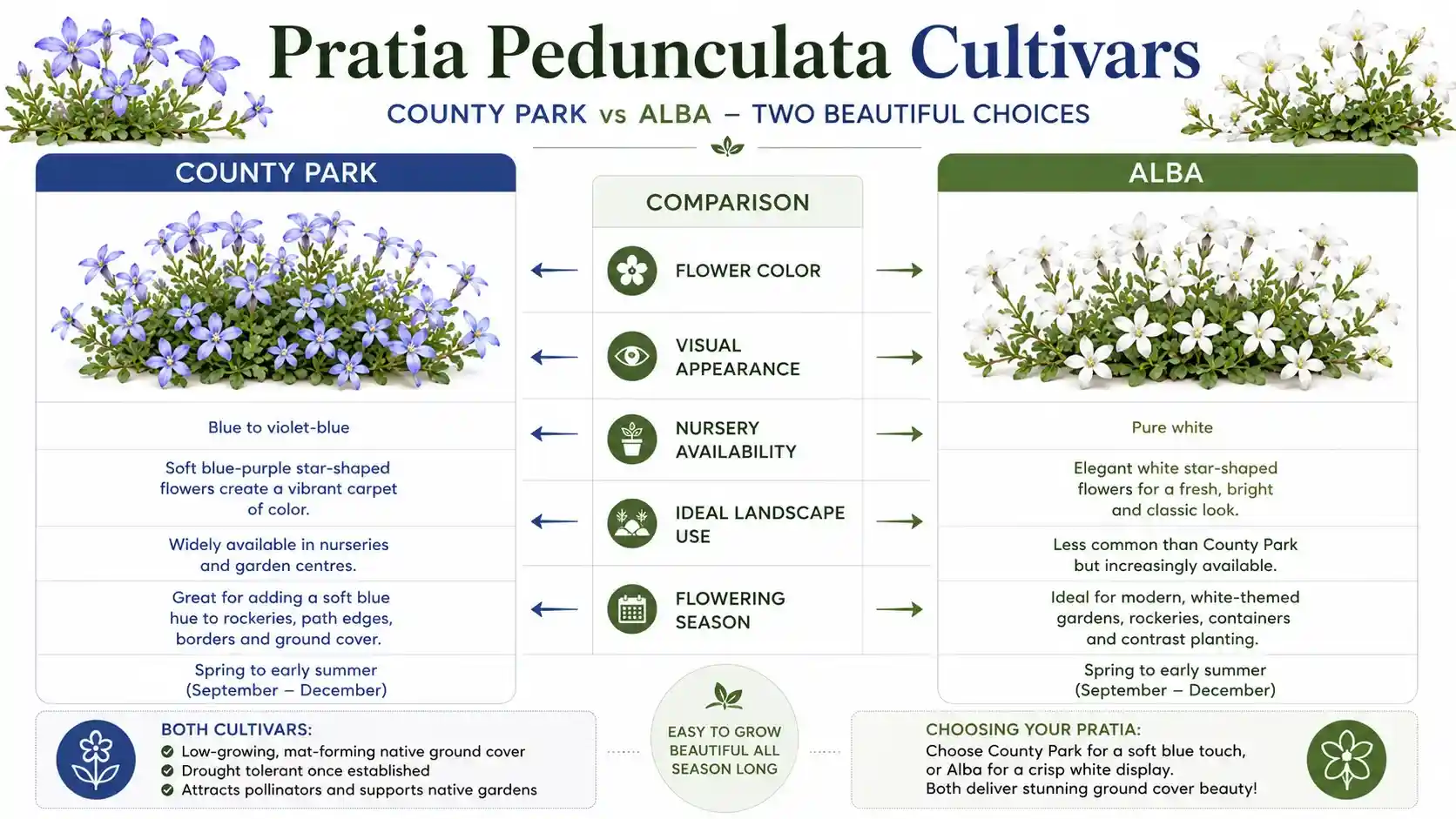
Several cultivars are available, primarily distinguished by flower color and growth characteristics.
Pratia Pedunculata ‘Alba’ — The White-Flowered Form
‘Alba’ is a white-flowering cultivar featuring pure white star-shaped blooms.
In botanical naming, “alba” means white, making it a common cultivar designation for white-flowered plants.
Key features include:
- Bright white flowers
- Dense creeping growth
- Attractive contrast against green foliage
- Suitable for shaded gardens and stone pathways
Pratia Pedunculata ‘County Park’ — The Blue Cultivar
‘County Park’ is a popular blue-flowering cultivar.
Characteristics include:
- Deep blue to purple-blue flowers
- Compact spreading habit
- Strong ornamental value
- Common availability in UK nurseries
Many plants sold as blue star creeper are actually the ‘County Park’ cultivar.
Blue Star Creeper vs White Star Creeper — Comparison Table
| Feature | Blue Star Creeper | White Star Creeper (Alba) |
| Flower colour | Blue / purple-blue | Pure white |
| Named cultivar | ‘County Park’ | ‘Alba’ |
| Visual mood | Cool, naturalistic | Clean, bright contrast |
| Common in | UK, AU, NZ nurseries | Specialty nurseries |
| Best use | Meadow-style ground cover | Stone gardens, shaded paths |
| Flowering season | Spring–Summer | Spring–Summer |
Plant Size and Growth Habit
How Tall Does Pratia Pedunculata Grow?
Pratia pedunculata remains extremely low-growing, typically reaching only 2–5 cm in height.
Its spread can extend 60–100 cm or more under favorable conditions. Because it grows nearly flat against the ground, it works exceptionally well beneath taller plants and as a lawn substitute.
Factors influencing size include:
- Soil fertility
- Moisture levels
- Light exposure
- Climate conditions
Growth Rate and Spreading Behaviour
Pratia pedunculata has a moderate to fast growth rate once established.
It spreads through creeping stolons that root at nodes and gradually form dense mats.
Growth is usually most active during:
- Spring
- Autumn
Growth may slow during extreme summer heat or very cold winter periods.
Using Pratia Pedunculata as a Ground Cover
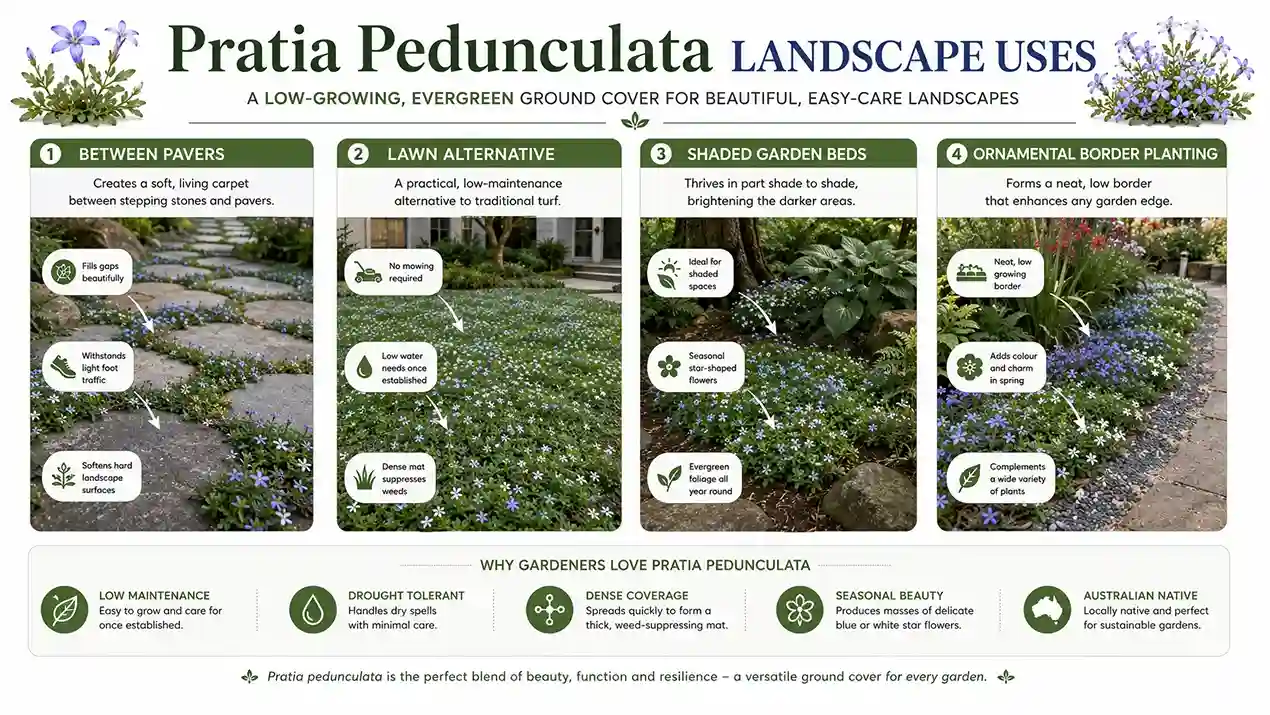
Pratia Between Pavers and Stepping Stones
Pratia naturally grows into gaps between pavers and stepping stones.
Benefits include:
- Softens hard landscaping
- Creates a natural appearance
- Requires little edging
- Produces seasonal flowers
Compared with native violet (Viola hederacea), pratia often flowers more heavily while providing similar ground coverage. For larger areas requiring rapid coverage, Creeping Myoporum is another popular ground cover that complements pratia in coastal and low-maintenance landscapes.
Pratia as a Lawn Alternative
Pratia can be used as a flowering lawn substitute in suitable locations.
Benefits include:
- No mowing required
- Seasonal flowers
- Lower maintenance than turf grass
- Moderate moisture tolerance
- Performs well in partial shade
It is best suited to areas with light foot traffic rather than heavily used lawns. Gardeners exploring lawn-free landscapes may also appreciate Carpet of Stars, another low-growing ground cover often used as a turf replacement in low-maintenance gardens.
Homeowners comparing lawn substitutes may also want to evaluate a Korean Grass Lawn, which provides a traditional turf appearance while remaining relatively low maintenance.
Ground Cover with White or Blue Flowers — Ornamental Value
Unlike many ground covers that remain purely green, pratia adds visual interest through its flowers.
It combines well with:
- Ferns
- Shade perennials
- Native shrubs
- Woodland garden plantings
Flowering usually occurs from spring into early summer, with additional flushes possible in favorable conditions. Gardeners designing shade gardens may find inspiration from other shade-tolerant native plants commonly used in woodland-style landscapes. The delicate flowers and spreading habit of pratia also make it a useful addition to traditional cottage garden planting schemes.
Pratia Pedunculata Care Guide
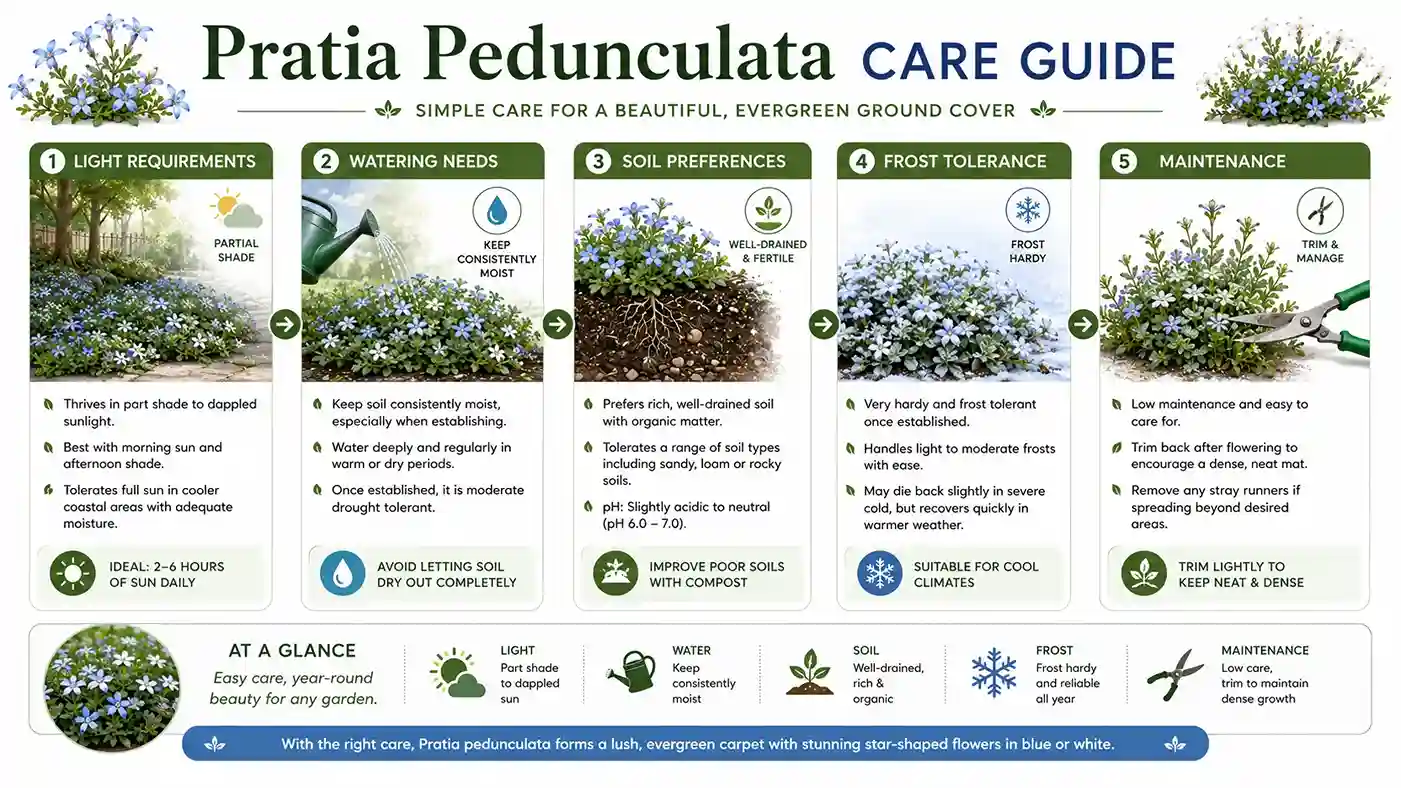
Light Requirements
Pratia prefers:
- Partial shade
- Full shade
- Morning sun with afternoon protection
It performs particularly well beneath trees and in sheltered garden beds. Because pratia performs best in partial shade, it pairs well with many other shade tolerant flowers that thrive in low-light garden settings.
Watering Needs
Pratia thrives in consistently moist soil.
Important watering guidelines include:
- Avoid prolonged drought
- Maintain even moisture
- Prevent waterlogging
- Reduce watering in cool seasons
Soil Preferences
The ideal soil is:
- Well-drained
- Rich in organic matter
- Slightly acidic to neutral
Heavy clay soils benefit from compost and drainage improvements before planting. If your garden contains heavy clay, these strategies for improving clay soil for lawns can also help create better growing conditions for pratia.
Frost Tolerance — How Cold Can Pratia Pedunculata Handle?
Pratia pedunculata is frost hardy and can tolerate temperatures down to approximately –10°C (14°F).
In severe winters:
- Foliage may die back
- Root systems usually survive
- Spring regrowth is common
This frost tolerance contributes to its popularity in the UK and New Zealand.
Pruning and Maintenance
Maintenance requirements are minimal.
Tasks include:
- Trimming excessive spread
- Dividing congested patches
- Removing winter-damaged foliage
Growing Pratia Pedunculata from Seeds
Pratia pedunculata can be grown from seed, although propagation is generally slower than division.
Seed-growing guidelines:
- Surface sow seeds
- Do not cover with soil
- Use moist seed-raising mix
- Maintain temperatures between 15–20°C
- Provide light for germination
Germination generally occurs within 2–6 weeks.
Division and rooted stolon sections are usually faster and more reliable methods, particularly when maintaining cultivar characteristics.
Growing Pratia Pedunculata in the UK and New Zealand
The UK climate is generally suitable for pratia pedunculata due to its frost tolerance.
UK considerations:
- Choose sheltered sites in colder northern regions
- ‘County Park’ is commonly available
- Slightly increased sunlight can improve flowering
In New Zealand:
- Performs well throughout temperate regions
- Thrives in both North and South Island climates
- Monitor spread near sensitive native ecosystems
In both countries, moisture-retentive soil and partial shade provide the best results.
Common Problems, Mistakes, and Troubleshooting
Invasive Spreading — When Pratia Gets Out of Control
Excessive spread is usually caused by ideal growing conditions.
Control methods include:
- Installing barriers
- Trimming edges regularly
- Monitoring nearby planting areas
While not generally classified as invasive in Australia, it can become weedy in garden borders.
Poor Flowering — Why Is My Pratia Not Blooming?
Common causes include:
- Excessive shade
- Dry soil
- Too much nitrogen fertilizer
Solutions include increasing light levels, maintaining moisture, and using balanced fertilizers.
Leaf Yellowing and Dieback
Potential causes:
- Waterlogged soil
- Root rot
- Slug damage
- Severe frost
Improving drainage and monitoring pests can prevent most issues.
Beginner Mistakes When Planting Pratia
Common mistakes include:
- Planting in full sun without irrigation
- Ignoring future spread
- Using poorly drained clay soil
- Expecting rapid growth in dry locations
How Pratia Pedunculata Compares to Similar Ground Covers
| Feature | Pratia Pedunculata | Isotoma Fluviatilis | Native Violet (Viola hederacea) |
| Flower colour | Blue, purple, or white | Pale blue | Purple/white bicolour |
| Height | 2–5 cm | 2–5 cm | 5–10 cm |
| Native to AU | Yes | Yes | Yes |
| Between pavers | Excellent | Good | Good |
| Foot traffic | Light only | Light only | Light only |
| Shade tolerance | High | Moderate | High |
| Frost tolerance | High | Moderate | Moderate–High |
Pratia pedunculata stands out because of its frost tolerance, dense mat formation, and availability in both blue and white flowering forms. Another option for covering exposed soil is Rock Cotoneaster, although it offers a shrub-like structure rather than the carpet-forming growth of pratia. Gardeners seeking alternative flowering ground covers may also compare pratia with Carmel Creeper, a widely used spreading plant valued for its blue blooms.
Conclusion
Pratia pedunculata is a versatile, low-maintenance Australian native ground cover valued for both its practical and ornamental qualities. Its dense spreading habit makes it ideal for filling gaps between pavers, replacing traditional lawns, and covering bare soil. The plant’s blue and white flowering cultivars add seasonal color while remaining easy to maintain. Strong frost tolerance further expands its usefulness in temperate climates such as the UK and New Zealand. Gardeners seeking a durable flowering ground cover can choose ‘County Park’ for blue blooms or ‘Alba’ for white flowers, depending on their landscape design preferences.
FAQs
Q1: What is pratia pedunculata commonly known as?
Pratia pedunculata is commonly known as blue star creeper, white star creeper, trailing pratia, matted pratia, and star creeper. Names vary according to flower color and regional usage.
Q2: Is pratia pedunculata native to Australia?
Yes. Pratia pedunculata is native to southeastern Australia, including New South Wales, Victoria, Tasmania, and the ACT.
Q3: What is the difference between pratia pedunculata blue and white varieties?
The primary difference is flower color. ‘County Park’ produces blue-purple flowers, while ‘Alba’ produces pure white flowers. Growth habits are generally similar.
Q4: Can pratia pedunculata grow in the UK or New Zealand?
Yes. Its frost tolerance and adaptability make it suitable for most temperate regions of the UK and New Zealand.
Q5: How do you grow pratia pedunculata from seeds?
Surface sow seeds on moist seed-starting mix, keep them exposed to light, and maintain temperatures between 15–20°C. Germination usually takes 2–6 weeks.
Q6: Does pratia pedunculata spread aggressively?
It can spread vigorously through stolons in moist, shaded conditions. Regular trimming and edge management help control its growth.
Q7: Is pratia pedunculata the same as Lobelia pedunculata?
Yes. Lobelia pedunculata is the accepted scientific name, while Pratia pedunculata remains widely used in horticulture and nursery trade.