Introduction
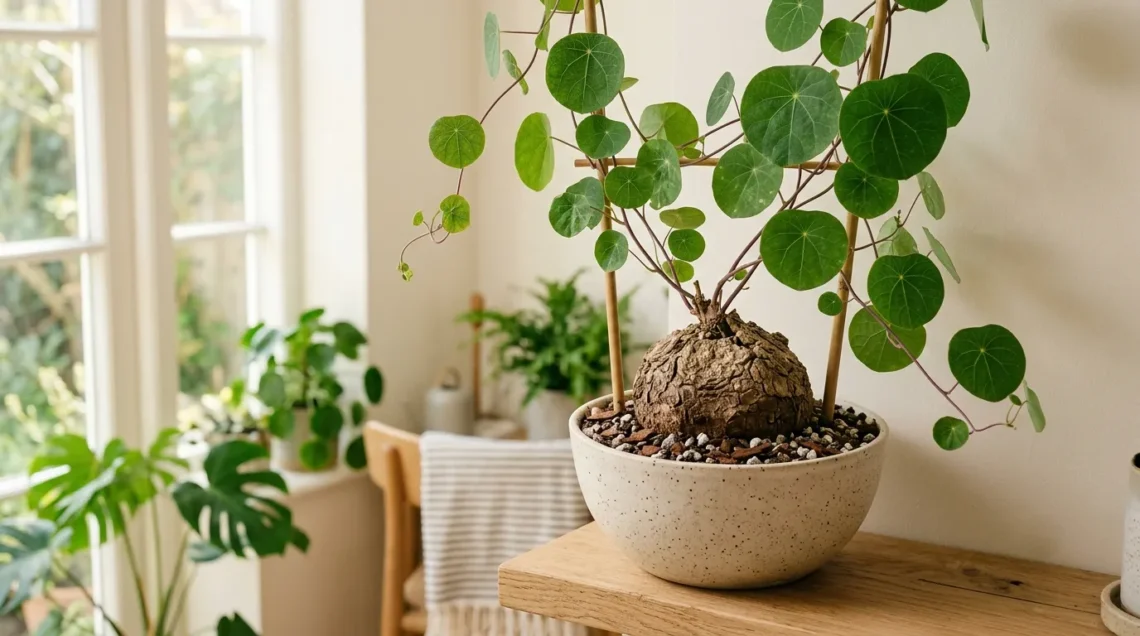
Stephania cepharantha is a caudex-forming perennial vine in the Menispermaceae family, closely related to Stephania erecta and valued by collectors for its distinctive swollen base rather than its flowers or foliage alone. A caudex, also called a caudiciform structure, is a thickened stem or trunk that stores water and nutrients, helping the plant survive dry periods. You may also see the botanical name Stephania cepharantha Hayata, which refers to the formal scientific classification of the species. While its care closely resembles that of Stephania erecta, understanding its seasonal growth cycle and dormancy is essential for long-term success as an indoor plant.
Stephania cepharantha is an excellent choice for collectors interested in unusual caudex plants and makes a fascinating addition to any indoor collection. If you’re building an indoor plant collection, our Guide to House Plants covers the essentials for choosing and caring for different species.
Quick Summary
- Stephania cepharantha is an uncommon caudex-forming vine from Southeast Asia, grown mainly for its rounded, woody caudex.
- It is closely related to—and often confused with—Stephania erecta and Stephania pierrei.
- It grows best in bright indirect light, well-draining soil, and requires minimal watering during dormancy.
- The plant contains the naturally occurring alkaloid cepharanthine, which is researched in pharmaceutical settings, but the plant itself is grown strictly as an ornamental houseplant and should not be consumed.
What Is Stephania Cepharantha?
Stephania cepharantha is a perennial climbing vine that develops from a swollen underground or partially exposed caudex, making it one of the most recognizable ornamental plants in the Stephania genus. Botanically classified within the Menispermaceae family, it naturally grows in parts of East and Southeast Asia, where warm temperatures and seasonal rainfall shape its annual growth cycle.
For readers interested in the botanical background and classification of the genus, the Stephania Wikipedia page provides a useful overview of its taxonomy and distribution.
The botanical designation Stephania cepharantha Hayata honors the taxonomist who formally described the species. Within the broader Stephania genus, it belongs to a group of caudiciform plants admired for their sculptural appearance and seasonal vines.
Other well-known members of this genus include:
- Stephania erecta
- Stephania pierrei
- Stephania suberosa
- Stephania nova
Although these species share many characteristics, they differ in leaf texture, stem color, growth habits, and regional distribution.
Unlike many ornamental houseplants that are primarily grown for colorful blooms, Stephania cepharantha is prized for its rounded, woody caudex that resembles a small potato or jicama. During its active growing season, slender vines emerge from the caudex and produce nearly circular green leaves that create a delicate, minimalist appearance.
In our experience growing caudiciform plants, the caudex becomes increasingly attractive with age. Older specimens often develop more character, making them especially desirable among collectors.
Common Names for Stephania Cepharantha
Unlike many ornamental plants, Stephania cepharantha does not have a widely recognized common name. Most nurseries, botanical collections, and specialty growers simply sell it under its scientific name.
Some collectors may describe it using general terms such as:
- Caudex plant
- Caudiciform vine
- Stephania caudex plant
- Potato caudex plant
This differs from Stephania erecta, which is occasionally—but somewhat inaccurately—marketed under common names such as cinnamon vine in parts of the horticultural trade. Because multiple unrelated plants share similar common names, using the botanical name helps avoid confusion.
For collectors and gardeners, referring to the plant as Stephania cepharantha remains the most accurate and universally accepted approach.
Stephania Cepharantha vs. Stephania Erecta
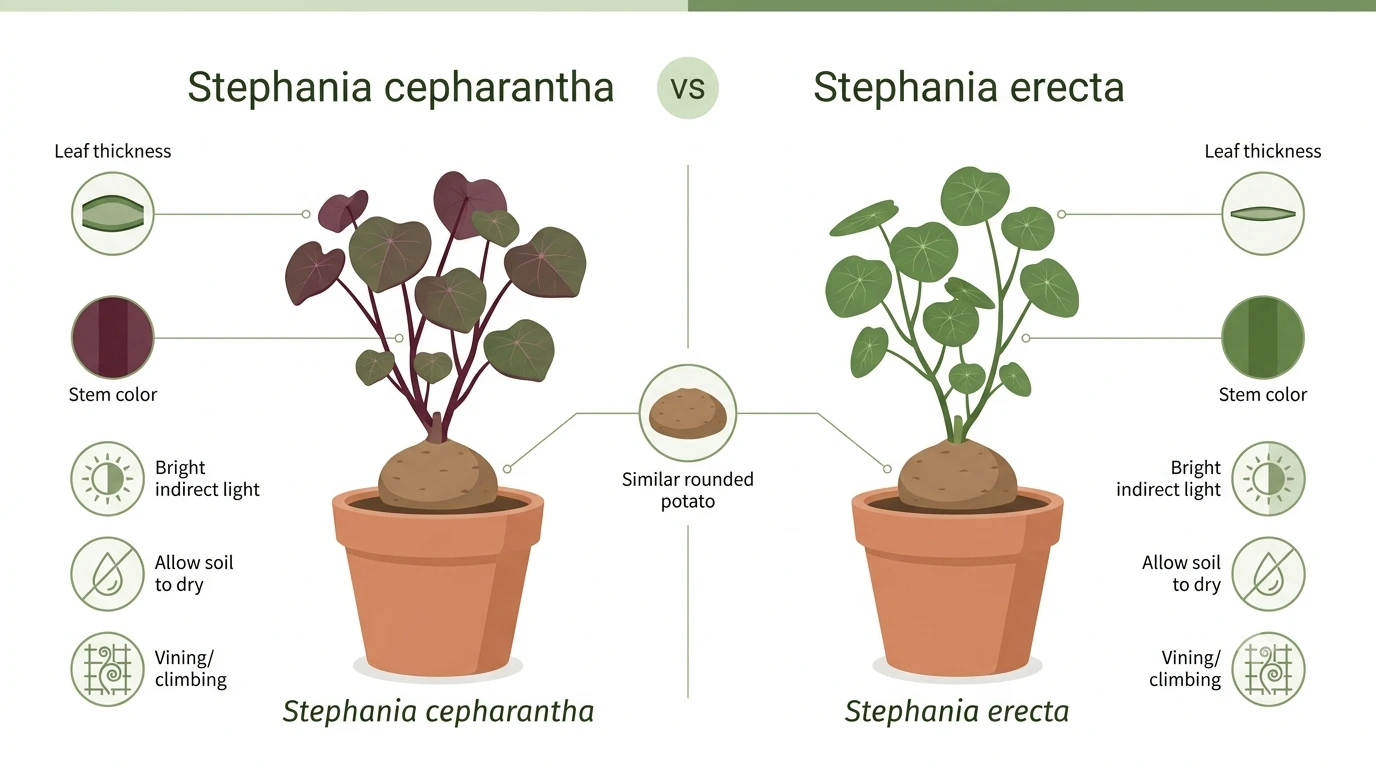
Because these two species belong to the same genus, Stephania cepharantha and Stephania erecta are frequently mistaken for one another. Their overall care requirements are almost identical, but several subtle botanical differences can help distinguish them.
| Feature | Stephania Cepharantha | Stephania Erecta |
| Stem color | Often develops deep red or purple stems under bright light | Typically green stems |
| Leaf thickness | Leaves are generally thicker and slightly firmer | Leaves are thinner and more delicate |
| Caudex shape | Rounded, potato-like caudex | Rounded, potato or jicama-like caudex |
| Care requirements | Functionally almost identical | Functionally almost identical |
Both species produce climbing vines from a dormant caudex and benefit from the same general care practices, including:
- Bright, indirect sunlight
- Fast-draining soil
- Careful watering
- Warm temperatures
- Seasonal dormancy
Greenery Inside recommends focusing less on the species name and more on maintaining the correct growing conditions. Whether you own a caudex Stephania cepharantha or a caudex Stephania erecta, avoiding excessive watering during dormancy has a much greater impact on plant health than the small botanical differences between the two.
Is Stephania Cepharantha Rare?
Yes, Stephania cepharantha is generally considered a rare houseplant in cultivation, although it is not necessarily botanically rare in its native habitat. Its limited availability is primarily the result of slow propagation, seasonal growth, and relatively small commercial production rather than extreme scarcity in nature.
Over the past several years, interest in caudex plants has increased significantly among collectors. Social media, specialty plant communities, and botanical enthusiasts have helped introduce more people to unusual species such as Stephania cepharantha, Stephania erecta, and Stephania pierrei. As demand has grown faster than supply, the plant has become harder to find through mainstream garden centers.
Several factors contribute to its reputation as a rare plant:
- It grows slowly compared to many common houseplants.
- Commercial propagation takes time.
- Most plants are sold through specialty growers rather than large retailers.
- Dormant caudexes are only available during certain parts of the year.
- Mature specimens require years of cultivation.
Among the various Stephania plant types, some remain more common in cultivation than others. Stephania erecta is generally the easiest to purchase internationally, while Stephania cepharantha, Stephania suberosa, and Stephania nova are often produced in smaller quantities.
As of the current growing season, collectors continue to report improved availability through specialist nurseries, but healthy, mature specimens still command higher prices because of their age and slow growth.
In our experience, patience is often rewarded when purchasing this species. Choosing a healthy dormant caudex from a reputable nursery usually results in better long-term success than purchasing an inexpensive specimen of uncertain origin.
Is Stephania Cepharantha Safe?
Stephania cepharantha should be treated as a non-edible ornamental houseplant. While the species contains naturally occurring bioactive compounds, including the alkaloid cepharanthine, these substances are extracted and purified under controlled pharmaceutical conditions for scientific research. The plant itself should never be consumed or used for home medicinal purposes.
Cepharanthine has attracted research interest because of its potential biological properties. However, these studies involve purified compounds produced through specialized laboratory and pharmaceutical processes—not leaves, stems, or the caudex from ornamental plants grown at home.
For everyday plant care, it is safest to follow standard precautions:
- Keep the plant out of reach of small children.
- Prevent pets from chewing the leaves or caudex.
- Wash your hands after pruning or repotting.
- Never consume any part of the plant.
- Dispose of damaged plant material responsibly.
Like many ornamental houseplants, Stephania cepharantha is best appreciated for its unique appearance rather than any medicinal association.
Greenery Inside recommends treating every caudex plant as decorative unless reliable scientific and medical authorities specifically advise otherwise. This approach provides the safest environment for both your family and your plants.
How to Care for Stephania Cepharantha
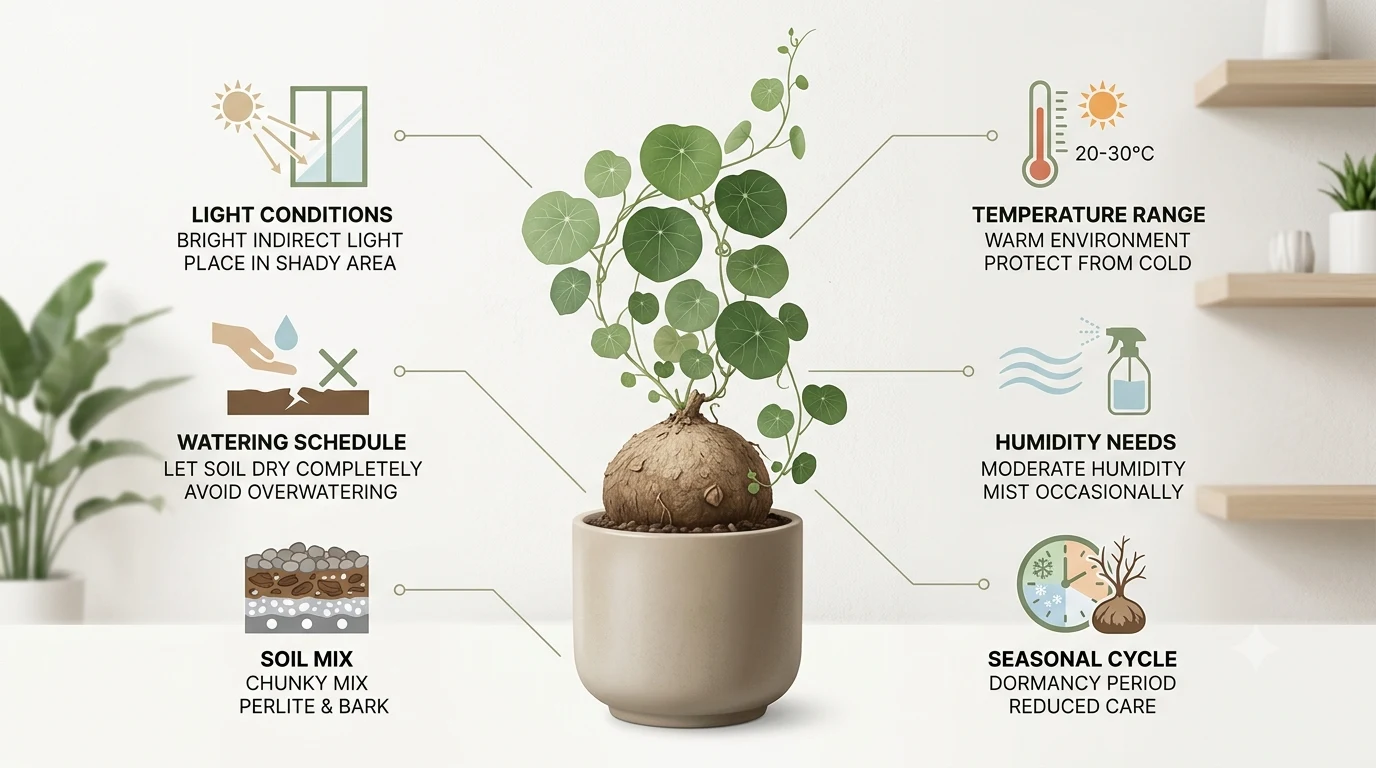
Stephania cepharantha grows best when its care mimics its natural seasonal cycle. Provide bright indirect light, a fast-draining soil mix, warm temperatures, and careful watering. The plant stores moisture in its caudex, so allowing the soil to dry between waterings is essential for preventing rot.
Although this species is considered relatively easy to maintain, most growing problems occur when its dormancy period is ignored. During active growth, the vine appreciates consistent warmth and moderate moisture. During dormancy, watering should be reduced significantly until new growth appears.
In our experience growing caudiciform plants, respecting the plant’s natural rhythm is far more important than following a fixed watering schedule. Growth can vary depending on temperature, light, and the age of the caudex.
Light Requirements
Stephania cepharantha prefers bright, indirect light rather than prolonged direct sun. An east-facing window is often ideal because it provides gentle morning sunlight without exposing the plant to the intense afternoon heat that can stress foliage.
Suitable lighting conditions include:
- Bright filtered sunlight
- East-facing windows
- Bright rooms with sheer curtains
- Supplemental full-spectrum grow lights during darker months
Too little light can result in:
- Weak, elongated vines
- Smaller leaves
- Slower seasonal growth
Excessive direct sunlight may lead to:
- Leaf scorch
- Faster soil drying
- Increased stress during hot weather
One interesting characteristic of Stephania cepharantha is that stems may develop a deeper reddish or purple tint when grown under brighter conditions. This natural coloration is generally not a sign of poor health unless accompanied by leaf burn.
As of the current growing season, many indoor growers successfully supplement natural light with LED grow lights during winter to maintain healthier vines in low-light climates.
Watering Needs
Water Stephania cepharantha only after the growing medium has dried thoroughly. The caudex acts as a water reservoir, allowing the plant to tolerate periods of dryness much better than excessive moisture.
During active growth:
- Water deeply.
- Allow excess water to drain completely.
- Wait until the soil becomes dry before watering again.
During dormancy:
- Water very sparingly.
- In some situations, no watering may be necessary for several weeks.
- Resume regular watering only after new shoots emerge.
The frequency depends on several environmental factors, including:
| Growing Condition | Watering Frequency |
| Warm summer growth | Moderate, only after soil dries |
| Cool indoor conditions | Less frequent |
| Winter dormancy | Minimal watering |
| High humidity | Reduced frequency |
Common signs of overwatering include:
- Yellowing leaves
- Soft caudex tissue
- Mushy roots
- Fungal problems
Signs the plant may need water include:
- Completely dry growing medium
- Slight softening of the caudex (not collapse)
- Active vines beginning to wilt
Greenery Inside recommends checking soil moisture with your finger or a moisture meter instead of watering on a fixed calendar. This simple habit greatly reduces the risk of root rot.
Soil and Potting
A highly draining substrate is essential for healthy root development. Heavy, moisture-retentive potting soils increase the likelihood of fungal diseases and caudex rot.
A suitable growing mix often includes:
- High-quality cactus or succulent soil
- Pumice
- Perlite
- Coarse horticultural sand
- Orchid bark or similar chunky material
This combination provides:
- Excellent drainage
- Improved aeration
- Reduced water retention
- Healthier root growth
Choose a container with:
- Large drainage holes
- A breathable material such as terracotta (optional but beneficial)
- Enough room for root development without excessive unused soil
One of the most important planting practices is leaving part of the caudex exposed above the soil surface. Burying the entire caudex increases moisture exposure and raises the risk of rot.
When repotting, handle the caudex gently because new roots can be surprisingly fragile during active growth.
Caudex and Bulb Care
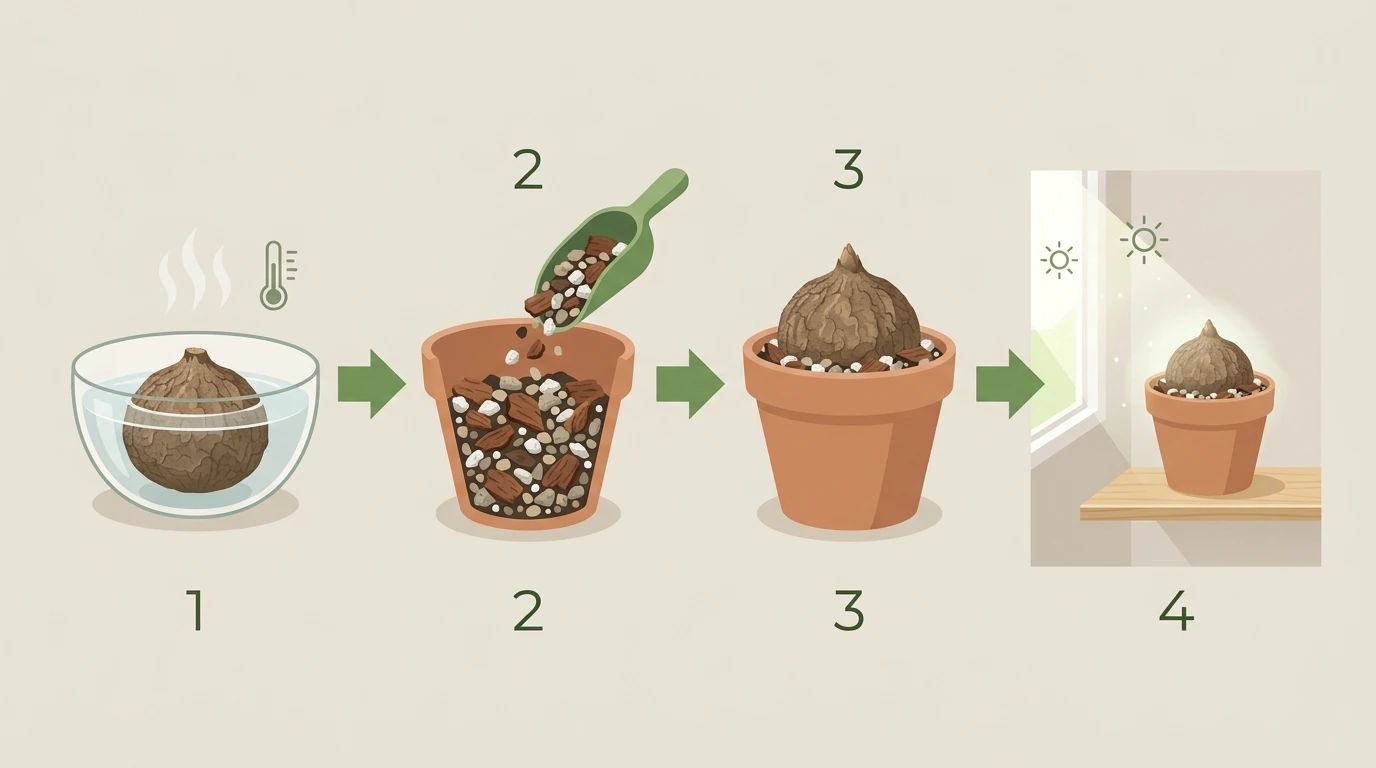
The swollen structure commonly referred to as the Stephania cepharantha bulb is actually a caudex, not a true botanical bulb. This woody storage organ allows the plant to survive seasonal drought by storing water and nutrients.
Dormant caudexes are commonly sold without vines or leaves. Before planting, they should be prepared carefully to encourage healthy sprouting.
Follow these basic steps:
- Use a well-draining, chunky soil mix.
- Expose one-third to one-half of the caudex above the soil surface.
- Soak the dormant caudex in lukewarm water before planting.
- Position the apical bud facing upward.
After planting:
- Place the pot in a warm, bright location.
- Avoid excessive watering before growth begins.
- Wait patiently, as sprouting may take several weeks.
Many new growers mistakenly believe the caudex has died if no vine appears immediately. In reality, dormant specimens often require extended periods before producing their first shoot.
In our experience, maintaining consistent warmth between approximately 21–29°C (70–85°F) usually produces faster and more reliable sprouting than increasing watering.
Can Stephania Cepharantha Be Grown Indoors?
Yes. Stephania cepharantha is primarily grown as an indoor plant outside tropical and subtropical climates. Its compact growth habit and unusual caudex make it especially suitable for windowsills, shelves, and indoor plant collections.
Like many tropical houseplants, Stephania cepharantha appreciates stable indoor conditions with bright indirect light. If you enjoy growing rare foliage plants, our Philodendron Gloriosum Care Guide for Healthy Growth explains similar indoor lighting and humidity principles.
For successful indoor cultivation, provide:
- Bright indirect light
- Warm temperatures throughout the growing season
- Moderate humidity
- Excellent airflow
- Fast-draining soil
Indoor growers should avoid placing the plant near:
- Cold drafts
- Air-conditioning vents
- Heating vents
- Frost-prone windows during winter
Humidity around 40–60% is generally sufficient for healthy growth. In very dry homes, occasional use of a humidifier can improve leaf quality and reduce stress.
Outside tropical climates, Stephania cepharantha is best treated as a seasonal indoor plant. It should be protected from frost because freezing temperatures can permanently damage both the caudex and developing roots.
If your home has consistently dry air, increasing humidity can improve overall plant health. Learn practical methods in our guide on How to Increase Humidity for Plants Naturally and with Humidifiers.
How Fast Does Stephania Cepharantha Grow?
Stephania cepharantha is a slow-growing perennial with a distinct seasonal growth cycle. Much of its annual development occurs during warm months, while growth slows dramatically—or stops completely—during dormancy.
Growth speed depends on:
- Caudex size
- Plant age
- Temperature
- Light intensity
- Root health
- Water management
Young plants typically produce:
- Shorter vines
- Smaller leaves
- Slower overall development
Older caudexes often produce:
- Longer vines
- Larger foliage
- More vigorous seasonal growth
Even under excellent conditions, it may take several years for the caudex to develop the mature, sculptural appearance prized by collectors.
One of the most common mistakes beginners make is assuming slow growth indicates poor health. In many cases, the plant is simply following its natural dormancy cycle rather than experiencing a care problem.
Is Stephania Cepharantha a Succulent?
No. Stephania cepharantha is not a true succulent, although it shares some similar survival strategies.
Succulents store water primarily in fleshy leaves, stems, or roots. Stephania cepharantha instead stores water within its enlarged woody caudex, making it a caudiciform plant rather than a succulent.
The differences are important:
| Characteristic | Stephania Cepharantha | Typical Succulent |
| Plant type | Caudiciform vine | Succulent |
| Water storage | Woody caudex | Fleshy leaves or stems |
| Growth habit | Seasonal climbing vine | Usually compact |
| Dormancy | Pronounced seasonal dormancy | Varies by species |
Although its watering schedule resembles that of many succulents, its botanical classification remains different.
Understanding this distinction helps growers provide more appropriate seasonal care, especially during dormancy when watering requirements decrease significantly.
How to Propagate Stephania Cepharantha
Stephania cepharantha is propagated primarily by seeds or through division when appropriate. Because the plant grows slowly, propagation requires patience regardless of the chosen method.
Commercial growers often rely on seed production because mature caudexes develop gradually over several growing seasons.
Growing From Seed
Growing Stephania from seed is possible but requires warm, consistently moist conditions during germination.
For the best results:
- Use fresh seeds whenever possible.
- Sow in a sterile, well-draining seed-starting mix.
- Maintain warm temperatures.
- Keep the medium lightly moist, never saturated.
- Provide bright, indirect light after germination.
Seedlings develop slowly and may take several years before producing a noticeable caudex.
Planting the Caudex/Bulb
Most hobbyists begin with a dormant caudex rather than seeds.
To plant successfully:
- Choose a pot with excellent drainage.
- Fill it with a chunky, fast-draining substrate.
- Place the caudex with the apical bud facing upward.
- Leave approximately one-third to one-half exposed.
- Water lightly after planting.
- Keep the pot warm and bright while waiting for new growth.
Avoid burying the entire caudex or watering heavily before active growth begins. These two mistakes are among the leading causes of failure when establishing newly purchased plants.
Common Problems With Stephania Cepharantha
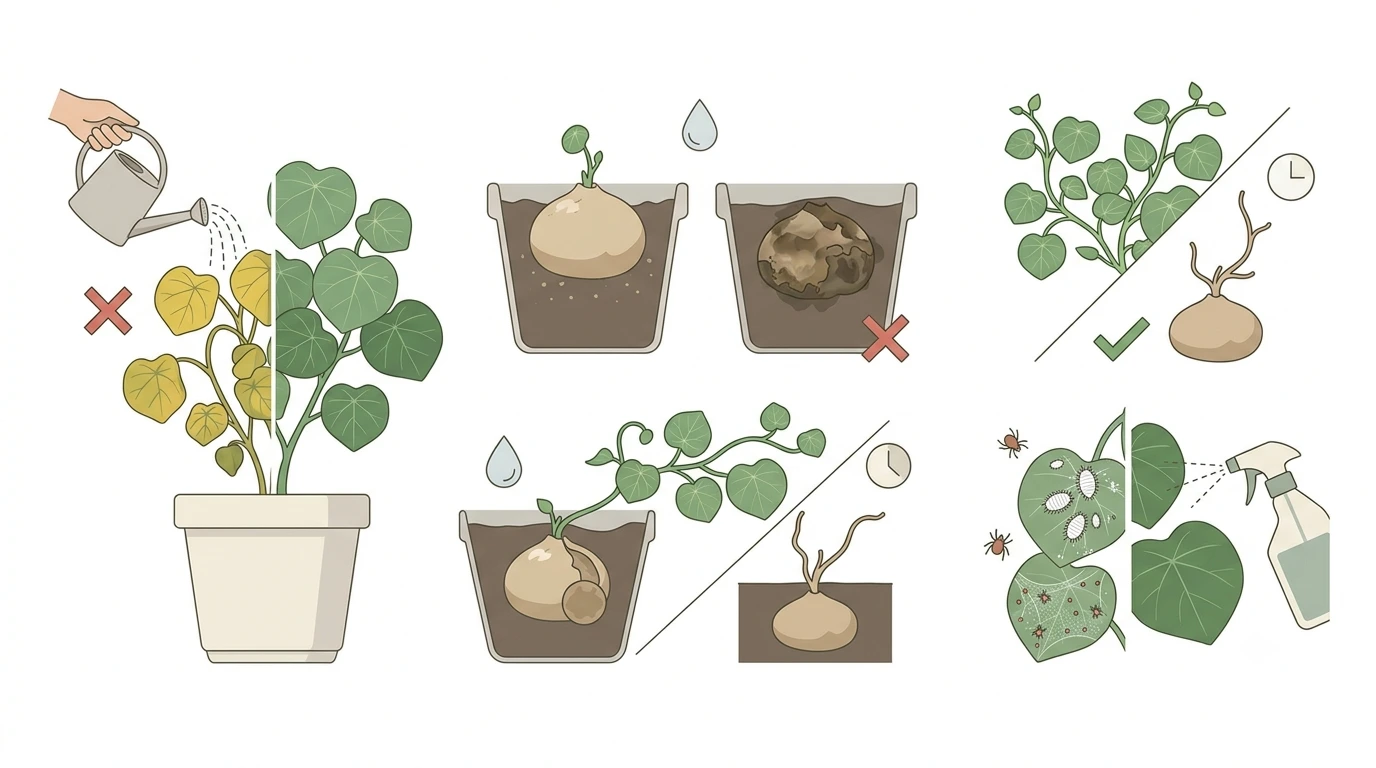
Most problems with Stephania cepharantha are related to watering, dormancy, or indoor growing conditions rather than disease. Learning to distinguish between normal seasonal dormancy and genuine health issues helps prevent unnecessary watering, repotting, or fertilizing.
Yellowing Leaves
Yellow leaves are most commonly caused by overwatering or poor drainage, although seasonal dormancy can also cause older leaves to yellow naturally before they drop.
Possible causes include:
- Soil remaining wet for extended periods
- Poorly draining potting mix
- Pot without adequate drainage holes
- Natural seasonal dormancy
How to fix it:
- Allow the soil to dry completely before watering again.
- Improve drainage with a chunkier soil mix.
- Reduce watering if the plant is entering dormancy.
- Remove only fully yellow leaves.
Caudex Rot
Caudex rot is one of the most serious problems affecting Stephania cepharantha. It typically develops when the swollen caudex stays in constant contact with wet soil or when watering is excessive.
Signs include:
- Soft or mushy caudex tissue
- Dark discoloration
- Unpleasant odor
- Collapse of healthy growth
Prevention tips:
- Keep one-third to one-half of the caudex above the soil surface.
- Use a fast-draining substrate.
- Never allow water to sit around the base of the caudex.
- Water only when the growing medium is dry.
In our experience, prevention is much easier than treatment. Once extensive rot develops, recovery can be difficult.
Slow or No Growth
Slow growth does not always indicate a problem. Stephania cepharantha naturally enters dormancy, during which vines may die back and growth temporarily stops.
Normal dormancy signs include:
- Leaf drop
- No new vines
- Firm, healthy caudex
- Dry resting period
Potential care issues include:
- Insufficient light
- Temperatures that are too cool
- Root damage
- Waterlogged soil
If the caudex remains firm and healthy, patience is usually the best approach until the next active growing season.
Pest Issues
Although relatively resistant to pests, indoor-grown plants can occasionally attract insects, particularly in dry environments.
Common pests include:
- Mealybugs
- Spider mites
Symptoms may include:
- Sticky residue
- Fine webbing
- Distorted leaves
- Slowed growth
Management strategies:
- Inspect the plant regularly.
- Increase humidity if indoor air is extremely dry.
- Isolate affected plants.
- Remove pests with insecticidal soap or horticultural oil when appropriate.
Maintaining good airflow and avoiding overcrowding can also reduce pest problems.
Benefits of Stephania Cepharantha
Stephania cepharantha is valued primarily as an ornamental collector’s plant, but it also has scientific significance because of naturally occurring bioactive compounds found within the species. Its sculptural caudex and compact growth make Stephania cepharantha an excellent feature plant for modern interiors. You can also explore other attractive species in our Plants for Homes and Gardens Guide.
Its main ornamental benefits include:
- Distinctive rounded caudex with sculptural appeal
- Minimalist vines and nearly circular leaves
- Compact growth suitable for indoor spaces
- Seasonal dormancy that reduces watering needs
- Excellent addition to caudex and rare plant collections
Many collectors appreciate the plant because every mature caudex develops its own unique shape over time, giving older specimens increased visual character.
From a scientific perspective, Stephania cepharantha contains the alkaloid cepharanthine, a compound that has been studied in pharmaceutical research for several decades. However, these investigations involve purified compounds produced under controlled laboratory conditions.
It is important not to confuse ongoing scientific research with home use. The ornamental plant should not be consumed or used as a medicinal product.
Greenery Inside recommends enjoying Stephania cepharantha for its exceptional architectural beauty while leaving pharmaceutical applications to qualified medical and research professionals.
Other Stephania Varieties Worth Knowing
The Stephania genus contains several fascinating species that appeal to collectors. Although they share similar growth habits, each offers unique characteristics.
| Species | Distinguishing Feature |
| Stephania cepharantha | Thick leaves and reddish stems in bright light |
| Stephania erecta | Most widely cultivated species with rounded caudex |
| Stephania pierrei | Similar caudex with subtle foliage differences |
| Stephania suberosa | Corkier, rough-textured caudex as it matures |
| Stephania nova | Less common species found mainly through specialty collectors |
| Stephania cepharantha Hayata | Scientific botanical designation for the species |
While these plants differ slightly in appearance, their cultivation requirements remain remarkably similar.
Most thrive under:
- Bright indirect light
- Warm temperatures
- Excellent drainage
- Seasonal dormancy
- Careful watering
For beginners, Stephania erecta is often the easiest species to locate. More experienced collectors may eventually expand into rarer species such as Stephania cepharantha, Stephania suberosa, or Stephania nova.
Growing Stephania Cepharantha in Different Climates
Stephania cepharantha grows naturally in warm climates and is best cultivated as an indoor plant in temperate regions.
Tropical and Subtropical Climates
In frost-free tropical areas, the plant may be grown outdoors in sheltered locations with:
- Filtered sunlight
- Warm temperatures
- Excellent drainage
- Protection from prolonged heavy rainfall
United Kingdom
In the UK, outdoor cultivation is generally unsuitable because winter temperatures fall below the plant’s tolerance.
Most UK growers:
- Grow it indoors year-round.
- Use bright windows or grow lights.
- Reduce watering during winter dormancy.
Australia
In Australia, cultivation depends on regional climate.
Warmer tropical and subtropical regions may support outdoor growth in protected conditions, while cooler southern regions generally require indoor cultivation or greenhouse protection during colder months.
North America and Europe
Across much of North America and continental Europe, Stephania cepharantha performs best as a houseplant.
Recommended conditions include:
- Indoor temperatures above 18°C (65°F) during active growth
- Bright indirect light
- Protection from frost
- Reduced watering during dormancy
As of current horticultural recommendations, growers outside tropical climates continue to achieve the best long-term results by treating the plant as a seasonal indoor specimen rather than attempting year-round outdoor cultivation.
Conclusion
Stephania cepharantha is a slow-growing, collectible caudex plant admired for its sculptural appearance and fascinating seasonal growth cycle. Closely related to Stephania erecta, it thrives when provided with bright indirect light, well-draining soil, and careful watering that respects its natural dormancy.
Although its unique caudex and elegant vines make it highly desirable among collectors, long-term success depends less on frequent care and more on avoiding common mistakes—particularly overwatering during dormancy. Understanding its natural growth rhythm allows the plant to develop into an increasingly attractive specimen over time.
Whether you are new to caudiciform plants or expanding an established collection, Stephania cepharantha rewards patient growers with a distinctive architectural form that remains a standout feature in any indoor plant display.
Frequently Asked Questions
Is Stephania cepharantha a rare plant?
Yes. Stephania cepharantha is generally considered uncommon in cultivation because it grows slowly and is produced in limited numbers. It is more accurately described as rare in the houseplant trade rather than botanically rare in nature.
Can Stephania cepharantha be grown indoors?
Yes. It is primarily grown indoors outside tropical climates. Bright indirect light, warm temperatures, moderate humidity, and a well-draining soil mix provide the best indoor growing conditions.
Does Stephania cepharantha need a lot of sunlight?
No. The plant prefers bright, indirect light rather than prolonged direct sun. Gentle morning sunlight from an east-facing window is often ideal, while intense afternoon sunlight may scorch the leaves.
How do you tell Stephania cepharantha apart from Stephania erecta?
Stephania cepharantha often develops thicker leaves and reddish or purple stems under bright light, whereas Stephania erecta usually has thinner leaves and green stems. Their care requirements are otherwise very similar.
How fast does Stephania cepharantha grow?
It is a slow-growing perennial vine. Growth occurs mainly during the active growing season, while dormancy can last several months. Mature caudex development often takes several years.
Is Stephania cepharantha safe to keep at home?
Yes, when treated as an ornamental houseplant. However, it contains naturally occurring bioactive alkaloids, including cepharanthine, so it should not be eaten. Keep the plant away from pets and young children, and handle it with the same care recommended for other non-edible ornamental plants.