Introduction
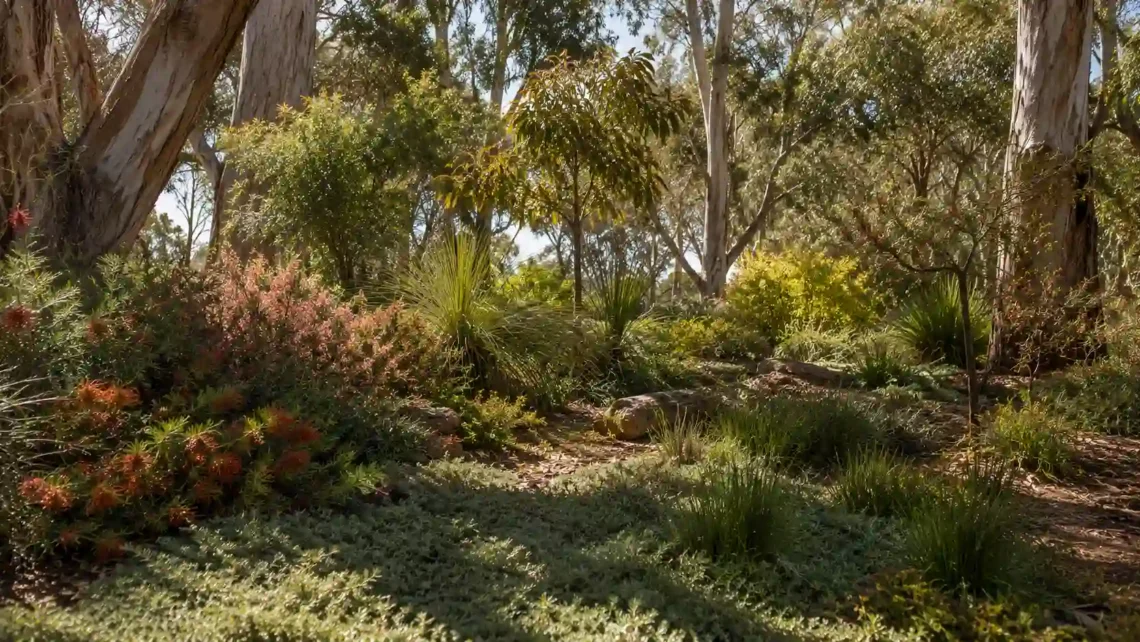
Native plants that grow in shade are species naturally adapted to low-light environments such as forest understories, shaded garden beds, and areas beneath mature trees. In Australian gardening, these plants are especially valuable because they combine resilience with low-maintenance growth.
In this guide, we explore native shade plants, including how they adapt to different shade levels and why they are often more reliable than exotic ornamentals. You will also learn about region-specific selections, dry shade solutions, and practical care techniques to ensure long-term success in shaded landscapes.
Shade gardening is not just about survival—it is about selecting the right native species that naturally thrive under filtered or indirect sunlight conditions.
Quick Summary
- Native plants that grow in shade are adapted to forest-floor light conditions and require less maintenance once established
- Australian native shade plants include groundcovers, shrubs, and small trees suitable for diverse climates
- Dry shade is a challenging condition, but many natives outperform exotic plants in these environments
- Plant selection must be region-specific for best results across Australia
What Does “Shade” Mean for Native Plants?
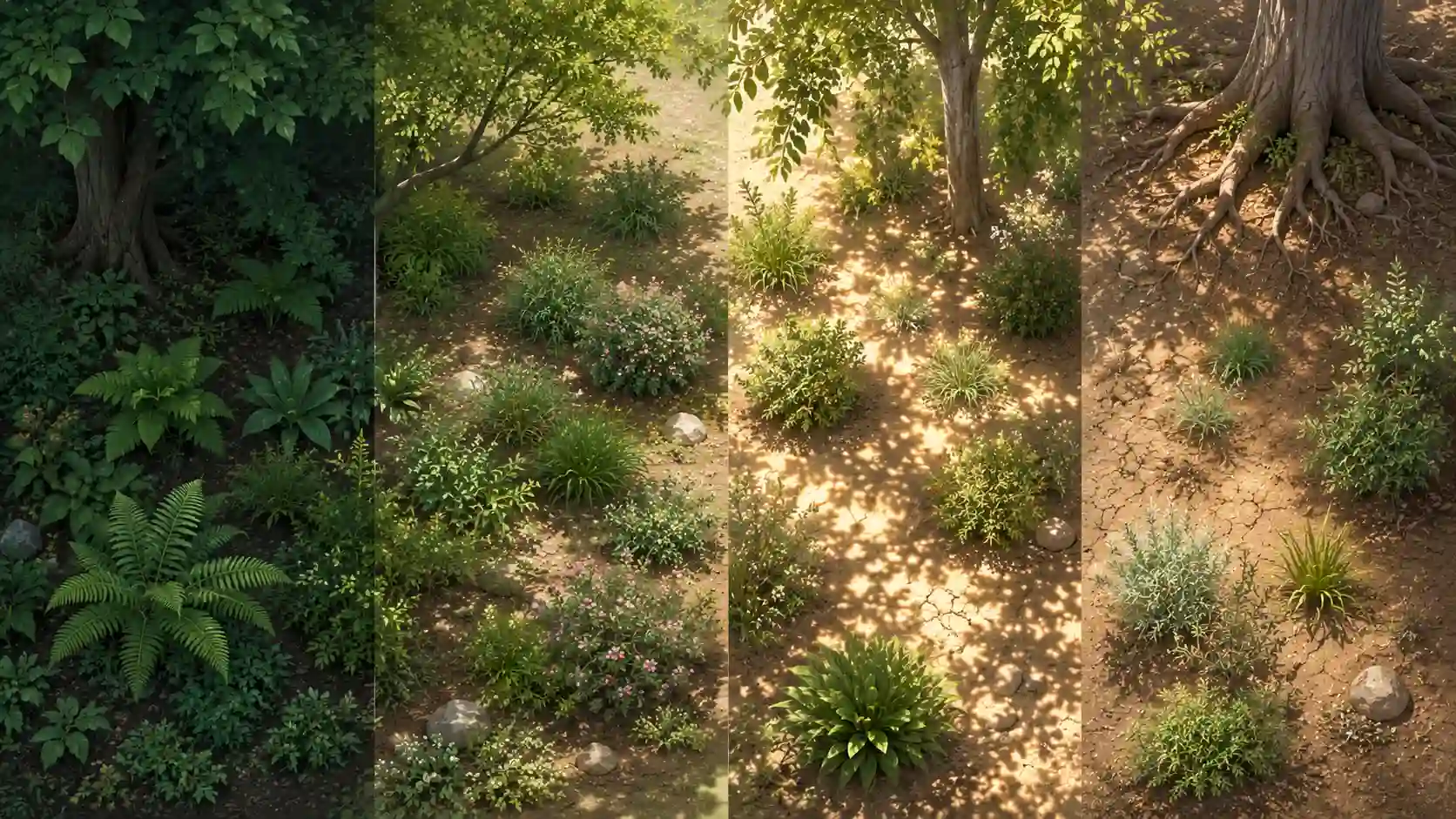
Shade refers to the amount and quality of sunlight reaching a plant, and native plants interpret shade differently depending on their evolutionary adaptation.
Full shade means almost no direct sunlight, often found under dense tree canopies or beside buildings. Partial shade includes 2–4 hours of direct sun daily, while dappled shade refers to filtered light through leaves or branches.
Shade in gardening is scientifically linked to forest ecology and light filtration patterns found in natural woodland ecosystems.
Dry shade is one of the most difficult conditions, combining low light with limited soil moisture. In our experience growing native gardens, dry shade under mature trees is where many exotic plants fail, while Australian natives often continue to perform reliably due to their adaptive root systems and low water requirements.
Why Choose Australian Native Shade Plants?
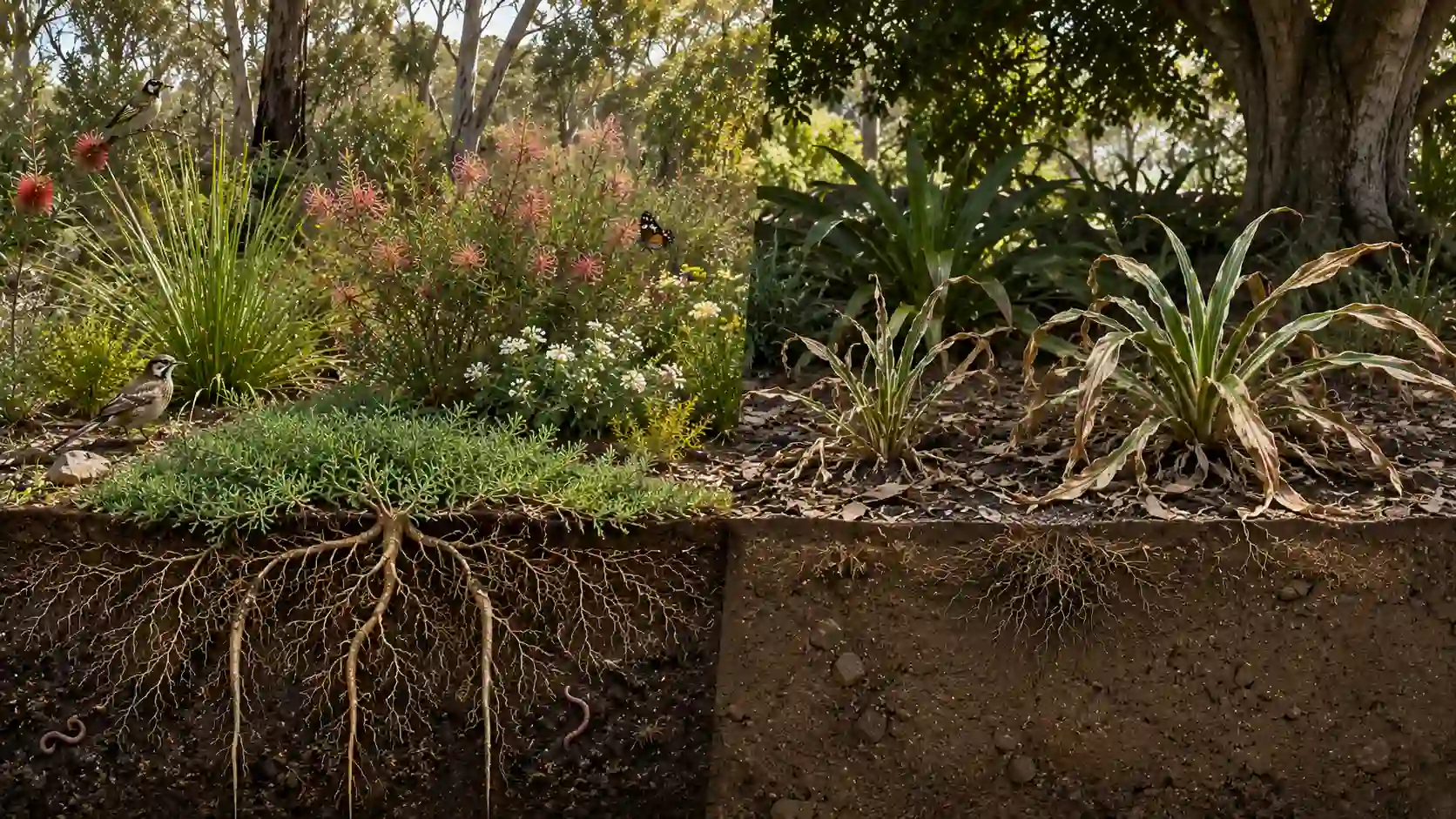
Australian native shade plants are uniquely adapted to local climates, soils, and ecological conditions.
They offer several benefits:
- Strong resilience in low-light environments
- Reduced fertilizer and water requirements
- Support for native wildlife such as birds and pollinators
- Adaptation to nutrient-poor soils common in Australia
How Native Plants Are Adapted to Low Light Conditions
Native shade plants often develop broader leaves to capture limited sunlight more efficiently. Their root systems are highly efficient, allowing them to compete in dry, shaded soils beneath larger trees.
Some species also exhibit seasonal growth cycles, slowing during low-light periods and conserving energy. Greenery Inside recommends choosing species based on natural understorey habitats for best results in shaded gardens.
Top Australian Native Plants That Grow in Shade
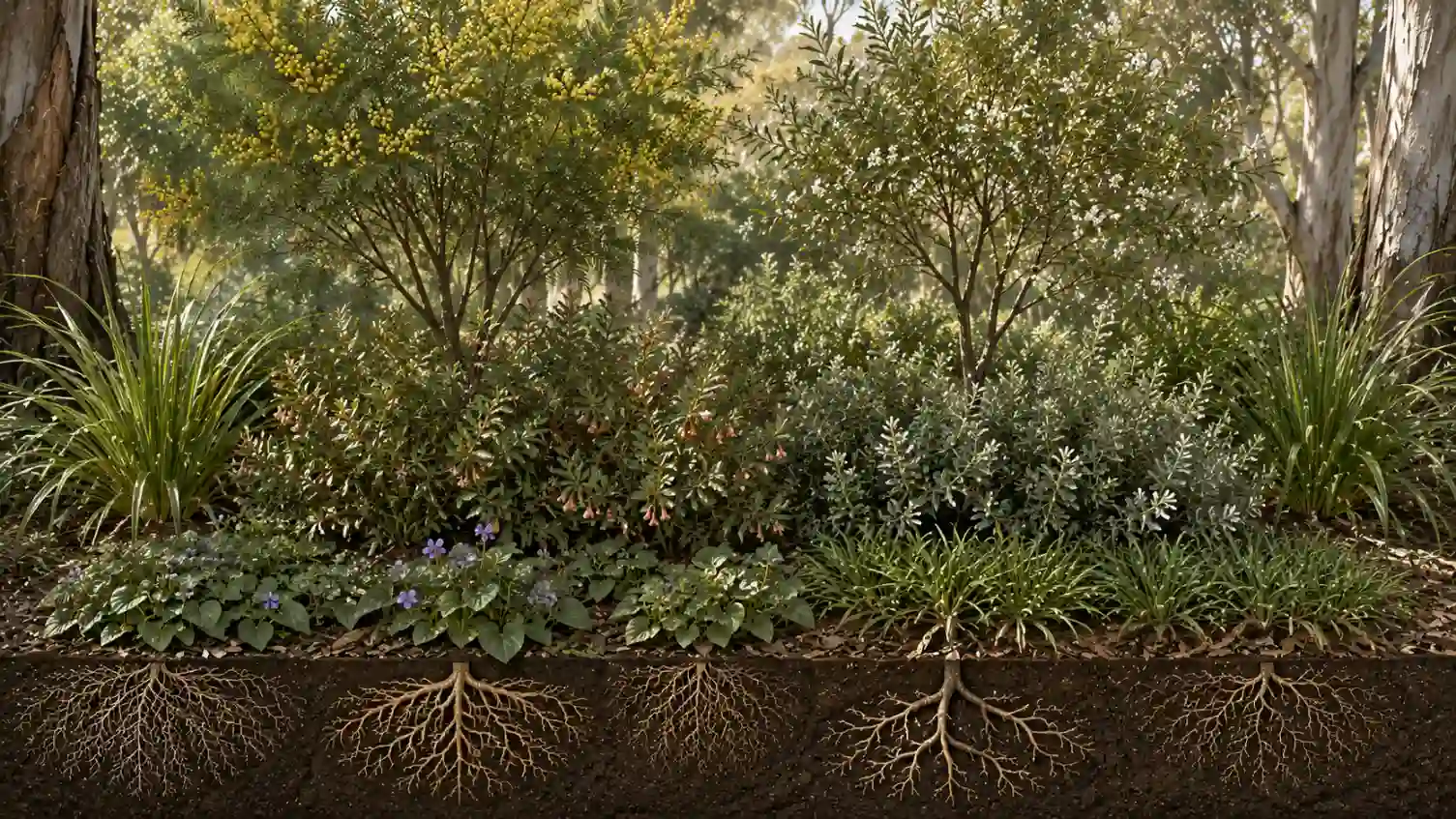
This section highlights key Australian natives suitable for shaded environments, ranging from groundcovers to shrubs.
Grevillea oleoides — A Shade-Tolerant Native Shrub
Grevillea oleoides is one of the more shade-adaptable grevillea species. It produces striking red to orange spider-like flowers and features narrow, dark green foliage.
It typically grows 1–2 meters tall and wide, making it suitable for small gardens and understory planting. It tolerates dappled to partial shade better than most grevilleas and is highly attractive to nectar-feeding birds.
In our experience, it performs best when planted in well-drained soil with moderate light exposure.
Other Grevillea varieties also perform well in structured hedge landscapes.
Other Shade-Tolerant Grevillea Species
While most grevilleas prefer full sun, a few varieties tolerate partial shade. However, deep shade should always be avoided as it reduces flowering and weakens growth. G. oleoides remains the most reliable option for shaded conditions.
Small Australian Native Plants for Shade
- Viola hederacea (Native Violet): Excellent groundcover for full to partial shade
- Lomandra longifolia (Mat Rush): Extremely hardy in dry shade
- Dianella species (Flax Lily): Versatile and drought-tolerant
- Hardenbergia violacea (Purple Coral Pea): Climbs or spreads in partial shade
Native grasses are especially effective in shaded and semi-shaded landscapes.
Native Shrubs for Shade in Australian Gardens
- Correa species: Excellent understorey shrubs for shade
- Westringia (selected varieties): Tolerates partial shade
- Leptospermum (Tea Tree): Performs well in dappled light
- Acacia low-growing species: Some tolerate filtered shade conditions
Some Acacia species tolerate partial shade in woodland environments.
Native Plants for Shade by Australian Region
Australia’s diverse climates require region-specific plant selection.
Shade-Loving Native Plants for Victoria and Melbourne
Cool-climate natives perform well in Melbourne’s shaded gardens:
- Blechnum ferns
- Correa reflexa
- Poa grasses
- Goodenia species
Clay soils and seasonal rainfall patterns make drainage and soil structure important considerations.
Western Australian Native Plants for Shade
Western Australia’s dry climate requires drought-adapted shade plants:
- Hibbertia species
- Kennedia species
- Acacia understorey varieties
Dry shade tolerance is essential due to long, hot summers.
Shade-Loving Australian Natives for Tropical and Subtropical Regions
In Queensland and northern NSW:
- Native gingers (Alpinia species)
- Rainforest ferns
- Understorey tropical foliage plants
Higher humidity increases growth speed but also raises fungal risk in poorly ventilated shade.
Native Plants for Dry Shade — The Hardest Garden Condition
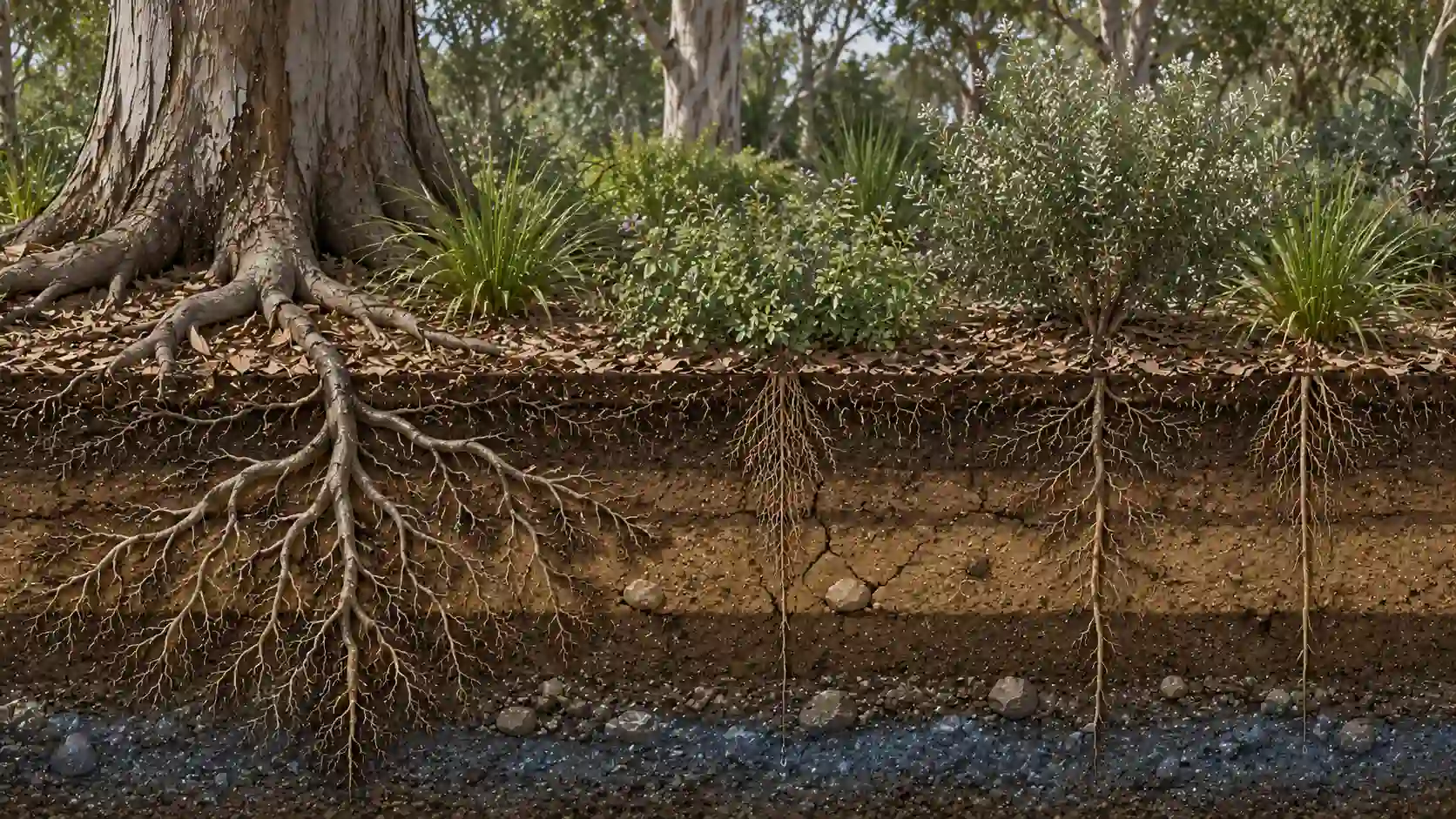
Dry shade occurs under trees, buildings, or dense structures where water and light are both limited.
Native plants are often more successful here due to deep root systems and drought adaptation. Competition from tree roots makes soil moisture scarce, so plant selection is critical.
Best Australian Natives for Dry Shade Conditions
- Lomandra longifolia: Top performer in dry shade
- Dianella species: Handles tree-root competition well
- Arthropodium (Rock Lily): Thrives in dappled dry shade
- Brachyscome species: Some tolerate partial dry shade
Practical tip: Improve soil structure with organic matter before planting to enhance moisture retention.
Native Shade Plants Beyond Australia — A Regional Comparison
While this guide focuses on Australian natives, similar shade-adapted plants exist globally.
California Native Plants for Shade
- Ribes sanguineum (Flowering Currant)
- Polystichum munitum (Sword Fern)
- Oxalis oregana (Redwood Sorrel)
Native Shade Plants in Other US Regions
- Florida: Zamia integrifolia, native ferns
- Texas: Aquilegia canadensis, woodland Salvia
- Midwest: Trillium, Mertensia virginica
New Zealand Native Plants for Shade
- Asplenium ferns
- Griselinia littoralis
- Kawakawa (Piper excelsum)
Perennial Native Flowers That Do Well in Shade
Flowering shade natives provide seasonal color in low-light gardens.
- Viola hederacea: Continuous small blooms
- Scaevola aemula: Performs in partial shade
- Goodenia ovata: Yellow flowers in dappled light
- Chrysocephalum apiculatum: Tolerates light shade
Flowering intensity generally increases with more light exposure.
How to Grow Native Shade Plants Successfully
Soil Preparation for Shaded Garden Beds
Native plants prefer well-draining soils. Avoid heavy fertilization. In our experience, adding organic mulch improves moisture retention without overwhelming roots.
Watering Native Shade Plants
Water regularly during the first 1–2 years. Once established, most species require minimal watering except during prolonged dry shade conditions.
Pruning and Maintenance
Light pruning encourages bushy growth. Avoid heavy cutting into old wood, especially for grevilleas.
Fertilizing Australian Native Shade Plants
Use low-phosphorus fertilizers only. Excess nutrients can damage root systems and reduce flowering.
Common Problems With Native Shade Plants and How to Fix Them
Yellowing Leaves on Shade-Loving Natives
Caused by overwatering or poor drainage. Improve soil structure and reduce watering frequency.
Leggy or Sparse Growth in Shaded Positions
Occurs when light levels are too low. Increase exposure to dappled light where possible.
Poor Flowering in Native Shade Plants
Often due to insufficient light or excess nitrogen. Adjust feeding and reposition plants if needed.
Comparison — Shade-Tolerant Australian Natives vs Exotic Shade Plants
| Feature | Australian Native Shade Plants | Exotic Shade Plants |
| Water needs (established) | Low | Moderate to high |
| Fertilizer requirements | Minimal | Regular feeding needed |
| Wildlife value | High | Low to moderate |
| Soil adaptation | High | Moderate |
| Dry shade tolerance | High | Low |
| Maintenance level | Low | Moderate to high |
| Availability | Widely available | Widely available |
Conclusion
Native plants that grow in shade offer one of the most reliable solutions for challenging garden conditions across Australia. They are low-maintenance, ecologically beneficial, and highly adaptable when matched correctly to light and soil conditions.
Whether you’re gardening in Melbourne’s cool shade or navigating the dry understorey of Western Australia, selecting the right species—from Grevillea oleoides to Lomandra longifolia—ensures long-term success and a resilient, wildlife-friendly garden.
Frequently Asked Questions
What are the best Australian native plants for full shade?
Viola hederacea, Lomandra, Dianella, and Correa species perform well in full shade due to their understorey adaptation.
Can grevilleas grow in shade?
Most grevilleas prefer full sun, but Grevillea oleoides tolerates partial to dappled shade better than most species.
What native plants grow in dry shade in Australia?
Lomandra, Dianella, and Arthropodium are the most reliable choices for dry shade conditions.
Are there small Australian native plants suitable for shaded garden beds?
Yes, Native Violet, small Dianella varieties, Brachyscome, and Goodenia are excellent compact options.
What native plants grow in shade in Victoria?
Correa reflexa, native ferns, Poa grasses, and Goodenia species are well-suited to Victorian shade gardens.
How do I grow native plants in the shade under trees?
Improve soil with organic matter, mulch well, water during establishment, and choose deep shade-tolerant species.
What are the best native perennial flowers for shaded gardens?
Viola hederacea, Goodenia ovata, and Scaevola aemula provide reliable flowering in partial shade conditions.