Introduction
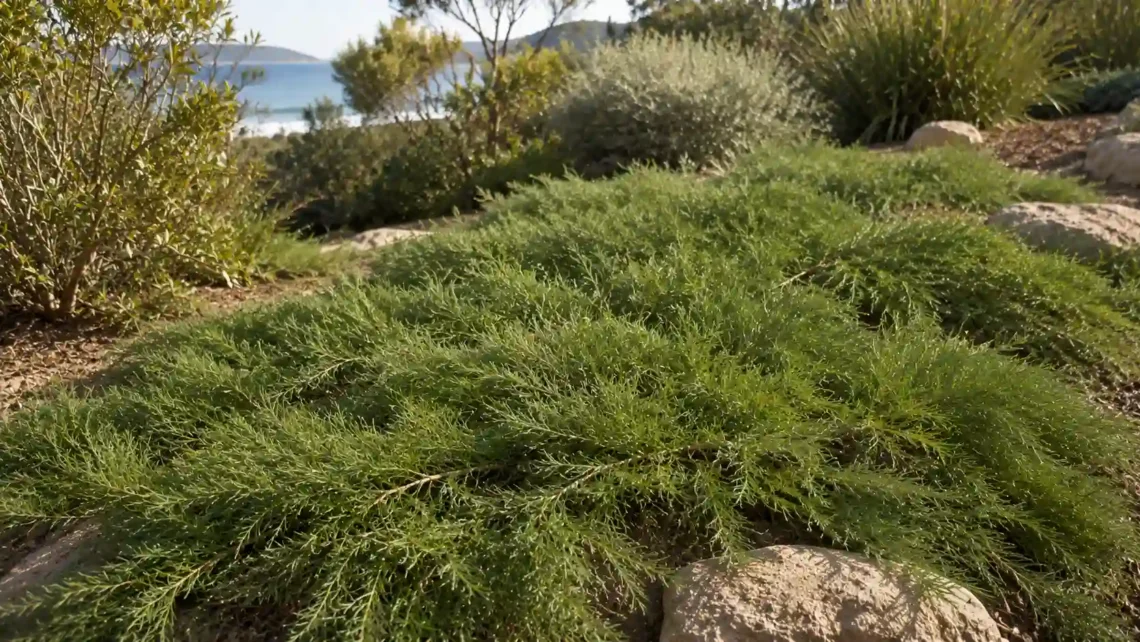
Casuarina ground cover refers to low-growing, spreading forms of the Australian native species Casuarina glauca, widely used in landscaping for erosion control and low-maintenance garden design. These plants are valued for their dense, shaggy texture and ability to thrive in poor soils, making them ideal for difficult sites. In gardens, they are often sold under trade names like Cousin It, Green Wave, and Shagpile. Despite their unusual appearance, they are hardy, drought-tolerant, and highly adaptable to Australian conditions.
Quick Summary
- Casuarina ground cover includes prostrate forms of Casuarina glauca, including popular cultivars like Cousin It and Green Wave
- These plants grow 20–50 cm tall and spread widely, making them excellent for erosion control
- They are drought-tolerant, low-maintenance, and adaptable to clay, sandy, and coastal soils
- Growth is moderate to fast once established, especially in full sun
- Generally non-invasive in Australian gardens when using named cultivars
What Is Casuarina Ground Cover?
Casuarina ground cover is a group of prostrate cultivars derived mainly from Casuarina glauca (swamp she-oak). These forms grow horizontally rather than as upright trees, forming dense mats of fine, drooping branchlets.
Botanically, the species is sometimes also referred to as Allocasuarina glauca, reflecting historical reclassification. In horticulture, both names are still encountered. Casuarina ground cover is derived from Casuarina glauca (see botanical details on Wikipedia).
Common trade names include:
- Cousin It
- Green Wave
- Shagpile
All refer to similar or closely related prostrate selections used for ornamental ground cover and soil stabilization.
These plants originate from coastal and swampy regions of eastern Australia, where they naturally tolerate fluctuating moisture levels, salt exposure, and poor soils.
What Is the Difference Between Cousin It, Green Wave, and Shagpile?
In most retail settings, these names refer to very similar or identical prostrate forms of Casuarina glauca, though slight variations in density or growth habit may occur depending on propagation source.
| Trade Name | Botanical Reference | Typical Availability | Growth Habit |
| Cousin It | Casuarina glauca cultivar | Widely available | Dense, cascading |
| Green Wave | Casuarina glauca form | Nursery-specific | Slightly looser spread |
| Shagpile | Casuarina glauca form | Limited retail | Very dense mat |
In practice, gardeners often treat them interchangeably.
Casuarina Ground Cover Plant Size and Appearance
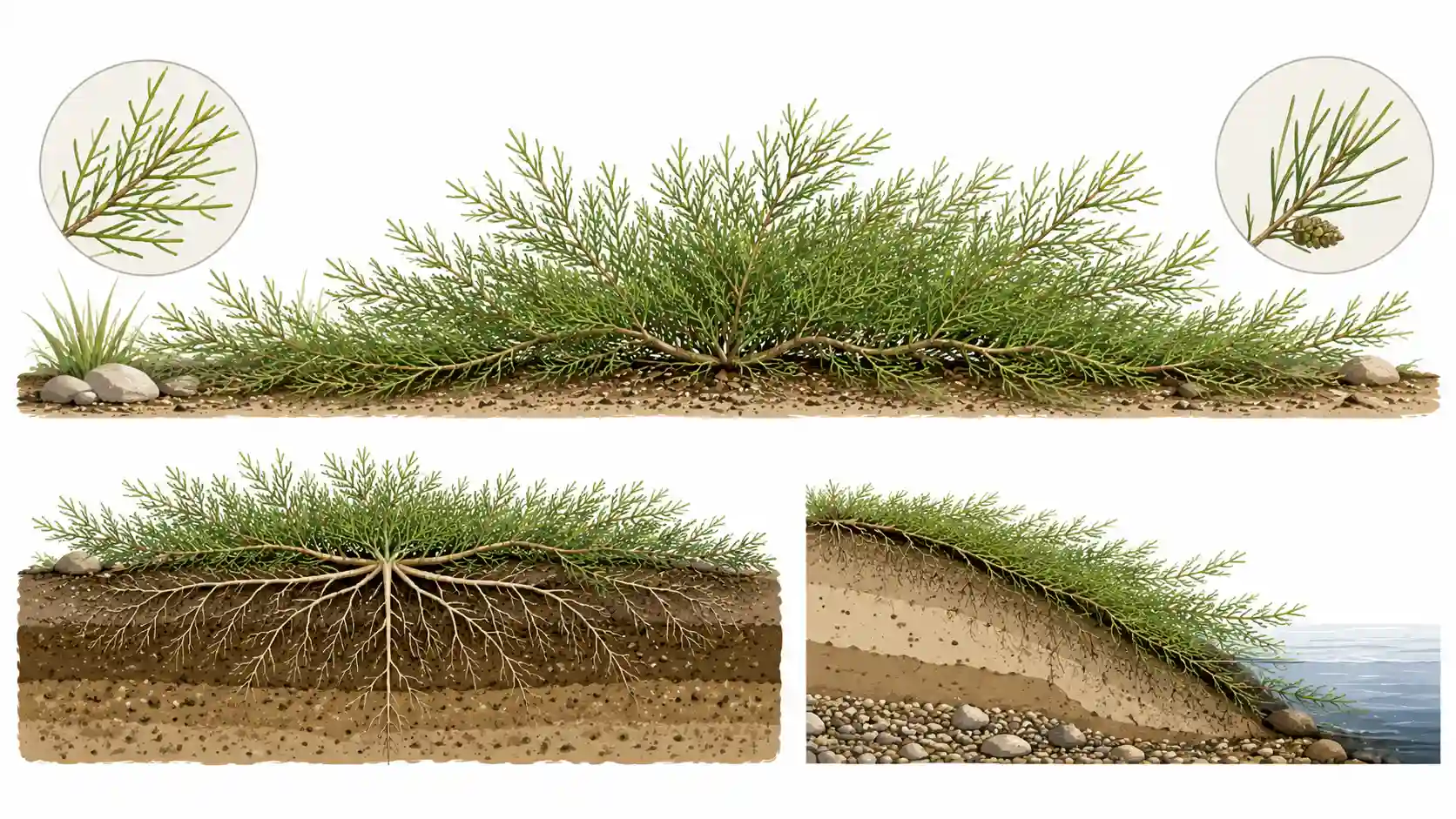
Casuarina ground cover typically grows 20–50 cm in height, with a spreading habit reaching 1–3 meters or more depending on conditions. The plant forms a soft, shaggy mat of green, thread-like branchlets.
Unlike typical foliage plants, it has no true leaves. Instead, photosynthesis occurs through modified green stems called cladodes.
The overall appearance is often described as:
- Mop-like or shaggy
- Grass-like from a distance
- Dense and cascading at maturity
What Does Casuarina Ground Cover Look Like in Different Seasons?
Casuarina ground cover is evergreen and maintains its structure year-round. However, subtle changes occur:
- Slight darkening or lightening of green tone depending on moisture
- Increased bronzing during drought stress
- Development of small woody cone structures in certain seasons
Similar prostrate natives like Acacia baileyana prostrate also provide spreading ground cover for large-scale landscaping.
In our experience growing coastal landscapes, the plant maintains the most vibrant color during mild spring and autumn conditions.
Casuarina Ground Cover Growth Rate
Casuarina ground cover has a moderate to fast growth rate once established. During the first year, growth is focused on root development rather than visible spread.
After establishment:
- Growth accelerates significantly in spring and autumn
- Spread increases approximately 30–50 cm per year under ideal conditions
- Growth slows in shade or compacted soils
Environmental factors such as irrigation, soil fertility, and sunlight exposure strongly influence performance.
How to Plant Casuarina Ground Cover
Proper planting ensures long-term success. These plants establish best when given space and minimal soil disturbance.
What Soil Type Is Best for Casuarina Ground Cover?
Casuarina ground cover adapts to a wide range of soils:
- Sandy soils: excellent drainage and fast establishment
- Clay soils: tolerated well with minimal amendment
- Loamy soils: optimal balance of nutrients and moisture
A key advantage is its nitrogen-fixing root nodules, which help improve poor soils over time. However, prolonged waterlogging should be avoided despite its “swamp she-oak” name.
How Far Apart Should You Plant Casuarina Ground Cover?
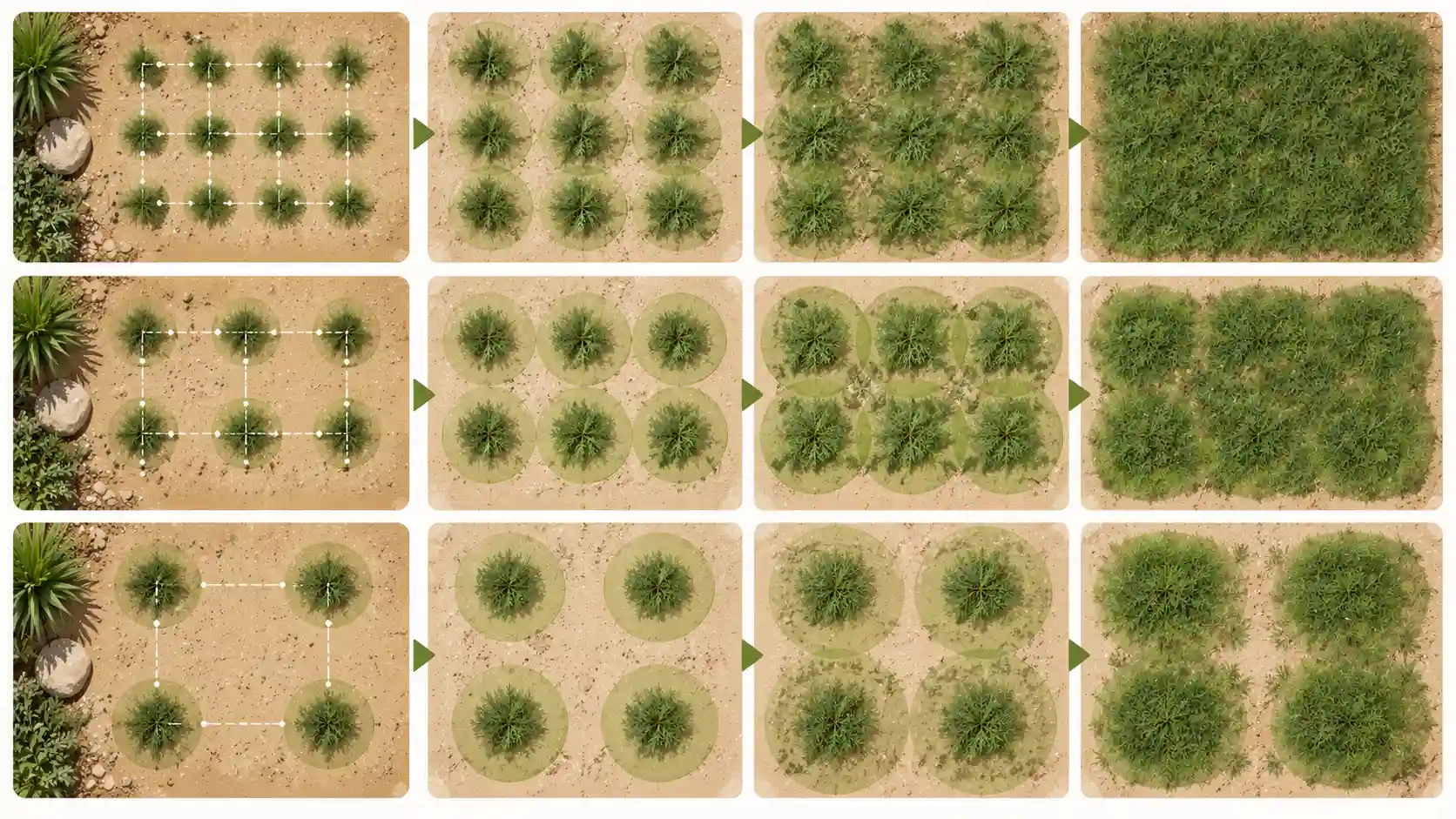
Spacing depends on intended coverage:
| Purpose | Spacing | Coverage Time |
| Fast ground cover | 1 m | 1–2 years |
| Standard planting | 1.5 m | 2–3 years |
| Erosion control | 0.8–1 m | Rapid coverage |
Closer spacing is recommended for slopes and embankments to suppress weeds quickly.
Casuarina Ground Cover Care Guide
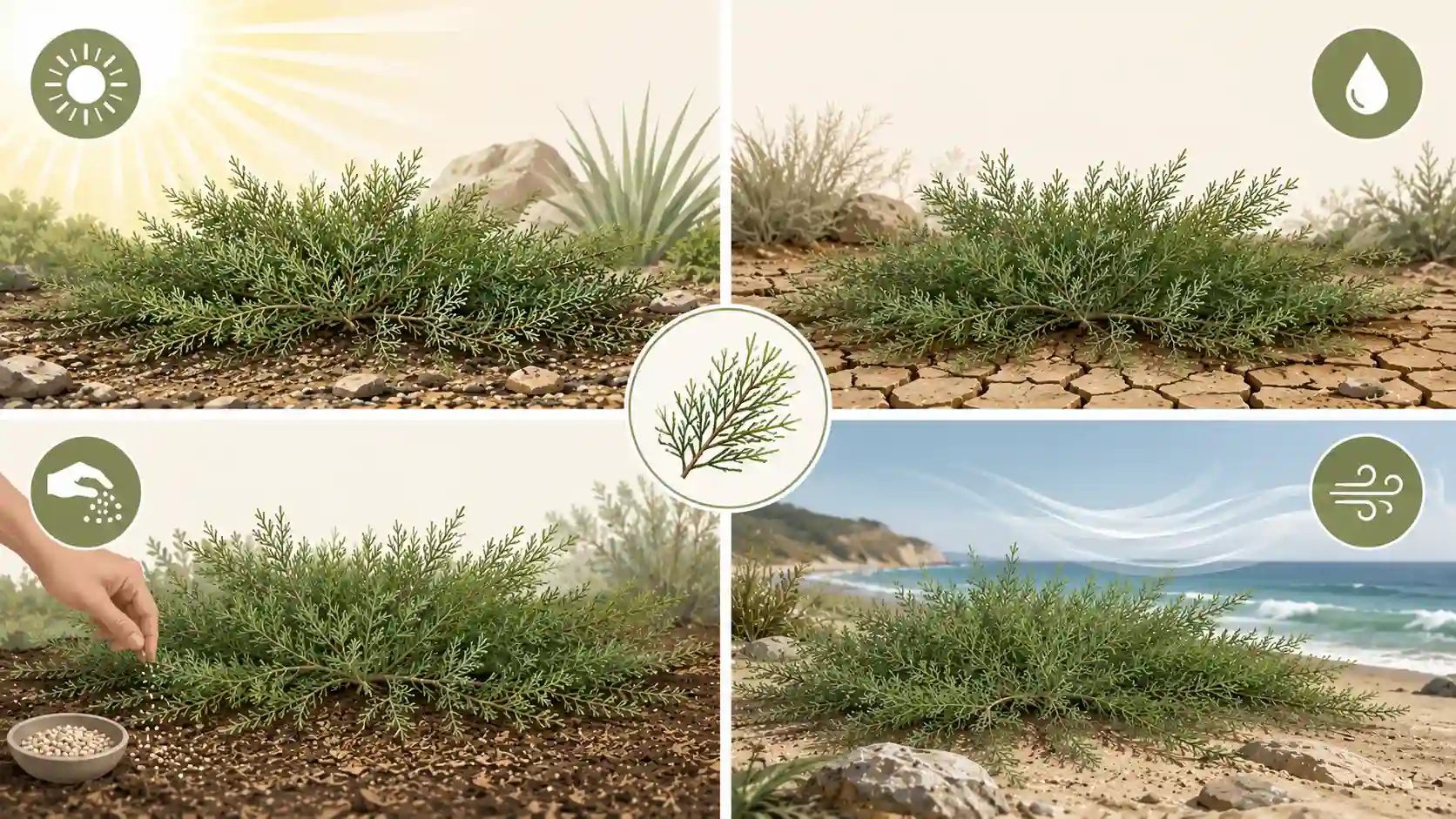
Watering Requirements
Once established, casuarina ground cover is highly drought-tolerant. During the first 6–12 months:
- Water 1–2 times per week
After establishment: - Water only during extended dry periods
Overwatering may cause yellowing and root stress.
Light Requirements
Full sun is ideal for dense growth. In partial shade:
- Growth becomes sparse
- Spread slows significantly
It performs well in coastal winds and exposed sites.
Fertilizing and Soil Feeding
Casuarina ground cover requires minimal fertilization. Use:
- Low-phosphorus native plant fertilizer only
Avoid high-phosphorus products, which can damage native Australian species.
Pruning Casuarina Ground Cover
Pruning is minimal:
- Light trimming encourages density
- Avoid cutting into woody stems
- Hard pruning may permanently damage growth points
Climate Tolerance
Casuarina ground cover performs well across:
- Coastal environments
- Subtropical regions
- Dry inland gardens
It tolerates light frost once established and shows high salt resistance.
Casuarina Ground Cover Height — What to Expect at Maturity
| Cultivar | Height | Spread | Texture |
| Cousin It | 20–40 cm | 1–3 m | Dense, shaggy |
| Green Wave | 30–50 cm | 1–3 m | Slightly open |
| Shagpile | 20–30 cm | 1–2.5 m | Very compact |
Although often perceived as flat, casuarina ground cover gradually develops low mounding height over time, especially in nutrient-rich soils or partial competition conditions.
Is Casuarina Ground Cover Invasive?
Casuarina ground cover derived from Casuarina glauca is generally not invasive in Australian garden settings when using cultivated prostrate forms.
However:
- The upright species Casuarina glauca can behave aggressively in some regions outside Australia
- In places like Florida (USA), related species are considered invasive
In Australian landscapes, named cultivars such as Cousin It are typically well-behaved and rarely self-seed excessively. Caution is advised near sensitive native bushland. For mixed native landscapes, Casuarina ground cover is frequently paired with Acacia podalyriifolia to create layered structure and shade.
Where to Buy Casuarina Ground Cover
Casuarina ground cover is widely available across Australia, particularly at:
- Major retail nurseries
- Bunnings Warehouse (seasonal availability)
- Specialist native plant growers
When purchasing:
- Check for healthy green branchlets
- Avoid pot-bound or dry plants
- Confirm cultivar name for intended growth habit
Availability may vary depending on season and region.
Common Problems With Casuarina Ground Cover
Why Is My Casuarina Ground Cover Turning Yellow or Brown?
Common causes include:
- Overwatering leading to root stress
- Iron chlorosis in alkaline soils
- Frost damage in young plants
- Phosphorus toxicity
Correction involves improving drainage and adjusting fertilizer use.
Why Is My Casuarina Ground Cover Not Spreading?
Possible reasons:
- Insufficient sunlight
- Compacted soil restricting roots
- Establishment phase still ongoing
Light pruning and soil aeration can improve spread.
Pests and Diseases
Casuarina ground cover is generally pest-resistant. Occasional issues include:
- Scale insects
- Root rot in waterlogged soils
Organic horticultural oils are effective for pest control.
Casuarina Ground Cover vs Similar Ground Covers
| Plant | Height | Spread | Soil Tolerance | Sun | Best Use |
| Casuarina ground cover | 20–50 cm | Wide | High | Full sun | Erosion control |
| Myoporum parvifolium | 10–30 cm | Very wide | High | Sun/part shade | Fast coverage |
| Grevillea groundcover | 20–60 cm | Moderate | Medium | Full sun | Flowering landscapes |
| Ornamental grasses | 30–100 cm | Variable | Medium | Sun | Texture contrast |
Casuarina is best for structural stability and difficult soils.
Landscaping Uses for Casuarina Ground Cover
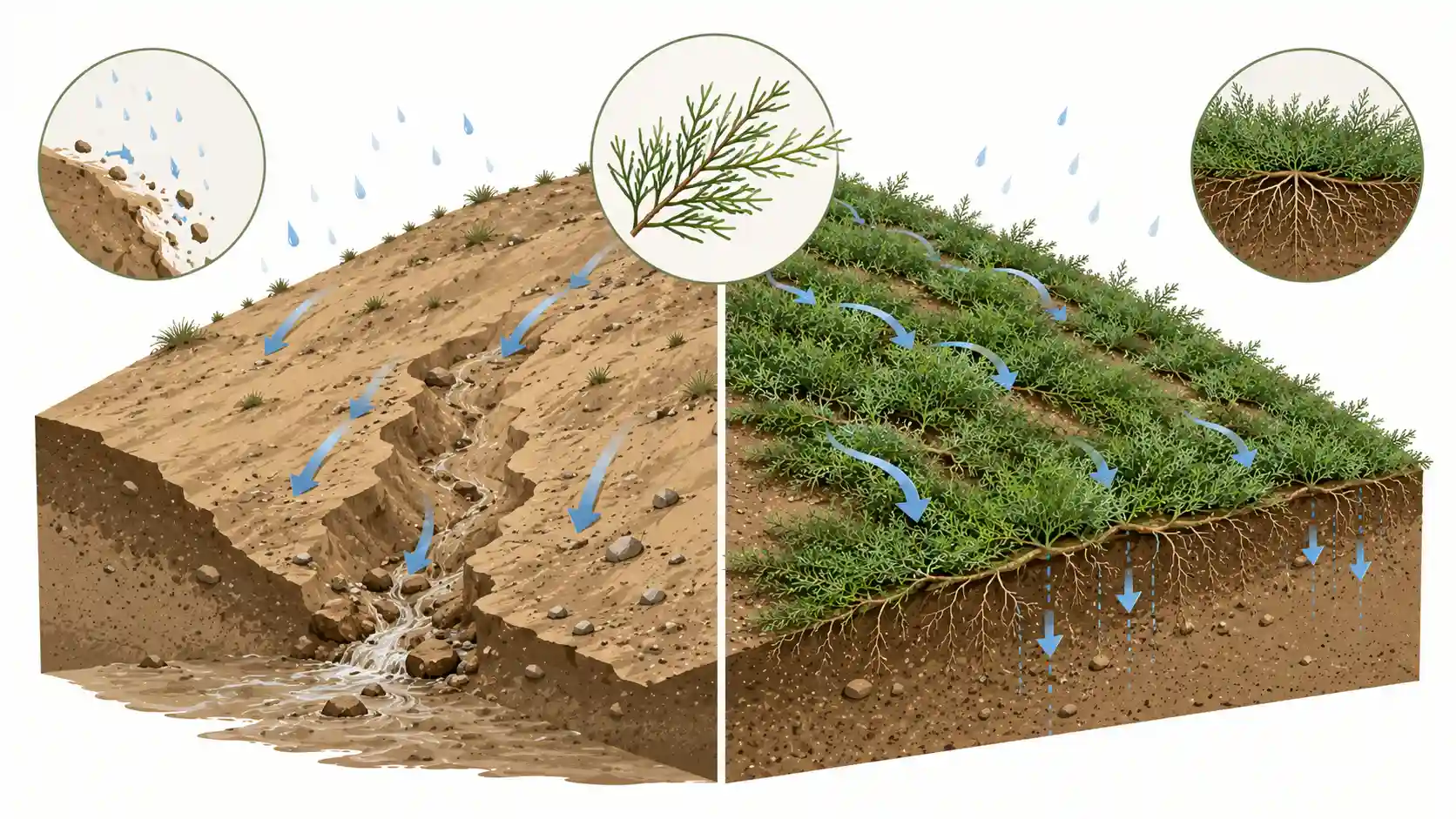
Casuarina ground cover is widely used in broader systems of Australian native garden trees, especially for erosion control and low-maintenance native landscaping.
Casuarina ground cover is widely used for:
- Slope stabilization and erosion control
- Weed suppression in large areas
- Coastal garden design
- Underplanting in native landscapes
- Container planting in large pots
It also offers moderate resistance to ember exposure, making it useful in fire-prone regions when properly maintained. For softer flowering alternatives, gardeners sometimes combine Casuarina with Pratia pedunculata to create layered native ground cover designs.
Conclusion
Casuarina ground cover is a resilient and highly adaptable native plant ideal for low-maintenance landscaping. Its ability to thrive in poor soils, resist drought, and stabilize slopes makes it a practical choice for many Australian gardens. Whether referred to as Cousin It, Green Wave, or Shagpile, these forms all provide similar benefits with a distinctive shaggy texture and reliable performance.
For gardeners seeking a durable, environmentally adaptable ground cover, casuarina ground cover remains one of the most effective native options available.
Frequently Asked Questions About Casuarina Ground Cover
What is the difference between casuarina ground cover and Cousin It?
Cousin It is a trade name for a prostrate form of Casuarina glauca, making it one type of casuarina ground cover.
How fast does casuarina ground cover grow?
It grows moderately to fast after establishment, typically 30–50 cm per year in good conditions.
Can casuarina ground cover grow in clay soil?
Yes, it tolerates clay soil well, especially when drainage is reasonable.
Does casuarina ground cover need pruning?
Only light pruning is needed to maintain shape and encourage density.
Is casuarina ground cover the same as swamp she-oak?
Yes, it is derived from Casuarina glauca, commonly known as swamp she-oak.
Where can I buy casuarina ground cover in Australia?
It is available at Bunnings and specialist native plant nurseries under various trade names.
Is casuarina ground cover invasive in Australia?
Named cultivars are generally not considered invasive in Australian gardens.