Introduction
Hovea acutifolia, commonly known as the purple pea bush or pointed leaf hovea, is an Australian native shrub valued for its vivid violet-purple flowers and hardy woodland nature. This species belongs to the Fabaceae family and is naturally adapted to dry forests and shaded understory environments. It is widely appreciated in native landscaping for its resilience and ecological benefits. This article explains what Hovea acutifolia is, how it grows, and how to care for it successfully in garden environments.
Quick Summary
- Hovea acutifolia is an Australian native shrub known for its vivid purple pea-shaped flowers
- Commonly called the purple pea bush or pointed leaf hovea due to its distinctive leaf shape
- Grows well in woodland gardens, native landscaping, and low-maintenance garden settings
- Prefers well-drained, acidic soils and partial to full shade conditions
What Is Hovea acutifolia?
Botanical Identity and Common Names
Hovea acutifolia is a flowering shrub in the Fabaceae (pea family), native to eastern Australia. The genus belongs to the broader Hovea plant genus, which includes several Australian native pea-flowered shrubs adapted to diverse habitats. The genus Hovea is a group of flowering plants endemic to Australia, widely documented in botanical literature for its ecological diversity and pea-flowered structure.
It shares similar ecological adaptations with other Fabaceae species such as Acacia fimbriata, which also thrives in Australian woodland conditions.
The scientific name “acutifolia” translates to “pointed leaves,” describing its narrow, sharply tapered foliage. This feature is one of its most recognizable traits in natural settings.
Common names include:
- Purple pea bush
- Pointed leaf hovea
In botanical classification, this species is part of Australia’s diverse native flora, often found in understory ecosystems where filtered light dominates.
What Does Hovea acutifolia Look Like?
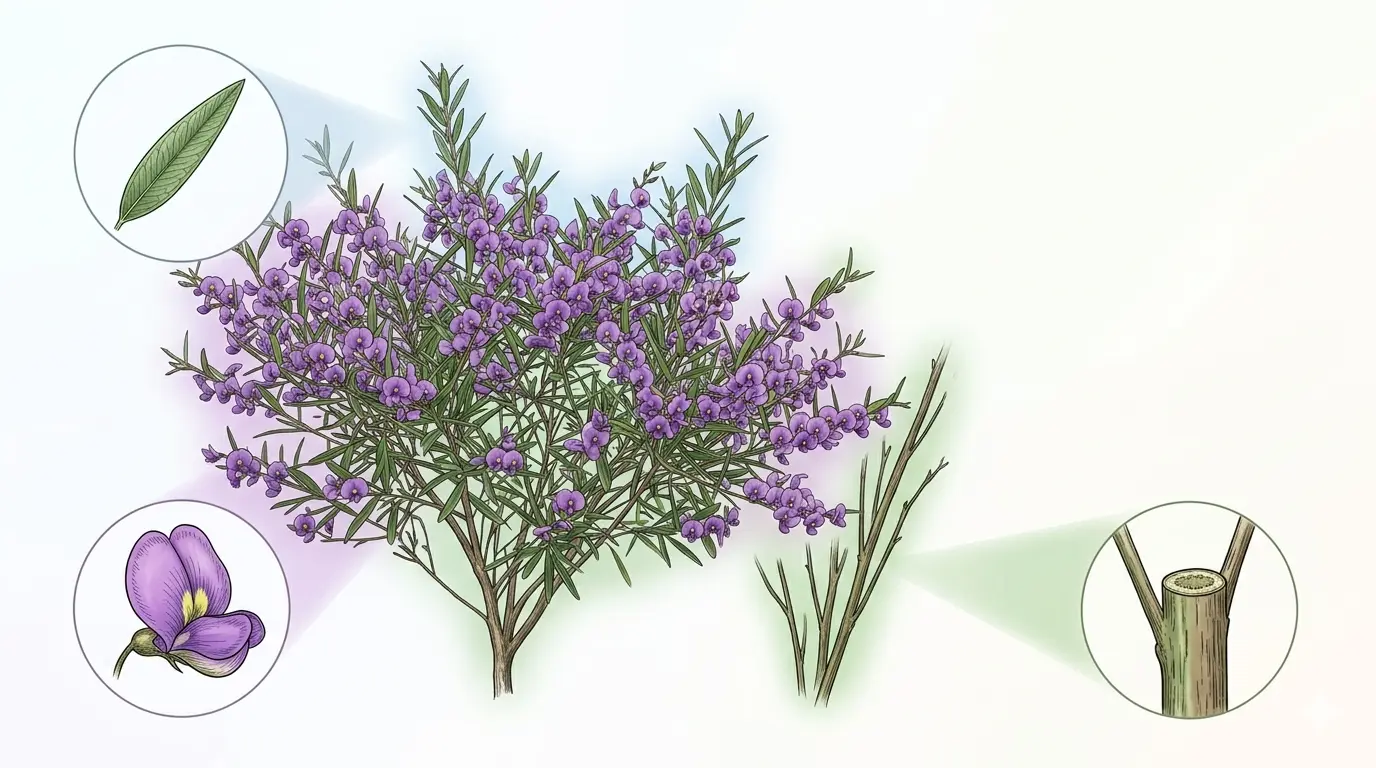
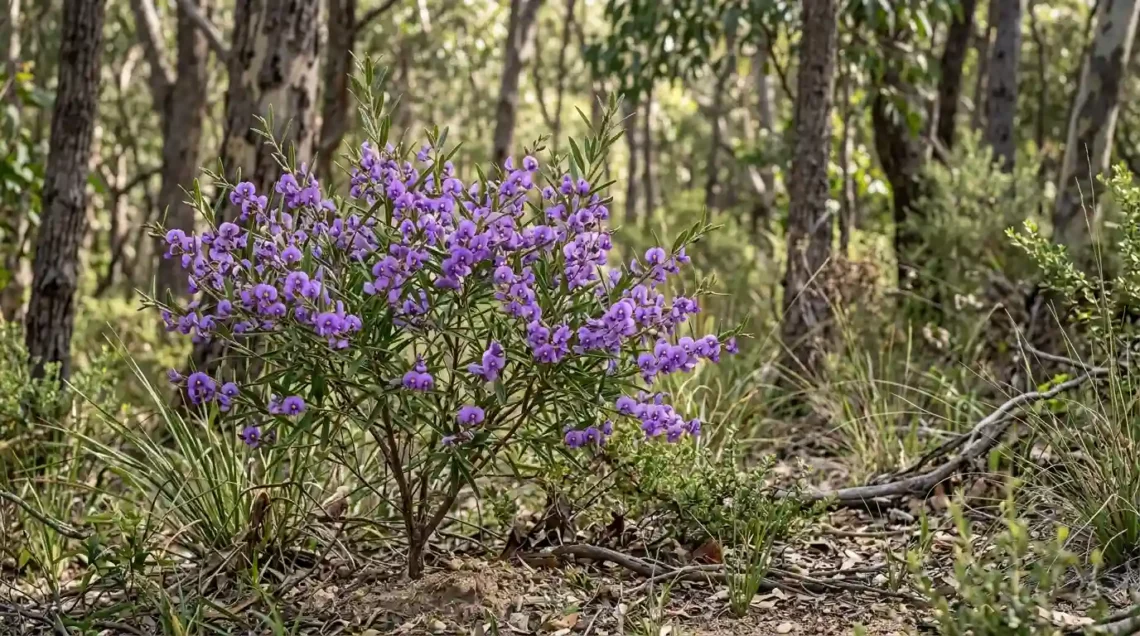
Hovea acutifolia is a compact, woody shrub with slender stems and visually striking pea-shaped flowers.
Key identifying features include:
- Narrow, lance-shaped leaves with pointed tips
- Small violet to purple pea-shaped flowers
- Woody, upright shrub habit
- Flowers appear in late winter to spring
The hovea flower typically has the classic Fabaceae structure: a standard petal, wings, and keel, forming a butterfly-like appearance that attracts native pollinators.
In our experience at Greenery Inside, this plant stands out most in shaded gardens where its purple blooms contrast strongly against darker green foliage.
Hovea acutifolia Habitat and Natural Distribution
Where Does Hovea acutifolia Grow Naturally?
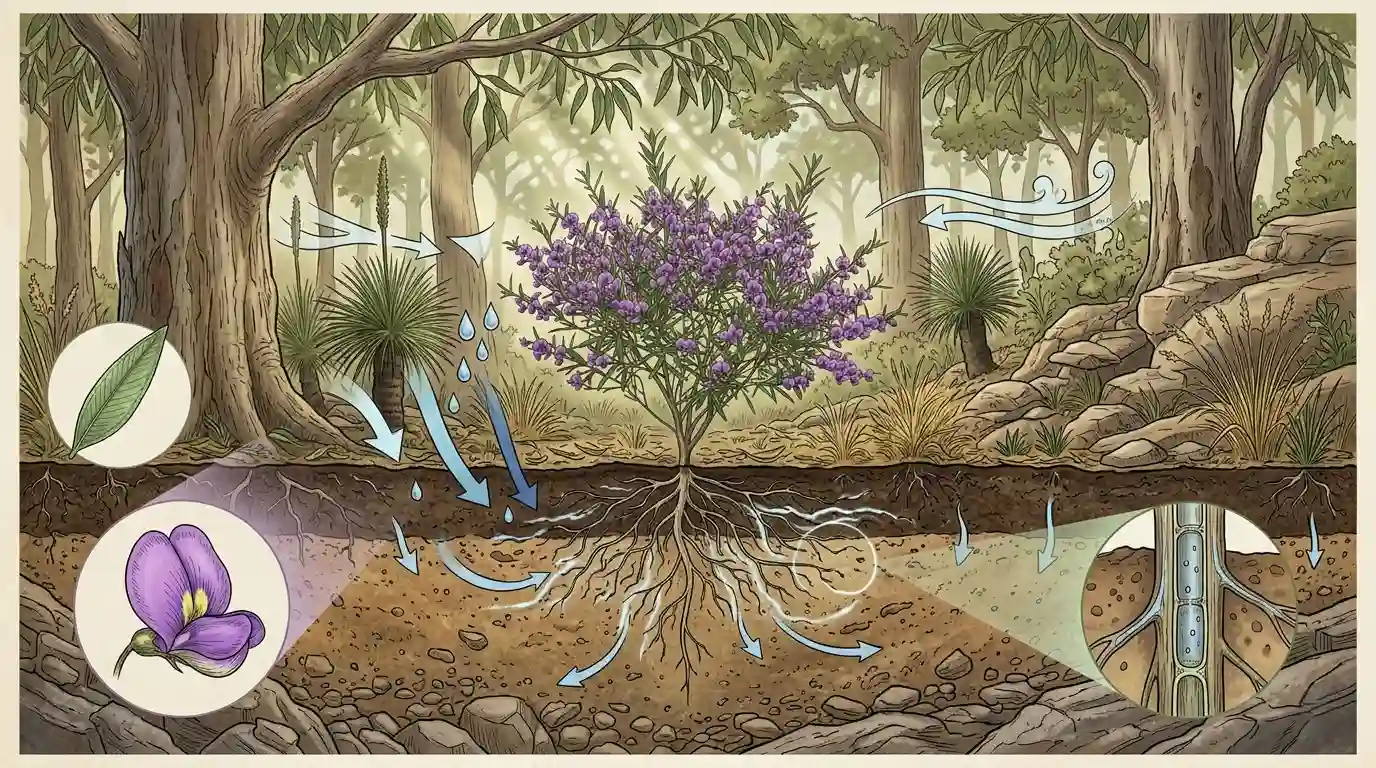
Hovea acutifolia is naturally distributed across eastern Australia, particularly in Queensland and New South Wales. It grows in:
- Dry sclerophyll forests
- Woodland understories
- Rocky slopes and forest edges
Its natural setting is typically shaded or semi-shaded, where competition from taller eucalyptus trees shapes its growth pattern.
Soil and Environmental Conditions in the Wild
In its native environment, Hovea acutifolia thrives in:
- Sandy, well-drained soils
- Slightly acidic pH conditions
- Dappled shade under eucalyptus canopies
It commonly grows alongside other shade loving Australian natives, especially under eucalyptus canopies in low-light woodland environments.
These natural hovea acutifolia growing conditions explain why it performs poorly in heavy, waterlogged soils. The species is adapted to low-nutrient environments and depends on good drainage for healthy root development. Hovea acutifolia is often included in broader Australian native garden trees and shrub ecosystems due to its ecological adaptability in woodland landscapes.
Hovea acutifolia Size and Growth Rate
How Tall Does Hovea acutifolia Grow?
Hovea acutifolia height typically ranges from:
- 1 to 3 metres depending on conditions
In ideal woodland conditions, plants reach their upper size range, while in harsher or drier gardens, they may remain more compact.
The overall hovea acutifolia size is influenced by soil quality, moisture, and light exposure.
How Fast Does Hovea acutifolia Grow?
Hovea acutifolia is a moderate-growing shrub. Growth is most active during warmer seasons following flowering in late winter and spring.
Growth rate depends on:
- Soil fertility (low to moderate preferred)
- Drainage quality
- Light availability
It is not considered fast-growing but develops steadily once established.
How to Grow Hovea acutifolia
Ideal Growing Conditions
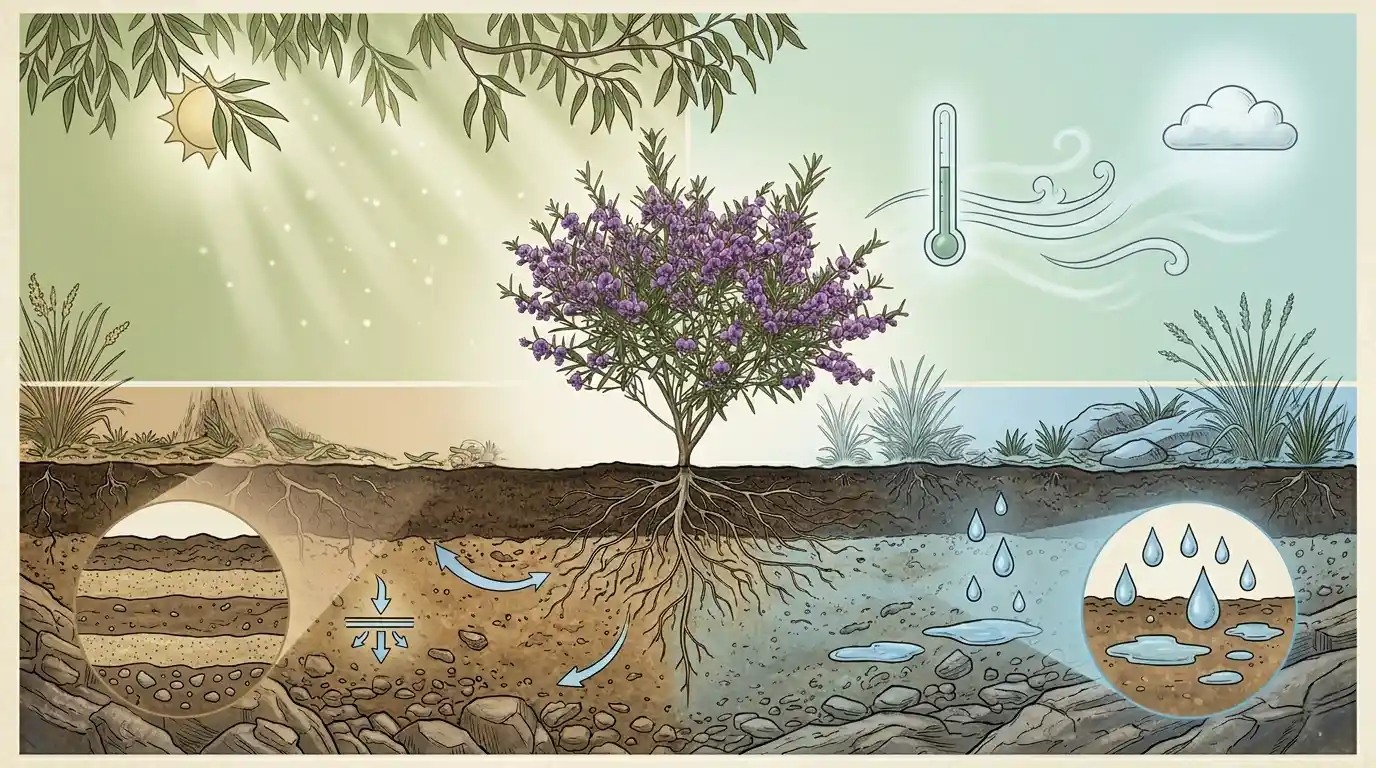
Hovea acutifolia performs best in conditions that replicate its native habitat:
- Light: Part shade to full shade
- Soil: Well-drained, acidic to neutral
- Moisture: Drought tolerant once established
In our experience growing native shrubs, the most successful specimens are those planted under filtered tree cover rather than exposed full sun sites.
How to Grow Hovea acutifolia from Seeds
Propagation from seed requires preparation due to a hard seed coat.
- Scarify seeds by lightly sanding or soaking in hot water before planting
- Sow in free-draining native seed-raising mix
- Keep moist but not waterlogged during germination
- Germination can take 3–6 weeks
Successful germination often depends on consistent moisture without saturation.
Planting Location and Spacing
Hovea acutifolia is best used in:
- Native garden beds
- Woodland-style landscapes
- Understory planting beneath trees
Recommended spacing is 1–2 metres apart, allowing natural shrub spread while maintaining airflow.
Hovea acutifolia Care Guide
Watering Needs
Once established, Hovea acutifolia is drought tolerant. However:
- Requires regular watering during first 1–2 seasons
- Prefers dry soil periods between watering
- Sensitive to overwatering
Light Requirements
- Thrives in dappled shade or part shade
- Tolerates morning sun in cooler climates
- Avoid harsh afternoon sun in hot regions
Light exposure directly influences flowering intensity. Like many native plants that grow in shade, Hovea acutifolia performs best in filtered light rather than direct harsh sun exposure.
Soil Preferences and Fertilisation
Hovea acutifolia prefers:
- Slightly acidic, well-draining soil
- Low nutrient environments
Avoid phosphorus-rich fertilisers, as Australian natives are sensitive to excess phosphorus. If needed, use low-phosphorus native plant fertiliser sparingly.
Pruning Hovea acutifolia
- Light pruning after flowering encourages bushy growth
- Avoid cutting into old woody stems
- Minimal pruning is recommended overall
Hard pruning into mature wood can reduce plant recovery.
Climate Tolerance
Hovea acutifolia performs best in:
- Temperate climates
- Subtropical regions
- Semi-arid zones
It has moderate frost tolerance but struggles in humid tropical or waterlogged conditions.
Hovea acutifolia Uses in the Garden and Beyond
Landscape and Garden Uses
Hovea acutifolia is ideal for:
- Native garden design
- Woodland restoration projects
- Wildlife-friendly landscapes
- Low-maintenance understory planting
It is valued for its natural appearance and ecological compatibility.
Wildlife Value
This species supports biodiversity by:
- Attracting native bees and butterflies
- Providing nectar-rich flowers
- Supporting seed-eating birds
Its ecological role makes it an important plant in Australian native garden systems.
Traditional and Cultural Uses
Documented Indigenous uses of Hovea acutifolia are limited in published horticultural records. However, related Australian native pea species have historically contributed to ecological knowledge and land management practices.
Hovea acutifolia Varieties and Related Species
Are There Different Varieties of Hovea acutifolia?
Natural variation exists in flower intensity and leaf size. A rare form sometimes referenced in horticulture is Hovea acutifolia white, though it is not widely cultivated.
Hovea acutifolia vs Hovea elliptica — What’s the Difference?
| Feature | Hovea acutifolia | Hovea elliptica |
| Common name | Purple pea bush / pointed leaf hovea | Tree hovea |
| Leaf shape | Narrow, pointed | Oval/elliptic |
| Mature height | 1–3 m | Up to 4–5 m |
| Flower colour | Purple/violet | Purple/violet |
| Preferred habitat | Dry woodland understory | Moist forest, SW Australia |
| Garden use | Native understory shrub | Specimen shrub or small tree |
Hovea elliptica is generally larger and prefers moister environments, making it more suitable as a feature plant rather than an understory shrub.
Other Plants in the Hovea Genus
The Hovea plant genus includes multiple Australian native shrubs adapted to varied ecosystems. These species collectively contribute to Australia’s pea-flower diversity and are commonly used in ecological restoration and native landscaping.
Common Hovea acutifolia Problems and How to Fix Them
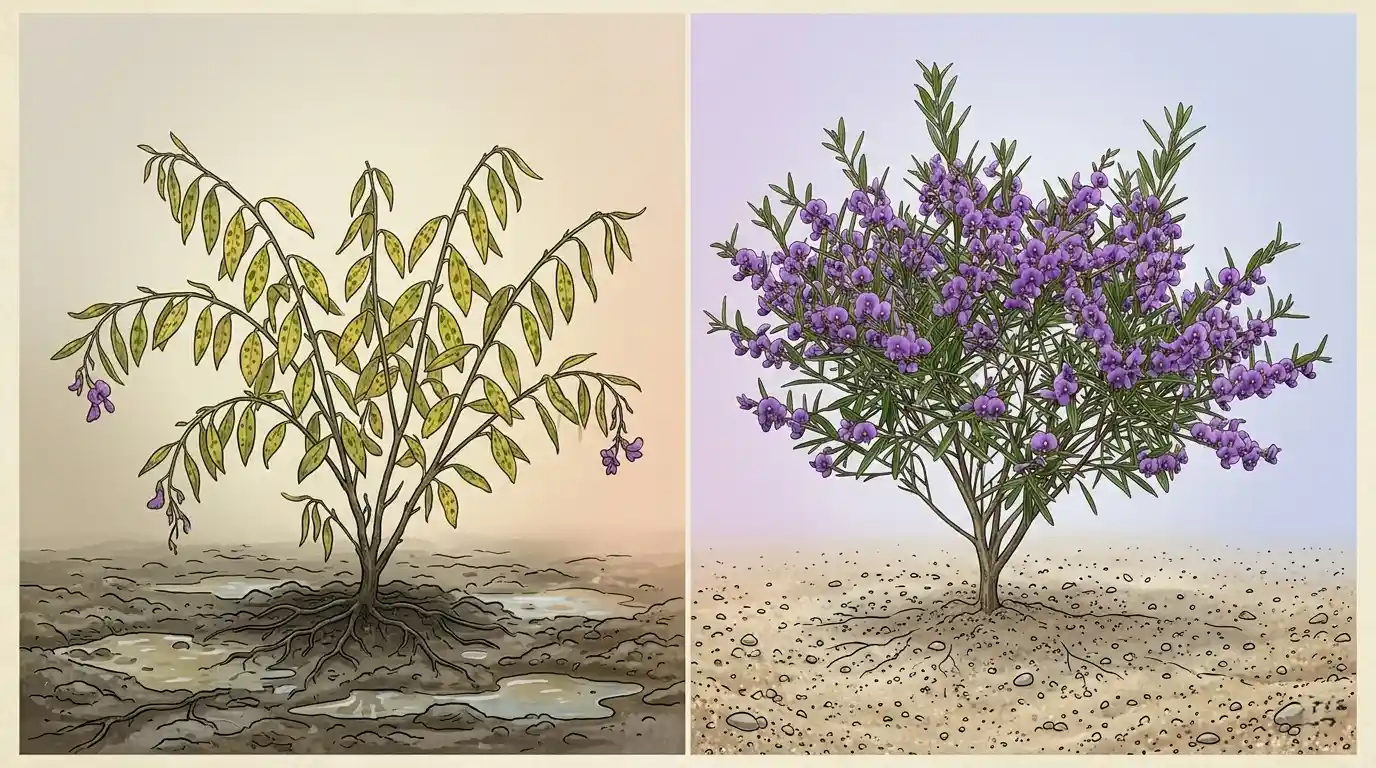
Why Is My Hovea acutifolia Not Flowering?
Common causes include:
- Excess shade or excessive sun exposure
- Poor or nutrient-rich soil
- Over-fertilisation
- Plant immaturity
Correcting light balance and reducing fertiliser usually improves flowering.
Root Rot and Overwatering Issues
Symptoms include:
- Yellowing leaves
- Wilting despite moist soil
- Stem dieback
Prevention:
- Improve drainage
- Avoid frequent watering
- Use raised planting beds if needed
Pest and Disease Issues
Common pests:
- Scale insects
- Aphids
Management:
- Use horticultural oil or insecticidal soap
- Encourage natural predators
Slow Growth or Poor Establishment
Troubleshooting checklist:
- Check drainage — waterlogged soil is the most common cause of poor health
- Test soil pH — aim for slightly acidic (pH 5.5–6.5)
- Avoid phosphorus-rich fertilisers
- Ensure adequate but not excessive watering during establishment
- Confirm appropriate light conditions
Common Beginner Mistakes When Growing Hovea acutifolia
- Overwatering or planting in poorly drained soil
- Using standard high-phosphorus fertilisers
- Planting in full sun in hot climates
- Not scarifying seeds before sowing
- Pruning into old wood
Conclusion
Hovea acutifolia, also known as the purple pea bush or pointed leaf hovea, is a resilient Australian native shrub valued for its ornamental flowers and ecological role. It thrives in shaded, well-drained environments and requires minimal maintenance once established. With proper soil conditions and careful watering, it becomes a reliable feature in native gardens. Its adaptability and wildlife benefits make it a strong choice for low-maintenance, biodiversity-focused landscapes.
Frequently Asked Questions About Hovea acutifolia
What is the common name for Hovea acutifolia?
The common names are purple pea bush and pointed leaf hovea, referring to its flower color and leaf shape.
How tall does Hovea acutifolia grow?
It typically grows 1 to 3 metres tall, depending on soil, light, and climate conditions.
What conditions does Hovea acutifolia need to grow well?
It needs well-drained, slightly acidic soil, part shade to full shade, and a temperate to subtropical climate.
Can Hovea acutifolia grow in full sun?
It prefers part shade. Full sun is only suitable in cooler climates with adequate soil moisture.
Is Hovea acutifolia drought tolerant?
Yes, once established it is drought tolerant, but young plants require regular watering during establishment.
How do I grow Hovea acutifolia from seed?
Scarify seeds, sow in free-draining mix, keep moist, and expect germination in 3–6 weeks.
What are common problems with Hovea acutifolia?
The main issues are overwatering, phosphorus sensitivity, and insufficient light, all of which can be corrected with proper care.