Introduction
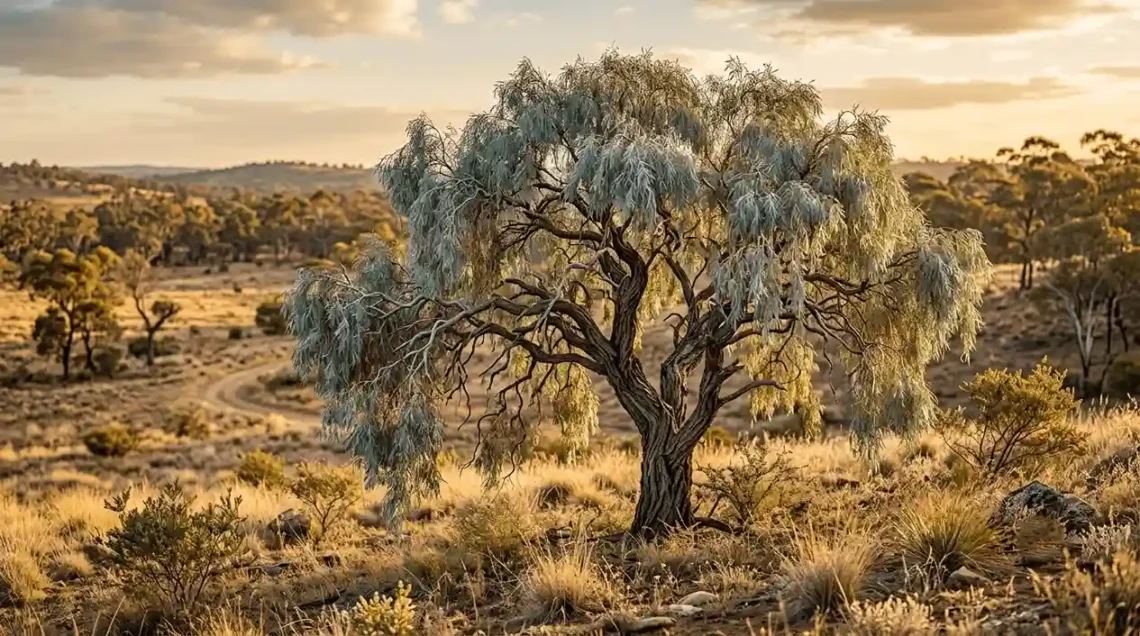
Acacia pendula is a distinctive Australian native tree admired for its elegant, drooping foliage and graceful weeping appearance. Commonly known as the boree tree, weeping myall tree, weeping acacia tree, or simply weeping myall, this species has become popular in drought-tolerant landscapes, habitat restoration projects, and water-wise gardens. Its silvery-blue foliage, resilience to harsh conditions, and long lifespan make it a valuable choice for both residential and large-scale plantings. This guide explores Acacia pendula identification, growth habits, mature size, lifespan, care requirements, propagation methods, and practical landscape applications.
As one of Australia’s most distinctive weeping native trees, Acacia pendula is often included among the best choices featured in our comprehensive guide to Australian Native Garden Trees.
By Greenery Inside | Plant Care & Gardening Expert
Quick Summary
- Acacia pendula is a drought-tolerant Australian native tree recognized for its elegant weeping form.
- The species is commonly known as the boree tree or weeping myall tree.
- It performs best in full sun and well-drained soils.
- Its growth rate, mature size, and longevity make it suitable for long-term landscape planning.
- The tree is widely used in water-wise gardens, restoration projects, and ornamental landscapes.
What Is Acacia Pendula?
Acacia pendula is a small to medium-sized Australian native tree belonging to the Fabaceae family. It is widely recognized for its pendulous branches, narrow bluish foliage, and exceptional drought tolerance. The species naturally occurs across inland regions of Australia and has adapted to challenging environmental conditions. Gardeners interested in exploring more species can also browse our complete guide to Native Trees of Australia for additional identification and care information.
Common Names and Botanical Identity
Acacia pendula is known by several common names:
- Boree tree
- Weeping myall
- Weeping acacia tree
- Weeping acacia
Like many Australian acacias, it produces phyllodes rather than true leaves. These modified leaf structures help reduce water loss and improve drought resistance.
Natural Habitat and Native Range
The species is native to inland Australia, particularly in semi-arid and arid regions.
Key habitat characteristics include:
- Low annual rainfall
- Open woodland environments
- Clay-based and alluvial soils
- Hot summers and periodic drought
Its natural adaptation to harsh environments explains its popularity in low-maintenance landscapes.
How to Identify a Weeping Acacia Tree
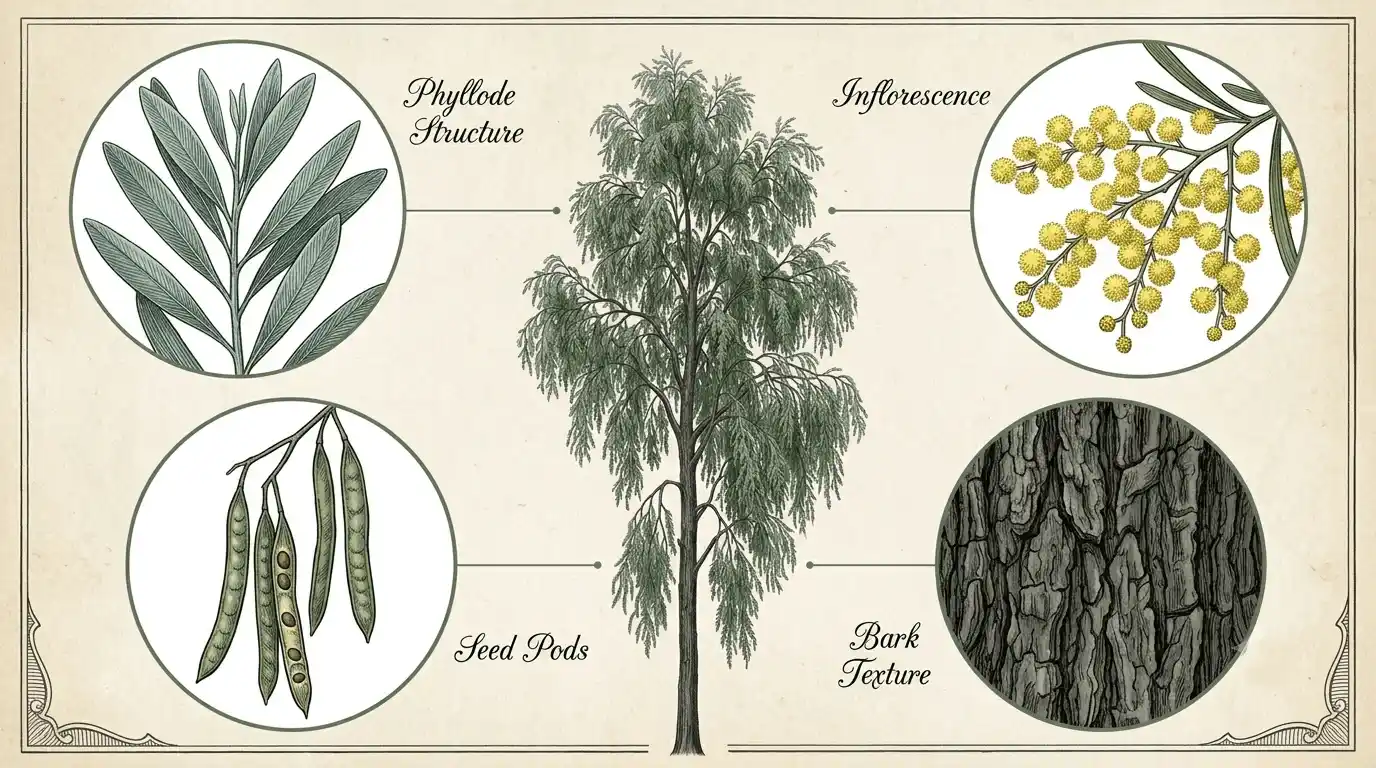
A weeping acacia tree can be identified by its distinctive form, foliage color, and branch structure.
Foliage, Branch Structure, and Growth Habit
Acacia pendula features:
- Narrow silvery-blue phyllodes
- Long pendulous branches
- Dense weeping canopy
- Rounded crown shape
The graceful drooping habit is one of the most reliable identification features and distinguishes it from many upright acacia species.
Acacia Pendula Flower Characteristics
The acacia pendula flower appears as small spherical yellow flower heads.
Characteristics include:
- Bright yellow color
- Fragrant blooms
- Typically produced during late winter and spring
- Rich nectar source for pollinators
The flowers attract bees and other beneficial insects, contributing to local biodiversity.
Bark, Seed Pods, and Seeds
The bark is typically dark gray to brown and develops a rough texture with age.
Additional features include:
- Narrow seed pods
- Dark seeds enclosed within mature pods
- Natural seed dispersal through pod splitting
Acacia pendula seed production generally increases as trees mature.
Acacia Pendula Size and Mature Growth Characteristics
Acacia pendula size varies depending on growing conditions, climate, and soil quality.
Typical Mature Height and Width
Most landscape specimens reach:
| Measurement | Typical Range |
| Height | 6–12 meters |
| Width | 4–10 meters |
The broad canopy requires adequate spacing during planting. Unlike many deciduous trees, Acacia pendula maintains its foliage year-round, making it a useful choice among Trees That Don’t Drop Leaves in Australia.
Environmental Factors That Affect Size
Several factors influence mature size:
- Soil fertility
- Water availability
- Sunlight exposure
- Climate conditions
- Competition from nearby vegetation
Trees growing in ideal conditions generally develop larger canopies and stronger branch structures.
Indoor vs Outdoor Growth Expectations
Acacia pendula is primarily an outdoor tree.
While young plants can be temporarily maintained in large containers, long-term indoor cultivation is generally unsuitable because of:
- Extensive root development
- Full sun requirements
- Mature size potential
Acacia Pendula Growth Rate and Development Stages
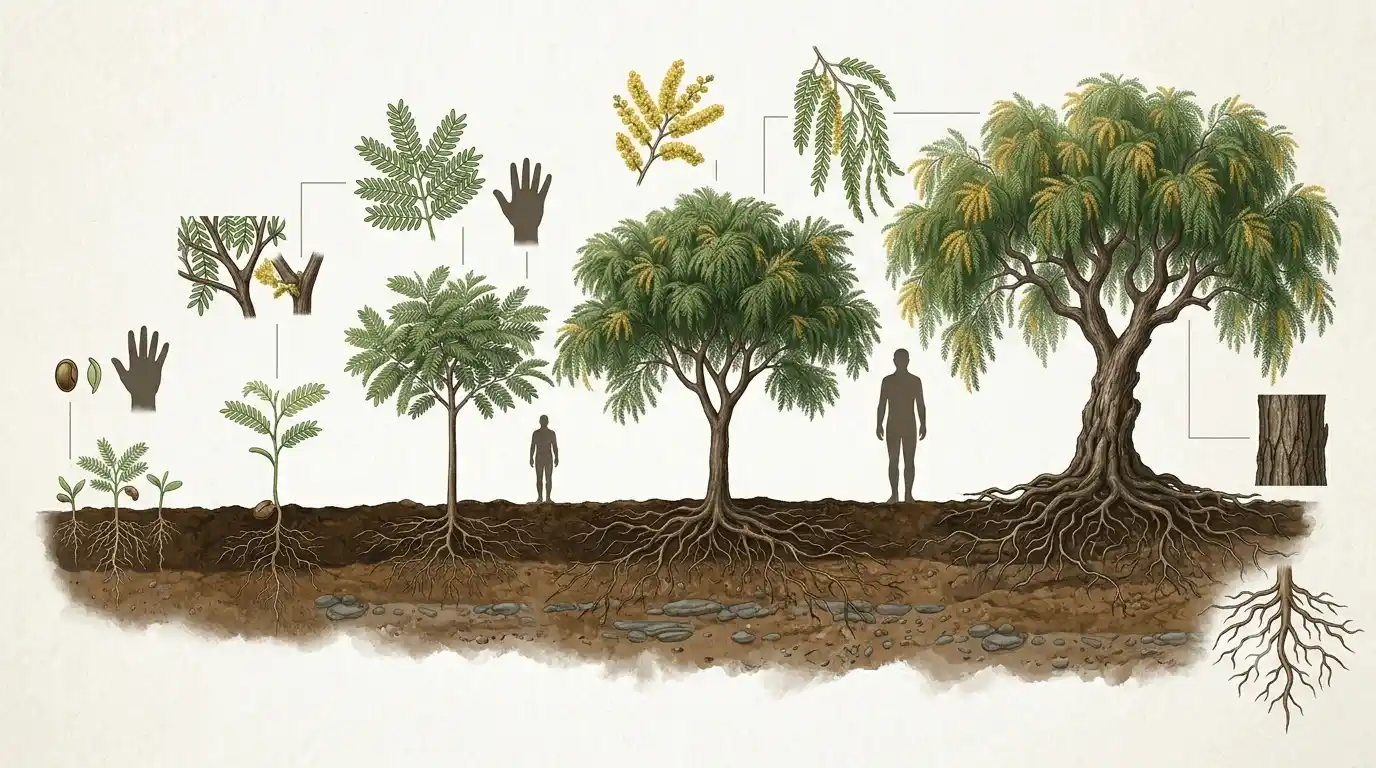
Acacia pendula growth rate is generally considered moderate.
Is Acacia Pendula Fast Growing?
Acacia pendula is moderately fast-growing compared to many native trees. Under favorable conditions, young trees commonly add 30–60 centimeters of growth annually.
In our experience growing Australian native trees, consistent establishment watering during the first two years significantly improves early growth rates.
Comparison With Fast Growing Native Australian Trees
While not among the fastest growing native Australian trees, Acacia pendula offers a balance between growth speed and longevity.
| Tree Species | Growth Rate | Mature Height | Drought Tolerance | Landscape Use |
| Acacia pendula | Moderate | 6–12 m | High | Feature tree |
| Acacia saligna | Fast | 3–8 m | High | Screening |
| Eucalyptus camaldulensis | Fast | 20–45 m | High | Large landscapes |
| Acacia melanoxylon | Moderate-Fast | 10–30 m | Moderate | Shade tree |
Growth Stages From Young Tree to Maturity
Growth typically progresses through three stages:
- Establishment phase
- Juvenile growth phase
- Mature canopy development
The first few years focus heavily on root system development before rapid canopy expansion occurs.
Acacia Pendula Lifespan and Long-Term Performance
Acacia pendula lifespan is relatively long compared to many fast-growing native species.
Average Lifespan in Landscape Settings
Under favorable conditions, trees may live between 30 and 70 years or more.
Factors affecting longevity include:
- Soil drainage
- Disease pressure
- Water management
- Climate suitability
Conditions That Support Healthy Long-Term Growth
Greenery Inside recommends:
- Selecting a permanent planting location
- Avoiding waterlogged soils
- Maintaining proper drainage
- Reducing root disturbance
These practices contribute significantly to long-term health.
Acacia Pendula Care Guide
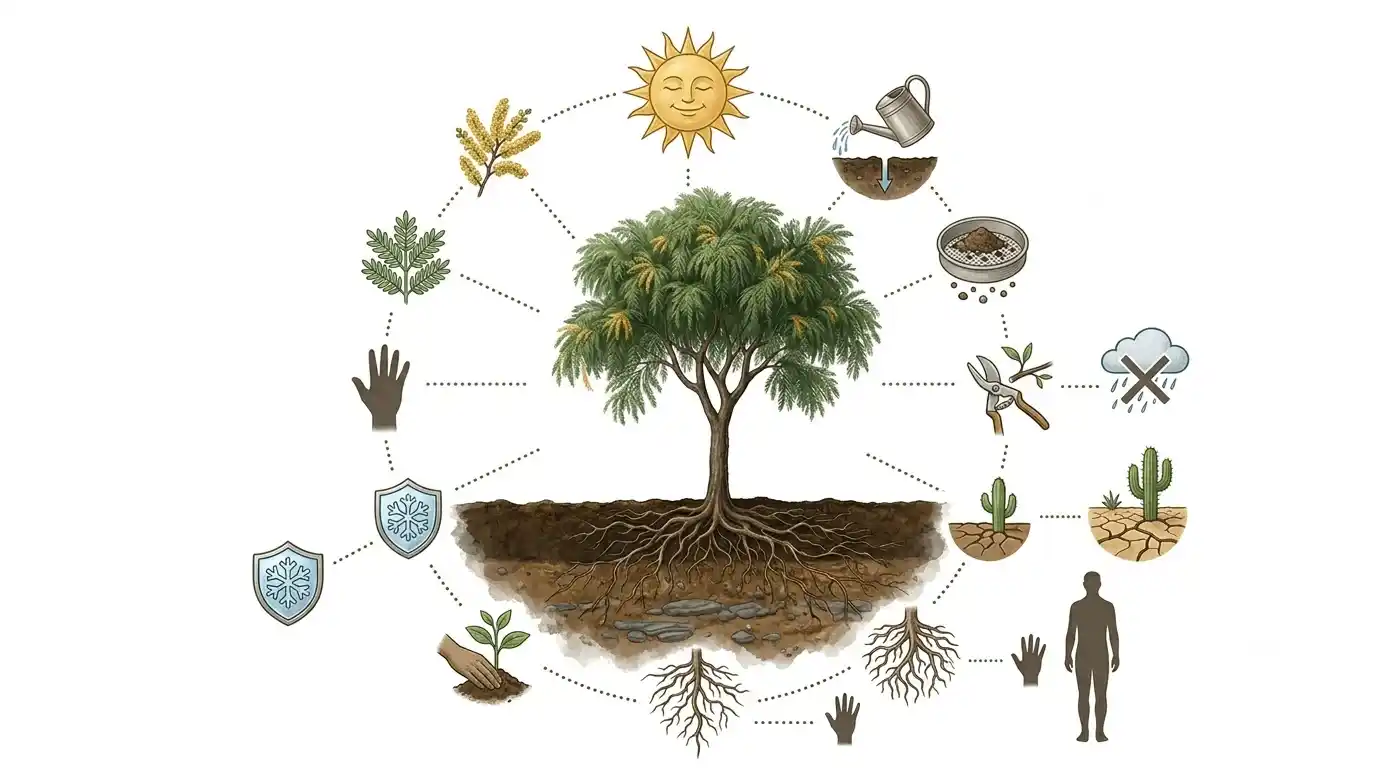
Proper care supports healthy growth and long-term landscape performance.
Watering Requirements
Young trees require regular watering during establishment.
After establishment:
- Water deeply but infrequently
- Allow soil to partially dry between watering
- Avoid consistently wet soil
Acacia pendula becomes highly drought tolerant once established.
Sunlight Requirements
Full sun is essential for optimal growth.
Benefits of full sun include:
- Better canopy development
- Stronger flowering
- Improved drought resistance
Heavy shade often reduces vigor.
Soil Preferences and Drainage Needs
Preferred soil conditions include:
- Well-drained soils
- Sandy loam
- Clay loam with good drainage
Poor drainage remains one of the most common causes of failure.
Fertilization and Nutrient Needs
Most established trees require minimal fertilization.
Avoid:
- Excessive nitrogen
- Frequent feeding
- Rich organic amendments in poorly drained sites
Pruning and Maintenance
Pruning should focus on:
- Removing damaged branches
- Correcting structural defects
- Maintaining clearance where necessary
Minimal pruning is typically required.
Climate and Temperature Tolerance
Acacia pendula tolerates:
- Extreme heat
- Periodic drought
- Light to moderate frost
As of 2026, many Australian native plant specialists continue recommending this species for climate-resilient landscapes due to its excellent drought adaptability. Due to its drought resilience and adaptability, Acacia pendula is frequently considered alongside other Fire Resistant Trees in Australia suitable for Australian gardens.
Acacia Pendula Uses in Landscaping and Environmental Projects
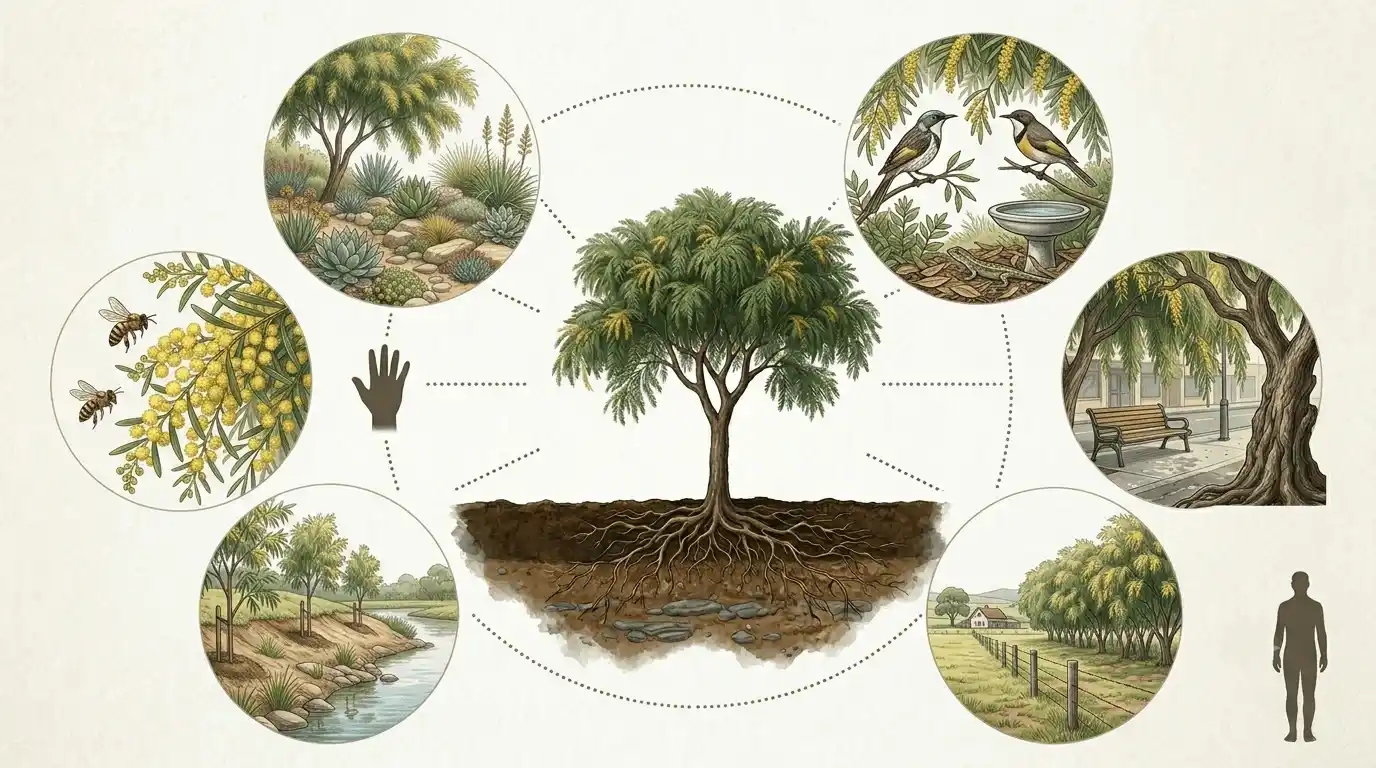
Acacia pendula uses extend beyond ornamental gardening.
Feature Tree Applications
The graceful form makes it highly effective as:
- Lawn specimen tree
- Courtyard focal point
- Architectural landscape feature
Drought-Tolerant and Water-Wise Gardens
Its low water requirements make it valuable for:
- Xeriscaping
- Sustainable landscapes
- Water-wise garden designs
Windbreaks, Shelter, and Habitat Benefits
Its resilience to harsh weather also makes it a valuable option among Australia’s best Wind Tolerant Trees Australia for exposed landscapes.
Benefits include:
- Wildlife habitat creation
- Pollinator support
- Wind protection
- Shade production
- Restoration plantings
Acacia Pendula Dwarf Forms and Cultivars
Interest in acacia pendula dwarf selections has increased among homeowners with smaller gardens.
Standard Trees vs Dwarf Varieties
Standard forms develop into medium-sized trees.
Dwarf selections generally offer:
- Reduced mature size
- Greater suitability for urban gardens
- Easier maintenance
Choosing the Right Form for Your Space
Consider:
- Available space
- Desired canopy size
- Maintenance expectations
Small gardens often benefit from compact cultivars, while larger properties can accommodate standard trees.
Common Problems and Growing Mistakes
Most issues result from site selection and watering mistakes.
Why Is a Weeping Acacia Struggling to Grow?
Common causes include:
- Poor drainage
- Inadequate sunlight
- Root competition
- Planting stress
Yellowing Foliage and Declining Health
Possible causes:
- Nutrient imbalance
- Root damage
- Waterlogging
- Environmental stress
Solutions focus on improving growing conditions and drainage.
Overwatering and Root Problems
Symptoms include:
- Yellow leaves
- Poor growth
- Dieback
- Root rot
Reducing irrigation and improving drainage often help recovery.
Common Beginner Mistakes
Common mistakes include:
- Overwatering
- Planting too deeply
- Choosing shaded locations
- Excessive fertilization
In our experience, poor drainage is responsible for more failures than drought stress.
Acacia Pendula vs Other Weeping Wattles
Many gardeners compare Acacia pendula with other weeping wattles. Another popular weeping Australian native worth comparing is the Acacia Waterfall Tree, which offers a different growth habit and mature size.
Similarities Between Weeping Acacia Trees and Other Wattles
Shared characteristics include:
- Australian origins
- Nitrogen-fixing capability
- Yellow flowers
- Wildlife benefits
Key Differences in Appearance and Growth
Differences often involve canopy form, foliage color, and mature size.
| Feature | Acacia Pendula | Other Weeping Wattles |
| Growth Habit | Strongly pendulous | Variable |
| Mature Size | 6–12 m | Varies widely |
| Drought Tolerance | High | Moderate to High |
| Landscape Use | Feature tree | Screening or ornamental |
Growing Acacia Pendula From Seed
Acacia pendula seed propagation is achievable with proper preparation.
Seed Collection and Preparation
Collect seed pods when mature and dry.
Best practices include:
- Cleaning seeds
- Dry storage
- Labeling collection dates
Germination Requirements
Successful germination often requires:
- Scarification
- Warm temperatures
- Consistent moisture
Scarification helps break the hard seed coat.
Early Seedling Care
Seedlings require:
- Bright light
- Moderate watering
- Protection from extreme weather
Transplant once roots are well established.
Regional Considerations for Growing Acacia Pendula
Regional conditions influence performance.
Growing Acacia Pendula in Perth and Similar Climates
Acacia pendula Perth plantings often perform well because of:
- Dry summers
- High sunlight levels
- Suitable rainfall patterns
Attention should still be given to drainage and establishment watering.
Environmental Limitations and Site Selection
Potential limitations include:
- High humidity
- Waterlogged soils
- Restricted root space
Urban plantings should allow adequate room for canopy and root development.
Conclusion
Acacia pendula is a highly valued Australian native tree known for its graceful weeping form, silvery-blue foliage, and exceptional drought tolerance. Its moderate growth rate, mature size of approximately 6–12 meters, and potential lifespan of several decades make it an excellent choice for long-term landscape planning. With proper site selection, well-drained soil, full sun exposure, and careful establishment care, the species performs reliably in gardens, public landscapes, and environmental restoration projects. For gardeners seeking a resilient, attractive, and low-maintenance native tree, Acacia pendula remains one of the most dependable options available.
Frequently Asked Questions
How fast does Acacia pendula grow?
Acacia pendula has a moderate growth rate and commonly grows 30–60 centimeters per year under favorable conditions.
What is the mature size of a weeping myall tree?
A mature weeping myall tree typically reaches 6–12 meters in height with a canopy spread of 4–10 meters.
How long does Acacia pendula live?
Most trees live between 30 and 70 years, although favorable growing conditions can support even greater longevity.
Does Acacia pendula produce flowers every year?
Yes. Healthy mature trees generally produce yellow flowers annually during their flowering season.
Can Acacia pendula be grown from seed?
Yes. Seed propagation is common and usually involves scarification to improve germination rates.
Is Acacia pendula drought tolerant?
Yes. Once established, Acacia pendula is highly drought tolerant and well suited to water-wise landscapes.
What are the most common problems with weeping acacia trees?
The most common problems include poor drainage, overwatering, root stress, and planting in unsuitable locations.
What is the difference between Acacia pendula and other weeping wattles?
Acacia pendula is distinguished by its strongly pendulous growth habit, silvery-blue foliage, high drought tolerance, and medium-sized mature form.