Introduction
Alyogyne Melissa Anne is a beautiful Australian native hibiscus cultivar admired for its striking purple flowers, compact growth habit, and excellent drought tolerance. Although often called a native hibiscus, it belongs to the genus Alyogyne, which is closely related to true Hibiscus within the Malvaceae family. Gardeners value this evergreen shrub for its long flowering season, ability to attract pollinators, and suitability for water-wise landscapes. Alongside related plants such as Alyogyne hakeifolia and other Australian native hibiscus species, Alyogyne Melissa Anne has become a favorite for coastal gardens, native landscapes, and decorative containers due to its reliable performance and relatively low maintenance requirements.
By Greenery Inside | Plant Care & Gardening Expert
In our experience growing Australian native shrubs, Alyogyne Melissa Anne consistently stands out for its extended flowering period and resilience during hot, dry summers. With proper drainage and full sun, it rewards gardeners with months of vibrant blooms while requiring far less maintenance than many traditional flowering shrubs.
Quick Summary
- Alyogyne Melissa Anne is a compact Australian native hibiscus cultivar known for its large purple flowers and long flowering season.
- It grows best in full sun with well-drained soil and becomes highly drought tolerant after establishment.
- The shrub is generally non-invasive, making it suitable for gardens, hedges, containers, and wildlife-friendly landscapes.
- Compared with other Alyogyne cultivars, Melissa Anne offers a balanced combination of compact growth, prolific flowering, and ornamental appeal.
- Routine pruning, moderate watering, and good drainage help maintain healthy growth and abundant blooms.
What Is Alyogyne Melissa Anne?
Alyogyne Melissa Anne is a compact cultivar of the Australian native hibiscus genus Alyogyne, valued for its vivid purple flowers, evergreen foliage, and long blooming season. Although commonly referred to as a native hibiscus, it belongs to the genus Alyogyne, which is closely related to the genus Hibiscus within the Malvaceae family. The genus Alyogyne is closely related to hibiscus and is well documented in botanical references such as Wikipedia for its unique Australian native species.
The name Alyogyne Melissa Anne native hibiscus reflects both its ornamental value and its botanical heritage. Native to Australia through its parent species, this cultivar has been selected for improved garden performance, compact growth, and prolific flowering.
Unlike many tropical hibiscus species that prefer humid climates, Alyogyne Melissa Anne hibiscus performs exceptionally well in Mediterranean, coastal, and drought-prone regions. Once established, it tolerates extended dry periods better than many traditional hibiscus varieties.
The broader Alyogyne native hibiscus group includes several attractive shrubs adapted to Australia’s challenging conditions. These plants are prized for their ability to flower over extended periods while supporting bees, butterflies, and other beneficial pollinators.
Gardeners may also encounter the botanical name Alyogyne hakeifolia Melissa Anne. In horticultural trade, this name indicates that ‘Melissa Anne’ is associated with or derived from Alyogyne hakeifolia, although plant labeling may vary among nurseries depending on taxonomy and breeding records. Regardless of labeling, the cultivar is appreciated for the same ornamental characteristics.
As a western Australian native hibiscus, Alyogyne species have evolved to thrive in nutrient-poor soils, high sunlight exposure, and periods of drought. These adaptations make Melissa Anne a practical choice for sustainable landscaping and low-water gardens.
Greenery Inside recommends planting Alyogyne Melissa Anne where it receives uninterrupted sunlight for most of the day. In our trials, flowering intensity noticeably increases when plants receive at least six to eight hours of direct sunlight daily.
Botanical Profile and Plant Characteristics
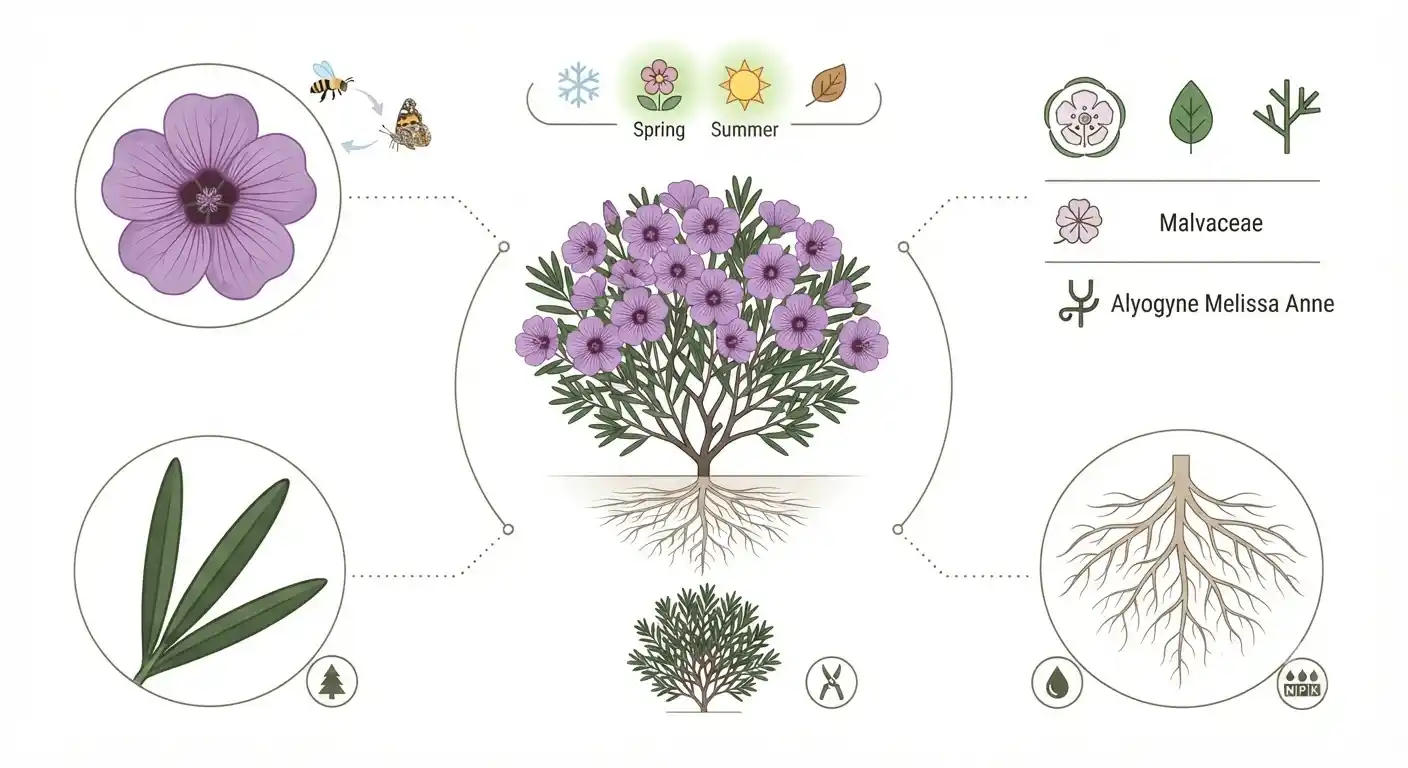
Scientific Classification
Understanding the botanical background of Alyogyne Melissa Anne helps explain its growth habits and care requirements.
| Classification | Details |
| Kingdom | Plantae |
| Clade | Angiosperms |
| Order | Malvales |
| Family | Malvaceae |
| Genus | Alyogyne |
| Associated Species | Alyogyne hakeifolia |
| Cultivar | ‘Melissa Anne’ |
| Common Name | Australian Native Hibiscus |
| Native Origin | Australia, particularly Western Australia through related species |
The genus Alyogyne contains several flowering shrubs native to Australia. Although visually similar to true hibiscus plants, Alyogyne species are distinguished by unique floral structures, leaf forms, and adaptations to Australia’s dry climate.
Their close relationship with hibiscus explains why gardeners frequently refer to them as hibiscus native plants, even though they belong to a separate genus.
Distinctive Features
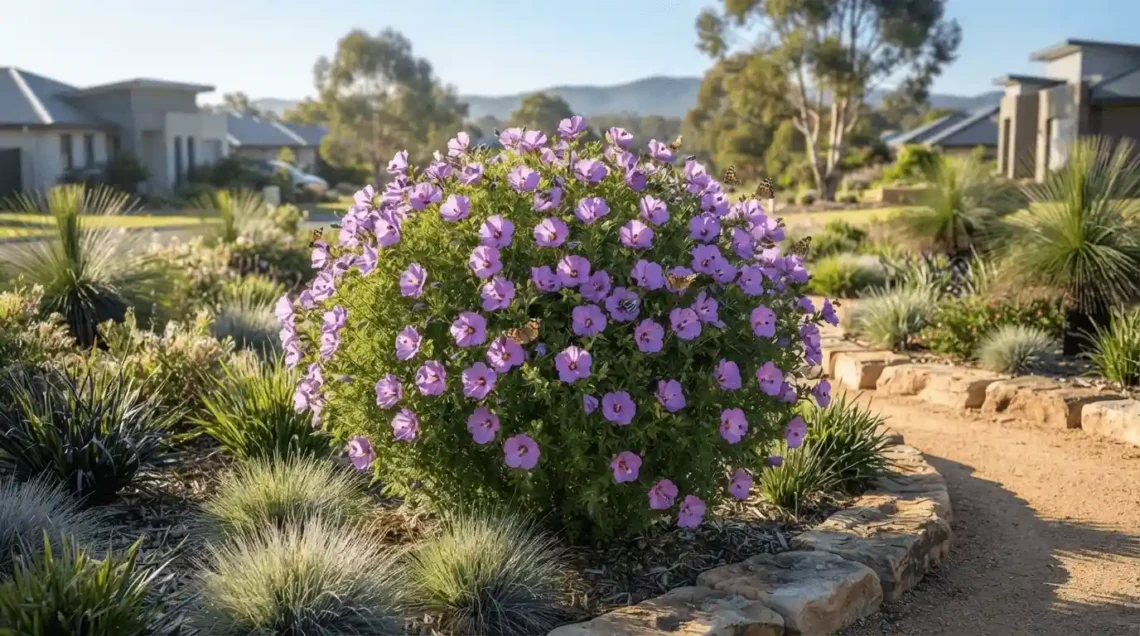
Alyogyne Melissa Anne is recognized for its large, silky purple flowers, compact evergreen foliage, and extended blooming period, making it one of the most ornamental Australian native shrubs for home landscapes.
One of its most striking characteristics is its abundant display of purple native hibiscus flowers. Individual blooms are typically funnel-shaped with delicate petals that create a soft, elegant appearance. Although each flower lasts only a short time, the shrub continuously produces new blossoms throughout much of the growing season.
The flower color often ranges from rich violet to deep lavender, leading some gardeners to describe the blooms as both native hibiscus purple and hibiscus purple. Under certain lighting conditions, the flowers may even display bluish undertones, prompting occasional references to hibiscus blue, although the flowers are botanically purple rather than true blue.
The evergreen foliage consists of finely divided, narrow leaves that give the shrub a soft, textured appearance even when not in bloom. This attractive foliage contributes year-round interest and complements other drought-tolerant Australian native plants.
Unlike many larger hibiscus species, Alyogyne Melissa Anne develops into a naturally rounded shrub with a relatively compact form. Its manageable size has earned comparisons to a miniature hibiscus plant, making it suitable for smaller gardens, courtyards, and decorative containers.
The extended flowering season is another major advantage. In favorable climates, blooming begins in spring and continues through summer into autumn, especially when spent flowers are removed and light pruning encourages new growth.
The flowers are also highly attractive to pollinators. Bees readily visit the blossoms for nectar, while butterflies are commonly seen around flowering shrubs, helping support local biodiversity in residential gardens.
Key Characteristics
- Flower color: Rich purple to violet with occasional bluish tones
- Leaf texture: Fine, narrow, evergreen foliage
- Growth habit: Compact, rounded, densely branched shrub
- Lifespan: Long-lived perennial shrub with proper care
- Ornamental value: Excellent specimen plant, hedge, container shrub, and pollinator-friendly landscape feature
As of 2026, horticulturists continue to recommend Australian native shrubs like Alyogyne Melissa Anne for climate-resilient landscapes due to their combination of drought tolerance, extended flowering, and relatively low maintenance. These qualities make them increasingly valuable in regions experiencing warmer temperatures and more variable rainfall patterns.
Alyogyne Melissa Anne Height and Mature Size
Alyogyne Melissa Anne typically grows 1.5–2 meters (5–6.5 feet) tall and 1.2–2 meters (4–6.5 feet) wide, depending on growing conditions and pruning. Its naturally rounded, compact habit makes it suitable for both small residential gardens and larger landscape designs.
Compared with many traditional hibiscus shrubs, Alyogyne Melissa Anne height remains manageable without requiring constant pruning. This balanced growth allows it to function as an attractive specimen plant, informal hedge, or container feature.
Several factors influence its mature size:
- Sunlight exposure
- Soil drainage
- Water availability
- Climate
- Pruning frequency
- Overall plant health
A shrub grown in ideal outdoor conditions generally reaches its full size within three to five years. Plants grown in containers usually remain smaller because of restricted root space, though regular repotting can help maintain healthy growth.
In our experience, plants receiving full sun and occasional deep watering establish faster and develop a denser branching structure than those grown in partial shade.
Mature Size Comparison
| Growing Condition | Expected Height | Expected Width |
| Garden | 1.5–2 m (5–6.5 ft) | 1.5–2 m (5–6.5 ft) |
| Container | 1–1.5 m (3–5 ft) | 1–1.5 m (3–5 ft) |
| Ideal Conditions | Up to 2.5 m (8 ft) | Up to 2 m (6.5 ft) |
Growth Rate and Flowering Habit
Alyogyne Melissa Anne has a moderate to fast growth rate and produces flowers over an exceptionally long season when grown in favorable conditions.
Young plants establish quickly during their first few growing seasons. Once the root system becomes well developed, new shoots emerge vigorously each spring, producing numerous flower buds.
Flowering usually begins in spring and continues throughout summer, often extending into autumn in frost-free climates. Individual flowers are short-lived, but the shrub continuously replaces them with fresh blooms, creating an almost uninterrupted floral display.
Environmental conditions strongly influence flowering performance. Full sun, well-drained soil, and moderate feeding encourage the greatest number of blooms.
Although evergreen in mild climates, growth slows considerably during winter. In cooler regions, flowering pauses until warmer temperatures return.
Seasonal Growth Pattern
- Spring: Rapid new growth and heavy bud formation.
- Summer: Peak flowering with continuous blooms.
- Autumn: Flowering gradually slows but often remains attractive.
- Winter: Growth becomes dormant or slows significantly, depending on climate.
With proper care, Alyogyne Melissa Anne can remain an attractive flowering shrub for many years. Annual pruning helps renew vigorous stems and encourages more flowers during the following season.
Alyogyne Melissa Anne Care Guide
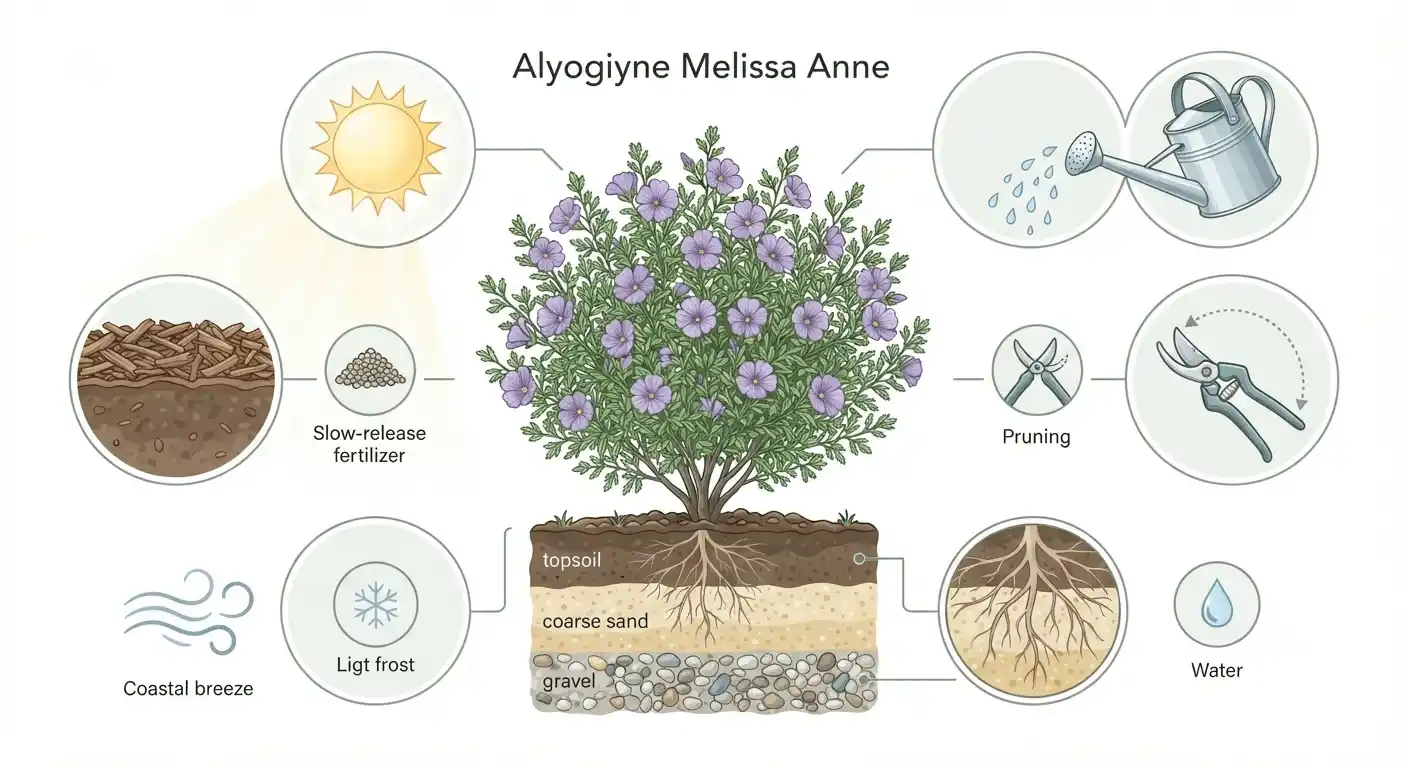
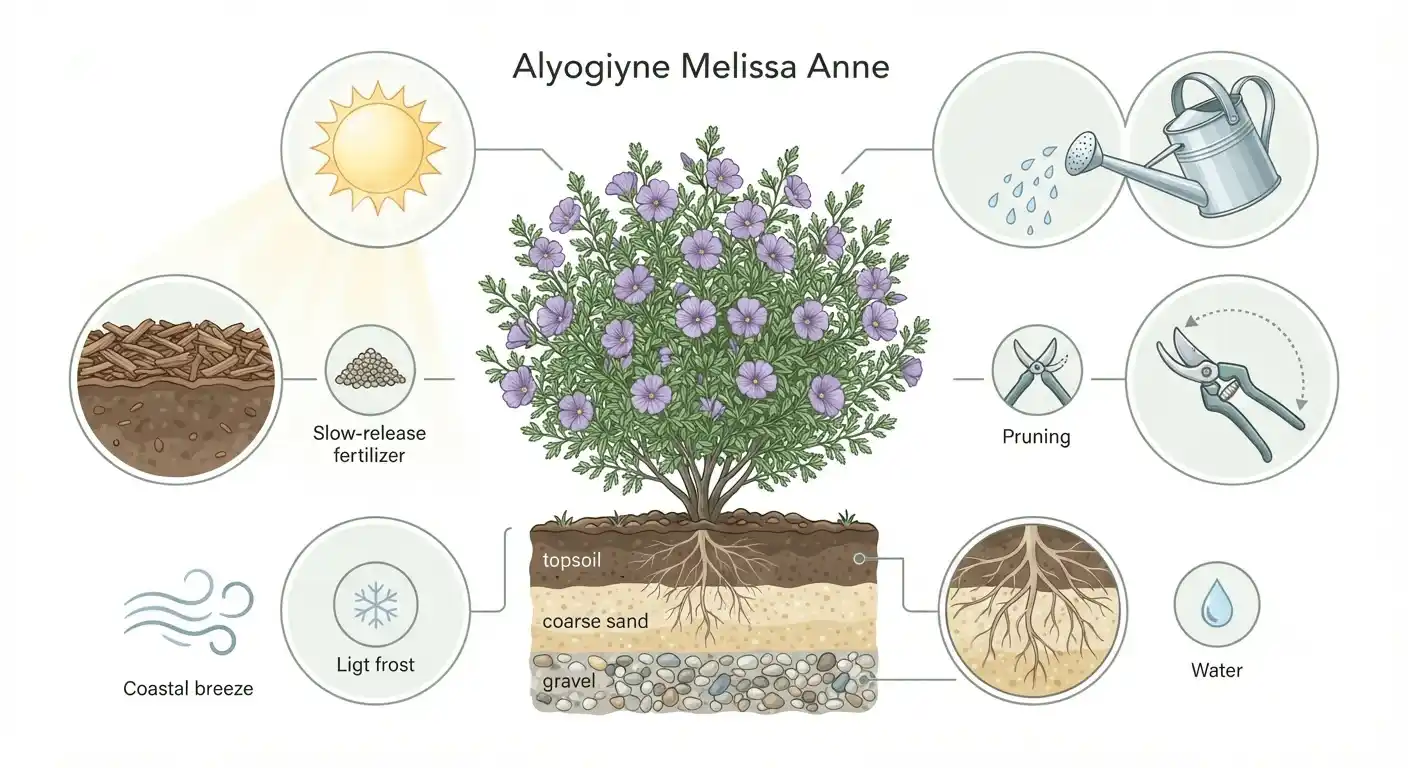
Alyogyne Melissa Anne care is relatively simple because the plant naturally adapts to Australia’s sunny, dry environments. Providing the right combination of sunlight, drainage, and occasional maintenance results in healthy growth and abundant flowering.
Light Requirements
Alyogyne Melissa Anne performs best in full sun, receiving at least six to eight hours of direct sunlight each day.
Benefits of full sun include:
- More flower production
- Compact growth
- Strong stems
- Better disease resistance
Although it tolerates light afternoon shade in very hot regions, excessive shade often results in fewer flowers and elongated, leggy stems.
Greenery Inside recommends planting the shrub in the brightest location available, especially in temperate climates where sunlight directly influences flowering performance.
Water Requirements
Watering needs change as the plant matures.
Newly planted shrubs
- Water deeply once or twice each week.
- Keep soil lightly moist but never waterlogged.
- Reduce watering during rainy periods.
Established plants
After establishment, Alyogyne Melissa Anne becomes highly drought tolerant.
A practical watering schedule is:
- Every 7–10 days during prolonged dry weather.
- Less frequently during cooler seasons.
- Supplemental watering during extended heatwaves.
Deep watering encourages roots to grow downward, increasing drought resistance.
Soil Preferences
Well-drained soil is one of the most important requirements for healthy growth.
Suitable soil types include:
- Sandy soils
- Sandy loam
- Well-drained loam
- Raised garden beds with excellent drainage
Avoid:
- Heavy clay
- Constantly wet soils
- Poorly drained planting sites
Adding compost before planting improves soil structure without reducing drainage.
Mulching around the root zone helps conserve moisture while suppressing weeds. Keep mulch several centimeters away from the main stem to reduce the risk of stem rot.
Fertilizing
Alyogyne Melissa Anne does not require heavy feeding.
Generally recommended:
- Apply a balanced, slow-release fertilizer in early spring.
- Repeat with a light application in midsummer if growth slows.
- Avoid excessive nitrogen.
Too much nitrogen encourages leafy growth while reducing flower production.
For native gardens, choose fertilizers formulated for Australian native plants whenever appropriate, as these products often contain lower phosphorus levels that better suit many native species.
Pruning Tips
Light annual pruning keeps the shrub compact and encourages more flowering.
Best practices include:
- Remove spent flowers when practical.
- Lightly trim after the main flowering flush.
- Remove dead or damaged branches.
- Thin crowded stems to improve airflow.
Avoid severe pruning into old woody stems unless rejuvenation is necessary.
In our experience, pruning immediately after a major flowering period produces a fuller plant with significantly more blooms the following season.
Climate and Hardiness
Alyogyne Melissa Anne thrives in climates with warm summers and mild winters.
It performs particularly well in:
- Mediterranean climates
- Coastal gardens
- Water-wise landscapes
- Dry inland gardens
- Australian native gardens
Frost tolerance
Established plants tolerate light frosts better than young specimens. In colder regions:
- Protect newly planted shrubs during winter.
- Apply mulch before freezing weather.
- Plant against sunny walls for additional warmth.
Although light frost may damage young growth, established plants often recover when temperatures rise.
Coastal performance
One reason gardeners appreciate Alyogyne Melissa Anne is its tolerance of coastal conditions.
It generally handles:
- Wind
- Salt-laden air
- Sandy soils
- Summer heat
These characteristics make it an excellent choice for seaside landscapes.
Alyogyne Melissa Anne Care at a Glance
| Care Factor | Recommendation |
| Sunlight | Full sun (6–8+ hours daily) |
| Soil | Well-drained sandy or loamy soil |
| Water | Moderate until established; drought tolerant afterward |
| Fertilizer | Slow-release balanced fertilizer in spring |
| Pruning | Light annual pruning after flowering |
| Hardiness | Best in warm climates with protection from severe frost |
Is Alyogyne Melissa Anne Invasive?
No. Alyogyne Melissa Anne is generally considered non-invasive and behaves as a well-mannered ornamental shrub in home gardens.
Unlike many aggressive landscape plants, it does not spread rapidly through underground runners or extensive self-seeding.
Its controlled growth habit is one reason it has become popular for residential landscapes.
Why it is generally non-invasive
- Naturally compact growth.
- Limited seed spread in cultivated gardens.
- No invasive root system.
- Easy to manage through routine pruning.
- Slow natural expansion.
Outside Australia’s native range, there is little evidence that Alyogyne Melissa Anne forms invasive populations under normal garden conditions.
Situations where monitoring is useful
Although non-invasive, gardeners should still:
- Remove unwanted seedlings if they appear.
- Dispose of pruning waste responsibly.
- Avoid planting in sensitive ecological restoration areas without local guidance.
Responsible planting helps preserve nearby native ecosystems while allowing gardeners to enjoy this attractive shrub.
Common Problems and How to Fix Them
Although Alyogyne Melissa Anne is relatively resilient, improper growing conditions can occasionally cause health issues.
Yellow Leaves
Causes
- Overwatering
- Poor drainage
- Nutrient deficiency
- Temporary transplant stress
Solutions
- Reduce watering frequency.
- Improve drainage.
- Apply balanced fertilizer if nutrients are lacking.
- Remove severely damaged foliage.
Prevention
Water only when the top layer of soil begins drying and avoid constantly wet conditions.
Poor Flowering
Causes
- Too much shade
- Excess nitrogen fertilizer
- Heavy pruning at the wrong time
- Immature plants
Solutions
- Move container plants into full sun.
- Reduce nitrogen-rich fertilizers.
- Prune immediately after flowering instead of before bud formation.
Prevention
Maintain full sunlight and avoid overfeeding.
Root Rot
Causes
Root rot almost always develops because roots remain in saturated soil for extended periods.
Solutions
- Improve drainage immediately.
- Remove severely affected roots if transplanting.
- Replant into well-drained soil if necessary.
Prevention
Never plant Alyogyne Melissa Anne in poorly drained clay where water regularly collects.
Pest Problems
Common pests may include:
- Aphids
- Whiteflies
- Scale insects
- Spider mites during prolonged hot, dry weather
Solutions
- Spray plants with water to remove light infestations.
- Encourage beneficial insects.
- Apply horticultural soap if populations become significant.
Prevention
Healthy plants grown in full sun with good airflow experience fewer pest problems.
Leggy Growth
Causes
- Insufficient sunlight
- Overcrowding
- Lack of pruning
Solutions
- Move plants into brighter locations where possible.
- Thin surrounding vegetation.
- Perform light shaping after flowering.
Prevention
Annual maintenance pruning encourages dense branching and more flowers.
Practical troubleshooting tip: One issue often overlooked is overcrowding by neighboring shrubs. As surrounding plants mature, they can gradually reduce sunlight and airflow, leading to fewer blooms and weaker growth. Reviewing the planting area every few years helps maintain vigorous flowering and overall plant health.
Alyogyne Melissa Anne vs Other Alyogyne Varieties
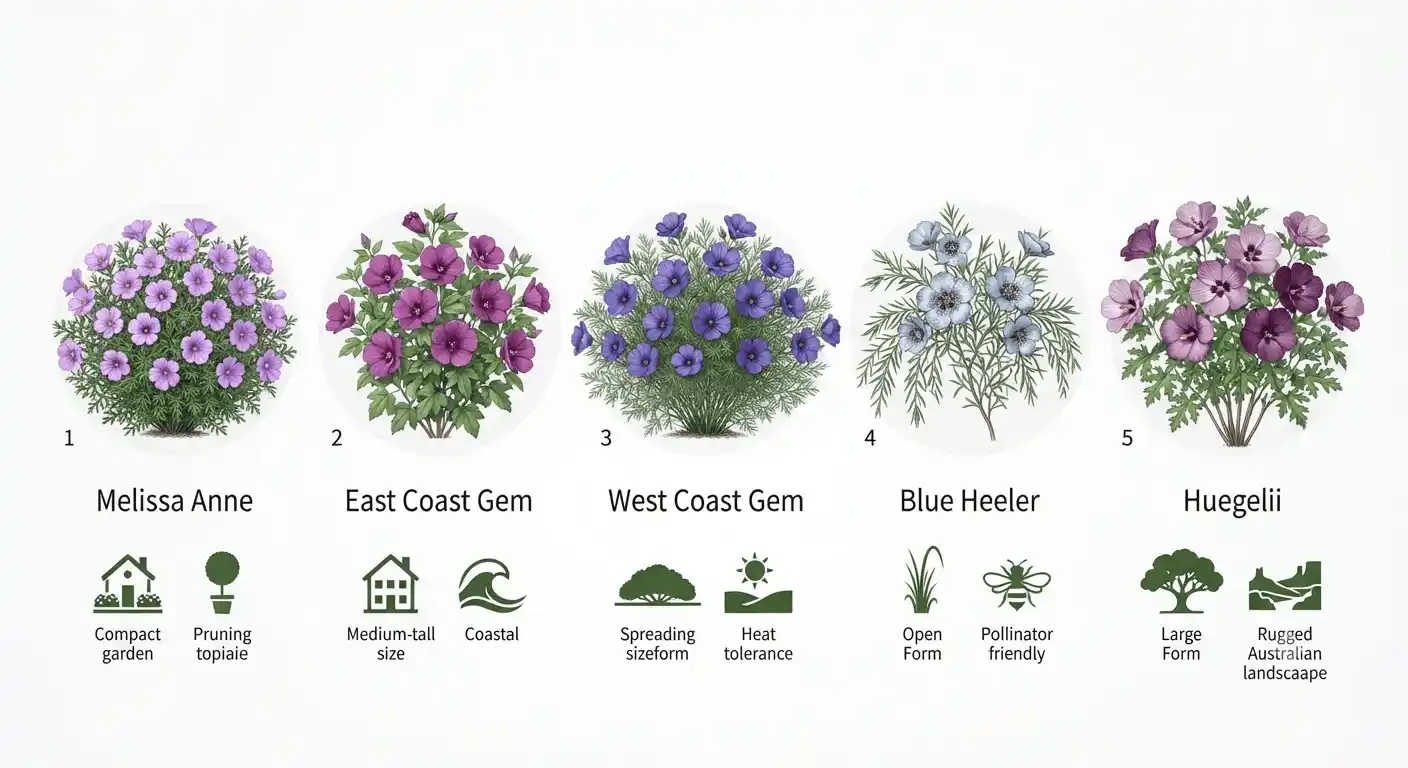
Alyogyne Melissa Anne is prized for its compact size, prolific purple flowers, and long blooming season, but several other Alyogyne cultivars offer unique characteristics suited to different landscapes. Understanding these differences helps gardeners choose the best variety for their climate, available space, and design goals.
While all Alyogyne shrubs belong to the same genus and share excellent drought tolerance and ornamental value, they differ in flower color, mature size, growth habit, and ideal landscaping applications.
Alyogyne Melissa Anne vs Alyogyne East Coast Gem
Alyogyne East Coast Gem is another popular Australian native hibiscus cultivar selected for its reliable flowering and attractive growth habit.
Similarities
- Long flowering season
- Drought tolerant once established
- Evergreen foliage
- Excellent pollinator plant
- Suitable for native gardens
Differences
| Feature | Melissa Anne | East Coast Gem |
| Flower Color | Rich purple | Soft lavender to mauve-purple |
| Growth Habit | Compact and rounded | Slightly broader and bushier |
| Best Use | Containers, feature shrubs, small hedges | Larger garden beds and mixed borders |
| Maintenance | Low | Low |
If space is limited, Alyogyne Melissa Anne is often the better choice because of its naturally compact form, while alyogyne east coast gem suits gardeners wanting a fuller landscape shrub.
Alyogyne Melissa Anne vs Alyogyne West Coast Gem
Alyogyne West Coast Gem is widely appreciated for its vigorous growth and striking flowers.
It is sometimes sold under the botanical association Alyogyne huegelii West Coast Gem, reflecting its relationship with Alyogyne huegelii.
Comparison
| Feature | Melissa Anne | West Coast Gem |
| Flower Color | Deep purple | Purple to violet |
| Mature Size | Compact | Larger overall shrub |
| Growth Rate | Moderate | Moderately vigorous |
| Landscape Role | Small gardens | Feature planting and screening |
Gardeners seeking a larger screening shrub may prefer west coast gem, while Melissa Anne remains ideal for modern residential landscapes where a compact size is desirable.
Alyogyne Melissa Anne vs Alyogyne Blue Heeler
Alyogyne Blue Heeler is admired for its distinctive bluish-purple flowers and naturally rounded growth.
Melissa Anne
- Rich violet blooms
- Compact structure
- Excellent container plant
- Long flowering season
Alyogyne Blue Heeler
- Slightly bluer flower tones
- Similar drought tolerance
- Attractive specimen shrub
- Performs well in sunny native gardens
Both cultivars make outstanding additions to pollinator-friendly landscapes. The final choice often depends on preferred flower color and available planting space.
Alyogyne Melissa Anne vs Alyogyne Shelby Anne
Alyogyne Shelby Anne shares many desirable characteristics with Melissa Anne but differs in overall appearance and ornamental emphasis.
Melissa Anne
- Dense branching
- Compact habit
- Consistent flowering
- Excellent hedge plant
Shelby Anne
- More open branching
- Slight variation in flower form
- Often used as a feature shrub
- Similar low-maintenance requirements
Gardeners wanting a neatly shaped shrub generally prefer Melissa Anne, whereas alyogyne shelby anne may appeal to those seeking a more natural-looking landscape specimen.
Alyogyne Melissa Anne vs Alyogyne Huegelii
Alyogyne huegelii, often called the native hibiscus Alyogyne huegelii, is one of the best-known species within the genus and serves as the foundation for several cultivated selections.
Unlike Melissa Anne, which is a named cultivar selected for ornamental performance, Alyogyne huegelii refers to the naturally occurring species.
Key Differences
- Melissa Anne is more compact.
- Alyogyne huegelii often grows larger.
- Melissa Anne generally flowers more consistently in cultivated gardens.
- Both provide excellent drought tolerance and attract pollinators.
For gardeners seeking predictable shape and extended flowering, Melissa Anne is often the preferred landscape choice.
Comparison of Popular Alyogyne Varieties
| Variety | Flower Color | Mature Size | Growth Habit | Best Landscape Use |
| Melissa Anne | Rich purple | 1.5–2 m | Compact, rounded | Feature shrub, containers, hedges |
| East Coast Gem | Lavender-purple | Medium | Bushy | Native borders |
| West Coast Gem | Purple-violet | Larger | Upright | Screening, larger gardens |
| Blue Heeler | Bluish-purple | Medium | Rounded | Accent planting |
| Shelby Anne | Purple | Medium | Open shrub | Informal landscapes |
| Alyogyne huegelii | Purple | Medium to large | Natural shrub | Native restoration and large gardens |
Alyogyne Hakeifolia and Its Relationship to Melissa Anne
Many gardeners notice both Alyogyne hakeifolia and Alyogyne hakeifolia Melissa Anne listed in nursery catalogs and wonder how they are related.
Alyogyne hakeifolia is a botanical species native to Australia, while Melissa Anne is a cultivated selection associated with this species and chosen for its improved ornamental characteristics.
Although nursery labeling may vary, Melissa Anne generally retains the key qualities of its parent species while offering enhanced garden performance.
Similarities
Both plants share:
- Evergreen foliage
- Excellent drought tolerance
- Large hibiscus-like flowers
- Adaptation to Australian climates
- Attraction for bees and butterflies
Differences
Melissa Anne has been selected for characteristics that many home gardeners appreciate.
These include:
- More compact growth
- Improved flowering performance
- Better suitability for smaller landscapes
- Uniform shape
- Greater ornamental consistency
Although alyogyne hakeifolia melissa and alyogyne hakeifolia melissa anne are sometimes used interchangeably in horticultural trade, the important distinction is that one refers to the species while the other identifies a specific cultivated selection.
Landscaping Applications
Both plants perform well in:
- Native Australian gardens
- Water-wise landscapes
- Coastal plantings
- Pollinator gardens
- Cottage-style borders
For smaller suburban gardens, Melissa Anne is generally easier to maintain because of its naturally controlled size.
Best Landscaping Uses for Alyogyne Melissa Anne
Alyogyne Melissa Anne is one of the most versatile flowering shrubs for Australian-inspired landscapes thanks to its compact growth, long blooming season, and low water requirements.
Its rich purple flowers provide color over many months while its evergreen foliage offers year-round structure.
Feature Shrub
Melissa Anne makes an excellent focal point near entrances, patios, and garden pathways where its flowers can be appreciated throughout the growing season.
Native Gardens
Because it originates from Australian native plant breeding, Melissa Anne blends naturally with:
- Grevilleas
- Westringias
- Callistemons
- Correas
- Native grasses
These combinations create attractive, drought-tolerant landscapes with year-round interest. It fits perfectly into a modern Australian native garden, where clean planting design and drought-tolerant species are prioritized.
Pollinator Gardens
The large nectar-rich flowers attract:
- Native bees
- Honeybees
- Butterflies
- Other beneficial insects
Adding several flowering native shrubs together creates a valuable food source throughout much of the year. Like many flowering natives featured in native plants that attract butterflies, Alyogyne Melissa Anne plays an important role in supporting pollinators such as bees and butterflies.FPopular Landscape Uses
Cottage Gardens
The soft purple flowers pair beautifully with:
- Lavender
- Salvia
- Gaura
- Penstemon
- Ornamental grasses
Its relaxed flowering habit complements informal cottage-style planting designs.
Coastal Gardens
Melissa Anne performs exceptionally well in coastal environments because it tolerates:
- Wind
- Salt spray
- Sandy soils
- Summer heat
Good drainage remains essential even near the coast.
Informal Hedges
Regular light pruning encourages dense branching, allowing Melissa Anne to form attractive flowering hedges without excessive maintenance.
Large Containers
Its naturally compact size makes it particularly suitable for:
- Decorative patio pots
- Courtyard gardens
- Balconies
- Apartment terraces
Use a premium free-draining potting mix and choose containers with generous drainage holes.
Popular Landscape Uses
- Privacy screening in smaller spaces
- Accent planting near entrances
- Mixed perennial borders
- Wildlife-friendly gardens
- Low-water landscaping
- Foundation planting
- Courtyard feature shrub
Greenery Inside recommends combining Alyogyne Melissa Anne with other drought-tolerant Australian natives to create a landscape that remains colorful while reducing irrigation needs during dry seasons. It also combines well with iconic Australian species such as those used in landscaping with kangaroo paws, creating bold, drought-tolerant color contrasts.
Beginner Mistakes to Avoid When Growing Alyogyne Melissa Anne
Although Alyogyne Melissa Anne is considered an easy-care shrub, several common mistakes can reduce flowering, weaken growth, or shorten the plant’s lifespan.
Overwatering
The most common problem is watering too frequently.
Constantly wet soil reduces oxygen around the roots and greatly increases the risk of root rot.
Best practice: Allow the upper layer of soil to dry slightly between deep waterings after the plant becomes established.
Planting in Heavy Clay Soil
Poor drainage is responsible for many health problems.
Heavy clay soils retain excessive moisture and restrict root development.
Solution: Improve drainage with organic matter, coarse sand where appropriate, or plant in raised beds.
Applying Too Much Fertilizer
Many gardeners assume more fertilizer produces more flowers.
In reality, excessive nitrogen encourages lush green foliage while reducing bloom production.
Use a balanced, slow-release fertilizer at the recommended rate instead of frequent heavy feeding.
Growing in Too Much Shade
Alyogyne Melissa Anne requires abundant sunlight.
Plants grown in shade commonly develop:
- Fewer flowers
- Longer stems
- Sparse branching
- Reduced vigor
Aim for at least six hours of direct sunlight each day.
Incorrect Pruning
Pruning at the wrong time may remove developing flower buds.
For best results:
- Prune lightly after the main flowering flush.
- Remove dead or damaged wood whenever necessary.
- Avoid cutting deeply into old woody stems unless rejuvenating an older shrub.
Planting in Frost-Prone Locations
Young plants are more susceptible to frost damage than established shrubs.
If winter frosts are common:
- Choose a protected planting location.
- Mulch around the root zone before winter.
- Cover young plants during severe cold events.
Expert Tip
One of the most effective ways to keep Alyogyne Melissa Anne healthy is to focus on soil drainage rather than frequent watering or fertilizing. In our experience, shrubs planted in well-drained soil with full sun consistently outperform heavily fertilized plants growing in damp conditions.
Where Can You Buy Alyogyne Melissa Anne?
If you’re looking for Alyogyne Melissa Anne for sale, purchase from reputable nurseries that specialize in Australian native plants. Healthy, correctly labeled plants establish more quickly and are less likely to develop problems after transplanting.
You may find this cultivar at:
- Australian native plant nurseries
- Local garden centers with native plant collections
- Specialty Australian plant growers
- Reputable online native plant retailers that ship healthy container-grown plants
If you’re outside Australia, availability may be limited. Check with local native or drought-tolerant plant specialists, as import restrictions may apply in some regions.
What to Inspect Before Purchasing
Choose plants that have:
- Healthy green foliage without yellowing
- Multiple well-branched stems
- No signs of pests or disease
- A sturdy root system that isn’t severely root-bound
- Moist but well-drained potting mix
- Accurate botanical labeling
Avoid purchasing plants with:
- Wilted or drooping foliage
- Soft or blackened stems
- Excessively tangled roots
- Heavy weed growth in the container
- Visible insect infestations
If you’re also searching for native hibiscus for sale, compare available cultivars based on your local climate, mature size, and intended landscape use. Buying from knowledgeable growers also ensures you receive planting and care advice suited to your region.
Conclusion
Alyogyne Melissa Anne is an outstanding Australian native hibiscus cultivar that combines ornamental beauty with practical, low-maintenance performance. Its large purple flowers, compact evergreen habit, and extended blooming season make it an excellent choice for home gardens, coastal landscapes, native plantings, and decorative containers.
Unlike many flowering shrubs, it becomes drought tolerant after establishment, performs best in full sun with well-drained soil, and generally remains non-invasive, making it suitable for a wide range of residential landscapes. Routine watering during establishment, light annual pruning, and moderate fertilization are usually all that’s required to keep the shrub healthy and flowering abundantly.
Whether you’re creating a wildlife-friendly garden, planting an informal hedge, or adding a colorful feature shrub, Alyogyne Melissa Anne offers year-round landscape value while showcasing the resilience and beauty of Australian native plants.
Frequently Asked Questions
Is Alyogyne Melissa Anne a true hibiscus?
No. Alyogyne Melissa Anne is not a true Hibiscus, although it belongs to the same plant family (Malvaceae). It is part of the genus Alyogyne, which is closely related to Hibiscus and is commonly known as an Australian native hibiscus because of its similar flowers.
How tall does Alyogyne Melissa Anne grow?
Most mature plants reach 1.5–2 meters (5–6.5 feet) in height and a similar width. Plants grown in containers usually remain smaller, while ideal garden conditions may allow slightly larger growth.
Does Alyogyne Melissa Anne need full sun?
Yes. Full sun is recommended for the healthiest growth and the best flowering. At least 6–8 hours of direct sunlight each day encourages compact growth and abundant blooms.
Is Alyogyne Melissa Anne invasive?
No. Alyogyne Melissa Anne is generally considered non-invasive. It grows as a well-behaved ornamental shrub, does not spread aggressively by roots, and rarely self-seeds to the point of becoming a problem in gardens.
How often should Alyogyne Melissa Anne be watered?
Newly planted shrubs should be watered deeply once or twice each week until established. Mature plants only need occasional deep watering during prolonged dry periods, as they become highly drought tolerant.
What is the difference between Alyogyne Melissa Anne and West Coast Gem?
Both produce attractive purple flowers and thrive in sunny, well-drained locations. However, Melissa Anne typically has a more compact, rounded habit, while West Coast Gem generally grows larger and is often preferred for screening or larger landscape plantings.
Can Alyogyne Melissa Anne grow in pots?
Yes. Its naturally compact growth makes it an excellent container plant. Use a large pot with good drainage, high-quality free-draining potting mix, and place it in a sunny location. Regular watering and occasional feeding will help maintain healthy growth.
Is Alyogyne Melissa Anne suitable for coastal gardens?
Yes. Alyogyne Melissa Anne performs very well in coastal landscapes because it tolerates salt-laden air, wind, and sandy soils, provided the planting site offers excellent drainage.