Introduction
Goodenia ovata is an adaptable Australian native shrub valued for its attractive yellow flowers, reliable growth, and ecological benefits. Commonly known as Hop Goodenia, it performs well in home gardens, revegetation projects, and native landscapes across a wide range of climates. Gardeners also grow Goodenia ovata prostrate selections as practical groundcovers, while comparisons with Goodenia lanata help distinguish similar members of the Goodenia genus. This guide focuses on identifying Hop Goodenia, understanding its natural habitat, growing conditions, care requirements, landscape uses, and how it differs from related Australian native shrubs rather than where to purchase it.
By Greenery Inside | Plant Care & Gardening Expert
Quick Summary
- Goodenia ovata, or Hop Goodenia, is a hardy Australian native shrub suited to diverse landscapes.
- It adapts to many soil types, tolerates pruning, and provides food and shelter for native wildlife.
- Prostrate forms work exceptionally well as low-maintenance groundcovers and erosion-control plants.
- Understanding its differences from Goodenia lanata and related native shrubs helps gardeners select the best plant for their landscape.
What Is Goodenia Ovata?
Goodenia ovata common name
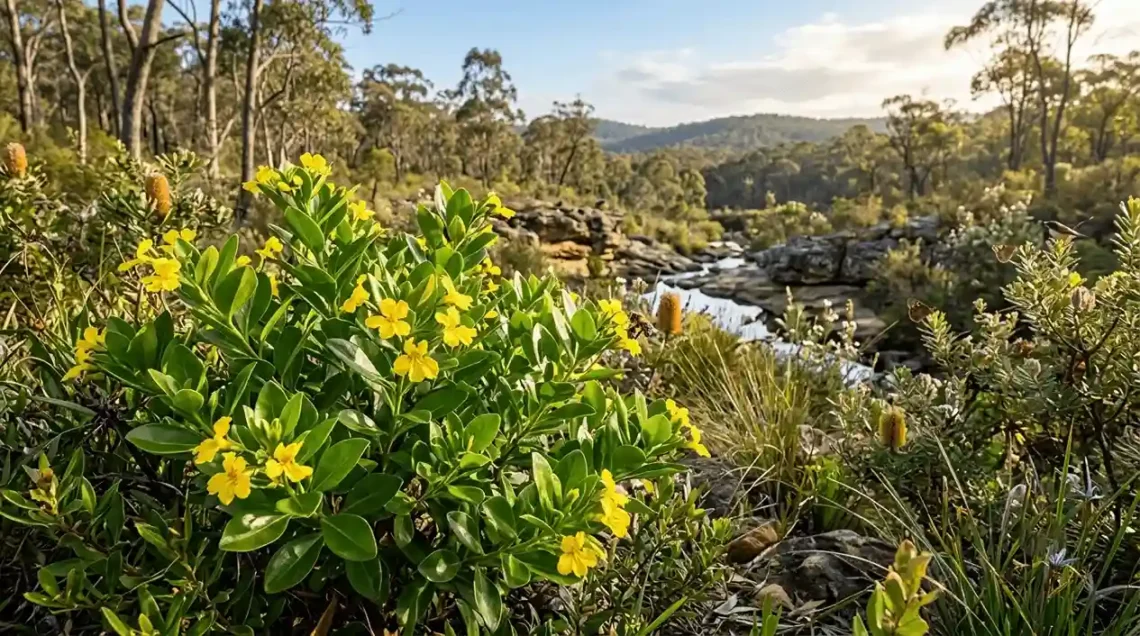
Hop Goodenia is the common name for Goodenia ovata, an evergreen shrub belonging to the family Goodeniaceae. The common name comes from the resemblance of its leaves to those of hop vines, although the plants are unrelated.If you’re planning a complete native landscape, our comprehensive Australian Native Garden Trees guide can help you choose companion trees and shrubs that thrive alongside Goodenia ovata.
Goodenia ovata is native to eastern and southeastern Australia, where it naturally occurs in forests, woodland margins, creek systems, and moist gullies. It has long been valued in ecological restoration because of its adaptability, resilience, and ability to establish quickly in disturbed sites.
Key characteristics of Goodenia ovata
Goodenia ovata is recognized by several distinctive features:
- Oval to broadly ovate green leaves with slightly toothed edges.
- Bright yellow fan-shaped flowers typical of the Goodenia genus.
- Dense branching that responds well to pruning.
- Smooth to slightly textured bark on mature stems.
- Evergreen foliage in suitable climates.
- Lifespan commonly exceeding 15–20 years under favorable growing conditions.
Botanical Profile of Hop Goodenia
| Attribute | Information |
| Scientific Name | Goodenia ovata |
| Common Name | Hop Goodenia |
| Family | Goodeniaceae |
| Native Range | Eastern and southeastern Australia |
| Plant Type | Evergreen native shrub |
| Mature Height | 1–3 m |
| Mature Width | 1.5–3 m |
| Flower Color | Bright yellow |
| Flowering Season | Mainly spring through summer, with sporadic flowering at other times |
| Growth Rate | Moderate |
| Wildlife Value | Supports pollinators, birds, and beneficial insects |
Where Does Goodenia Ovata Naturally Grow?
Native habitat
Goodenia ovata naturally grows in:
- Open forests
- Woodland edges
- Creek lines
- Coastal environments
- Moist gullies
Its broad natural distribution demonstrates its adaptability to varying moisture levels and soil conditions.
Climate preferences
Goodenia ovata grows best in temperate to subtropical climates.
It tolerates:
- Moderate to high annual rainfall
- Light to moderate frost once established
- Summer heat with adequate moisture
- Coastal winds
- Salt-laden air better than many ornamental shrubs
As of 2026, native plant growers continue recommending locally sourced forms for improved adaptation to regional growing conditions.
Growing Conditions for Goodenia Ovata
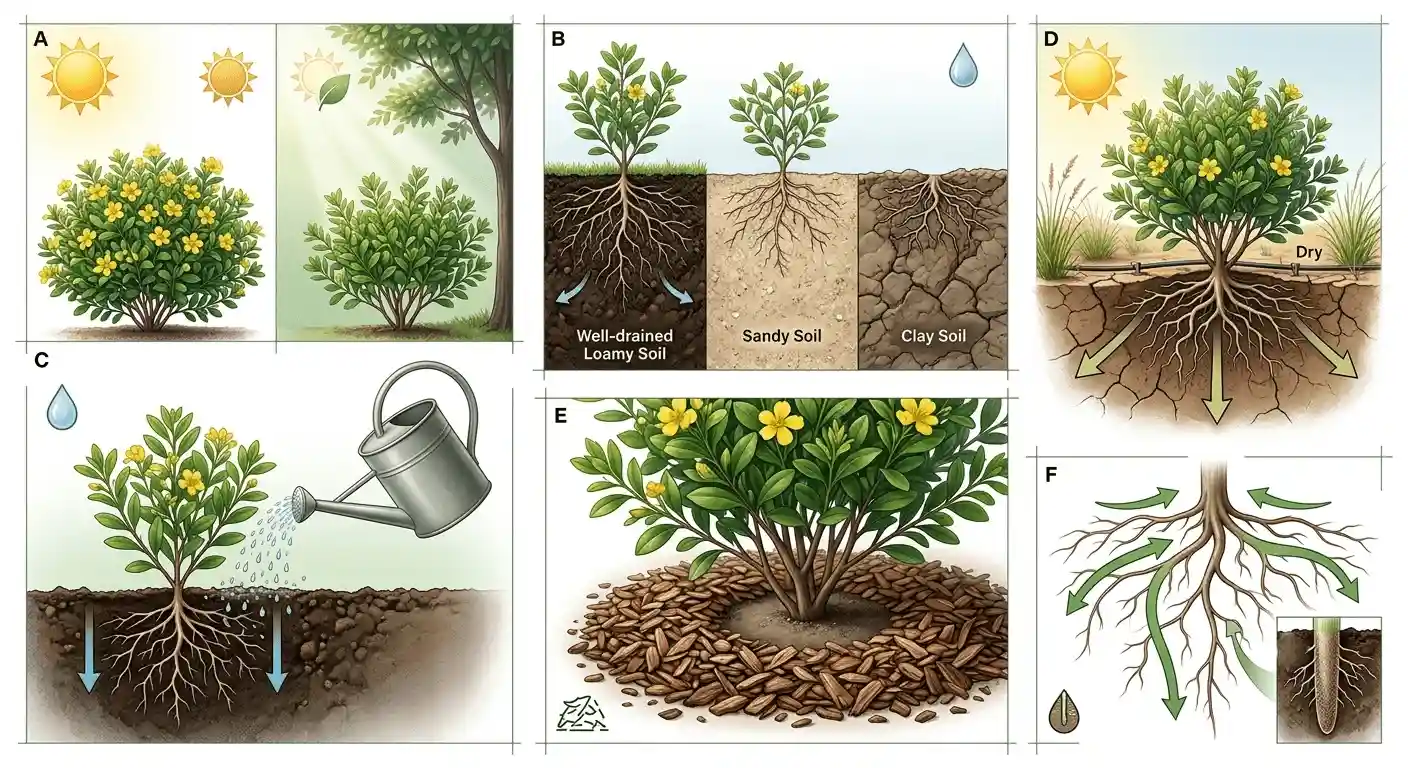
Sunlight requirements
Goodenia ovata performs best in:
- Full sun for maximum flowering.
- Partial shade in warmer regions.
- Light shade where afternoon sun is intense.
Dense shade reduces flowering and may produce leggy growth.
Soil preferences
The shrub adapts to numerous soil types, including:
- Well-drained loam
- Sandy soils
- Clay soils with good drainage
- Slightly acidic to neutral pH
- Mildly alkaline soils if drainage remains adequate
Water requirements
Newly planted shrubs require consistent watering during establishment.
Once mature, Goodenia ovata demonstrates moderate drought tolerance.
General guidance includes:
- Water weekly during establishment.
- Reduce irrigation after the first growing season.
- Water deeply during prolonged dry periods.
In our experience growing Australian native shrubs, deep but infrequent watering encourages healthier root development than frequent shallow irrigation.
Goodenia Ovata Care Guide
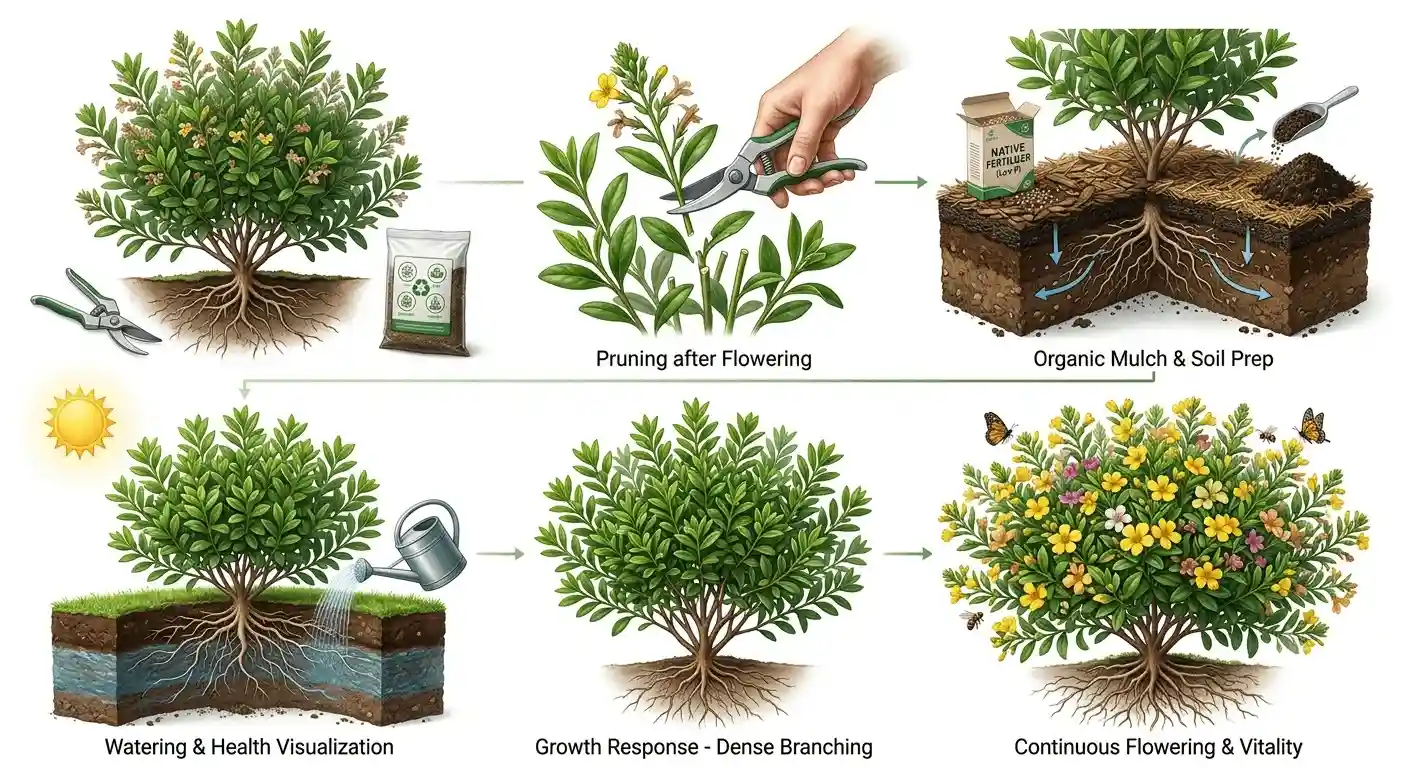
Watering
During establishment, keep soil consistently moist without becoming waterlogged.
Seasonal adjustments include:
- More frequent watering during extended summer heat.
- Reduced watering during cooler months.
Fertilizing
Goodenia ovata usually requires little fertilization.
Suitable options include:
- Low-phosphorus native plant fertilizers.
- Well-aged compost.
- Organic mulch that gradually improves soil.
Greenery Inside recommends avoiding excessive fertilizer because vigorous soft growth may reduce flowering and long-term resilience.
Pruning
Prune:
- After the main flowering flush.
- To encourage dense branching.
- To remove damaged or crossing stems.
Older shrubs benefit from rejuvenation pruning, provided it is done gradually over several seasons.
Mulching
Organic mulch helps:
- Retain soil moisture.
- Suppress weeds.
- Protect shallow roots.
- Moderate soil temperature.
Keep mulch several centimeters away from the main stem to prevent rot.
Plant Size and Growth Rate
Mature size
Most plants reach:
- Height: 1–3 meters
- Spread: 1.5–3 meters
Plant size varies according to:
- Soil fertility
- Moisture availability
- Sunlight
- Pruning practices
Growth rate
Goodenia ovata has a moderate growth rate.
Growth is strongest during spring and early summer.
Environmental factors influencing growth include:
- Soil moisture
- Available sunlight
- Nutrient availability
- Temperature
Goodenia Ovata Prostrate Forms
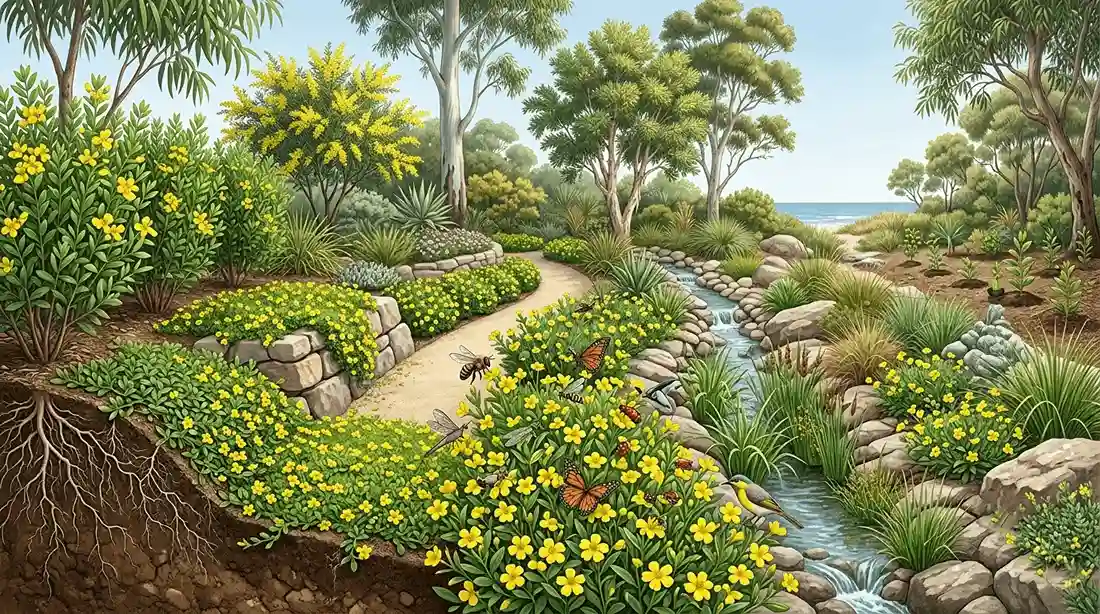
What is Goodenia ovata prostrate?
Goodenia ovata prostrate refers to naturally low-growing or cultivated forms that spread horizontally instead of forming upright shrubs.
Characteristics include:
- Trailing stems
- Dense groundcover
- Weed suppression
- Soil stabilization
- Low maintenance
Best landscape uses
Prostrate selections are ideal for:
- Slopes
- Erosion control
- Native gardens
- Rockeries
- Borders
- Difficult banks
In our experience, prostrate forms establish faster on sloping sites when planted before the wetter growing season.
Flowering and Seasonal Interest
Blooming season
Goodenia ovata typically flowers from spring into summer.
Flowering duration depends on:
- Local climate
- Rainfall
- Plant health
- Sun exposure
Some regions experience scattered blooms throughout much of the year.
Pollinator benefits
The flowers attract:
- Native bees
- Butterflies
- Beneficial insects
- Small nectar-feeding birds
This makes Hop Goodenia valuable for wildlife-friendly gardens.
Landscape Uses of Hop Goodenia
Hop Goodenia is widely used for:
- Wildlife gardens
- Coastal gardens
- Native hedges
- Informal screening
- Low-maintenance landscapes
- Rain gardens
- Restoration projects
- Pollinator gardens
Its adaptability allows designers to incorporate it into both formal and naturalistic landscapes.
Common Problems and How to Fix Them
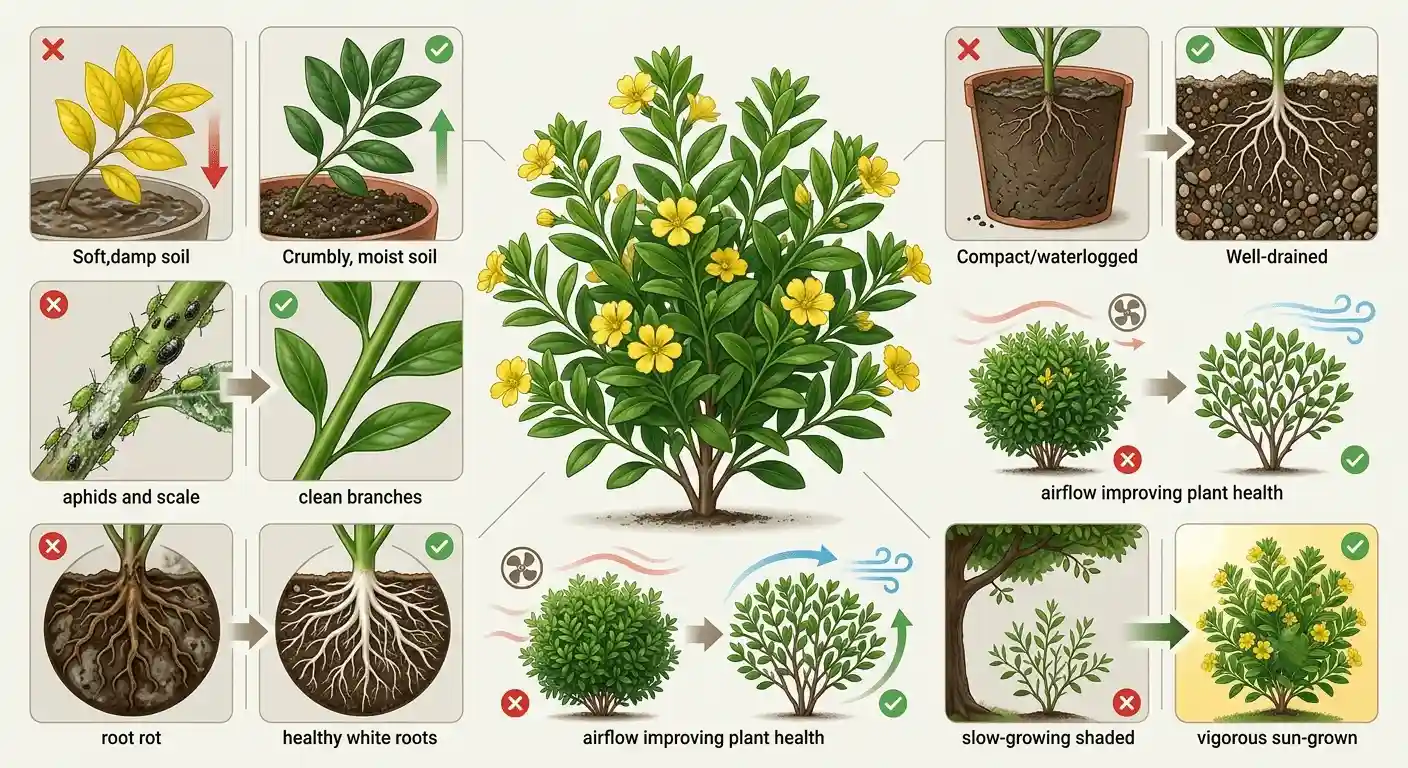
Yellow leaves
Common causes include:
- Overwatering
- Poor drainage
- Nutrient imbalance
Improve drainage and adjust irrigation before applying fertilizer.
Slow growth
Slow development may result from:
- Heavy clay soil
- Insufficient sunlight
- Newly establishing roots
Patience is often required during the first year while roots develop.
Pests and diseases
Potential issues include:
- Scale insects
- Aphids
- Root rot
Preventive measures:
- Maintain airflow.
- Avoid waterlogging.
- Monitor plants regularly.
- Remove heavily infested stems promptly.
Common Beginner Mistakes When Growing Goodenia Ovata
Common mistakes include:
- Planting in poorly drained soil.
- Applying excessive fertilizer.
- Overwatering mature shrubs.
- Pruning heavily at inappropriate times.
- Choosing excessively shaded locations.
- Ignoring the mature spread during planting.
Greenery Inside has found that proper site selection prevents most long-term maintenance issues before they develop.
Goodenia Ovata vs Similar Australian Native Shrubs
Goodenia ovata vs Goodenia lanata
Goodenia lanata differs from Goodenia ovata in several important ways.
- Habitat: Goodenia lanata often occupies different native environments.
- Leaf texture: Goodenia lanata generally has hairier foliage.
- Growth habit: Growth form differs depending on regional populations.
- Flowers: Both produce yellow flowers but differ subtly in appearance.
- Landscaping: Goodenia ovata is more widely cultivated for general landscaping due to its adaptability.
Goodenia ovata vs other Goodenia species
The Goodenia genus contains species ranging from compact groundcovers to upright shrubs.
Differences include:
- Growth habit
- Leaf shape
- Flower size
- Preferred habitat
- Climate adaptation
| Feature | Goodenia ovata | Goodenia lanata | Other Goodenia species |
| Growth Habit | Upright shrub | Shrub with hairier foliage | Groundcovers to shrubs |
| Leaves | Broad ovate | More woolly | Highly variable |
| Habitat | Forests, creek lines | Different native habitats | Diverse environments |
| Landscaping | Highly versatile | More specialized | Varies by species |
Similar Native Shrubs Often Confused with Goodenia Ovata
Spyridium parvifolium
Spyridium parvifolium is commonly called Dusty Miller, although this common name also refers to an unrelated ornamental bedding plant. The Australian native species differs botanically from the commonly sold ornamental Dusty Miller.If you’re comparing similar Australian native shrubs, Spyridium parvifolium is another attractive species valued for its silvery foliage, wildlife benefits, and adaptability.
Growing conditions include:
- Well-drained soils
- Full sun to partial shade
- Moderate drought tolerance
Typical size ranges from approximately 1–2 meters depending on conditions.
Some prostrate forms are available for native landscapes.
Uses include:
- Native gardens
- Habitat plantings
- Informal screening
- Biodiversity projects
VicFlora provides authoritative botanical information for species identification and distribution.
Spyridium vexilliferum
This Australian native shrub is identified by its distinctive foliage and clustered flowers.
It naturally grows in suitable native habitats and differs from Goodenia ovata in leaf structure, flower arrangement, and family classification.
Spyridium globulosum
Spyridium globulosum typically forms a rounded shrub adapted to Australian native habitats.
It is commonly used in native gardens, habitat restoration, and biodiversity-focused landscapes.
Related Australian Native Groundcovers
What is Myoporum parvifolium used for?
Myoporum parvifolium is widely planted as a native groundcover.
Common uses include:
- Weed suppression
- Erosion control
- Coastal gardens
- Low-water landscapes
- Large-scale groundcover planting
Compared with Goodenia ovata prostrate forms, Myoporum parvifolium generally spreads more extensively while Goodenia ovata often provides greater flowering display and shrub-like texture.Gardeners looking for another drought-tolerant native groundcover may also enjoy Eremophila Ground Cover, which performs exceptionally well in water-wise Australian landscapes.
Environmental Benefits of Goodenia Ovata
Goodenia ovata contributes to sustainable landscapes by:
- Creating habitat for wildlife.
- Supporting native biodiversity.
- Providing nectar for pollinators.
- Stabilizing soil.
- Reducing erosion.
- Requiring relatively low supplemental water after establishment.
- Assisting native revegetation projects.
These characteristics make it valuable in ecological restoration and climate-resilient landscape design. To create an even more wildlife-friendly garden, combine Hop Goodenia with other Native Plants That Attract Butterflies for season-long nectar and habitat.
Frequently Asked Questions
What is the common name of Goodenia ovata?
The common name of Goodenia ovata is Hop Goodenia.
Is Hop Goodenia suitable for coastal gardens?
Yes. It tolerates coastal exposure, wind, and moderate salt spray, making it suitable for many coastal landscapes.
How large does Goodenia ovata grow?
Most mature shrubs grow between 1 and 3 meters tall with a similar spread depending on growing conditions.
What is the difference between Goodenia ovata and Goodenia lanata?
Goodenia lanata generally has hairier foliage and different habitat preferences, while Goodenia ovata is more commonly used in landscape planting due to its adaptability.
Can Goodenia ovata be grown as a groundcover?
Yes. Prostrate forms of Goodenia ovata are specifically grown as attractive native groundcovers.
Is Goodenia ovata drought tolerant?
Once established, it has moderate drought tolerance but benefits from occasional deep watering during extended dry periods.
Does Goodenia ovata attract pollinators?
Yes. Its flowers attract native bees, butterflies, beneficial insects, and nectar-feeding birds.
What growing conditions does Goodenia ovata prefer?
It prefers full sun to partial shade, well-drained soils, and regular moisture during establishment, followed by occasional deep watering as needed.
Conclusion
Goodenia ovata, commonly known as Hop Goodenia, is one of Australia’s most adaptable native shrubs. Its attractive yellow flowers, reliable growth, tolerance of varied soil conditions, and value for wildlife make it an excellent choice for home gardens, restoration projects, and low-maintenance landscapes. Prostrate forms provide additional versatility as effective groundcovers for slopes and erosion control. By matching the plant to local site conditions and following established native gardening practices, gardeners can enjoy a resilient shrub that supports biodiversity while adding year-round structure and seasonal color to Australian landscapes.