Introduction
Native plants that attract butterflies are increasingly important in modern gardening as butterfly populations continue to decline due to habitat loss, pesticide use, and climate change. Home gardeners now play a direct ecological role in restoring these pollinator networks through intentional plant selection.
In the context of butterfly gardening, native plants are species that originate and evolved naturally within a specific geographic region. These plants co-evolved alongside local butterfly species, forming tightly linked ecological relationships. This means butterflies depend on them not only for nectar but also for reproduction and survival.
Native plants outperform non-native ornamentals because they support the full butterfly life cycle. While exotic plants may provide nectar, they often fail as larval host plants where caterpillars feed and develop. This guide explains which native plants attract butterflies, why they are more effective, and how to use them in different regions and garden environments. Butterflies belong to the order Lepidoptera, one of the most widely studied pollinator groups in ecology.
Quick Summary
- Native plants that attract butterflies are indigenous species that support both nectar feeding and larval development.
- Milkweed, native coneflowers, pentas, and native asters are among the most effective butterfly plants.
- Native plants outperform exotic species because they align with butterfly life cycles and ecological needs.
- A successful butterfly garden requires both nectar plants and larval host plants working together.
Why Native Plants Are Better Than Exotic Butterfly Plants
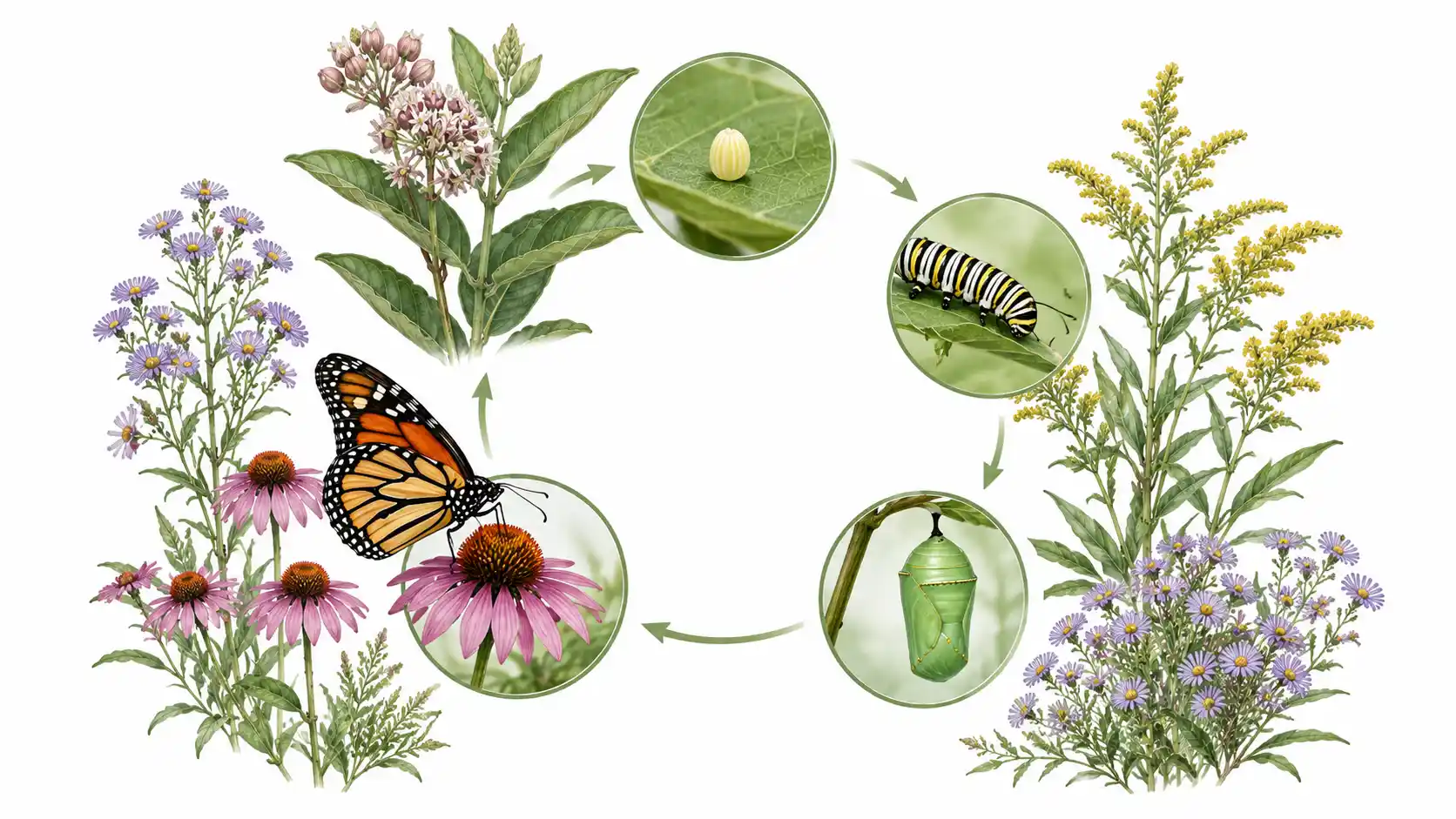
Native plants are better for butterflies because they evolved alongside local species, forming precise ecological relationships that exotic plants cannot replicate. This co-evolution means butterflies recognize native plants as food sources and reproductive hosts.
A key distinction exists between nectar plants and larval host plants. Nectar plants provide energy for adult butterflies, while host plants are where butterflies lay eggs and caterpillars feed. Without host plants, butterfly populations cannot sustain themselves.
Exotic plants like the butterfly bush (Buddleia davidii) are often praised for attracting adult butterflies, but they provide no larval value. In some regions, Buddleia is also invasive, spreading aggressively and displacing native ecosystems.
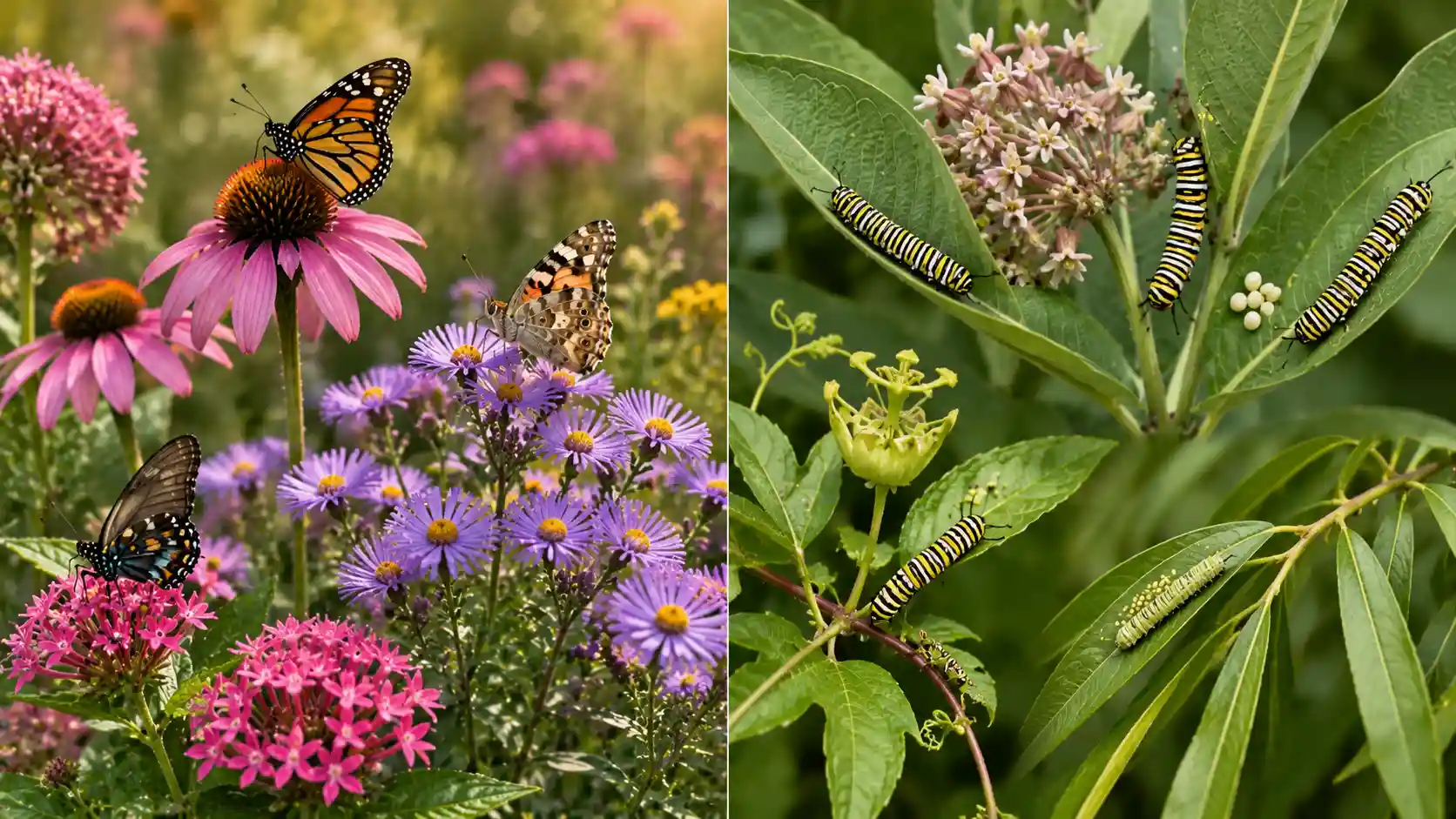
Key ecological insights include:
- Host plant specificity: Monarch butterflies require milkweed (Asclepias spp.) to reproduce
- Nectar vs habitat value: Nectar alone does not support lifecycle completion
- Ecological traps: Some ornamentals attract butterflies but fail to support breeding
How to Attract Butterflies to Your Garden — Core Principles
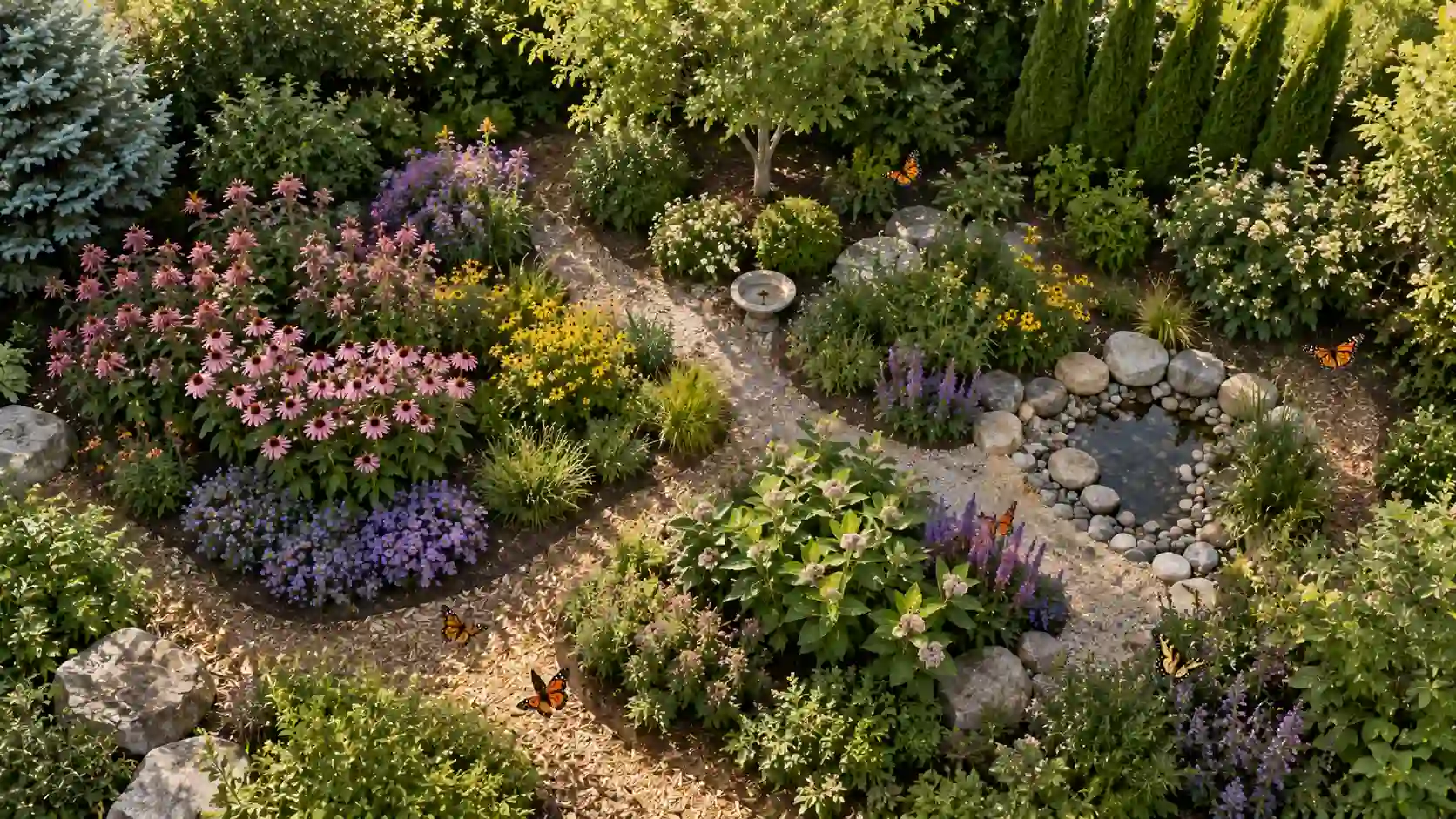
Attracting butterflies requires more than flowers; it requires creating a functioning habitat. A butterfly garden must provide food, shelter, and breeding spaces. Butterflies need warm, sunny environments because they are ectothermic and rely on external heat sources. They also require protection from wind, shallow water for puddling, and safe areas for egg-laying. While butterflies prefer sun, some supporting habitat plants can still thrive in partially shaded areas.
- Plant in sunny, sheltered locations
- Provide both nectar plants and larval host plants
- Avoid pesticides and herbicides
- Include flat rocks or bare soil for basking
- Add shallow water sources for puddling behaviour
A butterfly garden is not a decorative flower bed but a structured ecological system designed to support multiple life stages.
Top Native Plants That Attract Butterflies (By Plant Type)
Native Flowering Plants (Forbs & Wildflowers)
Native flowering plants are the foundation of any butterfly-friendly garden. They provide high-quality nectar and often serve as larval hosts.
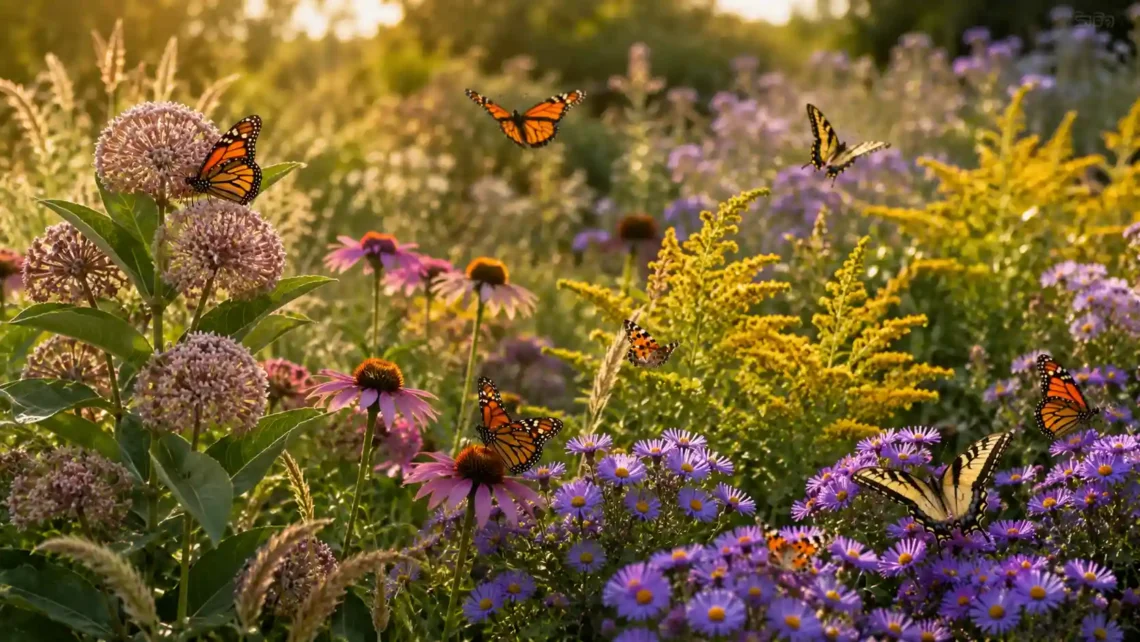
Milkweed (Asclepias spp.) is essential for Monarch butterflies, while native asters (Symphyotrichum spp.) support late-season migration. Coneflowers (Echinacea purpurea) provide long bloom periods, and goldenrod (Solidago spp.) is a powerful nectar source often misunderstood as a weed. Many gardeners also expand their setup using dedicated butterfly-attracting flowering species to increase nectar diversity.
| Plant Name | Butterfly Benefit | Bloom Season | Sun Requirement |
| Milkweed (Asclepias spp.) | Monarch host plant | Spring–Summer | Full sun |
| Purple Coneflower (Echinacea) | Nectar source | Summer–Fall | Full sun |
| Native Aster (Symphyotrichum) | Late nectar source | Fall | Sun–Part shade |
| Goldenrod (Solidago) | High nectar value | Late Summer–Fall | Full sun |
| Pentas (Pentas lanceolata) | Continuous nectar | Year-round (warm) | Full sun |
Native Shrubs and Butterfly Shrubs
Butterfly shrubs provide structure and long-term nectar resources. A butterfly shrub is typically a woody plant that supports either nectar feeding or larval development.
Native alternatives to the invasive Buddleia include buttonbush (Cephalanthus occidentalis), spicebush (Lindera benzoin), and native viburnums. These plants provide far greater ecological value than ornamental butterfly bushes.
Gaura (Oenothera lindheimeri) is a low-growing perennial often used as a butterfly-friendly landscaping option.
Native Trees That Attract Butterflies
Butterfly trees are primarily larval host plants rather than nectar sources. They are essential for sustaining butterfly populations long-term. Willows (Salix spp.), oaks (Quercus spp.), and native cherries (Prunus spp.) support hundreds of butterfly and moth species. These trees provide foliage for caterpillars, making them foundational ecosystem species. Many butterfly-supporting ecosystems overlap with broader Australian native tree landscapes that form the foundation of biodiversity gardens.
Native Plants That Attract Butterflies by Region (Australia & United States)
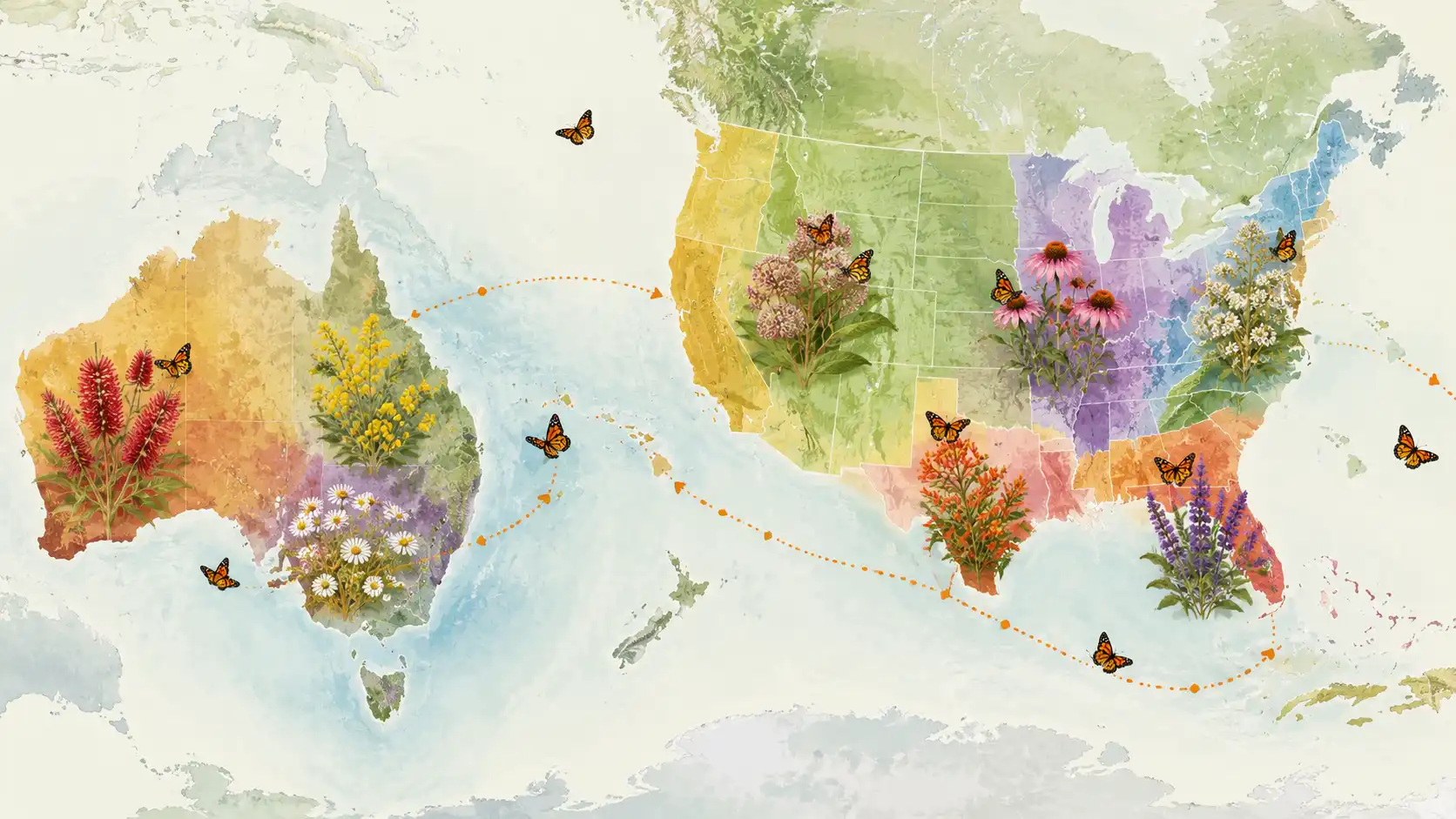
Native Plants That Attract Butterflies in Australia
Australian butterfly gardens rely heavily on native flora adapted to local climates and species. Plants such as bottlebrush (Callistemon), native daisies (Chrysocephalum), and wattles (Acacia spp.) are especially effective. Native grasses also play an important ecological role in supporting butterfly larvae and shelter habitats.
| Region | Recommended Native Plants | Butterfly Species |
| Queensland | Native daisies, Callistemon, Acacia | Orchard Swallowtail, Jezebel |
| South Australia | Scaevola, Brachyscome | Common Brown |
| New South Wales | Native asters, Pultenaea | Imperial Blue |
| All Regions | Swan plant, native grasses | Wanderer (Monarch equivalent) |
Native Plants That Attract Butterflies in the United States
North American butterfly gardens are strongly dependent on milkweed species and native prairie plants. California uses buckwheats (Eriogonum), Florida relies on firebush and milkweed, while Texas gardens include mistflower and native lantana. In temperate regions like the Midwest, native planting choices vary significantly and align with local prairie ecosystems.
| Region | Key Native Plants | Butterflies Supported |
| California | Salvia, buckwheat | Painted Lady |
| Florida | Milkweed, firebush | Monarch, Zebra Longwing |
| Texas | Milkweed, mistflower | Queen, Giant Swallowtail |
| Michigan | Milkweed, asters | Monarch |
| Virginia | Joe Pye weed, passionvine | Gulf Fritillary |
Milkweed — The Most Important Native Butterfly Plant
Milkweed (Asclepias spp.) is the most critical native butterfly plant in North America because it is the sole larval host for Monarch butterflies. Without milkweed, Monarchs cannot complete their life cycle.
Common species include butterfly weed (A. tuberosa), swamp milkweed (A. incarnata), and common milkweed (A. syriaca). Each species supports Monarch reproduction while offering nectar for multiple butterfly species.
In Australia, the ecological equivalent is the swan plant (Gomphocarpus physocarpus), which supports the Wanderer butterfly.
Butterfly Plants That Also Attract Hummingbirds
Some native plants attract both butterflies and hummingbirds due to tubular, nectar-rich flowers. These plants often produce red, orange, or bright pink blooms.
Examples include:
- Native salvias (Salvia spp.)
- Cardinal flower (Lobelia cardinalis)
- Trumpet vine (Campsis radicans)
- Columbine (Aquilegia spp.)
These plants are ideal for mixed pollinator gardens supporting multiple species. These nectar-rich plants often overlap with perennial flowers that attract hummingbirds, creating a multi-pollinator ecosystem.
Plant Size and Growth Habits of Key Butterfly Plants
Butterfly plants vary significantly in size depending on species and environment. Wildflowers remain compact, shrubs grow moderately, and trees can become large canopy species.
Container-grown plants often stay smaller due to restricted root space, while garden-grown plants reach full genetic potential.
- Wildflowers: 30–90 cm height
- Shrubs: 1–3 meters
- Trees: 10–30+ meters depending on species
Growth Rate and Seasonal Behaviour
Most native butterfly plants follow seasonal cycles. Many are perennials that go dormant in winter and regrow in spring.
Growth principles:
- Fast establishment in warm, fertile conditions
- “Sleep, creep, leap” growth pattern in perennials
- Annual dieback in cold climates
- Strong second-year performance in natives
Environmental factors such as rainfall, soil drainage, and sunlight strongly influence growth rate.
How to Care for Native Butterfly Plants
Native plants generally require low maintenance once established.
- Water deeply but infrequently
- Avoid high-nitrogen fertilisers
- Ensure full sun exposure (6+ hours)
- Use well-drained soil
- Deadhead flowers to extend blooming
- Leave seed heads for wildlife in winter
Over-fertilisation is one of the most common mistakes, leading to weak flowering and excessive foliage.
Common Problems with Butterfly Garden Plants (And How to Fix Them)
Leaves Turning Yellow
Yellowing leaves are usually caused by overwatering and poor drainage. Nutrient deficiency is less common in native plants.
Pests and Caterpillars — When “Damage” Is Actually Good
Caterpillar feeding is a positive sign of a functioning butterfly habitat. However, aphids and whiteflies may require organic control methods like water sprays or natural predators.
Plants Not Attracting Butterflies
This often results from:
- Wrong plant for the region
- Lack of plant diversity
- No host plants present
- Pesticide contamination
Comparing Native Butterfly Plants vs. Popular Exotic Options
| Feature | Native Plants | Butterfly Bush (Buddleia) |
| Larval host value | High | None |
| Nectar value | High | Very high |
| Invasiveness risk | None | High |
| Ecosystem support | Excellent | Poor |
Native plants provide full lifecycle support, while Buddleia primarily offers adult nectar without breeding value.
Beginner Mistakes When Planting a Butterfly Garden
Common mistakes include:
- Planting only nectar flowers
- Using pesticides near butterfly zones
- Choosing non-native species
- Planting single specimens instead of clusters
- Removing native “weedy” host plants
- Relying heavily on ornamental butterfly bush
Many beginner gardeners mistakenly choose ornamental cottage-style plants that lack ecological butterfly value.
Connecting Your Butterfly Garden to a Broader Habitat
Butterfly gardening connects to larger ecological systems such as wildlife corridors and habitat restoration programs.
Key extensions include:
- Propagating native plants from seed
- Creating pollinator corridors across landscapes
- Supporting Monarch Waystation-style habitats
- Integrating garden planning with seasonal ecosystem cycles
Butterfly-friendly landscapes can also integrate edible and productive ecosystems through dwarf fruit tree planting.
Conclusion
The most effective way to support butterflies is to plant native species that provide both nectar and larval host functions. Native plants that attract butterflies are not universal; they depend on regional ecology and local butterfly species.
A successful butterfly garden starts with a few well-chosen native plants, planted in clusters, combined with pesticide-free maintenance and habitat-focused design. Over time, these gardens become functional ecosystems that support biodiversity and pollinator survival.
FAQs
What are the best native plants that attract butterflies?
Milkweed, native asters, coneflowers, passionvine, and salvias are among the most effective, depending on regional climate and butterfly species.
What is the difference between a nectar plant and a host plant for butterflies?
Nectar plants feed adult butterflies, while host plants provide food for caterpillars and support reproduction.
Is butterfly bush (Buddleia) a good plant for butterflies?
It attracts adult butterflies but provides no larval support and can be invasive in some regions, making native plants a better choice.
What native plants attract butterflies in Australia?
Bottlebrush, native daisies, wattles, and swan plants are key butterfly-supporting native species.
Does milkweed grow in Australia?
Yes, related species like swan plant (Gomphocarpus physocarpus) serve the same ecological role for Wanderer butterflies.
How do I attract butterflies to my garden quickly?
Plant clustered native flowers in full sun, remove pesticides, and include both nectar and host plants.
Can native butterfly plants grow in pots?
Yes, many species like pentas, native asters, and butterfly weed grow well in containers with proper drainage and sunlight.