Introduction
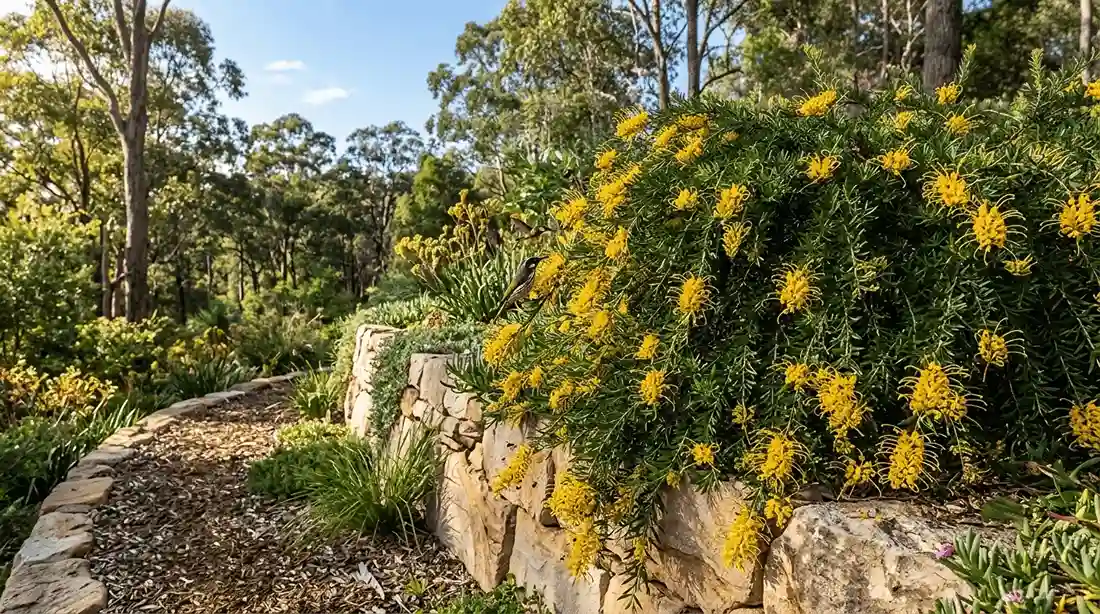
Grevillea Cooroora Cascade is a low-growing Australian native shrub admired for its graceful trailing branches, evergreen foliage, and vibrant yellow flowers. Often described as a cascading grevillea, it is widely planted as a grevillea ground cover in home gardens, public landscapes, and restoration projects. Its spreading habit makes it particularly effective for covering slopes, retaining walls, rockeries, and other difficult planting areas while helping reduce soil erosion.
Beyond its ornamental appeal, this yellow grevillea ground cover supports native wildlife by providing nectar for birds, bees, and butterflies. Its drought tolerance and adaptability also make it a valuable choice for water-wise Australian native gardens. This guide explains how to identify, grow, maintain, and landscape with Grevillea Cooroora Cascade while answering the most common questions gardeners ask.
By Greenery Inside | Plant Care & Gardening Expert
Quick Summary
- Grevillea Cooroora Cascade is a low-growing Australian native shrub grown primarily as a flowering ground cover.
- Its cascading habit makes it ideal for embankments, retaining walls, rockeries, and water-wise landscapes.
- Bright yellow flowers attract nectar-feeding birds, native bees, and other beneficial pollinators.
- Once established, it requires little maintenance and tolerates dry conditions with well-drained soil.
- Proper planting, pruning, and spacing encourage dense growth and long-lasting flowering.
What Is Grevillea Cooroora Cascade?
Botanical Overview
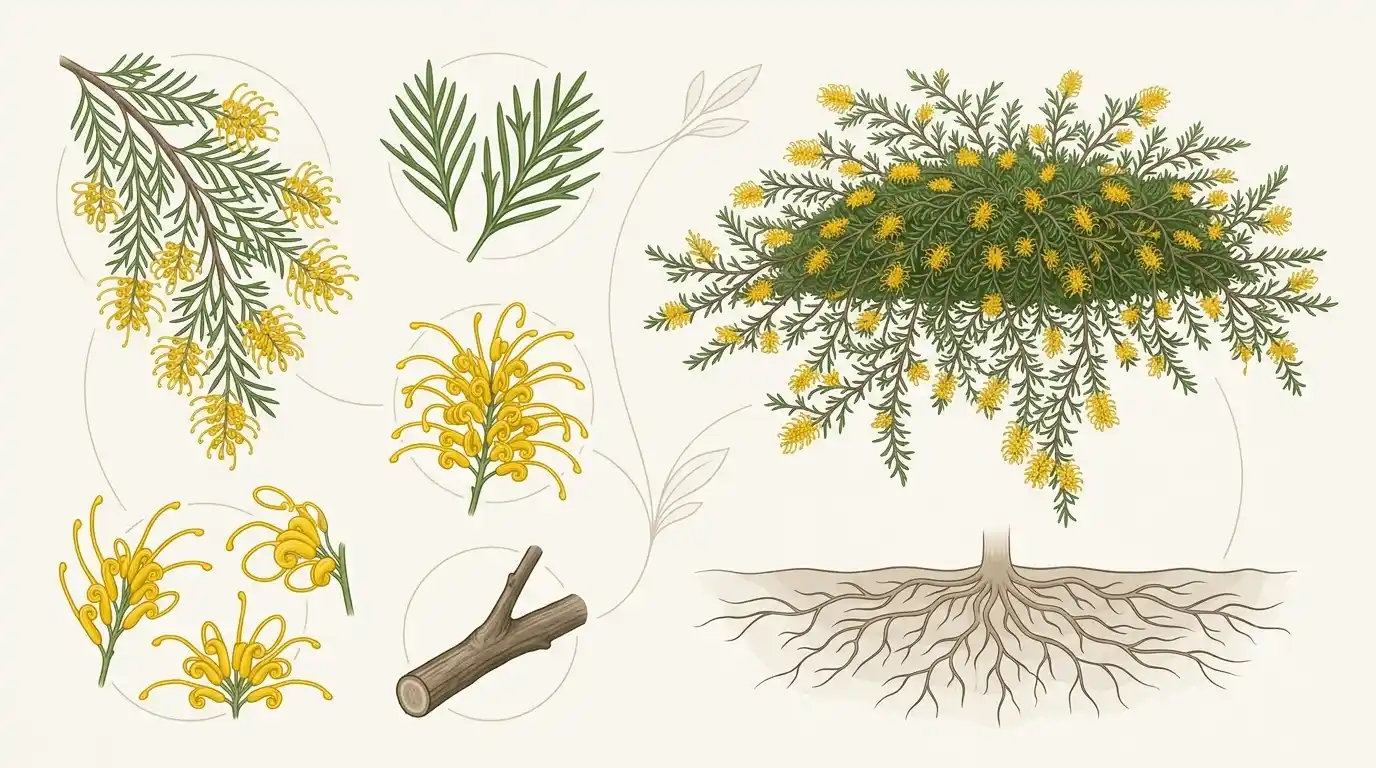
Grevillea Cooroora Cascade is an evergreen ornamental shrub belonging to the Proteaceae family, one of Australia’s most diverse native plant families. It is cultivated primarily for its spreading growth habit rather than upright form, making it especially useful where low-maintenance ground coverage is required.
Grevillea species belong to a diverse genus of Australian native plants widely studied for their ecological and horticultural value.
Although many cultivated grevilleas are hybrids developed for improved flowering and landscape performance, Cooroora Cascade is selected specifically for its dense trailing habit, reliable flowering, and adaptability across much of Australia’s temperate and subtropical climates.
The plant develops long, arching stems that gradually spread outward instead of growing vertically. Mature plants form dense evergreen mats that suppress weeds while adding year-round structure to garden beds.
From our experience growing native ground covers, Cooroora Cascade establishes more uniformly when planted in full sun with adequate airflow. Early attention to drainage often determines its long-term success.
Why It Is Called a Cascading Grevillea
The name cascading grevillea comes from its naturally flowing growth habit. Rather than forming an upright shrub, its flexible branches arch and spill over edges, creating a layered appearance.
This makes the plant particularly effective for:
- Retaining walls
- Raised garden beds
- Embankments
- Rock gardens
- Sloping landscapes
- Large containers where stems can trail naturally
As the branches mature, they spread horizontally before gently hanging downward, producing the attractive cascading effect that distinguishes Cooroora Cascade from many upright grevillea cultivars.
Its dense canopy also helps shade the soil, reducing moisture loss and limiting weed growth.
Key Identifying Features
Grevillea Cooroora Cascade is easily recognized by a combination of foliage, flowers, and growth habit.
Key identifying characteristics include:
- Low-growing, spreading evergreen shrub
- Long trailing branches with a cascading appearance
- Narrow, finely divided green foliage
- Bright yellow spider-like flowers
- Extended flowering period, often from winter through spring and intermittently during other seasons depending on climate
- Dense ground-covering habit
The yellow flowers produce abundant nectar that attracts wildlife while contrasting beautifully against the deep green foliage.
Unlike taller grevilleas grown as screening shrubs, this yellow grevillea ground cover rarely dominates a planting space, making it suitable beneath taller native trees or alongside pathways.
Why Grevillea Cooroora Cascade Is Popular in Australian Gardens
Grevillea Cooroora Cascade has become one of the preferred native ground covers because it combines ornamental value with practical landscape performance.
For broader native landscape planning, this plant fits naturally into larger design systems like Australian native garden trees, especially when building layered, wildlife-friendly gardens with mixed native species.
Australian homeowners and landscapers frequently choose this plant because it thrives in challenging conditions where many ornamental species struggle.
Its popularity stems from several important advantages.
Excellent Drought Tolerance
Once established, the plant survives extended dry periods with relatively little supplemental watering.
This makes it highly suitable for water-wise landscapes and regions experiencing seasonal drought.
Wildlife Attraction
Its nectar-rich flowers provide an important food source for:
- Honeyeaters
- Wattlebirds
- Native bees
- Butterflies
- Other beneficial insects
These pollinators improve biodiversity while increasing ecological value within home gardens.
Low Maintenance
Unlike many flowering shrubs, Cooroora Cascade generally requires only occasional pruning to maintain shape and density.
Routine maintenance is minimal when planted in suitable conditions.
Attractive Year-Round Foliage
Even outside peak flowering periods, the evergreen foliage provides consistent texture and colour.
This helps maintain visual interest throughout the year.
Native Landscaping Value
As an Australian native plant, it integrates naturally into:
- Bushland-style gardens
- Native landscapes
- Habitat gardens
- Coastal plantings
- Sustainable residential landscapes
Erosion Control
The spreading root system and dense canopy help stabilize loose soils. In coastal and exposed environments, Grevillea Cooroora Cascade is often combined with other resilient ground covers and shrubs used in low-maintenance landscape systems.
For this reason, landscapers frequently plant it on:
- Slopes
- Embankments
- Roadside gardens
- Drainage areas
- Retaining wall edges
Benefits at a Glance
- Excellent flowering ground cover
- Attracts nectar-feeding birds
- Supports native pollinators
- Covers exposed soil effectively
- Helps stabilize slopes
- Suitable for drought-tolerant gardens
- Evergreen foliage provides year-round interest
- Requires relatively little maintenance once established
Greenery Inside recommends combining Cooroora Cascade with other Australian native species to create layered, wildlife-friendly gardens that flower across multiple seasons.
Plant Size, Mature Height, and Growth Habit
Grevillea Cooroora Cascade Height
Grevillea Cooroora Cascade remains compact throughout its life, making it ideal where low-growing vegetation is preferred.
Typical mature dimensions include:
| Feature | Typical Range |
| Height | 30–60 cm |
| Spread | 2–4 m |
| Growth Habit | Low, spreading, cascading |
| Flower Colour | Bright yellow |
| Evergreen | Yes |
Instead of investing energy into vertical growth, the plant directs most growth outward.
Its long branches gradually create a continuous carpet of foliage.
How Fast Does It Spread?
Grevillea Cooroora Cascade has a moderate growth rate under suitable conditions.
During the establishment period, growth focuses on developing healthy roots.
After establishment, stems extend steadily across the surrounding soil.
Most gardeners observe significant ground coverage within two to three growing seasons when planted in:
- Full sun
- Well-drained soil
- Suitable climates
- Moderate watering during establishment
The mature plant continues expanding gradually without becoming invasive.
Factors Affecting Mature Size
Several environmental factors influence the final size and density of the plant.
Sunlight
Plants grown in full sun generally develop denser foliage, stronger flowering, and more compact branching.
Too much shade often results in longer, weaker stems.
Soil
Free-draining sandy or loamy soils promote healthy root development.
Poor drainage can restrict growth and increase disease risk.
Water
Regular watering during establishment encourages quicker spreading.
Once mature, irrigation requirements decline considerably.
Climate
Warm temperate and Mediterranean climates typically produce the strongest growth.
Cooler regions may experience slower seasonal development.
Pruning
Light pruning immediately after flowering stimulates branching and encourages thicker ground coverage.
Heavy pruning into old woody stems should generally be avoided.
Growth Rate and Long-Term Development
Grevillea Cooroora Cascade is considered a moderate-growing native shrub. Although it does not spread as rapidly as some vigorous ground covers, its steady growth contributes to a dense, durable landscape over time.
Under ideal conditions, most plants become well established within 12 to 24 months. During this establishment phase, energy is directed toward root development before vigorous lateral branching begins.
Once mature, the plant continues producing new stems that gradually fill gaps, resulting in a uniform carpet of evergreen foliage.
Seasonal Growth Pattern
Growth is usually strongest during:
- Spring
- Early summer
- Mild autumn conditions
In very hot summers or cooler winters, growth naturally slows while the plant conserves energy.
Flower production often increases after periods of active vegetative growth.
Establishment Period
The first year is critical for long-term performance.
During this period:
- Water deeply but infrequently.
- Maintain weed-free soil around the base.
- Avoid excessive fertiliser.
- Monitor drainage after heavy rainfall.
In our experience growing Australian native grevilleas, gardeners who focus on root establishment during the first season are rewarded with healthier, more drought-resistant plants in later years.
Lifespan
With suitable growing conditions, Grevillea Cooroora Cascade can remain productive and attractive for well over a decade.
Periodic rejuvenation pruning helps maintain flowering and prevents older stems from becoming sparse.
Factors Influencing Growth
Growth performance depends on several environmental conditions:
- Full sun encourages stronger branching and heavier flowering.
- Well-drained soils reduce disease risk and improve root health.
- Moderate watering during establishment supports rapid root expansion.
- Avoiding phosphorus-rich fertilisers prevents nutrient toxicity common in many Proteaceae species.
As of the 2026 growing season, native plant specialists continue to recommend low-phosphorus fertilisers and improved soil drainage as two of the most effective practices for maintaining long-term grevillea health.
Care Guide for Grevillea Cooroora Cascade
Light Requirements
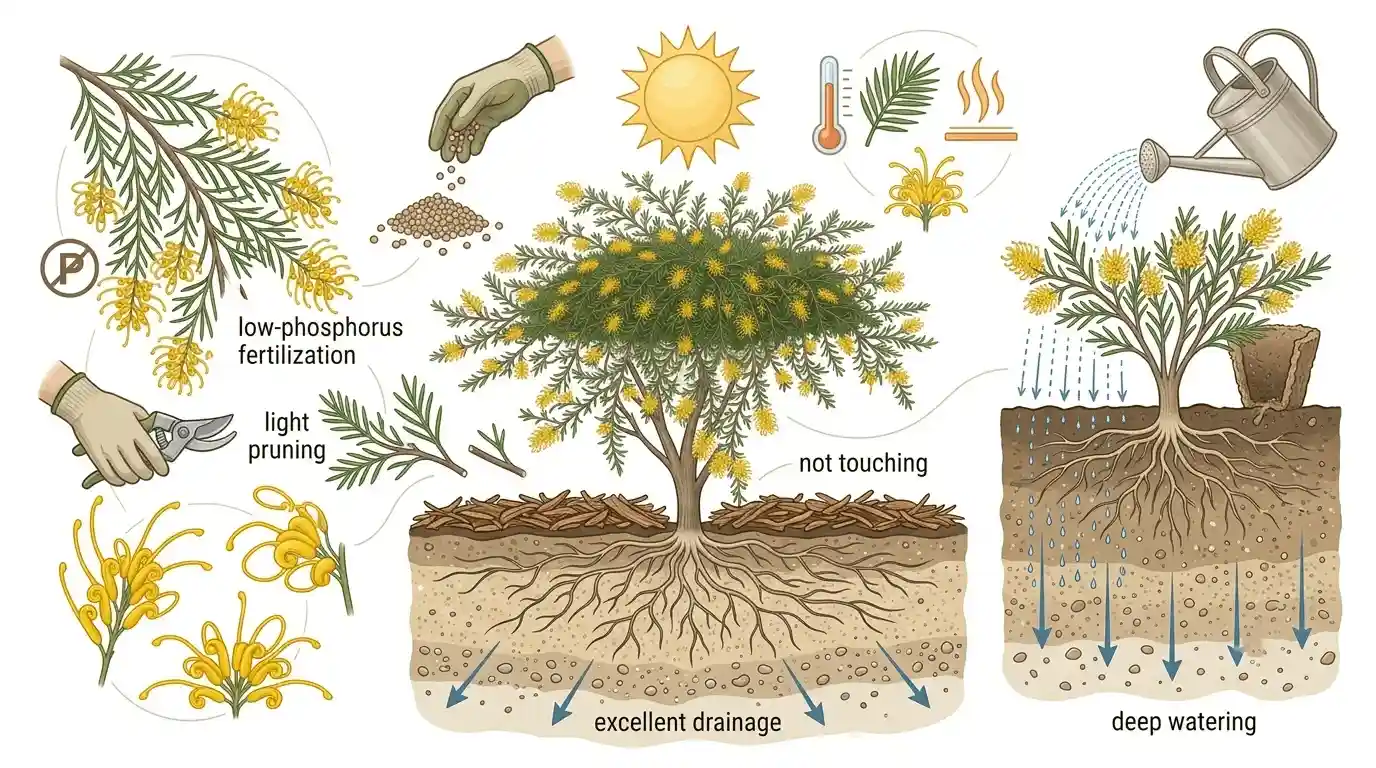
Grevillea Cooroora Cascade performs best in full sun, where it receives at least six hours of direct sunlight daily. Full sun encourages compact growth, abundant flowering, and healthy evergreen foliage.
Although the plant tolerates partial shade, reduced sunlight usually results in fewer flowers and a more open, less dense growth habit.
For the best display:
- Plant in an open, sunny location.
- Avoid deep shade beneath dense tree canopies.
- Ensure good air circulation around the plant to reduce humidity-related diseases.
Soil Preferences
Like most Australian native grevilleas, Cooroora Cascade thrives in free-draining soils. Sandy and sandy-loam soils are ideal because they prevent excess moisture from collecting around the roots.
Preferred soil conditions include:
- Sandy or loamy texture
- Excellent drainage
- Slightly acidic to neutral pH (around 5.5–7.0)
- Low to moderate fertility
Avoid planting in heavy clay soils, as prolonged waterlogging can lead to root rot. If clay soil is unavoidable, improve drainage by incorporating coarse sand or planting on a raised mound.
Watering Requirements
Newly Planted Grevilleas
During the first 6–12 months:
- Water deeply once or twice a week, depending on rainfall.
- Allow the soil surface to dry slightly between waterings.
- Avoid keeping the soil constantly wet.
Consistent watering during establishment encourages a deep, resilient root system.
Established Plants
Once established, Grevillea Cooroora Cascade becomes highly drought tolerant. In most Australian climates, mature plants require supplemental watering only during prolonged dry periods.
A practical watering schedule is:
- Every 2–3 weeks during extended drought
- Less frequently during cooler months
- Adjust according to rainfall and soil type
Overwatering is a far more common problem than underwatering.
Fertilizing
Grevilleas are sensitive to high levels of phosphorus, making fertiliser selection important.
Use:
- Low-phosphorus native plant fertilisers
- Slow-release formulations designed for Australian native plants
Fertilising is generally only necessary if growth appears weak or the soil is particularly nutrient-poor.
Avoid:
- General-purpose garden fertilisers with high phosphorus content
- Excessive feeding, which may damage sensitive roots and reduce flowering
Greenery Inside recommends applying a light dressing of native fertiliser in early spring if needed, followed by watering to help nutrients reach the root zone.
Pruning
Regular light pruning keeps the plant dense, healthy, and floriferous.
Best practices include:
- Lightly trim after the main flowering flush.
- Remove dead, damaged, or crossing branches.
- Shape the plant without cutting into old woody stems.
Routine pruning encourages new shoots, improves air circulation, and maintains the cascading form.
Avoid severe pruning unless rejuvenation is necessary.
Climate Tolerance
Grevillea Cooroora Cascade adapts well to many Australian climates.
It performs particularly well in:
- Temperate regions
- Mediterranean climates
- Coastal gardens
- Dry inland landscapes with good drainage
Frost Tolerance
The plant tolerates light frosts once established, although prolonged or severe frost may damage young shoots.
Heat Tolerance
Excellent heat tolerance makes it suitable for many warm regions, provided the soil drains freely.
Coastal Performance
Its tolerance of coastal winds and moderate salt spray makes it a reliable choice near the coast.
Dry Climates
Thanks to its deep root system and evergreen foliage, Cooroora Cascade remains an excellent option for water-wise gardens and xeriscaping when properly established.
Ideal Plant Spacing and Planting Tips
Recommended Grevillea Cooroora Cascade Spacing
Correct spacing allows plants to develop their natural spreading habit while ensuring good airflow.
General recommendations include:
- Ground cover: 1.5–2 metres apart
- Slope stabilisation: 1–1.5 metres apart for quicker coverage
- Near pathways: Allow at least 60–90 cm from the edge to accommodate mature spread
- Retaining walls: Plant approximately 50–80 cm back from the wall so stems can cascade naturally
Closer spacing provides faster soil coverage but may require occasional thinning as plants mature.
Best Planting Locations
Grevillea Cooroora Cascade performs well in a variety of landscape settings.
Ideal locations include:
- Rock gardens
- Australian native gardens
- Slopes and embankments
- Banks requiring erosion control
- Large mixed garden beds
- Wildlife-friendly landscapes
- Retaining walls where stems can spill over the edge
It can also be grown in large containers with excellent drainage, although regular watering may be required more frequently than for plants grown in the ground.
When planting:
- Dig a hole twice as wide as the root ball.
- Keep the crown level with the surrounding soil.
- Backfill without adding excessive fertiliser.
- Water thoroughly after planting.
- Apply coarse organic mulch while keeping it away from the stem base.
Following these planting practices helps establish healthy roots and supports vigorous long-term growth.
Landscaping Uses for This Grevillea Ground Cover
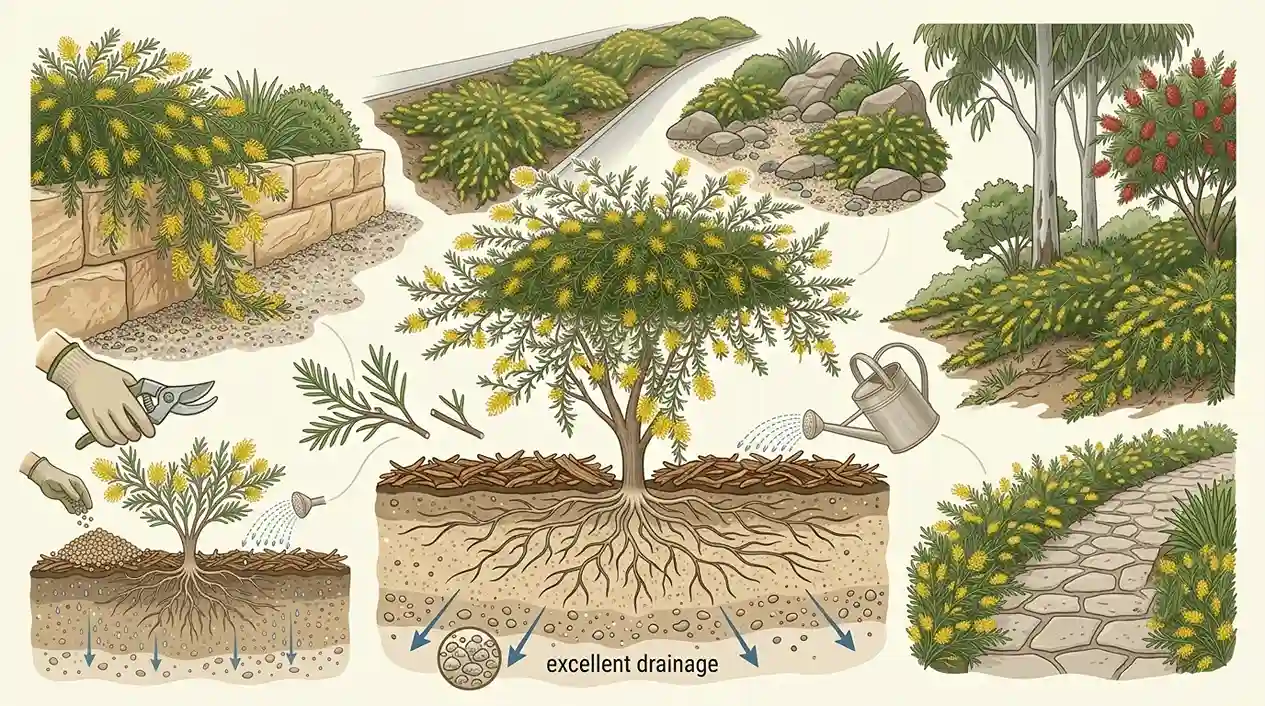
Grevillea Cooroora Cascade is one of the most versatile Australian native ground covers available for residential and commercial landscapes. Its trailing growth habit, evergreen foliage, and bright yellow flowers allow it to solve practical landscaping challenges while adding year-round visual interest.
Unlike upright shrubs that require regular shaping, this cascading grevillea naturally spreads across the ground or flows over edges with minimal maintenance. It is especially valuable in gardens where erosion control, wildlife support, and drought tolerance are priorities.
Native Gardens
Grevillea Cooroora Cascade is a natural fit for Australian native gardens because it blends seamlessly with indigenous trees, shrubs, and grasses.
It pairs well with plants such as:
- Banksias
- Callistemons (Bottlebrush)
- Westringia
- Correas
- Kangaroo Paw
- Native grasses
Its low-growing form creates attractive foreground planting beneath taller native shrubs while helping suppress weeds and retain soil moisture.
Cottage Gardens
Although often associated with native landscapes, Cooroora Cascade also works well in informal cottage-style gardens.
Its flowing branches soften hard landscape edges and contrast beautifully with upright flowering perennials. The bright yellow blooms provide seasonal colour without overwhelming surrounding plants.
Water-Wise Landscapes
Because established plants require relatively little irrigation, Grevillea Cooroora Cascade is widely used in drought-tolerant landscapes.
It is particularly suitable for:
- Xeriscapes
- Low-water residential gardens
- Sustainable commercial landscapes
- Public parks
- Roadside plantings
Greenery Inside recommends using coarse organic mulch around newly planted grevilleas to improve moisture retention during establishment while still maintaining excellent drainage.
Wildlife Gardens
One of the greatest strengths of this grevillea ground cover is its ecological value.
Its nectar-rich flowers provide food for wildlife throughout much of the flowering season, making it an excellent addition to biodiversity-focused gardens.
Wildlife-friendly landscapes benefit from combining Cooroora Cascade with flowering native shrubs that bloom at different times of the year, creating a continuous nectar source.
Public Landscapes
Landscape architects frequently select Grevillea Cooroora Cascade for:
- Streetscapes
- Parks
- Traffic islands
- Educational gardens
- Council landscape projects
Its combination of low maintenance, drought tolerance, and erosion control helps reduce long-term maintenance costs.
Erosion Control
One of the plant’s most practical uses is stabilizing loose soil.
Its extensive spreading branches protect the soil surface while the root system gradually binds the soil together.
This makes it particularly effective for:
- Embankments
- Drainage channels
- Roadside slopes
- Retaining wall gardens
- Coastal banks
Although it should not replace engineered erosion-control systems on steep unstable slopes, it provides excellent long-term vegetative stabilization.
Hanging Over Retaining Walls
Perhaps the most recognizable use of Cooroora Cascade is allowing its branches to spill gracefully over retaining walls.
As stems mature, they produce a soft cascading appearance that:
- Softens hard masonry
- Adds depth to the landscape
- Creates year-round greenery
- Highlights seasonal flowering
This effect is especially attractive when planted in raised beds or terraced gardens.
Popular Landscaping Applications
- Ground cover for large open spaces
- Feature planting beneath native trees
- Slope stabilization
- Pollinator gardens
- Rockeries
- Large mixed borders
- Retaining wall planting
- Roadside landscaping
- Commercial landscapes
- Water-wise residential gardens
Wildlife and Environmental Benefits
Grevillea Cooroora Cascade offers far more than ornamental value. As an Australian native flowering shrub, it plays an important ecological role by supporting pollinators and providing food resources for native wildlife. This plant performs especially well in biodiversity-focused gardens where multiple native flowering species are combined to support pollinators year-round.
For gardeners seeking environmentally responsible landscaping, it is one of the most rewarding ground covers to grow.
Bird Attraction
The bright yellow flowers produce abundant nectar that attracts many nectar-feeding birds.
Common visitors include:
- Honeyeaters
- Wattlebirds
- Eastern Spinebills
- New Holland Honeyeaters
These birds assist with pollination while increasing wildlife activity throughout the garden.
From our experience, flowering intensifies noticeably when plants receive full sun, leading to much higher bird activity during peak blooming periods.
Nectar Production
Grevillea flowers are specially adapted for nectar-feeding wildlife.
Their unique spider-like flower structure allows birds and insects to access nectar while transferring pollen between flowers.
Extended flowering periods provide a reliable food source during seasons when fewer native plants are blooming.
Pollinator Value
Grevillea Cooroora Cascade supports numerous beneficial pollinators.
These include:
- Native bees
- Honey bees
- Butterflies
- Hoverflies
- Other nectar-feeding insects
Pollinators contribute to healthier ecosystems and improve pollination of nearby flowering plants.
Biodiversity
Adding native grevilleas increases biodiversity by creating more diverse habitat opportunities.
Gardens containing multiple native flowering species generally support:
- Greater insect diversity
- Increased bird populations
- Improved ecological resilience
- Better seasonal food availability
Habitat Support
The dense evergreen foliage provides shelter for:
- Small reptiles
- Beneficial insects
- Ground-feeding birds
- Juvenile frogs in suitable environments
Even when flowering has finished, the plant continues contributing habitat throughout the year.
As of 2026, many Australian wildlife gardening recommendations continue to encourage the use of locally adapted native flowering plants like grevilleas to improve urban biodiversity and pollinator health.
Grevillea Cooroora Cascade vs Similar Grevillea Varieties
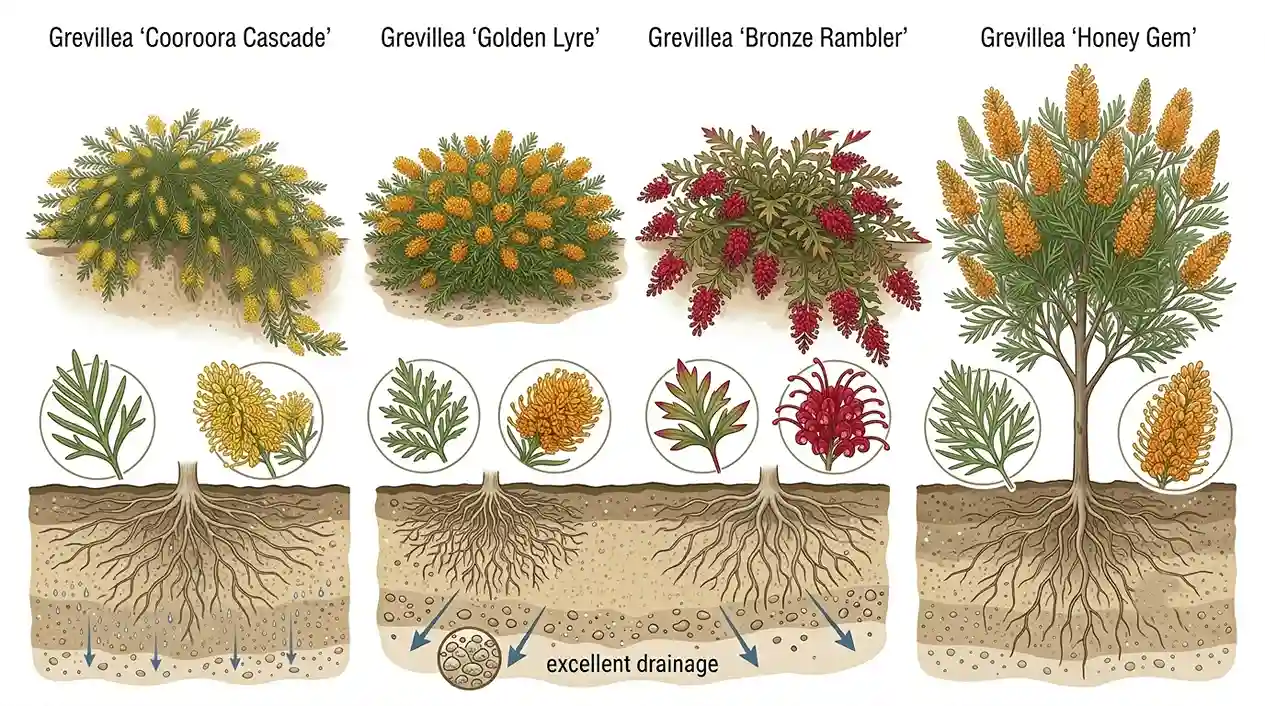
Many gardeners compare Grevillea Cooroora Cascade with other popular grevillea cultivars before selecting the best plant for their landscape.
Although all belong to the Proteaceae family, they differ significantly in mature size, growth habit, flower colour, and landscape applications.
| Variety | Height | Growth Habit | Flower Colour | Best Use |
| Grevillea Cooroora Cascade | 30–60 cm | Low, spreading, cascading | Yellow | Ground cover, retaining walls, slopes |
| Grevillea Golden Lyre | 20–40 cm | Dense, prostrate | Golden-yellow | Rockeries, native gardens |
| Grevillea Bronze Rambler | 20–40 cm | Vigorous trailing | Red | Large-scale ground cover, erosion control |
| Grevillea ‘Honey Gem’ | 3–6 m | Upright shrub to small tree | Orange-yellow | Screening, feature planting, bird habitat |
Grevillea Cooroora Cascade vs Grevillea Golden Lyre
Both are excellent ground covers, but they differ in appearance.
Grevillea Cooroora Cascade
- Longer cascading branches
- More flowing landscape appearance
- Ideal for retaining walls
- Strong spreading habit
Grevillea Golden Lyre
- More compact growth
- Dense ground-hugging habit
- Better suited to smaller gardens
- Excellent for rockeries
Grevillea Cooroora Cascade vs Grevillea Bronze Rambler
These are frequently compared because both spread widely across the ground.
Key differences include:
| Feature | Cooroora Cascade | Bronze Rambler |
| Flower colour | Yellow | Deep red |
| Growth habit | Moderate spreading | More vigorous trailing |
| Landscape appearance | Soft cascading | Dense mat-forming |
| Maintenance | Low | Moderate due to faster spread |
Bronze Rambler generally spreads more aggressively, while Cooroora Cascade offers a tidier appearance that is easier to manage in residential gardens.
Grevillea Cooroora Cascade vs Grevillea ‘Honey Gem’
These two grevilleas serve completely different landscape purposes.
Cooroora Cascade
- Ground cover
- Under 60 cm tall
- Covers soil
- Controls erosion
- Cascades over walls
Honey Gem
- Large shrub or small tree
- Used for screening
- Creates vertical structure
- Produces larger floral displays
- Requires considerably more space
Gardeners seeking low-maintenance ground coverage should generally choose Cooroora Cascade, while Honey Gem is better suited as a feature shrub or privacy screen.
Common Growing Problems and How to Fix Them
Although Grevillea Cooroora Cascade is considered a hardy Australian native, unsuitable growing conditions can occasionally lead to problems. Most issues are preventable through proper planting and routine maintenance.
Poor Flowering
Poor flowering is usually caused by insufficient sunlight, incorrect pruning, or excessive fertiliser.
Common causes
- Too much shade
- High-phosphorus fertiliser
- Heavy pruning before flowering
- Excess nitrogen encouraging foliage instead of blooms
Solutions
- Plant in full sun whenever possible.
- Use fertilisers formulated for Australian native plants.
- Prune lightly after the main flowering period.
- Avoid excessive feeding.
Root Rot
Root rot is the most serious disease affecting many grevilleas.
It usually develops when roots remain waterlogged for extended periods.
Causes
- Heavy clay soils
- Poor drainage
- Frequent overwatering
- Water collecting around the crown
Prevention
- Plant in well-drained soil.
- Improve drainage before planting.
- Water deeply but infrequently.
- Avoid planting in low-lying areas where water pools.
Once severe root rot develops, recovery is often difficult, making prevention the best strategy.
Sparse Growth
Older plants occasionally become open or woody in the centre.
Other contributing factors include:
- Too much shade
- Nutrient imbalance
- Aging branches
- Lack of pruning
Solutions
- Increase sunlight where practical.
- Apply low-phosphorus native fertiliser if required.
- Lightly prune after flowering to stimulate new shoots.
- Replace very old plants if rejuvenation pruning is unsuccessful.
Greenery Inside has found that annual light shaping maintains a denser, healthier canopy than infrequent heavy pruning.
Pests and Diseases
Grevillea Cooroora Cascade is generally resistant to most serious pests and diseases.
Occasional problems may include:
- Scale insects
- Aphids on new growth
- Leaf spot in persistently humid conditions
Healthy plants growing in suitable conditions rarely experience significant pest outbreaks.
Maintaining good airflow, avoiding overwatering, and planting in full sun remain the most effective long-term prevention measures.
Is Grevillea Cooroora Cascade Invasive?
No, Grevillea Cooroora Cascade is not considered invasive. It is a vigorous spreading ground cover, but it does not aggressively invade natural ecosystems or overwhelm nearby plants when grown under normal garden conditions. Its spreading habit is a desirable characteristic for erosion control and landscape coverage rather than an indication of invasive behavior.
Many gardeners searching for “grevillea cooroora cascade invasive” are concerned about how quickly the plant spreads. While it can cover a large area over several years, it expands predictably through its trailing branches instead of producing invasive underground runners or prolific self-seeding.
Vigorous Growth vs. Invasiveness
A vigorous plant grows quickly and covers available space, whereas an invasive plant spreads uncontrollably into natural habitats, displacing native vegetation.
Grevillea Cooroora Cascade is considered:
- A vigorous landscape plant
- A controlled spreading ground cover
- Suitable for managed gardens
- Easy to contain with occasional pruning
Unlike invasive species, it:
- Does not aggressively self-seed in most garden settings.
- Does not spread through invasive root systems.
- Can be maintained within its planting area with light annual pruning.
Suitable Growing Regions
Grevillea Cooroora Cascade Australia performs best in regions with well-drained soils and mild to warm climates.
Ideal regions include:
- Temperate Australia
- Mediterranean climate zones
- Coastal regions with moderate salt tolerance
- Dry inland gardens with supplementary watering during establishment
In colder climates with prolonged heavy frost, growth may slow, but the plant generally remains manageable.
Responsible Planting Practices
Although not invasive, proper planting improves long-term landscape performance.
Best practices include:
- Leave adequate spacing between plants.
- Avoid planting too close to small shrubs that may become smothered.
- Prune lightly each year to maintain shape.
- Remove damaged or dead stems after flowering.
- Monitor growth around pathways and retaining walls.
Following these simple practices keeps the plant attractive while allowing neighboring plants enough space to thrive.
Common Beginner Mistakes to Avoid
Grevillea Cooroora Cascade is relatively easy to grow, but several common mistakes can reduce flowering, slow growth, or shorten the plant’s lifespan. Most problems arise from unsuitable soil conditions or excessive maintenance rather than neglect.
Planting in Poorly Drained Soil
Poor drainage is the leading cause of grevillea failure.
Heavy clay soils retain water around the roots, increasing the risk of root rot and reducing plant vigor.
Better approach:
- Choose sandy or loamy soils.
- Improve drainage before planting.
- Consider raised beds or mounded planting if drainage is poor.
Overwatering
Many new gardeners assume native plants require frequent watering.
In reality, established Grevillea Cooroora Cascade is highly drought tolerant.
Overwatering may cause:
- Yellowing foliage
- Root diseases
- Reduced flowering
- Weak root systems
Best practice:
Water deeply during establishment, then reduce irrigation once roots have developed.
Using High-Phosphorus Fertilizer
Members of the Proteaceae family are sensitive to phosphorus.
Using ordinary garden fertilizer may damage roots and reduce plant health.
Instead:
- Use fertilizers formulated specifically for Australian native plants.
- Apply only when necessary.
- Follow manufacturer recommendations carefully.
Growing in Too Much Shade
Although the plant tolerates partial shade, heavy shade often causes:
- Fewer flowers
- Sparse growth
- Long, weak stems
- Reduced branching
For maximum flowering, select a location receiving at least six hours of direct sunlight each day.
Over-Pruning
Some gardeners prune too heavily, cutting into old woody stems.
Excessive pruning can:
- Delay flowering
- Reduce foliage density
- Slow recovery
Instead, perform light shaping immediately after the main flowering period.
Incorrect Plant Spacing
Planting too closely may eventually reduce airflow and create overcrowding.
Planting too far apart delays ground coverage.
General spacing recommendations are:
- 1–1.5 metres for erosion control
- 1.5–2 metres for standard ground cover
- Additional clearance near pathways or retaining walls
Proper spacing produces healthier plants while reducing future maintenance.
Seasonal Care Throughout the Year
Although Grevillea Cooroora Cascade is low maintenance, seasonal care helps maintain dense growth, healthy foliage, and abundant flowering.
Spring and Summer Care
Spring marks the beginning of the strongest growth period.
Recommended tasks include:
- Inspect plants for winter damage.
- Apply low-phosphorus native fertilizer if needed.
- Water deeply during prolonged dry periods.
- Remove spent flowers where practical.
- Lightly prune after the main flowering flush.
During hot summers:
- Water established plants only during extended drought.
- Maintain mulch to reduce soil temperature.
- Monitor young plants more closely than mature specimens.
From our experience, plants established before summer require significantly less irrigation during heatwaves than newly planted specimens.
Autumn Maintenance
Autumn is an excellent season for preparing plants for cooler weather.
Tasks include:
- Remove dead or damaged stems.
- Top up mulch while keeping it away from the stem.
- Plant new grevilleas while soil remains warm.
- Check drainage before winter rainfall begins.
Autumn planting often allows roots to establish before the following summer.
Winter Considerations
Growth naturally slows during winter, although flowering may continue in milder climates.
Winter care focuses on protection rather than active growth.
Recommendations include:
- Reduce watering in cool weather.
- Avoid heavy pruning.
- Protect young plants from severe frost if necessary.
- Inspect plants for signs of waterlogging after heavy rain.
As of the 2026 growing season, many Australian native plant growers continue recommending autumn planting and winter drainage management as two of the most effective ways to establish healthy grevilleas.
Conclusion
Grevillea Cooroora Cascade is one of the most reliable grevillea ground cover plants for Australian gardens. Its cascading growth habit, evergreen foliage, and cheerful yellow flowers make it an attractive solution for slopes, retaining walls, rockeries, and large landscape beds.
Beyond its ornamental appeal, this cascading grevillea supports native birds, bees, and butterflies while helping stabilize soil and reduce maintenance requirements. Once established, it thrives with relatively little watering, making it an excellent choice for drought-tolerant and water-wise landscapes.
Long-term success depends on planting it in full sun, providing well-drained soil, using low-phosphorus fertilizer when required, and performing occasional light pruning after flowering. With proper care and spacing, Grevillea Cooroora Cascade will provide years of dependable growth, vibrant seasonal blooms, and valuable habitat for local wildlife.
Frequently Asked Questions
How tall does Grevillea Cooroora Cascade grow?
Grevillea Cooroora Cascade typically reaches 30–60 cm (12–24 inches) in height while spreading approximately 2–4 metres wide. Its low-growing habit makes it ideal for use as a flowering ground cover rather than an upright shrub.
Is Grevillea Cooroora Cascade suitable as a ground cover?
Yes. It is specifically grown as a grevillea ground cover because of its dense, spreading branches and evergreen foliage. It is particularly effective on slopes, embankments, retaining walls, and large garden beds where weed suppression and erosion control are desired.
How far apart should Grevillea Cooroora Cascade be planted?
For general ground cover, space plants 1.5–2 metres apart. On slopes or erosion-prone sites, spacing of 1–1.5 metres provides faster coverage while maintaining adequate airflow as the plants mature.
Does Grevillea Cooroora Cascade attract birds and pollinators?
Yes. Its nectar-rich yellow flowers attract a variety of wildlife, including honeyeaters, native bees, butterflies, and other beneficial pollinators. It is an excellent choice for wildlife-friendly and biodiversity-focused gardens.
Is Grevillea Cooroora Cascade drought tolerant?
Yes. Once established, Grevillea Cooroora Cascade is highly drought tolerant. It performs well in water-wise landscapes and generally requires supplemental watering only during prolonged dry periods.
Can Grevillea Cooroora Cascade grow in pots?
Yes, although it performs best in the ground. If grown in containers, choose a large pot with excellent drainage, use a free-draining native plant potting mix, and water more frequently than in-ground specimens, especially during hot weather.
Is Grevillea Cooroora Cascade invasive?
No. Although it spreads steadily to form a dense ground cover, it is not considered invasive. It does not aggressively self-seed or spread through invasive root systems and can be easily managed with occasional pruning.
What is the difference between Grevillea Cooroora Cascade and Grevillea Bronze Rambler?
The main differences are flower colour and growth habit. Grevillea Cooroora Cascade produces yellow flowers and has a graceful cascading form, while Grevillea Bronze Rambler bears deep red flowers and has a more vigorous, mat-forming growth habit. Bronze Rambler generally spreads faster, whereas Cooroora Cascade offers a tidier appearance for residential landscapes.