Introduction
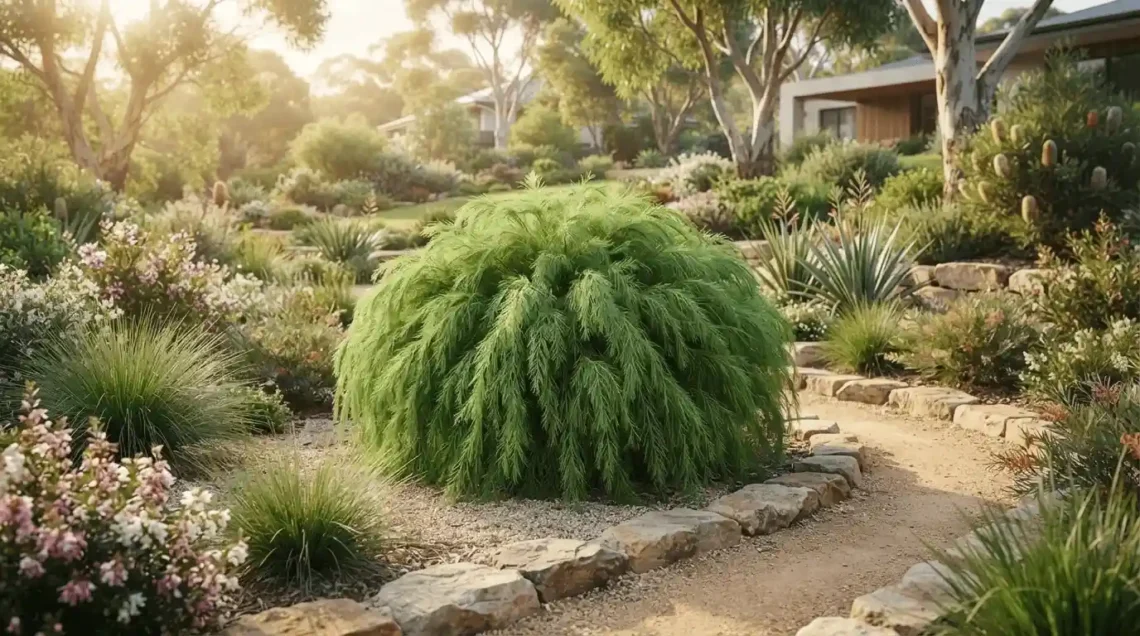
The Mini Cog plant (Acacia cognata ‘Mini Cog’) is a compact evergreen shrub admired for its graceful, cascading foliage and low-maintenance nature. This attractive cultivar of Acacia cognata has become a favorite in modern landscapes because it provides year-round texture without requiring extensive care. Often referred to as Acacia Mini Cog, Acacia cognata Mini Cog, mini cog acacia, dwarf acacia, or simply a small acacia, it performs equally well in borders, rock gardens, containers, and native garden designs. Many gardeners also compare it with Acacia Limelight, another popular cultivar with similar fine foliage but noticeable differences in size and growth habit. Understanding these differences helps gardeners choose the best variety for their landscape. Mini Cog is often used in modern Australian native garden designs alongside other compact landscape shrubs and small feature plants.
By Greenery Inside | Plant Care & Gardening Expert
Quick Summary
- Mini Cog Plant is a compact evergreen cultivar of Acacia cognata with soft, weeping, fern-like foliage.
- It grows best in full sun to partial shade with well-drained soil and requires relatively little maintenance.
- Its compact size makes it ideal for containers, borders, rock gardens, pathways, and small residential landscapes.
- Mini Cog and Limelight differ mainly in mature size, growth habit, maintenance needs, and landscape applications.
- With proper care, Mini Cog provides attractive year-round foliage and excellent drought tolerance once established.
What Is the Mini Cog Plant?
The Mini Cog plant is a dwarf ornamental cultivar of the Australian species Acacia cognata, a member of the pea family (Fabaceae). Unlike many larger wattles, Mini Cog is valued primarily for its dense, finely textured foliage rather than abundant flowering.
Originally developed for ornamental landscaping, this cultivar combines the naturally elegant, weeping habit of Acacia cognata with a much more compact growth form. The result is a versatile evergreen shrub that fits comfortably into modern residential gardens where space is limited.
Its fine, flowing foliage creates movement in the landscape, softening hard edges around paths, retaining walls, patios, and garden beds. Because it remains attractive throughout the year, it is widely used as both a feature specimen and a filler plant in contemporary landscape designs.
The plant is commonly marketed under several closely related names, including:
- Acacia Mini Cog
- Acacia cognata Mini Cog
- Mini Cog Acacia
- Acacia cognata dwarf
- Dwarf Acacia
- Small Acacia
- Little Cog Plant
Although these names vary by nursery or region, they generally refer to the same compact cultivar or describe its dwarf growth habit. Gardeners should verify the botanical name on the plant label to ensure they are purchasing Acacia cognata ‘Mini Cog’.
From a botanical perspective:
| Classification | Details |
| Scientific Name | Acacia cognata ‘Mini Cog’ |
| Family | Fabaceae |
| Plant Type | Evergreen ornamental shrub |
| Native Species | Acacia cognata (Australia) |
| Growth Habit | Compact, rounded, softly cascading |
| Foliage | Fine, narrow, evergreen leaves |
At Greenery Inside, we have found Mini Cog especially useful in smaller landscapes where standard acacias would eventually outgrow the available space. Its naturally compact habit also reduces the need for frequent pruning.
Common Name and Botanical Name
The common name for Acacia Mini Cog is simply “Mini Cog” or “Mini Cog Wattle,” while its correct botanical name is Acacia cognata ‘Mini Cog’.
Many nurseries market the same plant under slightly different names because they emphasize either the cultivar or the parent species. For example:
- Mini Cog highlights the cultivar name.
- Acacia Mini Cog connects it with the Acacia genus.
- Acacia cognata Mini Cog provides the complete botanical identification.
- Mini Cog Acacia is commonly used in retail catalogs.
- Dwarf Acacia and small acacia describe its compact growth rather than serving as official botanical names.
These naming variations can sometimes confuse gardeners, but they all refer to the same ornamental shrub when accompanied by the botanical designation Acacia cognata ‘Mini Cog’.
Using the botanical name is the most reliable way to distinguish Mini Cog from other compact Acacia cognata cultivars such as Limelight, Green Mist, or Green Magik.
Mini Cog Plant Features and Identification
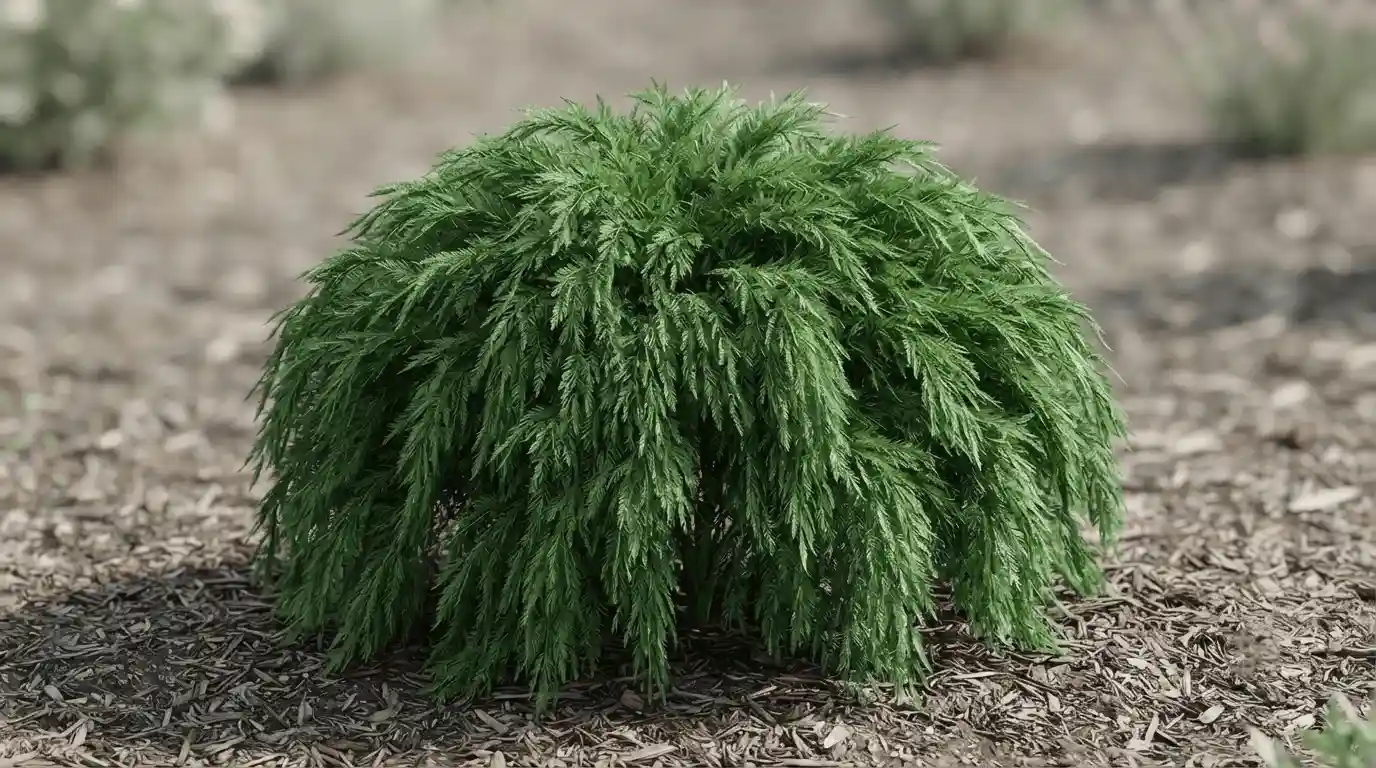
The Mini Cog plant is easy to recognize because of its distinctive foliage and naturally graceful form. Unlike broad-leaved shrubs, it produces thousands of narrow, soft leaves that create a delicate, almost fountain-like appearance.
Key identifying characteristics include:
- Fine, fern-like evergreen foliage
- Soft, cascading branches
- Naturally rounded, compact habit
- Bright green foliage throughout the year
- Dense growth requiring minimal shaping
- Attractive texture even when not flowering
Its foliage remains one of its strongest ornamental features. Instead of dramatic seasonal color changes, Mini Cog provides consistent greenery that contrasts beautifully with flowering perennials, ornamental grasses, and native Australian plants.
The compact habit also makes it suitable for urban gardens where larger shrubs would become difficult to manage.
In our experience growing Mini Cog, the plant develops its best natural form when allowed to grow without excessive pruning. Occasional light trimming preserves its graceful cascading habit while maintaining a tidy appearance.
Acacia Mini Cog Flower
Although foliage is the primary ornamental feature, Mini Cog does produce flowers each year under suitable growing conditions.
The flowers are typically:
- Small and rounded
- Pale cream to soft yellow
- Arranged in fluffy spherical flower heads
- Lightly fragrant
- Less showy than many other Acacia species
Flowering generally occurs from late winter through spring, although timing varies depending on local climate.
Unlike larger wattles known for spectacular floral displays, Mini Cog flowers are relatively subtle. Most gardeners grow the shrub for its elegant foliage rather than its blossoms.
Despite their modest appearance, the flowers still provide ecological value by attracting beneficial pollinating insects, including native bees and other nectar-feeding species. This makes Mini Cog a useful addition to wildlife-friendly and pollinator gardens.
Flower production is generally improved when plants receive:
- Full sun
- Good drainage
- Moderate watering during establishment
- Light annual pruning after flowering
Acacia Cognata Mini Cog Size
Mini Cog is specifically bred to remain compact, making it one of the smallest ornamental selections of Acacia cognata. Its manageable size allows it to fit comfortably into residential landscapes where larger acacias may become too vigorous.
Most mature plants reach approximately:
- Height: 2–3 feet (60–90 cm)
- Width: 3–5 feet (90–150 cm)
Growth is naturally rounded with gently arching branches that spread wider than they grow tall.
Plants grown in containers usually remain slightly smaller because root space is more restricted, while specimens planted directly in well-prepared garden soil often achieve their maximum spread.
Factors affecting mature size include:
- Climate
- Sunlight
- Soil fertility
- Water availability
- Pruning practices
- Root space
Mini Cog Plant Mature Size
| Growing Location | Height | Width | Growth Habit |
| Garden Beds | 2–3 ft (60–90 cm) | 3–5 ft (90–150 cm) | Rounded, cascading |
| Rock Gardens | 2 ft (60 cm) | 3–4 ft (90–120 cm) | Compact and spreading |
| Containers | 1.5–2.5 ft (45–75 cm) | 2–3 ft (60–90 cm) | Dense and compact |
| Mass Plantings | 2–3 ft (60–90 cm) | 4–5 ft (120–150 cm) | Soft mounding |
Because of its naturally compact dimensions, Mini Cog is often selected for narrow garden beds, pathway edging, and modern landscape designs where space efficiency is important.
Growth Rate and Lifespan
Yes, acacias are generally considered fast-growing plants, but the growth rate varies considerably between species and cultivars.
Mini Cog has a moderate to moderately fast growth rate, especially during its first few years after planting. Under favorable conditions, young plants establish quickly and develop their characteristic rounded shape within two to three growing seasons.
Growth is most active during the warmer months of spring and summer when temperatures are mild and soil moisture is adequate. In cooler seasons, growth naturally slows as the plant directs its energy toward maintenance rather than new foliage production.
Several environmental factors influence how quickly Mini Cog grows:
- Full sun encourages denser, faster growth.
- Well-drained soil supports healthy root development.
- Consistent watering during establishment improves vigor.
- Excessively wet or compacted soil slows growth.
- Heavy shade can reduce branching and overall density.
With proper care, Mini Cog can remain an attractive landscape shrub for 15 to 25 years or longer, depending on climate, soil conditions, and maintenance. Regular light pruning, good drainage, and avoiding prolonged waterlogging help maximize its lifespan.
At Greenery Inside, we recommend focusing on healthy root establishment during the first year rather than encouraging rapid top growth. A well-established root system leads to a healthier, more resilient shrub that requires less maintenance over time.
Mini Cog Plant Care Guide
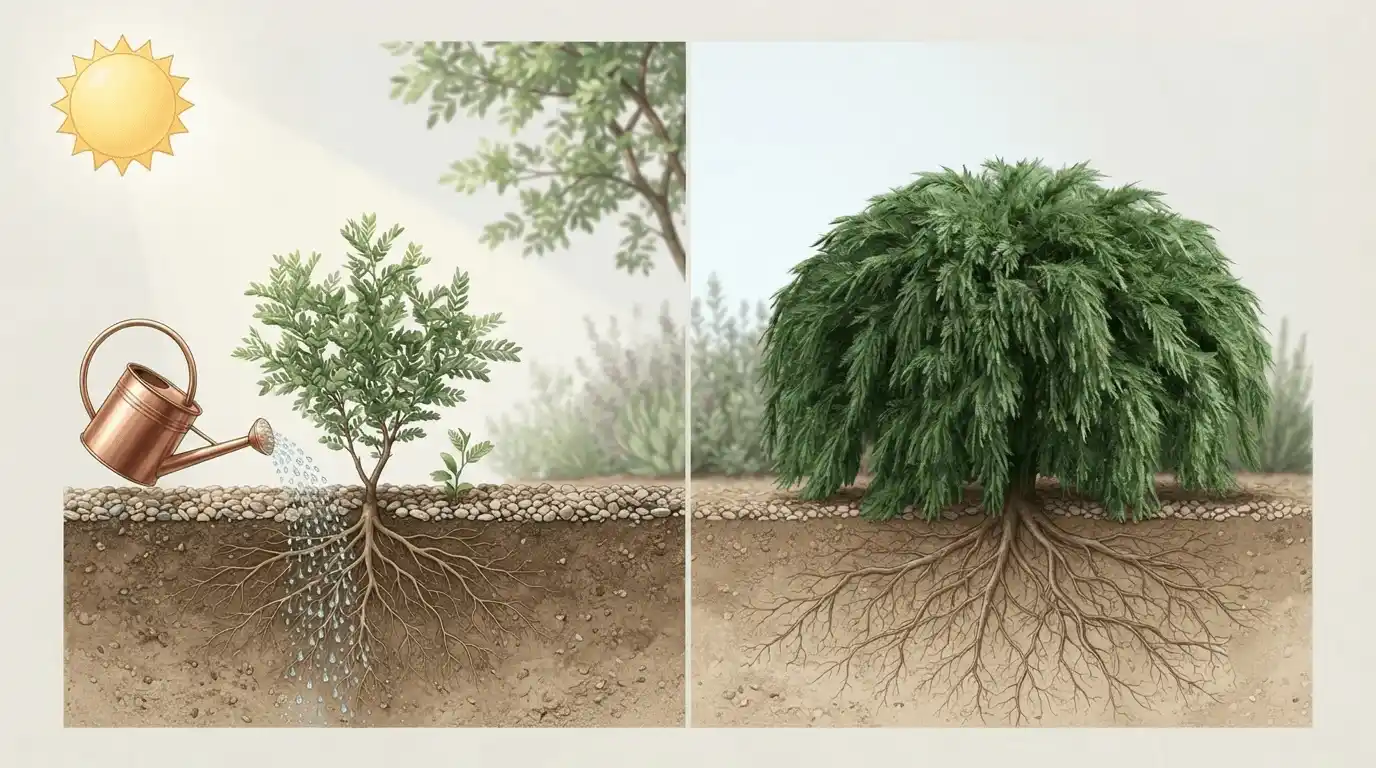
Proper care allows the Mini Cog plant (Acacia cognata ‘Mini Cog’) to maintain its dense, cascading foliage and compact shape for many years. Like most Australian native plants, it performs best when its growing conditions mimic its natural environment—plenty of sunlight, excellent drainage, and moderate watering.
One of the reasons Mini Cog is popular in residential landscapes is that it requires relatively little maintenance once established. However, paying attention to watering, soil, pruning, and seasonal care will help it remain healthy and attractive throughout the year.
Greenery Inside Tip: In our experience, most problems with Mini Cog are caused by excessive watering rather than neglect. It is far more tolerant of short dry periods than constantly wet soil.
Light Requirements
Mini Cog grows best in full sun to partial shade, with full sun producing the densest growth and healthiest foliage.
For optimal performance:
- Full Sun (6–8 hours daily):
- Encourages compact growth.
- Produces brighter green foliage.
- Improves overall plant vigor.
- Supports better flowering.
- Partial Shade (3–6 hours daily):
- Suitable in regions with extremely hot summers.
- Helps reduce heat stress during afternoon temperatures.
- Growth may become slightly looser.
Although Mini Cog tolerates partial shade, planting it in deep shade is not recommended. Insufficient sunlight often causes:
- Sparse branching
- Reduced foliage density
- Leggy growth
- Poor flowering
- Increased susceptibility to fungal diseases due to slower drying after rainfall
Best Planting Position
Choose a location that provides:
- Morning to afternoon sunlight
- Good air circulation
- Protection from constantly wet conditions
- Well-drained planting soil
As of 2026, many Australian growers continue recommending full sun for the most compact growth habit, while partial afternoon shade is beneficial in regions with prolonged extreme summer heat.
Watering
Mini Cog requires regular watering while establishing but becomes drought tolerant once mature.
Watering needs change significantly during the plant’s life cycle.
Newly Planted Mini Cog
During the first 6–12 months:
- Water deeply once or twice each week.
- Allow the top few inches of soil to dry slightly between watering.
- Increase watering during prolonged hot, dry weather.
- Avoid daily shallow watering, which encourages weak surface roots.
Deep watering promotes stronger root development and improves long-term drought resistance.
Established Plants
Once established:
- Water only during extended dry periods.
- Mature plants usually require supplemental watering every 2–4 weeks during drought.
- Rainfall is often sufficient in temperate climates.
Mini Cog is considerably more tolerant of drought than waterlogged conditions.
Signs of Overwatering
Watch for:
- Yellowing leaves
- Drooping despite moist soil
- Soft stems
- Root decline
- Poor growth
Signs of Underwatering
Look for:
- Curling foliage
- Dry branch tips
- Slower growth
- Premature leaf drop during extended drought
Greenery Inside Recommendation: We recommend checking soil moisture before watering rather than following a fixed schedule. This simple habit prevents one of the most common causes of root problems.
Soil Requirements
Well-drained soil is the single most important requirement for growing a healthy Mini Cog plant.
Like many Australian native species, Acacia cognata naturally grows in soils that drain freely and contain moderate levels of organic matter.
Ideal Soil Types
Mini Cog performs well in:
- Sandy loam
- Loamy soils
- Gravelly soils
- Raised garden beds
- Native garden soils with excellent drainage
It is less suitable for:
- Heavy clay
- Permanently wet soils
- Compacted ground
- Areas where water pools after rain
Soil pH
The preferred pH range is:
- Slightly acidic to neutral
- Approximately 6.0–7.0
The plant can tolerate slightly alkaline soils if drainage remains excellent.
Improving Poor Soil
If drainage is poor:
- Incorporate coarse sand or fine gravel.
- Add compost to improve soil structure rather than water retention.
- Plant on a slight mound or raised bed.
- Avoid excessive soil compaction around roots.
Healthy roots require oxygen, making proper drainage essential.
Fertilizing
Mini Cog generally requires very little fertilizer once established.
Because Australian native plants have evolved in nutrient-poor soils, excessive fertilization can encourage weak growth and reduce overall plant health.
When to Fertilize
Apply fertilizer:
- Once annually in early spring if needed.
- After planting only when soil fertility is extremely poor.
Best Fertilizer
Choose:
- Low-phosphorus native plant fertilizer
- Slow-release formulation
- Balanced nutrients designed for Australian natives
Avoid:
- High-phosphorus fertilizers
- Heavy applications of nitrogen
- Frequent feeding throughout the year
Too much fertilizer may result in:
- Soft, weak growth
- Reduced drought tolerance
- Increased susceptibility to pests
Many mature Mini Cog plants growing in healthy garden soil require no supplemental fertilizer at all.
Pruning
Mini Cog needs only light pruning to maintain its naturally compact, cascading shape.
Unlike formal hedging shrubs, it should not be heavily clipped into rigid shapes.
Best Time to Prune
The ideal time is:
- Immediately after flowering
- Late spring to early summer
- Whenever dead or damaged branches appear
Light Maintenance Pruning
Remove:
- Dead branches
- Broken stems
- Crossing branches
- Winter damage
- Excessively long shoots
Shaping
Light trimming helps:
- Maintain a rounded habit
- Encourage denser branching
- Improve air circulation
- Preserve the graceful weeping form
Avoid removing more than one-third of the plant during a single pruning session.
Excessive pruning may temporarily reduce flowering and spoil the plant’s naturally flowing appearance.
Is Acacia Cognata Cold Hardy?
Yes, Acacia cognata is moderately cold hardy, but prolonged severe frost can damage young plants and tender new growth.
Mini Cog performs best in mild to warm temperate climates where winters remain relatively moderate.
Frost Tolerance
Established plants tolerate:
- Light frosts
- Brief cold snaps
- Short periods near freezing
Young plants are more vulnerable and may require protection during their first winter.
Heat Tolerance
Mini Cog performs exceptionally well in:
- Warm summers
- Dry climates
- Heat reflected from walls and paving
- Water-wise landscapes
Its fine foliage rarely suffers heat scorch when roots are well established.
USDA Hardiness Zones
Mini Cog is generally suitable for:
| Climate Factor | Recommendation |
| USDA Zones | 9–11 |
| Light Frost | Usually tolerated |
| Heavy Frost | May damage foliage |
| Extreme Freeze | Protection recommended |
| Summer Heat | Excellent tolerance |
Winter Protection
In colder regions:
- Apply organic mulch around the root zone.
- Avoid late-season fertilizing that stimulates tender growth.
- Cover young plants during severe frost events.
- Plant near sheltered walls if winter temperatures regularly fall below freezing.
Is Acacia Cognata Invasive?
No, Acacia cognata is generally not considered an invasive ornamental shrub in most cultivated landscapes.
Mini Cog has a compact growth habit and behaves well in residential gardens.
Root Behavior
Its root system is:
- Relatively non-aggressive
- Fibrous rather than destructive
- Unlikely to damage foundations or paved areas when planted appropriately
However, all shrubs should be planted a reasonable distance from underground utilities and building foundations.
Seed Production
Unlike some larger Acacia species:
- Mini Cog produces relatively few viable seedlings in gardens.
- It rarely spreads aggressively through seed.
- Most cultivated plants remain where they are planted.
Landscape Safety
Mini Cog is considered suitable for:
- Small gardens
- Residential landscapes
- Container planting
- Urban environments
- Native garden designs
Environmental Considerations
The invasiveness of any Acacia species depends on regional climate and environmental regulations.
In some parts of the world, certain Acacia species have become naturalized outside cultivation. However, Acacia cognata ‘Mini Cog’ is generally regarded as a well-behaved ornamental cultivar.
Before planting, gardeners should always check local environmental guidelines if they live in regions where Acacia species are regulated.
Mini Cog Plant Uses in Landscaping
Mini Cog is one of the most versatile compact evergreen shrubs available for contemporary landscapes. Its fine-textured foliage and naturally rounded shape allow it to blend easily with both native and ornamental plantings.
It performs especially well in:
- Borders
- Rock gardens
- Decorative containers
- Mass plantings
- Pathway edges
- Native gardens
- Small residential landscapes
- Courtyard gardens
- Modern minimalist landscapes
Its year-round evergreen foliage provides continuous structure even when surrounding flowering plants are dormant.
Best Landscape Uses
- Feature specimen in small garden beds
- Informal low hedge
- Accent groundcover
- Modern architectural landscapes
- Water-wise gardens
- Courtyard focal point
- Poolside planting
- Softening retaining walls
- Mixed native shrub borders
Because of its graceful texture, Mini Cog also pairs beautifully with ornamental grasses, flowering perennials, and contrasting broad-leaved shrubs.
Growing Mini Cog in Pots
Yes, Mini Cog grows exceptionally well in containers when provided with good drainage and appropriate care.
Container growing is ideal for:
- Patios
- Balconies
- Courtyards
- Entryways
- Small urban gardens
Choosing a Container
Select a pot that:
- Has multiple drainage holes
- Is slightly wider than the root ball
- Allows future root development
- Is made from durable materials such as terracotta, ceramic, or quality resin
Potting Mix
Use:
- Premium native plant potting mix
- Free-draining container mix
- Mix amended with coarse sand or perlite if drainage needs improvement
Avoid heavy garden soil in containers.
Watering
Container plants dry out faster than garden-grown specimens.
Generally:
- Water when the top 1–2 inches (2.5–5 cm) of potting mix feels dry.
- Increase watering during hot summer weather.
- Reduce watering in winter.
Fertilizing
Apply:
- Slow-release native plant fertilizer once each spring.
- Avoid frequent liquid feeding unless nutrient deficiency is visible.
Repotting
Repot approximately every:
- 2–3 years, or
- When roots begin circling the container.
Move the plant into a container only one size larger to avoid excess moisture retention around undeveloped roots.
With proper care, container-grown Mini Cog maintains the same graceful cascading appearance as landscape specimens while remaining easy to manage in smaller spaces.
Acacia Mini Cog vs Limelight
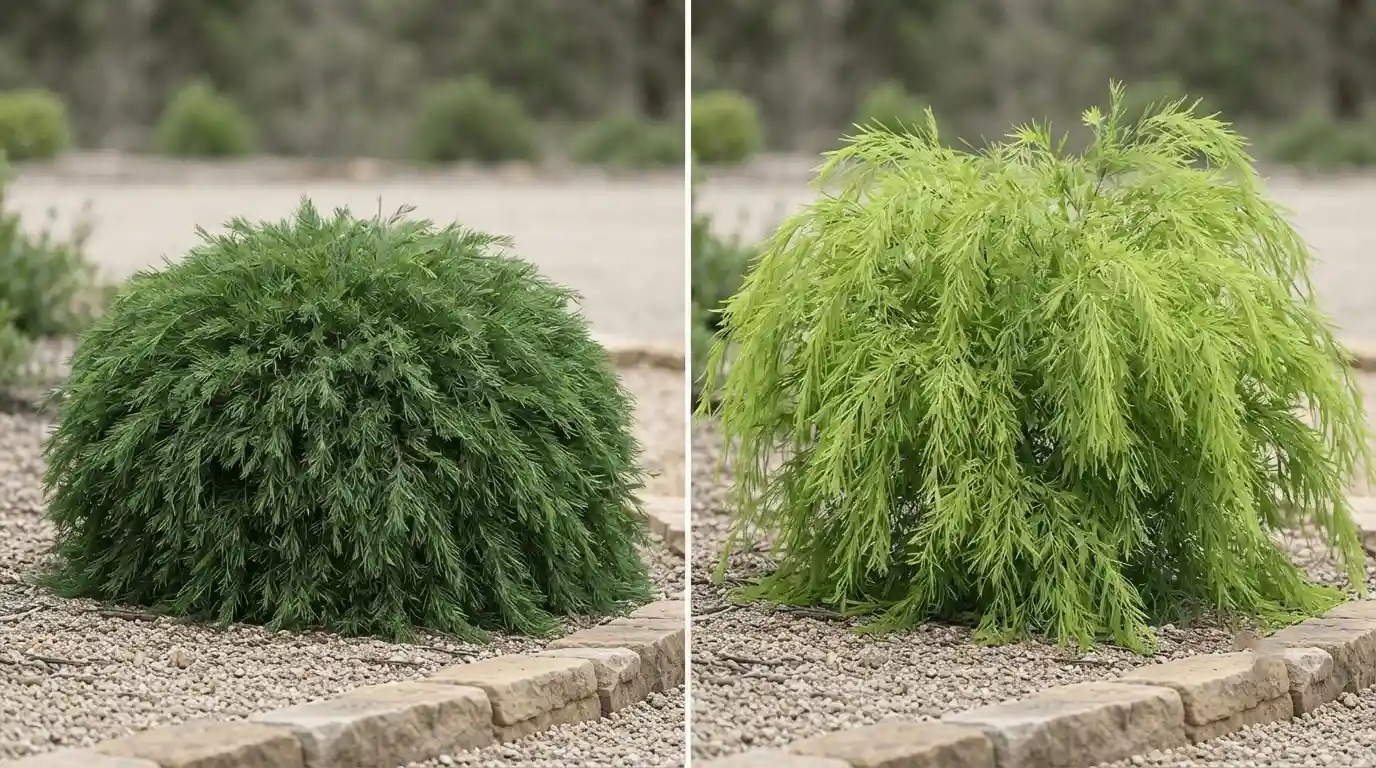
Many gardeners compare Acacia Mini Cog with Acacia Limelight because both are compact cultivars of Acacia cognata featuring soft, cascading foliage. Although they share many characteristics, they differ in mature size, overall form, and the landscaping roles they perform best.
Mini Cog is typically chosen for smaller gardens, narrow borders, and containers where a compact, mounding shrub is desired. Limelight, marketed as Acacia cognata ‘Limelight’, is larger and develops a broader, more flowing habit, making it suitable as a feature plant or for mass planting.
Neither cultivar is objectively better—the best choice depends on available space and the desired landscape effect.
Mini Cog vs Limelight Comparison
| Feature | Mini Cog (Acacia cognata ‘Mini Cog’) | Limelight (Acacia cognata ‘Limelight’) |
| Mature Size | 2–3 ft (60–90 cm) tall, 3–5 ft (90–150 cm) wide | 3–5 ft (90–150 cm) tall and wide |
| Growth Habit | Compact, rounded, softly cascading | Broader, more arching and fountain-like |
| Foliage | Fine, dense, bright green | Fine, slightly looser, lime-green foliage |
| Maintenance | Very low | Low |
| Best Landscape Use | Containers, borders, pathways, small gardens | Feature planting, mass planting, larger beds |
| Best Garden Style | Modern, courtyard, rock gardens, water-wise gardens | Native landscapes, informal gardens, larger contemporary designs |
When to Choose Mini Cog
Mini Cog is ideal if you need:
- A compact evergreen shrub
- A low-maintenance border plant
- A container specimen
- A neat plant for small gardens
- Minimal pruning
When to Choose Limelight
Limelight is often the better option when you want:
- A larger feature shrub
- More dramatic cascading foliage
- Greater visual impact
- A broader planting for open spaces
- Informal screening in native gardens
Greenery Inside Insight: In our experience, Mini Cog is easier to fit into average residential landscapes because its mature size rarely overwhelms surrounding plants. Limelight shines when given enough space to display its graceful, arching form.
Mini Cog Compared with Other Acacia cognata Varieties
Acacia cognata includes several attractive ornamental cultivars, each bred for different landscape purposes. While all share fine evergreen foliage and a graceful appearance, they vary in size, density, and growth habit.
Some of the most commonly available cultivars include:
- Acacia cognata ‘Mini Cog’
- Acacia cognata ‘Limelight’
- Acacia cognata ‘Green Mist’
- Acacia cognata ‘Green Magik’
- Acacia cognata ‘Nano’
Understanding these differences helps gardeners choose the right plant for their available space and design goals.
Comparison of Popular Acacia cognata Cultivars
| Variety | Mature Size | Growth Habit | Best Landscape Use |
| Mini Cog | 2–3 ft (60–90 cm) | Compact, rounded | Borders, containers, pathways |
| Limelight | 3–5 ft (90–150 cm) | Broad, cascading | Feature plant, mass planting |
| Green Mist | 4–6 ft (1.2–1.8 m) | Soft, weeping | Larger native gardens |
| Green Magik | 3–4 ft (90–120 cm) | Dense, compact | Formal landscapes, low hedges |
| Nano | 1–2 ft (30–60 cm) | Very dwarf, mounding | Small gardens, edging, pots |
Green Mist
Acacia cognata ‘Green Mist’ develops a taller, more open weeping form than Mini Cog. It suits larger gardens where its elegant habit can become a focal point.
Green Magik
Green Magik has a denser branching structure, making it useful where a more formal appearance is preferred. It responds well to occasional shaping.
Nano
Acacia cognata ‘Nano’ is among the smallest cultivars available. Its compact growth makes it particularly suitable for edging, rockeries, and decorative containers.
Mini Cog occupies the middle ground—it remains compact enough for small gardens while providing a fuller, more flowing appearance than ultra-dwarf varieties like Nano.
Common Problems and Solutions
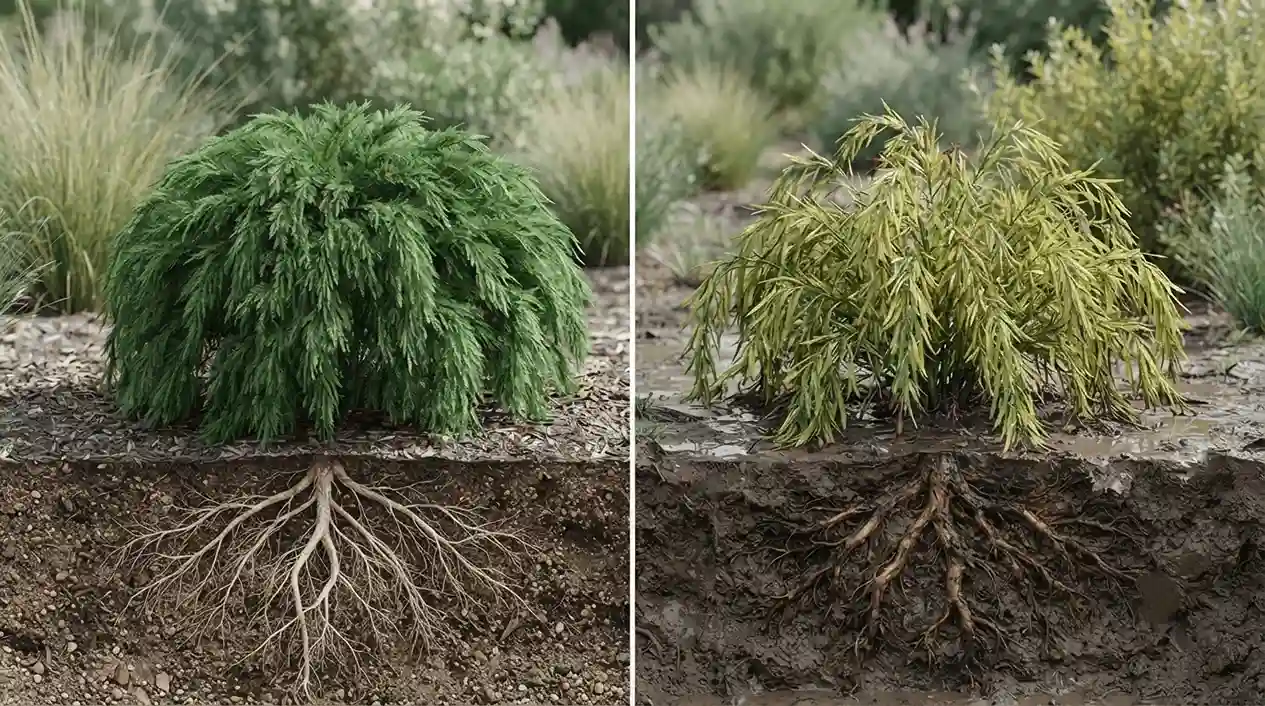
Mini Cog is generally a reliable, low-maintenance shrub. Most health issues result from environmental conditions rather than serious pests or diseases. Early identification and proper cultural care usually restore plant health.
Yellowing Leaves
Yellow leaves are one of the most common concerns among gardeners.
Possible Causes
- Overwatering
- Poor drainage
- Root stress
- Nutrient imbalance
- Temporary transplant shock
Solutions
- Check soil moisture before watering.
- Improve drainage if water remains around the roots.
- Remove severely damaged foliage.
- Apply a suitable low-phosphorus native plant fertilizer only if nutrient deficiency is confirmed.
Prevention
- Avoid constantly wet soil.
- Plant in well-drained locations.
- Water deeply but less frequently.
Poor Growth
Slow or weak growth often indicates environmental stress rather than disease.
Common Causes
- Heavy clay soil
- Insufficient sunlight
- Compacted roots
- Excessive shade
- Inadequate establishment watering
Solutions
- Move container plants to a sunnier location.
- Improve soil structure before planting.
- Water consistently during the first growing season.
- Avoid excessive fertilizer applications.
Healthy Mini Cog plants naturally develop dense, evenly distributed foliage.
Root Problems
Healthy roots are essential for long-term plant performance.
Common Causes
- Overwatering
- Waterlogged soil
- Poor drainage
- Containers without drainage holes
Symptoms
- Wilting despite moist soil
- Yellow foliage
- Slow growth
- Root rot
- Branch dieback
Prevention
- Plant in free-draining soil.
- Use raised beds where drainage is poor.
- Never allow pots to stand in water.
- Water only when necessary.
Proper drainage remains the single most effective way to prevent root diseases.
Pest and Disease Issues
Mini Cog experiences relatively few serious pest or disease problems.
Occasional Pests
- Aphids
- Scale insects
- Mealybugs
- Caterpillars (occasionally)
Possible Diseases
- Root rot
- Minor fungal leaf spots
- Stem dieback following prolonged wet conditions
Natural Management
- Encourage beneficial insects.
- Improve air circulation.
- Remove damaged branches.
- Avoid overhead watering late in the day.
- Maintain good garden hygiene by removing fallen plant debris.
Regular inspection helps identify problems before they become severe.
Common Beginner Mistakes
Many problems with Mini Cog are preventable. Understanding common mistakes helps gardeners establish healthier, longer-lived plants.
1. Planting in Heavy Clay
Heavy clay retains excessive moisture and limits oxygen around the roots.
Prevention:
- Improve drainage.
- Use raised beds if necessary.
- Amend compacted soil before planting.
2. Excess Watering
Mini Cog tolerates drought better than soggy soil.
Prevention:
- Water according to soil moisture rather than a calendar.
- Allow the soil surface to dry slightly between watering.
3. Overfertilizing
Too much fertilizer encourages weak, soft growth.
Prevention:
- Use low-phosphorus native plant fertilizer.
- Fertilize only when necessary.
4. Incorrect Pruning
Heavy pruning removes the plant’s naturally graceful form.
Prevention:
- Lightly shape after flowering.
- Remove only dead or damaged branches.
- Preserve the cascading habit.
5. Planting in Deep Shade
Insufficient sunlight produces sparse, leggy growth.
Prevention:
- Choose a location with full sun or light partial shade.
- Avoid heavily shaded planting sites beneath dense tree canopies.
Conclusion
The Mini Cog plant (Acacia cognata ‘Mini Cog’) is an outstanding compact evergreen shrub valued for its soft cascading foliage, naturally rounded form, and exceptionally low maintenance requirements. Its adaptability makes it suitable for borders, containers, rock gardens, pathways, water-wise landscapes, and modern residential gardens where space is limited.
With well-drained soil, full sun to partial shade, moderate watering during establishment, and occasional light pruning, Mini Cog provides attractive year-round texture for many years. Compared with other Acacia cognata cultivars such as Limelight, Green Mist, Green Magik, and Nano, Mini Cog offers one of the best combinations of compact size, ornamental appeal, and ease of care.
For gardeners seeking a drought-tolerant, evergreen shrub that fits comfortably into small and medium-sized landscapes, Mini Cog remains one of the most dependable choices. Its graceful appearance, manageable mature size, and resilience make it an excellent long-term addition to both native-inspired and contemporary garden designs.
Frequently Asked Questions About Mini Cog Plant
What is the common name for Acacia Mini Cog?
The common name is Mini Cog or Mini Cog Wattle. Its botanical name is Acacia cognata ‘Mini Cog’, indicating that it is a cultivated variety of the Australian species Acacia cognata.
Is Acacia cognata invasive?
No. Acacia cognata ‘Mini Cog’ is generally not considered invasive. It has a compact growth habit, non-aggressive roots, and rarely spreads beyond its planting location under normal garden conditions.
Are acacias fast growing?
Many Acacia species grow quickly. Mini Cog has a moderate to moderately fast growth rate, especially during its establishment years, when provided with full sun, well-drained soil, and appropriate watering.
Is Acacia cognata cold hardy?
Yes. Mini Cog is moderately cold hardy and is generally suitable for USDA Hardiness Zones 9–11. Established plants tolerate light frost, although young shrubs may require protection during severe freezes.
Can Mini Cog grow in pots?
Yes. Mini Cog is an excellent container plant. Use a pot with drainage holes, a free-draining native plant potting mix, and water only when the growing medium begins to dry.
How large does Acacia Mini Cog become?
Most mature plants reach 2–3 feet (60–90 cm) tall and 3–5 feet (90–150 cm) wide, forming a naturally rounded, cascading mound.
Does Mini Cog flower every year?
Yes. Under suitable growing conditions, Mini Cog usually flowers annually from late winter through spring, producing small cream to pale yellow blooms. The foliage remains its primary ornamental feature.
What is the difference between Mini Cog and Limelight?
Mini Cog is smaller, denser, and better suited to compact gardens and containers. Limelight grows larger with a broader, more flowing habit, making it ideal for feature plantings and larger landscape designs.