Introduction
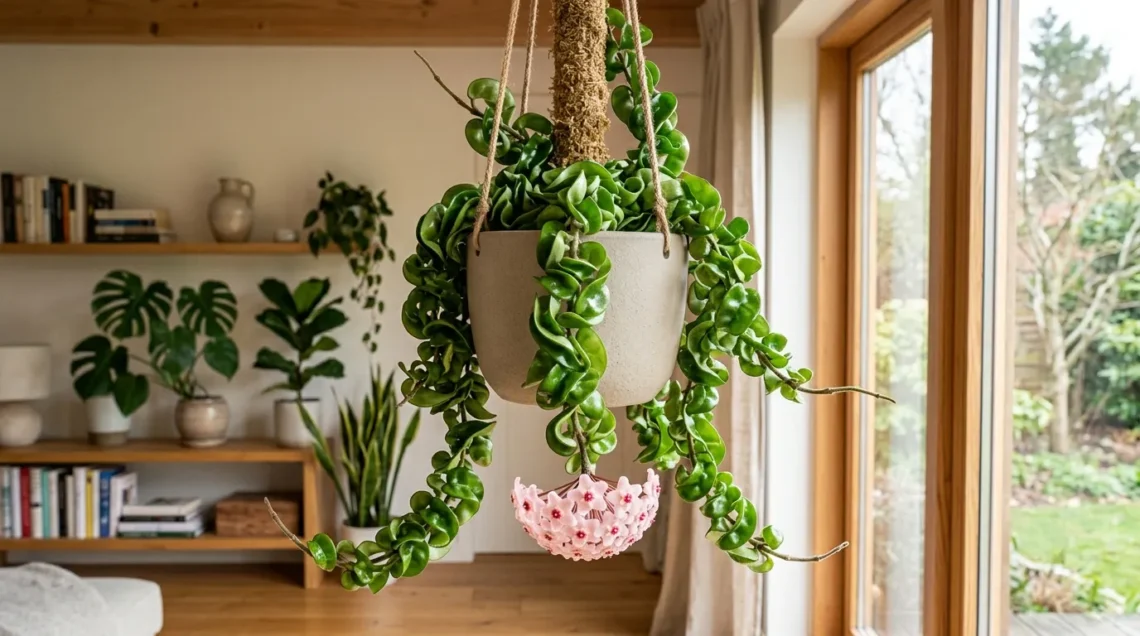
Hoya carnosa compacta, commonly known as the Hindu Rope plant, is a unique curly-leafed succulent vine prized for its twisted, rope-like foliage and fragrant clusters of waxy flowers. A cultivated variety of Hoya carnosa, this slow-growing houseplant is popular among collectors because of its distinctive appearance, long lifespan, and relatively simple maintenance routine. Understanding Hoya carnosa compacta care begins with providing the right balance of light, water, and well-draining soil. Whether you call it Hoya compacta, Hindu Rope plant, or rope hoya, this evergreen vine rewards patient growers with attractive foliage and beautiful blooms that can last for many years.
If you’re building an indoor plant collection, our Guide to House Plants can help you choose the best species and understand their general care requirements before adding a Hoya carnosa compacta to your home.
By Greenery Inside | Plant Care & Gardening Expert
Last Updated: July 2026
Quick Summary
- Hoya carnosa compacta (Hindu Rope) is a slow-to-moderate growing succulent vine that prefers bright, indirect light and infrequent watering.
- It grows well as either a climbing or trailing plant in hanging baskets and thrives in fast-draining, airy soil.
- Mature plants can produce fragrant, star-shaped wax flowers when provided with adequate light and consistent care.
- Wrinkled leaves usually indicate underwatering, while yellow leaves commonly result from excessive moisture around the roots.
- Healthy growth depends on proper lighting, good drainage, moderate humidity, and avoiding unnecessary repotting.
What Is Hoya Carnosa Compacta?
Hoya carnosa compacta is a cultivated variety of Hoya carnosa distinguished by tightly curled, twisted leaves that form thick rope-like vines. It belongs to the Apocynaceae family and is native through cultivation from the species Hoya carnosa, which naturally grows throughout parts of East and Southeast Asia.
Hoya carnosa compacta is a cultivated variety of Hoya carnosa, an evergreen flowering vine in the Apocynaceae family, with additional botanical information available on Wikipedia’s Hoya carnosa page.
Unlike the standard Hoya carnosa, which produces flat, oval leaves along slender vines, Hoya carnosa compacta develops dense, curled foliage that spirals around its stems. This unusual leaf structure creates the appearance of braided ropes, giving rise to the common names Hindu Rope plant, rope hoya, Hoya Hindu Rope, and Hindu Rope Hoya.
As an epiphytic succulent vine, the plant naturally grows by attaching itself to trees in tropical forests where its roots receive abundant airflow while absorbing moisture from rain and humidity. This natural growth habit explains why the plant performs best in loose, well-aerated potting mixes rather than dense garden soil.
Mature plants eventually produce clusters of small, star-shaped flowers with a waxy texture. These blooms are highly fragrant, especially during the evening, making the Hindu Rope plant attractive both for its ornamental foliage and seasonal flowers. For a deeper species-level reference, our Hoya Species Care Database catalogs Hoya carnosa compacta alongside its closest botanical relatives.
It’s a useful starting point if you want to understand how this cultivar fits within the wider Hoya carnosa lineage.
In our experience growing Hoya carnosa compacta, patience is one of the most important factors for success. The plant often spends its early years developing a healthy root system before producing noticeable vine growth or flowers.
As of 2026, experienced indoor growers continue to recommend maintaining bright indirect light and avoiding frequent movement of mature plants once flower buds begin to develop, since environmental changes can delay blooming.
Hoya Compacta vs. Hoya Compacta Variegata
Both varieties belong to the same species and require nearly identical care, but they differ primarily in their foliage coloration and growth characteristics.
The standard Hoya compacta produces solid green curled leaves throughout the vine. In contrast, Hoya compacta variegata—also sold as Hoya variegated compacta, variegated Hindu Rope, or Hoya carnosa compacta variegata—features cream, yellow, or white variegation mixed with green foliage.
Because variegated leaves contain less chlorophyll, they photosynthesize less efficiently. As a result, variegated plants generally grow more slowly and benefit from brighter indirect light to maintain healthy coloration.
Comparison: Hoya Compacta vs. Hoya Compacta Variegata
| Feature | Hoya Compacta | Hoya Compacta Variegata |
| Leaf Color | Solid deep green | Green with cream, yellow, or white variegation |
| Leaf Pattern | Uniform curled leaves | Curled leaves with colorful patterns |
| Light Needs | Bright indirect light | Brighter indirect light to maintain variegation |
| Growth Speed | Slow to moderate | Generally slower |
| Availability | Widely available | Less common |
| Typical Price | Lower | Higher due to collector demand |
Greenery Inside recommends rotating variegated plants every few weeks so all sides receive balanced light. This helps maintain even growth without exposing delicate leaves to harsh direct afternoon sun.
Is Hoya Carnosa Compacta Rare?
No, Hoya carnosa compacta is no longer considered a rare houseplant, although certain cultivars remain less common.
The standard green form has become widely available through commercial nurseries, garden centers, and specialty plant retailers. Advances in tissue culture have made production much more efficient than it was a decade ago.
However, several forms continue to attract collectors, including:
- Variegated Hoya compacta
- Reverse variegated cultivars
- Large mature flowering specimens
- Plants with unusually dense foliage
- Established collector cultivars with stable variegation
Availability also varies by region. While the standard Hindu Rope plant is relatively easy to purchase in many countries, premium variegated forms often command significantly higher prices because they grow more slowly and require longer production times.
Rather than rarity, plant quality often determines value. Well-rooted specimens with healthy vines and established growth are generally more desirable than recently propagated cuttings.
Light Requirements for Hoya Compacta
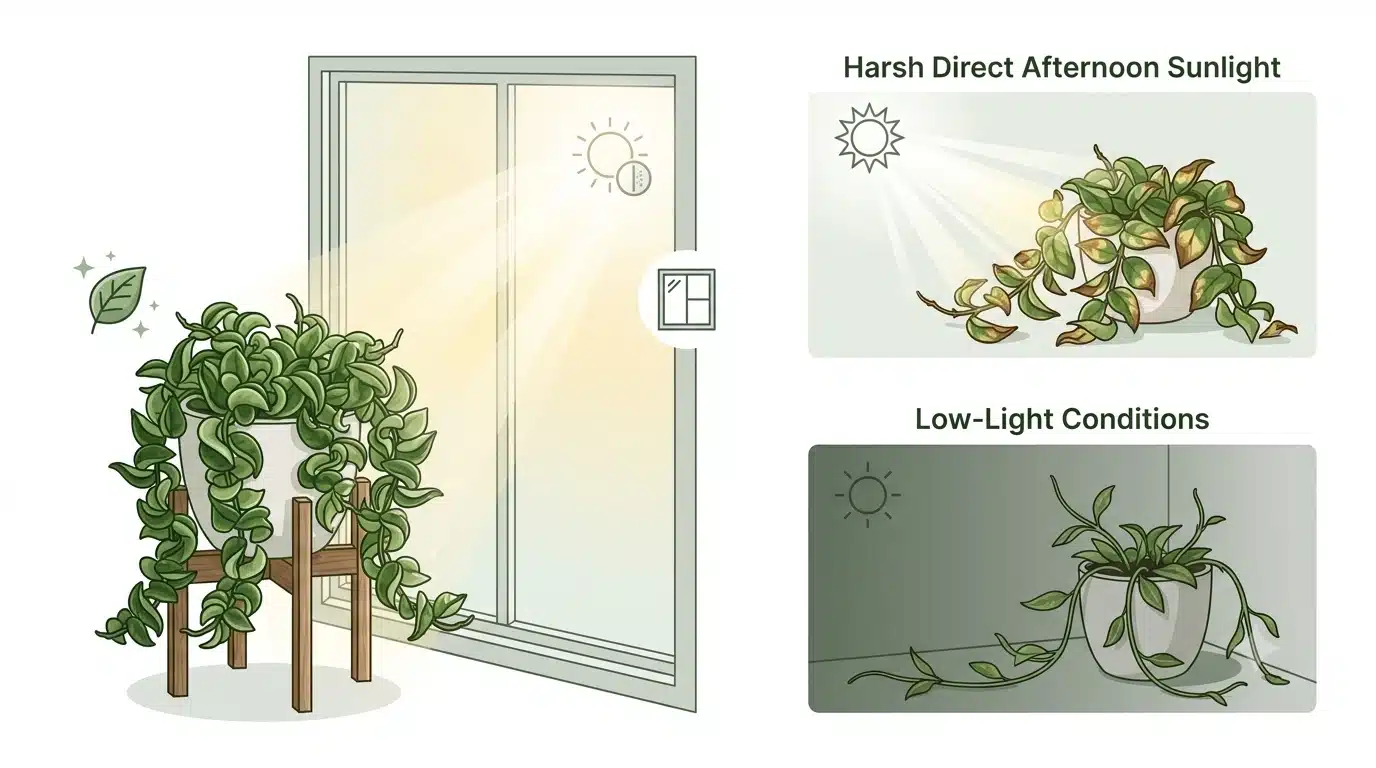
Hoya compacta grows best in bright, indirect light where it receives several hours of filtered sunlight each day without prolonged exposure to harsh afternoon rays.
Light is one of the most important factors influencing foliage health, flowering, and overall growth rate.
Ideal conditions include:
- Bright east-facing windows
- Bright north-facing windows in sunny climates
- South or west windows with sheer curtains
- Bright grow lights for indoor collections
Although the plant tolerates moderate light, insufficient lighting often results in slower growth, fewer flowers, and elongated vines with wider spacing between leaves.
Too much direct sunlight can cause:
- Leaf scorching
- Brown patches
- Bleached foliage
- Curling from heat stress
Too little light may lead to:
- Slow or stalled growth
- Failure to bloom
- Weak vines
- Reduced leaf density
Morning sunlight is generally well tolerated, while intense afternoon sun should be filtered through curtains or blinds.
In our experience growing Hindu Rope plants indoors, placing them within a few feet of a bright east-facing window consistently produces compact vines, healthier foliage, and more reliable flowering than keeping them in darker corners of the home.
Watering Hoya Carnosa Compacta
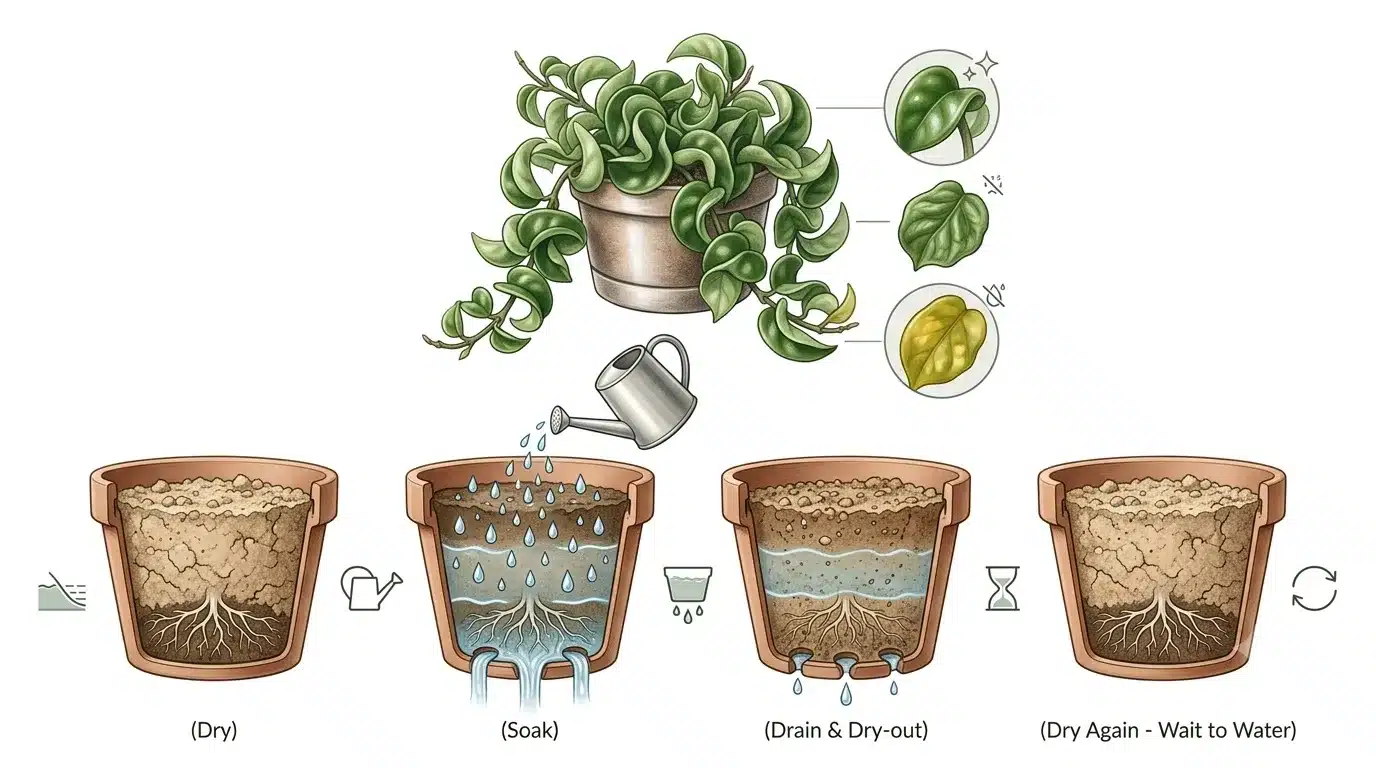
Hoya carnosa compacta should be watered using the soak-and-dry method, allowing most of the potting mix to dry before watering thoroughly again.
Its thick, succulent leaves store water, making the plant much more tolerant of temporary drought than consistently wet soil.
A good watering routine includes:
- Check soil moisture several inches below the surface.
- Water thoroughly until excess drains from the bottom.
- Empty decorative cachepots after drainage.
- Allow the soil to dry substantially before the next watering.
Watering frequency varies throughout the year:
| Season | Typical Watering Frequency |
| Spring | Every 10–14 days |
| Summer | Every 7–12 days depending on temperature |
| Autumn | Every 14–18 days |
| Winter | Every 2–4 weeks depending on indoor conditions |
These intervals are estimates rather than fixed schedules. Factors such as humidity, pot size, soil composition, and household temperature all influence how quickly the soil dries.
Signs of overwatering include:
- Yellow leaves
- Soft stems
- Root rot
- Mushy foliage
- Persistent wet soil
Signs of underwatering include:
- Wrinkled leaves
- Thin foliage
- Dry potting mix
- Slower growth
Because compact curled leaves can trap moisture, always ensure adequate airflow around the plant after watering to reduce the risk of fungal issues.
Why Hoya Compacta Leaves Wrinkle
Wrinkled leaves on Hoya compacta most commonly indicate underwatering, although damaged roots can produce similar symptoms.
When the plant cannot absorb enough water, it begins using moisture stored within its succulent leaves. As water reserves decline, the leaves gradually lose firmness and develop a wrinkled or shriveled appearance.
Common causes include:
- Soil remaining dry for extended periods
- Extremely low indoor humidity combined with drought
- Root damage from previous overwatering
- Severely root-bound plants unable to absorb water efficiently
To correct wrinkled leaves:
- Check soil moisture first.
- Water deeply if the soil is dry.
- Allow excess water to drain completely.
- Resume a consistent soak-and-dry watering routine.
- Inspect roots if symptoms continue despite proper watering.
Avoid watering repeatedly simply because leaves appear wrinkled. If root rot has already developed, additional watering will worsen the problem rather than solve it.
Greenery Inside recommends lifting the pot before watering. Over time, learning the weight difference between dry and hydrated soil becomes one of the most reliable methods for determining when your Hoya compacta actually needs water, helping prevent both underwatering and overwatering.
Soil, Pots, and Repotting Needs
Hoya compacta grows best in a loose, fast-draining potting mix that provides excellent root aeration while retaining just enough moisture for healthy growth. Because it is an epiphytic plant in nature, its roots are adapted to receiving plenty of airflow rather than sitting in dense, moisture-retentive soil.
A heavy potting mix can remain wet for too long, increasing the risk of root rot. In contrast, a well-aerated mix allows excess water to drain quickly while keeping oxygen available around the roots.
An ideal soil mix typically contains:
- 40% high-quality indoor potting mix
- 30% orchid bark
- 20% perlite or pumice
- 10% horticultural charcoal or coco chips (optional)
Alternatively, many growers successfully use a ready-made aroid mix amended with extra perlite and orchid bark to improve drainage.
Healthy soil should:
- Drain freely after watering
- Allow roots to breathe
- Resist compaction
- Dry moderately between waterings
- Support healthy microbial activity
Avoid using standard garden soil indoors because it compacts easily and holds excessive moisture.
In our experience growing Hoya compacta, adding coarse orchid bark significantly improves root health and reduces watering problems compared to using ordinary houseplant potting soil alone.
Do Hoyas Like Plastic or Terracotta Pots?
Hoyas grow well in both plastic and terracotta pots, but each material offers different advantages depending on your growing conditions.
Plastic pots retain moisture longer, making them suitable for dry indoor environments or homes with low humidity. They are lightweight and generally require less frequent watering.
Terracotta pots are porous and allow water to evaporate through the pot walls. This improves airflow around the root zone and reduces the likelihood of overwatering.
| Feature | Plastic Pot | Terracotta Pot |
| Moisture Retention | High | Moderate to low |
| Airflow | Moderate | Excellent |
| Drying Speed | Slower | Faster |
| Weight | Lightweight | Heavy |
| Best For | Dry homes, beginners who underwater | Humid climates or growers prone to overwatering |
Choose plastic if your home is naturally dry or if watering opportunities are limited.
Choose terracotta if your indoor environment is humid or if you’ve previously struggled with overwatering houseplants.
Regardless of the material, always select a container with drainage holes.
Do Hoyas Like Shallow or Deep Pots?
Hoyas generally prefer relatively shallow pots because their root systems are compact and spread outward more than downward.
Using an overly deep container allows excess soil beneath the roots to remain wet for extended periods, increasing the chance of root problems.
A suitable pot should:
- Be only slightly larger than the existing root ball
- Provide drainage holes
- Allow moderate root confinement
- Match the size of the plant rather than the length of the vines
When upgrading containers, increase the diameter by only 1–2 inches.
Excessively large pots often encourage wet soil rather than faster growth.
Do Hoyas Hate Being Repotted?
Hoyas do not hate being repotted, but they generally prefer to remain slightly root-bound and should only be repotted when necessary.
Frequent repotting disturbs their delicate root system and may temporarily slow growth or delay flowering while the plant re-establishes itself.
Signs that repotting is necessary include:
- Roots circling heavily inside the pot
- Water draining almost immediately because roots fill the container
- Declining growth despite proper care
- Soil breaking down into a dense, compact texture
- Roots emerging from drainage holes
The best time to repot is during spring or early summer when active growth allows the plant to recover more quickly.
Most healthy Hoya compacta plants only require repotting every 2–4 years, depending on growth rate and soil condition.
Greenery Inside recommends disturbing the root ball as little as possible during repotting. Simply transferring the plant into fresh soil without aggressively loosening the roots often results in quicker recovery.
Fertilizing Hoya Compacta
Hoya compacta benefits from regular but moderate feeding during its active growing season, helping support healthy foliage, vine development, and flowering. Not sure which product to use? Our guide on Plant Food vs Fertilizer: What’s the Real Difference? explains how each supports plant health and when to use them effectively.
Unlike heavy-feeding houseplants, Hoyas require relatively small amounts of fertilizer.
A balanced liquid fertilizer diluted to half strength works well during spring and summer.
General feeding schedule:
| Season | Fertilizer Recommendation |
| Spring | Every 4 weeks |
| Summer | Every 3–4 weeks |
| Autumn | Reduce feeding |
| Winter | Usually no fertilizer needed |
Look for fertilizers with balanced nutrients, such as:
- 10-10-10
- 20-20-20 (diluted)
- 3-1-2 formulations designed for foliage plants
Avoid excessive nitrogen because it may encourage leafy growth at the expense of flowering.
Always water the plant before applying fertilizer to reduce the risk of root burn.
As of 2026, many experienced indoor growers continue to favor diluted, consistent feeding over infrequent applications of highly concentrated fertilizers, producing steadier growth and reducing nutrient stress.
Is Miracle-Gro Good for Hoyas?
Yes, Miracle-Gro can be used successfully on Hoyas when applied at a reduced strength.
Many Miracle-Gro formulations contain balanced nutrients suitable for indoor foliage plants, but full-strength applications may be excessive for Hoya compacta.
For best results:
- Dilute to approximately half the label recommendation.
- Feed only during active growth.
- Avoid fertilizing dry soil.
- Flush the soil occasionally with plain water to prevent fertilizer salt buildup.
When used carefully, Miracle-Gro can support healthy vines without damaging sensitive roots.
Do Hoyas Like Coffee Grounds?
No, fresh coffee grounds are generally not recommended for Hoya compacta.
Although coffee grounds contain organic matter and small amounts of nutrients, they can create several problems in container-grown plants.
Potential drawbacks include:
- Reduced soil aeration
- Excess moisture retention
- Mold development
- Unpredictable nutrient availability
- Difficulty maintaining proper soil drainage
Composted coffee grounds may be suitable as a small component of outdoor compost, but they should not replace a balanced fertilizer for indoor Hoyas.
A complete houseplant fertilizer provides nutrients in forms that roots can absorb much more consistently.
Climbing vs. Hanging — How Hoya Compacta Grows
Hoya compacta naturally grows as a climbing vine but also performs beautifully as a trailing plant in hanging baskets.
In tropical forests, wild Hoyas climb tree trunks using long vines that search for support and brighter light. Indoors, the same growth habit remains.
You can display the plant in two primary ways.
Climbing
Using:
- Moss poles
- Bamboo stakes
- Trellises
- Decorative hoops
Benefits include:
- Upright growth
- Easier viewing of foliage
- More compact appearance
- Better support for longer vines
Hanging
Growing in hanging baskets allows the vines to cascade naturally.
Benefits include:
- Elegant trailing display
- Space-saving indoors
- Minimal training required
- Excellent for shelves and windows
Both methods are equally healthy. The choice depends primarily on available space and personal preference.
Greenery Inside has observed that mature climbing specimens often develop thicker, more organized vines, while hanging plants showcase the plant’s distinctive rope-like foliage more dramatically.
Hoya Compacta Growth Rate and Growth Habits
Hoya compacta is considered a slow-to-moderate growing houseplant, with growth speed largely determined by light, warmth, and overall growing conditions.
New growers sometimes expect rapid vine production, but this species naturally develops gradually.
Typical growth pattern:
- Spring: Active new vines and leaves
- Summer: Fastest annual growth
- Autumn: Growth begins slowing
- Winter: Semi-dormant with minimal development
Several environmental factors influence growth.
Light
Bright indirect light is the single most important factor affecting growth rate.
Temperature
Warm temperatures between 65–85°F (18–29°C) encourage consistent vine development.
Humidity
Moderate humidity supports healthier new growth, although established plants tolerate average indoor conditions.
Root-Bound Condition
Slightly root-bound plants often flower more readily, but excessively crowded roots eventually reduce growth.
Watering
Consistent watering encourages healthy development, while repeated drought stress slows growth considerably.
Fertilization
Balanced feeding during spring and summer supports steady vine production without encouraging weak growth.
New growth often appears as slender green stems before leaves begin developing along the vine. This is completely normal and should not be mistaken for unhealthy growth.
Because Hoya compacta grows gradually, patience is essential. In our experience, healthy plants often spend several months strengthening roots before producing significant vine extension, especially after repotting or propagation.
Hoya Compacta Bloom and Flowers
Hoya compacta produces clusters of fragrant, wax-like star-shaped flowers once the plant reaches maturity and receives suitable growing conditions.
The blooms emerge from permanent flowering structures called peduncles, which should never be removed because they can produce flowers repeatedly.
Flower characteristics include:
- Star-shaped blossoms
- Thick waxy texture
- White to pale pink petals
- Deep pink or reddish centers
- Sweet fragrance, especially during the evening
Blooming typically depends on several factors:
- Plant maturity
- Bright indirect light
- Slightly root-bound roots
- Consistent watering
- Stable growing conditions
Healthy plants may bloom once or several times each year, although flowering schedules vary among individual specimens.
Avoid moving the plant once flower buds develop, as sudden environmental changes may cause buds to drop before opening.
Many growers wait years for their first blooms, but mature specimens often flower reliably once their preferred environment is established.
Plant Size — Hoya Carnosa Compacta
Hoya carnosa compacta remains relatively compact compared to many vining houseplants, although mature vines can become impressively long over time.
Typical Mature Size
| Growing Condition | Mature Size |
| Indoor Height | Usually determined by support rather than stem height |
| Vine Length | 3–8 feet, occasionally longer |
| Plant Width | 1–3 feet depending on training |
| Outdoor Vine Length | Up to 10 feet or more in frost-free climates |
Indoor vs. Outdoor Growth
Indoor plants generally remain smaller because of lower light intensity and restricted root space.
Outdoor plants grown in warm tropical or subtropical climates often develop longer vines and produce more frequent flowering.
Factors Affecting Plant Size
Several conditions influence mature growth:
- Available light
- Pot size
- Fertilization
- Humidity
- Support structure
- Growing season length
Providing a trellis allows vines to grow vertically, while hanging baskets emphasize graceful trailing growth without affecting overall plant health.
Ideal Environment — Humidity, Temperature, and Placement
Hoya compacta grows best in warm indoor environments with moderate humidity, stable temperatures, and protection from extreme weather conditions. If your home’s humidity regularly falls below the recommended range, learn How to Increase Humidity for Plants Naturally and with Humidifiers to create a healthier environment for tropical houseplants like Hoya compacta.
Ideal growing conditions include:
| Environmental Factor | Recommended Range |
| Temperature | 65–85°F (18–29°C) |
| Minimum Safe Temperature | About 50°F (10°C) |
| Humidity | 40–70% |
| Light | Bright indirect light |
| Airflow | Gentle air circulation |
Avoid placing the plant near:
- Heating vents
- Air conditioners
- Cold drafts
- Frequently opened exterior doors
- Intense afternoon sun
Consistent environmental conditions help maintain healthy foliage and encourage flowering over time. If you’d rather cross-check these numbers at a glance, our downloadable Hoya species care comparison sheet lists ideal temperature, humidity, and light ranges for compacta and related varieties in one table.
It’s especially handy for tracking multiple Hoyas with slightly different environmental needs in the same room.
Do Hoyas Like Bathrooms?
Yes, Hoyas can grow well in bathrooms if the room provides sufficient natural light.
Bathrooms often offer higher humidity from showers, which can benefit tropical houseplants.
A bathroom can be an excellent location when it has:
- Bright frosted windows
- East-facing windows
- Good ventilation
- Stable temperatures
However, bathrooms without adequate natural or artificial light are usually unsuitable because insufficient light eventually slows growth and prevents flowering.
If your bathroom is dark, a bright nearby room or supplemental grow light will generally produce healthier long-term results.
How to Propagate Hoya Compacta
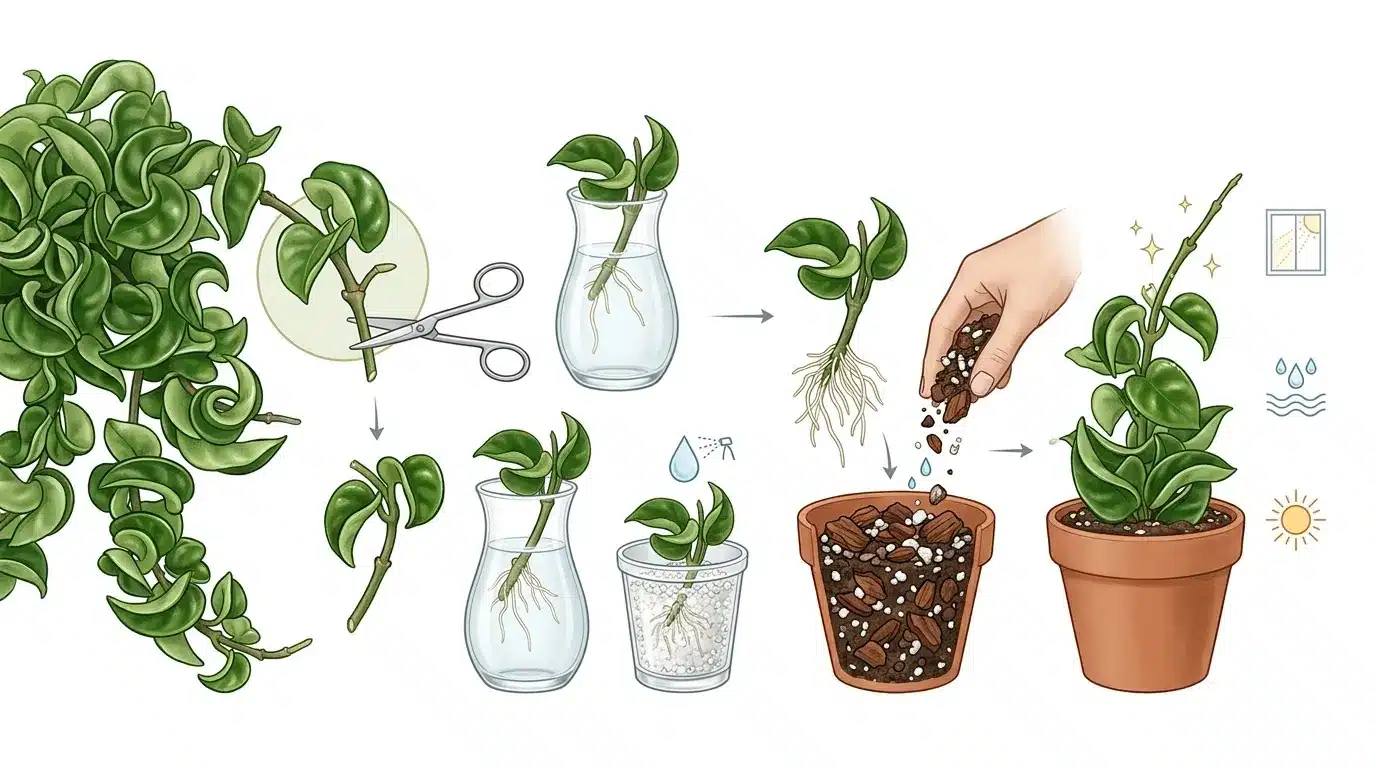
Hoya compacta is most successfully propagated from stem cuttings containing at least one node. While propagation requires patience due to the plant’s naturally slow growth, healthy cuttings root reliably when provided with warmth, bright indirect light, and consistent moisture.
The best time to propagate is during spring or early summer, when the plant is actively growing. Rooting during winter is possible but typically takes longer because growth slows significantly.
There are two common propagation methods:
- Water propagation
- Soil or perlite propagation
Both methods can be successful when a healthy cutting with viable nodes is used.
Water Propagation
Water propagation allows you to monitor root development before planting.
- Take a healthy stem cutting with at least one node and two to four leaves.
- Remove any leaves that would sit below the water line.
- Place the node in clean water while keeping the leaves above the surface.
- Position the container in bright, indirect light.
- Replace the water every 5–7 days.
- Once roots reach about 2–3 inches (5–7 cm) long, transplant into a well-draining soil mix.
Soil or Perlite Propagation
Many growers prefer rooting directly in soil or perlite because the roots adapt immediately to their permanent growing medium.
Use a loose rooting mix such as:
- Perlite
- Perlite mixed with coco coir
- Light aroid mix
- Fine orchid bark with perlite
Keep the rooting medium lightly moist—not soggy—until new growth appears.
Rooting generally takes 3–8 weeks, although cooler temperatures may extend this timeline.
Greenery Inside recommends taking cuttings only from healthy, actively growing vines. Strong parent plants consistently produce stronger, faster-rooting cuttings.
Propagating Hindu Rope from a Leaf — Does It Work?
No, a single Hoya compacta leaf without a node can survive for years but will almost never develop into a complete vine.
This is one of the most common misconceptions among new growers. While detached leaves often produce roots, they usually cannot generate new stems because the growth tissue required for vine development is located at the node.
For successful propagation, always use a stem cutting that includes:
- At least one healthy node
- One or more leaves
- Healthy, disease-free tissue
Recommended Propagation Steps
- Select a healthy stem with at least one node.
- Root the cutting in clean water or a moist perlite or soil mix.
- Place it in bright indirect light with warm temperatures.
- Transplant once a healthy root system has developed.
Using node-based cuttings provides the highest success rate and produces complete plants capable of developing new vines and eventually flowering.
Common Hoya Compacta Problems
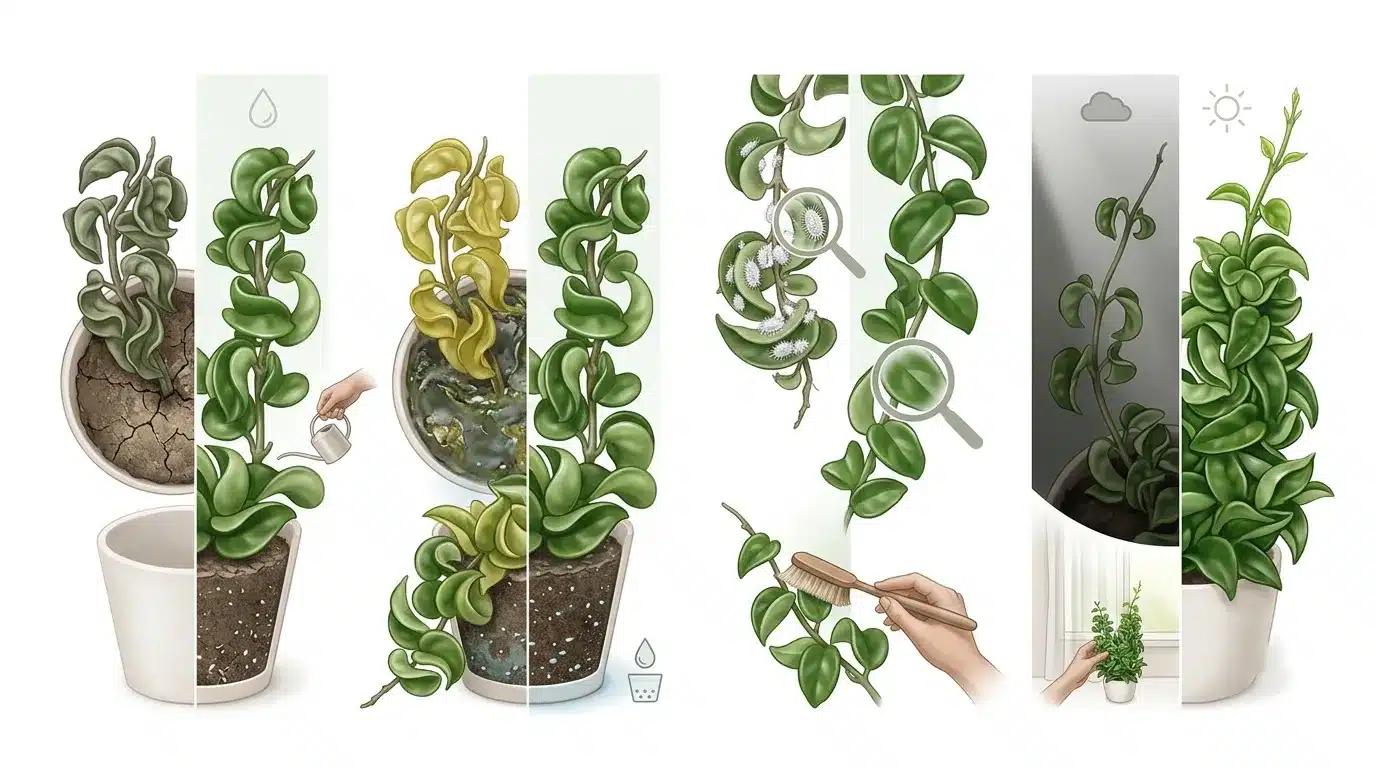
Hoya compacta is generally an easy-care houseplant, but most problems arise from improper watering, insufficient light, or pest infestations. Early identification allows most issues to be corrected before permanent damage occurs.
Yellowing Leaves
Yellow leaves most commonly result from overwatering, although nutrient deficiencies, aging foliage, or sudden environmental changes may also contribute.
Causes
- Soil remaining wet for extended periods
- Poor drainage
- Root rot
- Nutrient imbalance
- Natural aging of older leaves
How to Fix It
- Allow the soil to dry appropriately.
- Inspect roots if multiple leaves continue yellowing.
- Improve drainage if necessary.
- Remove severely damaged foliage.
Prevention
- Water only when the soil has mostly dried.
- Use a fast-draining soil mix.
- Ensure drainage holes remain unobstructed.
- Avoid oversized containers.
Overwatering Issues
Overwatering is the most common cause of serious Hoya compacta decline because constantly wet soil deprives roots of oxygen and encourages fungal diseases.
Signs include:
- Yellow leaves
- Soft stems
- Mushy roots
- Blackened root tissue
- Foul-smelling soil
- Leaf drop
If root rot develops:
- Remove the plant from the pot.
- Trim black or mushy roots using sterile scissors.
- Repot into fresh, well-draining soil.
- Reduce watering until new growth resumes.
The sooner overwatering is corrected, the greater the chance of recovery.
Pest Infestations
Healthy Hoya compacta plants occasionally attract common houseplant pests, particularly when grown indoors.
The most frequent pests include:
- Mealybugs
- Aphids
- Spider mites
- Scale insects
Signs of infestation include:
- Sticky honeydew
- White cotton-like clusters
- Distorted new growth
- Tiny insects beneath leaves
- Yellow spotting
Treatment options include:
- Wiping pests away with cotton swabs dipped in isopropyl alcohol
- Insecticidal soap
- Neem oil (used according to label directions)
- Isolating affected plants
Inspect the curled foliage regularly because pests often hide inside the tightly folded leaves.
Greenery Inside recommends checking between the twisted leaves during every watering session. Early detection is much easier than treating a severe infestation.
Slow or Stalled Growth
Slow growth is normal for Hoya compacta, but growth may stall completely when environmental conditions become unfavorable.
Possible causes include:
- Insufficient light
- Winter dormancy
- Low temperatures
- Root-bound conditions
- Nutrient deficiency
- Recent repotting
- Stress following propagation
Solutions include:
- Increase bright indirect light.
- Maintain warm indoor temperatures.
- Feed during active growth.
- Repot only if roots have completely filled the container.
- Be patient during winter, when reduced growth is expected.
Because this species naturally grows slowly, several months without noticeable vine extension is not always a sign of poor health.
Overall, Hoya compacta is not considered difficult to grow. Most problems are preventable with proper watering, adequate light, and well-draining soil.
Beginner Mistakes
Many new growers encounter similar challenges during their first year of growing Hoya compacta. Fortunately, these mistakes are easy to avoid with a better understanding of the plant’s natural growth habits.
Common beginner mistakes include:
Overwatering Out of Concern
Many owners water too frequently because the soil surface appears dry. However, the thick leaves store moisture, allowing the plant to tolerate drying between waterings.
Choosing the Wrong Pot
Large pots retain unnecessary moisture and increase the likelihood of root rot. Slightly root-bound plants generally perform better.
Providing Too Little Light
Low-light rooms may keep the plant alive but often prevent flowering and significantly slow growth.
Expecting Rapid Growth
Hoya compacta naturally grows more slowly than many popular houseplants. Healthy plants may produce only a few new leaves over several months.
Removing Flower Spurs
Flower clusters develop from permanent structures called peduncles. Removing them prevents future blooms from forming at those locations.
Ignoring Seasonal Changes
Watering and fertilizing should be adjusted throughout the year.
- Spring and summer: Active growth with more frequent watering and feeding.
- Autumn: Gradually reduce watering.
- Winter: Water sparingly and avoid routine fertilization.
In our experience, growers who adjust their care routine seasonally enjoy healthier plants, stronger root systems, and more reliable flowering over time.
Hoya Compacta vs. Other Hoya Varieties
Hoya Hindu Rope vs. Compacta — Are They the Same?
Yes. Hoya Hindu Rope and Hoya compacta refer to the same plant.
The term “Hindu Rope plant” is simply the common name for Hoya carnosa compacta. There is no botanical difference between them.
Different sellers may use names such as:
- Hoya compacta
- Hoya Hindu Rope
- Rope Hoya
- Hindu Rope Hoya
- Hoya carnosa compacta
All describe the same curled-leaf cultivar derived from Hoya carnosa.
If you’d like to explore another popular Hoya species, compare this plant with our Hoya Australis Lisa Flower Care and Bloom Guide to understand differences in foliage, flowering, and overall care.
Easiest vs. Most Difficult Hoyas to Grow
Some Hoya species are significantly easier for beginners than others.
| Variety | Light Needs | Growth Rate | Bloom Frequency | Difficulty |
| Hoya carnosa compacta | Bright indirect | Slow to moderate | Moderate once mature | Easy to Moderate |
| Hoya carnosa | Bright indirect | Moderate | Frequent | Easy |
| Hoya australis | Bright indirect | Moderate to fast | Reliable | Easy |
| Hoya linearis | Bright indirect with higher humidity | Moderate | Less frequent | Moderate |
| Hoya serpens | Bright indirect, cool and humid | Slow | Challenging | Difficult |
For beginners, Hoya carnosa and Hoya australis are generally considered the easiest Hoyas because they adapt readily to average indoor conditions. If you’re comparing more than these five varieties, our full Hoya species comparison chart breaks down light, watering, and difficulty for 16 different Hoyas side by side.
It’s a handy way to see exactly where Hindu Rope stacks up against tougher species like Hoya serpens before you commit to a new addition.
Species such as Hoya serpens require cooler temperatures, consistently high humidity, and more specialized care, making them better suited to experienced collectors.
Lifespan of Hoya Carnosa Compacta
With proper care, Hoya carnosa compacta can live for several decades, making it one of the longest-lived indoor houseplants.
Many well-maintained specimens are passed between generations, and mature plants often become more attractive as their vines lengthen and flowering becomes more consistent.
Factors that contribute to longevity include:
- Bright indirect light
- Well-draining soil
- Careful watering practices
- Minimal root disturbance
- Seasonal fertilization
- Prompt pest management
Because the plant grows slowly, consistent long-term care is more important than rapid growth. Mature specimens frequently become healthier and produce more flowers as they age.
Conclusion
Hoya carnosa compacta is a distinctive and rewarding houseplant valued for its rope-like foliage, fragrant wax flowers, and exceptional longevity. Successful Hoya carnosa compacta care centers on providing bright indirect light, watering only after the soil has mostly dried, using a well-draining potting mix, and avoiding unnecessary repotting. Patience is equally important, as this slow-growing vine often takes several years to reach maturity and bloom.
By understanding its natural epiphytic growth habit and adjusting care throughout the seasons, you can enjoy a healthy Hindu Rope plant that continues to grow and flower for decades. With consistent care and attention to its basic needs, Hoya compacta remains one of the most rewarding Hoyas for both beginners and experienced houseplant enthusiasts.
Frequently Asked Questions
What are the common problems with Hoya compacta?
The most common problems include overwatering, yellowing leaves, wrinkled leaves from underwatering, root rot, mealybugs, aphids, spider mites, and slow growth caused by insufficient light or winter dormancy. Most issues can be prevented with proper watering and a well-draining soil mix.
Do Hoyas like plastic or terracotta pots?
Both work well. Plastic pots retain moisture longer, making them suitable for dry homes, while terracotta pots provide better airflow and faster drying, making them ideal for growers who tend to overwater. Regardless of the material, always choose a pot with drainage holes.
Is Hoya carnosa compacta rare?
The standard green Hoya carnosa compacta is widely available and is no longer considered rare. However, variegated forms, mature flowering specimens, and uncommon cultivars remain more difficult to find and are often more expensive.
Is Hoya compacta hard to grow?
No. Hoya compacta is generally considered an easy-to-moderate houseplant. It becomes difficult only when overwatered or grown in poor lighting. Providing bright indirect light, well-draining soil, and allowing the soil to dry between waterings is usually enough to keep the plant healthy.
What is the lifespan of a Hoya plant?
With proper care, many Hoya plants, including Hoya carnosa compacta, can live for several decades. Healthy specimens often become more vigorous and flower more reliably as they mature.
Do Hoyas hate being repotted?
Hoyas do not hate being repotted, but they prefer to remain slightly root-bound. Repot only every two to four years or when roots have clearly outgrown the container. Repotting during spring or early summer minimizes stress and supports quicker recovery.