Introduction
The term eucalyptus yellow flower refers to several Australian eucalyptus species that produce attractive yellow blossoms rather than a single species. These trees belong to Australia’s diverse group of native eucalyptus and are valued for their ornamental flowers, wildlife benefits, and adaptability to a wide range of climates. Among them, Eucalyptus erythrocorys, commonly known as the Illyarrie Red Cap Gum, is the best-known yellow flowering eucalyptus, admired for its brilliant yellow flowers emerging from bright red bud caps. Other species, including Eucalyptus stricklandii and Eucalyptus melliodora, also produce beautiful yellow blooms, making each gum tree with yellow flowers a valuable addition to Australian gardens and landscapes.
By Greenery Inside | Plant Care & Gardening Expert
At Greenery Inside, we have grown and observed several flowering eucalyptus species in Australian gardens. In our experience, selecting the right species for your local climate and providing excellent drainage are the two most important factors for achieving reliable flowering and healthy long-term growth.
Quick Summary
- Several Australian eucalyptus species produce yellow flowers, each suited to different climates and garden sizes.
- Eucalyptus erythrocorys is the most recognised species, known for its vivid yellow flowers and striking red flower caps.
- Eucalyptus stricklandii and Eucalyptus melliodora also offer attractive yellow blooms with different growth habits and landscape uses.
- Full sun, well-drained soil, and careful watering during establishment encourage healthy flowering and vigorous growth.
- Choosing a species that matches your available space and local climate improves long-term performance.
What Is a Eucalyptus Yellow Flower?
A eucalyptus yellow flower is not a single plant but a general term used to describe eucalyptus species that naturally produce yellow blossoms. Australia is home to more than 700 eucalyptus species, yet only a relatively small number display consistently yellow flowers.
Like all eucalyptus trees, these species belong to the family Myrtaceae, a botanical family that also includes bottlebrushes, paperbarks, and lilly pillies. Their colourful flowers are composed mainly of long stamens, while the petals and protective bud cap are shed before the flowers fully open.
Although gardeners often search for a yellow flower eucalyptus, several different species fit this description. Each produces distinctive eucalyptus yellow flowers, but they differ in mature size, natural habitat, flowering season, and landscape suitability.
The three species most commonly associated with yellow flowering eucalyptus include:
- Eucalyptus erythrocorys (Illyarrie Red Cap Gum)
- Eucalyptus stricklandii (Yellow Flowering Gum)
- Eucalyptus melliodora (Yellow Box)
Each species contributes unique ornamental and ecological value, from spectacular floral displays to important nectar sources for native wildlife.
As of recent Australian horticultural recommendations in 2026, gardeners continue to favour locally adapted native eucalyptus species because they generally require less irrigation and provide greater habitat value than many exotic flowering trees.
Popular Yellow-Flowering Eucalyptus Species
Several eucalyptus species produce yellow blooms, but they vary considerably in appearance, size, and growing conditions. Understanding these differences helps gardeners choose the most suitable tree for their landscape.
Eucalyptus erythrocorys (Illyarrie Red Cap Gum)
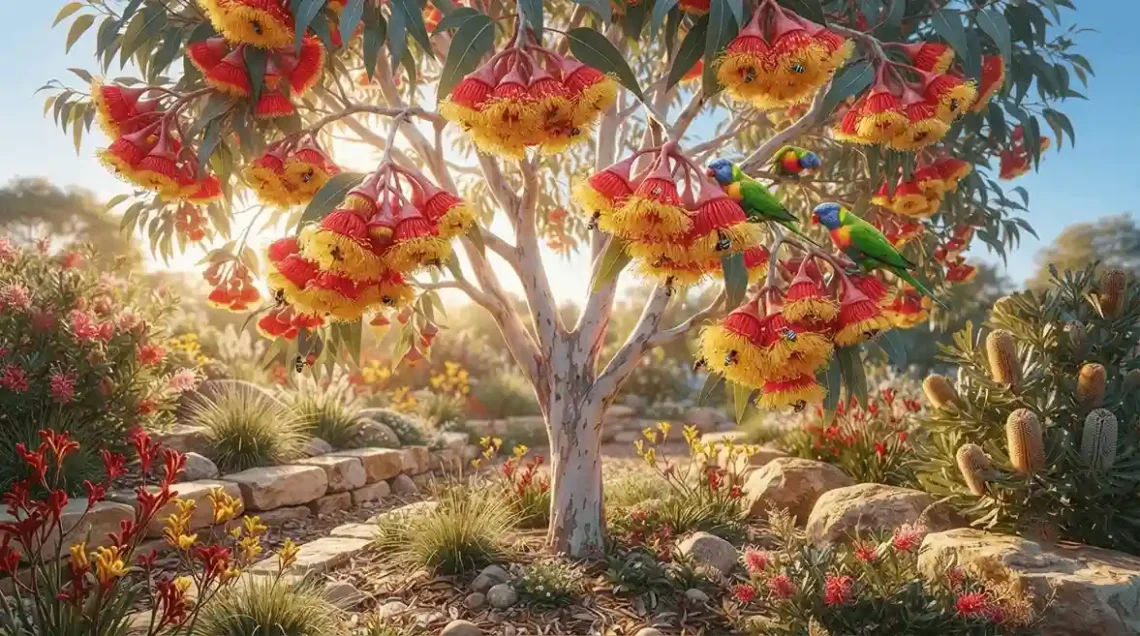
Eucalyptus erythrocorys is widely regarded as Australia’s most spectacular yellow-flowering eucalyptus. Native to a small coastal region of Western Australia, this remarkable species combines vivid yellow flowers with brilliant scarlet-red bud caps that create one of the most distinctive floral displays among native gums.
The species is sometimes listed as Eucalyptus erythrocorys Illyarrie, while gardeners also refer to it as Illyarrie, the Illyarrie tree, Illyarrie Red Cap Gum, Red Cap Gum, Red Capped Gum, Red Capped Gum Tree, or Red Cap Gum Tree.
Before flowering, large waxy red caps cover each flower bud. As flowering begins, these protective caps fall away to reveal clusters of bright golden-yellow stamens, creating a dramatic contrast rarely seen in other eucalyptus species.
Native Range
The species naturally occurs along coastal areas north of Perth in Western Australia, where it grows on sandy limestone soils under full sun. Its adaptation to dry Mediterranean conditions makes it highly drought tolerant once established.
Ornamental Value
Among ornamental gums, few rival the visual appeal of Eucalyptus erythrocorys. Its features include:
- Brilliant yellow flowers
- Large crimson-red flower buds
- Smooth grey-green foliage
- Attractive rounded crown
- Excellent feature-tree potential
Because of its unusual floral display, it is one of the most photographed examples of a gum tree with yellow flowers.
Wildlife Benefits
The nectar-rich flowers attract numerous pollinators, including:
- Native bees
- Honeybees
- Honeyeaters
- Lorikeets
- Beneficial insects
In our experience growing Illyarrie Red Cap Gum, flowering becomes noticeably heavier once trees receive uninterrupted full sun and develop a well-established root system.
Eucalyptus stricklandii (Yellow Flowering Gum)
Eucalyptus stricklandii Yellow Flowering Gum is another attractive Western Australian species valued for its graceful form and reliable flowering.
Often simply called the Yellow Flowering Gum, this medium-sized eucalyptus develops a narrow crown with bluish-green foliage and produces masses of creamy to bright yellow blossoms during its flowering season.
Compared with Eucalyptus erythrocorys, the flowers are less dramatic because they lack the striking red bud caps. However, the tree remains highly ornamental and performs well in dry landscapes.
Growth Habit
The Yellow Flowering Gum Tree typically develops:
- An upright trunk
- Open branching structure
- Moderate canopy spread
- Strong drought tolerance after establishment
Several cultivated Yellow Flowering Gum Trees are selected for improved form and dependable flowering, making them suitable for streetscapes and larger residential gardens.
Landscape Uses
This attractive Yellow Gum Tree is commonly planted as:
- A specimen tree
- A wildlife tree
- A drought-tolerant shade tree
- A feature in native gardens
- A streetscape planting in suitable climates
Its nectar-rich flowers provide seasonal food for birds and pollinating insects while adding colour to Australian landscapes.
Eucalyptus melliodora (Yellow Box)
Eucalyptus melliodora, commonly known as the Yellow Box Gum, is one of southeastern Australia’s most ecologically important eucalyptus species.
Unlike the highly ornamental Red Cap Gum, this tree is appreciated for its ecological significance, exceptional nectar production, and value to wildlife. Mature Yellow Box Trees are frequently found across woodlands in Victoria, New South Wales, and the Australian Capital Territory.
Natural Habitat
The species naturally grows in:
- Open woodland
- Rolling plains
- Grassy forests
- Temperate inland regions
It adapts well to fertile soils and moderate rainfall while tolerating seasonal drought once established.
Wildlife and Honey Production
The flowers of Eucalyptus melliodora produce abundant nectar, making them one of Australia’s premier honey-producing eucalyptus species.
The tree supports numerous wildlife species, including:
- Native bees
- European honeybees
- Parrots
- Honeyeaters
- Small mammals
- Beneficial insects
Its high nectar production contributes significantly to commercial honey industries across southeastern Australia.
Garden Suitability
Although the Yellow Gum is larger than many ornamental gums, it remains an excellent choice for:
- Rural properties
- Large native gardens
- Shelterbelts
- Habitat restoration projects
- Pollinator-friendly landscapes
Greenery Inside recommends selecting Eucalyptus melliodora primarily for larger gardens where its mature size can be accommodated. When given sufficient space, it develops into a long-lived shade tree that supports local biodiversity for decades while producing dependable seasonal displays of creamy-yellow eucalyptus flowers.
Comparison of Common Yellow-Flowering Gum Trees
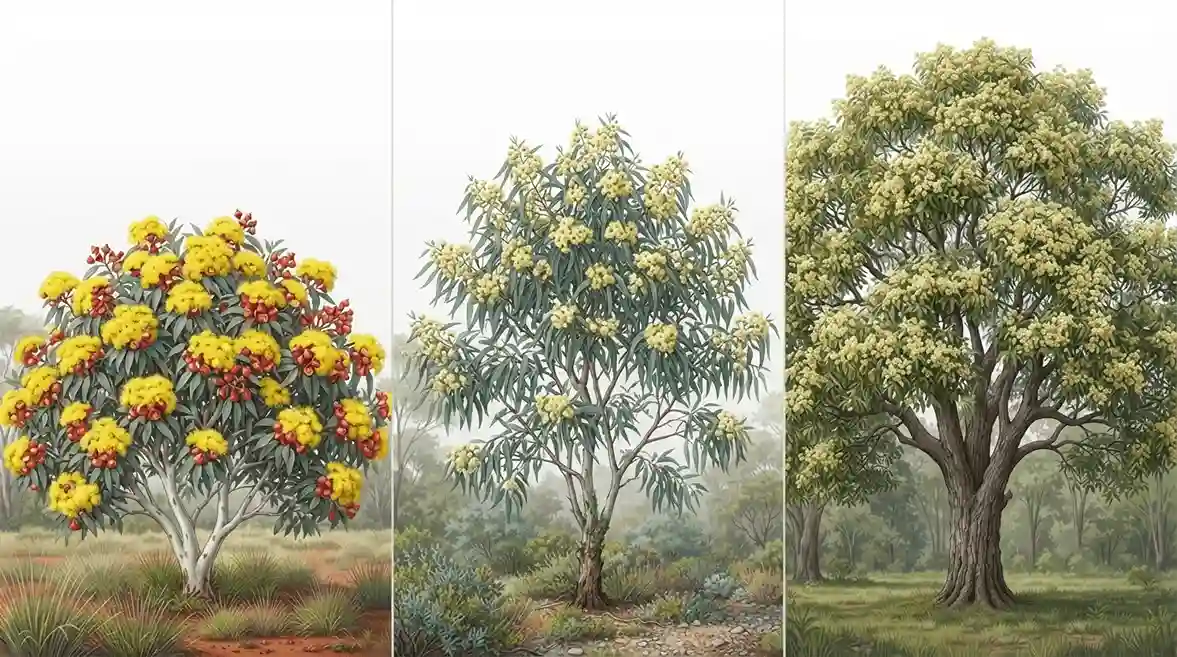
Several eucalyptus species produce yellow flowers, but they differ in mature size, climate preference, ornamental appeal, and wildlife value. The table below compares the three most commonly grown yellow-flowering gum trees, making it easier to choose the right species for your landscape.
| Species | Mature Height | Flower Colour | Best Climate | Garden Size | Wildlife Value |
| Eucalyptus erythrocorys (Illyarrie Red Cap Gum) | 4–8 m | Bright golden yellow with distinctive red bud caps | Mediterranean, coastal, warm temperate | Small to medium gardens | Excellent for bees, honeyeaters, lorikeets, and other nectar-feeding birds |
| Eucalyptus stricklandii (Yellow Flowering Gum) | 6–10 m | Creamy yellow to bright yellow | Semi-arid, Mediterranean, inland | Medium to large gardens | High nectar production for birds and pollinators |
| Eucalyptus melliodora (Yellow Box) | 15–30 m | Cream to pale yellow | Temperate woodland and inland regions | Large gardens, parks, and rural properties | Outstanding habitat tree and major nectar source for bees, birds, and other wildlife |
Key Differences at a Glance
- Eucalyptus erythrocorys is the best choice for gardeners seeking a compact ornamental tree with brilliant yellow flowers and distinctive red flower caps.
- Eucalyptus stricklandii combines dependable flowering with excellent drought tolerance, making it well suited to larger native landscapes.
- Eucalyptus melliodora is prized for its ecological value, long lifespan, and exceptional nectar production rather than showy flowers alone.
If your goal is a striking feature tree for a residential garden, Eucalyptus erythrocorys is often the top recommendation. For larger rural properties or habitat plantings, Eucalyptus melliodora provides greater shade, biodiversity benefits, and long-term landscape value.
Plant Size
Yellow-flowering eucalyptus trees vary greatly in mature height and canopy spread. Understanding how large each species will become helps you select a tree that suits your available space and reduces the need for future pruning.
Typical Mature Height and Spread
| Species | Mature Height | Canopy Spread |
| Eucalyptus erythrocorys | 4–8 m | 3–5 m |
| Eucalyptus stricklandii | 6–10 m | 4–7 m |
| Eucalyptus melliodora | 15–30 m | 10–20 m |
Among these species, Eucalyptus erythrocorys is the most suitable for suburban gardens because of its relatively compact growth habit. In contrast, Eucalyptus melliodora develops into a large shade tree that requires plenty of room to reach its full potential.
Choosing the Right Size for Your Garden
Garden size should always be considered before planting any eucalyptus tree.
For small gardens, suitable choices include:
- Eucalyptus erythrocorys
- Compact grafted cultivars
- Eucalyptus erythrocorys dwarf selections where available
Many gardeners search for a dwarf yellow gum because they want the spectacular flowers of a larger eucalyptus without the mature size. Although true dwarf varieties are uncommon, specialist nurseries occasionally offer Eucalyptus erythrocorys dwarf forms or grafted selections that remain more compact and are easier to manage.
For larger gardens, parks, and rural landscapes, Eucalyptus stricklandii and Eucalyptus melliodora have enough space to develop their natural shape and broad canopy.
Factors That Influence Mature Size
The final size of a yellow gum tree depends on more than genetics. Environmental conditions play a major role in determining how tall and wide the tree will grow.
Important factors include:
- Soil fertility
- Annual rainfall
- Sunlight exposure
- Root space
- Irrigation during establishment
- Local climate
Trees growing in deep, fertile soils with regular moisture generally become larger than those growing in dry, sandy, or nutrient-poor soils.
From our experience at Greenery Inside, one of the most common mistakes is planting a eucalyptus too close to buildings or fences. Allowing enough space for both the canopy and root system enables the tree to develop its natural form while reducing future maintenance.
Growth Rate
Most yellow-flowering eucalyptus trees have a moderate to fast growth rate when planted in suitable conditions. Their growth speed depends on the species as well as environmental factors such as climate, soil quality, sunlight, and water availability.
Average Growth Rate by Species
| Species | Growth Rate |
| Eucalyptus erythrocorys | Moderate |
| Eucalyptus stricklandii | Moderate to fast |
| Eucalyptus melliodora | Moderate to fast |
Young trees usually focus on establishing a strong root system during their first one or two years. Once established, growth becomes more vigorous, especially in warm climates.
Climate and Growing Conditions
Warm regions with long growing seasons encourage the fastest growth. Yellow-flowering eucalyptus trees perform best when they receive:
- Full sun for at least six hours daily
- Good air circulation
- Well-drained soil
- Mild winters
- Low humidity
Species native to Western Australia may grow more slowly in regions with prolonged frost or cool, wet winters.
Soil Fertility
Eucalyptus trees naturally thrive in a range of Australian soils, including sandy and low-fertility sites. Moderate soil fertility supports healthy establishment, but excessively rich soil or heavy nitrogen fertilisers can encourage leafy growth instead of abundant flowering.
Greenery Inside recommends improving soil drainage and structure before planting rather than relying on large amounts of fertiliser. Healthy roots create stronger, more resilient trees over time.
Water Availability
Regular watering during the establishment period is essential for developing a deep and extensive root system.
Once established, most yellow-flowering eucalyptus species become drought tolerant and generally require supplemental watering only during extended dry spells.
For best results:
- Water deeply but infrequently.
- Allow the soil surface to dry slightly between waterings.
- Avoid waterlogged conditions.
- Reduce irrigation during cool weather.
Deep watering encourages roots to grow downward, making mature trees more resilient during periods of drought.
When Do Yellow-Flowering Eucalyptus Trees Bloom?
The age at which a eucalyptus begins flowering varies between species and growing conditions.
Typical flowering maturity is:
- Eucalyptus erythrocorys: around 3–5 years after planting
- Eucalyptus stricklandii: approximately 4–6 years
- Eucalyptus melliodora: generally 5–10 years because of its larger mature size
Trees planted in full sun with minimal disturbance typically flower earlier and more consistently than those grown in shaded locations or subjected to heavy pruning.
Factors That Affect Flowering
Flower production may be delayed by:
- Too much shade
- Poor soil drainage
- Excess nitrogen fertiliser
- Drought stress during establishment
- Frequent or heavy pruning
As of 2026, Australian horticultural best practices continue to recommend choosing the right planting site instead of relying on fertilisers to improve flowering. A sunny position, well-drained soil, and appropriate species selection remain the most reliable way to encourage vigorous growth and spectacular displays of eucalyptus yellow flowers for many years.
Care Guide for Yellow-Flowering Eucalyptus
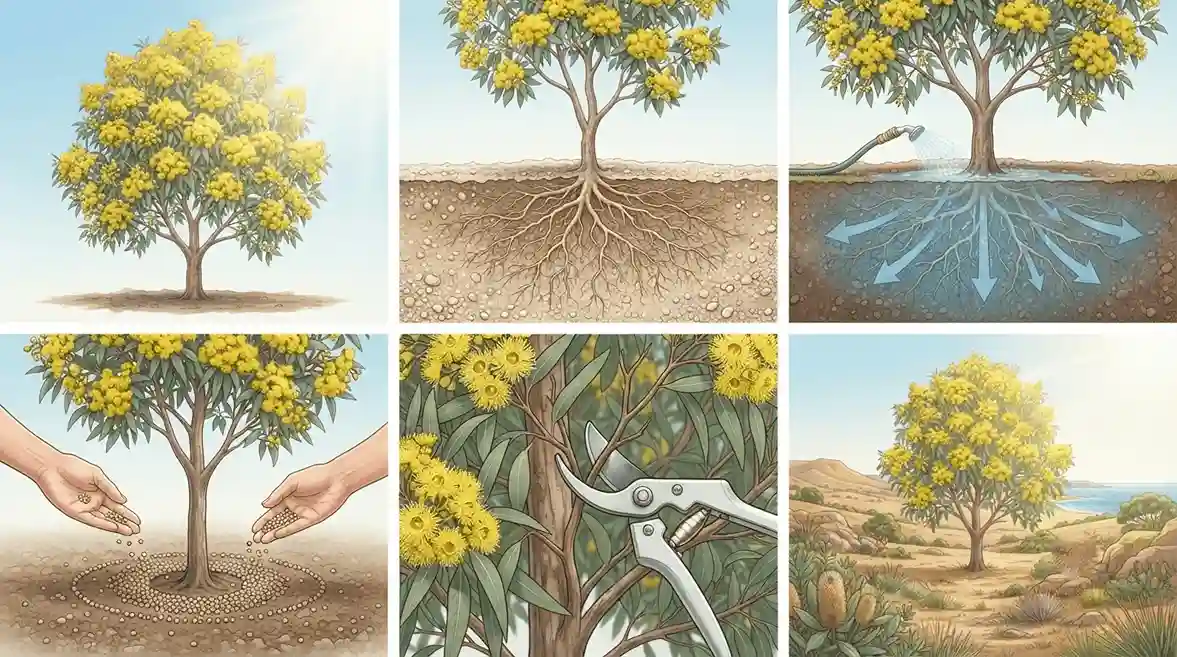
Yellow-flowering eucalyptus trees are generally hardy, low-maintenance, and well adapted to Australian conditions. Like most native eucalyptus species, they thrive when planted in the right location rather than relying on intensive care. Providing plenty of sunlight, excellent drainage, and appropriate watering during establishment will encourage healthy growth and abundant flowering.
At Greenery Inside, we’ve found that most problems with flowering eucalyptus trees stem from unsuitable planting sites rather than poor maintenance. Choosing the right location from the beginning usually results in healthier trees with fewer long-term issues.
Light Requirements
Yellow-flowering eucalyptus trees perform best in full sun.
For the healthiest growth and the most prolific flowering, plant them where they receive at least six to eight hours of direct sunlight each day. Sunlight is essential for photosynthesis, strong branch development, and flower bud formation.
Insufficient light may result in:
- Sparse flowering
- Leggy growth
- Smaller leaves
- Weak branch structure
- Increased susceptibility to pests
Avoid planting near large trees or buildings that cast heavy shade for much of the day.
Soil Requirements
Most yellow-flowering eucalyptus species naturally grow in free-draining soils and dislike prolonged wet conditions.
Ideal soil characteristics include:
- Well-drained sandy or sandy-loam soil
- Slightly acidic to neutral pH
- Good air circulation around the roots
- Moderate organic matter
Although these trees tolerate poor soils surprisingly well, they struggle in heavy clay that remains saturated after rain.
If your garden has clay soil:
- Improve drainage before planting.
- Create a raised planting mound if necessary.
- Incorporate coarse sand or gravel where appropriate.
- Avoid planting in low-lying areas that collect water.
Healthy root systems are the foundation of vigorous growth and reliable flowering.
Watering
Proper watering is most important during the establishment phase.
Newly planted trees
During the first 12–24 months:
- Water deeply once or twice a week during dry weather.
- Reduce watering after consistent rainfall.
- Allow the soil surface to dry slightly between waterings.
Established trees
Once mature, most yellow-flowering eucalyptus species become highly drought tolerant.
Supplemental watering is generally needed only during:
- Extended drought
- Extreme summer heat
- Prolonged dry winds
Deep, infrequent watering encourages roots to grow deeper into the soil, making trees more resilient during dry periods.
Avoid:
- Daily shallow watering
- Constantly wet soil
- Waterlogging around the trunk
These conditions increase the risk of root diseases and poor growth.
Fertilising
Unlike many ornamental trees, eucalyptus generally require very little fertiliser.
Most established trees obtain sufficient nutrients from healthy garden soil.
Fertiliser may be beneficial when:
- Planting into very poor soils
- Young trees show nutrient deficiencies
- Growth is unusually slow despite suitable conditions
Choose a low-phosphorus fertiliser formulated for Australian native plants, as excessive phosphorus can damage many native species.
Avoid over-fertilising with high-nitrogen products because they encourage lush foliage instead of flowers.
In our experience, improving soil health with compost around the root zone often produces better long-term results than frequent fertiliser applications.
Pruning
Most yellow-flowering eucalyptus trees require only light pruning.
Routine pruning helps maintain tree health by removing:
- Dead branches
- Broken limbs
- Crossing branches
- Diseased wood
Young trees also benefit from formative pruning, which encourages:
- A strong central trunk
- Balanced branch structure
- Improved stability
- Better canopy shape
Carry out pruning during dry weather using clean, sharp tools to reduce the risk of disease.
Avoid removing large amounts of healthy foliage, as excessive pruning can delay flowering and stimulate weak, rapid regrowth.
Climate and Hardiness
Different yellow-flowering eucalyptus species have adapted to different parts of Australia, but most thrive in sunny climates with well-drained soils.
They are especially well suited to:
- Mediterranean climates
- Coastal gardens
- Dry inland regions
- Warm temperate areas
Many species tolerate mild frosts once established, although young trees may require protection during unusually cold winters.
Eucalyptus yellow flower Australia enthusiasts should select species based on local climate rather than appearance alone. For example:
- Eucalyptus erythrocorys performs exceptionally well in coastal Western Australia and other Mediterranean climates.
- Eucalyptus stricklandii tolerates dry inland conditions.
- Eucalyptus melliodora is well suited to temperate regions of southeastern Australia.
Choosing a locally adapted native eucalyptus usually results in healthier growth, greater drought tolerance, and more dependable flowering.
As of 2026, Australian horticultural experts continue to recommend planting climate-appropriate native species to improve resilience against prolonged heat and changing rainfall patterns.
Flowers, Buds, and Fruit
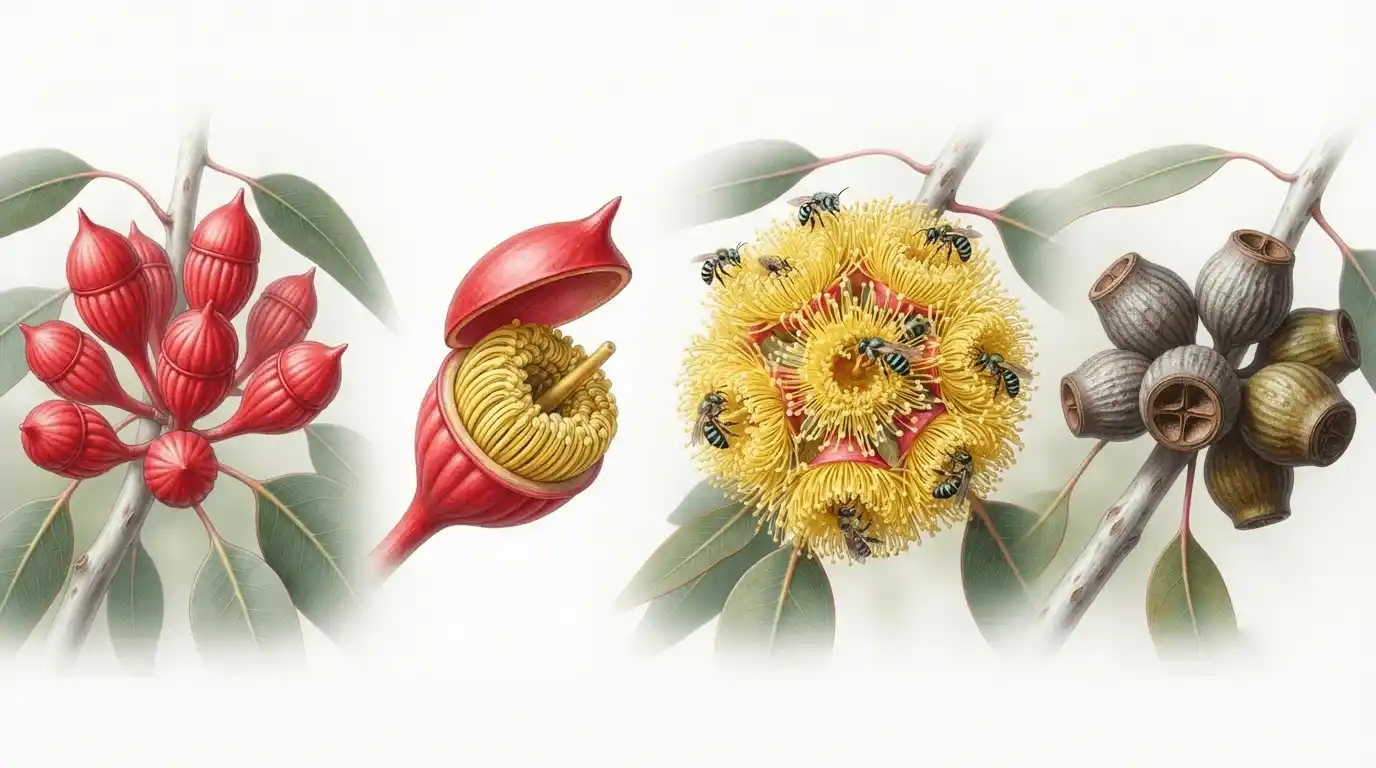
The flowers of yellow-flowering eucalyptus trees are among their most attractive features. Unlike many flowering plants, eucalyptus blossoms consist mainly of colourful stamens rather than petals, giving them their distinctive fluffy appearance.
Flower buds, blossoms, and woody seed capsules all play important roles in the life cycle of these trees and provide valuable food and habitat for native wildlife.
Why Does the Red Cap Gum Have Red Flower Caps?
The brilliant red caps of the Red Cap Gum are one of its defining characteristics.
Before flowering, each flower bud is enclosed by a protective cap called an operculum. This cap shields the developing flower from drying out, insects, and environmental damage.
As the flower matures:
- The red operculum loosens.
- It detens naturally from the bud.
- Bright yellow stamens rapidly expand.
- The tree becomes covered in spectacular golden blooms.
This dramatic transition explains why Red Cap Gum and Red Capped Gum are considered among Australia’s most ornamental flowering eucalyptus species.
The contrast between the vivid scarlet bud caps and the bright eucalyptus flower clusters creates a display rarely matched by other gum trees.
Eucalyptus erythrocorys Fruit
After flowering, Eucalyptus erythrocorys fruit develops as small, woody seed capsules commonly called gum nuts.
These capsules:
- Protect developing seeds
- Gradually dry and mature on the tree
- Open naturally to release seed
- Often remain attached long after seed dispersal
The fruit provides several ecological benefits.
It serves as:
- A food source for some native birds
- Shelter for small insects
- A valuable source of seed for natural regeneration and propagation
Many gardeners also appreciate the decorative appearance of mature gum nuts, which remain attractive even after flowering has finished.
Landscaping Uses for Yellow-Flowering Gum Trees
Yellow-flowering eucalyptus trees combine ornamental beauty with outstanding ecological value, making them versatile additions to Australian landscapes.
Their colourful flowers, attractive foliage, and ability to support wildlife make them suitable for both residential gardens and large public landscapes.
Common landscape uses include:
Feature Trees
A yellow flowering gum tree creates a striking focal point during the flowering season.
Species such as Eucalyptus erythrocorys are especially popular because their vivid yellow flowers and bright red bud caps attract attention from a considerable distance.
Native Gardens
Yellow-flowering gums integrate naturally into Australian native landscapes.
They pair well with:
- Grevilleas
- Banksias
- Bottlebrushes
- Kangaroo paws
- Native grasses
These combinations create low-maintenance gardens that support local biodiversity.
Wildlife Gardens
Few trees provide as much nectar as flowering eucalyptus species.
Their blossoms attract:
- Native bees
- Honeybees
- Honeyeaters
- Lorikeets
- Butterflies
- Beneficial insects
In our experience, mature flowering eucalyptus trees become some of the busiest pollinator plants in the garden during peak bloom.
Streetscapes
Compact species and selected cultivars are commonly planted along streets where their seasonal flowers, attractive bark, and drought tolerance provide year-round landscape interest.
Proper species selection is important to avoid conflicts with buildings, footpaths, or overhead powerlines.
Coastal Landscapes
Several yellow-flowering species tolerate:
- Coastal winds
- Salt-laden air
- Sandy soils
- Summer drought
These characteristics make them valuable choices for seaside gardens.
Pollinator Gardens
A gum tree with yellow flowers is an excellent addition to pollinator-friendly landscapes because its nectar-rich blossoms support insects and birds throughout the flowering season.
Greenery Inside recommends combining flowering eucalyptus with other native plants that bloom at different times of the year. This provides a continuous food source for pollinators while increasing overall biodiversity within the garden.
Common Problems and Solutions
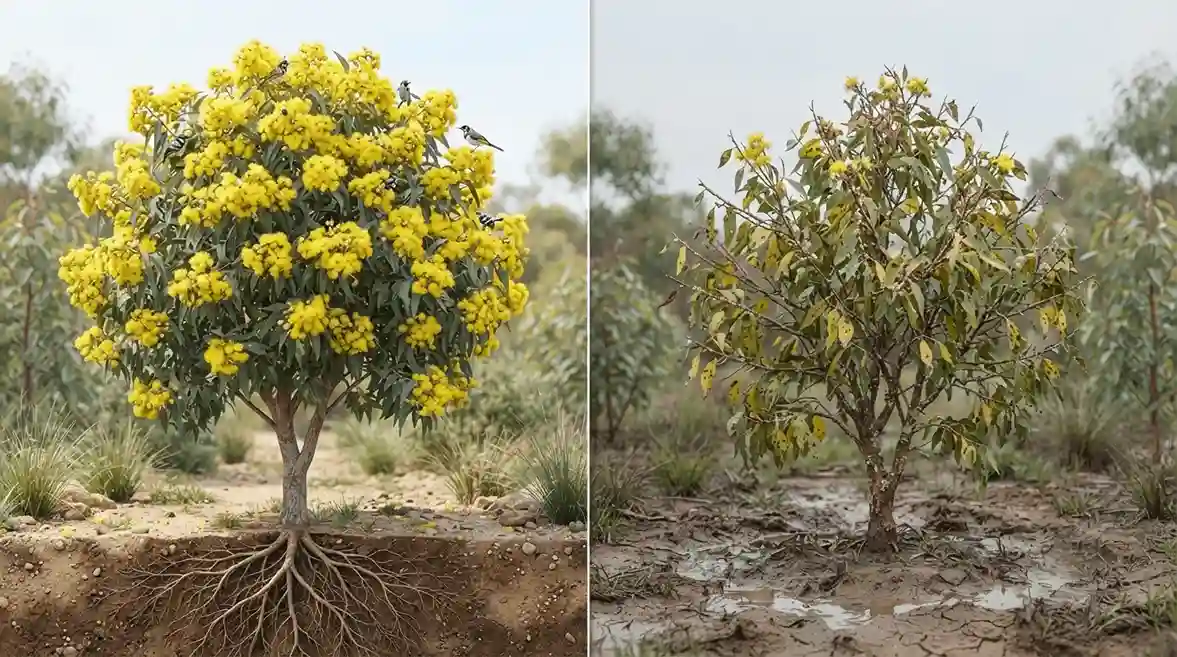
Yellow-flowering eucalyptus trees are generally resilient, but like all plants, they can experience problems if grown under unsuitable conditions. Most issues can be prevented through correct site selection, proper watering, and routine monitoring.
Poor Flowering
Poor flowering is one of the most common concerns among gardeners.
Possible causes include:
- Too much shade
- Excess nitrogen fertiliser
- Immature trees
- Heavy pruning
- Inadequate sunlight
How to improve flowering:
- Plant in full sun.
- Reduce nitrogen-rich fertilisers.
- Allow young trees time to mature.
- Prune only when necessary.
- Maintain good drainage.
Many eucalyptus species naturally flower more heavily as they age.
Yellow Leaves or Slow Growth
Yellowing foliage often indicates environmental stress rather than disease.
Common causes include:
- Waterlogged soil
- Poor drainage
- Root damage
- Nutrient imbalance
- Compacted soil
Solutions include:
- Improving drainage.
- Watering deeply but less frequently.
- Applying a suitable low-phosphorus native fertiliser only if deficiencies are confirmed.
- Protecting the root zone from heavy foot traffic.
Healthy roots are essential for vigorous growth.
Pests and Diseases
Although relatively hardy, yellow-flowering eucalyptus trees may occasionally be affected by pests or fungal diseases.
Common pests include:
- Psyllids
- Scale insects
- Leaf beetles
Potential diseases include:
- Leaf spot fungi
- Root rot caused by prolonged waterlogging
- Canker diseases affecting stressed trees
Prevention strategies include:
- Planting in full sun.
- Maintaining excellent drainage.
- Avoiding overwatering.
- Removing dead or infected branches promptly.
- Encouraging beneficial insects that naturally control pests.
Regular inspections allow problems to be identified early before they become severe. Healthy, well-established eucalyptus trees are naturally more resistant to most pests and diseases than stressed or poorly maintained specimens.
Eucalyptus erythrocorys vs Eucalyptus leucoxylon
Although Eucalyptus erythrocorys and Eucalyptus leucoxylon are both admired as ornamental flowering gum trees, they differ significantly in flower colour, mature size, flowering season, and landscape use. Understanding these differences helps gardeners choose the species that best suits their climate, available space, and design goals.
Gardeners looking for a smaller alternative may also like Eucalyptus leucoxylon Euky Dwarf, a compact flowering cultivar that offers many of the ornamental qualities of larger Yellow Gum varieties while fitting comfortably into suburban gardens.
Eucalyptus erythrocorys is famous for its brilliant yellow flowers that emerge from vivid red bud caps, creating one of Australia’s most striking floral displays. In contrast, Eucalyptus leucoxylon, often referred to as Yellow Gum, is better known for its wide range of flower colours, including pink, red, cream, and occasionally yellow forms.
Comparison Table
| Feature | Eucalyptus erythrocorys | Eucalyptus leucoxylon |
| Common Name | Illyarrie Red Cap Gum | Yellow Gum |
| Mature Height | 4–8 m | 10–20 m (varies by subspecies and cultivar) |
| Flower Colour | Bright golden yellow with red bud caps | Pink, red, cream, white, and occasionally yellow |
| Flowering Season | Mainly late winter to spring (varies by climate) | Winter through spring, with some cultivars flowering over extended periods |
| Bud Appearance | Large, bright scarlet-red operculums | Green to reddish buds depending on cultivar |
| Wildlife Attraction | Excellent for bees, honeyeaters, lorikeets, and pollinating insects | Outstanding nectar source for birds, bees, butterflies, and other pollinators |
| Best Climate | Mediterranean, coastal, warm temperate | Temperate, semi-arid, and Mediterranean regions |
| Best Landscape Use | Feature tree for small to medium gardens | Parks, streetscapes, wildlife gardens, and larger landscapes |
Understanding Eucalyptus leucoxylon
Eucalyptus leucoxylon, commonly shortened to Euc leucoxylon, is one of Australia’s most widely planted ornamental gum trees because of its adaptability and long flowering period.
Despite its common name Yellow Gum, the name refers to the colour of the timber rather than the flowers. Most cultivated varieties produce pink, red, or cream blossoms instead of yellow.
Popular ornamental forms include:
- Eucalyptus rosea
- Leucoxylon rosea
- Eucalyptus leucoxylon rosea
- Euc leucoxylon rosea
These selections are especially valued for their vibrant pink flowering Yellow Gum displays that attract large numbers of nectar-feeding birds.
Some cultivated forms also produce red flowering Yellow Gum, making the species one of the most colourful flowering eucalypts available for Australian gardens.
Which Tree Is Better?
Neither species is universally better—the right choice depends on your garden and growing conditions.
Choose Eucalyptus erythrocorys if you want:
- Brilliant yellow flowers
- Unique red flower caps
- A compact ornamental tree
- A feature specimen for suburban gardens
- Excellent drought tolerance once established
Choose Eucalyptus leucoxylon if you want:
- A larger shade tree
- Long flowering periods
- Multiple flower colour options
- Exceptional wildlife value
- Greater adaptability across different Australian climates
At Greenery Inside, we’ve found that Eucalyptus erythrocorys is often the preferred choice for homeowners with limited space who want maximum ornamental impact. Eucalyptus leucoxylon, however, is an outstanding option for larger landscapes where its broad canopy and prolonged flowering can be fully appreciated.
Beginner Mistakes When Growing Yellow-Flowering Eucalyptus
Yellow-flowering eucalyptus trees are relatively easy to grow, but a few common mistakes can slow their growth, reduce flowering, or shorten their lifespan. Most problems can be avoided by understanding the tree’s natural growing habits before planting.
Planting in Too Much Shade
Eucalyptus trees are sun-loving plants that require plenty of direct light.
Planting them beneath taller trees or beside buildings often results in:
- Reduced flowering
- Sparse foliage
- Weak branch development
- Slower overall growth
Always choose the sunniest location available.
Overwatering
Young trees benefit from regular watering during establishment, but constantly wet soil can damage their roots.
Signs of overwatering include:
- Yellowing leaves
- Poor growth
- Wilting despite moist soil
- Root rot
Deep, infrequent watering is far healthier than frequent shallow irrigation.
Poor Drainage
Most eucalyptus species dislike waterlogged soil.
Heavy clay or poorly drained sites may lead to:
- Root diseases
- Reduced oxygen around the roots
- Stunted growth
- Premature decline
If drainage is poor, improve the soil before planting or create a raised planting area.
Choosing a Species That Is Too Large
One of the biggest mistakes is selecting a tree based only on its flowers.
Always consider:
- Mature height
- Canopy spread
- Root system
- Distance from buildings
- Overhead powerlines
- Nearby infrastructure
For smaller gardens, compact species such as Eucalyptus erythrocorys are generally a better choice than larger woodland gums.
Using Too Much Fertiliser
Many gardeners assume more fertiliser means faster growth.
In reality, excessive nitrogen often causes:
- Vigorous leafy growth
- Fewer flowers
- Soft, weak shoots
- Increased pest problems
Most native eucalyptus trees perform well with little or no fertiliser once established.
Ignoring Mature Size
Young saplings may appear small, but many eucalyptus trees grow rapidly once established.
Before planting, allow sufficient space for:
- Future canopy spread
- Root development
- Air circulation
- Safe distance from structures
Greenery Inside recommends researching the mature dimensions of every species before purchasing. Proper planning helps prevent expensive pruning or tree removal in the future.
Choosing the Right Yellow-Flowering Gum for Your Garden
The best yellow-flowering eucalyptus depends on your local climate, available space, and gardening goals. While all three featured species offer attractive flowers and ecological benefits, each excels in different situations.
Consider Your Garden Size
Space is often the most important factor when selecting a eucalyptus tree.
For small to medium gardens, consider:
- Eucalyptus erythrocorys
- Compact grafted selections
- Dwarf forms where available
For large gardens and rural properties, suitable choices include:
- Eucalyptus stricklandii
- Eucalyptus melliodora
- Eucalyptus leucoxylon
Selecting a tree that matches your available space reduces maintenance and allows it to develop its natural shape.
Match the Tree to Your Climate
Choose species that are naturally adapted to your region.
| Climate | Recommended Species |
| Mediterranean | Eucalyptus erythrocorys, Eucalyptus stricklandii |
| Coastal | Eucalyptus erythrocorys |
| Dry inland | Eucalyptus stricklandii |
| Temperate | Eucalyptus melliodora, Eucalyptus leucoxylon |
Planting climate-appropriate species improves drought tolerance, flowering reliability, and long-term health.
Think About Flower Colour
Although this guide focuses on eucalyptus yellow flower species, flower colour varies among ornamental eucalyptus.
If you prefer:
- Brilliant yellow flowers with dramatic red buds — choose Eucalyptus erythrocorys.
- Soft yellow blooms on a hardy landscape tree — choose Eucalyptus stricklandii.
- Creamy-yellow flowers with exceptional nectar production — choose Eucalyptus melliodora.
- Pink or red blossoms — consider Eucalyptus leucoxylon rosea and related cultivars.
Support Local Wildlife
Flowering eucalyptus trees are among the best native plants for pollinators.
They attract:
- Native bees
- Honeybees
- Honeyeaters
- Lorikeets
- Butterflies
- Beneficial insects
If creating a wildlife-friendly garden is your goal, combining flowering eucalyptus with banksias, grevilleas, bottlebrushes, and native shrubs provides year-round food and shelter.
Consider Maintenance Requirements
Most yellow-flowering eucalyptus trees are relatively low maintenance once established.
Choose species that suit the amount of care you can provide.
In general:
- Compact ornamental species require occasional formative pruning.
- Larger woodland trees need more planting space but relatively little ongoing maintenance.
- All species benefit from full sun, excellent drainage, and minimal fertiliser.
Selecting the right tree from the beginning is the easiest way to enjoy healthy growth and spectacular flowering for decades.
Conclusion
A eucalyptus yellow flower can refer to several beautiful Australian eucalyptus species rather than a single tree. Among them, Eucalyptus erythrocorys, Eucalyptus stricklandii, and Eucalyptus melliodora are the most recognised for their yellow blooms, each offering unique ornamental features, growth habits, and ecological benefits.
Eucalyptus erythrocorys stands out for its unforgettable combination of brilliant yellow flowers and vivid red bud caps, making it one of Australia’s most spectacular ornamental gum trees. Eucalyptus stricklandii is an excellent choice for dry landscapes and larger gardens, while Eucalyptus melliodora provides outstanding habitat value, abundant nectar for pollinators, and reliable shade in spacious landscapes.
By selecting a species suited to your climate, available garden space, and maintenance preferences, you can enjoy a healthy, long-lived yellow flowering eucalyptus that enhances your landscape while supporting native birds, bees, and other beneficial wildlife. With full sun, well-drained soil, and proper establishment care, these remarkable native trees will reward you with years of vibrant flowering and ecological value.
Frequently Asked Questions
Which eucalyptus has yellow flowers?
Several eucalyptus species produce yellow flowers, including Eucalyptus erythrocorys, Eucalyptus stricklandii, and Eucalyptus melliodora. Among them, Eucalyptus erythrocorys is the best-known ornamental species because its bright yellow flowers emerge from striking red bud caps.
Is Eucalyptus erythrocorys the same as the Illyarrie Red Cap Gum?
Yes. Eucalyptus erythrocorys is the botanical name for the Illyarrie Red Cap Gum. It is a native Western Australian species recognised for its distinctive scarlet flower buds and brilliant yellow blossoms.
How large does a yellow flowering gum tree grow?
The mature size depends on the species. Eucalyptus erythrocorys typically reaches 4–8 metres, Eucalyptus stricklandii grows around 6–10 metres, while Eucalyptus melliodora can exceed 20 metres under favourable conditions.
Can yellow-flowering eucalyptus trees grow in pots?
Young trees and compact cultivars can be grown in large containers for several years, provided they receive full sun, excellent drainage, and regular watering. However, most species eventually perform best when planted in the ground because of their extensive root systems.
What makes the Red Cap Gum different from other eucalyptus species?
The Red Cap Gum is unique because its flowers emerge from large, bright red protective bud caps called operculums. This dramatic contrast between scarlet buds and golden-yellow flowers makes it one of Australia’s most distinctive ornamental eucalyptus trees.
Are yellow-flowering eucalyptus trees good for bees and birds?
Yes. Their nectar-rich flowers attract native bees, honeybees, honeyeaters, lorikeets, butterflies, and many other beneficial pollinators, making them excellent additions to wildlife-friendly gardens.
When do yellow-flowering eucalyptus trees bloom in Australia?
Flowering time varies by species and local climate. Most yellow-flowering eucalyptus trees bloom from late winter through spring, although seasonal conditions can influence the exact timing and duration of flowering.