Introduction
Grevillea buxifolia is a beautiful Australian native shrub widely admired for its distinctive spider-like flowers, evergreen foliage, and excellent adaptability. Commonly known as the grevillea spider flower, Australian spider flower, or spider grevillea, it is a popular choice for native gardens, wildlife-friendly landscapes, and low-maintenance planting schemes. Its compact growth habit, extended flowering period, and ability to attract nectar-feeding birds make it one of Australia’s most rewarding ornamental shrubs. Whether planted in rock gardens, coastal landscapes, or suburban gardens, Grevillea buxifolia combines year-round foliage with striking blooms that provide lasting colour and valuable habitat for pollinators.
Quick Summary
- Grevillea buxifolia is a compact Australian native shrub known for its distinctive spider-like flowers and evergreen foliage.
- It grows best in well-drained soil with full sun to light shade and requires little maintenance once established.
- The flowers attract honeyeaters, native bees, butterflies, and other beneficial pollinators, making it an excellent wildlife plant.
- Several closely related Grevillea species share similar features but differ in foliage, flower colour, and mature size.
- Long-term success depends on excellent drainage, careful watering during establishment, and using only low-phosphorus fertilisers.
What Is Grevillea buxifolia?
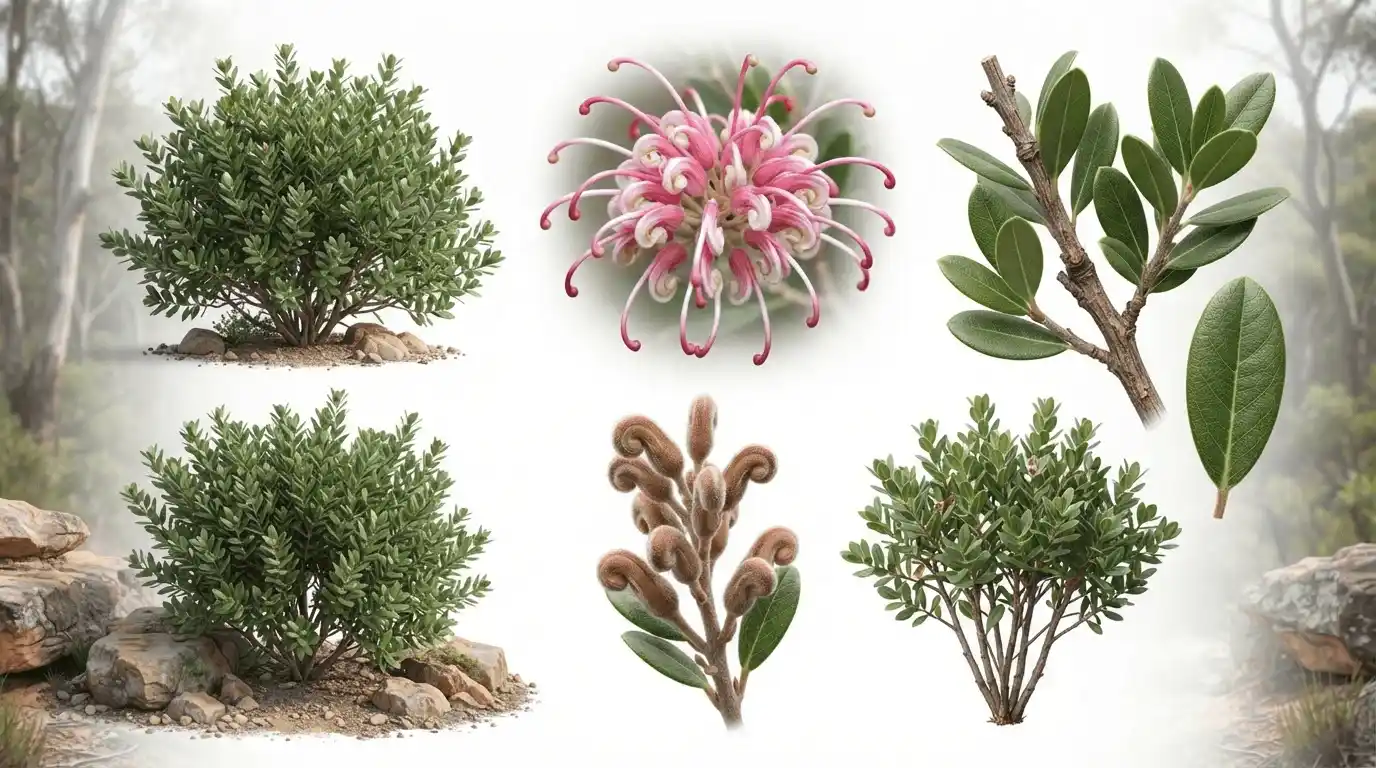
Grevillea buxifolia is a flowering evergreen shrub belonging to the family Proteaceae, one of Australia’s most diverse and ecologically important plant families. It is native to eastern New South Wales, where it naturally grows in heathlands, open forests, sandstone woodlands, and rocky slopes with freely draining soils.
The species is highly valued for its compact habit and unusual flowers, making it a favourite among gardeners who want an attractive Australian native that requires relatively little maintenance.
Within the large Grevillea genus—which contains more than 350 species—Grevillea buxifolia is recognised for its dense branching, small leathery leaves, and clusters of delicate spider-like flowers. These features make it easy to identify among many other native shrubs.
The plant has adapted to Australia’s nutrient-poor soils, dry summers, and periodic bushfire conditions. Its natural resilience makes it particularly suitable for sustainable landscaping and water-wise gardens.
Why Is It Called Grevillea Spider Flower?
The common name grevillea spider flower comes from the flower’s distinctive shape. Each bloom has long, slender styles that extend outward from the flower cluster, creating the appearance of a spider with delicate legs.
Unlike traditional flowers with broad petals, Grevillea flowers consist mainly of curled floral parts and extended styles, giving them their unique architectural appearance.
This unusual flower structure also serves an ecological purpose by allowing nectar-feeding birds and insects easy access to nectar while helping pollinate the plant.
Origin of the Common Names
Several common names are used for Grevillea buxifolia, each describing either its appearance or its Australian origin.
- Spider flower refers to the unusual spider-like form of the blooms.
- Spider grevillea combines the genus name with the flower’s distinctive appearance.
- Australian spider flower highlights that the species is native to Australia and naturally occurs in Australian bushland.
These names may also be applied to other spider-flowering Grevillea species, but Grevillea buxifolia remains one of the best-known examples because of its compact size and ornamental value.
Botanical Classification
| Classification | Details |
| Scientific name | Grevillea buxifolia |
| Family | Proteaceae |
| Genus | Grevillea |
| Plant type | Evergreen native shrub |
| Native range | Eastern New South Wales, Australia |
| Common names | Grevillea spider flower, spider grevillea, Australian spider flower |
In our experience growing Australian native shrubs, Grevillea buxifolia performs best when planted in conditions that closely resemble its natural habitat. Excellent drainage and good air circulation consistently produce healthier plants with heavier flowering.
As of current Australian gardening recommendations in 2026, growers continue to favour locally adapted native species like Grevillea buxifolia because they support biodiversity while requiring less water and fertiliser than many exotic ornamental shrubs.
Key Features of Grevillea buxifolia
Appearance and Foliage
Grevillea buxifolia is an evergreen shrub with a naturally dense, rounded growth habit that provides year-round interest in the garden. Its compact branching structure makes it useful as an informal hedge, feature shrub, or filler plant in native landscapes.
The foliage is one of the plant’s defining characteristics. The leaves are:
- Small and oval to broadly elliptical
- Thick and leathery
- Dark green to grey-green on the upper surface
- Slightly paler beneath
- Firm in texture to reduce moisture loss
The species name buxifolia means “box-like leaves,” referring to their resemblance to the foliage of boxwood (Buxus) plants.
Because the shrub retains its leaves throughout the year, it provides continuous structure and colour even when not flowering. The dense foliage also offers shelter for small birds, beneficial insects, and native wildlife.
Unlike some Grevillea species that develop an open or sprawling habit, Grevillea buxifolia usually forms a neat, bushy shrub with numerous fine branches arising from the base.
Greenery Inside recommends avoiding excessive nitrogen fertiliser, as it often encourages soft leafy growth at the expense of flowering and may shorten the plant’s lifespan.
Flower Colour Variations
Although naturally variable across its range, Grevillea buxifolia commonly produces flowers in shades including:
- Soft pink
- Deep pink
- White
- Creamy white
- Pale grey-pink forms
These natural variations have contributed to the development and selection of attractive garden forms suitable for different landscape styles.
Flowers and Blooming Season
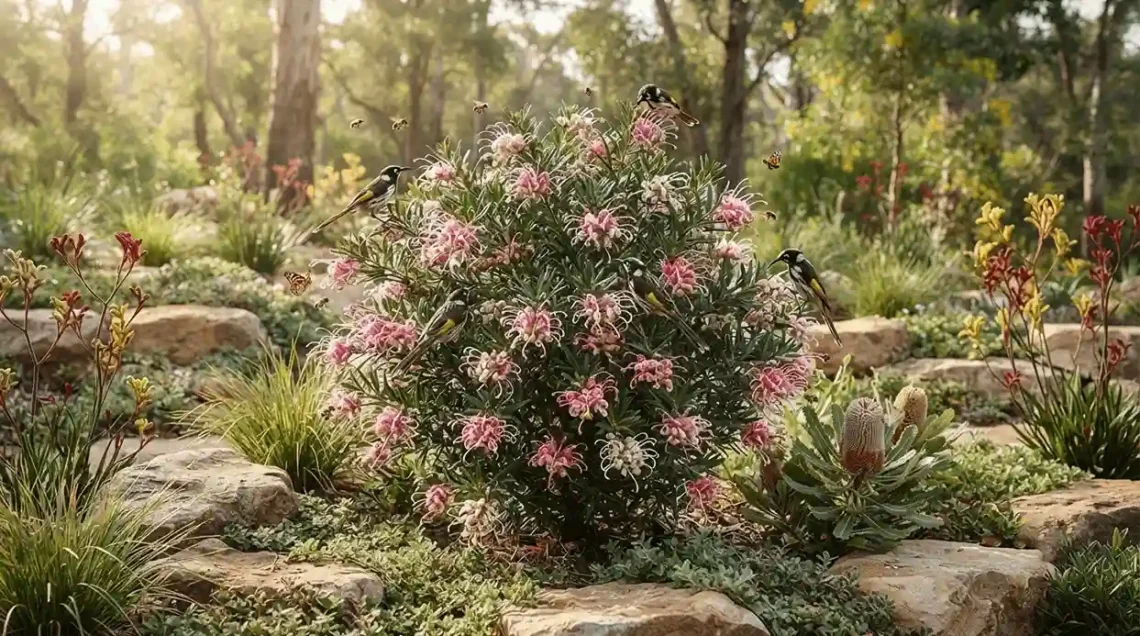
The most distinctive feature of Grevillea buxifolia is its intricate spider-shaped flowers. Instead of broad petals, each bloom consists of slender floral segments and long curved styles that radiate outward, giving the flower the appearance of a delicate spider.
Flower clusters are typically produced near the ends of branches, standing out clearly against the dense evergreen foliage.
Depending on the local climate and growing conditions, flowering generally begins in late winter or early spring and often continues through spring into early summer. In milder regions, scattered blooms may appear throughout much of the year.
The long flowering season is one of the reasons this species remains popular in Australian native gardens.
Flower Colour Forms
Gardeners may encounter several naturally occurring flower colour variations, including:
- Pink spider forms with soft pastel blooms
- Rich pink spider flower selections that provide vibrant seasonal colour
- Ornamental pink grevillea flower types commonly planted in residential landscapes
- Pale grey spider flower forms with subtle silvery tones
- Occasional red spider flower selections displaying deeper rosy shades
- Individual blooms that resemble a delicate pink flower spider because of their long projecting styles
These descriptive names generally refer to flower colour and appearance rather than separate botanical species.
Pollinator Value
Grevillea buxifolia is considered one of the more valuable Australian native shrubs for supporting wildlife. The nectar-rich flowers attract numerous beneficial animals throughout the flowering season.
Common visitors include:
- Honeyeaters
- Native bees
- European honeybees
- Butterflies
- Hoverflies
- Other nectar-feeding insects
The extended flowering period provides an important food source during seasons when fewer native plants are blooming.
In our experience, shrubs planted in sunny positions produce noticeably heavier flowering, resulting in increased visits from birds and native pollinators. Even a single mature plant can become an active feeding station during peak flowering.
Beyond its ornamental value, Grevillea buxifolia contributes to local biodiversity by providing nectar, shelter, and habitat within native gardens, pollinator landscapes, and ecological restoration projects. This combination of beauty and ecological function makes it one of the most rewarding compact Grevillea species for Australian gardeners.
Grevillea buxifolia Size and Growth Habit
Grevillea buxifolia is a compact, evergreen shrub with a naturally rounded and bushy form. Its manageable size makes it suitable for small residential gardens, native landscapes, rockeries, and low informal hedges. Dense branching provides year-round structure while supporting abundant flowering during the growing season.
Although mature size varies slightly between natural populations and cultivated forms, most plants remain compact without requiring frequent pruning. Environmental conditions such as soil quality, sunlight, rainfall, and pruning practices can influence ultimate height and spread.
Mature Size
Under favourable conditions, the typical grevillea buxifolia height ranges from 1–2 metres (3–6.5 feet), with a similar mature width of 1–2 metres. Some naturally occurring forms remain smaller, while vigorous specimens growing in ideal conditions may become slightly larger.
Because of its dense habit, the shrub works well as:
- Feature specimen plant
- Native border shrub
- Informal flowering hedge
- Rock garden planting
- Wildlife habitat shrub
- Coastal landscape feature
Its moderate size also allows it to be incorporated into mixed native plantings without overwhelming neighbouring plants.
Typical Size and Growing Conditions
| Feature | Typical Range |
| Mature height | 1–2 m |
| Mature width | 1–2 m |
| Growth habit | Dense, rounded, evergreen shrub |
| Flower colour | White, cream, pale pink to deep pink |
| Sun requirements | Full sun to light partial shade |
In our experience growing Australian native shrubs, Grevillea buxifolia develops its most symmetrical shape when planted in full sun with adequate spacing for air circulation. Crowded plants tend to become more open and produce fewer flowers.
Growth Rate
Grevillea buxifolia has a moderate growth rate. It establishes steadily during its first two years, after which growth slows as the shrub develops its naturally compact framework.
Most healthy plants reach close to their mature size within three to five years, depending on environmental conditions and care.
Unlike fast-growing ornamental shrubs that require constant maintenance, Grevillea buxifolia invests energy in producing dense branching and repeated flowering rather than excessive vegetative growth. This makes it an excellent long-term landscape plant with relatively low maintenance needs.
Seasonal Growth Patterns
Growth follows Australia’s seasonal climate.
- Spring: The strongest flush of new foliage and flowering.
- Summer: Growth slows during prolonged heat or drought, although established plants remain resilient.
- Autumn: Moderate vegetative growth resumes as temperatures become milder.
- Winter: Growth is generally slow, though flowering may continue in frost-free regions.
Seasonal patterns vary depending on local climate and rainfall.
Factors That Affect Growth
Several environmental factors influence the growth rate and overall health of Grevillea buxifolia.
Sunlight
Full sun promotes:
- Denser branching
- More abundant flowering
- Stronger stems
- Better overall plant form
Plants grown in excessive shade often become leggy and produce fewer flowers.
Drainage
Excellent drainage is essential.
Roots growing in waterlogged soil receive insufficient oxygen, reducing growth and increasing the likelihood of root diseases. Sandy and rocky soils generally produce healthier plants than heavy clay.
Climate
The shrub performs best in temperate and Mediterranean-style climates with warm summers and mild winters. Once established, it tolerates dry conditions well but grows more vigorously where seasonal rainfall is reliable.
Pruning
Light pruning after flowering stimulates branching and encourages additional flowering the following season. Heavy pruning into old woody stems should generally be avoided because recovery may be slow.
As of 2026, Australian native plant growers continue to recommend regular light tip pruning rather than infrequent hard pruning, as this maintains the plant’s compact habit while preserving flowering performance.
Grevillea buxifolia Care Guide
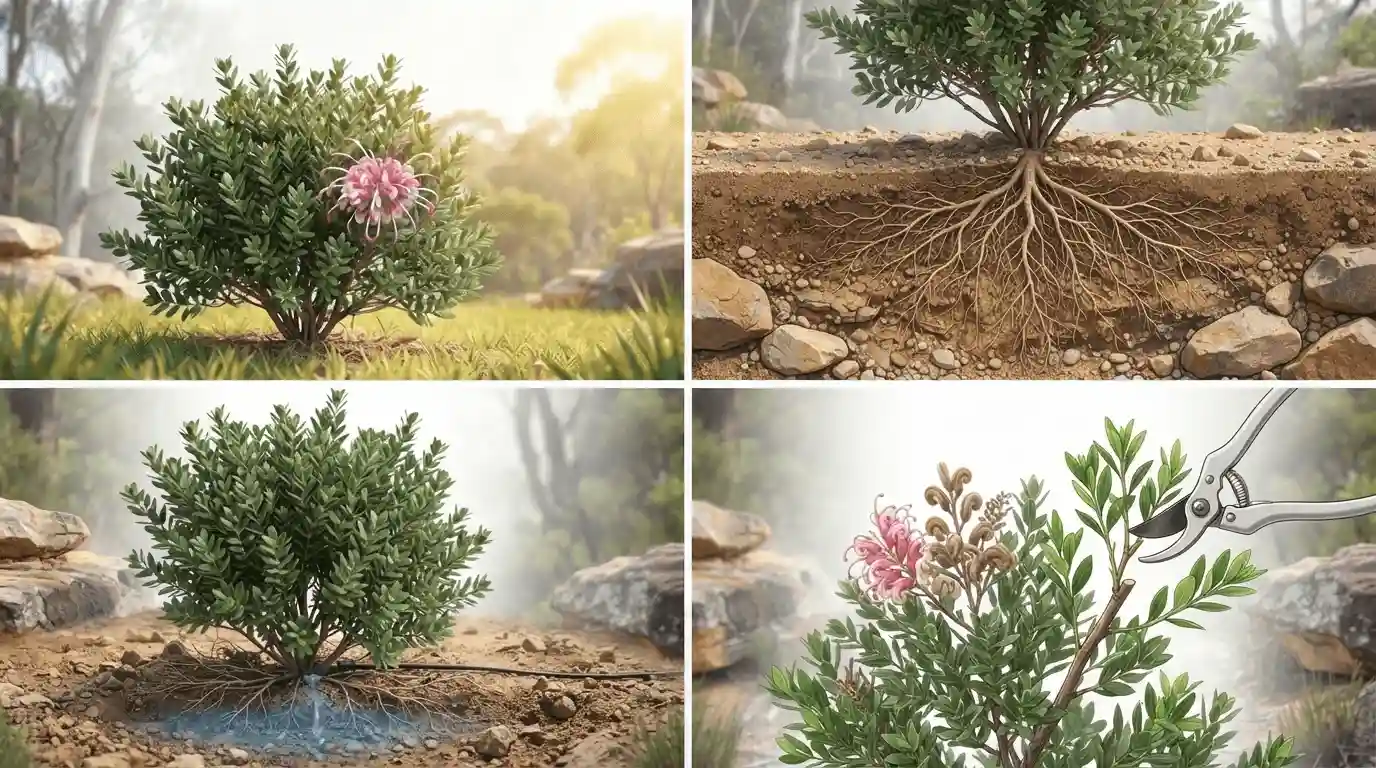
Providing conditions similar to the plant’s natural habitat is the key to long-term success. Grevillea buxifolia is naturally adapted to nutrient-poor, well-drained Australian soils and generally requires less maintenance than many exotic ornamental shrubs.
Light Requirements
Grevillea buxifolia grows best in full sun, where it produces dense foliage and abundant flowers.
Aim for at least six hours of direct sunlight each day.
Although the shrub tolerates light partial shade, flowering usually becomes less prolific as shade increases.
Best Lighting Conditions
| Light Level | Performance |
| Full sun | Excellent flowering and compact growth |
| Light partial shade | Good growth with reduced flowering |
| Heavy shade | Poor flowering and open, leggy growth |
Greenery Inside recommends selecting the sunniest available planting location whenever possible. Plants grown in bright positions consistently develop stronger branching and richer floral displays.
Soil Requirements
Well-drained soil is the single most important requirement for healthy growth.
In its natural habitat, Grevillea buxifolia commonly grows in:
- Sandy soils
- Rocky slopes
- Sandstone-derived soils
- Gravelly bushland soils
These conditions allow water to drain rapidly while providing adequate oxygen around the roots.
Ideal Soil Characteristics
- Excellent drainage
- Slightly acidic to neutral pH
- Low phosphorus content
- Moderate organic matter
- Loose, friable texture
Why Heavy Clay Causes Problems
Heavy clay retains excessive moisture around the root system.
Poor drainage can lead to:
- Root suffocation
- Reduced nutrient uptake
- Yellowing foliage
- Root rot
- Reduced flowering
- Plant decline
Where clay soils cannot be avoided, consider planting on raised mounds or improving drainage before planting.
Watering Needs
Young plants require regular watering while establishing their root systems.
During the first growing season:
- Water deeply once or twice each week, depending on rainfall.
- Allow the upper soil layer to dry slightly between waterings.
- Avoid keeping the soil constantly wet.
Once established, Grevillea buxifolia becomes highly drought tolerant.
Mature plants generally require supplemental watering only during prolonged dry periods or extreme summer heat.
Deep, infrequent watering encourages roots to grow deeper into the soil, improving drought resistance.
In our experience, the most common mistake is watering too frequently rather than too little. Established plants usually perform better with occasional deep watering than with daily shallow irrigation.
Fertilising
Like many members of the Proteaceae family, Grevillea buxifolia is sensitive to excessive phosphorus.
Always use fertilisers specifically formulated for Australian native plants.
Fertilising Guidelines
- Apply a low-phosphorus native plant fertiliser in spring if needed.
- Use only the recommended application rate.
- Avoid high-nitrogen fertilisers that encourage excessive leafy growth.
- Do not overfeed established plants growing well in suitable soil.
Excess fertiliser often produces lush foliage while reducing flowering and may damage sensitive roots.
Many established shrubs growing in healthy native soils require little or no supplementary fertiliser.
Pruning
Regular light pruning helps maintain a compact, attractive shrub.
The best time to prune is immediately after the main flowering period.
Benefits of pruning include:
- Encourages bushier branching
- Promotes additional flowering
- Removes spent flower clusters
- Maintains plant shape
- Improves air circulation
Avoid cutting deeply into old woody stems that have few leaves, as regeneration from older wood can be limited.
Annual tip pruning generally provides better long-term results than infrequent heavy pruning.
Climate and Hardiness
Grevillea buxifolia is well suited to many Australian growing regions.
It performs particularly well in:
- Temperate climates
- Coastal districts
- Mediterranean climates
- Areas with well-drained soils
- Regions experiencing seasonal dry periods
Frost Tolerance
Established plants tolerate light to moderate frost, particularly when growing in well-drained soil. Young plants benefit from temporary frost protection during their first winter in colder regions.
Coastal Performance
One of the shrub’s strengths is its ability to perform well in coastal gardens.
It generally tolerates:
- Salt-laden winds
- Sandy soils
- Periodic dry conditions
- Coastal exposure
Providing some shelter from severe ocean winds during establishment can improve early growth.
Greenery Inside has found that plants established before summer cope far better with Australia’s hot, dry conditions than those planted late in the season. Autumn planting allows roots to develop through the cooler months, resulting in stronger growth and greater drought resilience by the following summer.
How to Grow Grevillea buxifolia from Seeds
Growing Grevillea buxifolia from seed is a rewarding way to produce multiple plants for native gardens or restoration projects. While germination can be slower and less predictable than propagation from cuttings, fresh grevillea buxifolia seeds generally provide the best success.
Collecting Grevillea buxifolia Seeds
Seed is produced inside small woody follicles that develop after flowering.
To collect viable seed:
- Allow the seed pods to mature and dry naturally on the plant.
- Watch carefully, as mature follicles can split open suddenly and release the seed.
- Collect pods just before they fully open.
- Store seed in a cool, dry place until sowing.
Fresh seed usually has a higher germination rate than seed stored for long periods.
Preparing the Seeds
Unlike some Australian native plants, Grevillea buxifolia seeds usually do not require extensive pretreatment. However, soaking the seeds in room-temperature water for 12–24 hours before sowing may help speed moisture absorption and encourage more even germination.
Choosing the Right Soil Mix
Use a free-draining propagation mix to reduce the risk of fungal diseases.
A suitable mix may include:
- Coarse river sand
- Native plant seed-raising mix
- Fine pine bark
- Perlite
Avoid heavy garden soil or compost-rich mixes that retain excessive moisture.
Sowing the Seeds
- Fill seed trays or pots with the propagation mix.
- Sow the seeds on the surface.
- Cover lightly with a thin layer of sand or fine mix.
- Water gently using a fine spray.
- Place the tray in a warm, bright location with indirect sunlight.
Maintain consistent moisture without allowing the mix to become waterlogged.
Germination Time
Under favourable conditions, germination usually occurs within 3–8 weeks, although some seeds may take longer depending on temperature and seed freshness.
Ideal temperatures generally range between 18°C and 24°C (64–75°F).
Caring for Seedlings
Young seedlings should be:
- Kept in bright light
- Protected from extreme heat
- Watered carefully to prevent drying out
- Grown in well-drained media
Once several sets of true leaves have developed, seedlings can be transplanted into individual pots before eventually moving into the garden.
In our experience, young Grevilleas establish more successfully when transplanted while still relatively small rather than after becoming root-bound in containers.
Popular Grevillea buxifolia Varieties
Although Grevillea buxifolia is a naturally occurring species, gardeners can find several forms and selections that differ slightly in flower colour, foliage, growth habit, and landscape use. These grevillea buxifolia varieties have been selected for ornamental performance while retaining the species’ characteristic spider-like flowers.
Natural Variation
Across its natural range, the species shows variation in:
- Flower colour
- Leaf size
- Plant density
- Branching habit
- Flowering intensity
These differences reflect local environmental adaptation and natural genetic diversity.
Compact Forms
Compact forms are especially useful for:
- Small gardens
- Native borders
- Rock gardens
- Container planting
- Low hedges
Their dense habit requires only occasional light pruning to maintain shape.
Flower Colour Differences
Depending on the selection, flowers may appear in:
- White
- Cream
- Pale pink
- Bright pink
- Deep rosy pink
These subtle colour variations allow gardeners to match plants with different landscape themes.
Landscape Uses
Different forms of Grevillea buxifolia are commonly used for:
- Wildlife gardens
- Water-wise landscapes
- Native shrub borders
- Pollinator gardens
- Informal screening
- Coastal gardens
Regardless of the selected form, all benefit from similar growing conditions, including excellent drainage and low-phosphorus nutrition.
Grevillea buxifolia vs Similar Grevillea Species
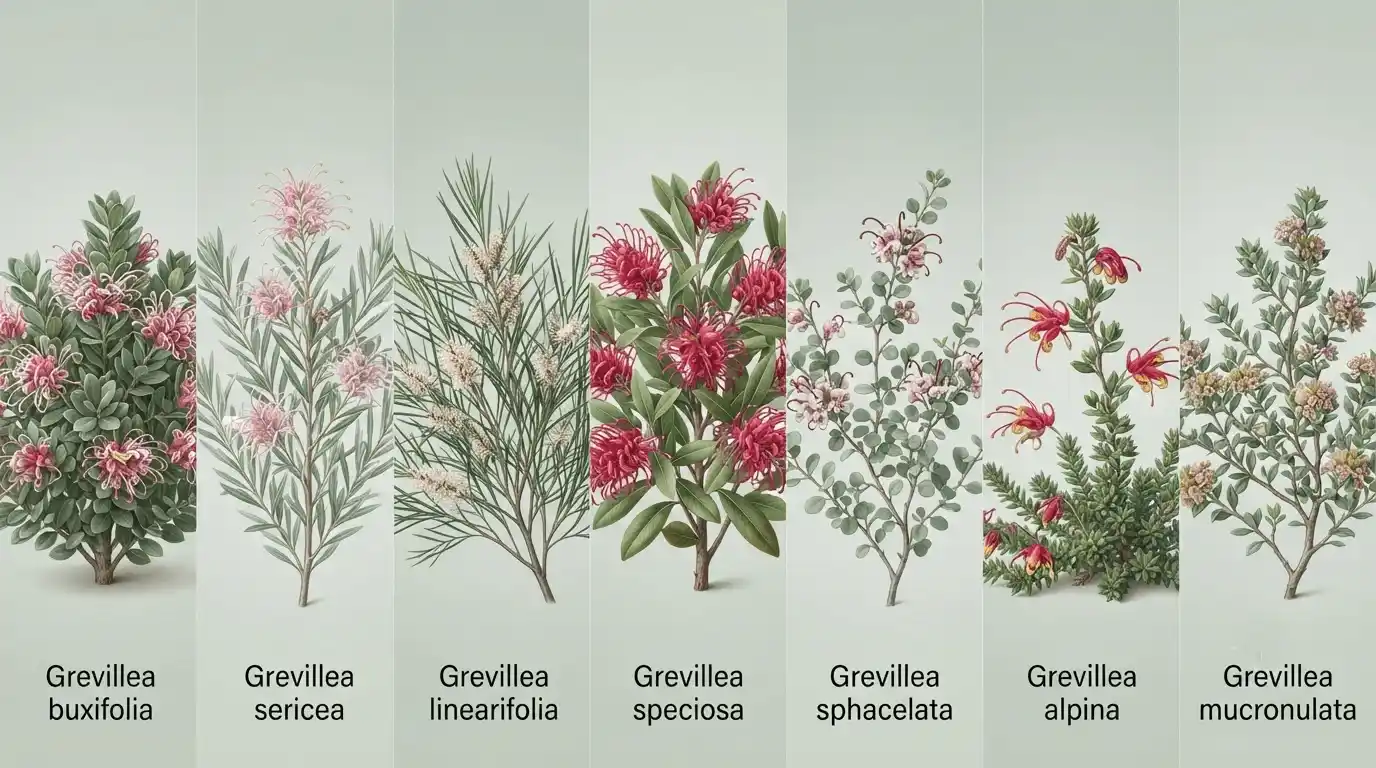
Many Australian Grevilleas share the characteristic spider-like flower shape, making identification challenging for new gardeners. Comparing foliage, flower colour, and growth habit helps distinguish Grevillea buxifolia from closely related species.
| Species | Main Difference | Flower Colour | Growth Habit |
| Grevillea buxifolia | Compact shrub with box-like leaves | White to pink | Dense, rounded |
| Grevillea sericea | Narrow silky leaves | Pink to red | Upright, open |
| Grevillea linearifolia | Long, narrow linear foliage | White to pale pink | Upright shrub |
| Grevillea speciosa | Larger flowers and broader leaves | Bright pink to red | Larger spreading shrub |
| Grevillea sphacelata | More open branching and elongated leaves | Pink to red | Upright shrub |
| Grevillea alpina | Small, variable shrub with tubular flowers | Red, yellow, cream combinations | Compact and spreading |
| Grevillea mucronulata | Sharply pointed leaves with finer branching | Pink to red | Medium-sized shrub |
Grevillea sericea
Grevillea sericea, often known as silky grevillea, is recognised by its narrow, silky-textured leaves and upright growth. Compared with Grevillea buxifolia, it has a looser structure and typically produces brighter pink or red flowers.
Grevillea linearifolia
Grevillea linearifolia develops long, slender leaves that clearly distinguish it from the shorter, box-like foliage of Grevillea buxifolia. It is often slightly taller and more upright.
Grevillea speciosa
Grevillea speciosa produces noticeably larger flower clusters with bold pink to red colouring. It also grows into a larger shrub, making it better suited to spacious gardens.
Grevillea sphacelata
Grevillea sphacelata has narrower foliage and a more open branching habit. While the flowers remain spider-like, the overall plant appears less dense than Grevillea buxifolia.
Grevillea alpina
Grevillea alpina differs considerably by producing compact tubular flowers that often combine red, yellow, green, or cream colours. It usually forms a lower-growing shrub suitable for borders and rockeries.
Grevillea mucronulata
Grevillea mucronulata features pointed leaves and a finer branch structure. Although closely related, it generally develops a taller, less rounded form.
Understanding these differences helps gardeners choose the most suitable Grevillea for available space, climate, and desired landscape effect.
Landscaping Uses for Grevillea buxifolia
The compact size, evergreen foliage, and extended flowering season make Grevillea buxifolia one of the most versatile Australian native shrubs for residential and public landscapes.
Native Gardens
Its natural appearance allows it to blend seamlessly with other Australian native species such as Banksias, Callistemons, Correas, and Westringias. It contributes year-round texture while supporting local wildlife.
Rock Gardens
The shrub thrives in rocky, free-draining soils where many traditional ornamental plants struggle. Its dense habit softens hard landscape features and adds seasonal colour.
Pollinator Gardens
The nectar-rich flowers attract:
- Honeyeaters
- Native bees
- Butterflies
- Hoverflies
- Other beneficial insects
Including Grevillea buxifolia in pollinator-friendly gardens increases seasonal food sources for wildlife.
Coastal Landscapes
Good tolerance of sandy soils, salt-laden air, and dry conditions makes this species well suited to many coastal gardens, provided drainage remains excellent.
Low Hedges
Regular light pruning allows Grevillea buxifolia to form attractive informal hedges. Unlike highly formal hedge plants, it retains a natural appearance while continuing to flower.
Wildlife Habitat
Dense branching offers shelter for:
- Small native birds
- Beneficial insects
- Lizards
- Garden wildlife
Combined with nectar production, the shrub becomes an important habitat plant in biodiversity-focused gardens.
Companion Planting
Excellent companion plants include:
- Kangaroo paws (Anigozanthos)
- Westringia
- Correa
- Banksia
- Lomandra
- Dianella
- Native grasses
These species share similar growing requirements and create visually balanced, drought-tolerant landscapes.
Common Growing Problems and Solutions
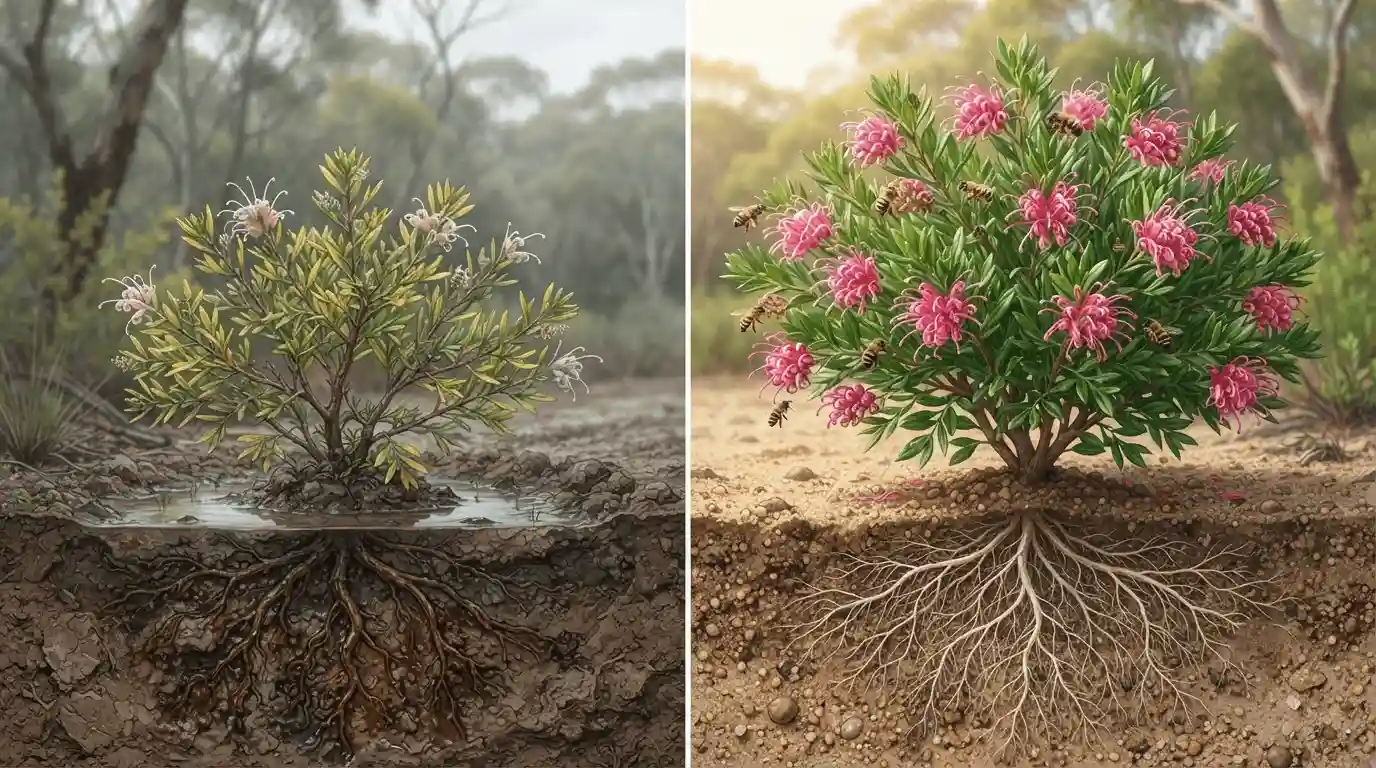
Although Grevillea buxifolia is generally hardy, unsuitable growing conditions can lead to several common problems. Most issues are preventable with proper planting and maintenance.
Yellow Leaves
Yellowing foliage is often the first sign that growing conditions need attention.
Common Causes
- Poor drainage
- Waterlogged soil
- Nutrient imbalance
- Root stress
- Reduced root oxygen
Solutions
- Improve drainage.
- Reduce watering frequency.
- Avoid excessive fertiliser.
- Check for root disease if symptoms persist.
Root Rot
Root rot is one of the most serious problems affecting Grevillea buxifolia.
Causes
- Overwatering
- Heavy clay soils
- Poor drainage
- Standing water around roots
Prevention
- Plant in well-drained soil.
- Water deeply but infrequently.
- Avoid low-lying sites where water collects.
- Use raised beds or mounds in poorly drained gardens.
Healthy root systems are essential for long-term flowering and drought tolerance.
Poor Flowering
Plants that produce abundant foliage but few flowers usually have an environmental issue.
Possible Causes
- Insufficient sunlight
- High-phosphorus fertiliser
- Excess nitrogen
- Incorrect pruning
- Immature plants
Solutions
- Move or plant in full sun where possible.
- Apply only low-phosphorus native fertiliser.
- Prune lightly immediately after flowering.
- Avoid heavy feeding.
In our experience, insufficient sunlight is the most common reason mature plants fail to flower heavily. Even a few additional hours of direct sunlight each day can noticeably improve blooming.
Pest Issues
Grevillea buxifolia experiences relatively few pest problems but may occasionally be affected by sap-sucking insects.
Common Pests
- Scale insects
- Aphids
Natural Management
- Encourage ladybirds and lacewings, which feed on aphids.
- Remove heavily infested stems if necessary.
- Wash small infestations away with a gentle stream of water.
- Maintain good plant health to improve natural resistance.
Healthy plants growing in suitable conditions are far less likely to experience significant pest damage.
Seasonal Care Tips
Seasonal maintenance helps Grevillea buxifolia remain healthy, flower consistently, and develop a strong, compact growth habit. Although this Australian native shrub is relatively low maintenance, adjusting care throughout the year supports long-term performance.
Spring Growth
Spring is the main growing season for Grevillea buxifolia. As temperatures rise, the shrub produces fresh foliage, vigorous new shoots, and abundant flower buds.
Spring tasks include:
- Inspect plants for winter damage.
- Apply a light application of low-phosphorus native plant fertiliser if required.
- Remove dead or damaged branches.
- Check mulch levels to help conserve soil moisture.
- Monitor for aphids and other sap-sucking insects during new growth.
This is also an excellent time to plant container-grown specimens, provided regular watering is available during establishment.
Summer Watering
Established plants tolerate extended dry periods, but prolonged heatwaves can place stress on young shrubs.
During summer:
- Water deeply during extended dry weather.
- Allow the soil to dry slightly between waterings.
- Avoid frequent shallow watering.
- Water early in the morning to minimise evaporation.
- Keep mulch away from the main stem to improve airflow.
Well-established plants often require very little irrigation, making Grevillea buxifolia an excellent choice for water-wise gardens.
Autumn Planting
Autumn is widely considered the best season for planting Australian native shrubs.
Cooler temperatures and increased seasonal rainfall allow roots to establish before the following summer.
Benefits of autumn planting include:
- Reduced transplant stress
- Improved root development
- Lower watering requirements
- Better drought tolerance during the first summer
Greenery Inside recommends autumn planting whenever possible because plants typically establish faster and require less supplemental irrigation than those planted in late spring or summer.
Winter Protection
Mature Grevillea buxifolia generally tolerates light frosts, but young plants benefit from additional protection in colder regions.
Winter care includes:
- Reducing watering as growth slows.
- Protecting young plants during severe frost events.
- Avoiding heavy pruning immediately before cold weather.
- Ensuring drainage remains excellent throughout wetter months.
In regions with harsh winters, planting near a sunny wall or in a sheltered position can reduce frost damage while still providing adequate sunlight.
Is Grevillea buxifolia the Right Plant for Your Garden?
Grevillea buxifolia is an excellent choice for gardeners seeking a hardy, evergreen Australian native shrub that combines ornamental beauty with ecological value. Its manageable size, extended flowering season, and relatively simple care requirements make it suitable for a wide range of landscapes.
It is particularly well suited to gardeners who prefer sustainable, drought-tolerant plantings that support local wildlife.
Small Gardens
Because it typically reaches only 1–2 metres in height and width, Grevillea buxifolia fits comfortably into compact suburban gardens.
Its naturally rounded form reduces the need for frequent pruning while providing year-round structure.
Native Landscapes
The shrub blends naturally with other Australian native plants, creating visually cohesive landscapes that reflect local ecosystems.
Suitable companions include:
- Banksias
- Callistemons
- Correas
- Westringias
- Kangaroo paws
- Lomandras
- Dianellas
Wildlife-Friendly Gardens
The nectar-rich flowers provide an important food source for:
- Honeyeaters
- Native bees
- Butterflies
- Hoverflies
- Other beneficial insects
Dense foliage also offers valuable shelter for small birds and native wildlife.
Drought-Tolerant Gardens
Once established, Grevillea buxifolia requires relatively little supplemental watering.
Its natural adaptation to Australia’s nutrient-poor soils and dry climate makes it ideal for:
- Water-wise gardens
- Xeriscaping
- Low-irrigation landscapes
- Sustainable native gardens
Coastal Gardens
Gardeners living near the coast often appreciate the shrub’s tolerance of:
- Sandy soils
- Salt-laden breezes
- Wind exposure
- Dry conditions
Providing well-drained soil remains the most important factor for long-term success.
Low-Maintenance Planting
For busy gardeners, Grevillea buxifolia offers several advantages:
- Evergreen foliage
- Long flowering season
- Minimal fertiliser requirements
- Moderate pruning needs
- Good drought tolerance
- Excellent wildlife value
These characteristics make it one of the more reliable Australian native shrubs for both beginner and experienced gardeners.
Conclusion
Grevillea buxifolia is a versatile Australian native shrub valued for its distinctive spider-like flowers, evergreen foliage, and adaptability to a wide range of garden settings. Its compact growth habit, extended flowering period, and ability to attract birds, bees, and other beneficial pollinators make it an outstanding choice for wildlife-friendly and low-maintenance landscapes.
Success with Grevillea buxifolia depends on providing conditions similar to its natural habitat. Well-drained soil, full sun, careful watering during establishment, and low-phosphorus fertiliser encourage healthy growth and abundant flowering. Regular light pruning after flowering helps maintain a dense, attractive shape without reducing future blooms.
Whether used in native gardens, coastal landscapes, rockeries, or informal hedges, Grevillea buxifolia delivers year-round ornamental appeal while supporting local biodiversity. For gardeners seeking a resilient flowering shrub that combines beauty with ecological benefits, this Australian spider flower remains one of the most rewarding native plants to grow.
Frequently Asked Questions
How tall does Grevillea buxifolia grow?
Grevillea buxifolia typically grows 1–2 metres (3–6.5 feet) tall with a similar spread. Its naturally compact, rounded habit makes it suitable for small gardens, native borders, informal hedges, and wildlife-friendly landscapes. Plant size may vary slightly depending on climate, soil quality, and pruning practices.
Is Grevillea buxifolia suitable for coastal gardens?
Yes. Grevillea buxifolia performs well in many coastal environments because it tolerates sandy soils, salt-laden air, and dry conditions once established. For best results, plant it in a sunny location with excellent drainage, as prolonged waterlogging is far more damaging than coastal exposure.
Can Grevillea buxifolia be grown from seeds?
Yes. Fresh grevillea buxifolia seeds can be sown in a well-drained native seed-raising mix. Germination usually occurs within 3–8 weeks under warm conditions, although timing varies depending on seed freshness and temperature. Young seedlings should be kept evenly moist but never waterlogged.
How is Grevillea buxifolia different from Grevillea sericea?
While both species produce spider-like flowers, Grevillea buxifolia has broader, box-like leaves and a denser, rounded growth habit. Grevillea sericea, commonly called silky grevillea, has narrow silky foliage, a more upright form, and typically brighter pink or red flowers. These differences make identification easier when the plants are growing side by side.
When does Grevillea buxifolia flower?
Flowering generally begins in late winter or early spring and continues through spring into early summer. In regions with mild climates, scattered flowers may appear during much of the year. Full sun and light annual pruning after flowering usually encourage the best floral display.
Does Grevillea buxifolia attract birds and pollinators?
Yes. The nectar-rich flowers are highly attractive to honeyeaters, native bees, butterflies, hoverflies, and other beneficial pollinators. Dense evergreen foliage also provides shelter for small birds, making the shrub an excellent addition to wildlife-friendly gardens.
What is the best soil for Grevillea buxifolia?
The ideal soil is well-drained, sandy, gravelly, or rocky, with a slightly acidic to neutral pH. Heavy clay soils should be improved or avoided because they retain excessive moisture and increase the risk of root rot. Like many members of the Proteaceae family, Grevillea buxifolia also benefits from low-phosphorus soils and fertilisers formulated specifically for Australian native plants.