Bellus—Ficus pumila ‘Bellus’, a variegated creeping fig cultivar—thrives in bright, indirect light with evenly moist, well-draining soil enriched with perlite, says Greenery Inside. Water once the top layer of soil dries slightly; never let it dry out completely. It favors moderate humidity, warm temperatures, and regular pruning to manage its fast, trailing growth habit.
Native to East Asia, Ficus pumila naturally shifts from a small-leaved juvenile trailing form to a larger-leaved, fig-bearing climbing form once it’s given a surface to grip, so most growers prune ‘Bellus’ to keep it in its delicate juvenile state. Like all ficus species, it exudes a milky latex sap that’s toxic if ingested and can irritate skin, so it’s best kept away from pets and children.
By Greenery Inside | Plant Care & Gardening Expert
Last Updated: August 2026
Quick Summary
- Bellus is a white-edged Ficus pumila cultivar with a medium growth rate.
- Give it bright indirect light and moist but well-drained soil.
- Water as the upper soil begins to dry; prolonged dryness can cause leaf drop.
- Ficus plants are mildly toxic or irritating to pets, and their milky sap can irritate skin.
What Is a Bellus Plant? (Ficus Pumila ‘Bellus’ Explained)
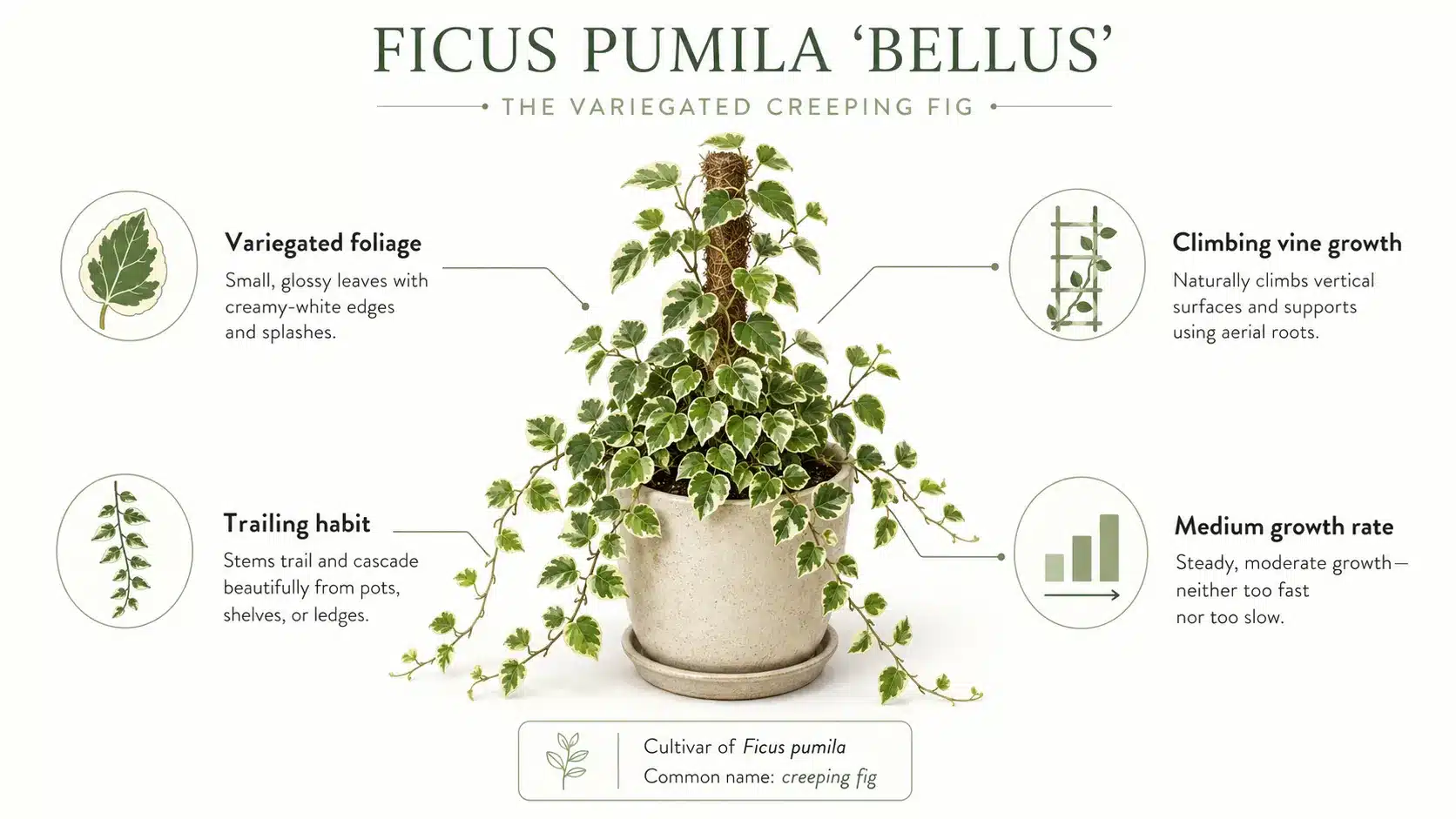
Ficus pumila ‘Bellus’, also called Bellus ficus or Bellus creeping fig, is a variegated evergreen vine. Costa Farms identifies it by its white-edged leaves and medium growth rate. “Ficus primula” is a common misspelling; the correct botanical name is Ficus pumila.
Ficus pumila ‘Bellus’, also called Bellus ficus or Bellus creeping fig, is a variegated cultivar of Ficus pumila, an evergreen climbing species in the mulberry family, Moraceae.
The species belongs to the mulberry family, Moraceae, and is native to East Asia. It naturally grows as a climber or creeping groundcover.
Bellus vs. Standard Creeping Fig
Bellus has distinctive white-edged foliage and a medium growth rate, while standard Ficus pumila has green leaves and typically grows faster.
Does Bellus Ficus Climb?
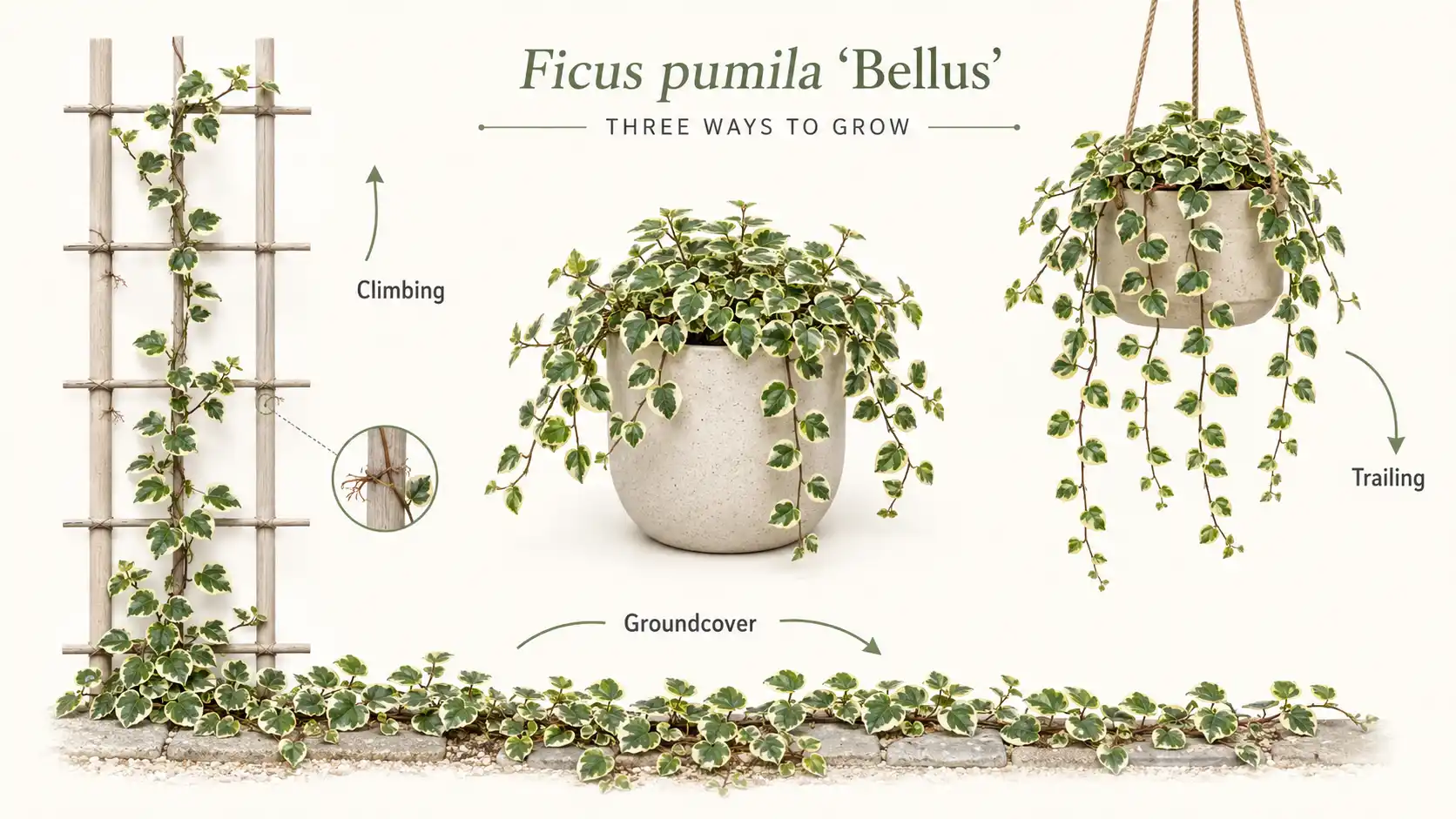
Yes. Bellus Ficus can climb because Ficus pumila produces short attaching roots that grip suitable surfaces. It can use a trellis or moss pole, trail from a basket, or spread as groundcover.
| Feature | Bellus | F. benjamina | Standard F. pumila |
| Growth habit | Climbing/trailing vine | Upright tree | Vine/groundcover |
| Leaves | Small, white-edged | Glossy green | Small, green |
| Light | Bright indirect | Bright indirect | Medium to bright |
| Indoor suitability | Excellent | Excellent | Excellent |
| Safety | Irritating Ficus sap | Toxic/irritating | Irritating Ficus sap |
Bellus Plant Care Guide (Light, Water, Soil, Humidity)
Light Requirements
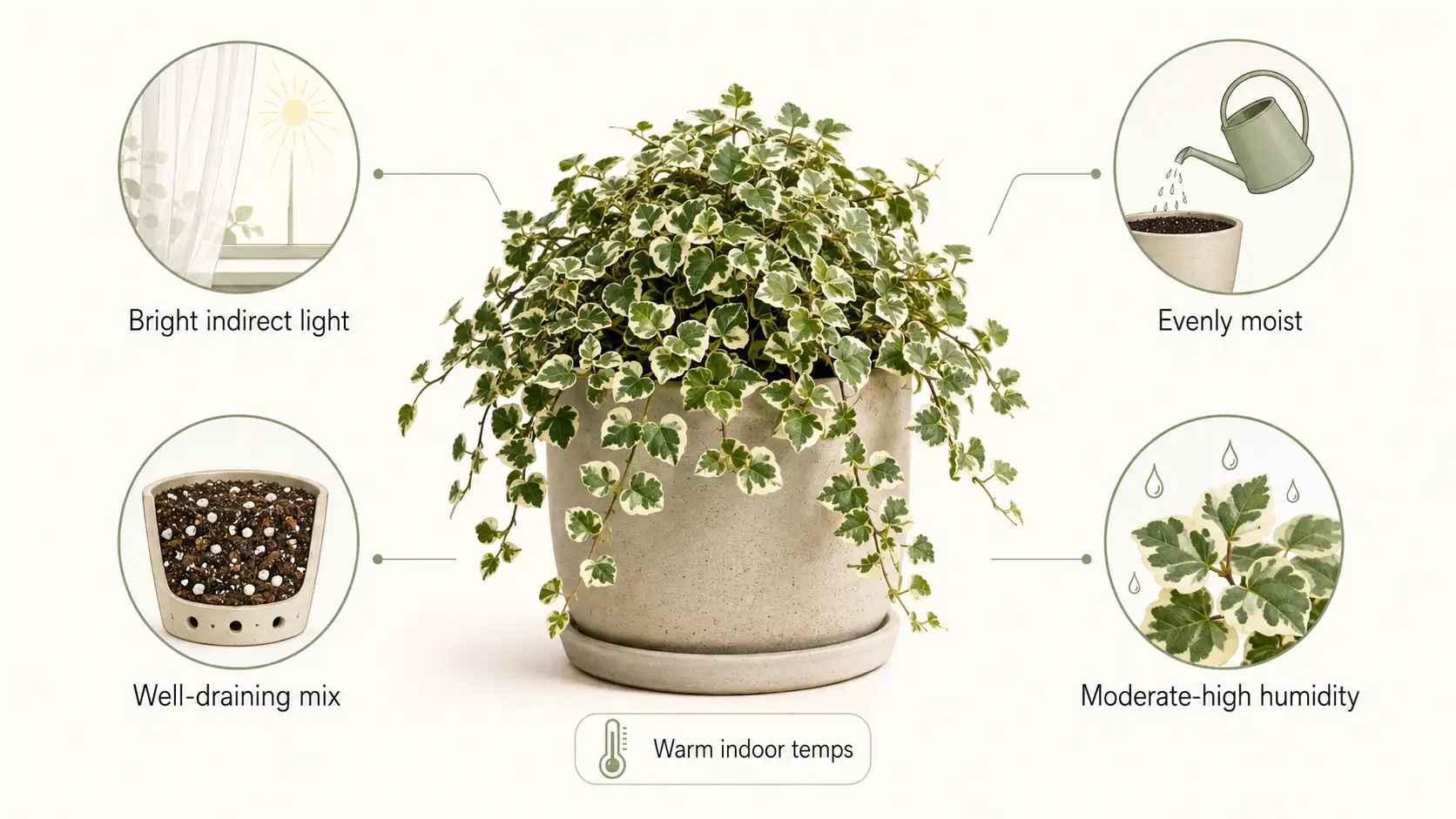
Bellus performs best in bright indirect or filtered light. Protect its variegated foliage from intense afternoon sunlight behind glass, which can cause scorching.
Bellus Plant Care Watering
Water Bellus when approximately the top inch of potting mix begins to dry, then water thoroughly and allow excess moisture to drain. Do not let the root ball completely dry or remain continuously waterlogged.
Greenery Inside recommends checking soil moisture by touch before watering instead of following a rigid weekly schedule.
Soil & Humidity
Use a moisture-retentive but well-draining houseplant mix. Adding perlite can increase aeration. Moderate-to-high humidity helps Bellus maintain healthy foliage and reduces the risk of dry, crispy leaf edges. If your indoor air is particularly dry, learn how to increase humidity for plants naturally and with humidifiers to create a more stable growing environment.
Bellus Plant Care Indoors
Place Bellus near filtered light and away from heating vents, air conditioners, and cold drafts. Choose a container with drainage holes and repot when roots substantially fill the pot, commonly around every one to two years for actively growing plants.
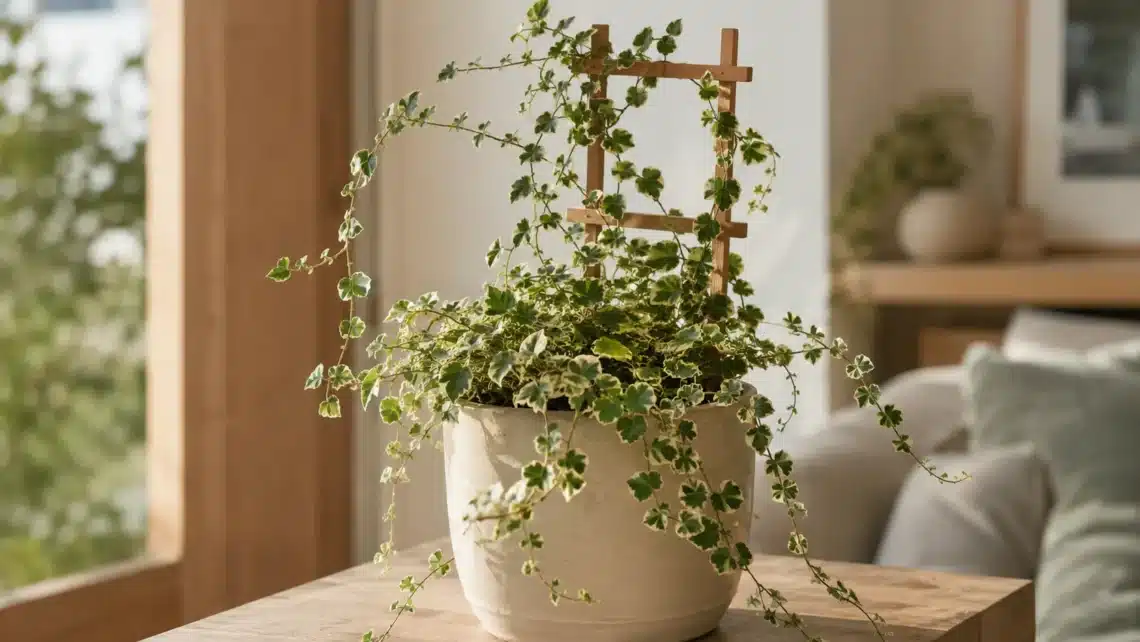
If you prefer trailing houseplants that can also be displayed from shelves or hanging containers, our Swedish ivy plant care guide covers another popular option for indoor greenery.
- Fertilizer: Feed lightly during spring and summer according to label directions.
- Drainage: Never leave the container standing in runoff.
- Temperature: Maintain stable warmth; RHS advises keeping ornamental figs generally above 10°C (50°F).
2026 care note: Current RHS guidance continues to favor filtered light and moist, well-drained growing media for variegated creeping figs. Bellus fits well into many indoor plant collections because its compact leaves and flexible vines work in pots, hanging containers, and vertical displays. For broader guidance on selecting and maintaining indoor species, see our guide to house plants.
Growth Rate and Size
Bellus has a medium growth rate, unlike standard Ficus pumila, which is generally faster-growing. Outdoors, the species can climb approximately 8–15 feet under favorable conditions; pruning and container size keep indoor plants more compact.
Does Creeping Fig Stay Green All Year?
Yes. Creeping fig is evergreen, meaning healthy plants retain foliage throughout the year. Indoor growth usually slows during cooler, darker periods, so watering should also decrease somewhat without allowing the soil to dry completely.
Common Bellus / Creeping Fig Problems (Problem-Solution Coverage)
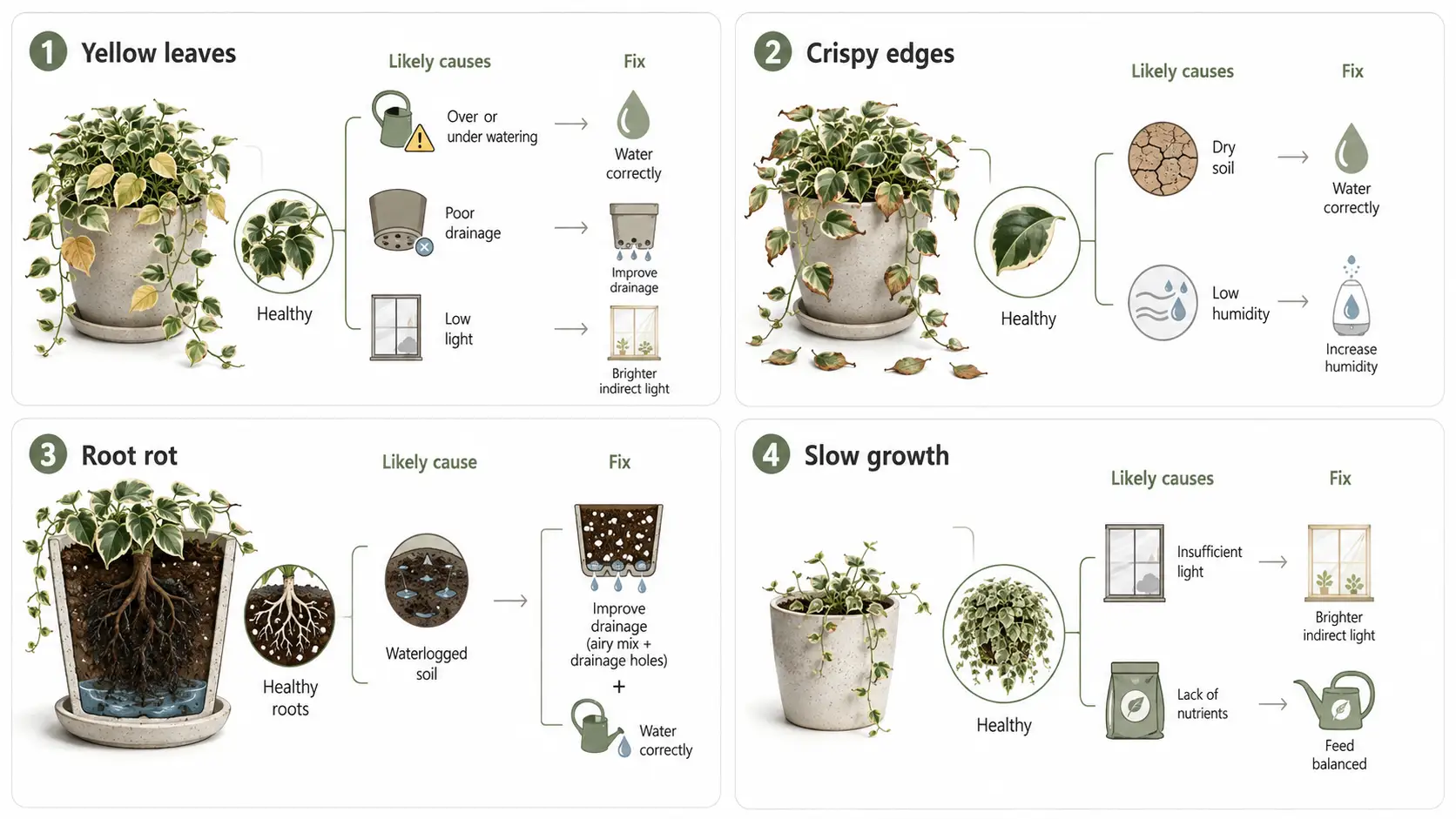
- Yellow leaves: Check overwatering, poor drainage, low light, drafts, or sudden environmental changes.
- Leaf drop or crispy edges: Often associated with underwatering, dry air, or drafts.
- Root rot: Prevent prolonged waterlogging and always use drainage holes.
- Slow or stalled growth: Improve available light first; fertilize lightly only during active growth.
Greenery Inside recommends changing one care variable at a time when troubleshooting so the actual cause is easier to identify.
Pruning, Propagation, and Trellis Support
Creeping fig tolerates pruning well. Trim long vines to control size and encourage branching, and wear gloves because cut stems release irritating milky sap. Stem or semi-hardwood cuttings can be propagated during spring or summer.
Guide young vines onto a moss pole or trellis if you want vertical growth. Outdoors, attaching roots can bond directly to porous surfaces. Greenery Inside recommends removable indoor supports rather than allowing the vine to attach permanently to painted walls.
Is Creeping Fig a Good Choice for Your Space?
Creeping fig can make an effective evergreen groundcover in warm climates, but its vigorous spread and attachment habit require management. Gardeners looking for another decorative vine with contrasting foliage can also explore variegated English ivy, although its growth behavior and care requirements differ from creeping fig.
The evidence-backed structural concern is its short adhesive rootlets, which can cement the vine tightly to porous surfaces. This is different from simply describing creeping fig as having a large, tree-like invasive root system. Avoid allowing it to attach to fragile mortar, deteriorating masonry, or surfaces requiring regular repainting.
Partial or dappled shade is tolerated outdoors, but deep shade generally reduces growth and variegation quality.
| Use | Main Advantage | Main Risk |
| Indoor pot | Easy to control | Needs steady moisture |
| Groundcover | Dense evergreen coverage | Vigorous spread |
| Wall climber | Strong surface coverage | Adhesive roots |
Bellus vs. Related Ficus Plants
Bellus is not a weeping fig. Bellus is Ficus pumila ‘Bellus’, a small-leaved climbing or trailing cultivar. Weeping fig is Ficus benjamina, an upright evergreen tree commonly maintained at about 2–10 feet indoors. Both favor bright indirect light, but their growth forms and space requirements differ substantially.
Conclusion
Successful bellus plant care comes down to bright indirect light, evenly moist but well-drained soil, adequate humidity, and regular pruning. Bellus differs from standard creeping fig through its white-edged foliage and medium growth rate. Maintain a consistent watering rhythm, protect the foliage from harsh direct sun, and provide support when climbing growth is desired.
FAQs
1. Does Bellus Ficus climb?
Yes. Bellus Ficus climbs using short attaching roots and can be trained onto trellises, moss poles, or suitable walls.
2. How often should you water a Bellus plant?
Water when approximately the upper inch of potting mix begins to dry. Check soil moisture rather than following a fixed schedule.
3. Why are my Bellus plant’s leaves turning yellow?
Common causes include watering stress, poor drainage, insufficient light, drafts, and sudden environmental changes.
4. Is creeping fig a good ground cover?
Yes. In suitable warm climates, creeping fig creates dense evergreen coverage, although regular pruning may be necessary to control its spread.
5. Can you cut back creeping fig, and how hard?
Yes. Creeping fig tolerates pruning well. Trim routinely to control growth and make heavier reductions while the plant is healthy and actively growing.
6. Does creeping fig have invasive roots?
Its more relevant structural concern is vigorous spreading growth and adhesive climbing rootlets rather than a large tree-like root system. Avoid allowing it to establish on vulnerable porous surfaces.