Introduction to the Bergenia Plant
What is a bergenia plant?
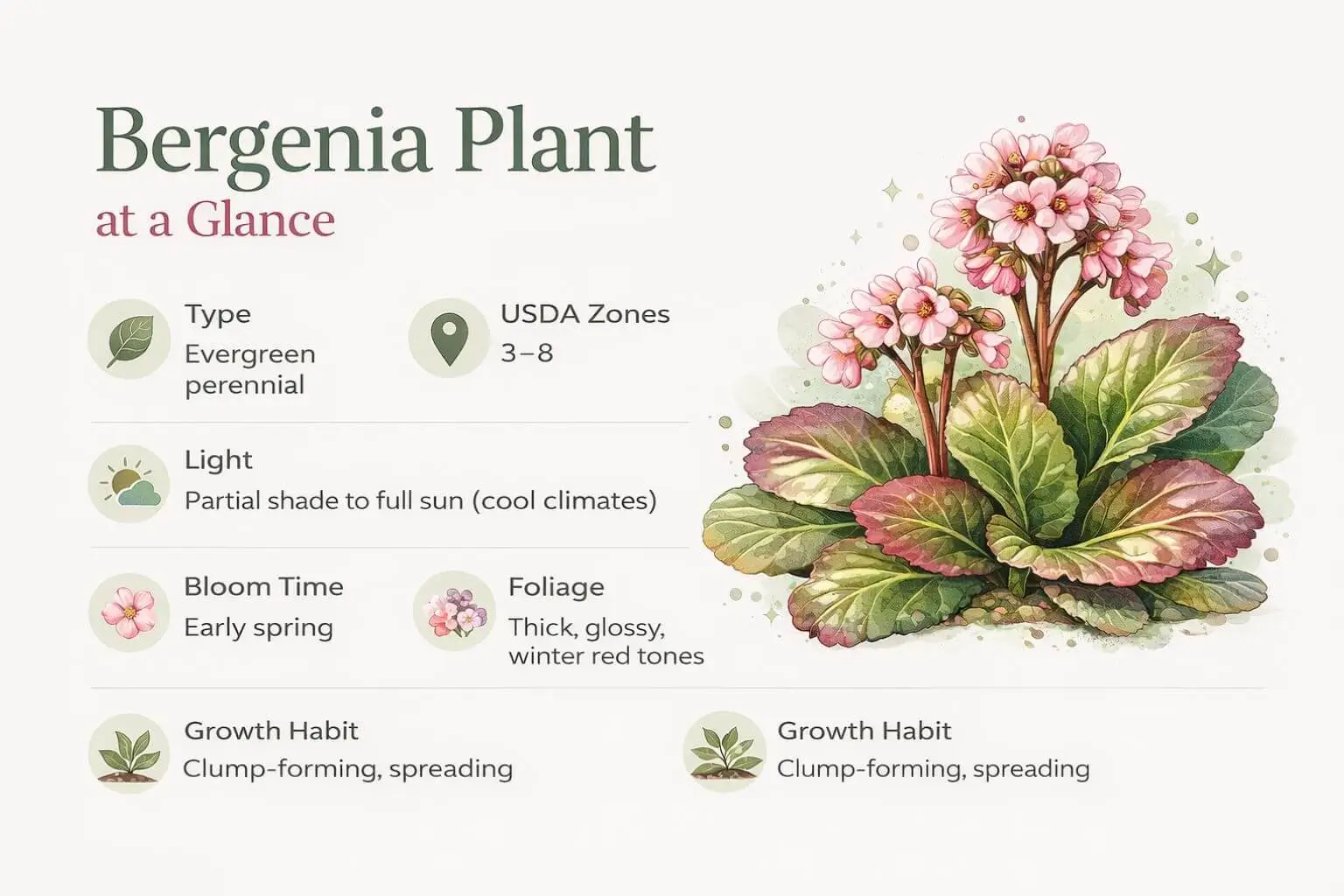
Bergenia is a clump-forming evergreen perennial known for its large, leathery leaves and early spring flowers. It thrives in a wide range of climates and is commonly grown for ornamental landscaping.
Why gardeners love bergenia perennials for year-round interest
- Evergreen foliage provides structure in winter
- Color-changing leaves add seasonal appeal
- Early blooms brighten gardens after winter
- Low-maintenance growth habit
Overview of its bold bergenia foliage, vibrant bergenia flower, and low-maintenance nature
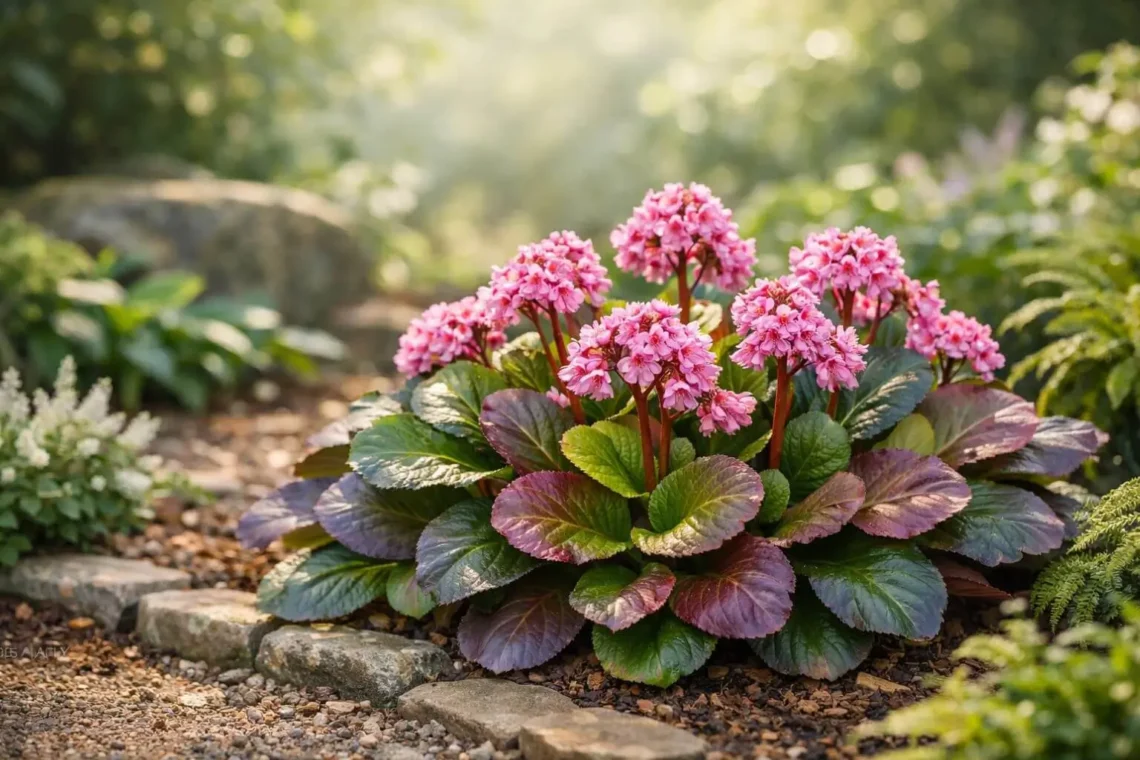
The plant features thick, glossy leaves that remain attractive throughout the year. In spring, tall stems rise above the foliage with clusters of pink, white, or purple blooms. Once established, bergenia requires minimal watering and care, making it ideal for busy gardeners.
Common names
- Bergenia elephant ear plant
- Elephant ear bergenia
- Bergenia elephant ears
Quick summary of why it’s ideal for borders, shade gardens, and ground cover
Bergenia spreads gradually through rhizomes, forming dense mats. It performs well in partial shade, under trees, and along pathways, making it a practical solution for filling gaps in landscape beds.
Bergenia Plant Overview and Characteristics
Botanical Background of Bergenia
Bergenia belongs to the Saxifragaceae family and is classified as a hardy bergenia perennial. Popular species include bergenia purpurascens, known for its reddish foliage tones. It grows in spreading clumps through underground rhizomes, gradually forming ground cover without becoming invasive.
Bergenia Leaves and Foliage Appeal
Bergenia leaves are:
- Thick and glossy
- Broad and rounded
- Evergreen in mild climates
Seasonally, bergenia foliage transitions from deep green to purple or reddish hues, especially in cold weather. This color transformation enhances winter garden interest.
Bergenia Flower and Blooming Season
Flower bergenia displays begin in early spring. The plant produces bell-shaped blooms in:
- Pink
- White
- Purple
These nectar-rich flowers attract bees and early pollinators, supporting garden biodiversity.
Popular Bergenia Varieties to Consider
Classic and Modern Bergenia Varieties
Top bergenia varieties differ in:
- Flower color intensity
- Leaf size and texture
- Growth spread
Some compact bergenia plants are suitable for small gardens, while spreading types work well as ground cover.
Bergenia Purpurascens and Purple Bergenia
Bergenia purpurascens is admired for its dramatic red-purple foliage. Purple bergenia varieties are popular in ornamental landscaping because they add bold contrast against green shrubs and flowering perennials.
Planting Bergenia Successfully
Best Time for Planting Bergenia
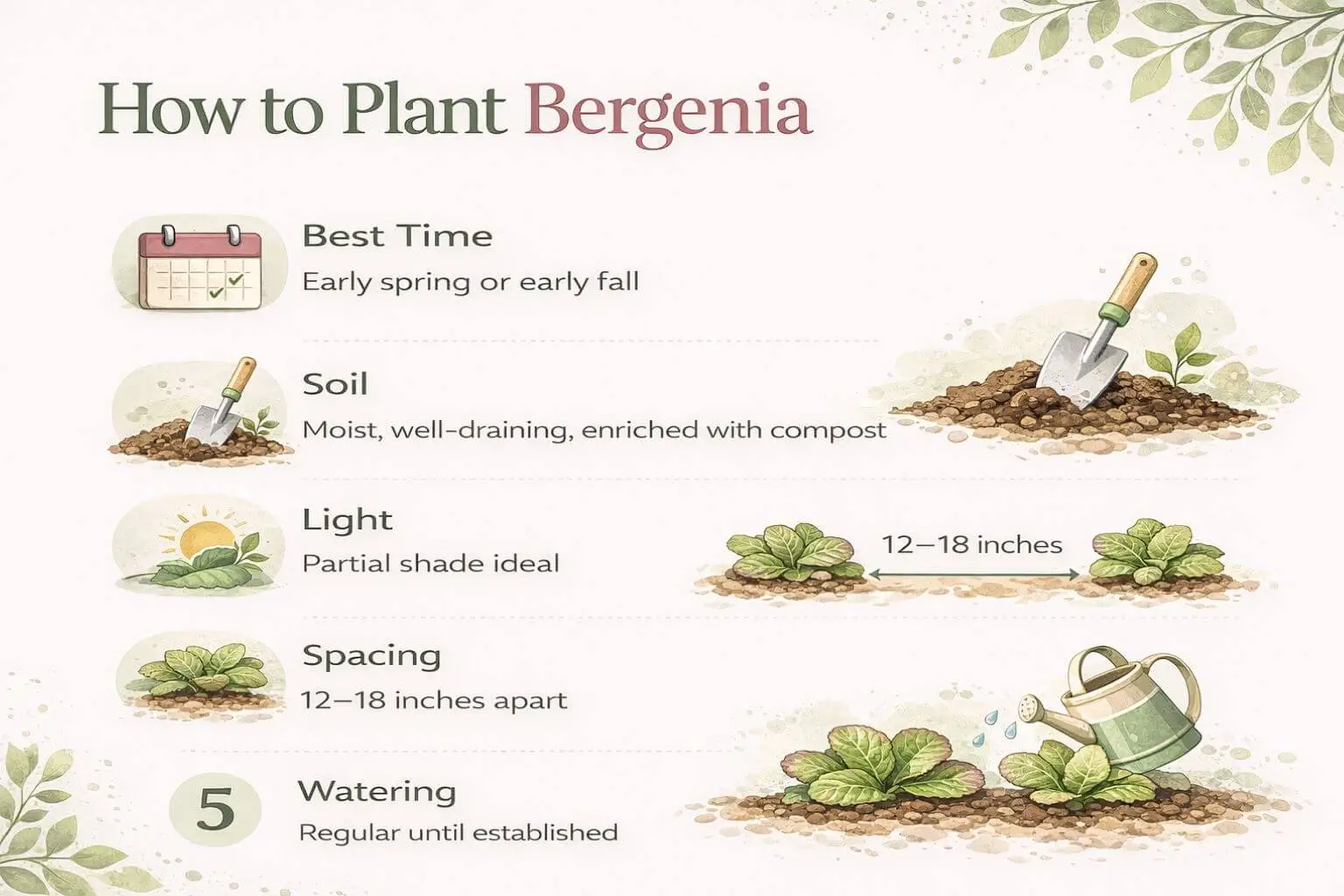
Ideal seasons:
- Early spring
- Early fall
Soil preparation tips:
- Loosen soil before planting
- Incorporate organic matter
- Ensure good drainage
Bergenia Sun or Shade Requirements
Does bergenia sun or shade work best? Bergenia performs best in partial shade. It tolerates full sun in cooler climates but benefits from afternoon shade in hot regions. Balanced light encourages vibrant blooms and healthy foliage.
Recommended Bergenia Zone
Bergenia typically thrives in USDA zones 3–8. It is highly cold tolerant and can handle frost. In warmer zones, proper moisture and partial shade improve performance.
Bergenia Plant Care Guide
Watering and Soil Needs
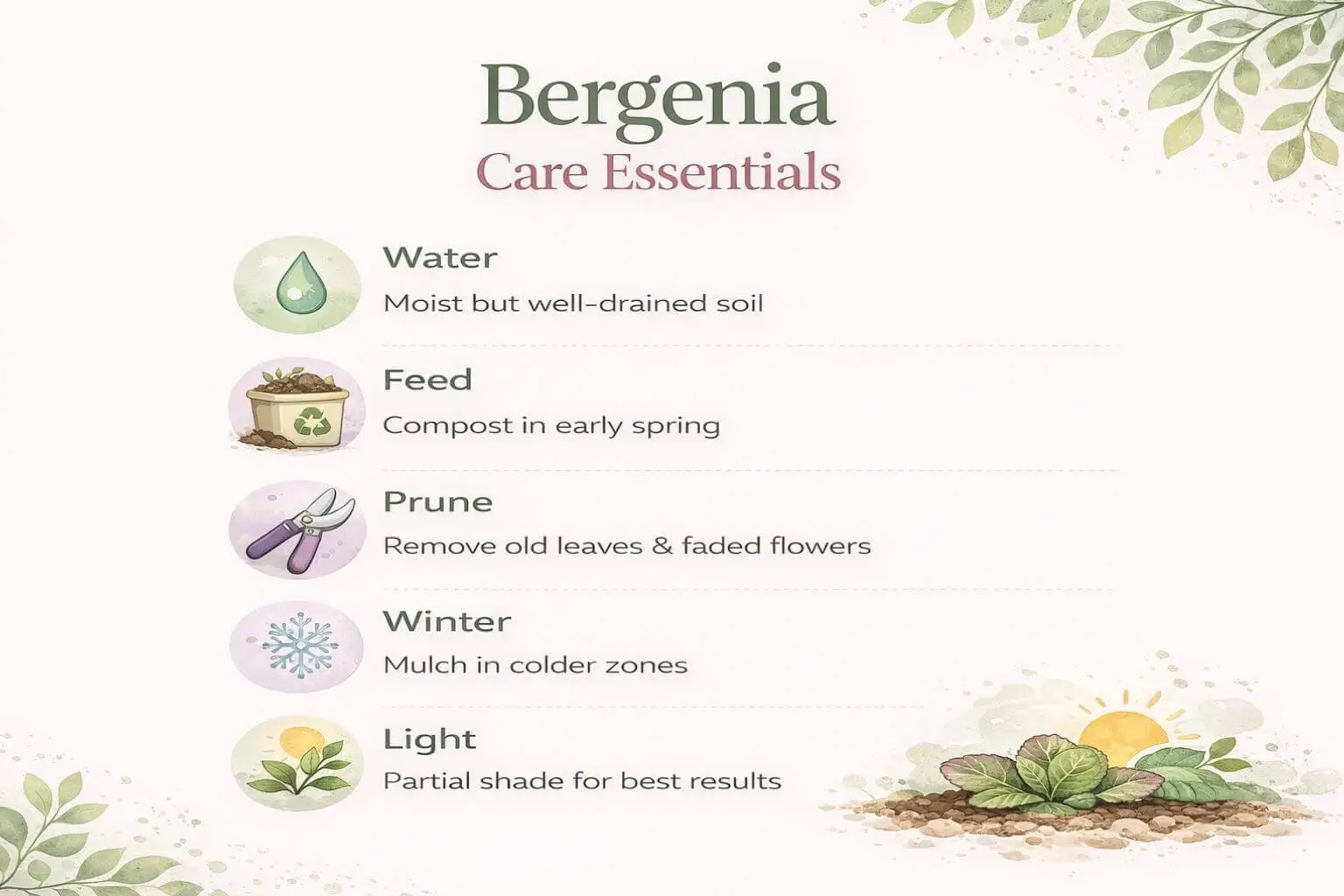
- Prefers moist but well-draining soil
- Avoid waterlogged conditions
- Drought tolerant once established
Fertilizing and Feeding
- Apply compost in early spring
- Use balanced fertilizer if growth is weak
- Organic compost improves soil structure
Caring for Bergenia Throughout the Year
Proper bergenia care includes:
- Winter mulching in colder zones
- Pruning damaged or old bergenia leaf growth
- Removing faded bergenia flower stalks
Consistent bergenia plant care ensures vigorous growth. Caring for bergenia involves minimal effort once established.
Common Bergenia Problems and Solutions
Pest and Disease Issues
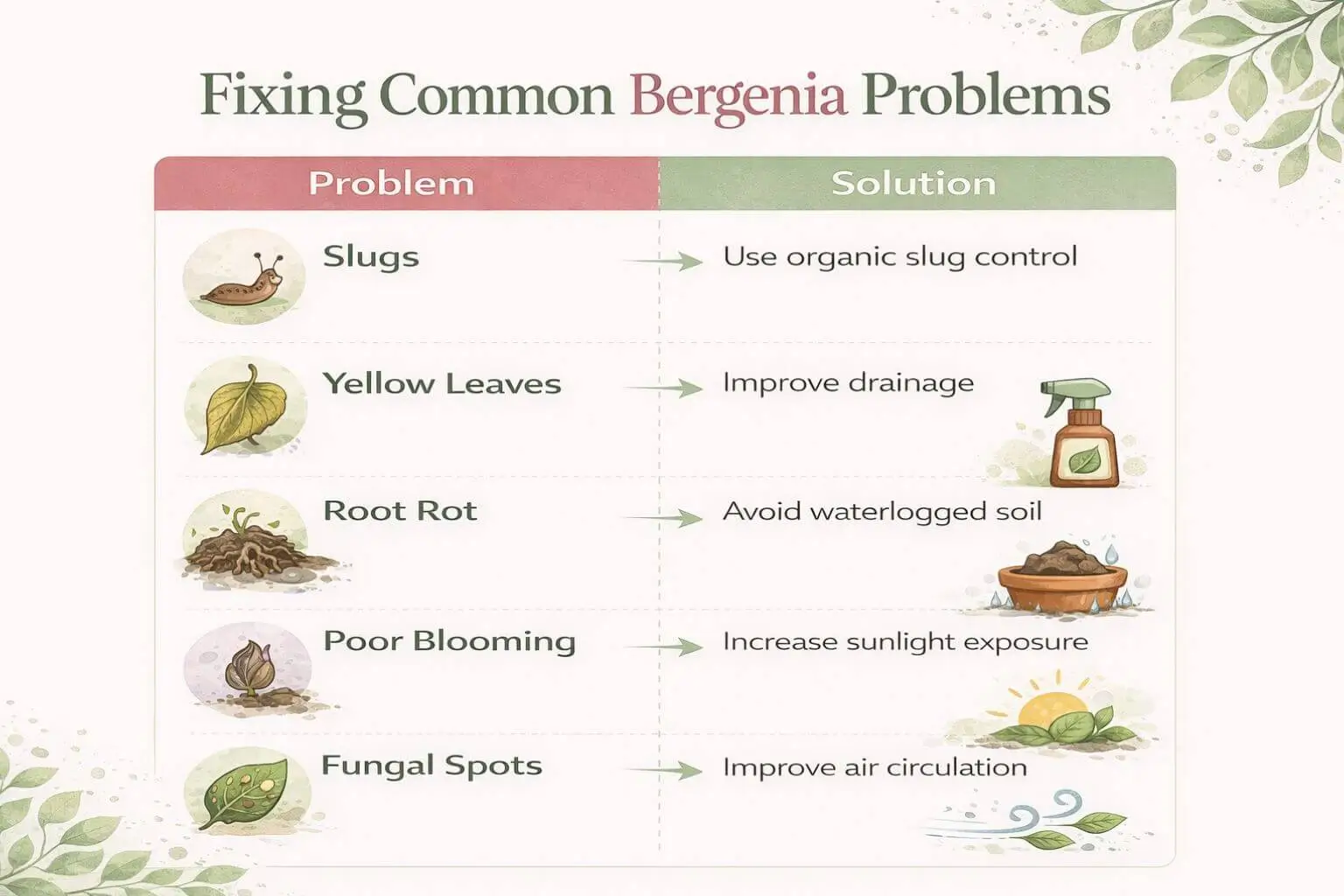
Common bergenia problems include:
- Slugs chewing leaves
- Fungal leaf spots
- Root rot in poorly drained soil
Improve air circulation and drainage to prevent issues.
Yellowing Leaves or Poor Blooming
Causes:
- Overwatering
- Poor drainage
- Insufficient sunlight
Quick fixes:
- Improve soil drainage
- Adjust sunlight exposure
- Reduce excessive watering
Landscaping Ideas with Bergenia Plants
Using Bergenia as Ground Cover
Mass planting bergenia plants creates dense borders. They work well:
- Under trees
- Along shaded pathways
- In woodland gardens
Companion Plants for Bergenia
Pair bergenia with:
- Hostas
- Ferns
- Spring bulbs
Contrast its bold foliage with finer-textured plants for visual balance.
Why Choose Bergenia Perennials for Your Garden?
- Low-maintenance and hardy
- Four-season visual interest
- Ideal for beginner gardeners
- Long lifespan of bergenia perennials
Its adaptability and evergreen structure make it a dependable landscape choice.
Conclusion — Is the Bergenia Plant Right for You?
The bergenia plant combines resilience, bold foliage, and vibrant blooms with simple bergenia care requirements. Its spreading habit, seasonal color changes, and shade tolerance make it suitable for borders, ground cover, and woodland settings. If you want a reliable perennial that delivers long-lasting structure and color, planting bergenia is a practical and rewarding choice. Add long-lasting color with a versatile bergenia plant in your garden today.
Learn more: 7+ Amazing Society Garlic Benefits You Can’t Ignore
Frequently Asked Questions (FAQs)
1. What is the best location to plant a bergenia plant?
Plant bergenia in partial shade with well-draining soil. It performs well under trees or along shaded borders.
2. Does bergenia prefer sun or shade?
Bergenia prefers partial shade but can tolerate full sun in cooler climates with adequate moisture.
3. How do you care for bergenia plants year-round?
Provide moist, well-drained soil, remove old leaves, mulch in winter, and cut back spent flower stalks.
4. What are common bergenia problems and how can they be fixed?
Slugs, fungal spots, and root rot are common. Improve drainage, reduce excess moisture, and increase airflow to resolve issues.
5. Is bergenia a perennial and which zone does it grow in?
Yes, bergenia is a hardy perennial that grows in USDA zones 3–8.
6. How often should you water bergenia plants?
Water regularly during establishment. Once mature, water moderately, allowing soil to dry slightly between watering.