Introduction
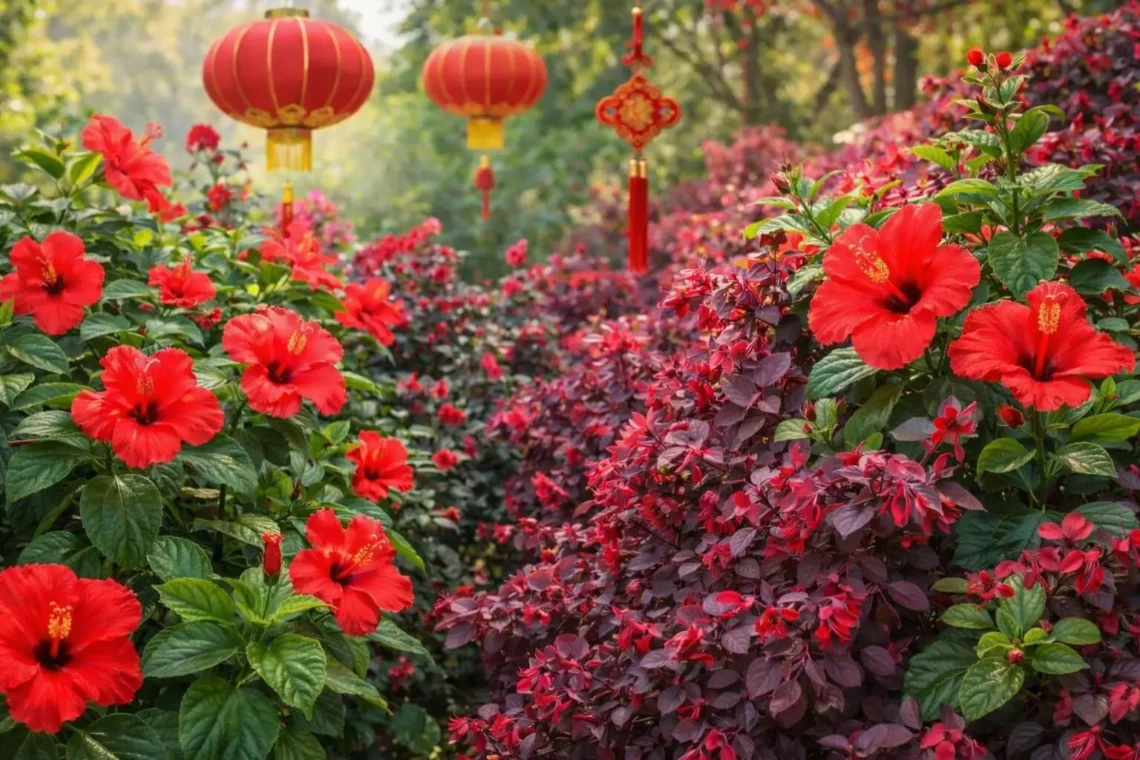
The term Chinese red flower commonly refers to several vibrant red plants native to Asia, most notably Hibiscus rosa-sinensis (China Rose) and Loropetalum chinense ‘Ever Red’ (Chinese fringe flower). These plants are highly valued for their striking red blossoms and cultural significance in China. Red flowers in China symbolize prosperity, good fortune, and happiness, often featured in festivals, celebrations, and traditional gardens. Scientific classifications, botanical features, and variations in plant types highlight the diversity of Asian red flowers. Whether referred to as red Chinese flowers, Chinese red flowers, or Asian red flowers, these plants hold both ornamental and symbolic importance.
What Is the Chinese Red Flower?
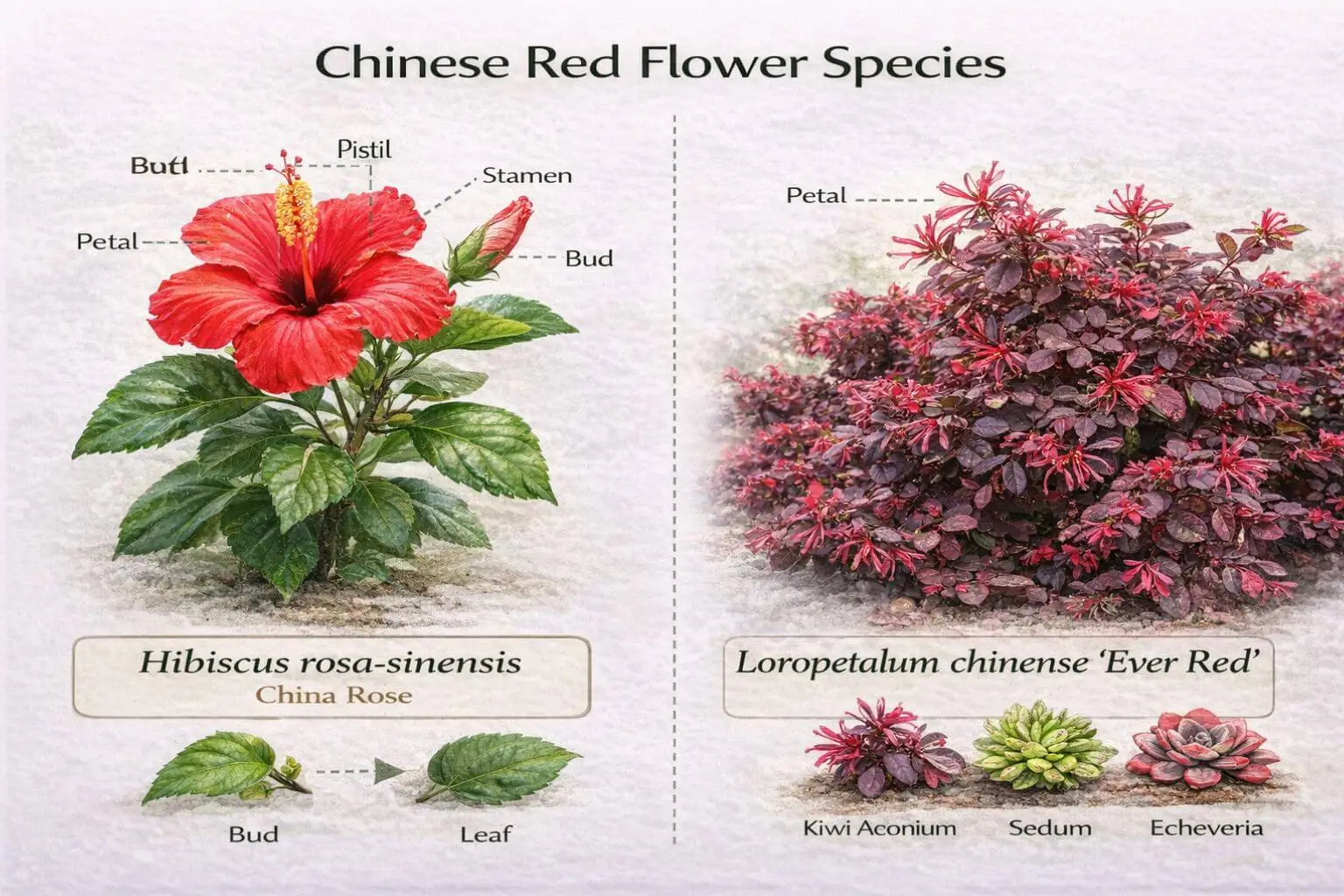
Most Recognized Species — Chinese Hibiscus
The most common Chinese red flower is the Chinese hibiscus. Known scientifically as Hibiscus rosa-sinensis, this species is a tropical flowering plant celebrated for its large, bright red blooms.
Classification of Hibiscus
The Hibiscus rosa-sinensis classification provides botanical clarity:
- Kingdom: Plantae
- Family: Malvaceae
- Genus: Hibiscus
- Species: H. rosa-sinensis
This species is part of the broader Hibiscus rosa sinensis species group and is scientifically referred to as hibiscus rosa sinensis L.
Other Plants Called Chinese Red Flower
Ever Red Loropetalum (Chinese Fringe Flower)
The Ever Red Loropetalum, or Chinese fringe flower, is a popular shrub distinct from hibiscus.
Features:
- Leaf color: deep red foliage
- Flower color: pink-red blooms
- Size: compact shrub, smaller than hibiscus trees
- Growth habits: ornamental shrub, suitable for garden hedges
-
Chinese Red Lotus Flower
The Chinese red lotus flower is another plant referred to as a Chinese red flower, primarily aquatic.
-
Chinese Red Peach Flower
Chinese red peach flowers are occasionally labeled as Chinese red flowers due to their bright red blossoms.
-
Chinese Red Spider Flower
The Chinese red spider flower is another regional variant with elongated petals and striking red color.
Chinese Red Flower Meaning in Chinese Culture
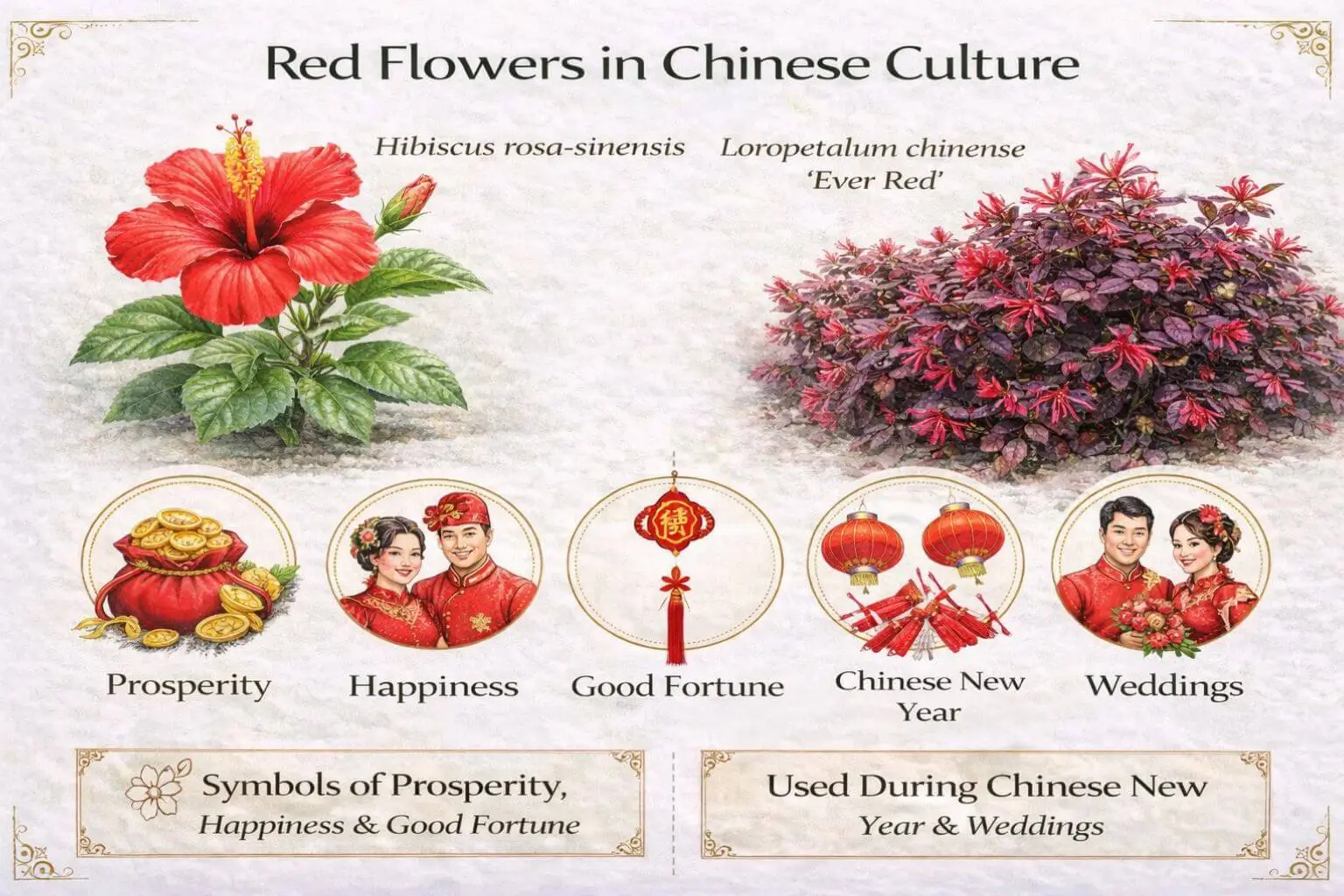
Symbolism of Red Flowers in China
Red flowers in Chinese culture are highly symbolic, representing:
- Prosperity
- Good fortune
- Happiness
- Celebration
Just as red flowers are integral to Chinese New Year, other ornamental plants such as Sweet Flag Grass are celebrated for their vibrant presence and cultural significance.
Red Flowers for Chinese New Year
During Chinese New Year, red flowers are prominently displayed to symbolize luck and positive energy.
Chinese Name for Red Flower
How to Say Red Flower in Chinese
- The Mandarin translation of red flower is 红花 (hóng huā).
- The hibiscus flower in Chinese is 扶桑花 (fú sāng huā), which specifically refers to Hibiscus rosa-sinensis.
Botanical Features of the Chinese Red Flower
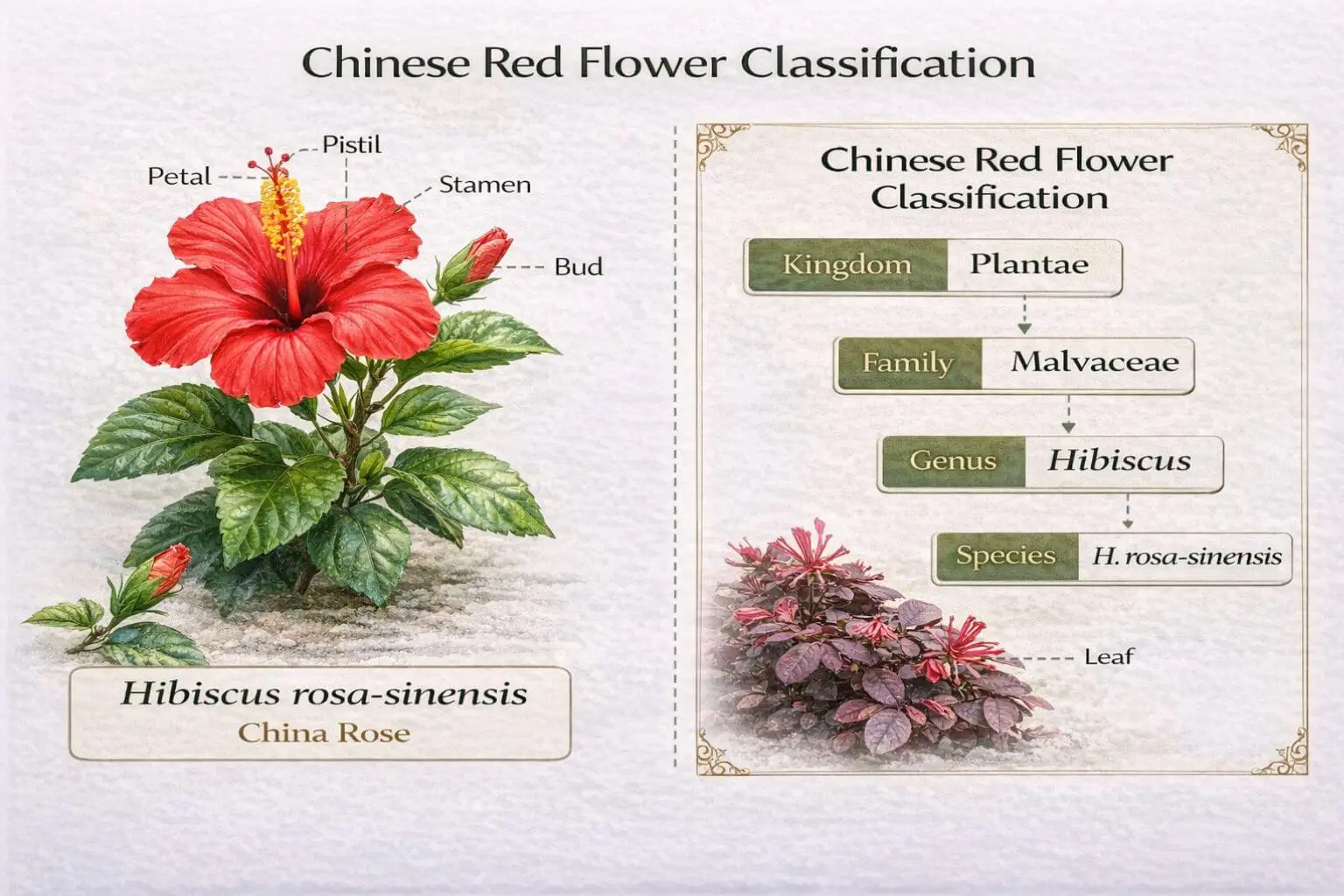
Flower Characteristics
- Large, showy petals
- Bright red coloration
- Tropical flowering habit
Growth & Size
Just like how some tropical and ornamental plants such as the Japanese Sweet Flag Grass thrive in specific climates, Chinese red flowers also require proper sunlight and tropical conditions to flourish.
- Ever Red Loropetalum size: compact shrub
- Hibiscus: shrub vs ornamental tree differences
- Chinese tree with red flowers: can grow several feet tall
- Chinese plant with red flowers: garden and potted varieties
Climate & Growing Conditions
- Native to Asia
- Suitable for tropical and subtropical climates
- Grows well in gardens or as potted ornamental plants
Uses of the Chinese Red Flower
Ornamental Uses
Many gardeners combine hibiscus and fringe flowers with other vibrant plants, similar to arranging Spider Plant or Purple Heart Plant for a visually stunning display.
- Chinese flower arrangement for decoration
- Chinese wedding red flower to symbolize luck and celebration
Traditional Herbal Associations
- Used in Chinese herbal medicine traditions
- Referred to as red flower Chinese herb and red flower Chinese medicine
Chinese red flowers are also used in herbal teas, complementing other plants valued for wellness, like Bamboo Plants or Elephant Ear Plant, which enhance both aesthetics and health benefits in your home.
Flower Tea
- Infused as Chinese flower tea
- Known as red flower tea Chinese or Chinese tea flower
(Informational only — no product claims)
Chinese Red Flower Tattoo Meaning
Red flowers in body art symbolize:
- Love
- Strength
- Cultural pride
Difference Between Hibiscus and Chinese Fringe Flower
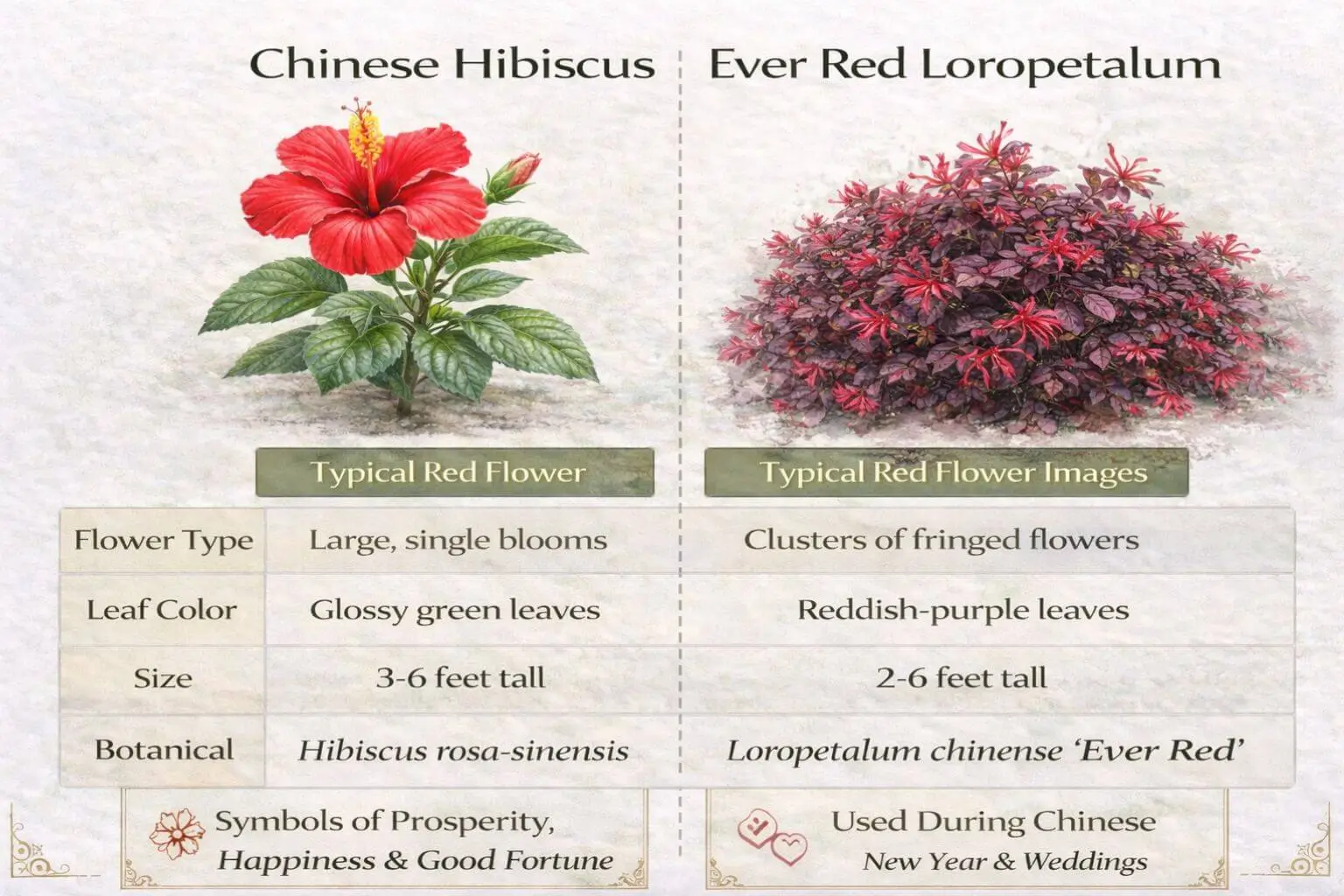
| Feature | Hibiscus (China Rose) | Ever Red Loropetalum (Fringe Flower) |
| Flower Type | Large, single flowers | Small clusters of fringe-like flowers |
| Leaf Color | Green | Red or burgundy |
| Size | Shrub to small tree | Compact shrub |
| Botanical Classification | Hibiscus rosa-sinensis | Loropetalum chinense ‘Ever Red’ |
How the Chinese Red Flower Differs from Other Asian Red Flowers
Clarifies regional confusion between hibiscus, loropetalum, lotus, peach, and spider flowers in Asia. Readers looking for additional plant comparisons, flower care ideas, and decorative garden inspiration can also explore this helpful red flowering plant resource.
Conclusion
The most common Chinese red flower is Hibiscus rosa-sinensis, widely recognized for its vibrant red blooms. Other plants like Loropetalum chinense ‘Ever Red’ are also labeled as Chinese red flowers. Red flowers symbolize luck, prosperity, and happiness in Chinese culture.
Learn more: 6+ Stunning Kiwi Aeonium Care Tips for Vibrant Succulents
FAQs
- What is the scientific name of the Chinese red flower?
The most common Chinese red flower is Hibiscus rosa-sinensis, also known as China Rose. - What does a red flower mean in Chinese culture?
A red flower symbolizes prosperity, happiness, celebration, and good fortune in Chinese tradition. - How do you say red flower in Chinese?
Red flower in Mandarin is written as 红花 (hóng huā). - Is the Chinese red flower the same as hibiscus?
Yes, in most cases the Chinese red flower refers to Chinese hibiscus (Hibiscus rosa-sinensis). - What is Ever Red Loropetalum?
Ever Red Loropetalum is a variety of Loropetalum chinense, commonly called Chinese fringe flower, known for its deep red foliage and pink-red blooms. - Are Chinese red flowers used during Chinese New Year?
Yes, red flowers are commonly displayed during Chinese New Year to symbolize luck and prosperity.