Introduction
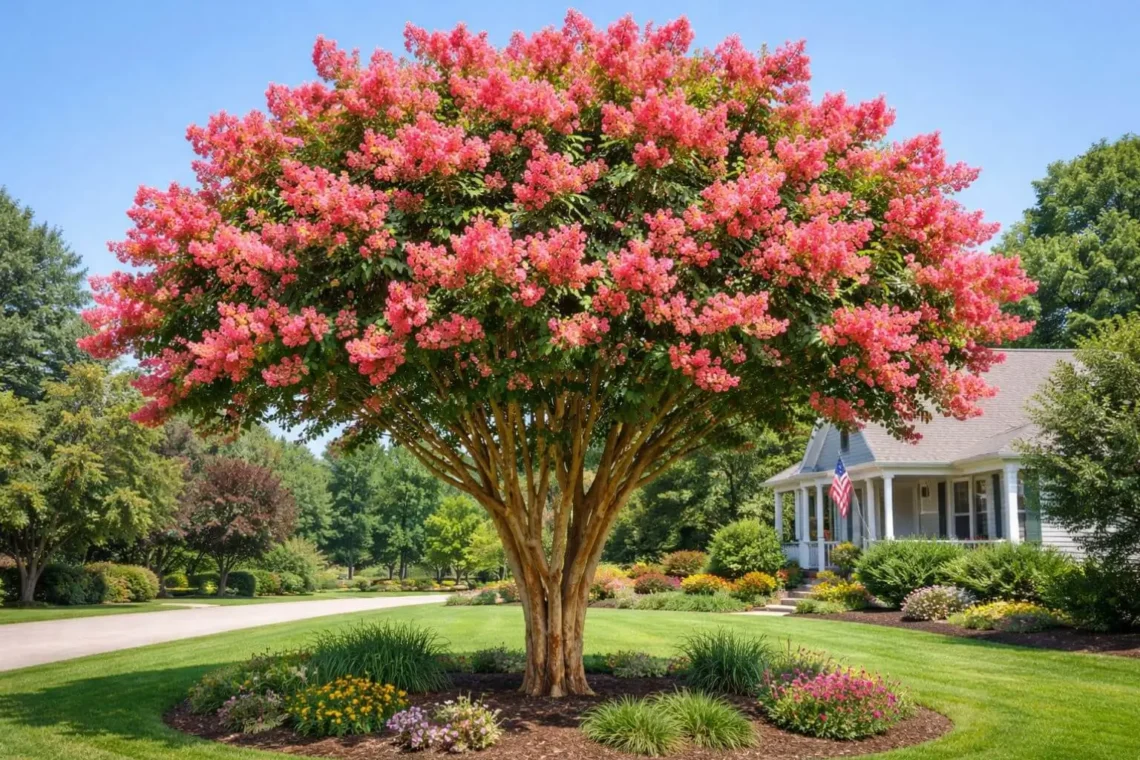
The tuscarora crape myrtle single trunk is a trained tree form of the Tuscarora cultivar valued for its upright structure, vibrant summer flowers, and ornamental bark. Unlike multi-stem crape myrtles, the single-trunk form features one dominant central leader, giving it a more traditional tree appearance. Tuscarora is especially popular for its fast growth, coral-pink blooms, and large mature size that works well in residential and urban landscapes. This article provides a clear, informational overview of what defines a Tuscarora crape myrtle single trunk, including growth habits, mature size, flowering traits, climate adaptability, pruning considerations, common problems, and comparisons with similar cultivars.
What Is a Tuscarora Crape Myrtle Single Trunk?
-
Tuscarora Crape Myrtle Overview
Tuscarora is a hybrid crape myrtle cultivar developed for strong disease resistance, vigorous growth, and showy floral display. It belongs to the group of larger crape myrtle varieties often used as small shade trees. Compared to generic crape myrtle varieties, Tuscarora stands out for its taller stature, consistent flowering, and reliable performance in warm climates. For a deeper editorial breakdown of how Tuscarora fits among hybrid crape myrtle cultivars, the crape myrtle cultivar comparison database documents disease resistance, growth habit, and flowering traits in detail.
It’s a useful companion resource when deciding whether Tuscarora or a related hybrid best suits your landscape goals.
-
Single Trunk vs Multi-Trunk Growth Habit
A single trunk crape myrtle tree has one main stem, while multi-trunk forms have several basal stems. Structurally, single-trunk trees resemble classic ornamental trees with a raised canopy. This form offers cleaner lines, easier clearance beneath the canopy, and a formal appearance. Single-trunk trees are created through early training by selecting one central leader and removing competing stems. Semantic variations such as standard crape myrtle form or single trunk crape myrtle tree describe this same growth style.
Mature Size and Growth Characteristics
-
Tuscarora Crape Myrtle Single Trunk Size
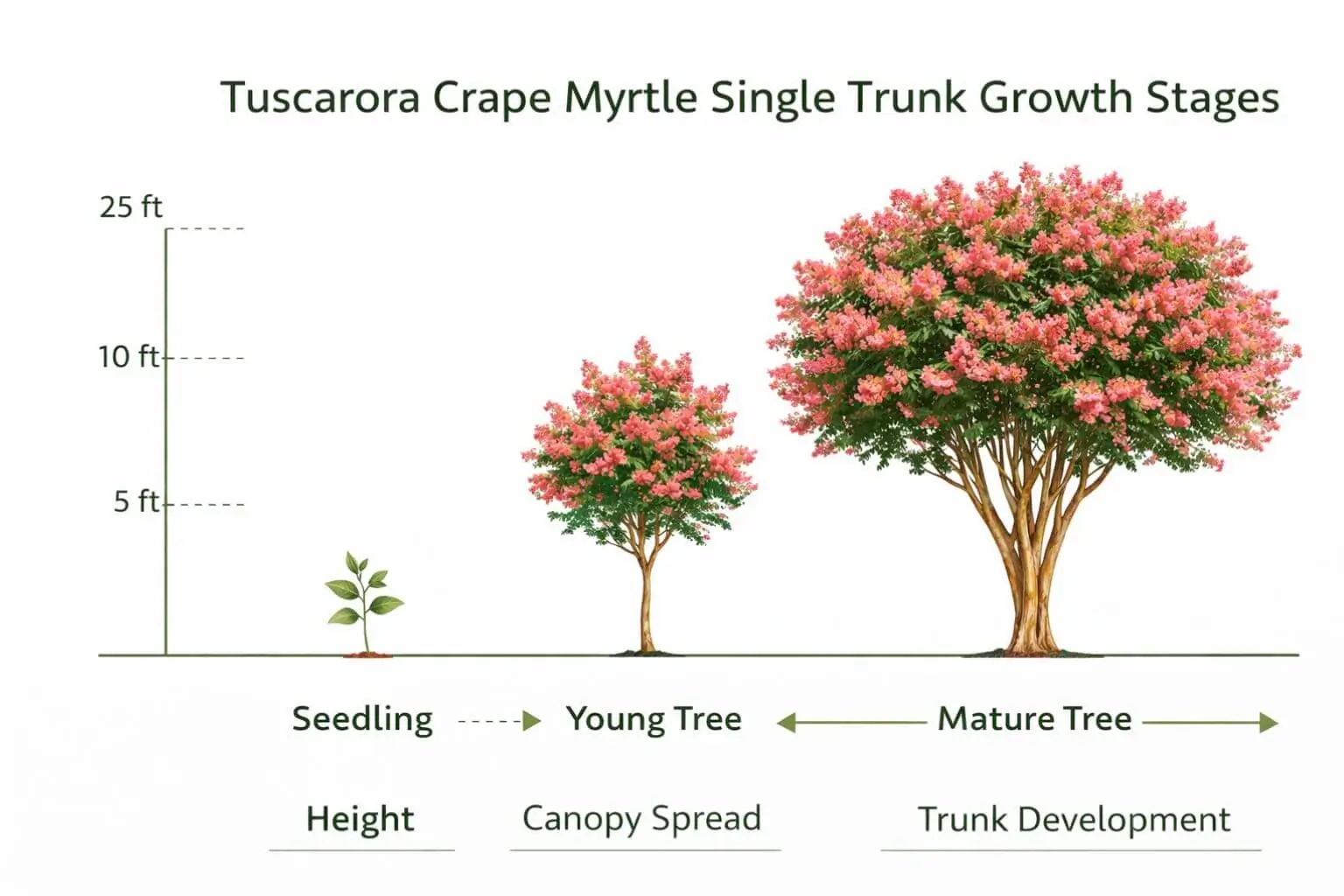
A full grown Tuscarora crape myrtle single trunk typically reaches 20 to 25 feet in height with a spread of 15 to 20 feet. The canopy develops a broad, vase-shaped form, supported by a thick, muscular trunk. As the tree matures, the trunk becomes a key ornamental feature. To quickly check where Tuscarora ranks against other cultivars by final height, the crape myrtle size tier lookup spreadsheet organizes cultivars into compact, medium, large, and very large size tiers.
This helps confirm that Tuscarora’s 20 to 25 foot mature height places it firmly in the large size class among crape myrtle varieties.
-
Growth Rate and Establishment Timeline
The tuscarora crape myrtle growth rate is considered fast. Young trees establish quickly in warm conditions, often putting on several feet of growth per year. Long-term development depends on sunlight, soil drainage, pruning practices, and climate. The tuscarora crape myrtle size at maturity is usually reached within 10 to 15 years under favorable conditions.
Flower Color, Bloom Time, and Seasonal Interest
-
Flower Color and Appearance
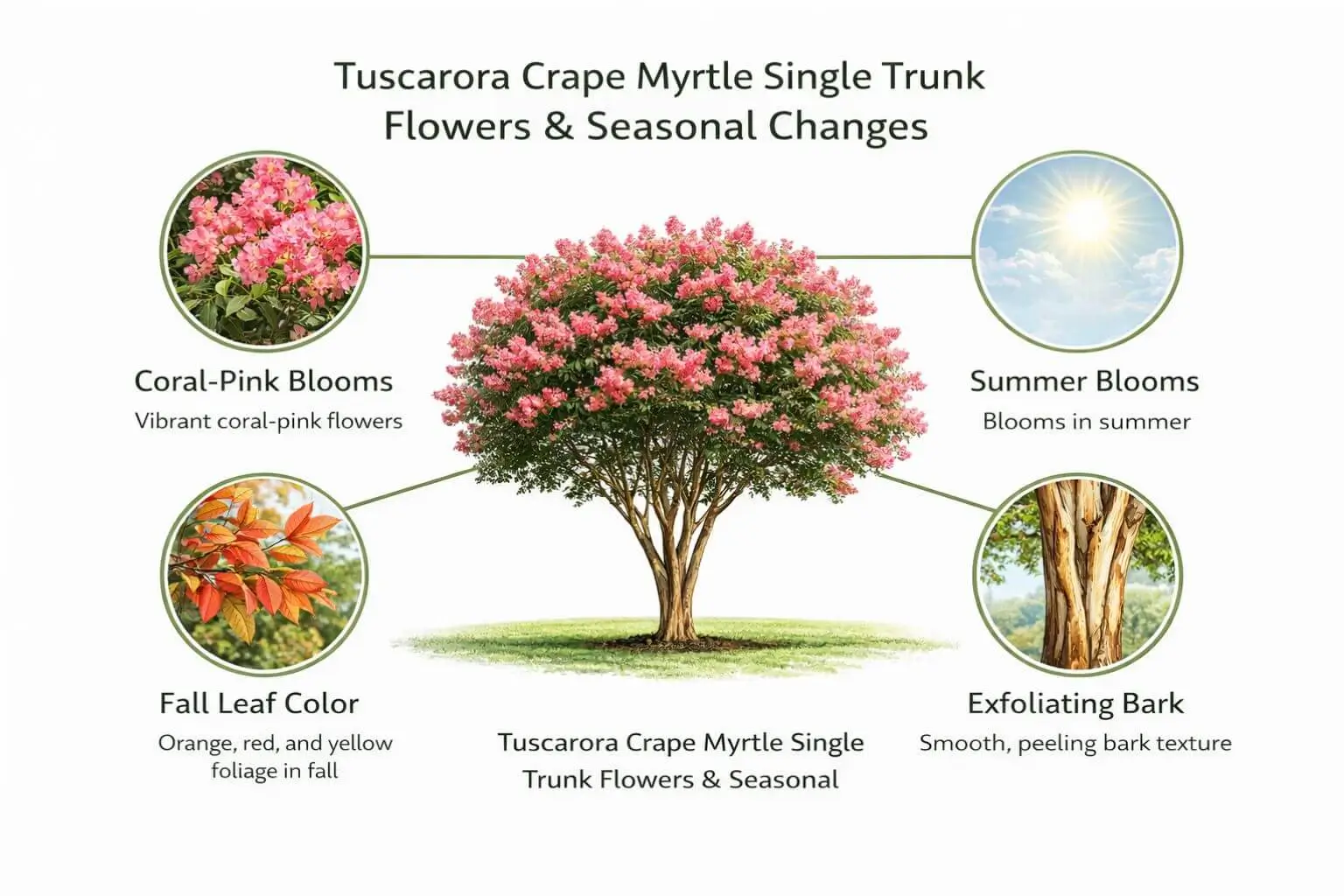
Tuscarora crape myrtle flowers range from coral-pink to deep pink. The color is often described as coral due to its warm undertones, which can appear redder in intense sunlight. This explains common confusion between pink, coral, and red descriptions.
-
Bloom Time and Duration
Tuscarora typically blooms from early to mid-summer and continues into late summer. In warmer regions, flowering may begin earlier and last longer. Cooler climates may see a slightly shorter bloom window.
-
Fall Color and Bark Interest
In fall, foliage turns shades of orange to red before dropping. The exfoliating bark reveals smooth patches of cinnamon, tan, and gray, providing winter interest even after leaf drop.
Climate, Hardiness, and Growing Zones
-
Tuscarora Crape Myrtle Zone Range
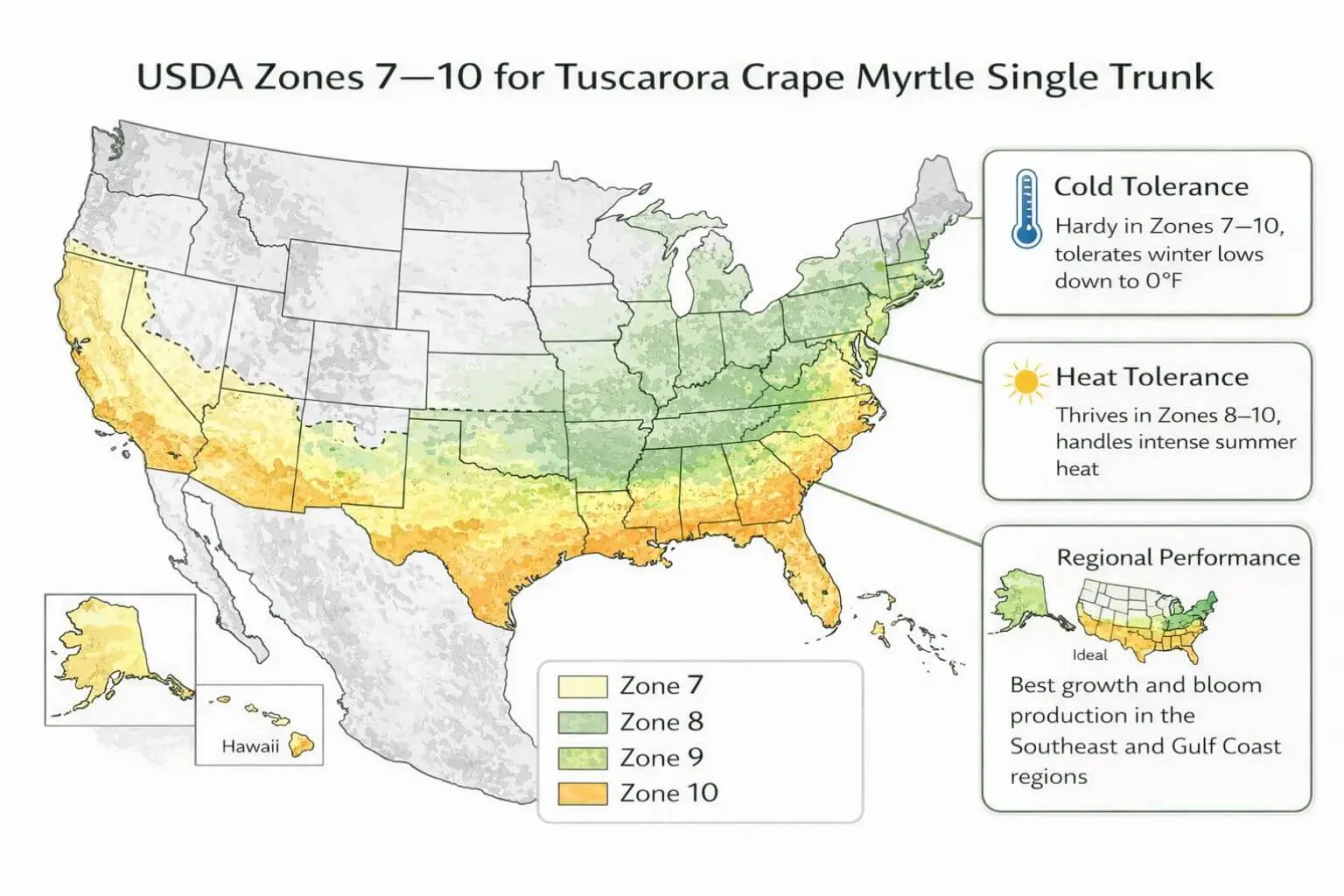
Tuscarora crape myrtles perform best in USDA hardiness zones 7 through 10. They tolerate heat extremely well and prefer full sun for optimal flowering.
-
Performance in Different Regions
In southern climates, Tuscarora grows vigorously and flowers reliably. In transitional zones, winter dieback may occur during severe cold, but established trees typically recover well. Cold resistance improves with age and proper siting.
Planting, Spacing, and Root System
-
Ideal Spacing for Single Trunk Trees
Proper tuscarora crape myrtle spacing is essential. Trees should be planted at least 15 to 20 feet away from buildings, power lines, and other large plants to allow full canopy development.
-
Root System Characteristics
The tuscarora crape myrtle root system is shallow and spreading rather than deep. Roots rarely cause structural damage but can compete with nearby plants for water if spacing is inadequate.
Pruning and Training a Single Trunk Form
-
How Single Trunk Form Is Maintained
Single trunk structure is established early by selecting one dominant leader and removing competing shoots. This training determines long-term form and stability.
-
Proper Pruning Practices
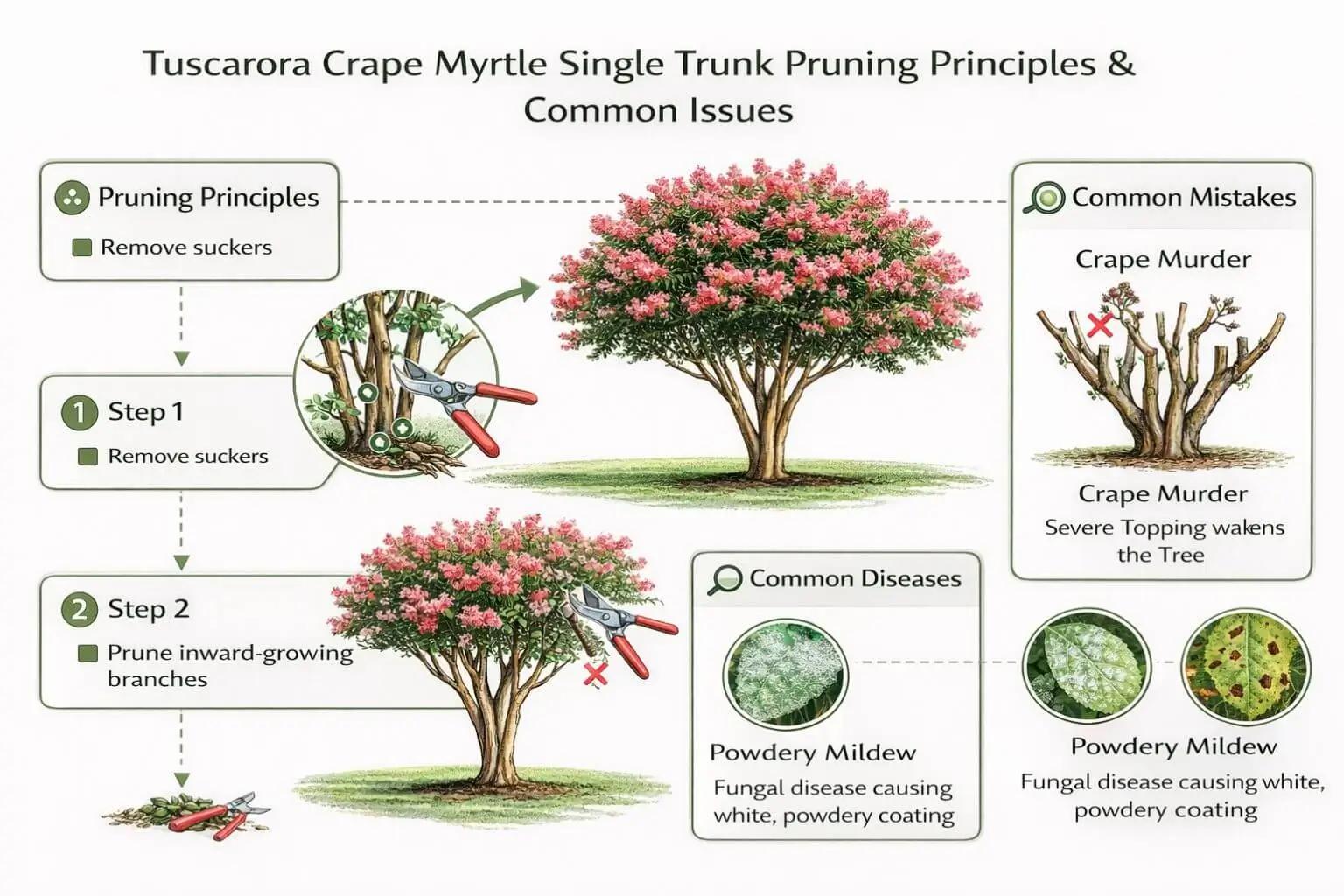
Pruning is best done in late winter or early spring. Minimal, corrective pruning maintains shape and removes weak or crossing branches without stimulating excessive growth.
-
Common Pruning Mistakes
Excessive topping, often called “crape murder,” leads to weak branching, delayed flowering, and long-term structural problems. Proper form relies on restraint, not heavy cutting.
Common Problems and Diseases
-
Tuscarora Crape Myrtle Problems
Common tuscarora crape myrtle problems include poor flowering due to shade, stress from drought, and weak structure from improper pruning.
-
Common Diseases Affecting Crape Myrtles
Crape myrtle diseases may include powdery mildew, leaf spot, and sooty mold. Good air circulation, sunlight, and proper watering reduce disease pressure.
Comparison With Other Crape Myrtle Varieties
-
Tuscarora vs Sioux
Tuscarora grows taller and has coral-pink flowers, while Sioux remains smaller with lighter pink blooms. Growth habit and mature size are the main differences. If you want to compare Tuscarora against 29 other cultivars side by side, the interactive crape myrtle cultivar selector lets you filter by mature height, flower color, and single-trunk suitability.
This makes it easy to see exactly how Tuscarora’s coral-pink blooms and vase-shaped canopy stack up against Sioux, Natchez, and Muskogee at a glance.
-
Tuscarora vs Natchez and Muskogee
Natchez and Muskogee produce white to lavender flowers and grow larger than Tuscarora. Tuscarora offers a balance of height and strong color without extreme size.
For a comparison of flower color and growth habit, see our guide on the White Crepe Myrtle Tree, which contrasts beautifully with Tuscarora’s coral-pink blooms.
Landscape Uses and Design Considerations
-
Best Uses for Single Trunk Tuscarora Trees
Single trunk Tuscarora trees work well as street trees, focal points, and shade elements in residential landscapes. Their upright form suits formal designs.
-
Visual Impact Over Time
Young trees emphasize structure, while mature specimens deliver shade, seasonal color, and bark interest. Visual appeal increases significantly with age.
Tuscarora crape myrtle single trunk pairs well with ornamental grasses like Japanese Sweet Flag Grass to create striking landscape textures and seasonal contrast.
Conclusion
The tuscarora crape myrtle single trunk combines strong structure, vibrant flowers, and seasonal interest in a versatile ornamental tree. Understanding its size, growth, pruning needs, and climate preferences helps ensure long-term success. Learn more about selecting and maintaining the right crape myrtle for your landscape.
Learn more: 5+ Stunning Purple Leaf Plum Bush Varieties for Vibrant Gardens
FAQs
- What is a Tuscarora crape myrtle single trunk?
It is a Tuscarora cultivar trained to grow with one central trunk, creating a tree-like form rather than multiple stems. - How tall does a Tuscarora crape myrtle single trunk grow?
Most reach 20 to 25 feet tall at maturity, depending on climate and care. - What color are Tuscarora crape myrtle flowers?
Flowers are coral-pink to deep pink and appear in large summer clusters. - What zones do Tuscarora crape myrtles grow in?
They grow best in USDA zones 7 through 10. - How is a single trunk crape myrtle maintained?
Maintenance focuses on early training, selective pruning, and avoiding excessive cutting.