Introduction
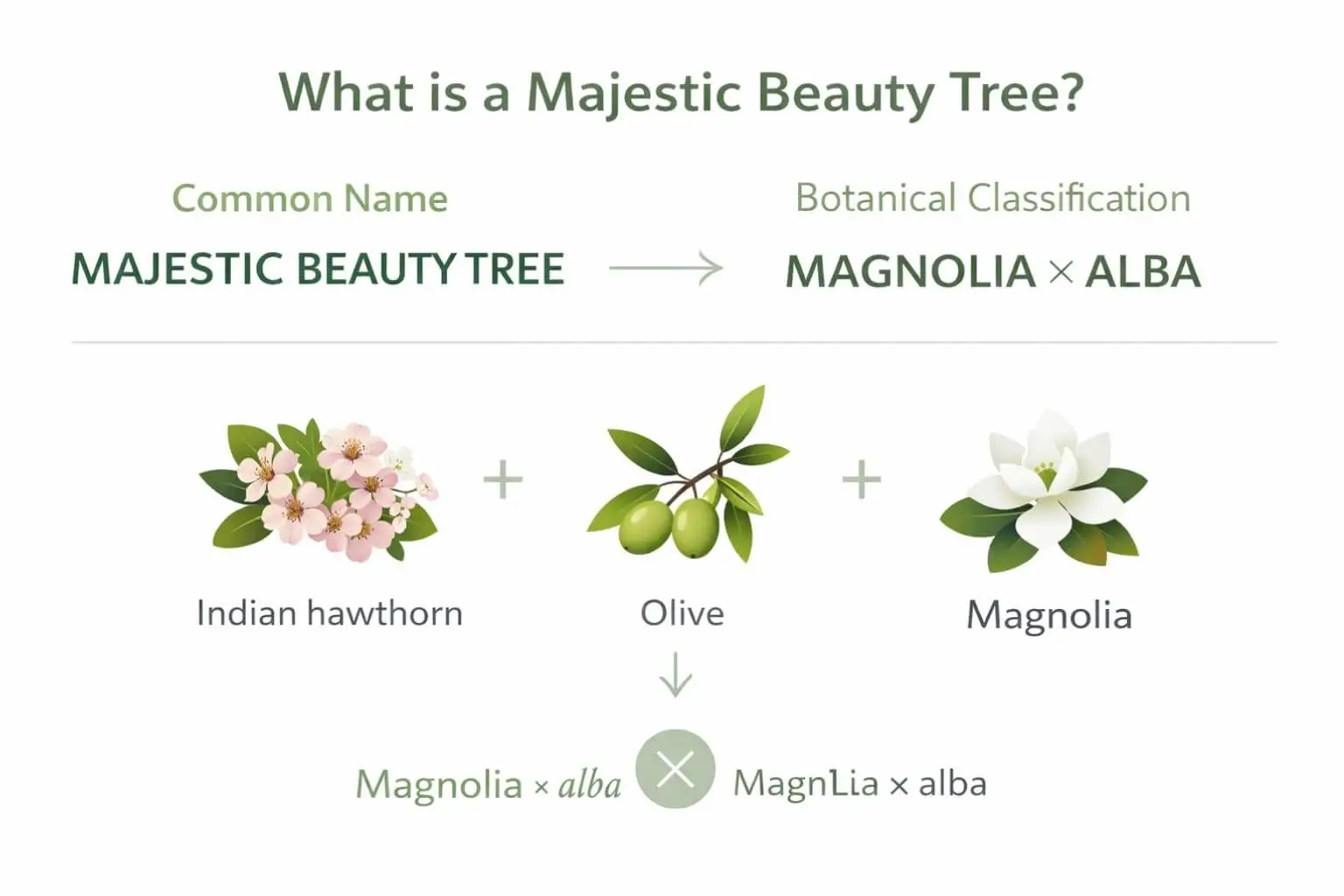
The majestic beauty tree is a cultivated ornamental tree name commonly applied to several visually striking landscape trees rather than a single botanical species. In horticultural use, the term is frequently associated with Indian hawthorn, olive, and magnolia cultivars selected for form, foliage, and flowering appeal. This shared naming creates confusion between marketing labels and formal plant classification. Understanding what the majestic beauty tree refers to requires separating common usage from scientific identification. This article defines the term clearly, explains why it applies to multiple tree types, and establishes a focused informational scope covering identification, physical traits, growth behavior, flowering habits, and general care considerations. The goal is accurate recognition and practical understanding rather than brand-specific promotion.
What Is the Majestic Beauty Tree?
Is “Majestic Beauty Tree” a Cultivar or a Common Name?
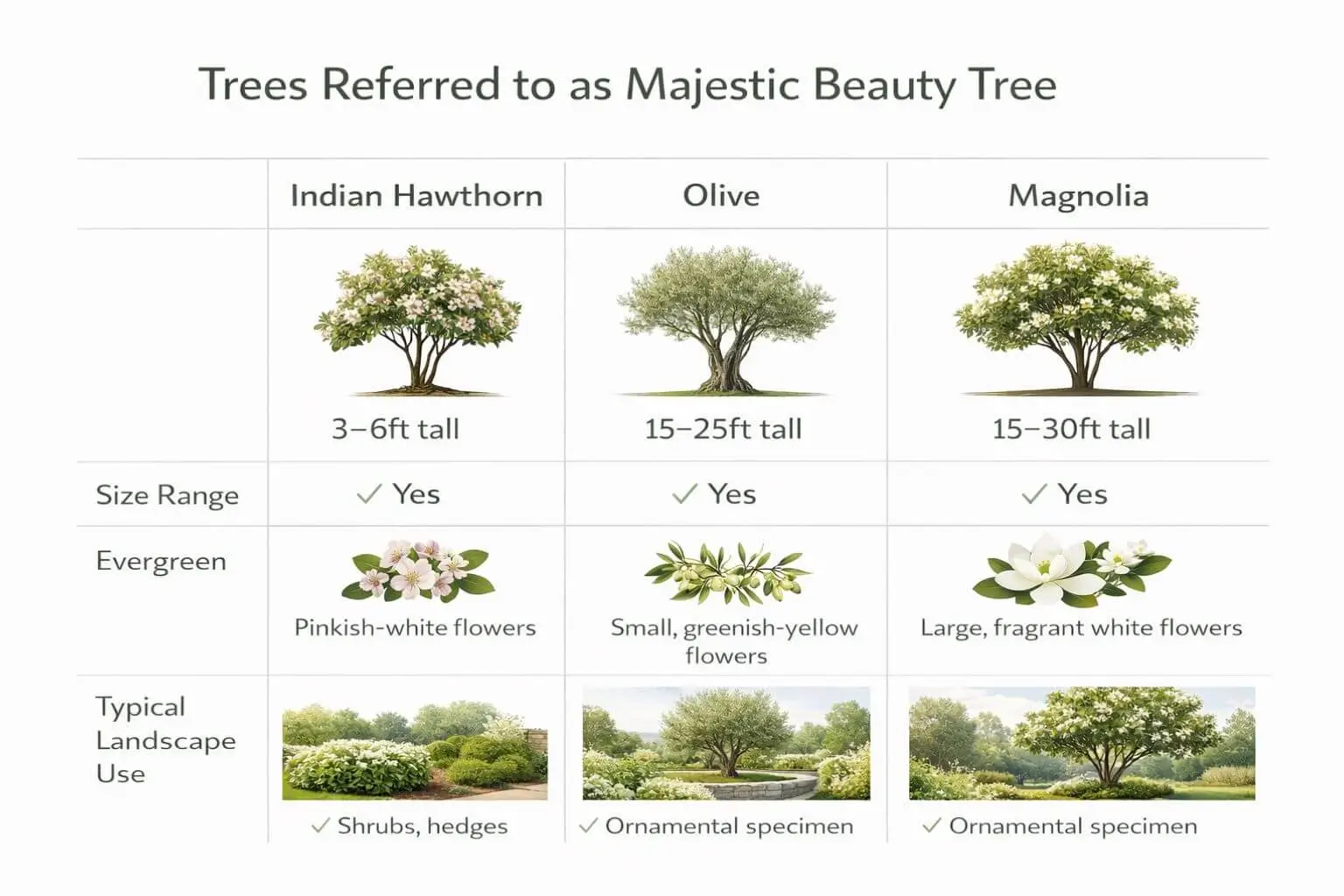
The majestic beauty tree is not a single registered cultivar in botanical taxonomy. It functions as a common or marketing name applied to ornamental trees that share refined structure, evergreen or semi-evergreen foliage, and decorative blooms. Nurseries and landscapers often use “majestic beauty” descriptively rather than scientifically.
Key distinctions:
- Botanical name: Identifies genus and species.
- Cultivar name: Indicates a specific, stabilized plant selection.
- Common name: Descriptive and variable, often overlapping species.
Semantic variations such as majestic beauty or majestic tree reflect appearance, not classification.
Common Tree Types Referred to as Majestic Beauty Tree
The name is most often associated with:
- Indian hawthorn varieties selected for tree form
- Fruitless olive varieties grown ornamentally
- Magnolia varieties valued for evergreen foliage or blooms
Usage depends on regional landscaping trends rather than strict species boundaries.
Majestic Beauty Indian Hawthorn Tree Overview
Botanical Background
Indian hawthorn belongs to the Rhaphiolepis genus. Tree-form selections are often hybrids or pruned cultivars developed from shrub varieties. The majestic beauty label is applied to forms bred or trained to grow as small ornamental trees rather than low hedges.
Tree-form Indian hawthorn selections are especially valued for compact structure and seasonal blooms, and you can explore detailed characteristics, growth traits, and landscape uses in our guide on Indian Hawthorn Plant.
Physical Characteristics
Typical traits include:
- Height of 10–20 feet when mature
- Rounded to upright growth habit
- Glossy, leathery evergreen leaves
- Dense branching structure
- Spring flower clusters with high ornamental value
Growth Rate and Maturity
Indian hawthorn trees grow at a slow to moderate rate. Growth speed is influenced by:
- Warm, temperate climates
- Well-drained soil conditions
- Light structural pruning
- Adequate sunlight exposure
Mature form is usually reached within 8–12 years.
Majestic Beauty Tree Fruit and Flowering Behavior
Does the Majestic Beauty Tree Produce Fruit?
Fruit production depends on the underlying tree type:
- Indian hawthorn varieties may produce small berries
- Fruitless olive selections are bred to minimize or eliminate fruit
- Magnolia types generally do not produce ornamental fruit
Fruit presence is secondary to visual appeal.
Flower Color, Bloom Time, and Pollinators
Flowering traits vary by species but commonly include:
- White to pale pink blossoms
- Spring bloom cycles
- High attractiveness to bees and other pollinators
- Short but visually impactful flowering periods
Majestic Beauty Olive Tree Explained
Fruitless Olive vs. Fruiting Olive Varieties
Fruitless olive trees are ornamental selections designed to reduce mess and maintenance. They differ genetically from traditional fruiting olives, despite visual similarity. The majestic beauty name is often applied to these cleaner landscape forms.
Majestic Beauty Olive Tree Size and Height
Typical mature size:
- Height: 20–30 feet
- Spread: 15–25 feet
These dimensions make them suitable for open landscapes, courtyards, and structured garden designs.
Growth Rate and Longevity
Olive trees exhibit slow to moderate growth but exceptional longevity. Development is affected by:
- Climate stability
- Soil drainage
- Long-term water management
Majestic Beauty Magnolia Tree Varieties
Relationship to Southern Magnolia Types
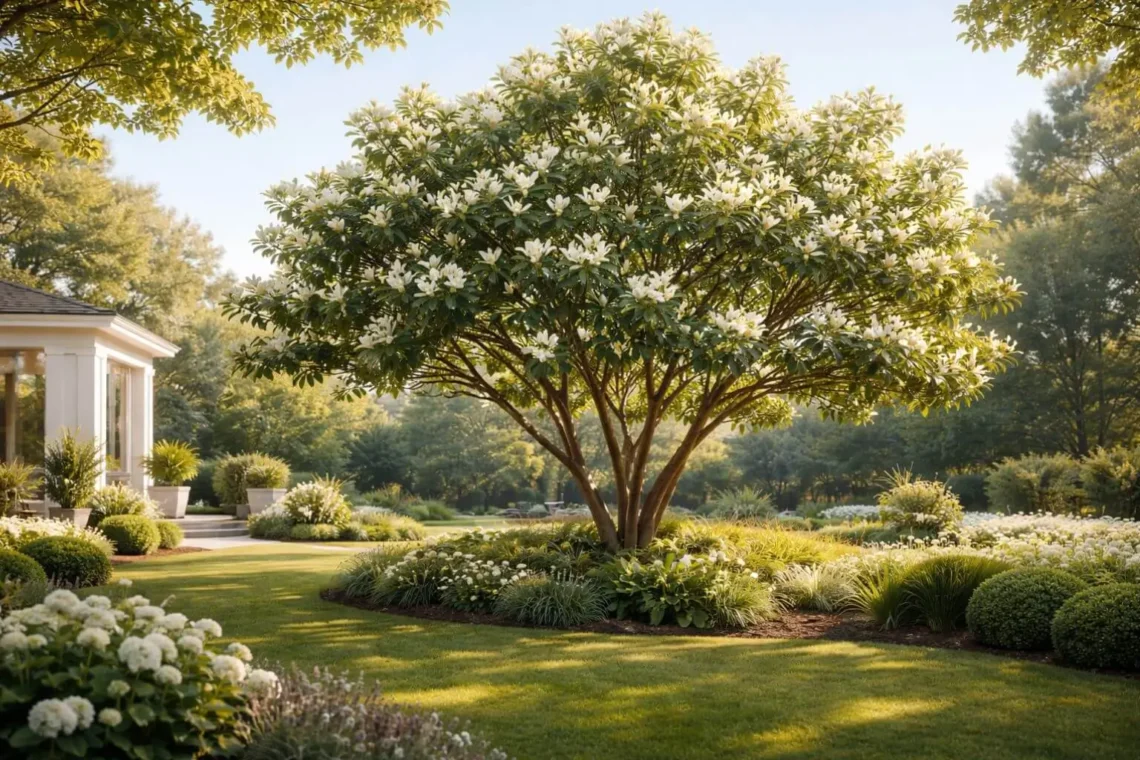
Magnolia varieties associated with the majestic beauty name are often evergreen or semi-evergreen selections related to Southern magnolia types. Classification depends on leaf retention, flower size, and growth habit.
Bloom Cycle and Visual Appeal
Magnolia traits include:
- Large, fragrant white or cream flowers
- Prominent seasonal blooming
- Thick, glossy foliage
- Strong year-round visual presence
Homeowners who appreciate ornamental trees with striking seasonal flowers may also enjoy learning about comparable landscape performers like the White Crepe Myrtle Tree, known for its vibrant blooms and graceful form.
Majestic Beauty Tree Care Basics
Soil, Sunlight, and Water Requirements
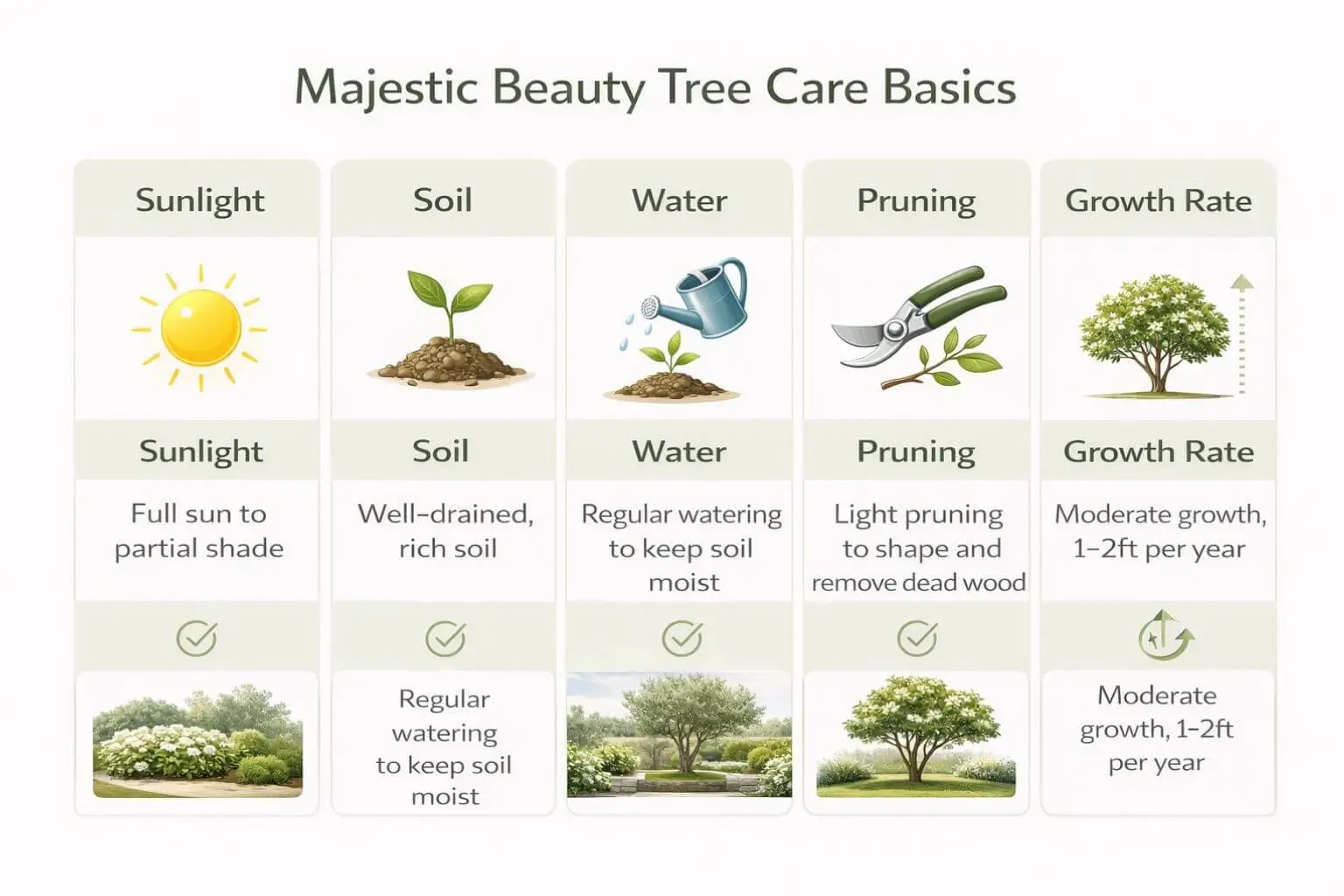
Across varieties, general care principles include:
- Well-drained soil
- Full sun to partial shade
- Moderate, consistent watering during establishment
Pruning and Maintenance Needs
Pruning focuses on:
- Maintaining shape
- Removing dead or crossing branches
- Supporting airflow and light penetration
Heavy pruning is rarely required.
Common Pests and Diseases
Common issues may include:
- Leaf spot or fungal stress
- Scale insects
- Aphids in warm climates
Preventative care emphasizes plant health rather than treatments.
Majestic Beauty Patio and Landscape Uses
Patio Tree Characteristics
Majestic beauty trees are often used as:
- Accent trees
- Container-grown patio specimens
- Space-conscious ornamental features
Compact form and controlled growth enhance versatility.
Wildlife and Environmental Benefits
Benefits include:
- Pollinator support during flowering
- Shelter for small birds
- Urban heat mitigation through canopy cover
How to Identify a Majestic Beauty Tree Correctly
Key Identification Features
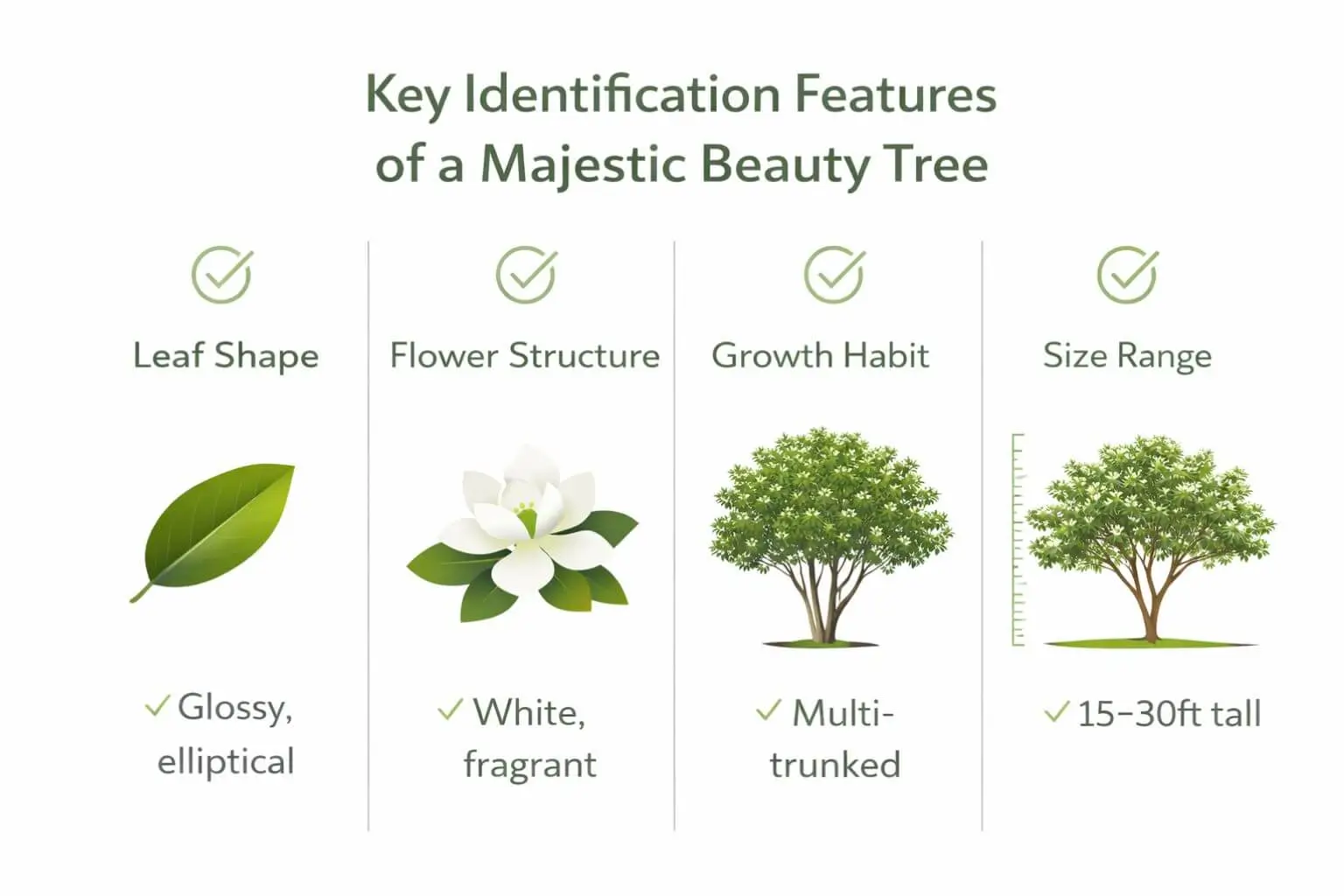
Identification relies on:
- Leaf shape and texture
- Flower size and structure
- Overall growth pattern and branching
Avoiding Common Misidentifications
Confusion often occurs between:
- Indian hawthorn and true hawthorn species
- Olive and similar gray-leaf evergreens
- Magnolia varieties with overlapping traits
Correct identification requires examining multiple features together.
Conclusion: Understanding the Majestic Beauty Tree
The majestic beauty tree is a descriptive term applied to several ornamental trees rather than a single species. Indian hawthorn, olive, and magnolia varieties may all carry the name depending on form and use. Accurate identification improves care decisions, landscape planning, and long-term plant success. Understanding the distinction between naming and classification ensures informed selection and better horticultural outcomes.
FAQs
- What does the term “majestic beauty tree” mean?
It is a common ornamental name used to describe visually refined trees across multiple species, not a single botanical classification. - Is the majestic beauty tree the same as Indian hawthorn?
Sometimes. The name is often applied to tree-form Indian hawthorn varieties but is not exclusive to them. - How tall does a majestic beauty tree grow?
Height ranges from 10 to 30 feet depending on whether the tree is an Indian hawthorn, olive, or magnolia type. - Does the majestic beauty tree produce fruit?
Fruit production varies. Some types produce small berries, while others, such as fruitless olives, do not. - Is the majestic beauty tree evergreen?
Many varieties are evergreen or semi-evergreen, but this depends on the specific species. - What climates are suitable for majestic beauty trees?
They perform best in temperate to warm climates with mild winters and adequate sunlight.