Introduction
Leptospermum Seclusion is a dense, evergreen shrub widely used in modern landscaping for hedging and privacy screening. It originates from cultivated selections within the Leptospermum genus, a group of woody plants native mainly to Australia and New Zealand. This cultivar is especially valued for its compact growth habit, fine foliage, and ability to form structured green barriers in residential and commercial landscapes.
Leptospermum belongs to the Myrtaceae family, which also includes plants commonly known as tea trees and manuka. In horticulture, this group is often referred to as the manuka plant or tea tree NZ species, with the most well-known being Leptospermum scoparium. Seclusion is a selected cultivar developed for improved hedging performance and uniform growth. Leptospermum Seclusion is widely used in structured planting systems similar to those found in broader Australian native garden trees landscapes, where resilience and low maintenance are key design goals.
Quick Summary
- Leptospermum Seclusion is a fast-growing evergreen hedge plant
- Belongs to the Leptospermum (tea tree/manuka) genus in Myrtaceae
- Ideal for privacy screens due to dense, upright growth habit
- Grows best in full sun with well-drained soil
- Low-maintenance once established and highly adaptable
What Is Leptospermum Seclusion?
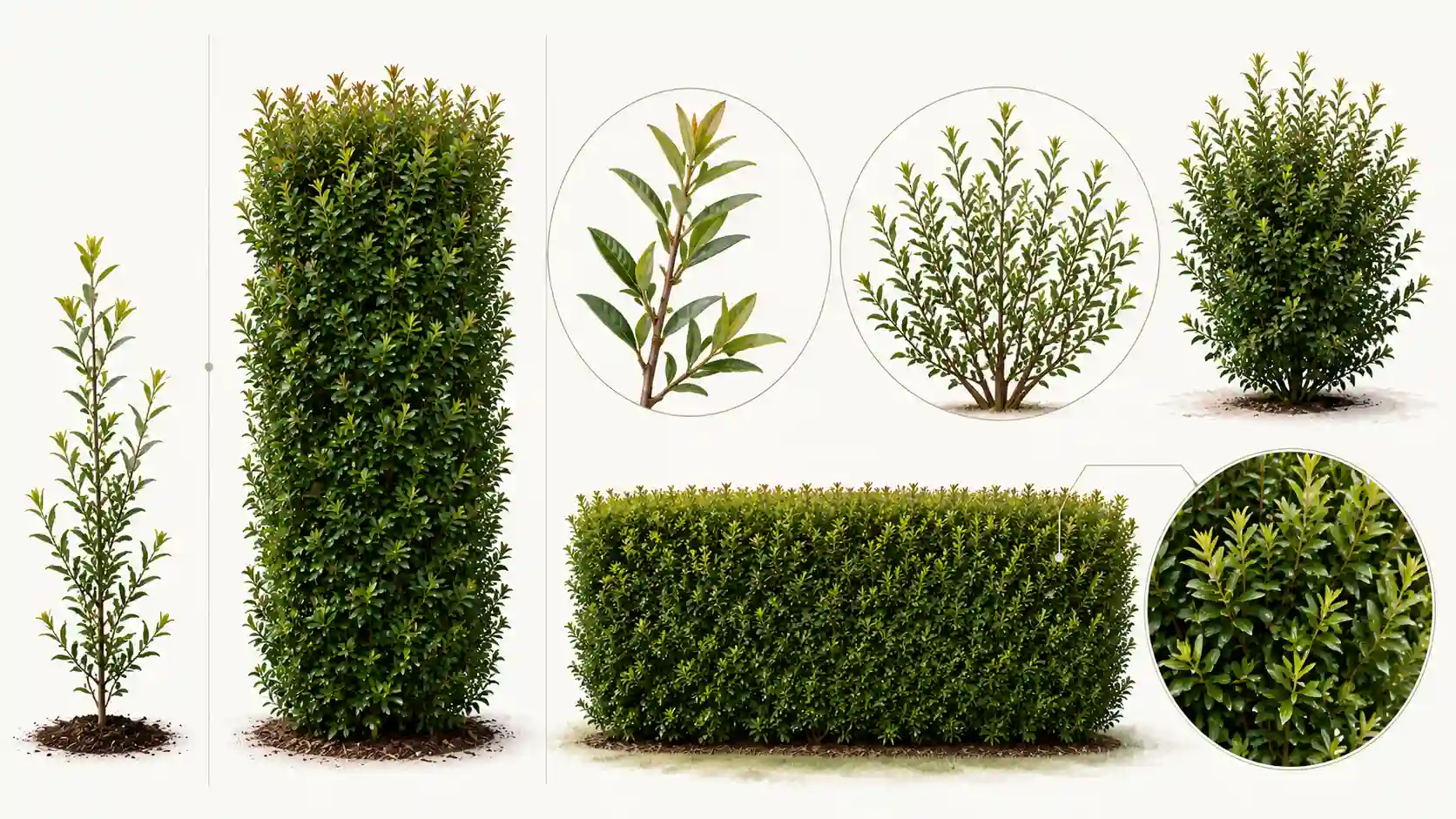
Leptospermum Seclusion is a cultivated form of the Leptospermum genus, bred specifically for landscaping and hedging use. It is a woody evergreen shrub characterized by fine, aromatic foliage and a naturally dense structure that responds well to pruning.
The Leptospermum genus is widely documented in botanical literature and includes species such as tea trees and manuka shrubs.
The term “Seclusion” refers to its intended use as a privacy plant, forming thick green screens. It is part of the broader Leptospermum plant group, which includes species commonly called tea trees and manuka shrubs.
Key botanical details include:
- Family: Myrtaceae
- Genus: Leptospermum
- Common names: Tea tree, manuka, New Zealand tea tree
- Origin: Cultivated selection derived from Australian/New Zealand species
Key traits
- Dense branching structure
- Small, narrow leaves
- Responds well to shaping
- Evergreen year-round coverage
- High suitability for hedging
Leptospermum Seclusion as a Hedge Plant
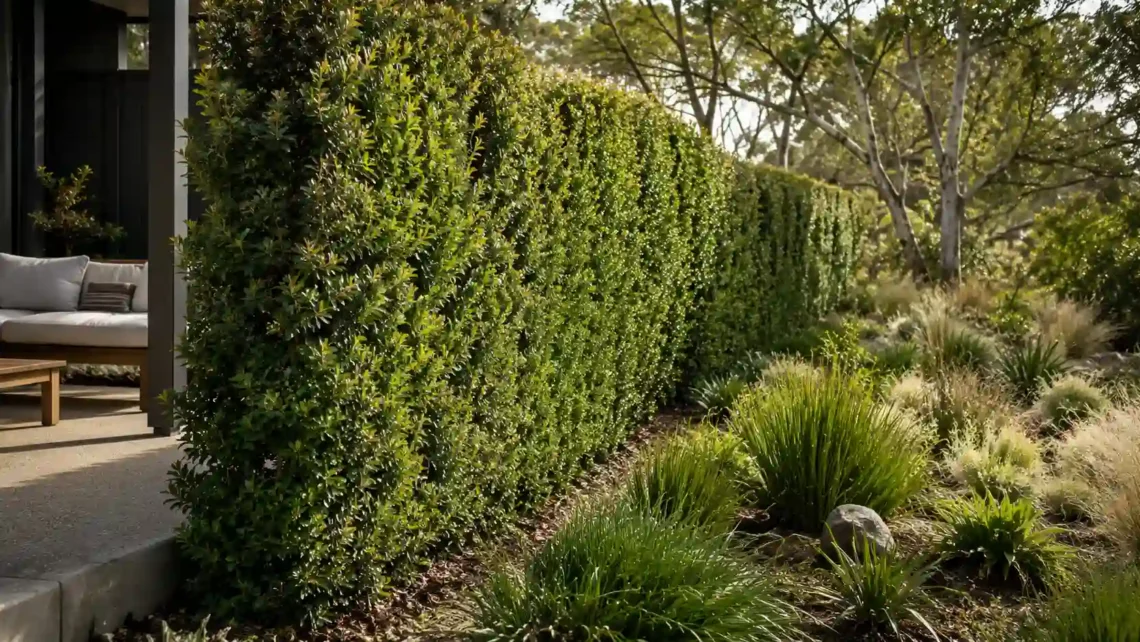
Leptospermum Seclusion is widely chosen as a hedge plant because it naturally grows in a tight, upright form. This makes it highly effective for privacy screening, wind protection, and boundary definition in both residential gardens and commercial landscapes. It is commonly compared with other fast-growing hedge species used in privacy planting systems.
Its ability to tolerate pruning allows gardeners to maintain formal hedge lines, while its natural density supports informal screens without heavy maintenance.
How to Use Leptospermum Seclusion for Privacy Screening
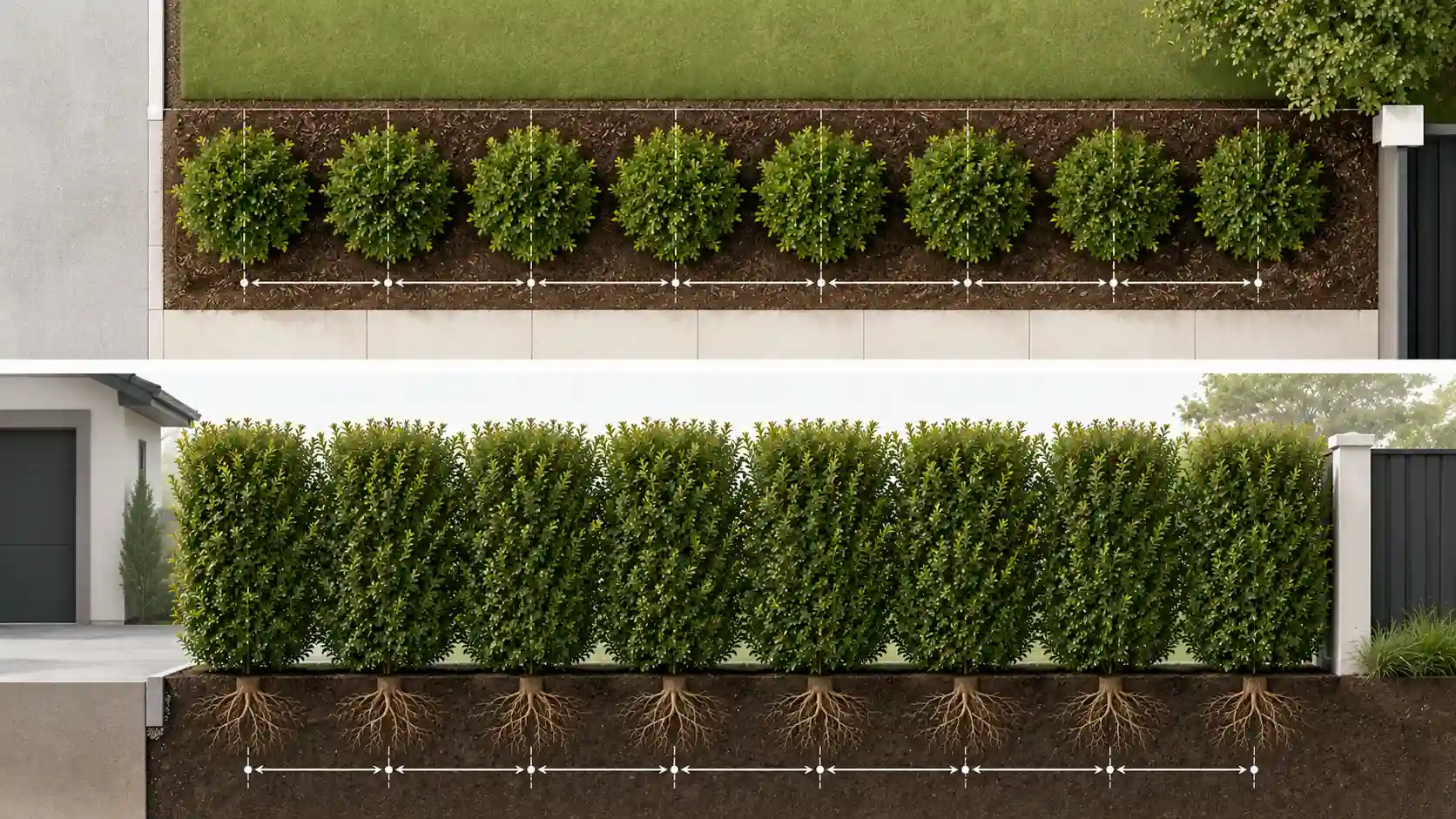
- Ideal hedge height: 2–4 meters depending on pruning
- Plant spacing: 0.8–1.5 meters apart for dense coverage
- Suitable for formal clipped hedges or informal natural screens
- Moderate maintenance required during establishment phase
- Commonly used in urban gardens, driveways, and boundary lines
Leptospermum Lemon Hedge — Is Seclusion a Good Fit?
The term “leptospermum lemon hedge” is often used informally to describe lemon-scented or light-foliage Leptospermum varieties. Seclusion is not specifically a lemon-scented cultivar, but it performs better than many lemon-type selections in formal hedging due to its tighter structure and faster density formation.
Compared to lemon-foliaged types:
- Seclusion is denser and more uniform
- Better suited for structured privacy hedges
- Lemon-scented types are more ornamental than functional
Leptospermum Seclusion Size — What to Expect at Maturity
Leptospermum Seclusion typically reaches a medium-to-large shrub size depending on pruning and climate conditions. In optimal outdoor conditions, it develops into a tall, structured hedge plant.
| Feature | Details |
| Mature Height | 2–4 meters |
| Mature Width | 1.5–3 meters |
| Growth Habit | Upright, dense |
| Best Use | Hedging, screening, borders |
Indoor growth is not recommended, as the plant requires full sunlight and open space to develop properly. In restricted conditions, size will remain significantly smaller and less dense.
Growth is influenced by:
- Climate warmth and sunlight exposure
- Soil fertility and drainage
- Regular pruning practices
Growth Rate of Leptospermum Seclusion
Leptospermum Seclusion is considered a moderate to fast-growing shrub under ideal conditions. Growth is most active during spring and summer when temperatures are warm and daylight is extended.
Key factors affecting growth rate:
- Full sun exposure increases density and speed
- Well-drained soil promotes healthier root development
- Regular watering during establishment boosts early growth
- Poor drainage significantly slows development
- Pruning encourages branching and thicker hedging
How to Care for Leptospermum Seclusion
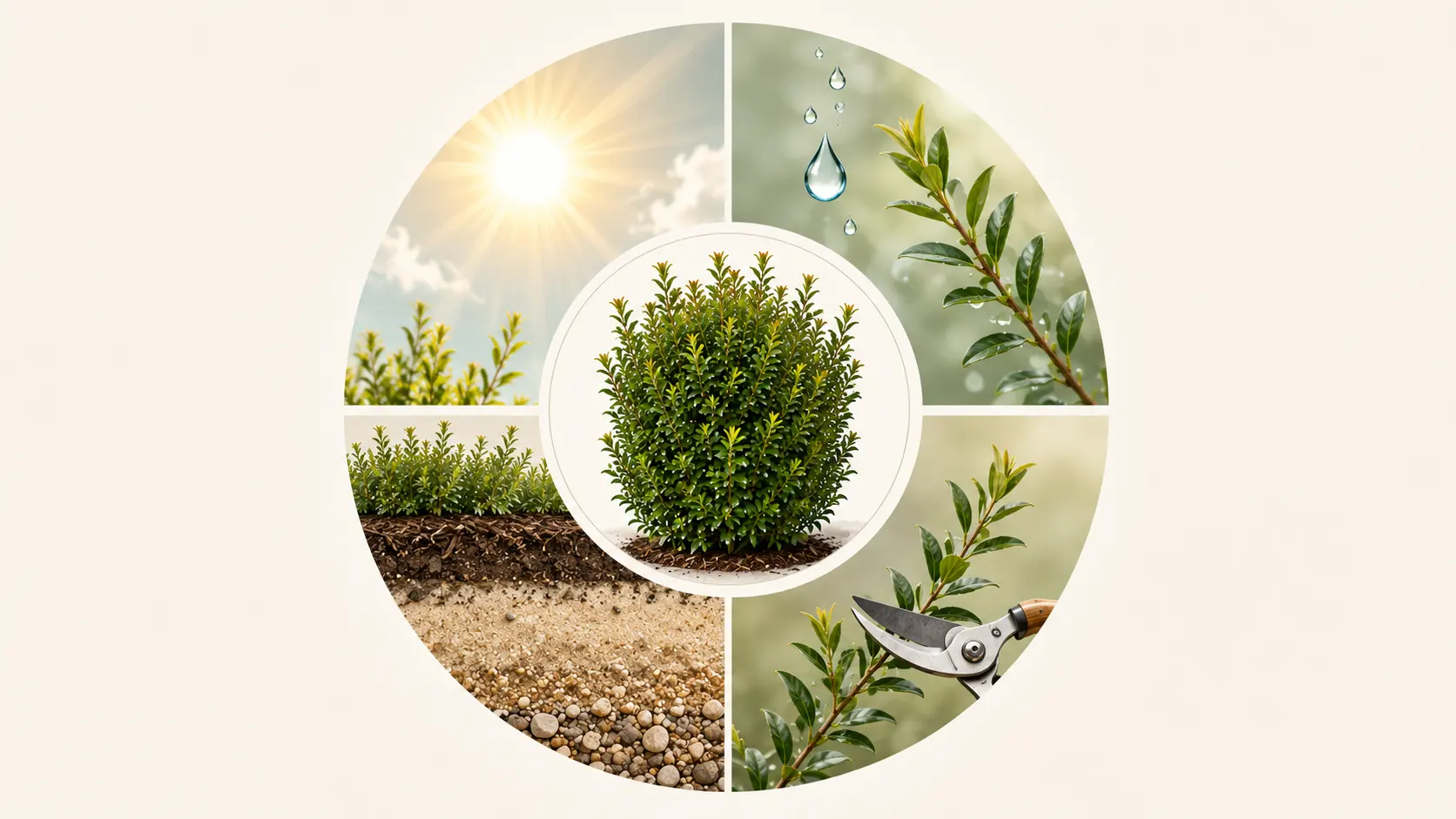
Watering Requirements
Young plants require regular watering until established. Once mature, Seclusion becomes drought-tolerant and needs only occasional deep watering during dry periods.
Sunlight and Position
It performs best in full sun but tolerates partial shade. Deep shade reduces density and weakens hedge structure.
Soil and Drainage
Well-drained soil is essential. It adapts to a range of soil types but does not tolerate waterlogging.
Fertilizing Leptospermum Seclusion
Use low-phosphorus native plant fertilizer once or twice a year. Over-fertilizing can reduce flowering and stress roots.
Pruning Tips
- Prune after flowering for best shape control
- Avoid cutting into old woody stems
- Regular trimming encourages dense hedge form
Climate Tolerance
- Tolerates mild frost once established
- Performs well in warm, dry climates
- Suitable for coastal environments due to salt tolerance
Care requirements are similar to other drought-tolerant native shrubs often used in structured gardens.
Types of Leptospermum — How Seclusion Compares to Other Cultivars
Seclusion is one of several Leptospermum cultivars used in landscaping. Each variety has unique ornamental or functional traits.
Comparison Table — Leptospermum Cultivars at a Glance
| Cultivar | Key Feature | Best Use | Size |
| Seclusion | Dense hedge screening | Privacy hedge | Medium–Large |
| Cardwell | Weeping form, white flowers | Feature plant | Medium |
| Lanigerum | Woolly silver foliage | Ornamental garden | Medium |
| Scoparium | Classic manuka flowers | Native planting | Small–Medium |
| Aphrodite | Compact fine foliage | Low hedge | Small |
| Starry Night | Dark foliage, pink flowers | Ornamental contrast | Small–Medium |
| Continentale | Native species form | Wildlife habitat | Medium |
Difference Between Melaleuca and Leptospermum
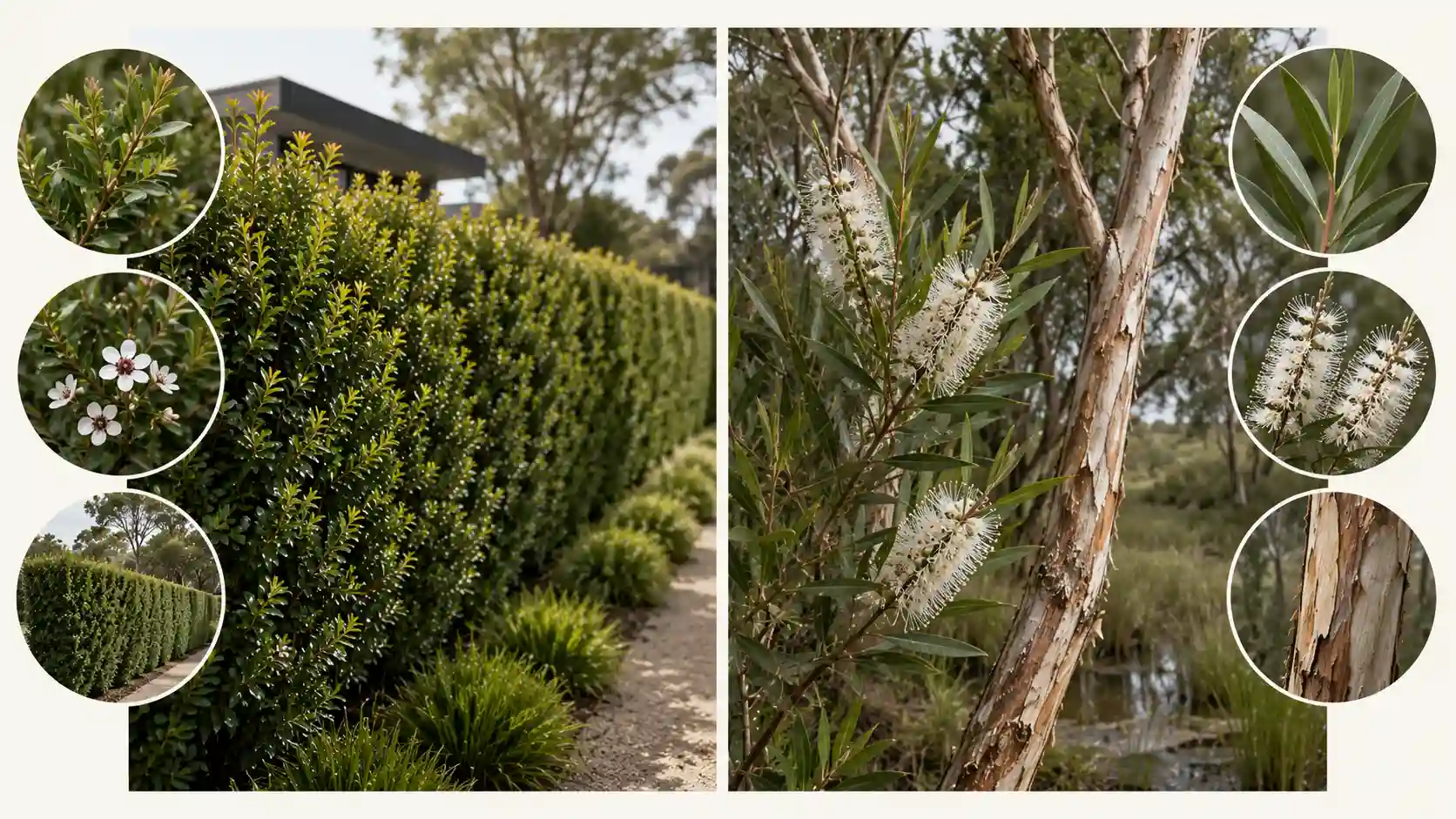
Both Leptospermum and Melaleuca belong to the Myrtaceae family, which causes frequent confusion in identification. However, they differ in structure and landscape use.
| Feature | Leptospermum | Melaleuca |
| Common Name | Tea tree / Manuka | Paperbark / Honey myrtle |
| Bark | Fibrous, fine | Thick, papery layers |
| Flowers | Small, 5-petaled | Bottlebrush clusters |
| Foliage | Fine, aromatic | Variable size |
| Typical Use | Hedge, screening | Screening, wetlands |
| Origin | Australia / New Zealand | Mostly Australia |
How Long Do Leptospermum Live?
Leptospermum plants typically live 15–30 years in garden conditions, with some specimens lasting longer under ideal care.
Factors supporting longevity:
- Well-drained soil
- Regular pruning and maintenance
- Protection from severe frost
- Proper watering balance
Factors reducing lifespan:
- Root rot from poor drainage
- Extreme neglect or overwatering
- Heavy, compacted soils
Leptospermum Seclusion and Its Connection to Manuka and Tea Tree Plants
Leptospermum Seclusion belongs to the same genus as manuka and tea tree plants, which are widely recognized across Australia and New Zealand. The most famous species is Leptospermum scoparium, commonly known as the manuka plant or New Zealand tea tree.
However, not all Leptospermum species are manuka. The genus includes many ornamental and native shrubs with different traits. Seclusion is a cultivated form designed for hedging rather than medicinal or honey production. This connection places it within the wider ecosystem of native Australian and New Zealand planting schemes.
Common Problems With Leptospermum Seclusion and How to Fix Them
Yellowing Leaves
Caused by poor drainage or nutrient imbalance. Improve soil structure and reduce watering frequency.
Root Rot and Overwatering
Occurs in waterlogged soil. Remove affected roots and replant in well-drained soil.
Pest Issues (Scale, Webworm)
Treat with horticultural oil or organic insect control methods.
Slow or Stunted Growth
Often due to low sunlight or compacted roots. Improve exposure and loosen surrounding soil. Similar issues are also seen in other native shrubs grown in Australian-style gardens.
Beginner Mistakes When Growing Leptospermum Seclusion
- Planting in heavy clay soil without drainage improvement
- Over-pruning into old woody stems
- Choosing incorrect spacing for hedge density
- Underestimating mature size requirements
- Neglecting watering during early establishment
Seasonal Care Guide for Leptospermum Seclusion
- Spring: Prune after flowering and apply light fertilizer
- Summer: Water during heat stress and monitor pests
- Autumn: Mulch and reduce intervention
- Winter: Protect young plants from frost and avoid pruning
Leptospermum Seclusion in Landscape Design
Leptospermum Seclusion is widely used in structured landscape design due to its reliability and dense growth. It works well as:
- Formal hedge boundaries
- Privacy screening walls
- Coastal garden planting
- Low-maintenance urban greenery
It also pairs well with other native species in mixed ecological plantings. It also integrates well into larger ecological planting frameworks such as native garden ecosystems.
Leptospermum Seclusion is often grouped with other Australian native screening trees and shrubs, making it a strong candidate for modern native landscaping designs like those in the broader Australian native garden trees approach.
Conclusion
Leptospermum Seclusion is a highly adaptable evergreen shrub valued for its dense structure, manageable size, and strong performance as a hedge plant. As part of the broader Leptospermum genus linked to manuka and tea tree species, it offers both ornamental and functional value in modern landscaping. With proper care, it provides long-lasting privacy and structure in a wide range of garden environments.
FAQs
What is Leptospermum Seclusion used for?
It is primarily used for privacy hedging, screening, and structured landscape borders.
How tall does Leptospermum Seclusion grow as a hedge?
It typically grows 2–4 meters tall depending on pruning and conditions.
What is the difference between Leptospermum and Melaleuca?
Leptospermum has fine leaves and small flowers, while Melaleuca has bottlebrush-style blooms and papery bark.
Is Leptospermum Seclusion the same as a manuka or tea tree plant?
It belongs to the same genus but is a cultivated hedge form, not the medicinal manuka species.
How do I care for Leptospermum Seclusion in my garden?
Provide full sun, well-drained soil, moderate watering, and light annual pruning.
What are the best Leptospermum varieties for hedging?
Seclusion and compact forms like Aphrodite are best for hedging use.
How long does a Leptospermum plant live?
It generally lives 15–30 years depending on care and environmental conditions.