Introduction
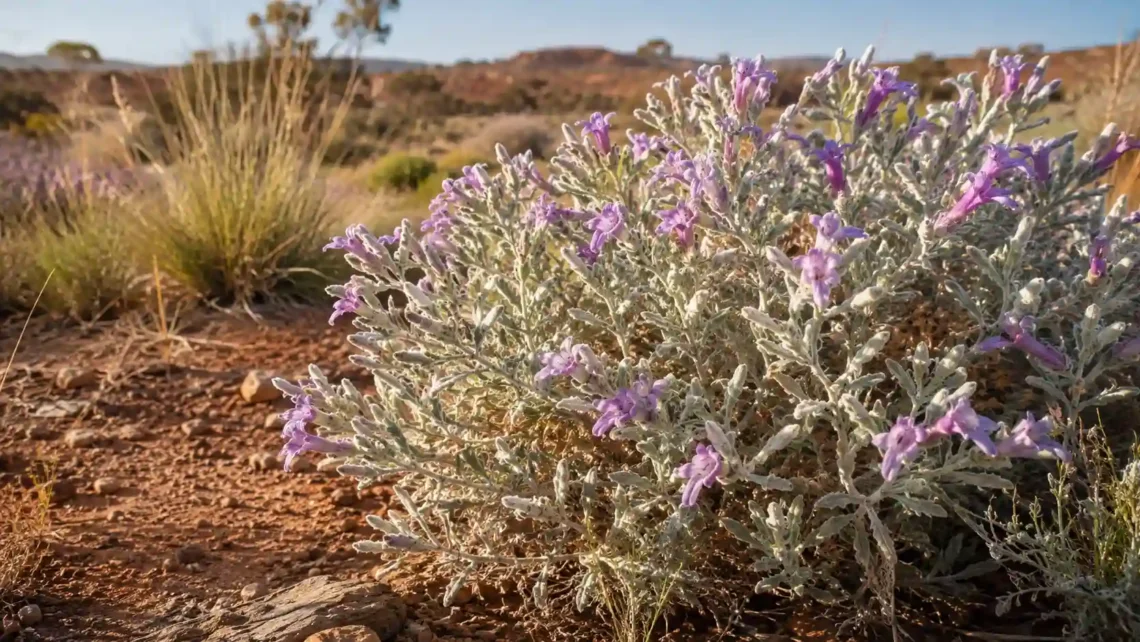
Eremophila waitii is a standout member of the emu bush group, valued for its soft silvery foliage, compact form, and strong drought tolerance in dry climates. This Australian native shrub thrives in arid and semi-arid landscapes where many ornamental plants struggle to survive. Belonging to the diverse Eremophila genus, it is closely related to well-known species such as eremophila nivea, eremophila hygrophana, and other silky-leafed forms like the popular silky emu bush.
This guide covers everything about Eremophila waitii, including its botanical features, care requirements, growth habits, related species, and common cultivation challenges. It is designed to help gardeners understand both its ornamental value and ecological importance in native planting systems. Eremophila waitii is often included in broader Australian native planting designs alongside other drought-tolerant species featured in guides like Australian Native Garden Trees: The Complete Planting Guide.
Quick Summary
- Eremophila waitii is a compact, drought-hardy Australian shrub with silky silver-grey foliage and tubular flowers that attract honeyeaters.
- It belongs to the Eremophila (emu bush) genus, which includes over 250 species adapted to dry Australian environments.
- The plant performs best in well-drained soils and requires minimal water once established.
- Closely related to species like eremophila nivea and eremophila hygrophana, it is prized for ornamental and wildlife value.
What Is Eremophila waitii?
Eremophila waitii is a flowering shrub in the family Scrophulariaceae, native to Western Australia’s arid and semi-arid regions. The genus name Eremophila means “desert-loving,” reflecting its adaptation to harsh, dry environments. The species name waitii honors its botanical classification within Australian native flora. Within larger native landscaping systems, emu bushes such as Eremophila waitii are frequently grouped with other resilient shrubs like those described in Eremophila Ground Cover: Best Varieties, Care & Planting Guide.
Commonly known as the silky emu bush or silver emu bush, Eremophila waitii is part of the broader emu bush plant group, defined by its ability to thrive in nutrient-poor soils and low rainfall conditions. These plants are ecologically significant in Australian landscapes because they support pollinators and stabilize arid ecosystems.
The term emu bush plant refers to hardy native shrubs in the Eremophila genus, many of which are adapted to survive extreme drought and heat. Within this group, Eremophila waitii stands out for its soft, reflective foliage that reduces water loss and protects the plant from intense sunlight.
Key Characteristics of Eremophila waitii
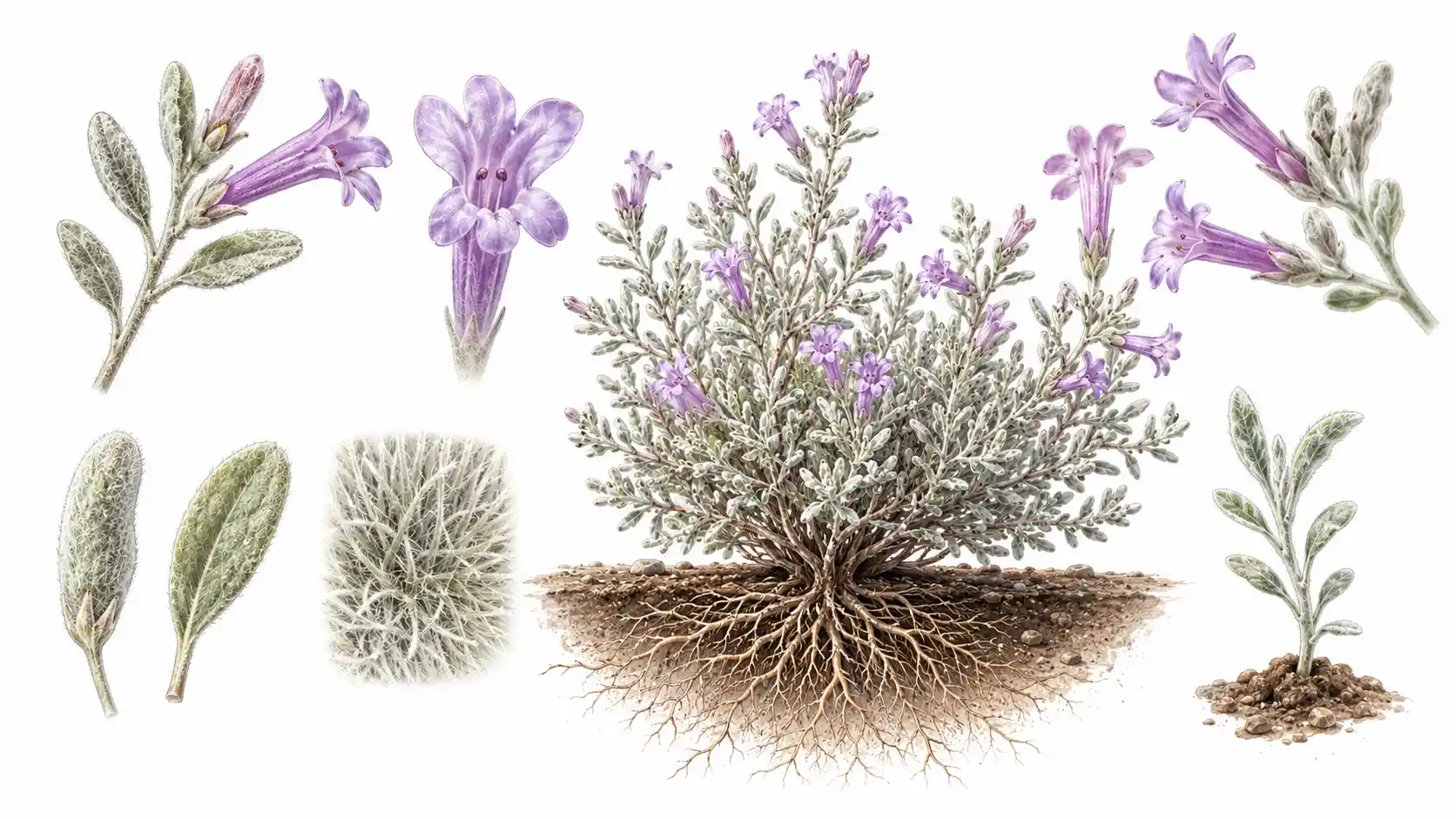
Eremophila waitii is easily recognized by its soft, silky foliage and ornamental floral display. The leaves are covered in fine hairs that give the shrub a silvery appearance, helping reflect sunlight and conserve moisture. Its tubular flowers are typically lilac to soft purple and are highly attractive to nectar-feeding birds. The plant’s soft, hairy foliage is a defining trait shared by many Australian natives listed in 7+ Essential Plants with Velvety Leaves You Can Grow.
The combination of foliage texture, flower form, and drought resistance makes it a popular choice in low-water ornamental gardens.
Eremophila waitii At a Glance
| Feature | Description |
| Foliage | Silvery-grey, soft, silky-haired |
| Flower colour | Lilac to soft purple, tubular |
| Wildlife value | Attracts honeyeaters and native bees |
| Soil preference | Well-drained, sandy to loamy |
| Climate tolerance | Arid to semi-arid; frost-tolerant once established |
| Water needs | Low; drought-tolerant |
Plant Size and Growth Habit
Eremophila waitii is a compact shrub that typically grows between 0.5 and 1.5 metres in height and width. Its natural form is rounded and dense, making it suitable for borders, rock gardens, and dry landscape designs.
While it is primarily an outdoor plant, it can be grown in large containers if drainage is excellent. Outdoor specimens generally achieve better size and flowering performance compared to indoor or restricted environments.
Environmental factors such as rainfall, soil fertility, pruning frequency, and climate conditions strongly influence its final size. In particularly dry conditions, growth may remain more compact, while slightly enriched soils may encourage broader foliage development. The silky eremophila growth habit is generally slow to moderate, maintaining a naturally neat structure.
Growth Rate
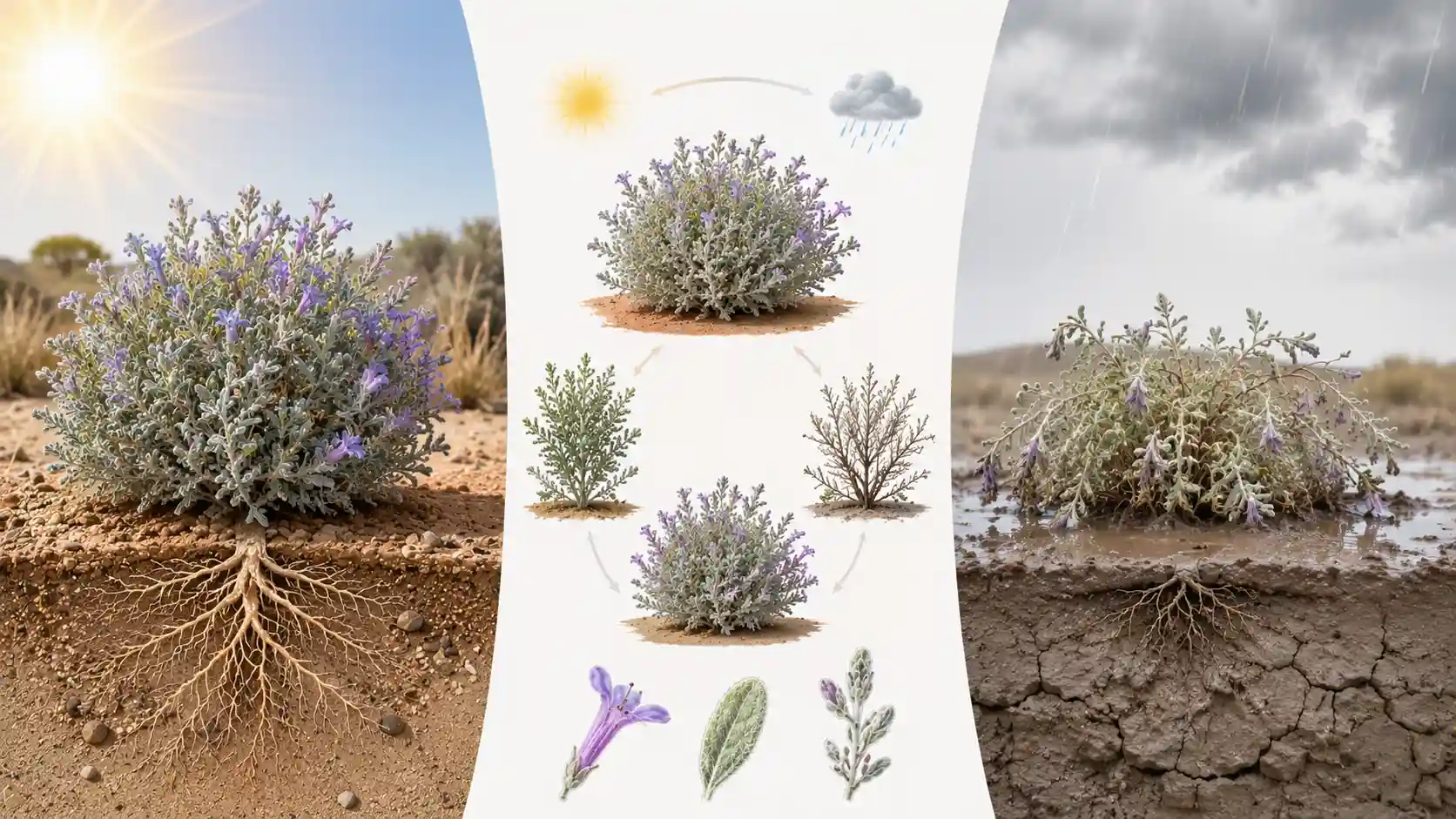
- Eremophila waitii has a moderate growth rate under ideal conditions. It establishes slowly at first as it develops a deep, drought-resistant root system, then accelerates once established.
- Growth is most active during cooler months following seasonal rainfall. In dry summers, growth often slows significantly as the plant conserves moisture.
- Soil drainage, full sun exposure, and occasional deep watering directly influence establishment speed. Poor drainage or excessive watering can severely restrict growth and lead to decline.
How to Care for Eremophila waitii
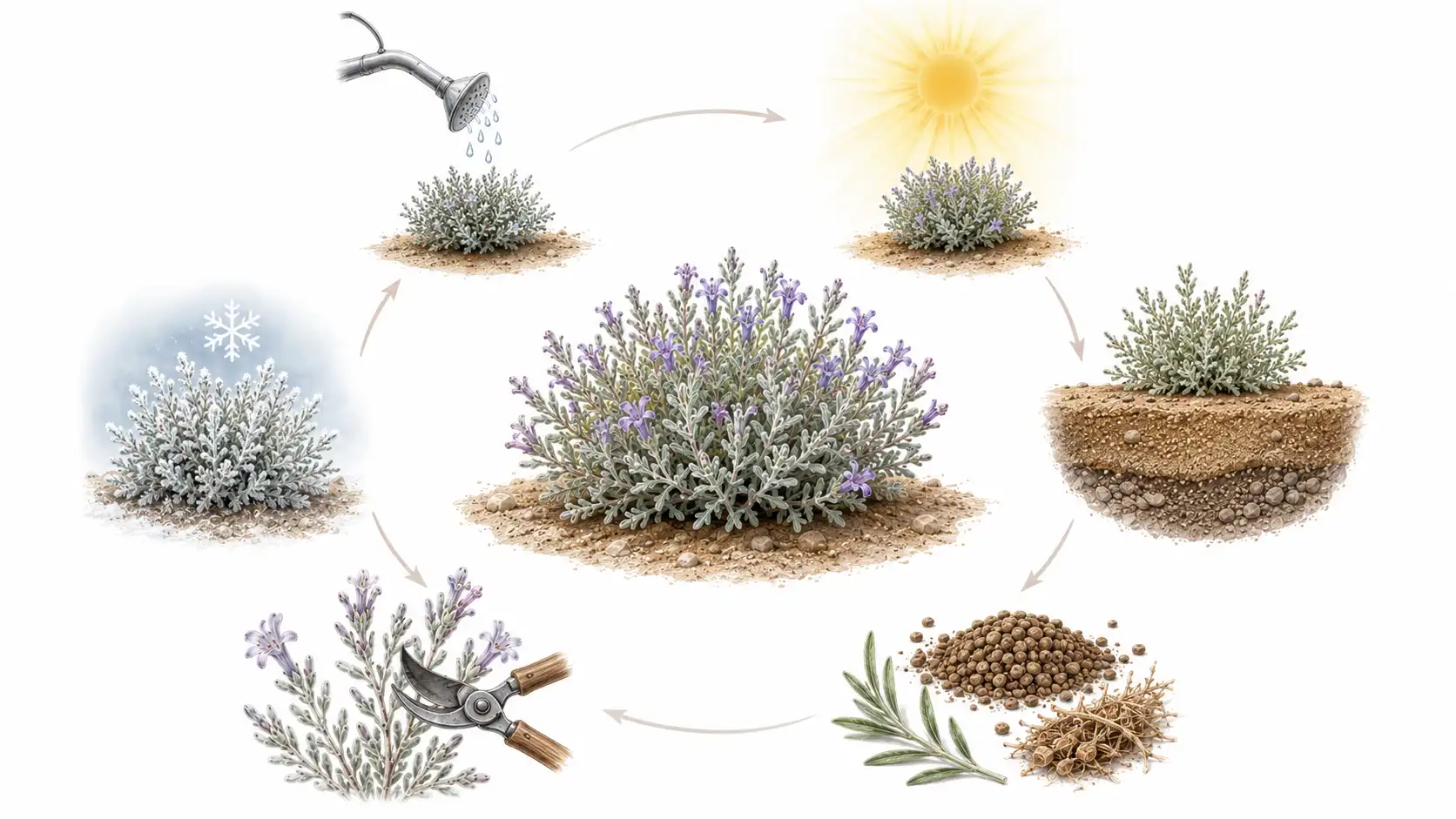
Watering Requirements
Eremophila waitii requires minimal water once established and is highly drought-tolerant.
- Water moderately during establishment phase
- Reduce watering once roots are established
- Avoid waterlogging at all costs
- Deep, infrequent watering is ideal in dry climates
- Suitable for Mediterranean-style watering regimes
This drought-adapted watering behavior is similar to other low-water Australian natives discussed in Ultimate 8+ Plants That Like Wet Soil Australia Guide, where drainage balance is also critical.
Sunlight and Positioning
This species performs best in full sun conditions.
- Requires full sun for best flowering
- Tolerates reflected heat and hot positions
- Ideal for north- or west-facing gardens (Southern Hemisphere)
- Poor flowering occurs in heavy shade
Soil and Drainage
Well-drained soil is critical for survival.
- Prefers sandy to loamy, well-drained soil
- Slightly alkaline to neutral pH is ideal
- Does not tolerate heavy clay soils
- Raised beds or mounded planting recommended in poor drainage areas
Well-drained soil requirements are a common trait among native shrubs such as those covered in Ultimate Guide to the Best Trees for Clay Soil in Australia.
Fertilisation
As a native Australian plant, it is sensitive to phosphorus.
- Use low-phosphorus native plant fertiliser only
- Apply light slow-release fertiliser once per year
- Avoid general-purpose or high-phosphorus feeds
- Over-fertilisation can damage root systems
Pruning
Light pruning helps maintain shape and encourage flowering.
- Tip prune after flowering to promote bushiness
- Avoid cutting into old woody growth
- Regular light shaping improves plant density
- Hard pruning is not recommended
Climate and Frost Tolerance
Eremophila waitii is adapted to dry climates.
- Tolerates light to moderate frost once established
- Performs best in arid and semi-arid regions
- Not suitable for high-humidity tropical climates
- Requires excellent drainage in cooler zones
Eremophila waitii vs. Related Silky-Leafed Species
Eremophila waitii is often compared with other silky-leafed emu bushes due to its similar appearance and ecological preferences.
Comparison of Silky Eremophila Species
| Species | Foliage | Flower Colour | Size | Best Use |
| E. waitii | Silver-grey, silky | Lilac/purple | 0.5–1.5 m | Dry gardens, wildlife |
| E. nivea | Dense silver-white | Mauve/blue | 1–2 m | Cottage/native gardens |
| E. hygrophana | Soft grey-green | Blue-purple | 0.5–1 m | Low-water borders |
| E. nivea ‘Spring Mist’ | Silver | Soft lavender | Compact | Mass planting, pots |
| E. nivea ‘Blue Velvet’ | Soft silver | Rich blue-violet | Medium | Statement shrub |
| E. nivea ‘Gubburra Bells’ | Silver | Bell-shaped mauve | Compact | Cottage gardens |
| Silky lavender forms | Silvery | Lavender | Low-growing | Rockeries |
| E. ‘Hello Cocky’ | Grey-green | Red/orange | Medium | Bird gardens |
Closely related species such as Eremophila nivea are also widely used in landscaping, especially in designs referenced in Eremophila nivea bunnings availability discussions and native retail guides.
Eremophila nivea — The Most Popular Silky Emu Bush
Eremophila nivea is one of the most widely cultivated silky emu bushes due to its ornamental appeal and availability in nurseries, including large retailers such as eremophila nivea bunnings stock lines.
It is especially valued for its dense silver foliage and strong flowering performance. Popular cultivars include ‘Spring Mist’, ‘Blue Velvet’, and ‘Gubburra Bells’, each offering variations in size and flower colour.
Common Eremophila nivea Problems
- Root rot
- Cause: Overwatering or poor drainage
- Fix: Improve soil drainage, reduce watering
- Prevention: Use raised beds and sandy soils
- Leaf drop or yellowing
- Cause: Overwatering, frost stress, nutrient imbalance
- Fix: Adjust watering, protect from frost
- Prevention: Maintain dry, well-drained conditions
- Humidity stress
- Cause: High humidity climates
- Fix: Improve airflow, avoid overhead watering
- Prevention: Plant in arid-compatible regions
- Pests (scale, aphids)
- Cause: Weak or stressed plants
- Fix: Horticultural oil or natural predators
- Prevention: Maintain plant health and airflow
Common Mistakes When Growing Eremophila waitii and Related Species
Many cultivation failures occur due to incorrect environmental conditions or care practices.
- Overwatering leading to root rot
- Planting in heavy clay without amendment
- Using high-phosphorus fertilisers
- Pruning into old woody stems that do not regenerate
- Growing in humid or tropical climates
- Choosing cultivars unsuitable for available space
Wildlife Value and Ecological Role
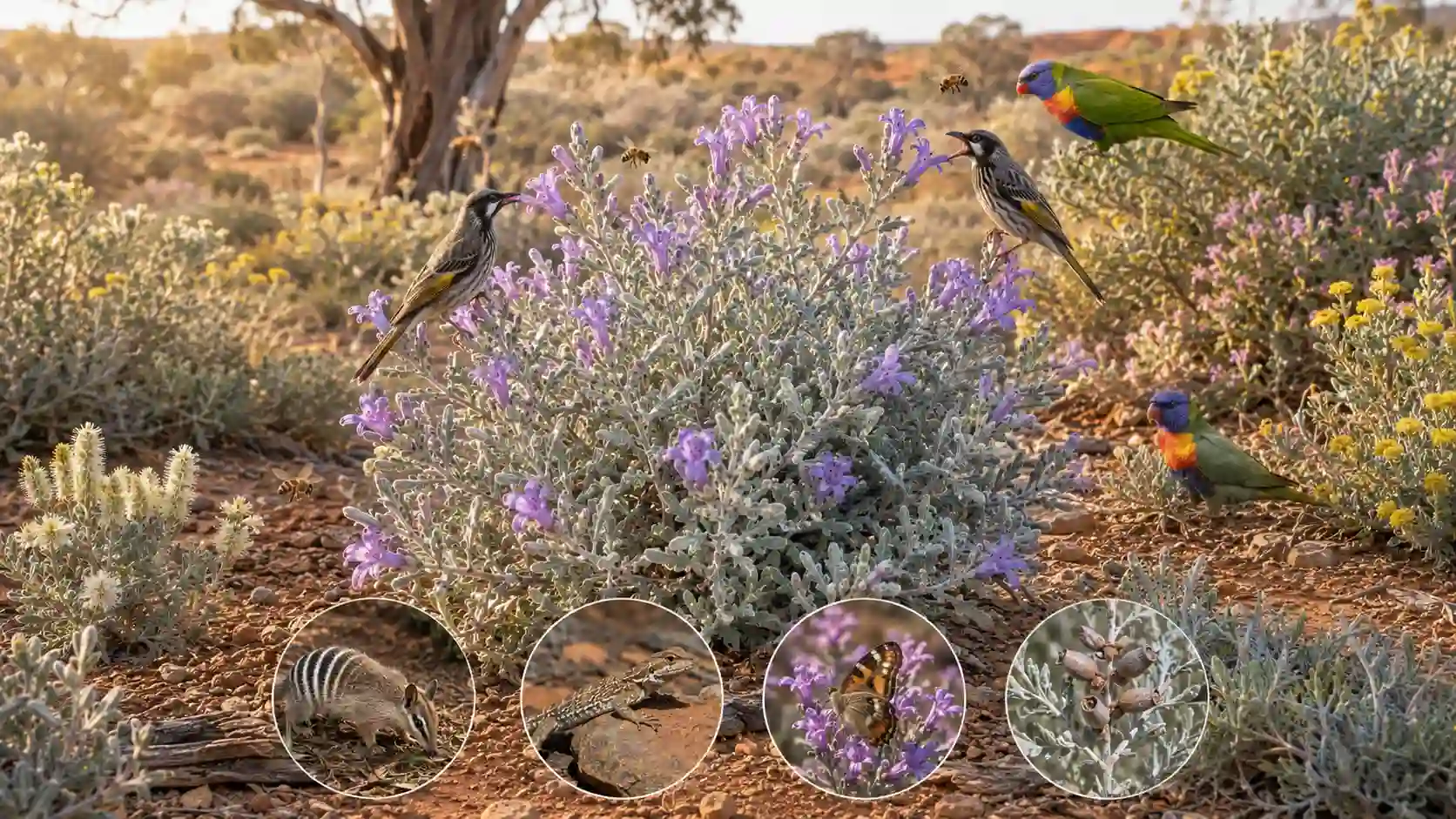
Eremophila waitii plays an important ecological role in supporting native wildlife. Its tubular flowers provide nectar for honeyeaters, lorikeets, and native bees.
These plants are part of broader arid-zone ecosystems where flowering shrubs sustain bird populations during dry periods. Species such as the hello cocky plant also contribute to similar bird-attracting habitats. Plants like Eremophila waitii contribute to biodiversity corridors similar to other wildlife-attracting natives described in What to Plant with Kangaroo Paw: 8+ Smart Companion Tips.
By planting silky emu bushes, gardeners help create urban biodiversity corridors that support pollinators and native birds in fragmented landscapes.
Where to Buy Eremophila waitii
Eremophila waitii for sale is generally available through specialist native plant nurseries, online Australian native plant retailers, and regional plant society sales.
It is less commonly found in mainstream garden centres compared to Eremophila nivea, which is more widely stocked. When purchasing, ensure correct labeling, as similar-looking cultivars are often misidentified.
Topical Connections — Eremophila in the Broader Native Garden
- Eremophila species, including waitii, nivea, and hygrophana, are widely used in Australian native garden designs.
- They pair well with grevilleas, callistemons, and westringias in low-water landscapes. These combinations create resilient, wildlife-friendly ecosystems.
- Propagation is typically done through tip cuttings in autumn, while grafting is sometimes used for difficult-to-grow species.
Conclusion — Is Eremophila waitii Right for Your Garden?
Eremophila waitii is a highly adaptable, drought-tolerant shrub valued for its silver foliage, compact form, and strong wildlife appeal. It performs best in dry, well-drained soils and is ideal for Mediterranean and arid climates where water conservation is important.
If you are looking for a low-maintenance native shrub that delivers year-round texture, colour, and ecological value, Eremophila waitii and its silky emu bush relatives are excellent choices for sustainable garden design.
Frequently Asked Questions
What is the difference between Eremophila waitii and Eremophila nivea?
Eremophila waitii is smaller with lilac flowers, while E. nivea is larger with silver-white foliage and blue or mauve flowers. Both are drought-tolerant emu bushes.
How much water does Eremophila waitii need?
It requires minimal water once established and should only be watered deeply and infrequently during prolonged dry periods.
Why is my Eremophila nivea dying or dropping leaves?
The most common cause is overwatering or poor drainage, though frost damage and nutrient imbalance can also contribute.
Can Eremophila waitii grow in a pot or container?
Yes, it can grow in large, well-drained containers using sandy native potting mix and careful watering practices.
What birds does Eremophila waitii attract?
It attracts honeyeaters, lorikeets, wattlebirds, and native bees due to its nectar-rich tubular flowers.
Is Eremophila waitii frost-tolerant?
It tolerates light to moderate frost once established but should be protected when young, especially in wet soil.
Where can I buy Eremophila waitii in Australia?
It is available at specialist native nurseries, online native plant stores, and plant society sales, but is less common than E. nivea.