Introduction
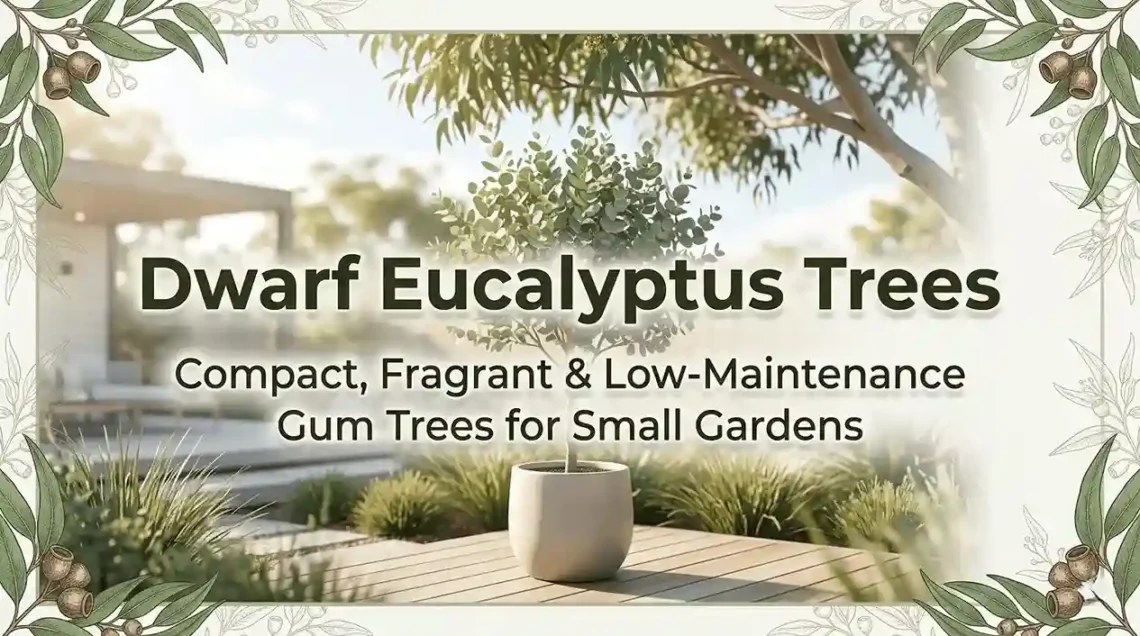
Dwarf eucalyptus trees are compact cultivars of the iconic Australian eucalyptus (gum tree) species, developed for smaller landscapes, patios, and even container growth. These small eucalyptus trees retain the signature aromatic foliage, smooth bark, and colorful blooms of full-sized varieties while staying manageable in size. Ideal for urban gardens and limited spaces, dwarf gum trees thrive in warm climates and offer both ornamental beauty and ecological benefits. Their adaptability, fragrance, and relatively low maintenance make them a practical choice for modern horticulture and landscape design.
Dwarf eucalyptus trees are also increasingly included in modern indoor and container gardening setups, making them relevant to broader plant care systems such as a comprehensive Guide to House Plants, where adaptable and low-maintenance species are explored in detail.
Quick Summary
- Dwarf eucalyptus trees typically grow between 3–10 meters, making them suitable for small gardens and urban spaces.
- Popular varieties include Eucalyptus leucoxylon ‘Euky dwarf’ and Corymbia citriodora ‘Dwarf’ (lemon scented gum).
- They feature aromatic leaves, attractive bark, and nectar-rich flowers that support wildlife.
- Native to Australia, especially Western Australia gum tree regions, they are drought-tolerant once established.
What Are Dwarf Eucalyptus Trees?
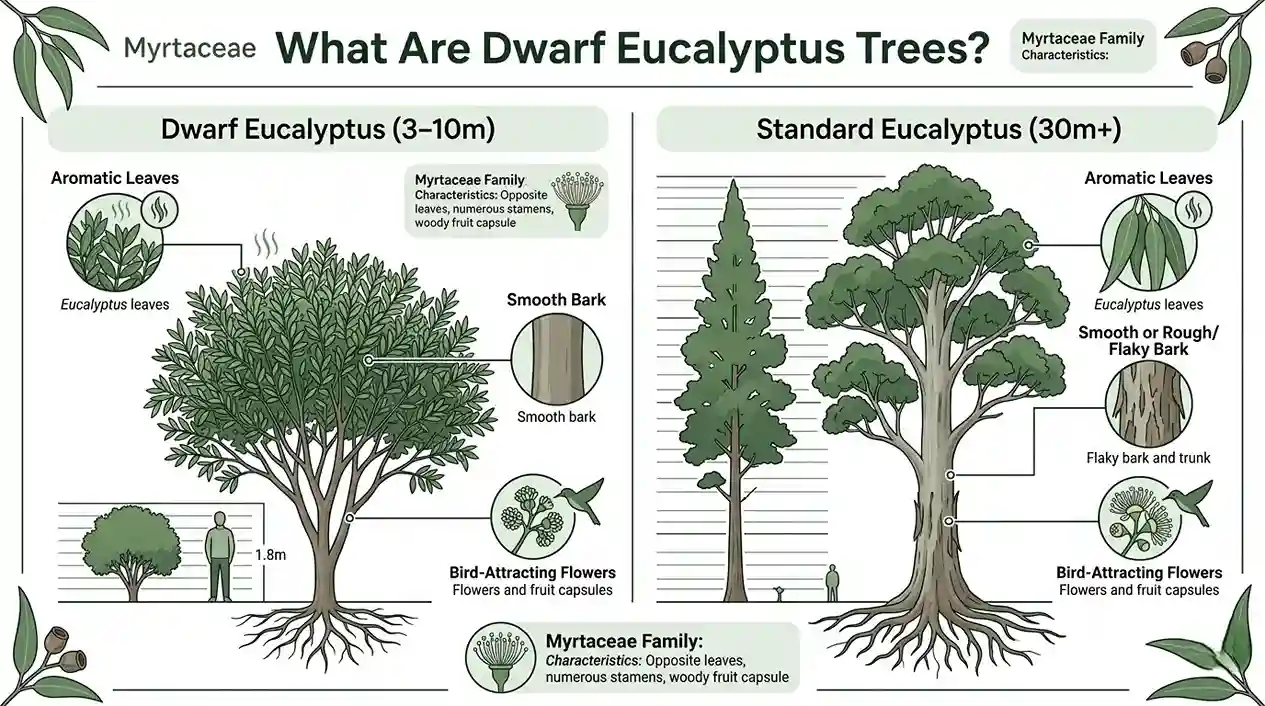
Dwarf eucalyptus trees are specially cultivated, compact forms of species from the genera Eucalyptus, Corymbia, and Angophora, designed to maintain smaller growth habits while preserving the defining traits of traditional gum trees. Dwarf eucalyptus trees belong to the broader eucalyptus group, a genus that includes hundreds of species native primarily to Australia, as described in detail on Wikipedia.
Key Characteristics
- Aromatic foliage rich in essential oils
- Smooth or peeling bark depending on species
- Nectar-rich flowers that attract birds and pollinators
- Evergreen leaves with narrow or lance-shaped forms
Differences from Standard Eucalyptus
- Reduced height due to selective breeding
- Slower canopy expansion and root spread
- Better suitability for residential and container planting
Native Habitat
These trees originate from Australia, with many species adapted from regions like Western Australia where diverse gum tree types naturally occur.
Botanical Facts
| Feature | Details |
| Family | Myrtaceae |
| Genera | Eucalyptus, Corymbia |
| Leaf Shape | Lanceolate, narrow |
| Bark Type | Smooth, fibrous, or peeling |
| Flower Type | Nectar-rich, showy |
Popular Varieties of Dwarf Eucalyptus Trees
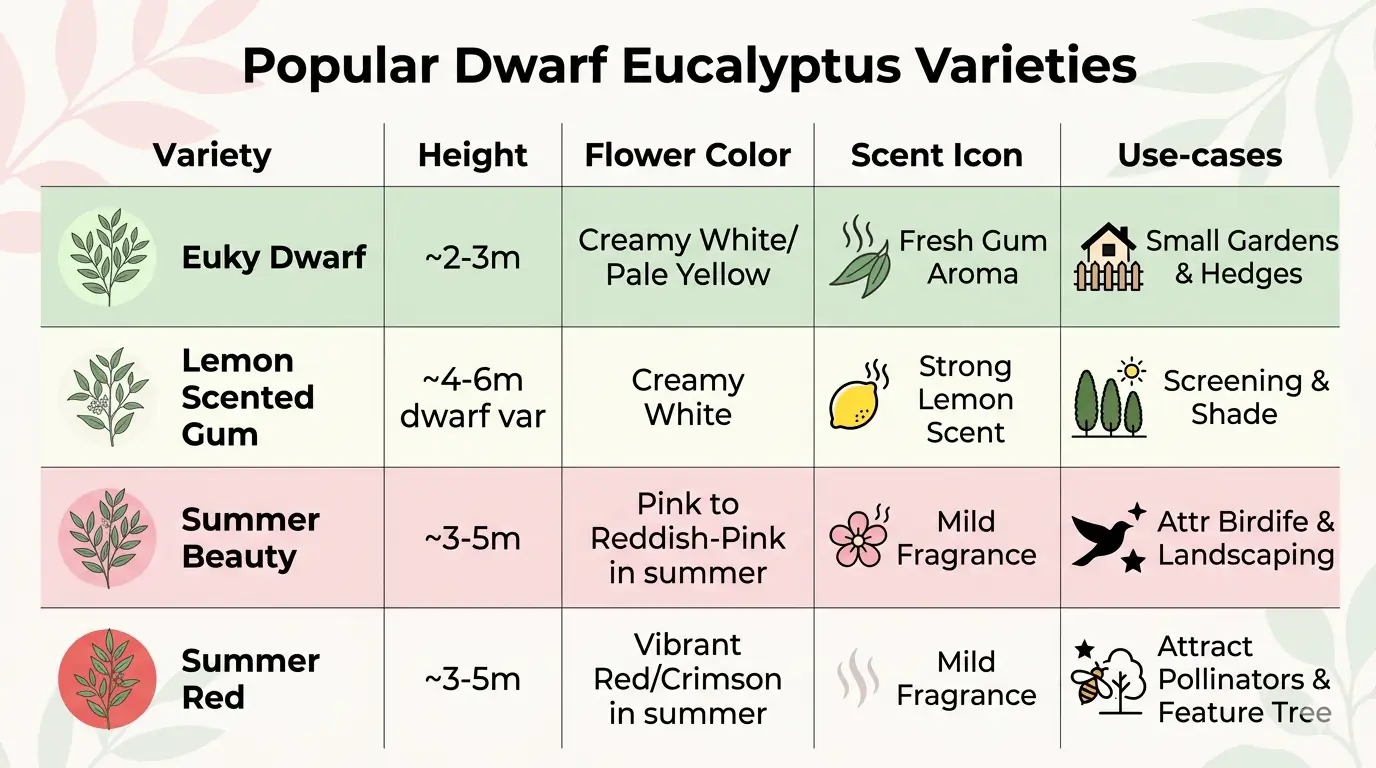
Comparison of Key Varieties
| Variety | Height (m) | Flower Color | Scent Profile | Best For |
| Euky Dwarf (E. leucoxylon ‘Euky dwarf’) | 5–8 | Pink/Red | Mild eucalypt | Small gardens, streets |
| Lemon Scented Gum (Dwarf C. citriodora) | 6–10 | White | Strong lemon | Aromatic hedges |
| Eucalyptus Summer Beauty | 4–7 | Pink | Sweet gum | Flowering accents |
| Eucalyptus Summer Red | 5–9 | Red | Classic eucalypt | Bird attractors |
Unique Traits of Popular Varieties
- Euky Dwarf: Strong drought tolerance and compact canopy
- Lemon scented gum: Highly fragrant foliage ideal for sensory gardens
- Summer Beauty: Extended blooming period with soft pink flowers
- Summer Red: Vibrant red blooms that attract nectar-feeding birds
Plant Size
Typical Dimensions
- Mature height: 3–10 meters depending on cultivar
- Width: 2–5 meters with rounded canopy structure
Indoor vs. Outdoor Growth
- Indoor/container: 2–4 meters due to root restriction
- Outdoor: Fuller growth with wider canopy spread
Size Influencing Factors
- Soil quality and drainage
- Sunlight exposure
- Pruning practices
Size by Variety
| Variety | Height | Width |
| Euky Dwarf | 5–8 m | 3–4 m |
| Summer Beauty | 4–7 m | 2–3 m |
| Lemon Scented Gum | 6–10 m | 4–5 m |
Growth Rate
Growth Pattern
Dwarf eucalyptus trees grow at a moderate to fast rate during the first 2–3 years, then gradually slow as they mature.
Seasonal Growth
- Peak growth occurs in spring and summer
- Slower development during cooler months
Influencing Factors
- Full sun accelerates growth
- Poor or compacted soil reduces vigor
- Adequate spacing prevents root restriction
Care Guide
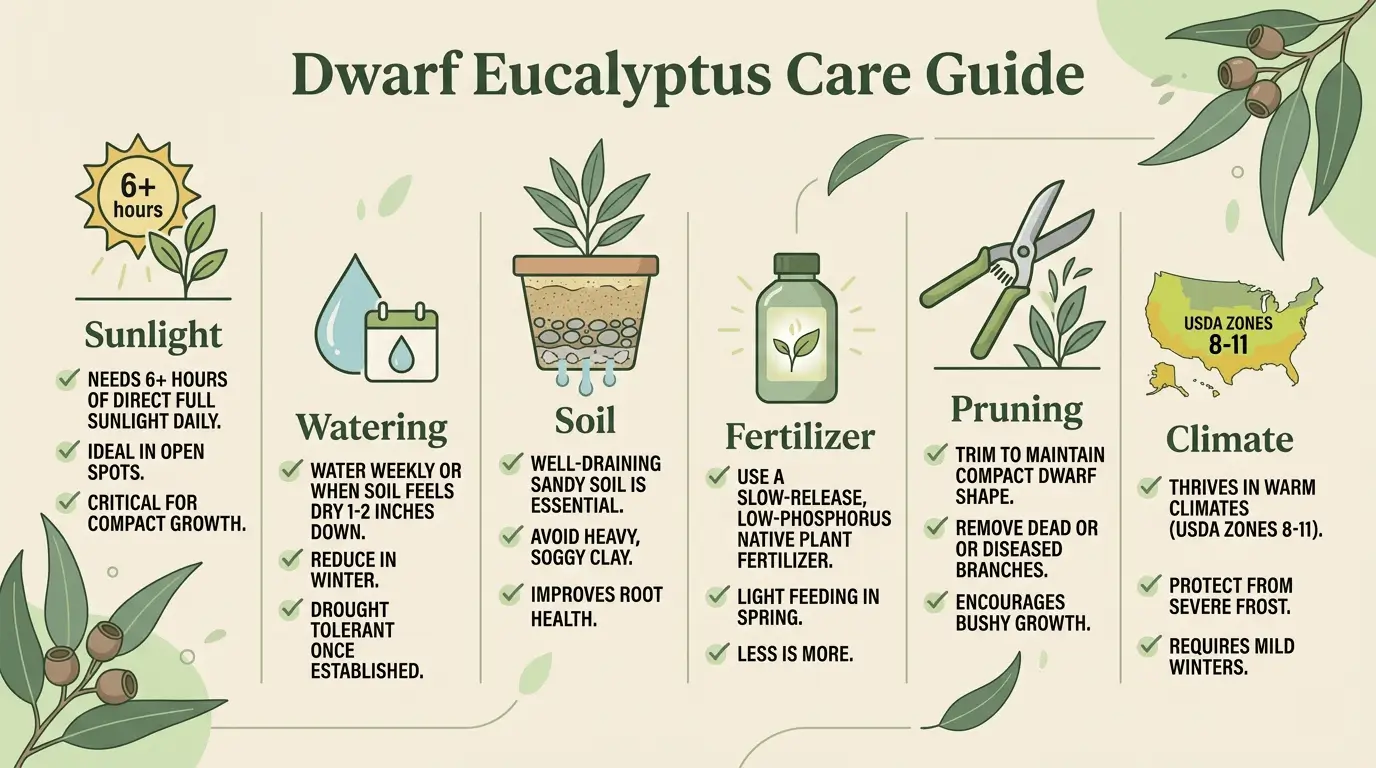
Watering
- Moderate watering required
- Once established, drought-tolerant
- In pots: water weekly or when soil dries
Light Requirements
- Full sun exposure (minimum 6 hours daily)
Soil Conditions
- Well-draining sandy or loamy soil
- Ideal pH: 5.5–7.5
Fertilization
- Low-nitrogen fertilizer in spring
- Avoid over-fertilizing to prevent weak growth
Pruning
- Light pruning annually after flowering
- Maintains shape and encourages airflow
Climate Tolerance
- Best suited for USDA zones 8–11
- Sensitive to frost below -5°C
Regional Adaptation Example
| Region | Suitability |
| Perth (Western Australia) | Excellent |
| Coastal warm regions | High |
| Cold inland climates | Limited |
Common Problems and Solutions
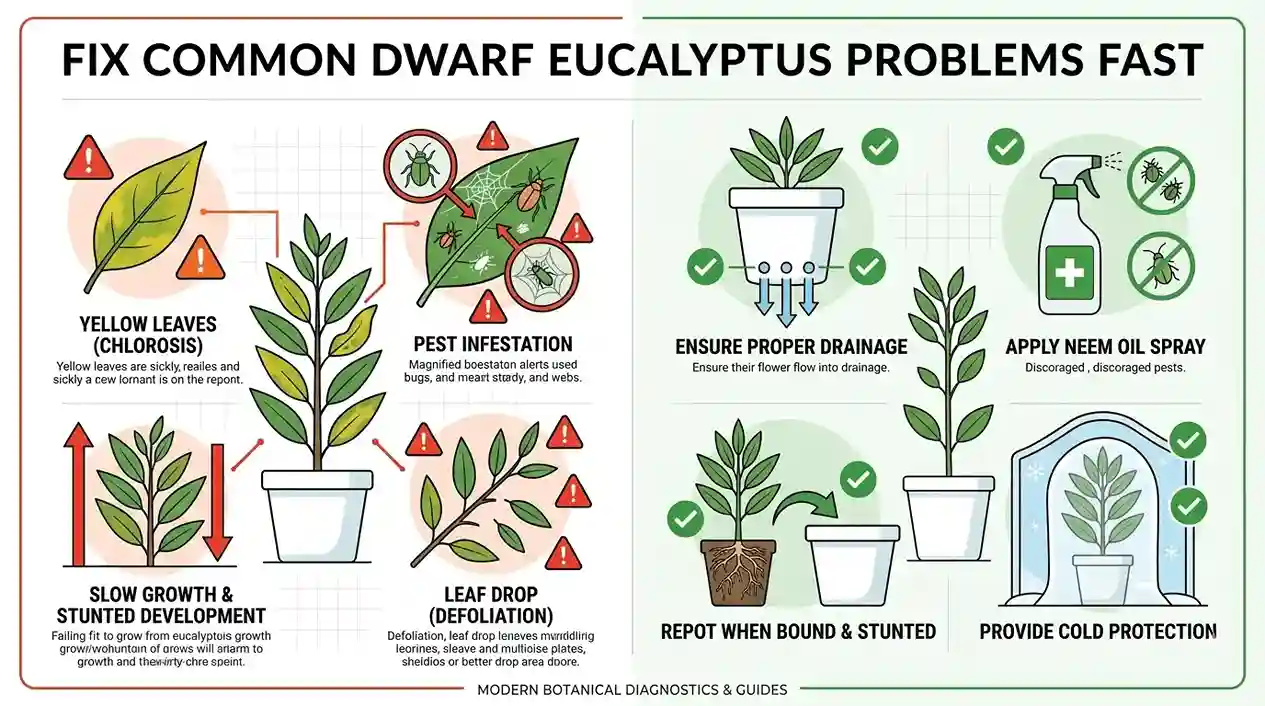
Yellow Leaves
- Cause: Overwatering or nutrient imbalance
- Fix: Reduce watering, apply balanced fertilizer
- Prevent: Ensure proper drainage
Pest Infestations
- Cause: Psyllids or other insects
- Fix: Apply neem oil spray
- Prevent: Encourage beneficial insects
Slow Growth
- Cause: Lack of sunlight or root-bound conditions
- Fix: Relocate to sunny area, repot if needed
- Prevent: Provide adequate space and light
Leaf Drop
- Cause: Cold stress or environmental shock
- Fix: Add mulch and protect from cold
- Prevent: Choose hardy varieties like Euky Dwarf
Comparisons: Dwarf vs. Standard Eucalyptus
Key Differences
| Feature | Dwarf Eucalyptus | Standard Eucalyptus |
| Height | Up to 10 m | 30 m+ |
| Maintenance | Low | Moderate to high |
| Space Requirement | Small gardens | Large landscapes |
| Root Spread | Controlled | Extensive |
Practical Insights
- Dwarf varieties are ideal for suburban environments
- Standard trees require significant space and planning
- Common mistake: planting dwarf eucalyptus in shaded areas reduces growth quality
If you are exploring other compact landscaping options, you may also find value in Dwarf Olive Trees Guide: 7+ Essential Care & Growth Tips, 7+ Essential Lilly Pilly Varieties for Hedges & Screening, and 7+ Essential Australian Native Screening Trees for Privacy, which offer similar low-maintenance and space-saving benefits for modern gardens.
Content Differentiation: Varieties and Regional Tips
Western Australia Varieties
- Adapted to dry, warm climates
- Includes compact forms of native gum trees
Cultivar Highlights
- Flowering dwarf varieties provide seasonal color
- Some types like rose mallee offer ornamental diversity
Beginner Mistakes
- Over-fertilizing leads to weak, leggy growth
- Poor drainage causes root stress
- Ignoring sunlight needs limits development
Practical Seasonal Tip
- In dry summers, deep watering once weekly improves root strength
- Avoid frequent shallow watering
Conclusion
Dwarf eucalyptus trees such as Euky Dwarf and lemon scented gum provide the essence of traditional Australian gum trees in a compact, manageable form. With aromatic foliage, attractive flowers, and adaptability to smaller spaces, they are well-suited for modern gardens. By ensuring full sun, well-drained soil, and minimal maintenance, gardeners can achieve healthy growth and long-term ornamental value. Selecting the right variety for your climate is essential for consistent performance and ease of care.
FAQ
What is the average height of a dwarf eucalyptus tree?
Most dwarf eucalyptus trees grow between 3–10 meters, depending on the variety, with Euky Dwarf typically reaching 5–8 meters.
How do you care for a dwarf eucalyptus tree in a pot?
Use well-draining soil, provide full sun, water moderately, and repot every 2–3 years to prevent root binding.
What are the best dwarf eucalyptus varieties for small gardens?
Euky Dwarf, Eucalyptus Summer Beauty, and dwarf lemon scented gum are ideal due to their compact size and ornamental features.
Can dwarf eucalyptus trees tolerate cold climates?
They are sensitive to frost below -5°C, so protection or container growing is recommended in colder regions.
Why do dwarf eucalyptus leaves turn yellow?
Yellow leaves are usually caused by overwatering or poor drainage; improving soil conditions and adjusting watering resolves the issue.