Introduction
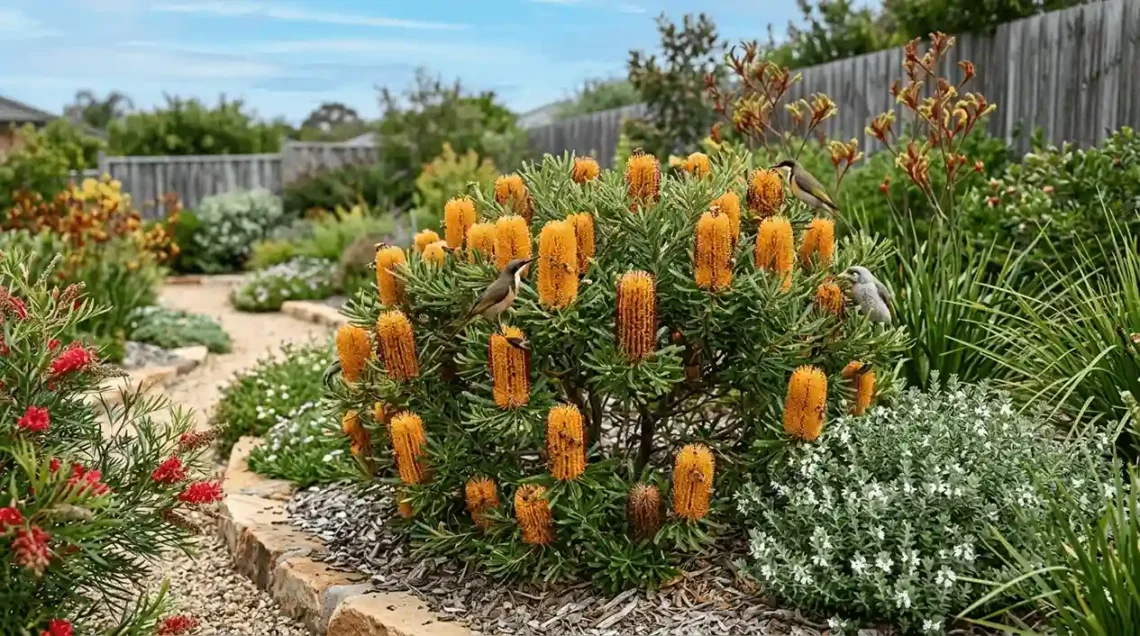
Banksia Spinulosa Stumpy Gold is a compact Australian native shrub admired for its bright golden flower spikes, dense evergreen foliage, and exceptional adaptability. As a selected dwarf cultivar of Banksia spinulosa, this variety delivers all the beauty of the species while remaining much smaller, making it ideal for modern residential landscapes. Whether referred to as banksia spinulosa stumpy gold, banksia stumpy gold, or stumpy gold banksia, it has become one of the most reliable choices for gardeners seeking a hardy, low-maintenance native plant. Like many species within the banksia plant Australia collection, it supports local wildlife by providing nectar for birds and pollinating insects throughout its long flowering season. Banksia Spinulosa Stumpy Gold is part of a wider group of resilient native plants featured in our guides on Australian native garden trees, banksia tree varieties, and coastal-friendly landscaping plants such as coastal rosemary.
By Greenery Inside | Plant Care & Gardening Expert
Quick Summary
- Banksia Spinulosa Stumpy Gold is a compact cultivar of Banksia spinulosa ideal for smaller Australian gardens.
- It produces striking golden flower spikes that attract honeyeaters, bees, butterflies, and other native pollinators.
- The shrub thrives in full sun and free-draining soil while requiring minimal maintenance after establishment.
- Its compact habit makes it suitable for borders, containers, wildlife gardens, coastal landscapes, and mass plantings.
- Proper drainage and low-phosphorus fertiliser are the keys to long-term health and vigorous flowering.
What Is Banksia Spinulosa Stumpy Gold?
Botanical Classification and Origin
Banksia Spinulosa Stumpy Gold is a cultivated dwarf selection of Banksia spinulosa, commonly known as Hairpin Banksia. It belongs to the Proteaceae family, one of Australia’s most distinctive native plant families. This cultivar belongs to the broader Banksia group, which also includes popular landscape species like Banksia integrifolia Roller Coaster and other varieties explained in our banksia tree varieties guide, all forming part of Australia’s diverse native garden ecosystem. Banksia spinulosa belongs to the Proteaceae family and is widely documented in botanical references such as Wikipedia’s classification of the species.
Botanical Classification
| Classification | Details |
| Botanical Name | Banksia spinulosa ‘Stumpy Gold’ |
| Common Name | Banksia Spinulosa Stumpy Gold |
| Family | Proteaceae |
| Plant Type | Evergreen native shrub |
| Native Origin | Eastern Australia |
| Growth Habit | Compact, dense, rounded |
The parent species naturally occurs across eastern Australia, where it grows in open forests, woodlands, coastal heath, and sandstone environments. Plant breeders developed Stumpy Gold to provide gardeners with a naturally compact form that requires little pruning while maintaining prolific flowering.
Unlike taller forms of Banksia spinulosa, this cultivar stays neat throughout its life, making it particularly valuable for suburban gardens, commercial landscapes, and water-wise planting schemes.
In our experience growing Australian natives, compact cultivars like Stumpy Gold are easier to integrate into mixed garden beds because they rarely outgrow their allocated space.
Key Characteristics
Banksia Spinulosa Stumpy Gold combines ornamental beauty with outstanding resilience.
Its dense evergreen foliage forms a naturally rounded shrub throughout the year. During flowering, large cylindrical golden flower spikes emerge above the foliage, creating vibrant seasonal colour while supplying abundant nectar for wildlife.
Key features include:
- Dense evergreen foliage
- Bright golden cylindrical flower spikes
- Naturally compact growth habit
- Long flowering season from autumn through winter and often into spring
- Excellent nectar source for birds
- Highly attractive to bees and butterflies
- Adaptable to coastal and inland gardens
- Drought tolerant once established
Like many forms of banksia spinulosa, this cultivar contributes significantly to biodiversity by supporting native pollinators. It is also among the easiest examples of a banksia plant Australia gardeners can grow successfully with minimal intervention.
Greenery Inside recommends planting it where its flowers can be viewed closely, as the golden flower spikes often become one of the garden’s most striking seasonal features.
Banksia Spinulosa Stumpy Gold Size and Mature Height
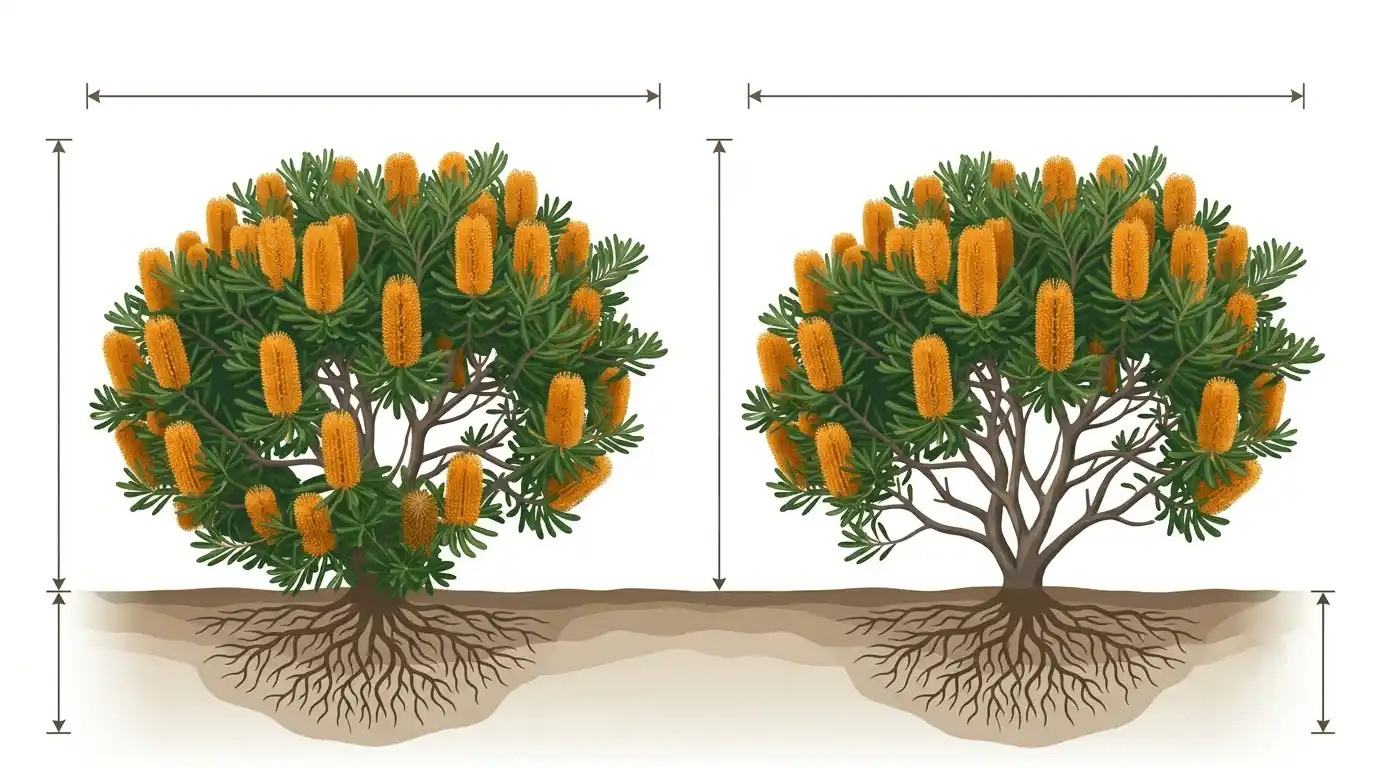
Banksia Spinulosa Stumpy Gold was specifically selected for its manageable size, making it far smaller than the standard species.
Typical Mature Size
| Feature | Typical Measurement |
| Mature Height | 0.8–1.2 metres |
| Mature Width | 1–1.5 metres |
| Growth Habit | Dense, rounded shrub |
| Suitable Garden Size | Small to medium gardens, borders, containers |
Its naturally compact structure means very little pruning is required to maintain an attractive shape.
Banksia Spinulosa Height Compared With Stumpy Gold
Standard Banksia spinulosa height typically ranges between 2 and 4 metres depending on the subspecies and growing conditions.
By comparison, banksia spinulosa stumpy gold size usually remains under 1.2 metres tall, making it much easier to accommodate in modern residential landscapes.
| Variety | Typical Height |
| Standard Banksia spinulosa | 2–4 m |
| Banksia Spinulosa Stumpy Gold | 0.8–1.2 m |
Advantages of the dwarf cultivar include:
- Easier maintenance
- Better suitability for front gardens
- Minimal pruning requirements
- Ideal beneath windows
- Safer around powerlines
- Better for container growing
Compact cultivars also simplify long-term landscape planning because mature dimensions remain predictable.
Factors That Influence Mature Size
Several environmental factors determine the final size of Banksia Spinulosa Stumpy Gold.
Climate
Plants generally grow faster in temperate climates with mild winters and warm summers.
Soil Drainage
Excellent drainage promotes stronger root development and healthier top growth. Heavy clay soils may significantly reduce plant vigour.
Rainfall
Moderate rainfall supports steady growth, although established plants tolerate extended dry periods.
Sunlight
Full sun encourages dense branching, stronger flowering, and compact growth.
Pruning
Light pruning after flowering maintains shape and encourages branching without stimulating excessive growth.
Plant Age
Growth is most vigorous during the first several years before gradually slowing as the shrub reaches maturity.
Banksia Spinulosa Growth Rate
How Fast Does It Grow?
Banksia spinulosa growth rate is generally considered moderate.
Under ideal conditions, young plants typically grow around 20–40 cm annually during their establishment years.
Typical development:
| Plant Age | Growth Stage |
| Year 1 | Root establishment |
| Years 2–3 | Rapid branching and canopy formation |
| Years 4–5 | Near mature size |
| Mature plants | Slow, steady maintenance growth |
Although it is not a fast-growing shrub, its moderate growth contributes to excellent structural stability and longevity.
Greenery Inside has found that young plants establish noticeably faster when planted during autumn, allowing roots to develop before summer heat arrives.
What Conditions Encourage Healthy Growth?
Healthy growth depends more on suitable conditions than heavy fertilising.
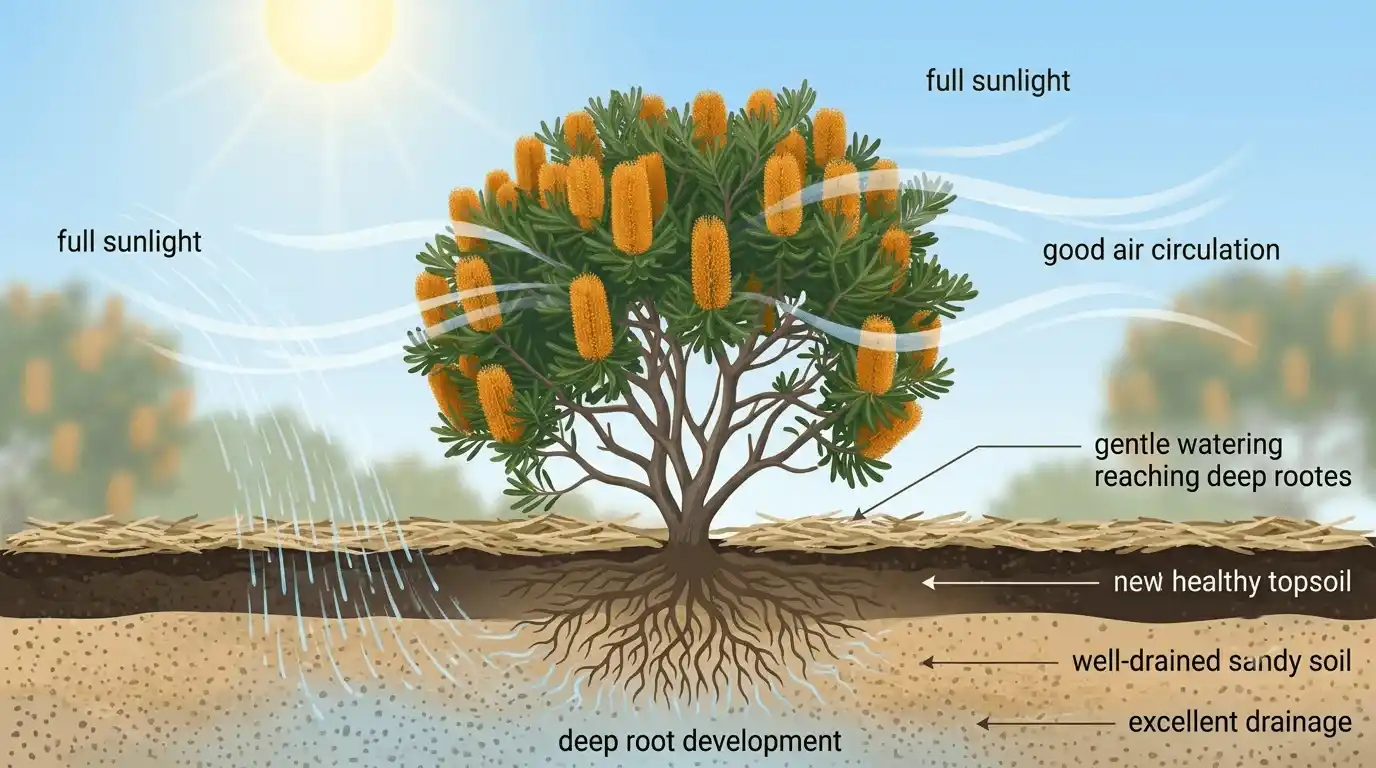
The best conditions include:
- Full sun for at least six hours daily
- Well-drained sandy or loamy soil
- Good air circulation
- Moderate watering during establishment
- Native low-phosphorus fertiliser
- Organic mulch kept away from the stem
As of the 2026 growing season, Australian native plant specialists continue to recommend avoiding high-phosphorus fertilisers because Proteaceae roots are highly sensitive to excess phosphorus.
How to Grow Banksia Spinulosa Stumpy Gold Successfully
Best Light Conditions
Banksia Spinulosa Stumpy Gold performs best in full sun, where it receives at least six to eight hours of direct sunlight each day.
Adequate sunlight encourages:
- More flower spikes
- Compact branching
- Stronger stems
- Improved drought tolerance
- Richer foliage colour
Although it can tolerate partial shade, reduced light usually leads to fewer flowers and a more open growth habit.
Soil Requirements
Excellent drainage is the single most important requirement for successful growth.
Ideal soil characteristics include:
| Soil Factor | Recommendation |
| Drainage | Excellent |
| Texture | Sandy or sandy loam |
| pH | Slightly acidic to neutral (5.5–7.0) |
| Organic Matter | Moderate |
| Waterlogging | Avoid completely |
If heavy clay soil is unavoidable, consider planting on raised mounds or raised garden beds to improve drainage.
Watering Needs
During establishment, water deeply once or twice each week depending on rainfall.
After approximately 12 months, watering requirements decrease substantially.
General watering guide:
- Newly planted: Deep watering weekly
- Established plants: Water only during prolonged drought
- Containers: Check moisture more frequently
Avoid shallow daily watering, which encourages weak surface roots.
Fertilizing Australian Native Banksias
Unlike many ornamental shrubs, Australian native Banksias require specialised fertilisers.
Use only low-phosphorus native fertilisers formulated specifically for Proteaceae plants.
Avoid:
- High-phosphorus fertilisers
- Fresh animal manure
- Excessive nitrogen applications
Apply fertiliser:
- Once in early spring
- Again after flowering if required
Too much fertiliser often causes more problems than too little.
Mulching and Root Protection
Organic mulch helps regulate soil temperature while conserving moisture.
Suitable mulches include:
- Aged bark
- Leaf litter
- Wood chips
- Eucalyptus mulch
Maintain mulch approximately 5–8 cm deep while leaving a small gap around the trunk to prevent rot.
Benefits include:
- Reduced evaporation
- Weed suppression
- Improved soil biology
- Better root insulation
- Reduced temperature fluctuations
Plant Spacing for Healthy Growth
Proper spacing improves airflow, flowering, and long-term plant health.
Recommended Spacing
| Planting Purpose | Recommended Spacing |
| Feature Plant | 1.5–2 m |
| Informal Hedge | 1–1.2 m |
| Mass Planting | 1–1.5 m |
| Wildlife Garden | 1.5–2 m |
Recommended Banksia Spinulosa Stumpy Gold Spacing
Correct banksia spinulosa stumpy gold spacing allows each shrub to reach its mature width without excessive competition.
Benefits of proper spacing include:
- Better air circulation
- Reduced fungal disease risk
- Stronger flowering
- Healthier root systems
- Easier maintenance and pruning
Avoid planting shrubs too closely together, as overcrowding can limit airflow and reduce flowering over time.
Landscaping Uses for Banksia Spinulosa Stumpy Gold
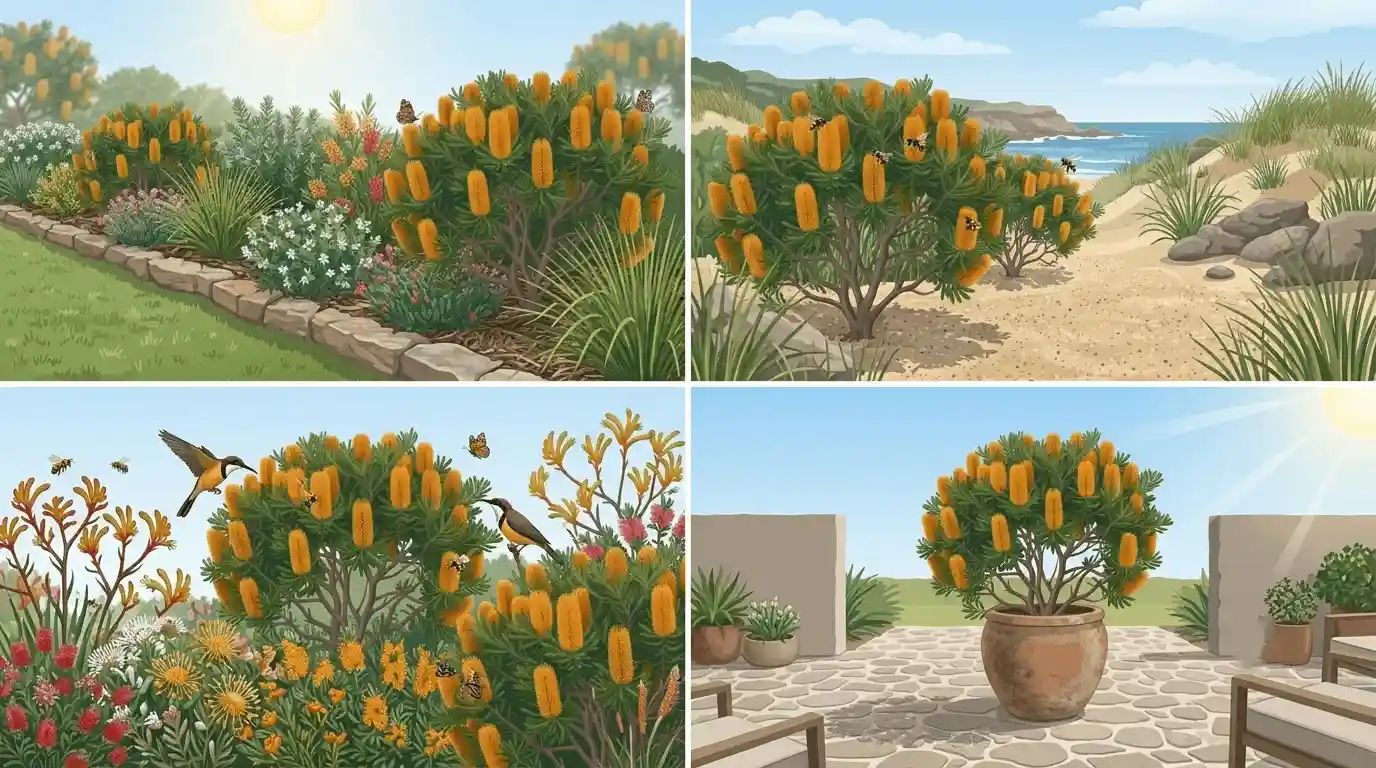
Its compact habit makes this cultivar one of the most versatile native shrubs available for Australian gardens.For more ideas on designing wildlife-friendly gardens, explore native plants that attract butterflies, structured planting styles in Australian native garden trees, and companion planting options with other flowering natives.
Native Gardens
Stumpy Gold blends naturally with grevilleas, westringias, correas, and other Australian natives. It adds year-round structure while providing valuable nectar for wildlife.
Coastal Gardens
Excellent salt tolerance and resistance to coastal winds make this cultivar highly reliable near the ocean, provided drainage remains excellent.
Low-Maintenance Landscapes
Because it requires minimal pruning, little fertiliser, and relatively infrequent watering once established, it suits water-wise gardens and busy homeowners seeking attractive, resilient plantings.
Pollinator and Bird Gardens
Its nectar-rich flowers attract:
- Honeyeaters
- Native bees
- Butterflies
- Beneficial insects
Planting several specimens together creates an extended food source that supports local biodiversity throughout the flowering season.
Container Growing
Banksia Spinulosa Stumpy Gold also performs well in large pots with premium free-draining native potting mix.
For best results:
- Choose containers at least 45–50 cm wide.
- Ensure multiple drainage holes.
- Water more frequently than garden-grown plants.
- Feed sparingly with a native plant fertiliser.
- Repot only when roots become crowded.
Container-grown plants are ideal for patios, courtyards, balconies, and small outdoor spaces where a compact Australian native shrub is desired.
Banksia Spinulosa Stumpy Gold Compared With Other Popular Banksia Varieties
Choosing the right Banksia variety depends on your available space, desired flower colour, maintenance expectations, and landscaping goals. While Banksia Spinulosa Stumpy Gold is prized for its compact size and bright golden blooms, several other Banksia cultivars offer different growth habits and ornamental features.
The comparison below highlights how Stumpy Gold differs from other popular cultivars commonly grown in Australian gardens.
| Variety | Mature Size | Flower Colour | Growth Habit | Best Use |
| Banksia Spinulosa Stumpy Gold | 0.8–1.2 m × 1–1.5 m | Golden yellow | Compact, rounded shrub | Borders, containers, wildlife gardens |
| Banksia Black Magic | 1.5–2 m | Deep orange to bronze | Upright shrub | Feature planting, native gardens |
| Banksia Dwarf Golden Candles | 1–1.5 m | Bright golden yellow | Dense dwarf shrub | Low hedges, mass planting |
| Banksia Bold and Gold | 1.5–2.5 m | Golden yellow | Upright spreading shrub | Larger landscapes, screening |
| Banksia Spinulosa Prostrate | 0.2–0.5 m | Yellow to orange | Groundcover | Slopes, retaining walls, rockeries |
Stumpy Gold vs Banksia Black Magic
Banksia Black Magic is a larger shrub with rich orange-bronze flower spikes that create a dramatic display in the landscape. Compared with Stumpy Gold, it requires more planting space and suits medium to large gardens.
Banksia Spinulosa Stumpy Gold
- Compact growth habit
- Usually under 1.2 metres tall
- Bright golden flowers
- Excellent for smaller gardens
- Easier to maintain with minimal pruning
Banksia Black Magic
- Taller, upright growth
- Rich bronze and orange flower spikes
- Strong feature shrub
- Better suited to spacious landscapes
- Creates greater vertical interest
If garden space is limited, Stumpy Gold is generally the more practical choice.
Stumpy Gold vs Banksia Dwarf Golden Candles
Both cultivars are compact and highly suitable for residential gardens.
Similarities
- Dwarf growth habit
- Excellent bird-attracting flowers
- Long flowering season
- Low maintenance
- Suitable for native landscapes
Differences
| Feature | Stumpy Gold | Dwarf Golden Candles |
| Growth Habit | Rounded | Upright, compact |
| Mature Height | 0.8–1.2 m | 1–1.5 m |
| Landscape Use | Borders and containers | Informal hedges and mass planting |
Gardeners seeking a softer, rounded appearance often prefer Stumpy Gold, while Dwarf Golden Candles is commonly selected for creating neat hedges.
Stumpy Gold vs Banksia Bold and Gold
Banksia Bold and Gold grows considerably larger than Stumpy Gold and is designed for larger gardens where screening or background planting is required.
Stumpy Gold
- Compact
- Ideal for suburban gardens
- Minimal pruning
- Works well in pots
Bold and Gold
- Larger shrub
- Better for privacy planting
- Greater canopy spread
- Suitable for larger landscape projects
If you need a feature shrub without overwhelming the garden, Stumpy Gold remains the better option.
Stumpy Gold vs Banksia Spinulosa Prostrate
Although both originate from Banksia spinulosa, their growth habits differ dramatically.
Banksia Spinulosa Stumpy Gold
- Rounded shrub
- Approximately one metre tall
- Excellent focal plant
- Suitable for mixed borders
Banksia Spinulosa Prostrate
- Groundcover form
- Usually below 50 cm high
- Spreads horizontally
- Excellent for erosion control and rock gardens
Prostrate forms are ideal for covering open ground, whereas Stumpy Gold provides height, structure, and seasonal flowering.
Where It Fits Among Banksia Tree Varieties
Many gardeners search for banksia tree varieties, but not every Banksia develops into a tree.
Banksias generally fall into three broad groups:
Groundcover Forms
Examples include prostrate cultivars that spread across the ground and help stabilise slopes.
Compact Shrubs
Banksia Spinulosa Stumpy Gold belongs to this category. Compact shrubs suit smaller residential gardens, courtyards, and containers while offering abundant flowers with minimal maintenance.
Large Shrubs and Trees
Species such as Banksia integrifolia, Banksia serrata, and Banksia marginata can mature into substantial shrubs or small trees. These varieties are better suited to parks, acreage, coastal reserves, and larger landscapes.
For most suburban gardens, compact cultivars like Stumpy Gold provide the best balance of ornamental appeal, manageable size, and wildlife value.
Care Guide Throughout the Year
Consistent seasonal care helps Banksia Spinulosa Stumpy Gold remain healthy, flower reliably, and develop a dense, attractive canopy for many years.
Watering Schedule
Water requirements vary depending on the plant’s age and seasonal weather.
| Season | Watering Recommendation |
| Spring | Water during extended dry periods while new growth develops. |
| Summer | Deeply water every 10–14 days during prolonged heat if rainfall is limited. |
| Autumn | Reduce watering as temperatures cool. |
| Winter | Supplemental watering is rarely needed unless conditions are unusually dry. |
Established plants tolerate drought well but benefit from occasional deep watering during extended dry spells.
Fertilizing Schedule
Banksias require relatively little fertiliser.
A simple annual schedule includes:
- Apply a low-phosphorus native fertiliser in early spring.
- Apply a light second feed after flowering only if growth appears weak.
- Avoid frequent feeding, as excessive nutrients can damage sensitive roots.
Greenery Inside recommends always choosing fertilisers specifically formulated for Australian native plants.
Pruning After Flowering
Light pruning immediately after flowering helps maintain the shrub’s compact shape.
Remove:
- Spent flower spikes
- Dead branches
- Damaged growth
- Crossing stems
Avoid cutting into old, leafless wood because Banksias often regenerate poorly from heavily pruned mature stems.
Seasonal Maintenance
Routine maintenance is straightforward.
Annual checklist:
- Inspect mulch and replenish if necessary.
- Remove weeds around the root zone.
- Check drainage after heavy rainfall.
- Monitor foliage for nutrient deficiencies.
- Inspect flowers for pest activity.
- Remove dead material to improve airflow.
As of the 2026 growing season, maintaining healthy soil biology with organic mulch remains one of the most effective long-term practices for Australian native shrubs.
Frost and Heat Tolerance
Banksia Spinulosa Stumpy Gold tolerates a wide range of Australian climates.
Heat
Once established, the shrub handles hot summers well when planted in full sun with well-drained soil.
Frost
Light to moderate frost is generally tolerated, particularly by mature plants. Young specimens may benefit from temporary frost protection during their first winter.
Common Problems and How to Prevent Them
Although Stumpy Gold is relatively hardy, poor growing conditions can lead to avoidable problems.
Root Rot
Causes
- Poor drainage
- Heavy clay soils
- Persistent overwatering
Solutions
- Improve drainage.
- Plant on raised mounds if necessary.
- Reduce watering frequency.
Prevention
Always choose free-draining soil and avoid waterlogged locations.
Yellow Leaves
Causes
- Nutrient imbalance
- Waterlogging
- Poor drainage
- Natural ageing of older foliage
Solutions
- Improve drainage.
- Apply a suitable native fertiliser if deficiencies are confirmed.
- Remove damaged foliage.
Prevention
Maintain healthy soil and avoid excessive fertiliser applications.
Poor Flowering
Causes
- Too much shade
- Excess nitrogen
- Immature plants
- Incorrect pruning
Solutions
- Increase sunlight exposure.
- Reduce fertiliser use.
- Prune only after flowering.
Prevention
Provide full sun and avoid high-nitrogen fertilisers.
Pest Issues
Banksias are generally resistant to serious pests.
Occasional visitors include:
- Scale insects
- Aphids
- Leaf-chewing caterpillars
Solutions
- Remove pests manually when possible.
- Encourage beneficial insects.
- Use horticultural oils only when necessary.
Healthy plants rarely suffer significant pest damage.
Nutrient Problems
Causes
- High-phosphorus fertilisers
- Poor soil conditions
- Overfeeding
Solutions
- Flush soil if phosphorus toxicity is suspected.
- Switch to native plant fertilisers.
Prevention
Use only products designed for Proteaceae species.
Common Beginner Mistakes When Growing Banksia Spinulosa Stumpy Gold
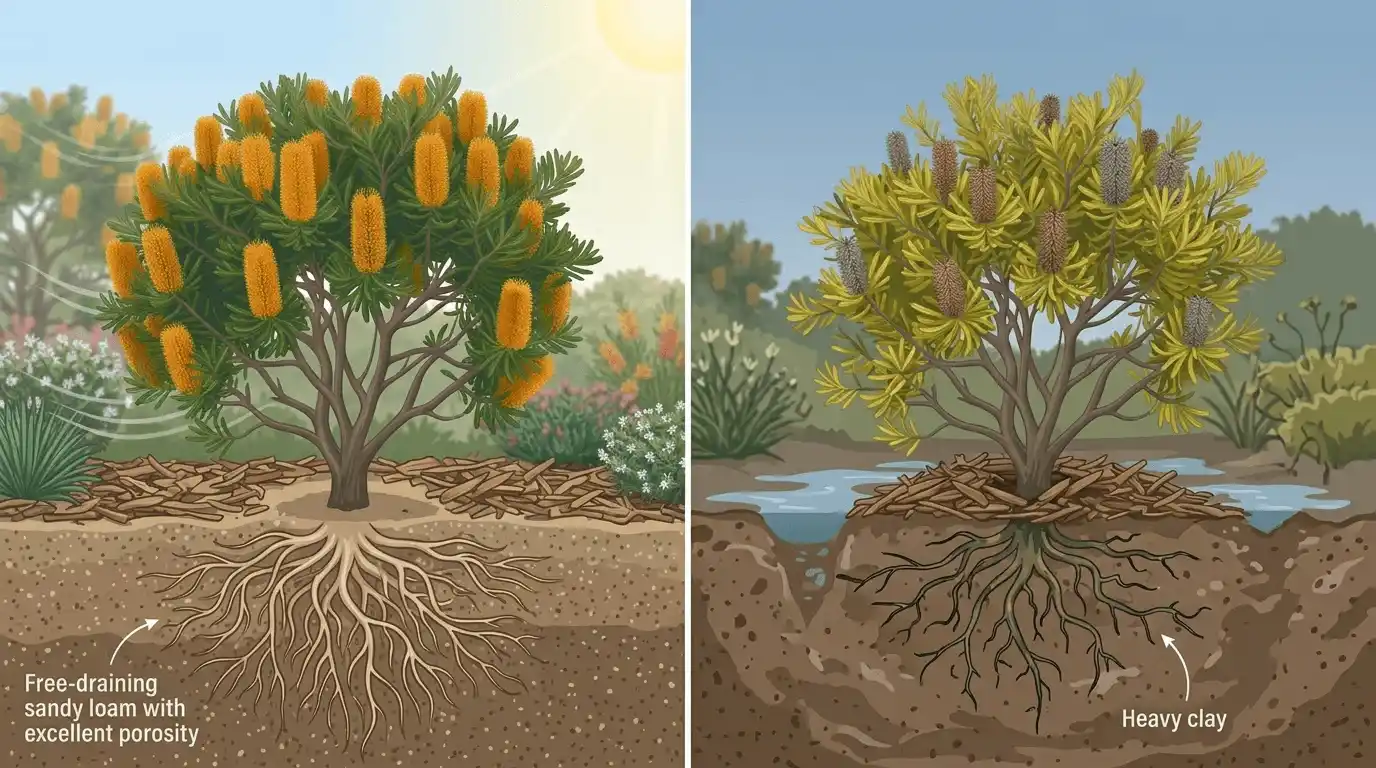
Many growing problems result from simple planting mistakes rather than difficult diseases.
Common mistakes include:
- Planting in heavy clay without improving drainage.
- Overwatering newly established plants.
- Applying general-purpose fertilisers with high phosphorus.
- Growing the shrub in excessive shade.
- Planting too closely together.
- Covering the trunk with mulch.
- Pruning heavily into old wood.
Avoiding these common errors greatly improves long-term plant health and flowering performance.
Environmental Conditions That Affect Performance
Coastal Conditions
Stumpy Gold performs exceptionally well in coastal gardens thanks to its tolerance of salty air and strong winds. Good drainage remains essential.
Inland Climates
Inland regions with hot summers and cooler winters support healthy growth when occasional deep watering is provided during prolonged dry periods.
Drought Tolerance
Once established, the shrub is highly drought tolerant. Its naturally adapted root system allows it to survive extended dry weather better than many ornamental shrubs.
Frost Resistance
Mature plants withstand light to moderate frost. Newly planted shrubs should receive temporary protection during severe frosts until established.
Wind Exposure
Strong airflow rarely damages healthy plants. In fact, good air circulation helps reduce fungal problems and encourages vigorous growth.
Conclusion
Banksia Spinulosa Stumpy Gold combines the beauty of Australia’s native flora with a practical size that suits modern gardens. Its dense evergreen foliage, brilliant golden flower spikes, moderate growth rate, and exceptional adaptability make it an outstanding choice for borders, wildlife gardens, coastal landscapes, containers, and low-maintenance plantings.
With full sun, well-drained soil, careful watering during establishment, and low-phosphorus fertiliser, this compact cultivar provides reliable colour and valuable habitat for birds and pollinators throughout much of the year.
Whether you are creating a native garden, designing a water-wise landscape, or simply looking for a manageable flowering shrub, Banksia Spinulosa Stumpy Gold offers an attractive, resilient, and long-lasting solution for Australian gardens.
Frequently Asked Questions About Banksia Spinulosa Stumpy Gold
What is the mature size of Banksia Spinulosa Stumpy Gold?
Banksia Spinulosa Stumpy Gold typically reaches 0.8–1.2 metres in height and 1–1.5 metres in width, making it ideal for compact gardens and container growing.
How tall does Banksia Spinulosa grow compared with Stumpy Gold?
Standard Banksia spinulosa can grow between 2 and 4 metres tall, while Stumpy Gold remains significantly smaller, usually under 1.2 metres, making it easier to maintain.
How fast does Banksia Spinulosa Stumpy Gold grow?
It has a moderate growth rate, generally adding 20–40 cm of growth each year under favourable conditions. Most plants approach their mature size within four to five years.
Does Stumpy Gold attract birds and pollinators?
Yes. Its nectar-rich golden flower spikes attract honeyeaters, native bees, butterflies, and other beneficial pollinators, making it an excellent choice for wildlife-friendly gardens.
What spacing is recommended for Banksia Spinulosa Stumpy Gold?
Allow 1.5–2 metres between feature plants, 1–1.2 metres for informal hedges, and 1–1.5 metres for mass plantings to ensure healthy airflow and canopy development.
Can Stumpy Gold grow in pots?
Yes. It grows well in large containers with free-draining native potting mix, provided the pot has adequate drainage and the plant receives full sun.
Is Banksia Spinulosa Stumpy Gold drought tolerant?
Once established, it is highly drought tolerant and generally requires supplemental watering only during prolonged periods of hot, dry weather.
Does it require regular pruning?
No. Only light pruning after flowering is usually needed to remove spent blooms and maintain a compact, rounded shape. Heavy pruning into old wood should be avoided.