Introduction
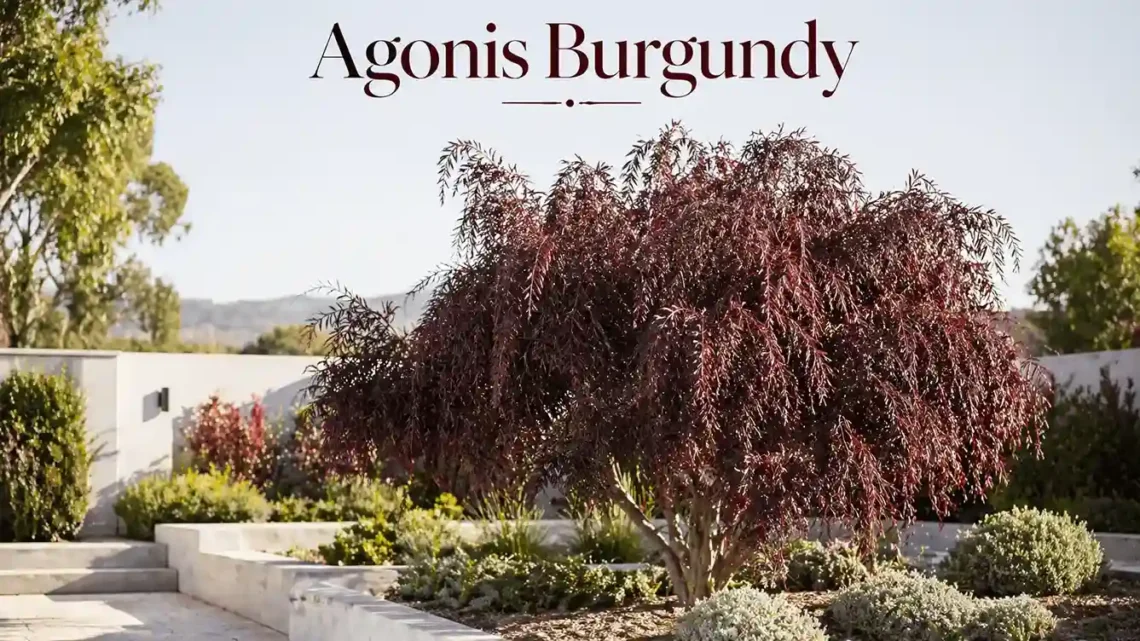
Agonis burgundy, scientifically known as Agonis flexuosa ‘Burgundy’, is a distinctive ornamental tree prized for its elegant weeping form and deep red-purple foliage. Native to Australia, this cultivar of willow myrtle is widely used in landscaping due to its graceful structure and adaptability to various environments. The tree belongs to the Myrtaceae family, commonly associated with peppermint trees, and features aromatic leaves and subtle seasonal blooms. Agonis burgundy is particularly valued for creating visual contrast in gardens, offering both aesthetic appeal and functional landscape benefits when properly maintained.
Quick Summary
- Agonis burgundy is a weeping evergreen tree with deep burgundy foliage
- It belongs to the species Agonis flexuosa (willow myrtle)
- Mature size, growth rate, and root system vary by conditions and cultivar
- Requires proper pruning, spacing, and care to avoid common problems
What Is Agonis Burgundy? (Plant Identity and Classification)
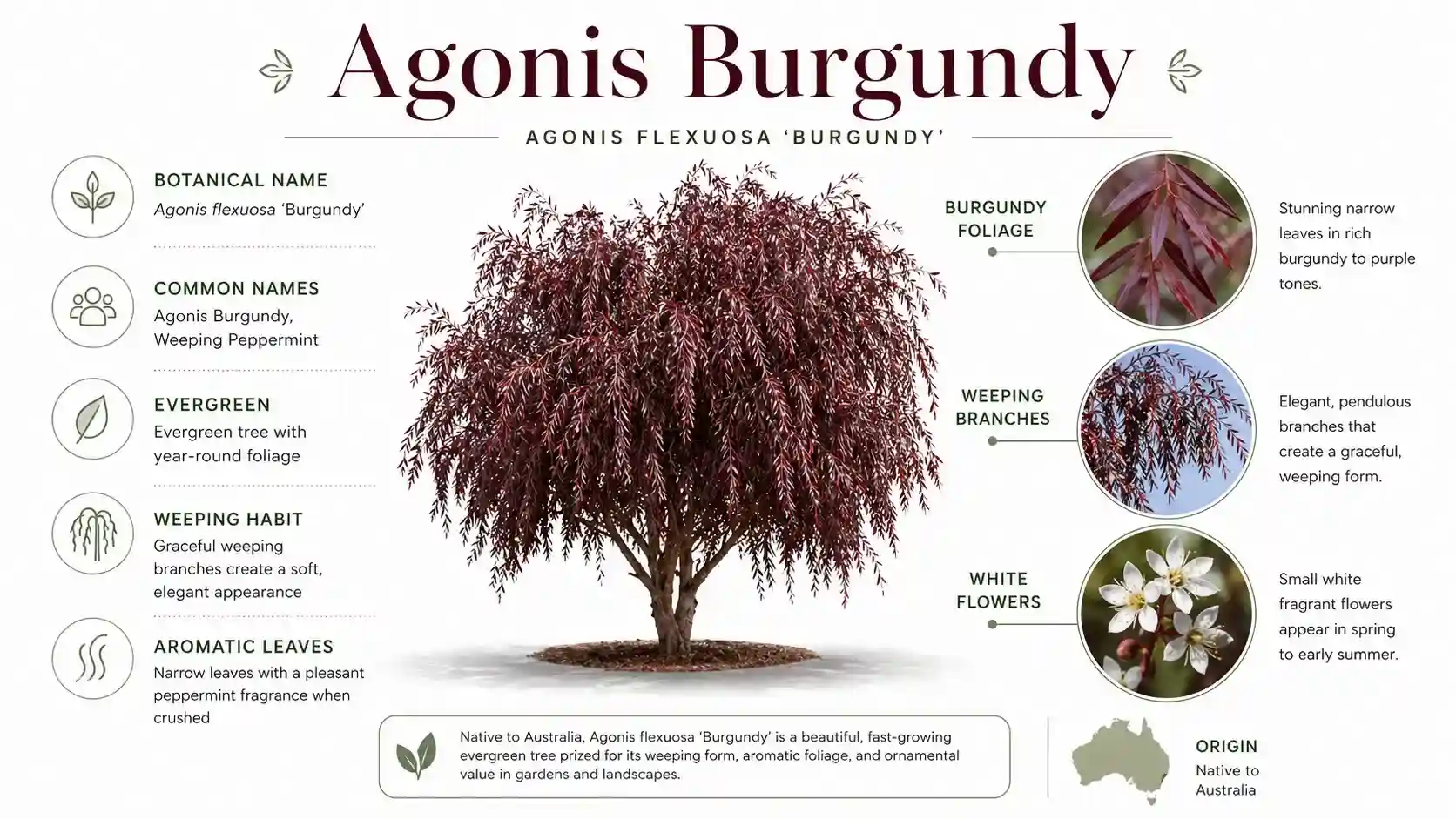
Agonis burgundy, scientifically known as Agonis flexuosa ‘Burgundy’, is a cultivated variety of the species Agonis flexuosa (willow myrtle) [source: Wikipedia]. The botanical name Agonis flexuosa ‘Burgundy’ refers to its distinctive foliage color compared to the standard green species.
It is also known by several synonyms, including:
- Burgundy agonis
- Burgundy willow myrtle
- Agonis burgandy (common misspelling)
Unlike the typical Agonis flexuosa, which has green leaves, this cultivar features deep burgundy to purple-toned foliage. It maintains the same weeping structure but offers enhanced ornamental value due to its color contrast. Agonis burgundy belongs to the same species group as the Australian willow, which shares similar weeping characteristics and adaptability in warm climates—learn more in this detailed guide on Australian Willow.
Key Features of the Burgundy Willow Myrtle
Agonis burgundy is recognized for its elegant form and visually striking foliage. Its weeping branches create a cascading canopy that adds movement and texture to landscapes.
Key Characteristics
- Evergreen foliage with burgundy tones
- Weeping growth habit (weeping agonis burgundy)
- Aromatic leaves typical of peppermint tree family
- Subtle flowering in spring/summer
The tree produces small white flowers, often referred to as agonis burgundy flowers, which appear in clusters. While not highly showy, they contribute to seasonal variation and ecological value.
Agonis Burgundy Size and Growth Characteristics
Mature Height and Width
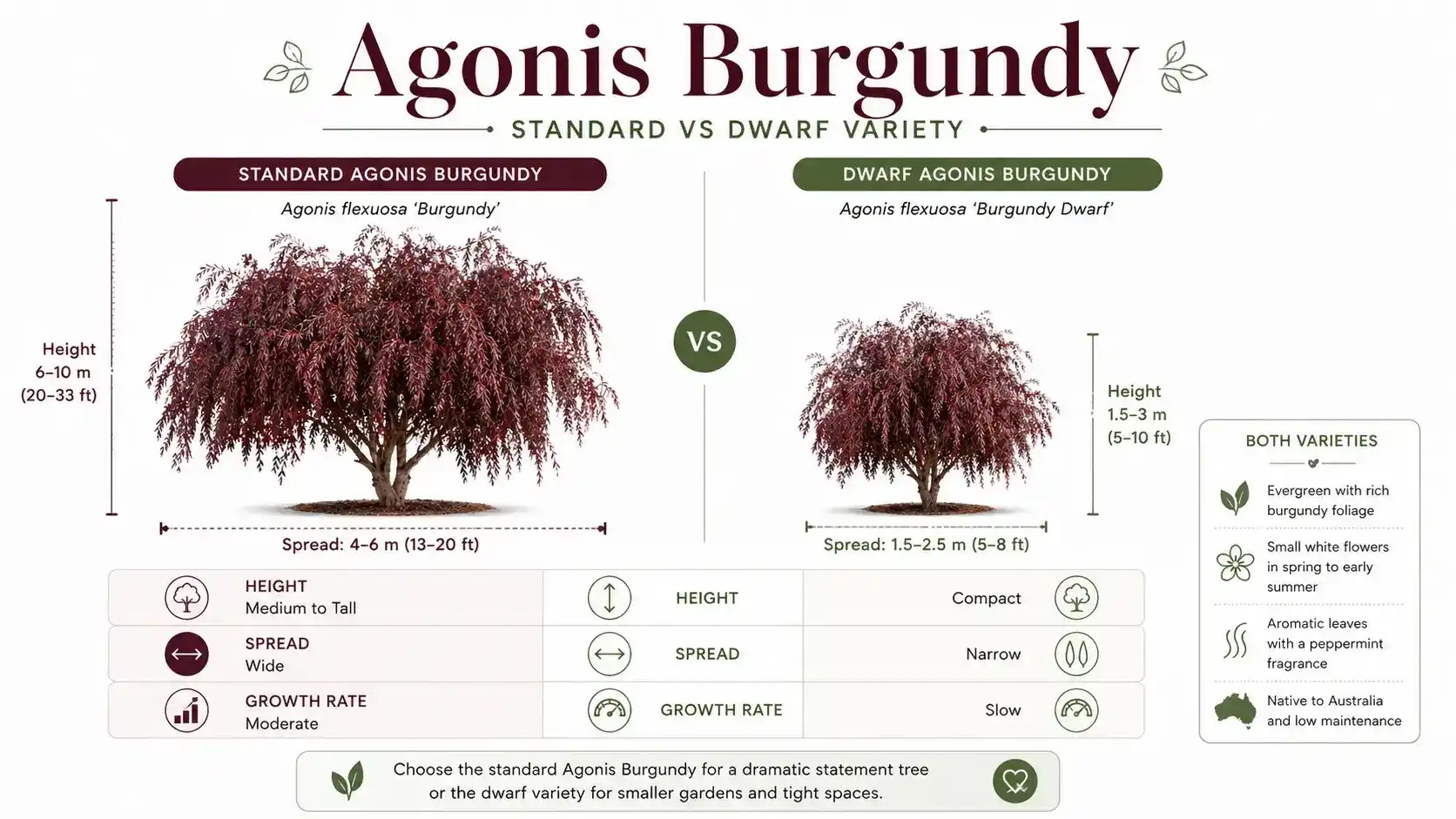
Agonis burgundy typically grows into a medium to tall tree, depending on environmental conditions. Standard trees can reach significant heights, while dwarf forms remain more compact.
Factors influencing size include:
- Soil quality
- Water availability
- Sunlight exposure
- Climate conditions
Growth Rate
Agonis burgundy has a moderate to fast growth rate, especially in warm, well-maintained environments. Compared to other Agonis flexuosa varieties, it grows at a similar pace but may vary slightly based on cultivar type. To see how Burgundy’s mature height, spread, and growth rate compare against other accent trees at a glance, this ornamental accent tree comparison spreadsheet lays out the full dataset in sortable rows. It’s worth checking if you’re planning a mixed border and need exact figures rather than general ranges.
Table: Size and Growth Overview
| Feature | Standard Burgundy Tree | Dwarf Varieties |
| Height | Medium to tall | Compact |
| Spread | Wide canopy | Narrow |
| Growth Rate | Moderate | Slower |
Fully Grown Agonis Burgundy: What to Expect
A fully grown agonis burgundy tree develops a broad, weeping canopy with cascading branches. The foliage retains its deep burgundy coloration, providing strong visual contrast in landscapes.
Spacing is important, as mature trees require adequate room for canopy expansion. When fully grown, the tree becomes a prominent feature, often used as a focal point in garden design.
Root System and Planting Considerations
The agonis burgundy root system is moderate and generally non-invasive, making it suitable for residential landscapes when planted correctly.
Key Considerations
- Moderate root spread
- Needs well-drained soil
- Avoid planting too close to foundations
Compared to peppermint tree root systems and other willow myrtle varieties, it behaves predictably when soil conditions are appropriate.
Dwarf and Related Varieties of Agonis Flexuosa
Dwarf Options
Dwarf varieties such as Agonis flexuosa nana offer compact growth, making them suitable for smaller gardens. These are often referred to as dwarf willow myrtle or agonis burgundy dwarf.
They differ in:
- Reduced height and spread
- Slower growth rate
- Greater suitability for confined spaces
Comparison: Burgundy vs Other Agonis Varieties
Burgundy vs Green Forms
- Burgundy foliage vs green foliage
- Similar weeping structure
Weeping Intensity
- Burgundy varieties often show more pronounced cascading
Landscape Use
- Burgundy: feature planting and contrast
- Green forms: general landscaping and screening
If you’re weighing Burgundy against other feature and screening options for an Australian-style garden, this interactive Agonis Burgundy plant selector lets you filter 18 comparable trees by mature height, spread, and coastal tolerance. It’s a fast way to confirm Burgundy is the right fit before you commit to spacing and site placement.
Care Guide for Agonis Burgundy Tree
Watering and Soil Requirements
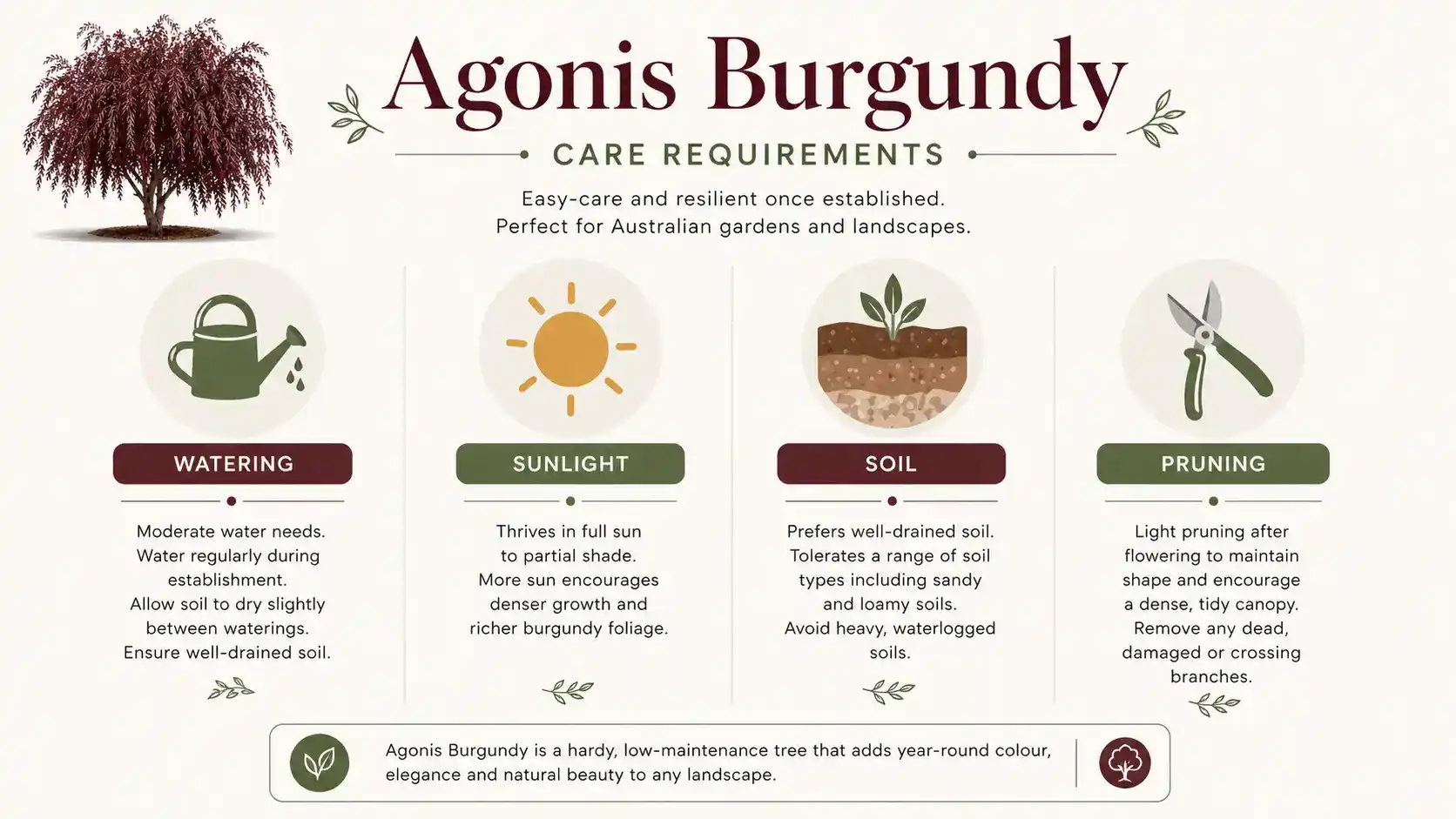
Agonis burgundy prefers well-drained soil and performs best when watering is balanced. Once established, it shows moderate drought tolerance.
Light and Climate Conditions
The tree thrives in full sun but can tolerate partial shade. It is best suited to warm, temperate climates and performs well in coastal regions.
Pruning and Maintenance
Proper pruning maintains the tree’s shape and health. Pruning agonis burgundy should be done carefully to avoid stress.
Best Practices
- Light pruning to maintain form
- Remove dead or crossing branches
- Avoid heavy pruning during stress periods
Common Problems and Diseases (Agonis Flexuosa Burgundy Problems)
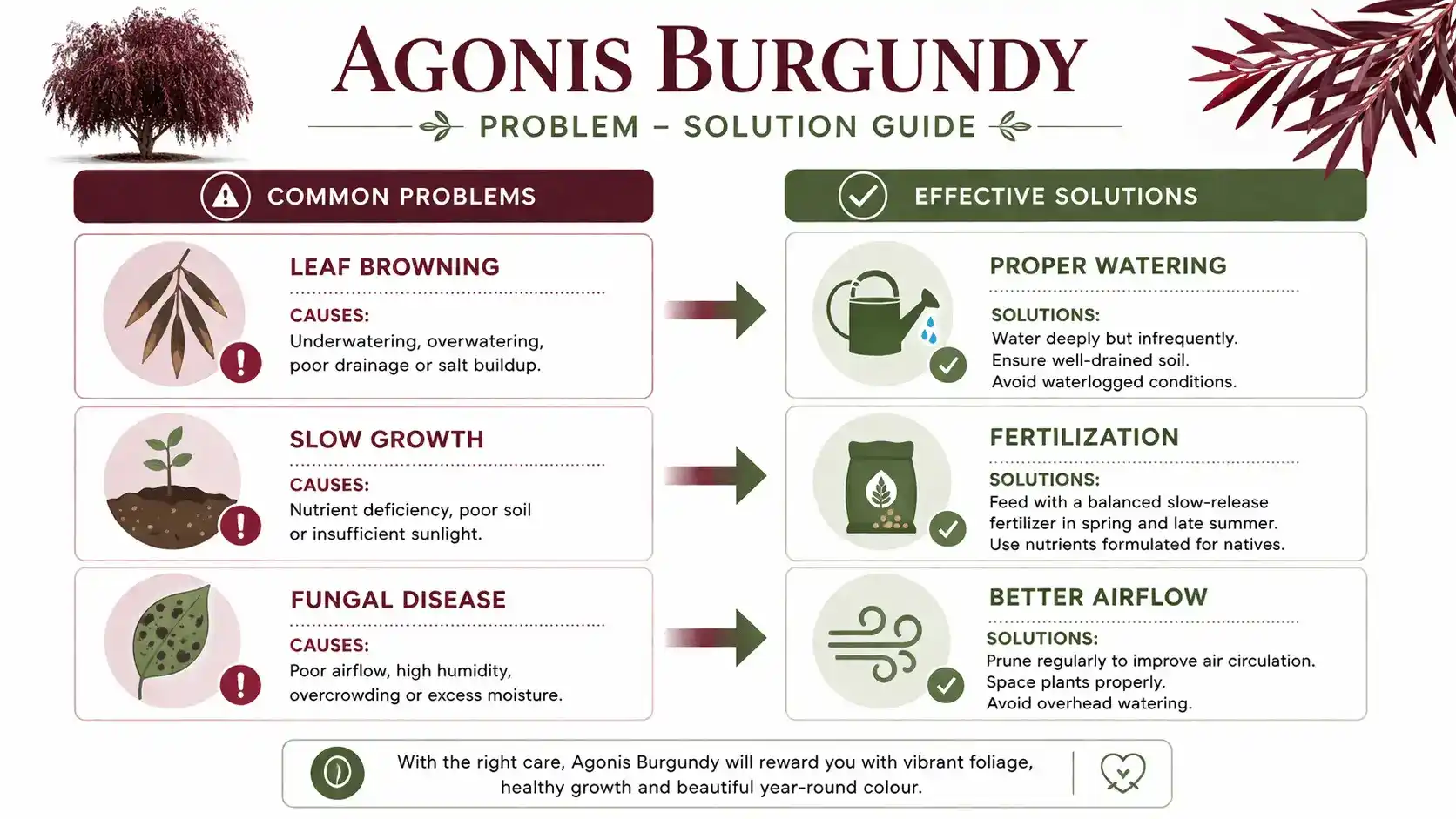
Agonis flexuosa burgundy problems are usually linked to environmental stress or improper care. These issues can affect growth, foliage, and overall health.
Problem-Solution Section
- Leaf browning or drop
Cause: drought or poor drainage
Fix: adjust watering, improve soil - Slow growth
Cause: poor nutrients or shade
Fix: fertilization, more sunlight - Disease susceptibility
Cause: fungal conditions
Fix: airflow and proper spacing
Environmental Limitations and Growing Conditions
Agonis burgundy is sensitive to frost and extreme cold, which can damage foliage and slow growth. It prefers well-drained soils and may struggle in heavy clay conditions.
The weeping structure provides moderate wind tolerance, but strong winds can still cause stress or structural damage.
Landscaping Uses of Burgundy Tree
Agonis burgundy is widely used in landscaping due to its ornamental appeal and adaptability.
Common Uses
- Feature tree for visual contrast
- Privacy screening
- Coastal or urban planting
It is particularly popular in Australian landscaping, where burgundy trees add depth and color variation. For a deeper look at how Burgundy’s cascading form stacks up against other weeping ornamentals used in similar landscape roles, this weeping feature tree comparison database breaks down growth habit, canopy shape, and seasonal display side by side. It’s a useful next stop if you’re still deciding between several weeping species for a focal point.
As a visually striking specimen, agonis burgundy is often categorized among top feature plants—explore more options in this guide to accent trees for landscaping.
Beginner Mistakes to Avoid When Growing Agonis Burgundy
Common mistakes can limit growth and health:
- Overwatering or poor drainage
- Incorrect spacing for full-grown size
- Lack of pruning maintenance
Proper planning and care prevent most issues.
Seasonal Care and Growth Behavior
Agonis burgundy shows active growth during warmer seasons. Flowering typically occurs in spring to early summer, followed by consistent foliage display throughout the year.
Seasonal pruning should be light and timed after active growth periods to maintain structure.
Agonis Burgundy in the Broader Plant Care Context
Agonis burgundy is primarily an outdoor ornamental tree and is not suitable for indoor plant care due to its size and light requirements. It plays a role in landscaping and ornamental tree selection, and while propagation is possible, it is typically discussed within broader plant propagation practices. As an evergreen species, agonis burgundy fits within a broader category of trees that maintain year-round foliage—see this complete guide to evergreen trees for deeper understanding.
While agonis burgundy is primarily an outdoor tree, many of its care principles—such as watering balance and light requirements—also apply to indoor plants, as explained in this complete guide to house plants.
Conclusion
Agonis burgundy is a visually striking evergreen tree that combines the graceful structure of willow myrtle with rich burgundy foliage. Understanding its size, growth rate, root system, and care requirements ensures successful cultivation. With proper maintenance and awareness of common problems, this versatile ornamental tree can thrive in a variety of landscapes.
FAQs
1. How big does an agonis burgundy tree grow?
Agonis burgundy typically reaches medium to tall heights depending on environmental conditions, while dwarf varieties remain compact and suitable for smaller spaces.
2. What is the growth rate of agonis flexuosa ‘burgundy’?
It has a moderate growth rate, which can increase in warm climates with proper watering, sunlight, and soil conditions.
3. Does agonis burgundy have invasive roots?
No, the root system is generally moderate and non-invasive when planted with adequate spacing and proper soil drainage.
4. What are common problems with agonis flexuosa burgundy?
Common issues include leaf drop, slow growth, and fungal diseases, usually caused by poor drainage or environmental stress.
5. Is agonis burgundy suitable for small gardens?
Yes, dwarf varieties like Agonis flexuosa nana are ideal for small gardens due to their compact size and slower growth.