Introduction
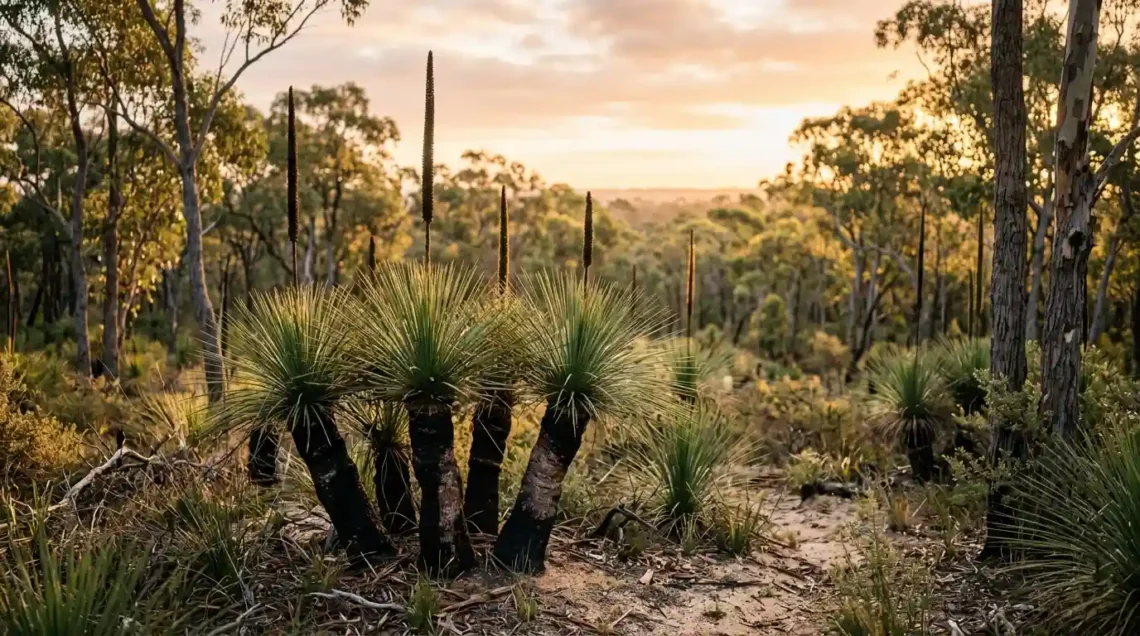
Grass trees Perth landscapes are among the most iconic features of Western Australia’s native environment. Known scientifically as Xanthorrhoea species, grass trees are slow-growing, long-lived plants that have existed in Australia for millions of years. These distinctive plants are instantly recognisable by their tufted, grass-like foliage and tall flowering spikes, often emerging from thick, fire-shaped trunks.
In Perth and surrounding regions, grass trees are increasingly used in residential gardens and commercial landscaping due to their sculptural form and extreme drought tolerance. However, they are also highly protected and slow to grow, making them both valuable and ecologically significant. This guide explains everything about grass trees in Perth, including growth habits, cost, care requirements, and legal considerations.
By Greenery Inside | Plant Care & Gardening Expert
Last Updated: June 2026
Quick Summary
- Grass trees (Xanthorrhoea spp.) are ancient Australian natives widely found in Perth and WA.
- They are extremely slow-growing, often taking decades to form visible trunks.
- Mature specimens in Perth can cost $1,500–$5,000+ due to rarity and transplant difficulty.
- They thrive in full sun, sandy soil, and low-nutrient conditions typical of Perth’s climate.
- Once established, grass trees are highly drought-tolerant and long-lived, often surviving for centuries.
What Are Grass Trees? Defining Xanthorrhoea in an Australian Context
Botanical Identity and Common Names
Grass trees belong exclusively to the genus Xanthorrhoea, which is endemic to Australia. Despite the name, they are not true trees or grasses but a unique group of flowering plants adapted to fire-prone environments. The genus Xanthorrhoea is scientifically documented on Wikipedia as a unique group of Australian plants adapted to fire-prone ecosystems.
Historically, they were sometimes referred to as “blackboy trees,” but this term is now considered outdated. “Grass tree” is the preferred and widely accepted name in horticulture and ecology.
Key features include:
- Long, narrow, grass-like leaves forming dense crowns
- A trunk built from accumulated leaf bases
- A tall flower spike that can exceed several metres
In our experience at Greenery Inside, even young grass trees immediately stand out in landscapes due to their architectural silhouette.
Are Grass Trees Native to Western Australia?
Yes, multiple Xanthorrhoea species are native to Western Australia. They are especially common in Perth’s bushland and the southwest regions, including areas near Margaret River.
Different species occupy different environments:
- Coastal dunes and sandy soils
- Jarrah and banksia woodlands
- Inland heathlands
Grass trees in WA are often featured in nature photography due to their striking appearance in wild landscapes.
Where Do Grass Trees Grow in Australia?
Natural Distribution Across the Continent
Grass trees are widely distributed across Australia, especially along the east and west coasts. Western Australia is a major centre of diversity, with many species adapted specifically to nutrient-poor soils and fire-prone ecosystems.
They are commonly found in:
- Heathlands
- Dry forests
- Coastal scrub regions
Grass Trees in the Perth Region and Margaret River
In Perth and the southwest, grass trees are a defining feature of:
- Banksia woodlands
- Jarrah forests
- Kwongan heathlands
The Margaret River region is particularly known for scenic grass tree populations. These landscapes are often highlighted in “grasstrees Australia photos” due to their dramatic natural composition.
Types of Grass Trees Found in Perth
Common Xanthorrhoea Species in the Perth Area
| Species | Common Traits | Habitat |
| X. preissii | Tall trunk, very common | Jarrah/banksia woodland |
| X. gracilis | Slender, smaller form | Sandy coastal areas |
| X. brunonis | Often trunkless or short | Kwongan heathland |
These species are commonly used in native landscaping projects across Perth due to their resilience.
Grass Tree Size, Lifespan, and Growth Rate
How Long Do Grass Trees Live?
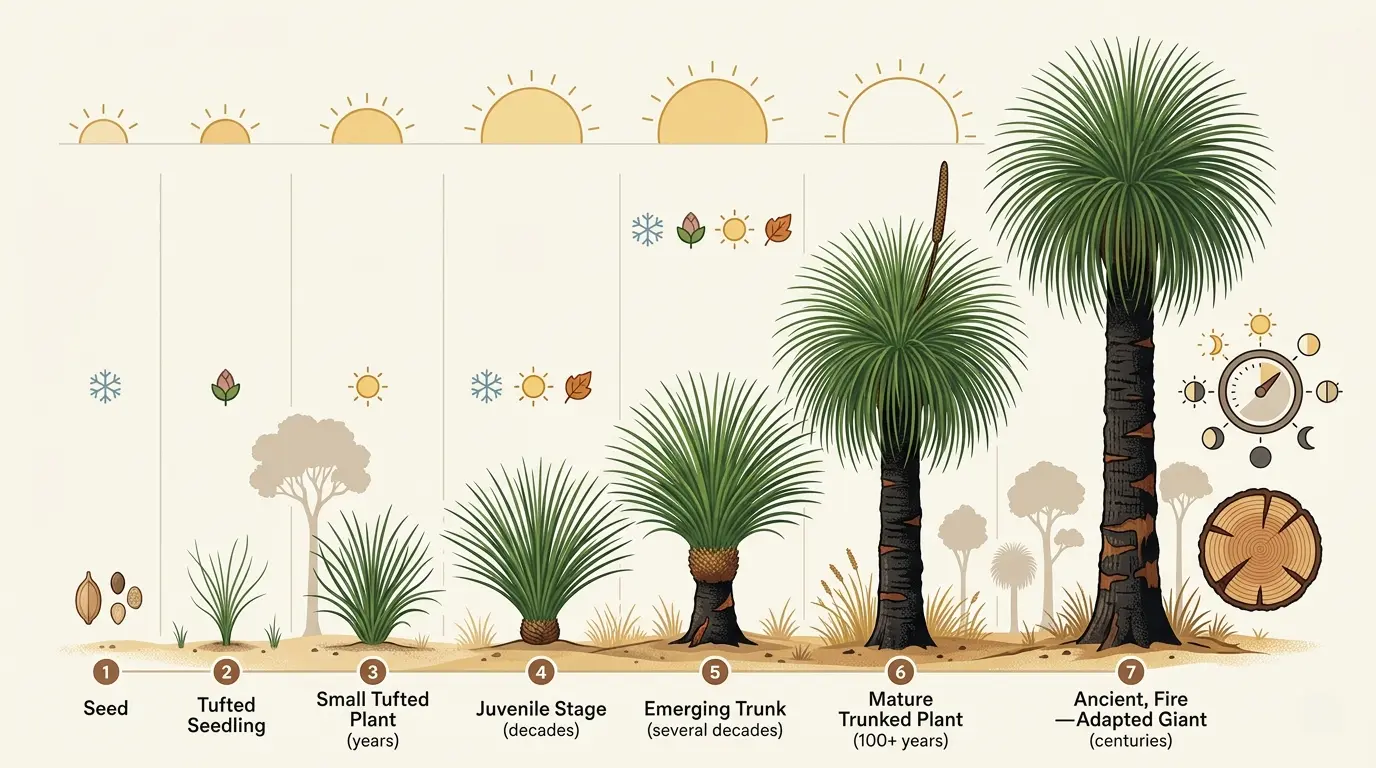
Grass trees are among Australia’s longest-living plants, with lifespans that can exceed 600 years. The trunk height is often used as an age indicator, with approximately 1 cm of trunk growth per year.
How Fast Do Grass Trees Grow?
Grass trees are extremely slow-growing.
Key growth facts:
- Trunk growth: ~1–2 cm per year
- Leaf growth: faster, especially after rain or fire
- A 1-metre trunk may represent 50–100 years of growth
This slow growth is the primary reason mature specimens are so expensive in the nursery trade.
Grass Tree Root System
Grass trees have a shallow, fibrous root system adapted to sandy soils. This structure makes them:
- Highly drought-resistant
- Difficult to transplant
- Sensitive to disturbance
Key points:
- Trunk growth: ~1–2 cm/year
- Leaf regrowth after fire: rapid
- Transplant recovery: 1–3 years
- 1-metre trunk age: 50–100 years
Grass Trees for Sale in Perth — What You Need to Know
Where to Buy Grass Trees in Perth
Grass trees are available through:
- Specialist native plant nurseries
- Landscaping suppliers
- Selected garden centres
- Some Bunnings stores (usually small potted plants only)
Large mature specimens are rarely available at general retailers like Bunnings (Xanthorrhoea bunnings searches often reflect small stock only).
Grass Trees Perth Cost — How Much Should You Expect to Pay?
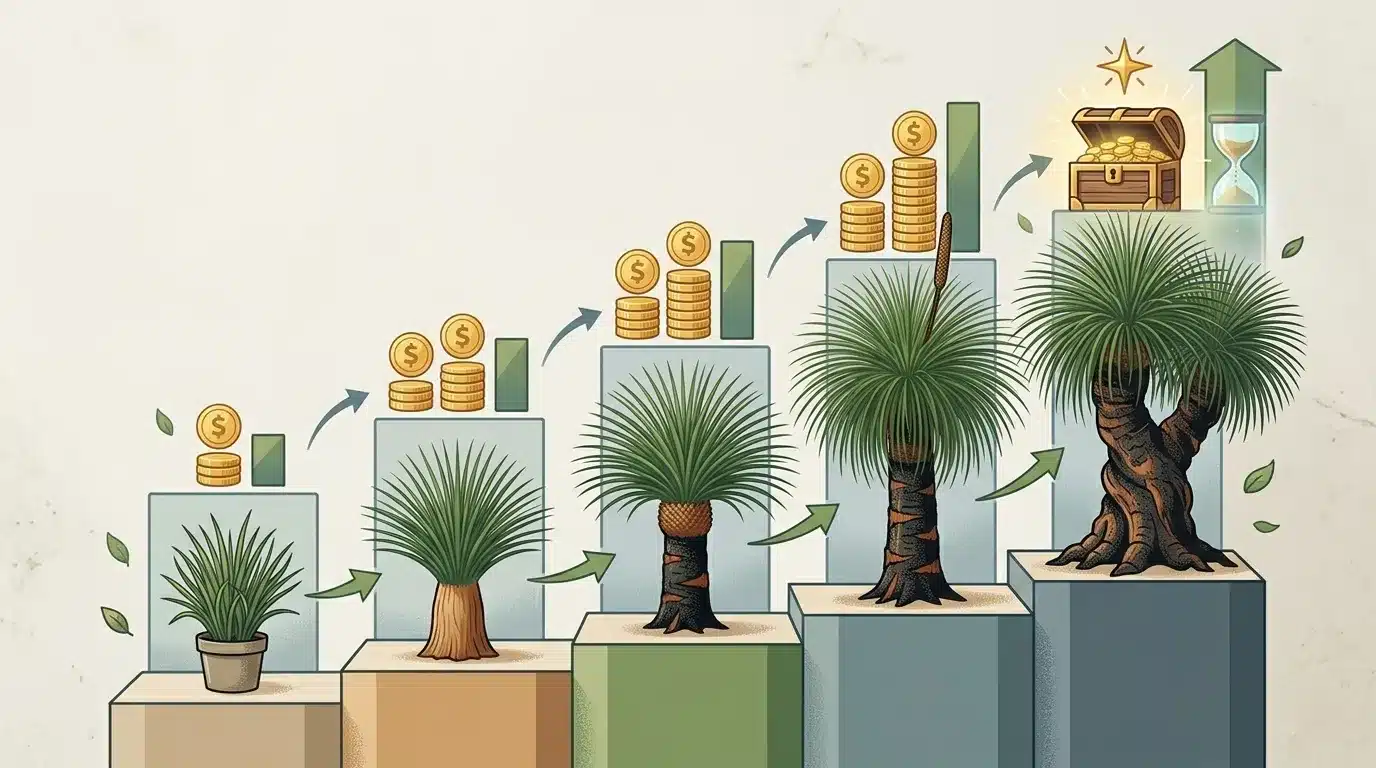
| Plant Size | Approx. Price (WA) |
| Small potted | $20–$80 |
| Juvenile (0–20 cm) | $100–$300 |
| Medium (20–50 cm) | $500–$1,500 |
| Mature (50 cm–1 m+) | $1,500–$5,000+ |
Why Are Grass Trees So Expensive?
- Extremely slow growth rate
- High transplant risk and labor costs
- Legal protections in WA
- Long establishment recovery time
- Mature specimens represent decades of natural growth
In our experience, the most overlooked factor is transplant recovery, which can take years.
Buying Grass Trees vs. Boab Trees — Understanding Your Options
Comparing Grass Trees and Boab Trees
| Feature | Grass Tree (Xanthorrhoea) | Boab (Adansonia gregorii) |
| Native range | SW & Eastern Australia | Kimberley region, WA |
| Growth rate | Very slow | Slow to moderate |
| Mature size | 1–4 m tall | Up to 14 m tall |
| Availability | Specialist nurseries | Specialist only |
| Price range | $20–$5,000+ | $500–$10,000+ |
Legal Considerations — Can You Remove Grass Trees from Private Property in WA?
Protected Status of Grass Trees in Western Australia
Grass trees are protected under WA biodiversity legislation. Removal or transplanting generally requires permits, even on private land.
This regulation exists because wild populations recover extremely slowly after disturbance.
Ideal Conditions for Growing Grass Trees in Perth
Even though grass trees prefer sandy soil, understanding soil correction methods from How to Improve Clay Soil for Lawns for Better Grass Growth can help gardeners adjust difficult landscapes.
Soil, Sun, and Water Requirements
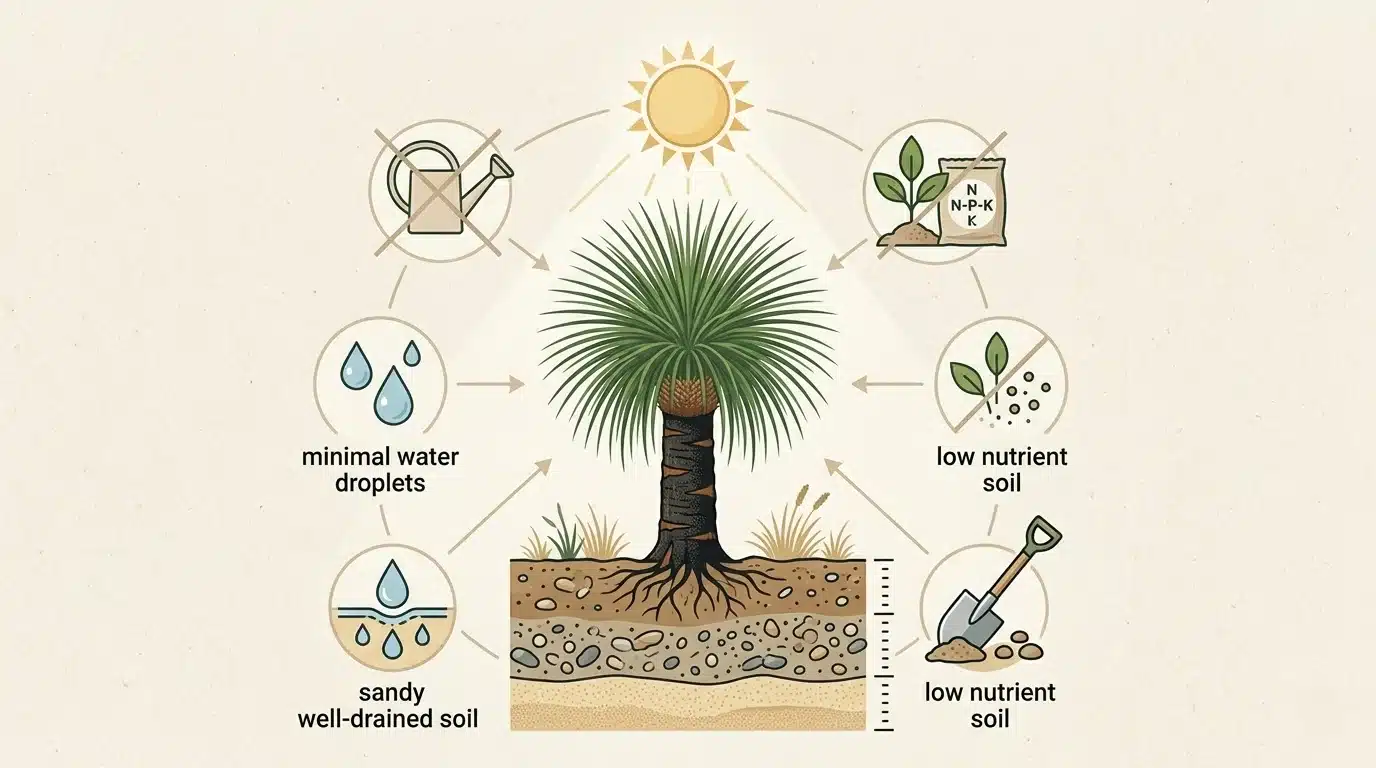
Grass trees thrive under the following conditions:
- Full sun exposure (6+ hours daily)
- Well-drained sandy or gravel soils
- Low nutrient availability
- Minimal watering once established
Climate Tolerance and Perth’s Suitability
Perth’s Mediterranean climate is ideal. Grass trees are adapted to:
- Hot, dry summers
- Mild winters
- Occasional fire exposure
Fertilisation and Soil Nutrition
- Avoid phosphorus-rich fertilisers
- Use native plant slow-release fertiliser sparingly
- Over-fertilising can damage root systems
Care checklist:
- ☀️ Full sun
- 💧 Deep, infrequent watering
- 🌱 Sandy soil
- 🚫 No high-phosphorus fertiliser
- 🔥 Fire-tolerant species
Proper establishment techniques are essential, and learning the correct method is crucial in guides like How to Plant a Grass Tree to avoid long-term transplant failure.
Grass Tree Care Guide After Purchase or Transplanting
Transplanting Stress and Recovery
Transplant shock is common. Leaves may brown or drop after relocation. Recovery takes 6–18 months, and new leaf growth indicates successful establishment.
Ongoing Maintenance
- Minimal pruning required
- Never cut the growing crown
- Dead leaves can remain or be carefully removed
- Fire can stimulate flowering in mature plants
Watering Schedule by Season
- Summer: deep watering every 3–4 weeks if dry
- Winter: usually no extra watering needed
- Newly planted: weekly watering for 3–6 months
Common Problems With Grass Trees and How to Fix Them
Leaves Turning Yellow or Brown
Usually caused by overwatering or poor drainage. Improve soil conditions and reduce watering.
No Flower Spike Appearing
Flowering is irregular and often triggered by stress or fire. Lack of flowering is normal in young plants.
Slow Growth or No New Leaf Growth After Transplant
This is normal for up to 18 months. Avoid fertilisers and ensure proper drainage. If issues persist such as yellowing or poor recovery, detailed solutions are explained in Grass Tree Problems: 7+ Essential Fixes That Work.
What Other Native Trees and Grasses Are Found in Perth?
Trees Native to Perth
Common species include jarrah (Eucalyptus marginata), marri, tuart, banksia, and sheoak. These form the backbone of WA’s biodiversity.
What Grasses Are Native to Perth?
Native grasses include kangaroo grass, wallaby grass, and weeping grass. These are true grasses, unlike grass trees.
What Is “Poor Man’s Grass”?
This term is locally used for hardy, low-maintenance ground covers that mimic lawn-like surfaces but require less water and care.
The 3-30-300 Rule and Urban Tree Canopy in Australia
What Is the 3-30-300 Rule?
This urban greening principle suggests:
- 3 trees visible from every home
- 30% canopy cover in neighbourhoods
- 300 metres to the nearest park
Grass trees contribute to biodiversity and visual structure in Perth’s urban greening initiatives, especially in native landscaping designs.
Beginner Mistakes When Buying or Growing Grass Trees in Perth
Most Common Mistakes New Grass Tree Owners Make
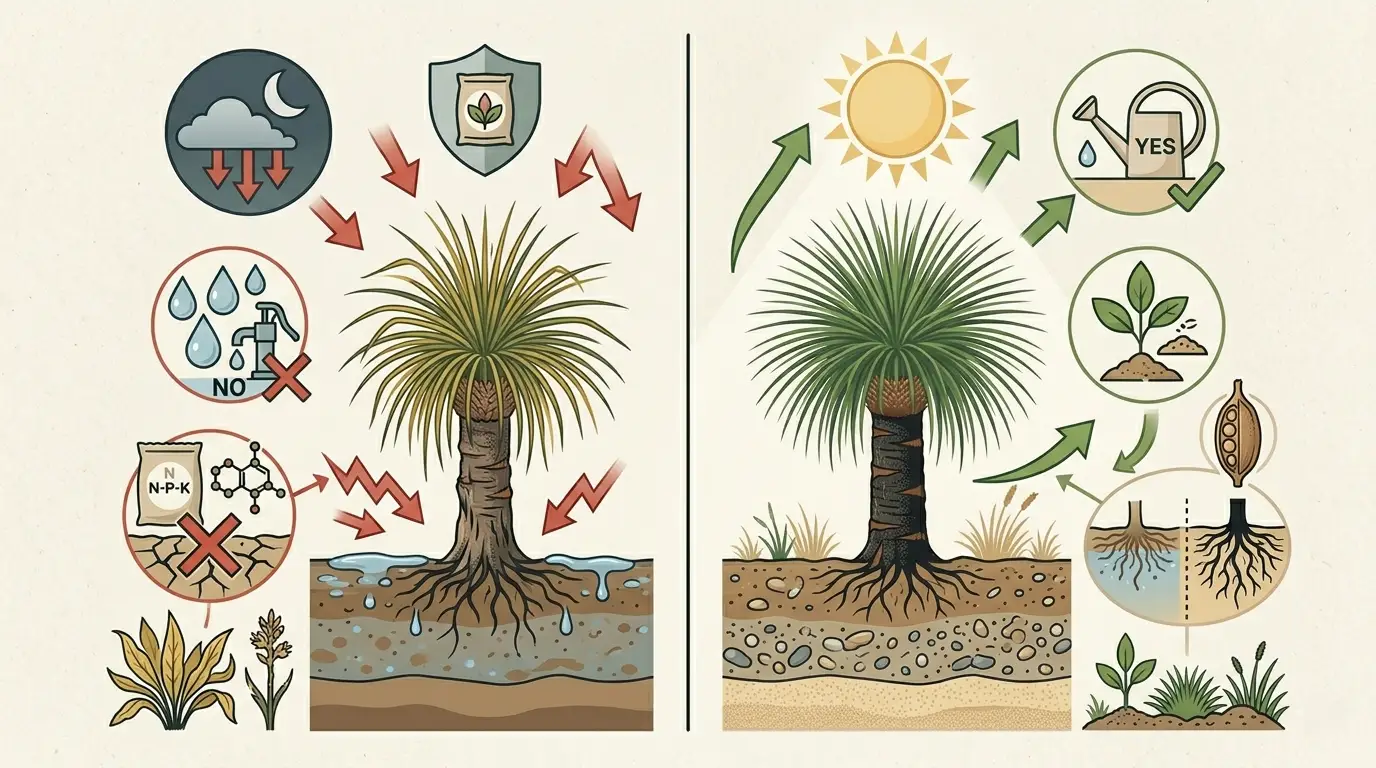
- Overwatering after planting
- Planting in shaded or clay-heavy soils
- Using standard fertilisers
- Expecting fast growth
- Ignoring transplant recovery time
How to Choose a Healthy Grass Tree at a Nursery
Look for:
- Firm, healthy leaf bases
- No crown rot
- Intact root ball
- Nursery-grown (not wild dug) stock
Conclusion
Grass trees are among Australia’s most extraordinary native plants — slow-growing, ancient, and uniquely adapted to the Western Australian landscape. Whether for landscaping or ecological appreciation, grass trees Perth represent long-term investment in natural heritage. Their slow growth, legal protection, and unique biology make them unlike any ordinary garden plant, rewarding patient growers for generations.
Frequently Asked Questions About Grass Trees in Perth
1: How much do grass trees cost in Perth?
Prices range from $20 for small plants to $5,000+ for mature specimens, depending on size and age.
2: Why are grass trees so expensive compared to other plants?
Because they grow extremely slowly, require careful transplanting, and often take decades to reach maturity.
3: Can I remove a grass tree from my property in Western Australia?
Usually no without permits, as they are protected under WA biodiversity laws.
4: How long does it take for a grass tree to grow a 1-metre trunk?
Approximately 50–100 years depending on conditions like fire, soil, and rainfall.
5: Do grass trees grow well in Perth gardens?
Yes, Perth’s climate is ideal if soil is well-drained and sunlight is sufficient.